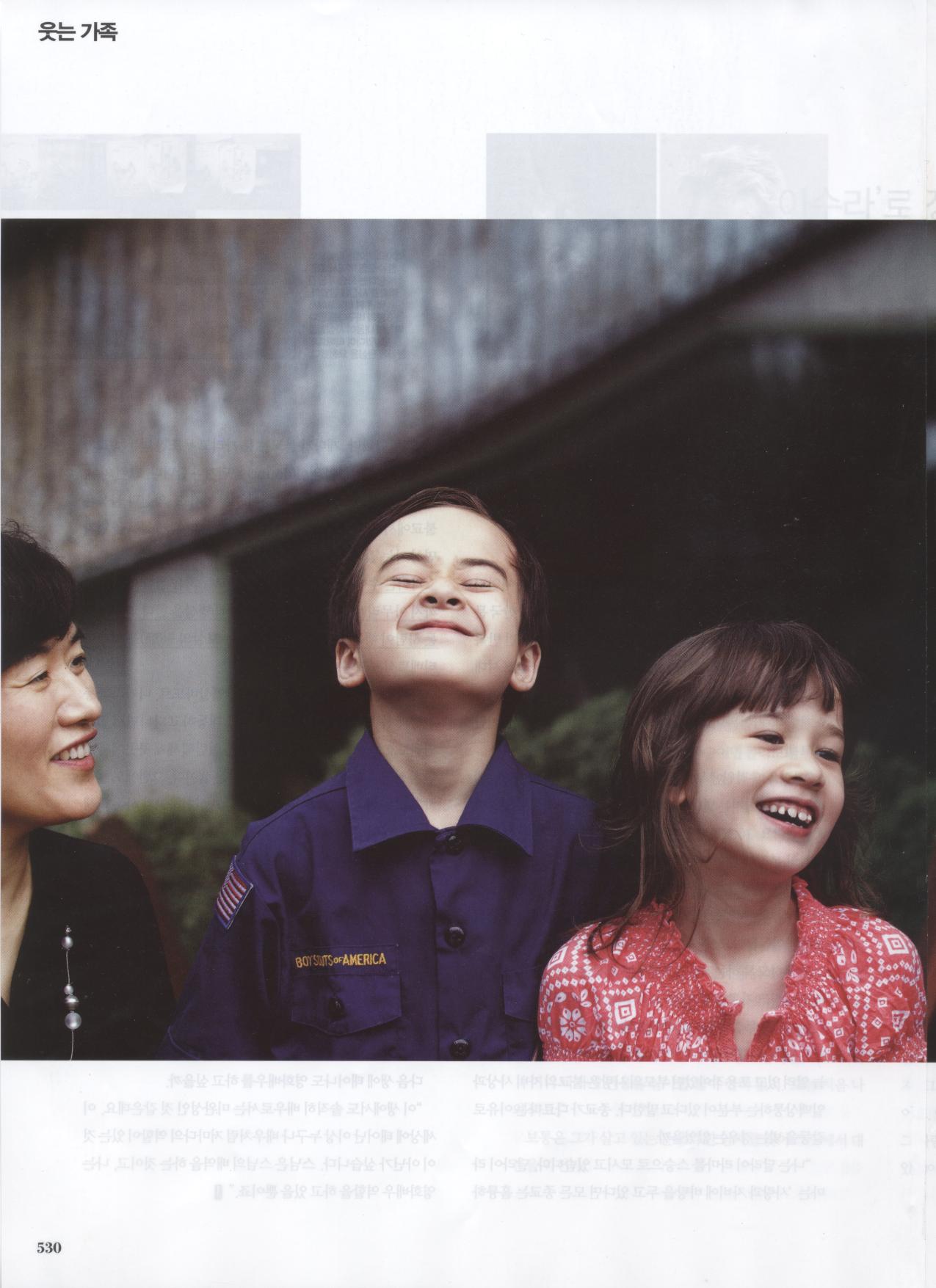
What’s This about a Foreigner Teaching Park Jiwon’s Novels?

This article by 임송이 describes the class for the Department of Korean Literature that I will be teaching next semester. The class is in English and concerns the novels of Park Jiwon, the 18th century writer whose novels I recently translated into English. This class is the first class taught in English in Kyung Hee University’s department of Korean literature and I do not know of any other universities teaching Korean literature in English, but to do so makes sense these days as there are an increasing number of foreign students in Korean literature departments. In graduate school foreigners outnumber Koreans.

By the way, I was interviewed at Korea University for a position in the department of Korean Literature in 2006, but at the time the department decided against hiring a foreigner. Times have changed, and we realize that teaching Korean is not just about some cruel globalization project, but a reality about the very nature of Korea. As Korea’s cultural power increases, we will see more such efforts to bring in internationals.

Read more

Life is a Matter of Direction, not Speed

Emanuel's book about life in Korea and the Future of Education

My new book, titled “Life is a Matter of Direction, not Speed” or in Korean “인생은 속도가 아니라 방향이다,” addresses the challenges for young people in Korea and around the world in the context of larger cultural forces and the evolution of education. In the book I also take time to describe my experiences in Korea and explain why I have settled down in this country.  It came out on July 20, 2011, and is published by Nomad Books.  Read on for a Korean-language excerpt.

Read more

The Renaissance for the 21st Century can Happen in Korea

This article originally appeared in the Munhwa Ilbo on August 1st, 2011.   

이만열/경희대 후마니타스 칼리지 교수, 아시아연구소장

최근 서울 안국역 주변 지역을 중심으로 일고 있는 활발한 예술의 흐름을 보다 보면 놀라움을 금치 못한다. 지금 서울은 세계 어디에 내놔도 그 창의성 면에서 돋보이는 작품들을 선보이는 갤러리가 하루가 다르게 늘어가고 있다. 그것은 문화재나 TV 드라마, 가요뿐 아니라 개념예술, 조각, 회화 등의 예술 영역으로 빠르게 확산되고 있다. 이곳 서울에서 일고 있는 문화의 바람이 아시아를 넘어 세계를 향해 나아가고 있는 것만은 확실하다.

Read more

July 28 Meeting of the Mirae Sotong (Future Communications) Forum

I made a presentation at the Mirae Sotong (Future Communications) Forum  on July 28, 2011 in which I described my thoughts on the “Intellectual Korean Wave.” I suggested that the time has come to go beyond the Korean Wave of pop songs, dramas and Kimchi and start to introduce the best of Korean artists, intellectuals and writers to the world in a serious fashion. See these materials for more in Korean on the talk.  “The Intellectual Korean Wave” is Forthcoming as an article from Korea IT Times and Munhwa Ilbo Newspaper.  The Korean language article follows after the break.

Read more

Future Communications Forum (The Miso Forum) Wednesday, July 27, 2011

Emanuel will give a presentation at the Miso Forum (Future Communications Forum) on Wednesday, July 27, 2011, in the afternoon at 4:30  PM. The Miso Forum was founded by a group of concerned businessmen, academics and public servants who wish to explore new potentials for a deeper international dialog focused around Korea. I have been impressed by their dedication to the project.

Emanuel’s talk is entitled” “Future Communications: The Intellectual Korean Wave”

The entire conference is conducted in Korean.

The Miso Forum will be held at the Hanguk gisul Center (한국기술센터) (16th floor) –located next to

exit 5 of Seolleung Station on (Line #2). For more information, call: 02 247-8807.

www.koreams.co.kr

The Miso Forum 미래소통포럼

Read more

“Six Months After Korea’s West Coast Oil Spill” (article translated by Emanuel Pastreich)

I translated this article about the Taean oil spill on behalf of a friend who works at Eco-Horizon Institute (Saengtae Jipyeong) as part of my efforts on the critical issue of what to do in the aftermath of this ecological disaster.

The Taean spill blends together in my mind with Hurricane Katherina, the Deep Horizon oil spill and the Fukushima disaster. All are examples of ecological disasters, the biggest security challenge we face today. I must say that most of the security budget we spend is not much use for responding to these terrible threats, and that their frequency seems to be increasing.

Six Months After Korea’s West Coast Oil Spill – Need exists for new effort to stave off a social and ecological disaster

August 8, 2008
By Seung-hwa Lee
(translated by Emanuel Pastreich)

A horrific collision between a crane and an oil tanker off the coast of Korea’s Taean Peninsula last December resulted in over 10,000 tons of crude oil being dumped into ocean just off the coast of one of Asia’s most important marine preserves. The striking coastline where pristine waves crashed on rugged rocks was transformed into a sea of oozing black goop.

The animals and plants of the coast were not the only ones devastated. The residents of Taean have found themselves in a life and death struggle for economic and psychological survival. A dark shadow hangs over their lives and has driven some to despair.

Now that the summer season has returned, there is much talk in the Korean media about the reopening of the beaches and the miracle of the Taean recovery. After all, when over a million people from all over Korea came to help clean the coast of oil in the months after the spill many predicted a quick return to normal. But although the beaches may appear clean, traces of oil can still be found.

The roads once packed with tourists during the summer have little traffic. And the generations of families whose livelihood depended on fishing or tourism wonder what they should do. They watch the bills pile up, getting into unpleasant fights about possible compensation money.

http://english.ohmynews.com/articleview/article_view.asp?menu=c10400&no=383335&rel_no=1

Emanuel’s proposal for a festival at Taean for Children (August, 2008)

The terrible Taean Oil Spill of December, 2007 caused such damage to the eastern coast of Korea that many were demoralized. Fishermen found themselves suddenly without a livelihood. That spill took place at the time I worked as advisor to the governor of Chungnam Province.

Of all the work I did with the province of Chungnam, I think the response to the oil spill was the most meaningful. I visited the headquarters for the clean up site, helped clean the tar on the beach and spoke with both residents and members of the local government team in charge. It was an opportunity to help coordinate the international response. But it was my visits to local elementary schools that made the deepest impression on me. Here were these children struggling to understand how their parents suddenly no longer had work as fishermen. They were gripped by an  invisible threat hovered over their communities. The teachers were quite frank about the psychological stress.

I worked with several people at the local level to make up this proposal for an international children’s festival that would bring new hope to the children. Here are versions in Korean, English and Japanese. Ultimately, there was just too much sensitivity about the oil spill and we could not actually hold it, but there were several figures in local government who did their best at the time.

 “The Delicate Little World of Taean”

A Festival for Children of Art & Music Celebrating the Environment

July, 2008

[proposal]

Emanuel Pastreich

A thick oozing sheet has coated the pristine coast of Taean in Korea since December of 2007, transforming once spotless beaches into a black crust lining a sea of death.

As the shock of Korea’s worst oil spill sinks in, we are forced to think about the terrible consequences of our dependence on oilnot only for the fishermen of Taean, but for the entire world.

We think about such matters most of all when we watch our children. After all, the implications of oil, from creeping pollution to climate change, gather like dark clouds on the horizon, dark clouds that we are fearful to speak of with our young ones.

The only way forward is to create a sustainable world.

To do that, we must change culture itself, and we can only achieve that goal if we first turn to our children and offer them a vision of how the world could be.

Delicate Little World of Taean (English)

Delicate Little World of Taean (Japanese)

Delicate Little World of Taean (Korean)