Center for Truth Politics

Emanuel Pastreich
&
Charles Cabell
Discuss the ominous events surrounding the 80th anniversary of the inhuman Battle of Okinawa
Center for Truth Politics
This letter was delivered after a speech in English and Japanese on March 28th on the occasion of the meeting of the secret US-Japan Joint Committee. I call for the abolition of the US-Japan Joint Committee which is held between US military representatives and high level Japanese political appointees in government, the establishment of a Japan-US Peace Committee committed to promoting peace and addressing real security issues, and the adoption of an amendment to the US constitution based on the Japanese constitution’s article nine.

March 28, 2024
Brigadier General George B. Rowell IV
Deputy Commander, United States Forces Japan
Topic: Ending the Japan-U.S. Joint Committee, establishing a Japan-US Peace Committee, and advocating for a peace amendment to the Constitution inspired by Japan’s article nine
Dear General Rowell:
Thank you for receiving the letter from me and a group of concerned American citizens of February 1, 2024 that we mailed to you concerning the Japan-US Joint Committee and its unconstitutional role in both American and Japanese government policy. I enclose with this letter a copy of that previous letter for your reference. We welcome an open discussion with you and all current members of the Japan-US Joint Committee as to the role of that committee.
Today, joining with our Japanese friends, I repeat the request for the abolition of that unconstitutional committee. I would like to make two additional suggestions to you for our future discussions concerning the US-Japan alliance.
I make these suggestions, in contrast to the content of the last letter, as an individual American citizen who has been deeply involved in US-Japan relations for the last 38 years. My work with Japan started with my study of Japanese at Yale College as a senior in 1986, continued when I attended graduate school at University of Tokyo (1988-1992) and Harvard University (1992-1998) in Japanese studies, advanced when I worked as professor of Japanese studies (and researcher at the Arms Control, Disarmament, and International Security Program) at University of Illinois, Urbana-Champaign (1998-2004), and as visiting scholar at University of Pennsylvania and George Washington University (2004-2007), and then as director, and later as president, of the Asia Institute, which has offices in the Republic of Korea, the United States, and Japan (2007-present). I do not represent anyone else in making these suggestions, granted that I have consulted with many Americans and Japanese about these ideas.
First, I propose that we establish a Japan-US Peace Committee that is explicitly dedicated to bringing together government and military officials, experts, and ordinary citizens from both the United States and Japan to discuss which policies should be pursued in both countries as part of the US-Japan alliance so as to assure that our primary goal is the promotion of a lasting and substantial, robust and resilient, peace in East Asia, and around the world. I offer to help organize such a committee and I propose that this committee can replace the current Japan-US Joint Committee.
This Japan-US Peace Committee will function in accord with the procedures described, and the ideals embodied, in the constitutions of the United States and Japan, and it will consult directly with the government institutions of the United States and Japan as defined by those constitutions, seeking out the opinions of the government officials and citizens of both nations, consulting with experts in both nations, and doing so in a constitutional, transparent and accountable manner, while offering full records of all discussions that must be made public. There will be no role for private corporations, banks, consulting firms, private military and intelligence contractors, or other unaccountable for-profit institutions in that committee.
The second suggestion is an amendment to the United States constitution that is inspired by Article Nine of the Japanese constitution and that makes explicit the commitment of the United States to peace and that asserts the essential anti-imperialist, republican and democratic import of the United States Constitution and the Declaration of Independence.
I offer a proposal for what this 29th amendment might be based on primary consultations, but I suggest we should make this proposal to the American people, and that we should listen carefully to the Japanese people as well. This 29th amendment would follow the recently adopted 28th amendment known as the Equal Rights Amendment,
This amendment is essential for holding up the spirit and the imperative of the Constitution and the Declaration of Independence, and asserting our independence from imperialist ventures that threaten to draw us into unending foreign wars.
Remember what John Quincy Adams wrote,
“The United States knows that she should not go abroad in search of monsters to destroy, for once enlisting under other banners than her own, she would involve herself, beyond the power of extrication, in all the wars of interest and intrigue, of individual avarice, envy, and ambition, which assume the colors and usurp the standard of freedom. The fundamental maxims of her policy would insensibly change from liberty to force so that, although she might become the dictatress of the world, she would be no longer the ruler of her own spirit.”
I am sure that you are fully aware, as a military officer, of the tremendous dangers the United States faces as a result of the increasing control of local economies by global financial institutions, the privatization of the military, and the decay of the branches of government of the United States as defined by the Constitution.
These dangers cannot be attributed simply to an individual, or to some bad apples.
We must affirm the connection between the Constitution and the Declaration of Independence, texts which define what is and what is not the government, and the citizens of our nation. We all have an ethical imperative, especially as members of the military, to protect our citizens from all enemies, foreign and domestic, and to remain loyal to the Constitution.
The pledge to uphold the Constitution is not an empty ritual, nor is it the hollow words of political trickers. Upholding the Constitution means the rejection of kings and aristocracy, the rejection of inherited privilege in its many forms, and the commitment to a government of the people, by the people and for the people, through the pursuit of policy that is transparent, accountable, and that places the welfare of our citizens, and the rule of law, as the highest goal.
We should adopt a constitutional amendment, the twenty-ninth amendment, that will spell out a fundamental shift in the concept of security for the United States, one that takes its inspiration from Article Nine of the Japanese constitution.
The Constitution, and the amendments to it, serve a lodestar, a compass that leads us forward as citizens striving to create peace and establish true human security, the fundamental priority for the nation, and for the world.
Here is draft for this amendment that can serve as the starting point for a serious scientific debate as to how we can best realize this transformation of our nation.
Twenty-ninth Amendment to the United States Constitution
“The United States will assume the pursuit of peace to be its primary goal in foreign and domestic policy, make a peace economy its highest priority, and in that process reduce its nuclear weapons to zero within ten years, and demand that all other nations reduce their nuclear weapons to zero as well.
Other dangerous weapons such a depleted uranium, mines and cluster bombs, biological and nano weapons, electromagnetic and infrared weapons, and the project of information warfare will be ended decisively. The United States will oppose efforts to wage war by conventional, nuclear, or psychological, biological, or nano-technological means.
The United State military will be restructured to focus on the long-term security of the United States, calculated in the hundreds of years, giving up its short-term obsession with weapons and war, and devoting itself to preventing the destruction of the environment, earth, water, and air, the rising power of the rich and powerful, the use of technology to manipulate citizens and to destroy information, and other threats to human security.
Americans will only be deployed outside of the United States in a transparent and accountable manner for multinational efforts that are clearly defined, and such deployments will only be for a proscribed period of time.”
Your corrections, and suggestions, are welcome.
Let us advance the debate about what exactly the text of this amendment should be, and how we can create a nation dedicated to peace and security in the United States that will replace the nightmare tyranny of war and consumption that is presently being drawn toward the apocalypse by the dark horses of debt, consumption, and extraction.
I also include for your reference a copy of my recently published book “The Bitter Tonic Known as Truth” which outlines honestly the tremendous challenges that we face today.
Sincerely,
Emanuel Pastreich
American Citizen
Massachusetts
Resident in Japan
The following letter formally requesting the termination of the secretive Japan-US Joint Committee responsible for deciding through classified directives American and Japanese policy will be submitted to Brigadier General George B. Rowell IV, Deputy Commander for United States Forces Japan, at 10:30 AM on February 1, 2024 at formal gathering. The public is invited to attend (New Sano Hotel, 2-12 Minami Azabu, Minato-ku Tokyo ニュー山王ホテル 港区南麻布4丁目12).
This letter is from American citizens and we invite you to add your name. Please send me your name and your state of residence in the United States. Your email address will not be released to anyone, but I will use it to tell you about the results of our effort.
We cannot change the content of the letter (except for grammatical or typographical errors) but we welcome you to share on Substack, or elsewhere, your opinions and suggestions. We also encourage you to send your own letters independent of this one. Please send your name and state to me at Substack, via email at epastreich@protonmail.com, or at Petition · End the Japan-US Joint Committee · Change.orgwhere we will post this letter as well.
The text for the letter from American citizens is as follows:
———————————————————————————
February 1, 2024
Topic: The abolition of the Japan-U.S. Joint Committee
Brigadier General George B. Rowell IV
Deputy Commander, United States Forces Japan
Dear General Rowell:
We are writing you as U.S. citizens who are devoted to constructive, positive, and transparent cooperation between the United States and Japan. We are concerned about the unconstitutional Japan-U.S. Joint Committee (“Nichibei Goudou Iinkai” in Japanese) that dominates U.S.-Japan relations today.
This letter accompanies another letter concerning that selfsame committee that was drafted by a group of thoughtful Japanese citizens and describes its problems in detail.
The secretive Japan-U.S. Joint Committee has taken on malevolent tendencies in recent years, serving as a platform for the determination of policy in secret without any accountability to elected officials, or to the citizens of Japan, or of the United States.
The very concept of a secret Japan-U.S. Joint Committee was unconstitutional and unethical from the beginning. This opaque institution that meets regularly in downtown Tokyo to determine policy between unelected American military officers and Japanese government officials undermines the process of deliberative democracy and the rule of law in both Japan and the United States. Its actions encourage and abet the dangerous trend towards unconstitutional secret governance that has crept through the federal government and military of the United States over the past two decades.
Such secret governance has its origins in the British Empire, with its grotesque mixture of government, private bankers, and mercenaries known as the British East India Company. Such secret, imperial governance is precisely what our nation’s forefathers, men like George Washington and Thomas Jefferson, rightfully rejected when they signed the Declaration of Independence.
The United States of America is a republic, and its government is defined by the Declaration of Independence of 1776 and the Constitution of 1787. Our nation cannot tolerate secret governance by rich and influential individuals, or the privatization of the military as took place in the British Empire. Sadly, that is precisely what the Japan-U.S. Joint Committee practices.
Imposing this unaccountable and secretive institution on our ally Japan is an insulting infringement on Japan’s sovereignty, but it is also unconstitutional on the U.S. side, and violates both the legal and moral imperatives behind the founding of our country.
The oath of enlistment for military officers, which you signed, contains the words, “I do solemnly swear that I will support and defend the Constitution of the United States against all enemies, foreign and domestic.” As citizens of the U.S., we share this commitment to the Constitution.
In other words, the primary duty of the United States Forces Japan is to serve the American people according to the Constitution. Upholding the Constitution demands transparent and accountable government.
Our honorable Japanese colleagues have submitted a letter in defense of the sovereignty of the nation of Japan. This letter contains within it three demands of the U.S. Forces Japan (USFJ), the US military as a whole, and the federal government. We feel that those demands are justified and appropriate.
1) Abolish the Japan-U.S. Joint Committee.
2) Make public all the records of the proceedings of the Japan-U.S. Joint Committee since its founding, and make them accessible to all Japanese citizens.
3) In addition to releasing to the Japanese public all the secret agreements decided on by the Japan-U.S. Joint Committee without the authorization of the citizens of Japan through a democratic process, take immediate action to assure that all such secret agreements are from this day forward null and void.
All three actions are required in light of the extensive examples already revealed in declassified documents of secret agreements made by the Japan-U.S. Joint Committee that violate the constitution and the sovereignty of Japan, and also violate the constitution of the United States of America.
It is critical that our alliance remain between the peoples of the United States and Japan and that it be completely in accord with the constitutions of the two nations.
Our military must follow the Constitution and its members must refuse any secret directives issued within the Japan-U.S. Joint Committee, or elsewhere, that violate either the letter or the spirit of the Constitution. Consultants, corporations, banks, and their representatives can play no role in the decision-making process because our government is defined by that selfsame Constitution.
Finally, it is our responsibility as Americans to consider the malevolent forces at work in the military, and throughout the entire Federal government, that are dragging us away from an economy based on productive and sustainable economic activity of a transparent and morally sound nature, and towards one based on war, expansion, extraction, and domination.
Whether it is the illegal and unconstitutional use of military personnel to sell the weapons of arms manufactures (many of whom pay almost no taxes in the United States) or the demands made on the military by consulting firms and lobbyists representing the super-rich, we must stop such unaccountable governance and endless territorial expansion. The historical records of the last five thousand years tell us exactly what tragic end that path of endless military expansion leads to.
Governance in the United States was compromised in the 20th century by the subversion of the Constitution and federal lawby a vaguely defined concept of national security. The result has been the establishment of a national security state that follows the economic and structural imperatives of imperialism while pretending to uphold the republic defined by the Constitution.
The existence of the Japan-U.S. Joint Committee declares to Americans and the world that the United States is not a republic. It is shameful that we behave like a global empire and treat Japan, supposedly our ally, as a client state.
We call on you to take action regarding the Japan-U.S. Joint Committee today. And we welcome your response to this letter.
Most respectfully,
———————————————————–
The text of the letter from our Japanese colleague and allies is as follows
————————————————
February 1, 2023
Brigadier General George B. Rowell IV
Deputy Commander, United States Forces Japan
Dear General Rowell,
We have gathered here today as Japanese citizens for the purpose of presenting to you, in your capacity as Deputy Commander of the United States Forces Japan, this formal demand for immediate policy changes, specifically as a protest against the Japan-US Joint Committee.
The Japan-US Joint Committee is an organization made up of high ranking officers in the United States Forces Japan and of high ranking officials in the government of Japan that meets in secret at the New Sanno U.S.Force Center in downtown Tokyo on a regular basis.
The following is our formal demand:
When the Treaty of San Francisco that formally established peaceful relations between the United States and Japan took effect on April 28, 1952 the “US-Japan Security Treaty” and the “Administrative Agreement under Article III of the Security Treaty between Japan and the United States of America” also took effect.
The Japan-US Joint Committee was set up as an institution assigned the purpose of carrying out all consultation regarding the administration of the “U.S.–Japan Status of Forces Agreement” (which replaced the “Administrative Agreement” in 1960).
If we considered the intention of the U.S.–Japan Status of Forces Agreement, we would assume that the Japan-US Joint Committee must be a place where a discussion is held in the open about what is in the interests of both nations, and that this discussion would be carried out by members of the Diet (for Japan) and members of the Congress (for the United States) who are empowered with the solemn trust of the citizens of both countries, the citizens in whom the ultimate sovereignty is vested. The members of the committee would thereby represent all of the citizens of the two allied nations.
However, the Japan-US Joint Committee consists of Japanese civil servants who are not elected in any election and unelected American military officers assigned to Japan. Moreover, the meetings are held in absolute secrecy.
We the people of Japan are incensed that this consultative meeting is being carried out in a manner that degrades the sovereignty of Japan as an independent nation.
The members of the Japan-US Joint Committee have no obligation to make public the agenda, or the topics discussed, at the regular meetings, nor to make available any of the documents describing what agreements have been reached.
It is precisely for this reason that the Japan-US Joint Committee is viewed as a black box wherein numerous secret agreements have been made.
As far as all previous meetings of the Japan-US Joint Committee are concerned, it is recorded that an agreement was reached “not to make public the content without a mutual agreement by Japan and the United States.” The reason given for this secrecy is that “there is a concern that the relationship of trust between Japan and the United States might be damaged, that the stable stationing of American troops, and the smooth carrying out of their activities, might be impinged on, and that the safety of Japan might be harmed” if this information were made public.
The result is that all records of the meetings, and all written agreements that result from the meetings, are, in principle, secret and unavailable to the public.
But various secret agreements have been made public as a result of requests following the American Freedom of Information Act in the United States and the documents released demonstrate that these secret agreements reached by the Japan-US Joint Committee openly violate the sovereignty of Japan.
For example, at a meeting of the Japan-US Joint Committee in October, 1953, the subcommittee on criminal proceedings within the special committee on legal jurisdiction carried out deliberations on policy at which they agreed to an “secret agreement relinquishing rights of jurisdiction for Japan,” stating that “regarding criminal actions by members of the US military in Japan, with the exception of extremely important incidents for the nation of Japan, legal jurisdiction will not be exercised.”
The comments of the Japanese representative at that subcommittee, Tsuda Minoru, who was at that time director general for the criminal justice division at the Ministry of Justice, were recorded and they remain in the transcripts made public since then.
Another case made public involves the deliberations at a meeting of the Committee on Commercial Aviation of the Japan-US Joint Committee in May, 1975 which produced an “Agreement concerning traffic control for aviation and transportation.” This agreement resulted in the complete control of the airspace around the Yokota Base, the Iwakuni Base, and the Kadena Base by the United States military in violation of Japanese sovereignty.
Even though the Ministry of Foreign Affairs has formally stated that “even though there may be an agreement of the Japan-US Joint Committee in effect, there is no pressing legal basis for it to take precedence over Japanese aviation law,” the reality today is that aviation management continues to follow exclusively the agreements reached in secret by the Japan-US Joint Committee for takeoff and landing in the airspace at the Yokoda Base and Atsugi Base. Moreover. In addition, air control for the airspace of all of Japan for the altitude of 2450 meters to 7000 meters is reserved for US military aircraft and in placed entirely in the hands of the US military. The result is that Japanese civil aircraft that wish to use that airspace are required to have permission from the US military command.
The cases described above are but two examples of the numerous secret agreements reached at the Japan-US Joint Committee which grant special rights to the US military in Japan. The fact that the records of the meetings cannot be made public means that we have no way of knowing how many other secret agreements have been reached. These secret agreements are kept hidden from the citizens of Japan who have sovereignty in this republic in accord with the constitution. Moreover, the elected representatives of the Japanese people in the Diet, who are entrusted with legislative authority, are also not privy to these agreements.
These egregious special powers and privileges assigned by the Japan-US Joint Committee have no legal basis in the original “U.S.–Japan Status of Forces Agreement” and are by their very nature unacceptable for an independent nation state.
These embargoed agreements decided in secret rooms have eaten away at the very foundations of the rule of law in Japan, creating a world of shadows that is incompatible with the Japanese constitution which must serve as the highest legal authority in the nation.
The grave consequence is that our sovereignty is transgressed and degraded by these secret agreements.
We Japanese of conscience cannot tolerate the reduction of our nation to a vassal nation in blatant violation of our constitution and our sovereignty.
We therefore, in place of the members of the Japanese Diet who have been stripped by the United States and the United States military of the authority granted by our constitution, respectfully request that you, honorable Brigadier General George B. Rowell IV, in your capacity as Deputy Commander of United States Forces Japan, carry out the following actions:
First, abolish the US-Japan Joint Committee.
Second, make public all records of the proceeds of the US-Japan Joint Committee since its founding, and make them accessible to all Japanese citizens.
Third, in addition to releasing to the Japanese public all the secret agreements decided on by the Japan-US Joint Committee without authorization by the citizens of Japan, take immediate action to assure that all such secret agreements are from this moment null and void.
Respectfully,

The following interview appeared today in Japan’s Asahi Shimbun Newspaper English language section. This article is the first example of a mainstream media source mentioning my campaign for president ever, anywhere. I wish to express my great thanks to the brave people in Japan who have fought to help us get on the stage and challenge not only the establishment, but also the fake “anti-globalists” who feed at the billionaires trough in secret.

THE ASAHI SHIMBUN
January 10, 2024
https://www.asahi.com/ajw/articles/15082997
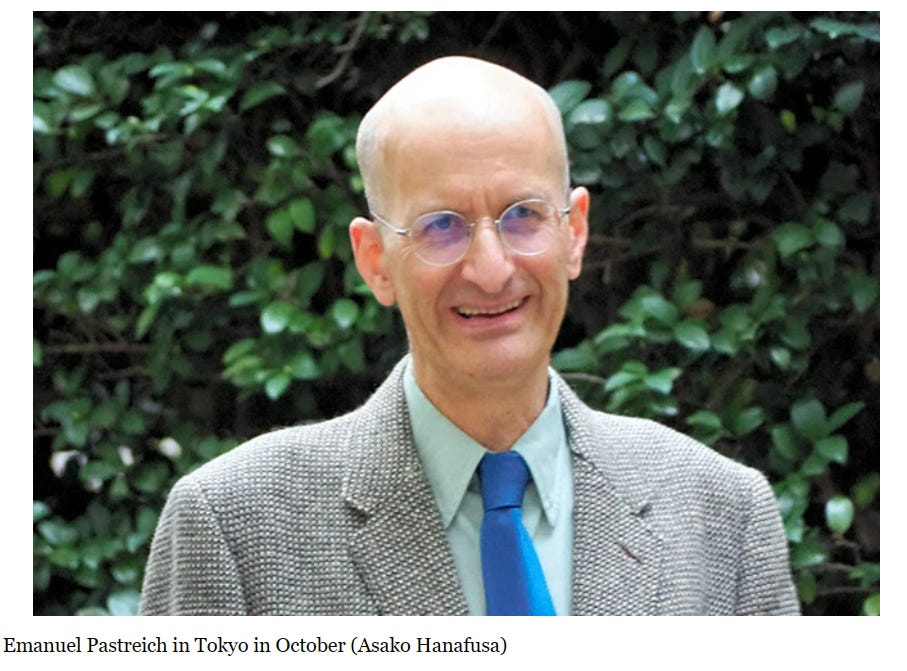
U.S. scholar Emanuel Pastreich took at face value the textbooks claiming that the United States had no choice but to drop atomic bombs on Japan to end World War II and save lives that he read in high school.
After years of research, and visits to Nagasaki and Hiroshima, the expert on East Asian diplomacy is now convinced that the United States owes an apology to Japan for the bombings and must also eliminate its stockpile of nuclear weapons.
Pastreich, president of the think tank Asia Institute, highlighted these issues during his short-lived bid to run as a candidate from the Green Party in the 2024 U.S. presidential election.
“Some people may think my apology was too extreme and others may think it was a brave act,” Pastreich, 59, said in a recent interview with The Asahi Shimbun. “I do not think it was either. I was merely doing my duty as a U.S. presidential candidate.”
Excerpts from the interview follow:
*************************************************************************
I expressed my formal apology in a speech I delivered on Aug. 6, the 78th anniversary of the atomic bombing of Hiroshima.
“As an American, I offer my deep apologies to the Japanese people for this bombing,” I said in the speech, which was later broadcast on YouTube.
I also stated unambiguously, “The atomic bombings were not necessary.”
In my declaration of candidacy for the 2024 U.S. presidential nomination from the Green Party, I made a public promise that “America will get rid of all its nuclear weapons within 10 years.”
Unfortunately, I was unable to gain the necessary support to continue the campaign for the nomination from the Green Party and withdrew at the end of September.
The mainstream American media has not covered my comments or speeches from that period.
Even so, as an American who aspires to become U.S. president, I wanted to apologize for the atomic bombings and to make a public promise that the United States will stop the development and deployment of nuclear weapons.
I was born in the United States and educated in the United States.
The history books I read in high school taught me that “in order to end the war quickly and save lives, we had no choice but to drop the atomic bomb.”
My teachers said the same thing, and so I did not think deeply about the matter at the time.
When I studied in Taiwan (in 1985) for my junior year of college, I encountered the Japanese culture that had been left behind from the colonial period and I was inspired to study about Japan seriously.
After I graduated from Yale, I came to Japan, studied the Japanese language, and then entered the graduate program at the University of Tokyo.
My major was Japanese literature, but I read broadly in modern Japanese history as well.
Those readings gave me insights into what the United States had done in Asia.
I started to have doubts about what Americans did from World War II, to the Korean War, and the Vietnam War, and I asked myself why we continued to expand militarily.
I first visited Nagasaki in 1991. The visit was related to my graduate research on how Chinese culture was imported into Japan through the port of Nagasaki in the 19th century.
I visited the site of the foreign settlement Dejima and Chinatown.
I also stopped by the Nagasaki Atomic Bomb Museum.
That was my first exposure to images of the apocalyptic ruins of Nagasaki and the burned bodies of innocent civilians.
That experience made me realize that the United States is a country capable of doing terrible things like this.
It was clear that dropping the atomic bombs had been a mistake and that it was wrong for the United States to keep nuclear weapons today.
When I had occasion later to visit Hiroshima, those thoughts became only the stronger.
In 2016, Barack Obama became the first sitting U.S. president to visit Hiroshima. U.S. President Joe Biden also visited the city when he attended the Group of Seven summit there in May.
But neither of them apologized for the dropping of the atomic bombs in spite of overwhelming evidence of the criminality of the act.
Many people in the United States perhaps think it is natural that their government takes such a position about the dropping of the atomic bombs, but I do not.
Some people may think my apology was too extreme and others may think it was a brave act.
I do not think it was either. I was merely doing my duty as a U.S. presidential candidate.
It was an apology that meant that we Americans must understand Japan and must not forget the sufferings of the victims of those bombings.
It was an apology meant to keep Americans from accepting as normal that the United States, a signatory to the Treaty on the Non-Proliferation of Nuclear Weapons, has refused to adhere to its obligations.
I have not had the chance to meet with the victims of the atomic bombings or their families. I am sorry I did not make the effort earlier in my career.
I hope that one day I can make an apology in person for the atomic bombings.
I will continue to make public calls for the elimination of nuclear weapons in my capacity as an expert on international relations in East Asia.
(This article is based on an interview by Asako Hanafusa.)
*************************************************************************
Born in Nashville, Tennessee, Emanuel Pastreich was educated in Chinese literature at Yale University.
He received a master’s degree at the University of Tokyo in comparative culture in 1992 and a Ph.D. in East Asian languages and civilizations from Harvard University in 1997.
He taught Japanese studies at the University of Illinois Urbana-Champaign and George Washington University. He is currently affiliated with Yale University’s Council on East Asian Studies.
Pastreich founded the Asia Institute in 2007 as a platform for global dialogue on contemporary issues.
He declared himself a U.S. presidential candidate as an independent in February 2020.
In August, he was recognized as a registered presidential candidate in the Green Party of the United States, but he had to withdraw after failing to raise sufficient funds.
Pastreich, currently residing in Japan, commutes between Tokyo, Washington and Seoul.
田中竜作ジャーナル
2023年12月27日
日米合同委員会の「イスラエル‐米国版」が目論むガザ戦争の次
世界中の批判を浴びながらも米国が国連安保理で拒否権を行使し、イスラエルのガザ戦争に肩入れするのには、れっきとした制度的根拠があった。(田中はそれを良しとしているわけではない)
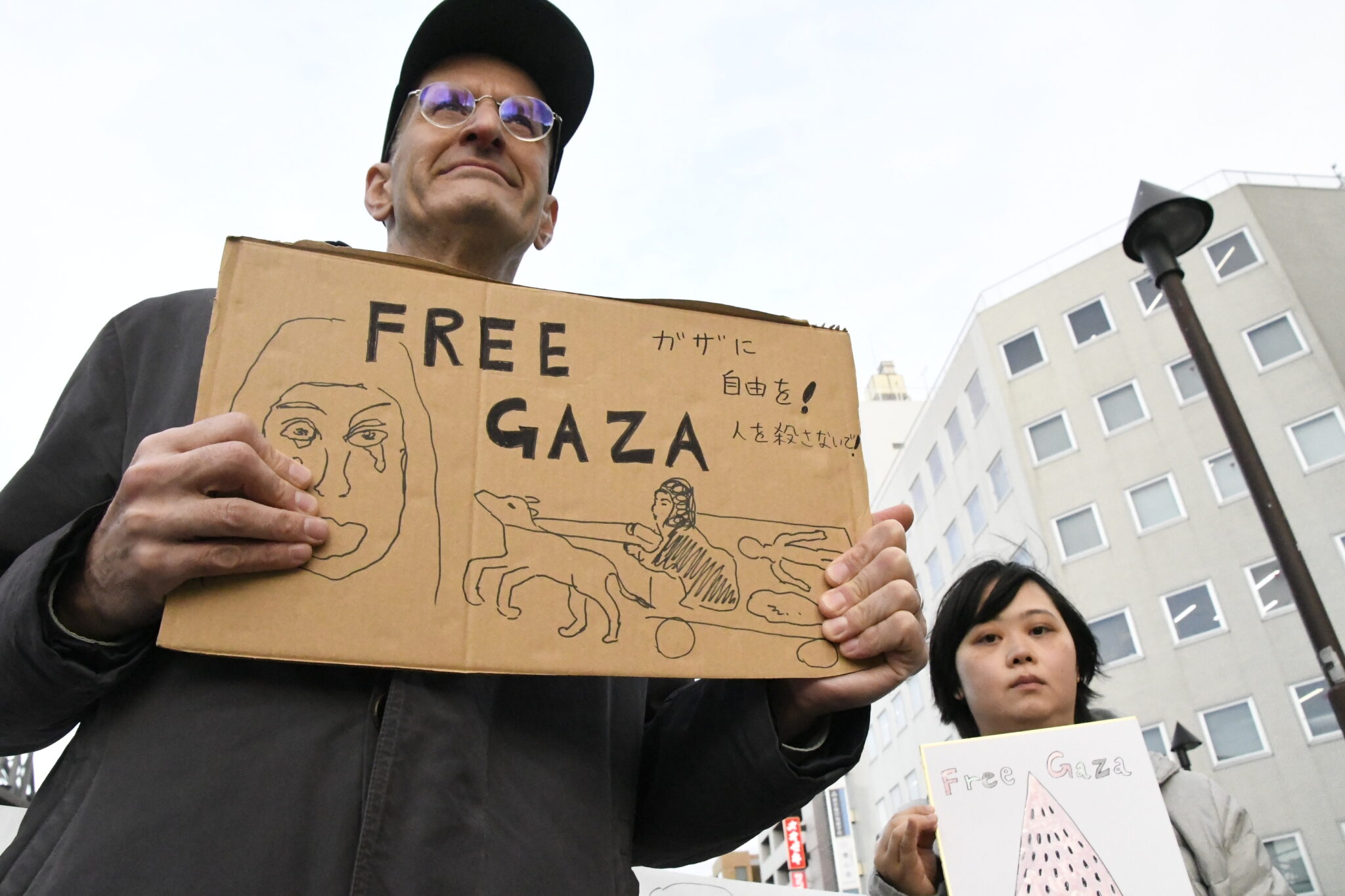
寒風の中、パストリッチ氏は妻の葉さんと共にガザ戦争に反対するスタンディングデモを続ける。=27日、三鷹駅南口
AIPAC(アメリカ・イスラエル公共政策委員会)。日米合同委員会の「イスラエル・米国版」の存在である。全米ライフル協会を凌ぐ最強のロビイスト団体だ。
米国の政治家は国会議員になると「AIPACの政策に従う」という署名を求められる。任意なので署名しない自由もあるが、あの手この手で政治活動を妨害されるため、ほとんどの国会議員はこれに署名するという。
米国の政策は上下両院で議論する前にAIPACで決まっているのだ。これまた日米合同委員会と同じである。AIPACの政策を貫く背骨は、米国によるイスラエル支援だ。援助の対象は軍事、世論、経済などあらゆる面にわたる。
駐日米国大使のラーム・エマニュエル氏はAIPACの中心的政治家で、少なくとも18歳まではイスラエルと米国の二重国籍を持っていた。現在は米国籍のみ。
ユダヤ系米国人のエマニュエル・パストリッチ氏(シンクタンク、アジア・インスティテュート理事=1964年生まれ)はAIPACの存在に強い危機感を示す。
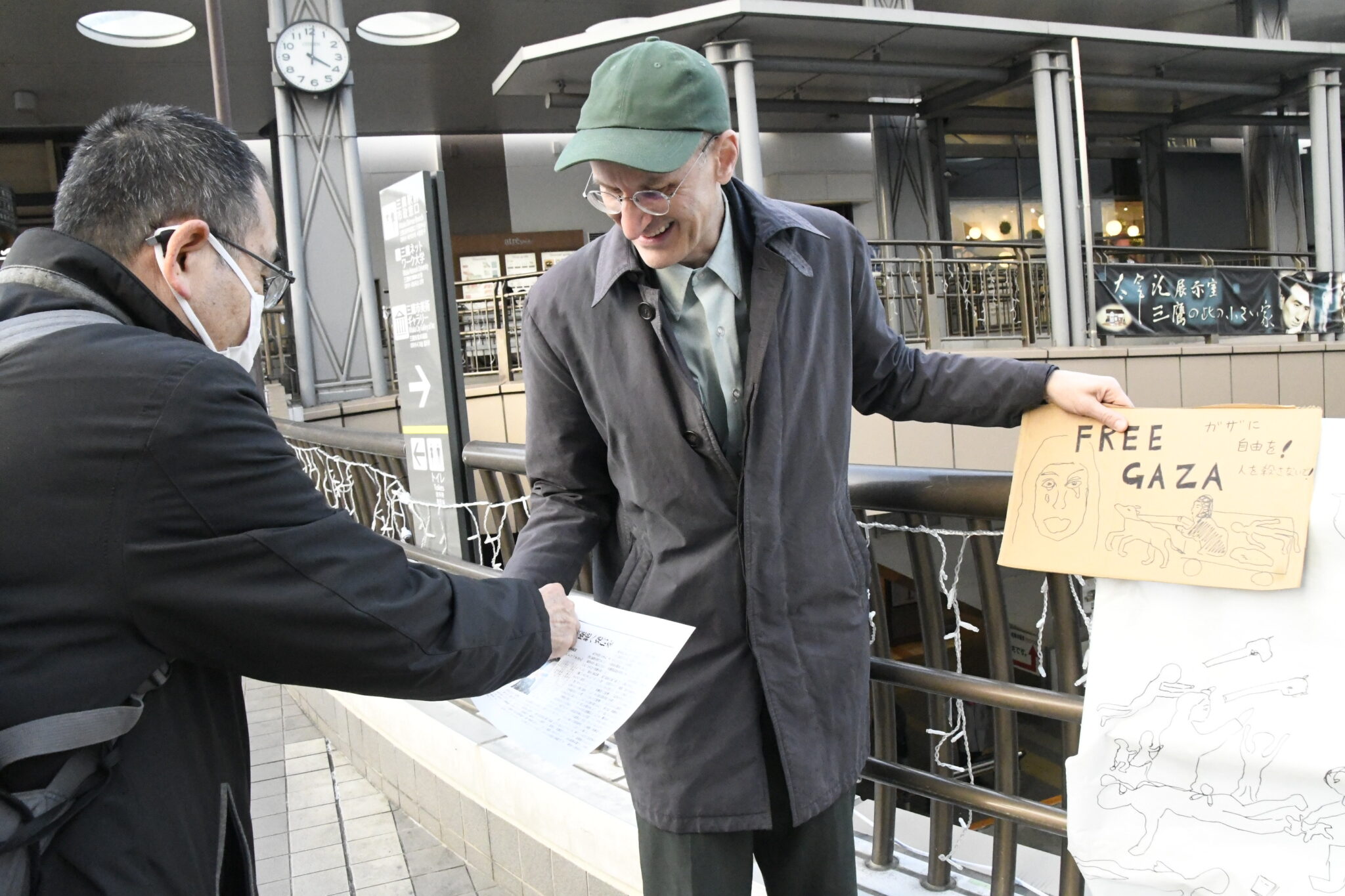
「私にできることは…」と言って「ガザ戦争反対」に寄付する通行人も現れて
ガザ戦争遂行は軍事産業と持ちつ持たれつであるAIPACの意思だからだ。「AIPACの米国はガザ戦争をきっかけにイランに戦争を仕掛けたがっている。イランとの戦争は第3次世界大戦に発展する可能性を秘めている」。パストリッチ氏は指摘する。
「今やってることはイスラエルの自殺行為だ。『戦争はユダヤ人の責任だ』と言われて反ユダヤ主義が世界中に吹き荒れることになる。それだけは避けたい」。
「戦争が続けば米国にとっても将来はない」。パストリッチ氏は祖国の行方に強い危機感を示した。
外国人のものの見方
孫崎享とエマニュエル・パストリッチ
孫崎享・元外務省国際情報局長とエマニュエル・パストリッチ・NGOアジアインスティチュート所長がジュンク堂でトーク!孫崎享氏「外国人のものの見方は極めて的確であって、簡潔に本質を突くというところがある」 2019.10.20
2019年10月19日(日)19時半より東京都豊島区のジュンク堂書店池袋本店にて、元外務省国際情報局局長で『日本国の正体』著者である孫崎享氏とアジアインスティチュート所長で『武器よさらば』著者エマニュエル・パストリッチ (Emanuel Pastreich) 氏による講演会「自著を語る『日本国の正体』(毎日新聞出版)VS『武器よさらば 地球温暖化の危機と憲法9条』(東方出版)」が開催された。
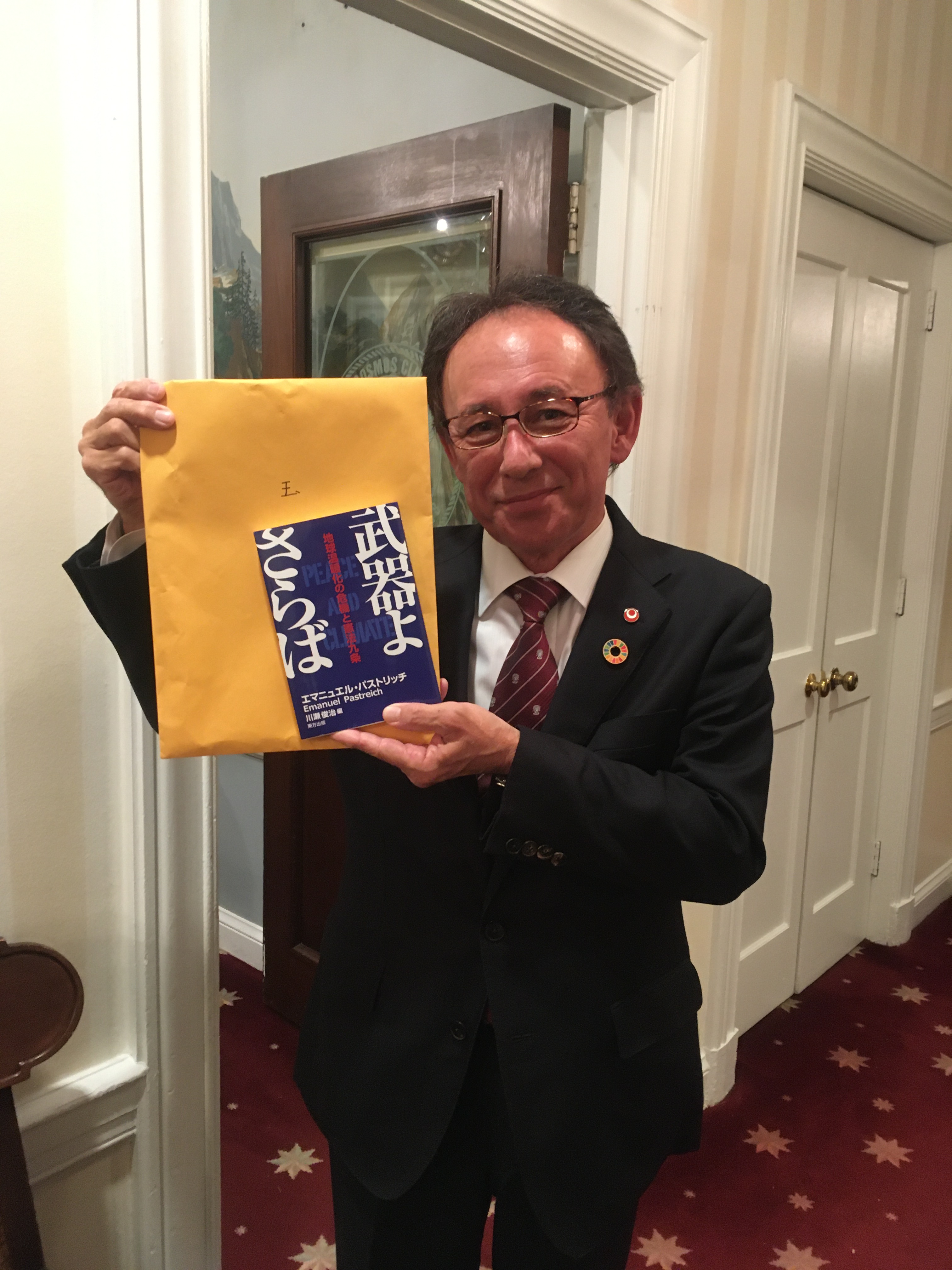
私の誕生日(55歳)十月十六日に沖縄県の玉城デニー知事がワシントンを訪問し、コスモスクラブでマイクモチヅキ教授とローレンス ウイルカーソン教授と一緒に食事をなさいました。私がその時たまたま飛行機にのって大阪行きでした。ぜひ玉城知事に会って私の本「武器よさらば」を差し上げたいと思いました。それはできなかったので、 ウイルカーソン教授 に伝達をお願いしました。玉城知事が私を本をもってこの写真を撮れました。関心があったと伺いました。
今度ぜひ沖縄にいって本について講演したいと思います。
「日本とはなにか、アメリカ人学者と考える」
2019年 10月21日 19:00〜21:00
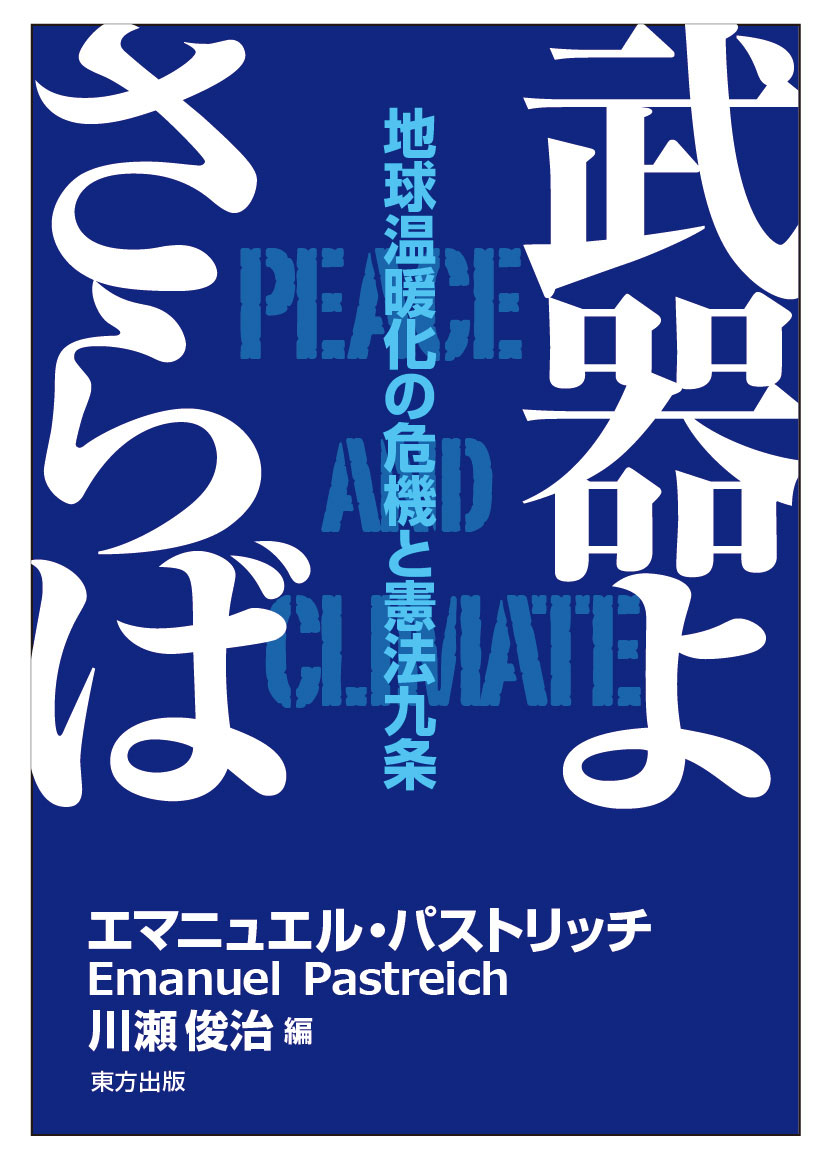

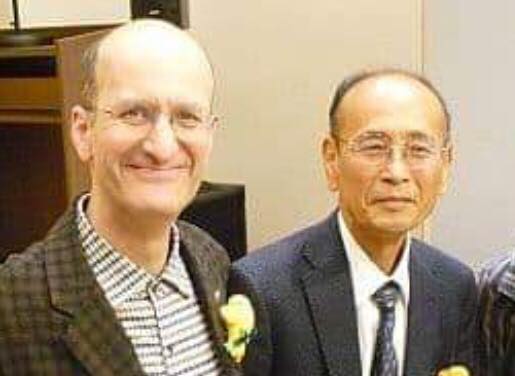
ワシントン在住のアメリカ学者エマニュエル ・パストリッチ氏を囲んで、今私たちが直面している社会問題を討論するための小さな集まりを開催します。日本に6年間留学した経験があり、日本の文化や思想に詳しいパストリッチ氏は、今年の7月に日本の政治、経済、文化と外交について興味深い著作を出版しました。この会でパストリッチ氏の著書、「武器よさらば〜地球温暖化の危機と憲法九条〜」を皆さまにご紹介致します。是非奮ってご参加くださいませ。
日時:2019年 10月21日 19:00〜
会場: 新宿 cafe&bar DUG
東京都新宿区新宿3-15-12(アドホック隣)
お飲み物代はお一人様あたり500円まで、こちらで負担致します。会場にお店を使わせていただくため、お一人様1オーダー、ドリンクを注文して戴く形となります。500円を超える差額は各自御負担いただきます。どうぞお気軽にお集まりください。
連絡先 ange.no644@gmail.com
日本を語る
外交、安保、環境
孫崎享 (元外交官、東アジア共同体研究所 理事・所長)
パストリッチ エマニュエル (N G Oアジアインスティチュート 所長)
2019年 20日(日曜日)午後 7:30-9:00
ジュンク堂池袋店(4階)
対米従属の外交政策に警鐘を鳴らしてきた元外交官が外国人の目から見た日本通史を上梓、憲法9条こそ非軍事的脅威・地球温暖化の危機に有効性をもつと初の邦訳書を出した安全保障の米国の論者—自著を語る対談実現!!
自著を語るー『日本国の正体』VS『武器よさらば 地球温暖化の危機と憲法9条』
孫崎享
孫崎 享(まごさき うける)1943年生まれ。元外交官、評論家東アジア共同体研究所理事・所長。ハーバード大学国際問題研究所研究員、ウズベキスタン駐箚特命全権大使、外務省国際情報局局長、イラン駐箚特命全権大使など歴任。新著『日本国の正体』では外国人が見た日本を通史的に取り上げて日本人とは何かを問う。
エマニュエル・パストリッチ
エマニュエル・パストリッチ (Emanuel Pastreich)、1964年生まれ。外交、環境問題のN G Oアジアインスティチュート所長。イリノイ大学、韓国の慶熙大学で教授を務めた。7年間日本に留学し、12年韓国に努めて今年8月から米国に帰国した。中国語、韓国語、英語の著作に加えて、この8月に日本語訳初の著書を刊行した。
東アジアの安全保障上の地図が激変しています。
孫崎享さんはすでに10年近くも前の著作で、米国のアジア戦略の今後について、米中2大大国が世界を調整する政策と、その調整として同盟国日本が共通の敵に当たらせる政策をとると予言し、「対米追従だけが国益ではない事実を見定めるべきだ」と述べています。最新著『日本国の正体』は日本の外側、外国人から見た日本を通史的に描くことで「私たちは何者か」を問いました。
エマニュエル・パストリッチさんは日本、中国の古典文学の専門家でしたが、環境問題と安全保障問題に深い関心を持ってきました。その成果は日本の初の著書『武器よさらば 地球温暖化の危機と憲法9条』に結びつきました。この書の中で地球温暖化という人類の危機は非軍事的脅威であり、軍事的圧力ではない安全保障・憲法9条こそが実効性を持つと指摘しています。
なぜ自身のこの著を書かねばならなかったのかー孫崎さんは豊富な外交官としての経験と長年にわたる歴史研究から、パストリッチさんは米韓日での生活、研究を送ったことで一国中心主義から脱却した視点から自著を語ることで、日本、米国、東アジアの現状、課題が見えてくるのではないでしょうか。ご期待ください。
対談のためパストリッチさんはワシントンから来日します。
Mj Book Cafe ジュンク堂池袋店 4階
東京都豊島区南池袋2-15-5 Tel 03-5956-6111
問い合わせ
epastreich@asia-institute.org
After the meltdowns at the Fukushima nuclear power plants in 2011, Japanese public opinion has been divided into three groups: those who want to continue using it, those who want to phase it out and those who want to end its use immediately. The establishment has argued that nuclear power is required for the economy and recently the Abe Administration has pushed for restarting plants as part of his agenda for growth.
The choice is one rather of choosing the future of Japan and goes far beyond nuclear power. If we continue this rate of “growth” we will exhaust all our resources in the near future. Even 2% growth will assure us that we will use up what resources we have in fifty years, rather than one hundred.
War and catastrophe will be the consequences of the radical exhaustion of resources.
There is much talk about a sustainable society today, but the term “sustainable” is used in a vague sense with no concrete guidelines.
Some in industry see it as meaning the sustaining of current growth into the future, the complete opposite of the environmentalists demand for limited consumption.
We must face the truth and reduce real consumption. If we reduce consumption by 1% every year, a 100 year reserve can be continued indefinitely. If we reduce more than that, we can build up a reserve. We must design a smaller society for the sake of future generations in order to avoid catastrophe.
The current economic system is based on mass production and mass consumption. As a result, our lives are flooded with industrial products to which we have become addicted. Our ever-growing society is already showing the signs of discordance as a result of this consumption illness. A smaller society, on the other hand, supports local production and consumption, and requires less energy. We will have a more healthy society if people are not addicted to industrial products and anonymous consumption but rather nurture each other and promote a creative life.
