Examples of innovation in Japan

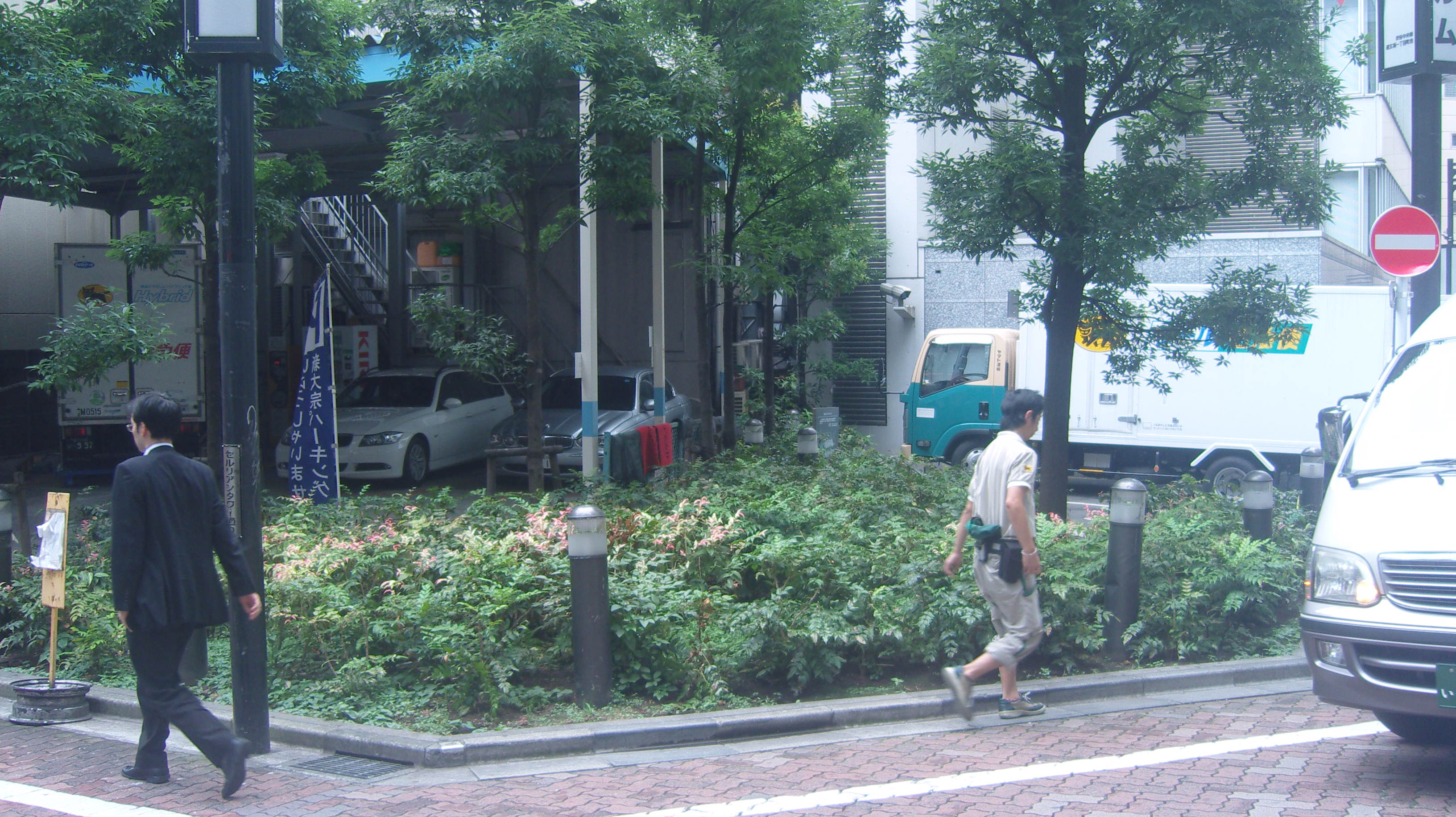
During my recent visit to Japan to attend a meeting at RIKEN and see  a few friends at University of Tokyo, I was quite impressed at the innovation I saw all around me in Japan. For example, a small bit of land in downtown Tokyo was converted into a very attractive natural space with flora that truly appeared wild.

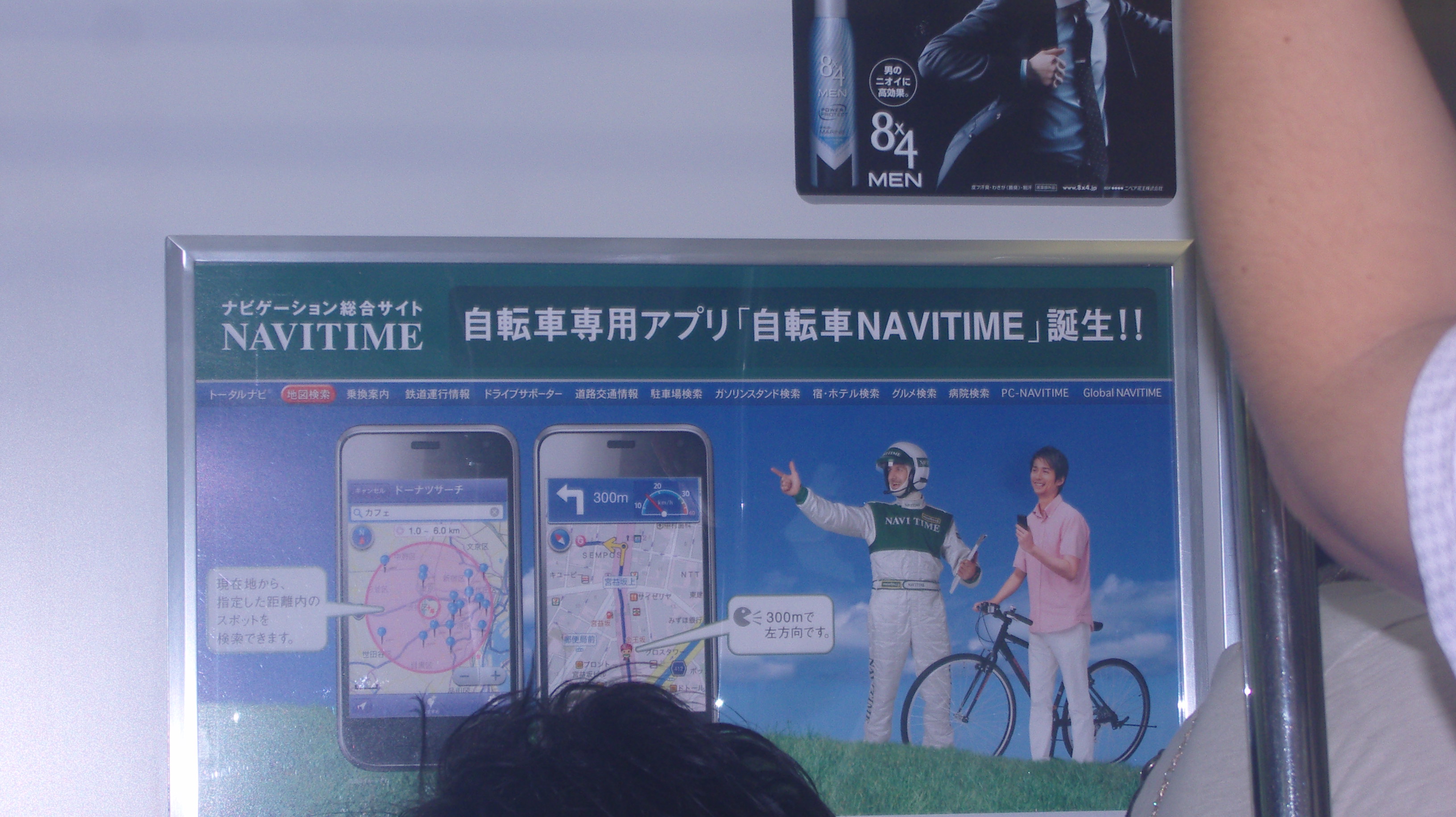
I saw an advertisement for a very innovative navigation system aimed at bicycle riders.

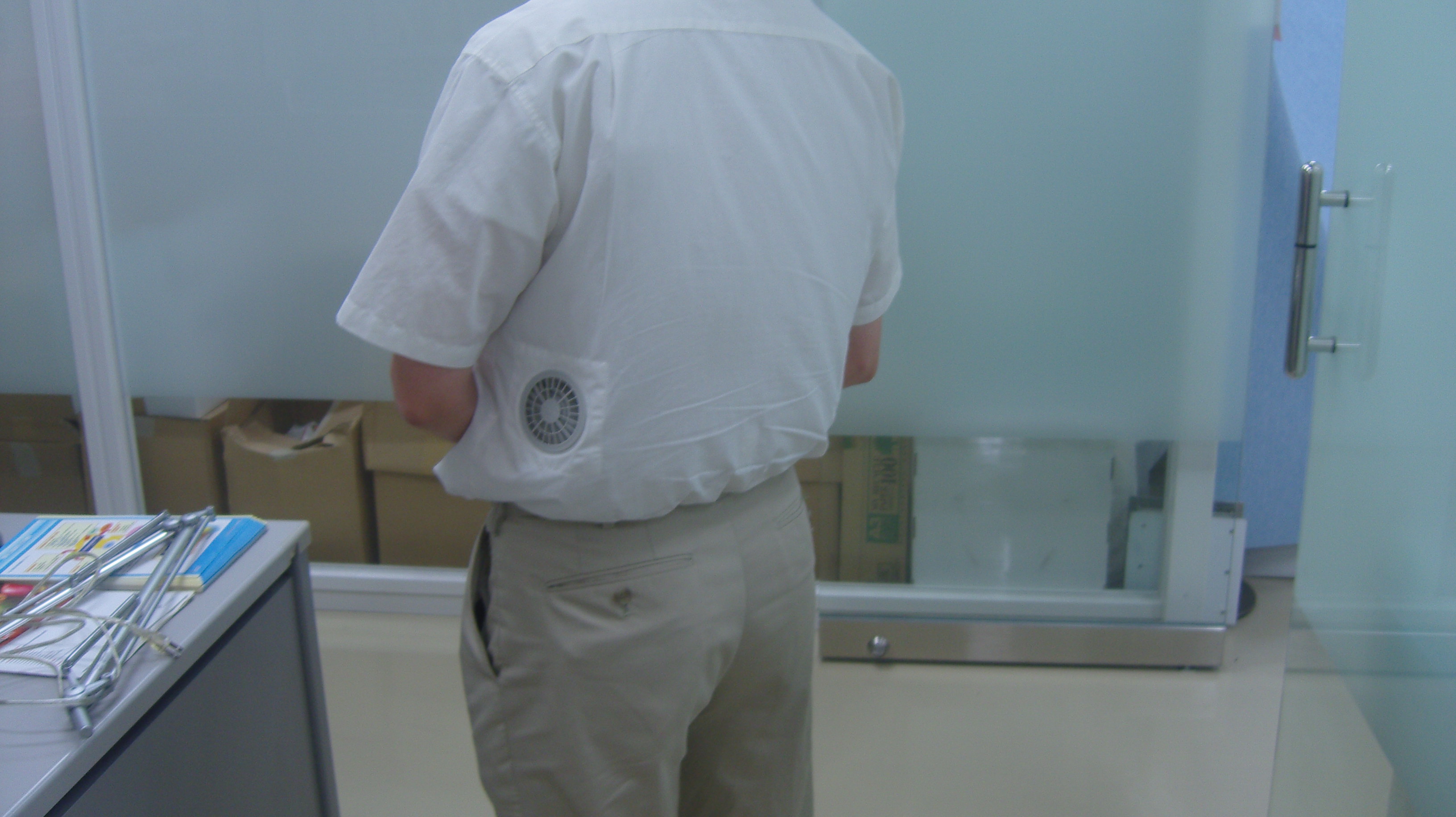
Dr. Isoshima at RIKEN was wearing a ventilated shirt that looked remarkably comfortable, with two small fans sewn in place.

In Wako there is an organic farm. This dispenser allows the local residents to sell their pumpkins to passersby.
An empty lot in the Shibuya neighborhood of Tokyo is lovingly maintained as a natural space.
A new system for navigation aimed at bicycle riders
Here is a ventilated shirt that my friend Dr. Isoshima at RIKEN was wearing the other day.

Alliance for Environmental Technologies? What do you think?

I wrote this article for possible publication in Nautilus Institute’s NAPSNET newsletter about three months ago. Several individuals who read the manuscript, however, noted that my understanding of the technologies involved was mistaken and also suggested that I had not properly assessed the accident because of rather unreliable materials available on the internet.

I decided not to publish the article, but I do think the concept of an alliance for cooperation in the development of technologies to address environmental threats is worthy of consideration. I am placing the manuscript here in the hope that I may solicit the opinions of everyone.

Read more

Using Art to Build a Bridge to Post-Tsunami Japan


The Fortune Cookies Made by children in Korea

One of the most innovative programs for education that I have found in Seoul  is the “Kids’ Atelier” (어린이 예술 공방) at the Paik Hae Young Gallery in Itaewon. I wrote an article about their excellent programs in the latest edition of Seoul Magazine. This remarkable series of art classes for children creates a total environment in which children learn not only to create art, but also and many other issues in society. Every Saturday, the children gather for a new project with a distinct theme and purpose. The entire space of the house is open to visitors.  The garden, the artwork, the café can be explored by children and parents. The parents who come along with their children can sit in the attractive café and engage in their own intellectual discussions on art, or other topics, with the director and others who stop by. In a sense it is a program for children as part of a “salon culture” that involves everyone.For a detailed description of the Paik Hae Young Gallery, see “Unique Cultural Space Thrives in Itaewon”

Paik Hae Young Gallery recently held a remarkable art project intended to increase exchange with the children in Northeast Japan impacted by the recent tsunami and nuclear disaster. Through a student at Kyung Hee University from Sendai, Honda Nika, I managed to get in touch with an elementary school in Higashi Matsushima, a town half destroyed by the tsunami. Nika’s father made a special effort to introduce me to the principle, Mr. Kudo, and we arranged for a unique artistic exchange: Fortune cookies!

Read more

On Murakami Haruki

A short essay about the time I spent with Murakami Haruki back in the summer of 1993.


On Murakami Haruki


The summer of 1993 followed the very intense period of study that made up my first year at Harvard-a period of readjusting to American society and also American academics. I was selected for a small research grant that allowed me to concentrate on reading in depth the Tale of Genji, the grade medieval Japanese novel, with my advisor for Japanese literature Edwin Cranston. Oki Yasushi, a professor of Chinese literature from University of Tokyo whose classes I had taken previously, was also visiting Harvard. It was a remarkable summer indeed as I remember an unending series of intense discussions about literature and history contemporary society and politics with fellow students and faculty. Harvard over the summer was different than during the year. Graduate ` major institutions around the world poured in.

Read more

Translation of Murakami Haruki’s Speech at Barcelona in Japan Focus

I watched a video of Murakami Haruki’s Barcelona speech about the Tsunami and Fukushima nuclear accident on the internet about two days after its release. I was struck by this effort by a writer who is best known for his studied distance to engage in the contemporary world in an extremely concrete manner. I felt the speech was so significant that it deserved to be translated into English. I did the translation within a few days and passed it on to John Treat, a professor of Japanese literature at Yale University whom I had the chance to host here in Korea recently. After I discussed the translation a bit with John, I passed it on to my friend Mark Seldon, editor of Japan Focus, suggesting we should publish it in Japan Focus for a wider audience.

Mark recommended that I take the translation down from my website and prepare an authoritative version. I contacted Murakami Haruki’s office, through the introduction of Jay Rubin at Harvard—who is one of Murakami’s primary translators—and discussed the translations and Murakami’s publisher’s policy. This translation is by no means an “authorized edition” but in fact I talked with the office at length and sent the material by email to Murakami Haruki. There are several other versions out there, but I think this one is most accurate.

I spent quite a bit of time with Murakami Haruki back in the summer of 1994 when he was on sabbatical at Harvard for one year. We spent a bit of time together as I describe in my essay “On Murakami Haruki.”

Japan Focus

July 18, 2011

Speaking as an Unrealistic Dreamer

Speech by Murakami Haruki on the occasion of receiving the International Catalunya Prize

Translated by Emanuel Pastreich  


I last visited Barcelona two years ago in the spring. An amazing number of readers gathered when I held a book signing. Long lines formed and I still could not finish signing all the books even after one and a half hours. The reason it took so long is that so many of the female readers wanted to kiss me. That was time consuming.

I have held book signings in many cities around the world, but Barcelona was the only place in the world where the female readers asked for kisses. That one example is sufficient evidence of just what a fantastic city Barcelona is. And what good fortune it is that I have another chance to return to this city whose beautiful streets are resplendent with refined culture and a long history.

Murakami Haruki

But, unfortunately, I am not going to talk about kisses today. I must talk about something a bit more serious.

Read more

“The Fukushima Disaster Opens New Prospects for Cooperation in Northeast Asia” (Markku Heiskanen)

This article by Asia Institute Senior Associate Markku Heiskanen on NAPSNET sums up well many of the topics we have been discussing at Asia Institute and dovetails well with my upcoming article.

The Fukushima Disaster Opens New Prospects for Cooperation in Northeast Asia
By James Goodby & Markku Heiskanen

June 28, 2011

I. Introduction

James Goodby, former American ambassador to Finland and Markku Heiskanen, former Finnish diplomat and Senior Associate of The Asia Institute in Daejeon, South Korea, write that “[t]he nuclear disaster at the Fukushima nuclear plant in Japan has dramatically demonstrated the interdependence between the countries of Northeast Asia. This crisis poses a palpable threat to Northeast Asia, and is not an issue of military conflict, but rather of environmental pollution, as radioactive materials spread across national frontiers. It is an example of a number of transnational issues that can be addressed effectively only through cooperative actions.”

The views expressed in this article are those of the author and do not necessarily reflect the official policy or position of the Nautilus Institute. Readers should note that Nautilus seeks a diversity of views and opinions on significant topics in order to identify common ground.

II. Article by James Goodby & Markku Heiskanen

-The Fukushima Disaster Opens New Prospects for Cooperation in Northeast Asia
By James Goodby & Markku Heiskanen

Read this report online at:
http://www.nautilus.org/publications/essays/napsnet/forum/Goodby_Heiskanen_Fukushima%20

The nuclear disaster at the Fukushima nuclear plant in Japan has dramatically demonstrated the interdependence between the countries of Northeast Asia. This crisis poses a palpable threat to Northeast Asia, and is not an issue of military conflict, but rather of environmental pollution as radioactive materials spread across national frontiers. It is an example of a number of transnational issues that can be addressed effectively only through cooperative actions. It is hard to find any positive thing to be said about this disaster except to express the hope that this common threat can rally Northeast Asia to recognize that degradation of the environment is an immediate threat. If it can lead the nations of Northeast Asia to divert more of their budgets to non-traditional threats, it could be a unique gift presented by this crisis.

The massive release of radioactive material is a serious threat with implications for all of us and requires renewed examination of nuclear safety globally, not just in Japan.

The countries in Northeast Asia are heavily dependent on nuclear power. China already has 13 power reactors and 25 more are being built. Others are planned. In Japan there are 50 main reactors. There are 21 nuclear reactors in South Korea. North Korea has one. Given this concentration of reactors in areas where earthquakes and other natural disasters have happened fairly frequently, it would be prudent to consider whether additional safety measures are called for.

The full support of the entire international community is needed to address nuclear reactor safety. Top experts from around the world should be mobilized to discuss how radioactivity from damaged reactors can best be contained. International research teams should work around the clock to develop new systems to prevent and respond to similar crises.

We need full funding support to quickly make the solutions proposed viable. There are two possible avenues for progress in this area: one is the Nuclear Security Summit scheduled to meet in Seoul in 2012; the other is to proceed within the framework offered by the Six-party Talks.

This process should and can be started without delay in Northeast Asia. The six-party talks, aimed since 2003 at solving the North Korean nuclear issue, offers a ready-made forum for such a regional conference in Northeast Asia with the participation of Japan, China, North and South Korea, Russia and the United States. There is a specific working group on economy and energy ready to tackle this issue. European expertise could be utilized in the process. If those talks are not reinstated soon, a forum might be found within the framework of preparatory work for the Seoul Nuclear Security Summit.

Although the main target in the talks should be urgent development of a regional energy safety system, in the longer run what should emerge is a fully developed regional energy system. The ultimate goal should be a Northeast Asia Energy Development Organization including all the countries of the region. This proposal, and how to realize it, could be discussed in the run-up to the Seoul Summit. The President of South Korea already has suggested that North Korea participate in the Seoul Conference. It would be natural to invite North Korean energy experts to participate in the preparatory talks if an item such as is suggested here were on the agenda.

A version of such an organization was established in 1995 as the Korean Peninsula Energy Development Organization (KEDO), in which the EU also participated, to fulfill the 1994 US-DPRK Agreed Framework. It was founded by Japan, South Korea and the United States. KEDO was terminated in 2006 after evidence of uranium enrichment activities in North Korea was revealed. Finland was the first general member of KEDO.
A new and more comprehensive energy organization should include China, Russia, Japan, the United States, the ROK and the DPRK. The EU might also participate in some fashion. The mandate should be to promote energy security and safety in Northeast Asia and contribute to economic development. It should have a standing secretariat; broad oversight should be provided by a Council of Ministers. The European Atomic Energy Community’s charter suggests some relevant missions.

The provision of nuclear fuel services could be multilateralized within this framework, allowing the sharing of both North and South Korea in the ownership and the output of one or more nuclear fuel service facilities in China, Russia, and Japan. The condition must be, of course, that the DPRK re-commits to the Non-Proliferation Treaty (NPT), including its status as a non-nuclear weapon state. And that means a confirmed dismantling of its nuclear weapons program.

The European post-war experience of the European Coal and Steel Community (ECSC), founded in 1951, has lessons which may be useful in the present situation. The insight of French Foreign Minister Robert Schuman and his intellectual collaborator, Jean Monnet, was that if Franco-German production of coal and steel were placed under a common High Authority, it would plant the seeds of peace between Germany and France. Today’s European Union traces its origins to Schuman’s declaration of May 9, 1950, celebrated today as “Europe Day”.

We can turn the disaster in Japan into a process towards a new era of peace and security in Northeast Asia.

http://www.nautilus.org/publications/essays/napsnet/forum/Goodby_Heiskanen_Fukushima%20

TEPCO’s comment on Fukushima

The Tokyo Electric Power Company (TEPCO) had this to say about Fukushima:

Our deepest sorrows go to those people and their families who are suffering from the Tohoku-Chihou-Taiheiyo-Oki Earthquake and tsunami that struck our nation on March 11th.

Furthermore, I deeply apologize for the distress and inconvenience to those residing in the surrounding areas of the power station, Fukushima Prefecture as well as broader society due to the extensive damage our facilities sustained at Fukushima Daiichi Nuclear Power Station and the rolling blackouts. We had little choice but to implement such measures on account of the tight supply-demand balance of electricity.

Read more

福島原発以降の再建

福島原発以降の再建というのは人間がロケットにのって月に行くのと同じようなことだと思います。私たちがまず大胆な計画を建てて、あらゆる技術をその目的に適用するために集中してがんばれば、望みが生じます。いまは不可能だと思われることでも、技術融合を通してそのうち可能になると思います。もしかしたら思ったよりはやく解決方法が見つかるかもしれません。でも大きなヴィジョンがないかぎり、なかなか進まないでしょう。

例えば今のところは放射能に汚染された土地は100年や200年は使えないだろうと常識的に考えられています。福島原発あたりの農地がどうなるかまだはっきり論じられていませんが、すぐにはつかえません。でも全世界の技術をあわせていろんな角度からその問題に取り組めば、方法があるかもしれません。ちかごろの技術は先例のない速さで進んでいるので、もしかして融合的な方法を取り入れれば、モットモット早く解決できるかもしれません。生命工学とナノ工学をあわせれば土壌を清瀞する技術を新しく開発できるかもしれません。ただし、国際的な共同研究が絶対必要であり、その研究はお金儲けのためではありません。

農業も早く復興できるかもしれません。いわゆる垂直農業があります。完全に保護されている室内で水と資源を永遠に再利用する形で運営される農業ですが、今のところは本格的に始まっていません。もしかしたら、垂直農業施設に放射能保護設備をつければ、原発の付近でも農業ができるかもしれません。同じように、室内漁業も可能かもしれません。そのために想像力と意志と技術をあわせて乗り出すしかありません。

そしてロボット開発のことですが、今のところ放射線が多い環境で作業できるロボットは多くありません。放射線に強い電子回路が特に無いからです。ゆっくり測定できるロボットは今のところ福島で活動しているそうですが、土を掘ったり、建物と囲いを立てたりできる対放射装置のあるロボットはまだまだありません。でも集中して努力すれば開発可能かもしれないし、電子回路ではなくその他の方法でロボットを操ることもありうることです。

もしも国際技術開発連合を組んで福島原発内で活動できるロボット・プロトタイプを開発しようと決心するなら、うまくいけば、技術融合を使ってそのような特殊ロボットの開発が思ったより早くできるかもしれません。なぜかというと単純な機械工学の問題ではないからです。様々な分野の知識と理解を合わせて進めるべきプロジェクトです。

最後ではないですが、原発の六面:上下南北東西に放射能物質を防ぐ材料の囲いを設置して、土にも海にも淡水にも汚れる恐れがない完璧な離隔システムを開発すればいいと思います。今のところは夢みたいな話ですが、ナノ工学と先端ロボット技術を合わせれば、5年以内にそのような完璧な隔離材料で作られた囲いが可能かも知れません。モットはやくできるかもしれません。

今のところは具体的な提案が難しいかもしれませんが、国際社会の多くの協力を得て一緒にがんばれば、解決できるかもしれません。