One of the most innovative programs for education that I have found in Seoul is the “Kids’ Atelier” (어린이 예술 공방) at the Paik Hae Young Gallery in Itaewon. I wrote an article about their excellent programs in the latest edition of Seoul Magazine. This remarkable series of art classes for children creates a total environment in which children learn not only to create art, but also and many other issues in society. Every Saturday, the children gather for a new project with a distinct theme and purpose. The entire space of the house is open to visitors. The garden, the artwork, the café can be explored by children and parents. The parents who come along with their children can sit in the attractive café and engage in their own intellectual discussions on art, or other topics, with the director and others who stop by. In a sense it is a program for children as part of a “salon culture” that involves everyone.For a detailed description of the Paik Hae Young Gallery, see “Unique Cultural Space Thrives in Itaewon”
Paik Hae Young Gallery recently held a remarkable art project intended to increase exchange with the children in Northeast Japan impacted by the recent tsunami and nuclear disaster. Through a student at Kyung Hee University from Sendai, Honda Nika, I managed to get in touch with an elementary school in Higashi Matsushima, a town half destroyed by the tsunami. Nika’s father made a special effort to introduce me to the principle, Mr. Kudo, and we arranged for a unique artistic exchange: Fortune cookies!
The fortune cookie was first invented in Kyoto, Japan. It is a simple rolled cracker with a hollow space inside that serves to transmit words of wisdom, or a prophecy of good fortune, Over the years, fortune cookies have become part of global culture, readily identifiable cookies that carry messages of love, prayers, and good luck wishes. The were introduced to the United States and the San Francisco World’s Fair in 1915. Today, many associate fortune cookies with Chinese food.
The children of the Kids’ Atelier at Paik Hae Young Gallery in Seoul made a special batch of fortune cookies for the children of Higashi Yamoto Elementary school to convey their best wishes and their desire to be international friends.
Each fortune cookies has a message, or drawing by a child on the back. Each fortune cookie was then folded and placed in a special box. These were not edible fortune cookies, but rather flexible plastic that can be folded into a fortune cookie easily.
As a note from the Paik Gallery accompanying the art states, “These fortune cookies symbolize our message of hope, love and strength. We hope that this unusual art installation will bring pleasure to the children of Yamoto Higashi elementary school. We want to be their friends, to be with them and to wish them well. The cookies are decorated by children of different backgrounds, from around the world, who live in Seoul. We wish the children of Yamoto Higashi elementary school a most colorful and happy life!”
Both my children, Benjamin and Rachel, are enrolled in the Saturday art class at the “Kids Atelier.” The classes use both English and Korean. English is a natural part of the discussion surrounding the making of works of art, but it is not forced, or pressured.
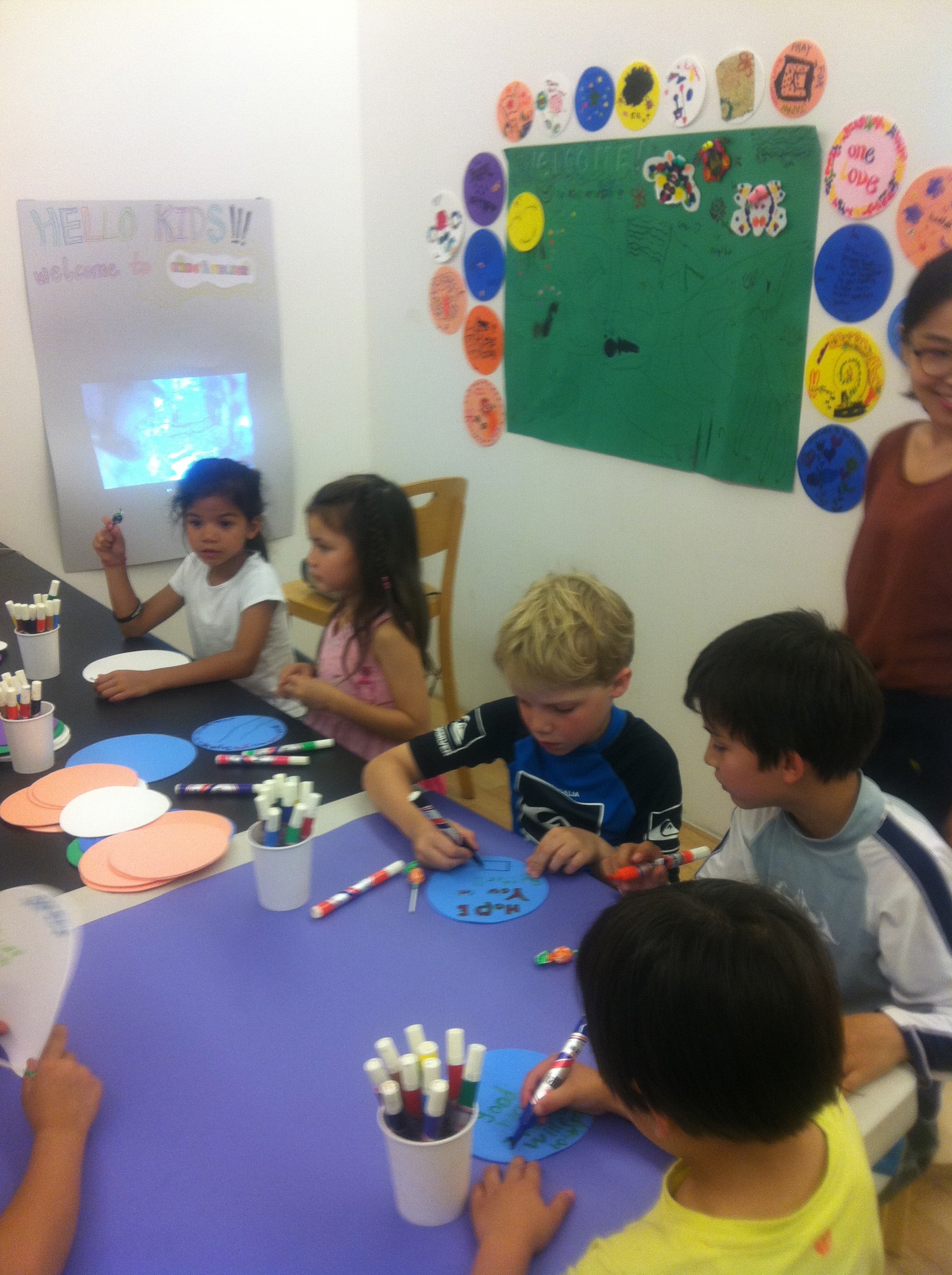
Above all, the effort is cooperative. The children are encouraged to work together and their individual pieces become part of a larger work in the end. There is no competition in the classroom and the goal is individual creativity within the context of a larger collective project.
The art work is meant as a means to create a moment of good will shared with the children whose lives have been so disrupted since the terrible tsunami. This ethical aspect to art, creation and learning at the gallery is what distinguishes it from other learning environments. Rather than a commercial drive to create competition, and thereby fuel spending on education, the classes inspire cooperation and a desire to create a better world. In a sense the Paik Gallery art classes run counter to the highly competitive world of education for children. The Paik Gallery used art to bring people together.
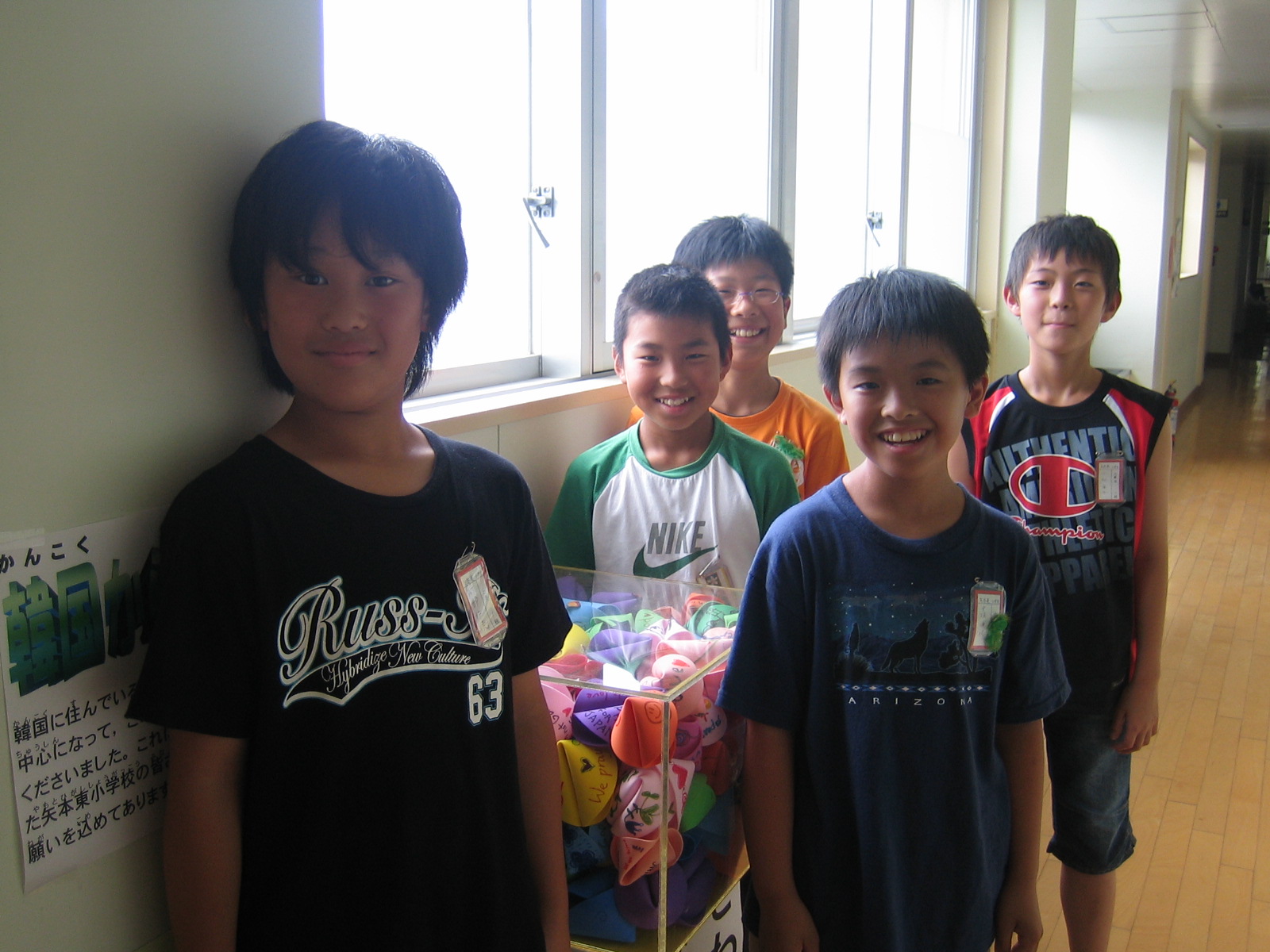
We received the photograph below from the Yamato Higashi Elementary School showing some of the students with the art work. It was a rare moment when children manage to communicate with children far away. Language was no barrier.
I visited Higashi Matsushima and neighboring Ishinomaki last week and met with the staff of the Yamato HIgashi Elementary School. They have made a concerted effort to create a new world for their students and I am honored to have been involved.
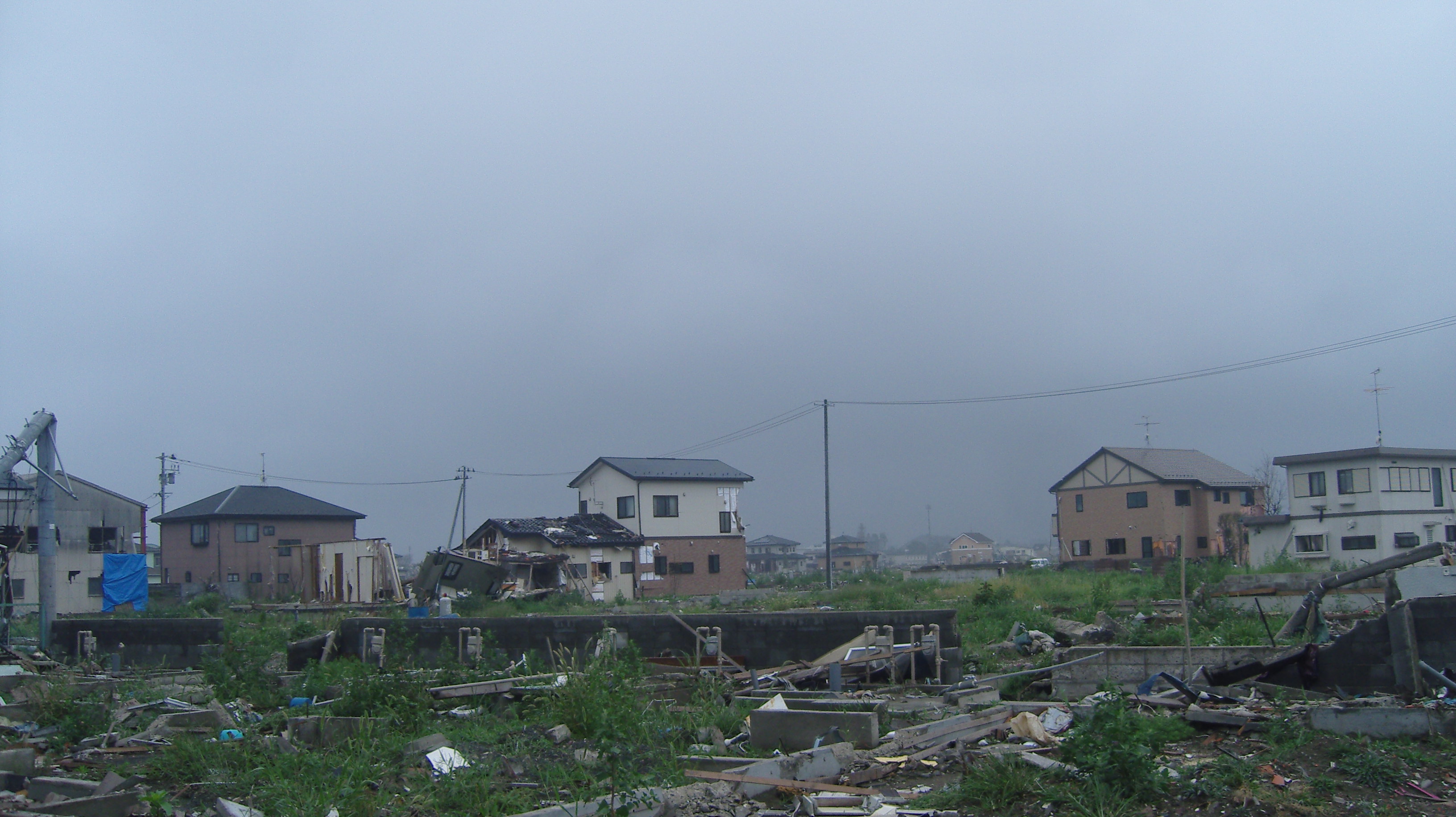
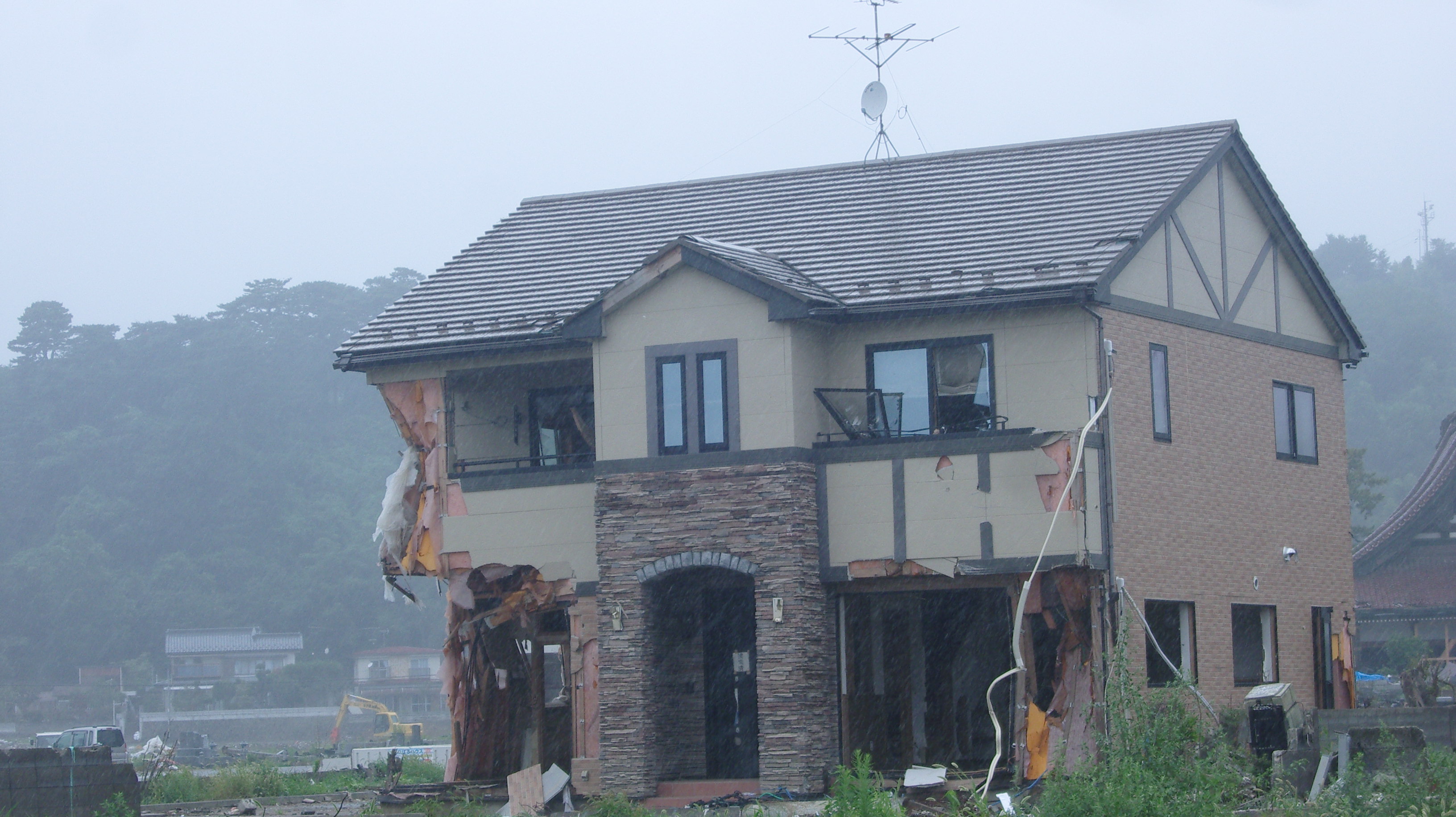
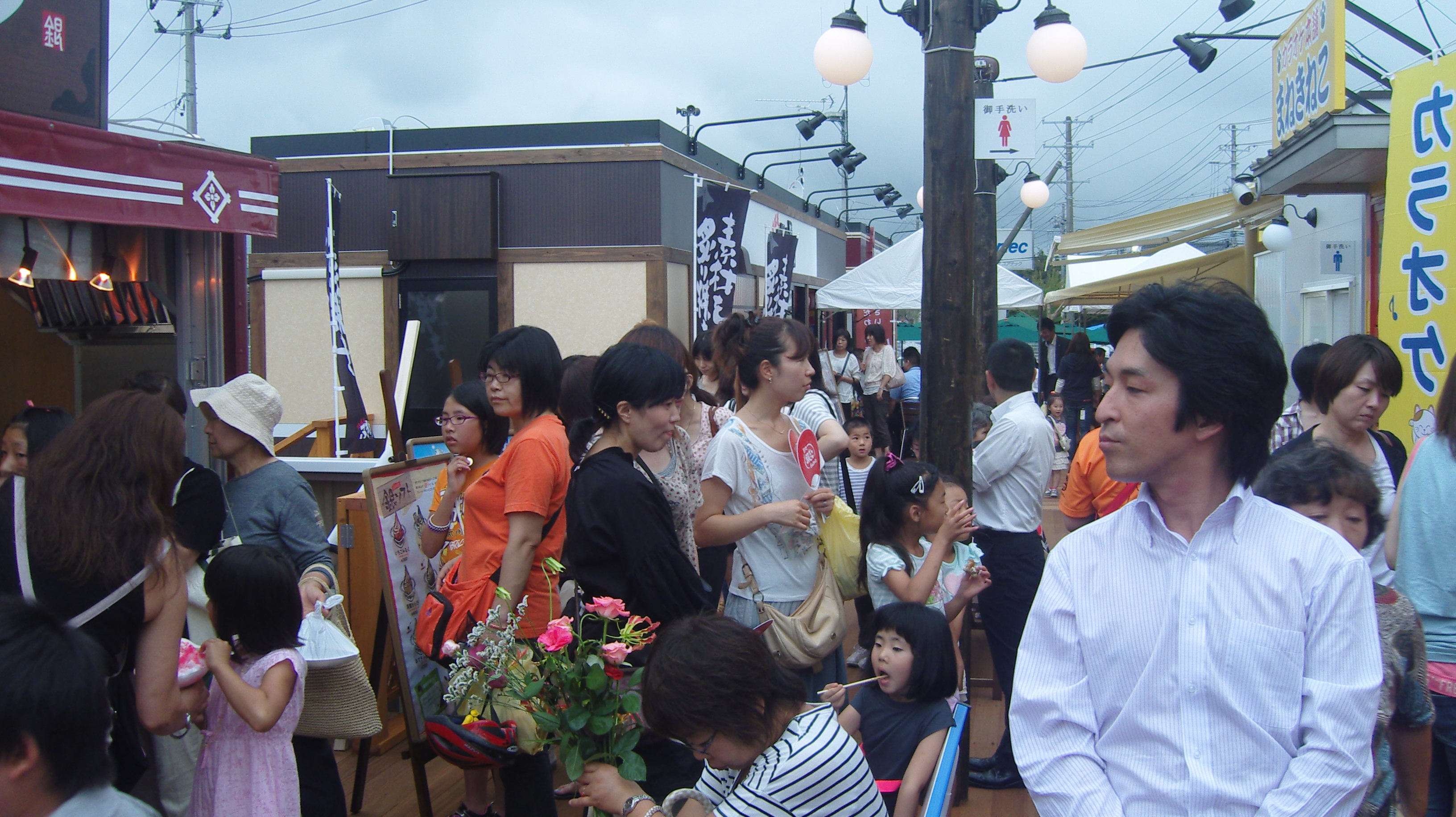
I had a chance to see the terrible, yet un-repaired devastation of the tsunami in Ishinomaki and took these photos as a record. I also managed to see some of the new shops that have recently opened in Ishinomaki as the town starts to rebuild.