The Frankenstein Alliance: China and the United States in the 21st Century

This is an article I originally wrote for Foreign Policy in Focus.  It was originally published on March 9, 2007, and can be found here.

If you read U.S. newspapers through a security lens, you might get the impression that Washington is well on its way to containing China economically, politically and militarily. China is portrayed in the media as America’s enemy of choice: the 2006 Quadrennial Defense Report states explicitly that “of the major and emerging powers, China has the greatest potential to compete militarily with the United States and field disruptive military technologies that could over time offset traditional U.S. military advantages absent U.S. counter-strategies.”

In response the United States is working closely with Japan, Australia, New Zealand, South Korea and Indonesia to develop closer bilateral military relationships. It has concluded a nuclear deal with India, remains close to Pakistan, and has cultivated strategic alliances in Central Asia with China’s neighbors. When former Secretary of Defense Rumsfeld held a meeting in June 2006 with Mongolian Defense Minister Mishigiyn Sonompil one might have thought the United States had just about surrounded China. More recently, in October, the U.S. Missile Defense Agency touted a successful integrated ground test as the first step in a system that will counter the supposed military modernization of China that so threatens American security. And China tested an anti-satellite missile in response that caused great concern all around.

Read more

The Washington Debate on “Security” and “The Ripple Effect”

When I worked in Washington D.C., from 2005 to 2007, I made repeated efforts to organize a conference, even just a small seminar, to discuss the serious security threats resulting from the shortage of water and the degradation of the environment.  I remember vividly the complete lack of interest of certain  individuals in the policy world when I brought up the topic of “non-traditional threats.”  Somehow the greatest problem we face just didn’t seem that important. Better to have another seminar on  North Korea’s nuclear program or the Chiang Mai Initiative.

I had a long discussion with a well-known think tank figure back in 2006 during which I pleaded for support. The seminar, which would have been rather small, was entitled,  “Water: Worth more than Gold and Oil Combined.” The individual in question responded that the topic was “amusing” and maybe could be considered at “some future date.” I was appalled.

With the help of Professor David Steinberg of Georgetown University and  Col.  Larry Wilkerson of the College of  William and Mary (former Chief of Staff for Secretary of State Colin Powell) I  put together a proposal for a conference at Georgetown University on “non-traditional threats.”

The rough proposal is available below.

Non-Traditional Security ,Threats Conference Proposal 2005

We did not get any funding whatsoever. I told David Steinberg that, “This is simply wrong. Do these people think that we will be able to respond to climate change or water shortages with aircraft carriers?”

David offered me some words of wisdom about the way things really work. But I was learning that a lot of people in national security are not interested in national security.

Later the New America Foundation put together a Smart Strategy Initiative under the leadership of Patrick Doherty. Larry Wilkerson has joined that initiative and tells me there are some very meaningful discussions taking place. Doherty, whom I do not know personally, writes:

“Twenty years have passed since the Cold War grand strategy of containment accomplished its objective. After four presidents and ten Congresses, Washington has yet to articulate a formula capable of promoting the general welfare and providing for the common defense–for either ourselves or our posterity. Today our economy is hollowed out, our military is over-extended and the global ecosystem is fast approaching depletion.”

See:

http://smartstrategy.newamerica.net/

The publication of Alex Prud-Homme’s study The Ripple Effect: The Fate of Fresh Water in the Twenty-First Century this month has historic significance. Here is a book that systematically argues that this small detail of mundane life, drinkable water, is shaping up to be the security issue of the century. And the problems we will face at home and abroad cannot be easily addressed by military action.

Prud’Homme notes,

“By 2000 some 1.2 billion people around the world lacked safe drinking water, and that by 2025 as many as 3.4 billion people will face water scarcity, accord- ing to the UN. What’s more, as the global population rises from 6.8 billion in 2010 to nearly 9 billion by 2050, and climate change disrupts familiar weather patterns, reliable supplies of freshwater will become increasingly threatened. In Australia and Spain, record droughts have led to critical water shortages; in China rampant pollution has led to health problems and environmental degradation; in Africa tensions over water supplies have led to conflict; and in Central America the privatization of water has led to suffering and violence.”

His argument is unrelenting:

“In the meantime, human thirst began to outstrip the ecosystem’s ability to supply clean water in a sustainable way. By 2008, the world’s con- sumption of water was doubling every twenty years, which is more than twice the rate of population growth. By 2000, people had used or altered virtually every accessible supply of freshwater. Some of the world’s mighti- est rivers—including the Rio Grande and the Colorado—had grown so depleted that they reached the sea only in exceptionally wet years. Springs have been pumped dry. Half the world’s wetlands (the “kidneys” of the environment, which absorb rainfall, filter pollutants, and dampen the effects of storm surges) were drained or damaged, which harmed ecosystems and allowed salt water to pollute freshwater aquifers. In arid, rapidly growing Western states, such as Colorado, Texas, and California, droughts were causing havoc.”

http://www.alexprudhomme.com/books/the-ripple-effect/quality/

Feature on Emanuel’s Two books on literature in Yonhap News (in Korean)

On June 20 (2011) this article appeared in Yonhap News concerning my two recent books and my work at Kyung Hee University. A good summary of recent academic work.

연합뉴스      

YONHAP NEWS 


사람들              

People


미국인 교수가 쓴 ‘지행합일’


2011/06/20 05:34

연구실에 들어서자 ‘ㄱ’자로 배치된 책장에는 중국어, 일본어, 영어, 그리고 우리말로 된 책들이 분류돼 빼곡하게 꽂혀 있다.

바닥 한쪽에는 빨간 고무 대야에 거북이와 물고기가 있고 옆에는 명상을 위한 대자리가 깔렸다.

창가엔 여러 종류의 화초가 자라는 화분이 놓여 있고, 연구실 밖에는 토마토와 가지, 상추가 자라고 있다.

이 독특한 연구실의 주인은 경희대 교양교육 전담 기구인 ‘후마니타스 칼리지’의 융복합 프로그램 디렉터인 이만열(미국명 임마누엘 패스트라이쉬) 교수다.

미국 국적자인 그의 한국 이름은 한국인 아내와 결혼하며 장인어른이 지어줬다.

하버드대에서 동아시아언어문화학 박사 학위를 받은 이 교수의 관심사는 그의 연구실에서 풍기는 느낌 만큼이나 다양하다.

이번 학기 수업은 빠른 속도로 발전하는 과학기술이 일상생활과 문화에 어떤 영향을 미치는가를 주제로 한 내용이었고, 비정부기구(NGO)와 국제교류에도 관심이 많아 최근에는 일본 후쿠시마 재건을 위해 현지 어린이들과의 교류를 추진하고 있다.

연암 박지원의 소설을 영문으로 번역하고 소개한 ‘The Novels of Park Jiwon'(2월 출간)과 이달 말 나올 일본문학 연구서인 ‘The Observable Mundane’의 출판기념회를 앞둔 이 교수를 그의 연구실에서 만났다.

그는 “(책 출간은) 정말 오랜만에 전공과 관련된 일이다. 이제 전문성이 떨어져 앞으로 문학교수는 못할 것 같다”고 말하면서도 환하게 웃었다.

이 교수는 학부에서 중국어를 전공하고 예일대와 도쿄대에서 일본과 중국의 고전문학 연구로 석사학위를 받았다. 두 권의 책은 중국의 통속소설이 한국과 일본 문학에 어떤 영향을 끼쳤는지 연구한 박사 논문의 일부다.

이 교수는 “수호지나 금병매 같은 중국의 통속소설이 일본과 한국에 소개되면서 지식인들이 처음으로 하인과 상인, 서민에게 관심을 두게 되고 일상생활과 문화가 나타나게 된다”며 “한국에서는 박지원의 소설이 대표적”이라고 소개했다.

고등학교 때까지만 해도 과학에 관심이 많았다는 이 교수는 대학에 입학하던 1980년 초반 중국이 중요한 나라가 될 것이라는 예감에 중국어를 전공으로 택했다가 동아시아 고전문학에 빠져들었다고 한다.

일본에서 6년 동안 유학하며 주로 중국과 일본의 고전문학을 연구했고 두 나라를 비교 연구하다 보니 그 사이에 있는 한국에도 관심을 두게 됐다.

이후 연세어학당에서 한국어를 배우고 서울대 중문과에서 교환학생으로 공부하며 논문을 준비했다.

일리노이대학에서 일본문학을 강의했지만, 인문학보다 공대의 영향력이 컸던 학교의 영향으로 15년 만에 다시 과학에 관심을 두게 됐고 해당 분야에서 한국 대학과 교류하기도 했다.

또 조지워싱턴대에서 교수로 지내면서는 주미 한국대사관과 인연이 닿아 대사관이 발행하는 신문 편집장을 지냈고, 충남도지사 보좌관으로 일할 때는 충남의 국제화를 위해 조언하는 등 한국의 몇몇 지자체와도 인연을 맺었다.

대전 우송대를 거쳐 경희대로 온 이 교수는 “다른 대학들의 제안도 많이 받았지만 인문학과 봉사, 예술을 함께 하는 후마니타스 칼리지에 매력을 느꼈다”고 했다.

그는 “처음에는 토론 문화에 익숙하지 않은 한국 학생들이 수업시간에 말을 잘 하지 않아 힘들기도 했지만 지금은 많이 나아졌다”며 “항상 자극을 하면 상당히 잘한다”고 평가했다.

이 교수는 다음 학기에 자신이 번역한 박지원의 소설로 국문과에서 영어 수업을 하기로 했고 평화복지대학원 강의도 할 예정이다.

그는 “고전문학은 항상 머리에 있지만 요즘은 이 세상에 관심이 많다. 이제는 뭔가 해야 한다”며 왕양명(王陽明)의 ‘지행합일(知行合一)’을 한자로 썼다.
http://www.yonhapnews.co.kr/society/2011/06/19/0701000000AKR20110619064800004.HTML?template=3394

Emanuel’s Proposal for the “Future of Seoul” from 1997 (in Korean)

Seoul Story

metro.seoul.kr/seoulstory

The Future of Seoul (in Korean)

October, 1997


Emanuel Pastreich

I submitted this proposal for the city of Seoul back in 1997 to the City of Seoul. I recommended that Seoul be transformed into an eco city even back then, and suggested it could be a center for global governance. Many themes I have pursued later in my work can be traced back to this short essay. The essay was given official recognition and posted on the website (it is no longer there) but did not win first, second or third prize.

1997년

미래의 서울

Emanuel Pastreich (미국)

미래의 서울은 마침내 그 충분한 잠재력을 실현하게 될 민족의 생동력을 한껏 지닌 통일 한국의 번성하는 수도로 우뚝 설 뿐 아니라, 영향력과 자신감을 더해가는 동아시아 문화권의 정치 문화의 중심지로도 두각을 나타낼 것이다.

중국과 서양과 그 밖의 문화 전승들로부터 이질적인 요소들을 흡수하여 통합하면서도 고유의 문화적 정체성을 견지하는 한국인들의 독특한 능력으로 인해 서울이 대단히 융통성 있고 개방된 문화 환경을 지니게 될 것이고 전세계 사람들의 중요한 모임 장소가 될 것이다. 서울은 아시아뿐 아니라 전세계에 국제 협력과 교류의 모델이 될 것이다.

국제 문제의 중재와 경제발전 조정을 위한 국제 기구들이 성숙한 환태평양 지역을 다스리는데 대단히 중요한 역할을 할 서울에 줄지어 들어설 것이다. 이 기구들 중 가장 처음 들어설 것은 국제연합니다. 국제연합은 한국이 동아시아에서 완충 세력으로 수행할 역할을 인정하고 제네바와 뉴욕에 이어 제 3본부를 서울에 세울 것이다.

한국은 중국과 일본, 그 밖의 아시아 나라들과 많은 것을 공유하면서도 수천 년간 나름대로 독자적 문화를 유지해온 민족으로서 아시아에서 차지하고 있는 독특한 지위 때문에, 아시아 전역의 대표들이 자유롭게 만날 수 있는 중립적인 터가 된다. 한국은 중국과 일본의 역사를 얼룩지게 만든 제국주의와 팽창주의의 전통을 갖고 있지 않기 때문에, 지구촌 시대와 아시아 문화의 르네상스 시대에 비위협적 문화 세력으로서 중심 역할을 하게 될 것이다. 한때 이념과 정치적 장벽으로 단절되었던 아시아 국가들이 유럽과 비슷한 보다 긴밀한 문화 단위를 형성함에 따라, 서울이 아시아의 훌륭한 수도로 갖고 있는 역할은 더욱더 중요성을 띠게 될 것이다.

아울러 서울은 세계의 여느 도시보다 규모가 크고 활동이 왕성한 문학과 학문의 공동체로서 아시아의 지적 중심지가 될 것이다. 이미 서울은 가장 거대한 학문 공동체들 중 하나를 갖고 있으며, 그 영향력은 그저 커져 나가기만 할 것이다. 서울의 주요 대학들은 새로운 객관성을 가지고 비교적인 관점에서 아시아의 모든 전통에 접근할 동아시아문화연구를 위한 프로그램들을 갖추게 될 것이다. 한국이 오랜 세월 동안 동아시아와 맺어온 문화적 유대관계로 인해 이 과정이 용이 할 것이다. 범위를 동아시아 문학으로만 제한한 새로운 상(賞)이 서울에 생긴다면 결국 유럽 중심의 노벨문학상에 가려 오랫동안 빛을 보지 못한 동아시아 전통이 제대로 평가 받게 될 것이다. 모든 아시아 국가들의 학자들이 참여하는 동아시아 문화의 비교 연구를 위한 무수한 사업들이 서울에서 이루어질 것이다 아시아의 문학, 철학, 예술 을망라한 모든 문헌들을 실은 학문 총서들이 서울에서 편찬될 것이다. 서울은 아시아가 지적으로 세계를 주도하는데 필요한 문화적 일체성을 제공할 것이다.

장래 서울의 건축은 서울의 미래에서 가장 현저한 특징이 될 것이다. 이 도시를 국제적 수도로 만들어 줄 가장 현대적인 공법을 사용하되 한국의 전통적인 장신의 요소들을 보존함으로써, 건물들이 전체적으로 다른 도시에서 찾아볼 수 없는 조화롭고 안정된 도시 풍경을 이루어낼 것이다. 집집마다 빠짐없이 초현대식 통신서비스가 제공되는 한편, 전통 기술을 지닌 목수, 석수, 장인들도 한국의 전통에서 이끌어낸 단순하면서 우아한 멋을 간직한 가옥과 사무실의 건축 수요가 끊이지 않아 일거리가 끊이지 않을 것이다. 서울은 고전적 과거와 현재를 온전히 통합하는 아시아의 수도로서 두각을 나타낼 것이다. 서울의 한적한 거리에는 나무들과 섬세하게 설계된 건물들이 줄지어 늘어서서 기와 지붕 밑의 돌과 나무의 천연미를 간직하게 될 것이다.

서울이 지닌 비결 가운데 하나는 자연 환경과 도시 환경을 세심하게 통합하는데 있을 것이다. 서울은 세계의 여느 대도시보다 우수한 자연 환경을 갖추고 있다. 우뚝 솟아 있는 북한산 봉우리에서부터 맑은 한강물에 이르기까지, 서울의 모든 자연적 특징들이 조심스럽게 간직 될 것이다. 음용수로 사용해도 될 만큼 깨끗한 한강은 각종 물고기들로 가득할 것이며 여름에는 수영이나 유람하는데 이상적인 장소가 될 것이다. 강둑을 따라 레스토랑과 노천 카페가 줄지어 들어서 시민들이 밤늦도록 음악과 신선한 공기를 즐기게 될 것이다. 한강에서 서울 도심으로 뚫린 여러 운하를 통해 운반된 신선한 물은, 현대가 되기 전에 그랬듯이, 도시 한가운데에 시원한 오아시스를 만들어 줄 것이다.

전기 자동차의 도입으로 더 이상 외국으로부터 원유를 수입하지 않게 됨으로써 서울은 동아시의 여느 도시보다 공기가 맑아질 것이고, 도시 계획의 모델이 될 것이다. 서울의 수정같이 맑은 공기가 완공된 경복궁 너머에 아스라이 펼쳐진 사들의 경치를 더욱 황홀하게 만들 것이다. 종로 대로를 따라 양쪽으로 줄지어 선 사무실 건물들이 고거풍스런 궁궐과 조화를 이루도록 한국의 전통 양식으로 재건축될 것이다. 이면 도로에는 서점들과 미술전시관들과 박물관들이 빼곡히 들어설 것이다. 양식(樣式)의 통일성으로 서울은 세심한 도시 계획으로 건설된 파리나 워싱턴 특별구와 견줄 수 있는 수도가 될 것이다.

시원한 안뜰과 전통적인 선조(線條) 세공으로 장식한 현관문을 지닌 한국의 가옥 안에는, 세련된 현대식 사회가 살아서 움직이고 있다. 그러나 현대 컴퓨터 공학은 가정생활과 일을 훨씬 더 폭넓게 통합할 것이고, 일터로 통근할 필요가 없어지므로 한국의 전통적 가정을 더욱 강하게 만들 것이다. 더 이상 일과 가정생활이 상충되지 않을 것이다. 재택근무를 할 수 이는 부모들은 자녀들에게 전통적 가치관과 기본 교육을 직접 가르칠 수 있게 될 것이다. 유치원부터 대학에 이르는 교육은 배움을 세계와 사회에 대한 이해와 개인 역량의 성장의 일환으로써 강조할 것이다. 배움을 자기 수련으로 본 한국의 전통이 개인의 교육 이력보다 개인의 학문적, 도덕적 성취도를 더 중시하는, 한국 현대 교육 체계의 기초를 형성할 것이다. 최첨단의 기술들로 인해 전통적 의미에서의 느긋하고 여유있는 한국의 수도로 만들 수 있을 것이다.

서울은 경기가 활발한 도시일 뿐 아니라 박물관, 극장, 카페, 출판사가 좋은 풍경을 이루어내는 도시가 될 것이다. 아시아의 여느 수도도 이룩하지 못한 문화 생활을 누리게 될 것이고, 뉴욕과 파리와 어깨를 나란히 하게 될 것이다. 한국 문화의 고요함과 연속성이 최첨단 기술과 조화를 이루어 한국의 서울을 아시아의 ‘소울(soul, 영혼)’로 만들 것이다.

The Balancer: Roh Moo-hyun’s Vision of Korean Politics and the Future of Northeast Asia

Here is an article I originally wrote for Japan Focus back in August, 2005.  The article can still be viewed on their web site.

The President of the Republic of Korea is unique as a politician in the media age, both in embracing the potential of the Internet and refusing to pander to the sound bite. He spends hours on-line each week promoting his vision of e-government. The website of the Cheong Wa Dae presidential residence, the Korean equivalent of the White House, features a picture of Roh typing away furiously at his laptop. Roh, who has authored a biography of Abraham Lincoln, on whom he models himself, and like Lincoln, crafts speeches of great intellectual complexity. Roh also sees himself as the leader of a nation divided between North and South, and fragmented within. He works on the assumption that concepts and ideals can transform a society.

Moreover, Roh’s lack of concern about criticism or bad press is remarkable. Repeatedly he has demonstrated that he is perfectly willing to accept blame, even risk his tenure in office, in the effort to implement his policies. Since his rise from relative obscurity to win in the presidential election on December 19, 2002, Roh has encountered unprecedented resistance within Korea from entrenched factions that see his attempts to transform the Korean government as a threat, direct or indirect. He has stepped on many toes in his pursuit of an ideal of new Korea. Although his selflessness has earned the respect of many, he has often failed to speak in a language that is easily grasped by corporate figures, bureaucrats and local politicians accustomed to a far more venal political tradition.

Read more

June 30 Reception for the Publication of Two Books by SNU

Publication Reception 출판 기념회

Reception commemorating the release of two books from

Seoul National University Press written by Emanuel Pastreich (이만열 교수님)

of  Kyung Hee University’s Humanitas College.

The Novels of Park Jiwon: Translations of Overlooked Worlds

&

The Observable Mundane: Vernacular Chinese and the Emergence of a Literary Discourse on Popular Narrative in Edo


Time:  June 30th Thursday, 5pm–7pm

(초대일시: 6월 30일 목요일, 오후 5시-7시)


Place:  PAIK HAE YOUNG GALLERY


PAIK HAE YOUNG GALLERY

101-40 Itaewon, 1-Dong

Yongsan-Gu, Seoul 140-201

T. 82-2-796-9347  F. 82-2-796-9348

paikhy@paikhygallery.com

www.paikhygallery.com

Directions from Itaewon Subway Station(line 6) Exit #2
Walk toward till you see the Fire Station across and turn left at the Chosun Antique.

Walk up to the hill about 5 mins to the Grand Hyatt Hotel direction.

Follow the yellow line and you will see the white building of Paik Hae Young Gallery.

SEE ATTACHMENT for details and MAP 

SNU PRESS RECEPTION INVITATION

Visit to Beckman Institute at University of Illinois & West Campus at Yale University

I visited University of Illinois, Urbana-Champaign and Yale University with Eugene Pak, director for research and development at Seoul National University AICT (Advanced Institutes of Convergence Technology) at the end of May (2011).

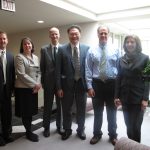
In the first picture, we pose with  Professor Scott Stobel, Vice President for West Campus at Yale University. Professor Stobel took time to show us the very impressive facilities at West Campus and to describe such new innovations as the Biodesign Institute. When Bayer decided to sell its primary research center in North America, Yale had the foresight to purchase it, and, in effect, double to size of its campus. We also toured the Yale Medical School.

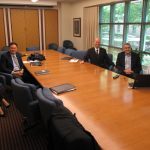
The second photo is of a presentation at the Beckman Institute at University of Illinois, Urbana-Champaign, by Professor Kevin Kim. Professor Kim  introduced his work on drug delivery systems. The Director of the Beckman Institute, Dr. Art Kramer, also met with us to discuss future cooperation with Korea in convergence technology. I had a chance to see several close friends at University of Illinois. Also included in the picture are the associate dean of Electrical Engineering Bruce Vojak, and researcher Soo Choi.

Harnessing Energy, Korea’s Future

This article I originally wrote for the JoongAng Daily in 2008.  They published it on June 12.

We can certainly empathize with the desire of young Koreans to actively participate in the political process and address the serious problems resulting from profound changes in the global economy. Nevertheless, there is a danger that the Koreans who filled the streets with their protests against the import of American beef are being distracted from a far more serious threat to Korea’s well-being. Let us urge concerned Koreans to focus their energy on the problem of Korea’s economic survival in an age of high energy costs.

Korea, a nation without natural resources whose economy is built around exports, will find it far hard to compete if oil reaches $200 a barrel. Moreover, Korea’s logistics system, and much of its public transportation, is based on the American model: highways and automobile transportation are at the center while regional trains and energy efficient buses are almost non-existent. We are witnessing just the first signs of a serious dislocation in Korean society that will increase with the cost of petroleum.

Read more

Driven by Moore’s Law

On December 13, 2010, I participated in a relay interview on Korea Business Centeral.  This was an interesting experience for me as the entire process was done online.  The original interview can be found on the KBC web site.  I have reprinted it here.

Vince Rubino: I have heard you have a bit of experience in Asia, stretching back to the 1980’s, can you tell us a little about your history here?

Emanuel  Pastreich: Well there is a lot I could say about myself and Asia. I started at Yale in 1983 and was intrigued by China because I went to Lowell High School in San Francisco. That high school was about 75% Asian, so I was sometimes the only Caucasian in the classe. When I arrived at Yale, I got it in my head that in some future age Americans would have to read and write Chinese because the world will have changing radically. I wanted to get it right. So I tried to teach myself Chinese day and night.

I went to Taiwan for my junior year, and then after graduating I moved on to Japan where I eventually received my MA from University of Tokyo before returning to the US in 1992. What is perhaps unusual about my work in Taiwan and Japan is that I did all my classes and papers in Chinese and Japanese respectively. I wrote a 250 page MA thesis in Japanese, for example. It was required, but of course I chose to enter a program that required me to write such a thesis. Doing my work in the original language was very important to me. And I recommend that anyone who takes Asia seriously should enter a degree program that requires him to write in the native language.

Vincent Rubino: You recently published a book here in Korea, isn’t that right?

Emanuel  Pastreich: I have two books coming out from Seoul National University Press next month.

Vincent Rubino: Tell us about the two books.

Emanuel Pastreich: One is a collection of translations of novels of the 18th century Korean novelist Bak Jiweon and the other is a study of Chinese vernacular novels and their impact in Japan in the 18th and 19th centuries. Both works are based on my previous work as a professor of comparative Asian literature while at University of Illinois, Urbana-Champaign.

Vincent Rubino: What language are these particular works published in?

Emanuel  Pastreich: Both books are in English. Seoul National University is making a serious effort to enter English language publishing these days.  I write in Korean as well, but primarily articles.

Vincent Rubino: Speaking of Korean, what is it that brought you to Korea?

Emanuel  Pastreich: Originally,  I was writing a dissertation on Chinese and Japanese novels and came to feel that I had to understand something about the Korean tradition in literature to do my research accurately. But once I started to look at Korean literature, it became clear that I had to learn to speak Korean fluently. So I came here in 1995 and threw myself into language study, and learning about Korea. Along the way, I came to appreciate many aspects of Korea, especially the friendships I made here. That led me to take Korea even more more seriously. But in fact when I started as an assistant professor at University of Illinois, I was a professor Japanese literature.  I came back to Korea in 1007 after ten years in the US. This is my first time working in Korea: a different experience

Vincent Rubino: Indeed! What a very deep experience you have had here.

Emanuel Pastreich: Well, the truth is that know much less about Korea and how it works than many members of KBC. My main advantage is that I can speak and read pretty technical Korean. That is a skill that can make all the difference in some contexts. Being able to sit down and answer, in Korean, 15 e-mails rapidly makes a big difference. But it can be misleading. I don’t necessarily know Korea better than experts who have worked on Korea for years, I just know the language.

Vincent Rubino: What are your main projects these days?

Emanuel  Pastreich: These days I consider technology convergence to be my serious effort, with a continuing interest in the question of “the future of the research institute.” For fun I have my Daejeon T Shirt and coffee mug. But both of those efforts are part of a larger effort to engage in Korea and the world at multiple levels. Right now I am working with Daejeon Metropolitan City and Gwangju Metropolitan City, and giving talks at the research institutes.

Vincent Rubino: I have noticed you have something of a philosophical bent as well, Emanuel!

Emanuel Pastreich: Interesting point. Yes, I think I am a rather odd person in that respect. I both want to be involved in the details of policy and thinking about what the best way to deal with problems right now is. At the same time, I also want to sit back and watch with detachment the evolution of civilization and technology over time. After all, whatever exciting projects we engage in now, our work is like building sand castles on the beach. Most efforts cannot last forever against the tides of change. But maybe in the future, some people will remember the castles we built and try to build them again at later dates. Sand castles keep emerging throughout history. Whatever our plan is, it is based on the efforts of those who came before us.

I am most taken by Moore’s Law these days and how it drives the changes we see around us.

Vincent Rubino: How does Moore’s Law apply to your work in Korea?

Emanuel  Pastreich: Well, we see vast range of technologies emerging in Korea. People once looked down on Korean research institutes because they lacked “basic research.” Suddenly we are finding that research institutes around the world are moving from basic research towards commercialization, and even towards marketing. This puts Korea in a strong position.

The reason for the shifts in R&D can be attributed to financial limitations, or market forces, but I think there is something beneath the surface going on. Moore’s law states that the number of circuits you can place on a microprocessor doubles every two years. Moore’s Law has held for 50 years.The result is that you can do more computer calculations, hold more memory, for less and less cost. As a result, the primary issue is no longer producing technology. We are producing more technology than we know what to do with. The question then becomes how can we can apply that technology. And as that task also becomes easier and easier over time, we will find ourselves working more and more on how to market the technologies we produce. I would go out on a limb and say that Moore’s law will eventually make patents relatively unimportant.

Vincent Rubino: Wow!  That is a bold statement.

Emanuel  Pastreich: moreover, Moore’s law is a primary force driving the Korean economy. Drive out to Asan and take a look at Samsung Electronics’ new display fabrication plants. You will find that the generation 8 plant is at full production. Next to it is the generation 9 factory: almost completed and ready to go on line in three months. Next to that is generation 10: half built. Next to the generation 10 plant is the site of the future   generation 11 plant: a hole in the ground. There is an ineluctable drive to create the next generation of technology. Market forces? Maybe, but I personally think there is something else at work here. The relentless drive of Moore’s law to produce new technologies lies beneath the surface. And Korea is ground zero in this new order

Vincent Rubino: This is a titillating idea, Emanuel.  You are definitely onto something here.

Emanuel  Pastreich: In terms of my work in Korea, I first worked as advisor to the governor of Chungnam Province. Then I started to advise the Daejeon Metropolitan City on FDI and internationalization (which I still do). I have conducted five research projects with three research institutes, helped found the Daejeon Environment Forum and now I am working on a possible convergence forum. And I write articles. One representative article is “To Take the Lead Globally, Korea Must Build the Ferrari of hand-held Devices”   http://www.biztechreport.com/story/722-take-lead-globally-korea-mus….

Vincent Rubino: I have not caught up on all my reading yet, Emanuel.  I think YOU are an example of Moore’s law, writing articles faster than I can read them.

Emanuel  Pastreich. Well we are all driven by Moore’s Law. I am writing an article on that very issue.

Vincent Rubino: I look forward to reading more.

Emanuel  Pastreich: Korea is fascinating because Koreans do so many things so well, but have some unexpected blind spots. They are excellent at engineering devices, but have great trouble figuring out how to make good use of people. That is why I find the work so interesting here.

Vincent Rubino: On that note, as I final question, what advice or recommendations would you have for a foreigner who is FOB (fresh off the boat) here in Korea?

Emanuel  Pastreich: Well, I think you should expect to go through several sets of friends as you become more familiar with Korea. That is a reality. You cannot expect to have profound friendships immediately. But you meet a greater variety of people at the beginning, which is also good.

I find Korea more difficult than Japan on a day to day basis. Things just don’t work the way I want them to. But when I sit down and think about it, in fact I have many, many more Korean friends than Japanese friends, even though I lived in Japan for more than six years and spent almost all my time with Japanese people. You need to think about how to take advantage of your own skills in your work here. For example, I find that as an American, I am better at horizontal networking than Koreans. I use that skill to introduce Koreans to other Koreans. That gives me value for  them. Here is a simple thing you can do. Offer to make and English language Facebook entry for a Korean friend you want to work with. It doesn’t take long, but it establishes a relationship. It is symbolic and valuable act. Try to remember the names of the family members of Koreans you meet. And always remember, you may feel as if Koreans are unfeeling to you, but in fact if you were a foreigner living in your own country who spoke little or no English, you might feel pretty alienated too. That last point is important keep in mind to avoid the destructive “everything is done wrong in Korea” syndrome.

Vincent Rubino: Very wise and helpful advice, Emanuel. Thank you very much for taking the time to do this interview.


[twitter-follow screen_name=’epastreich’]

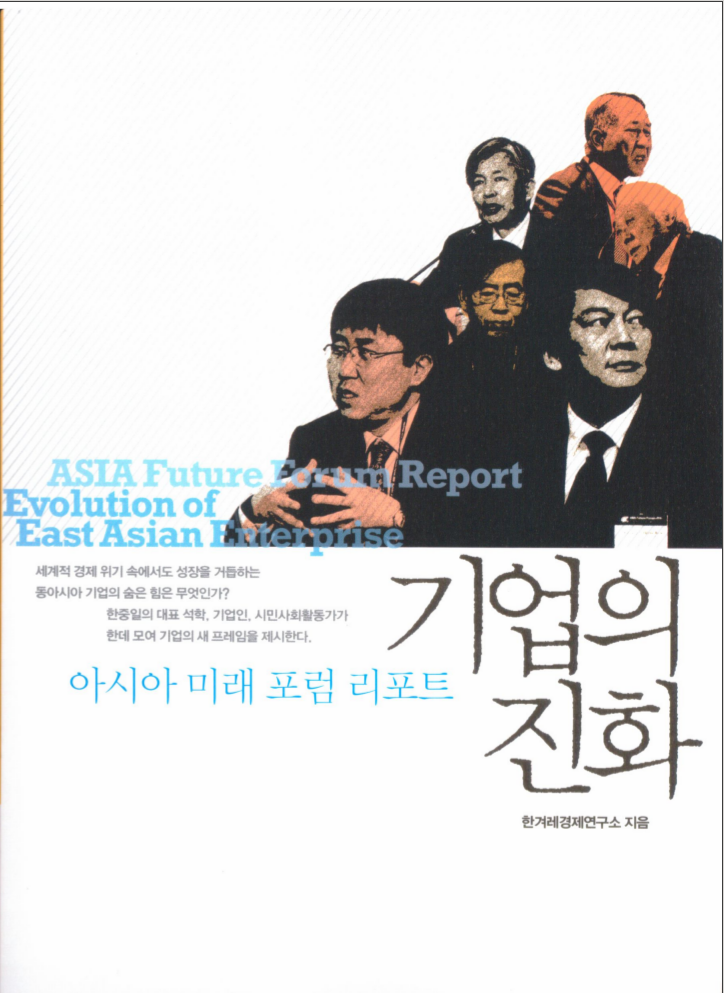
Evolution of East Asian Enterprise from Hangyoreh Economic Research Institute

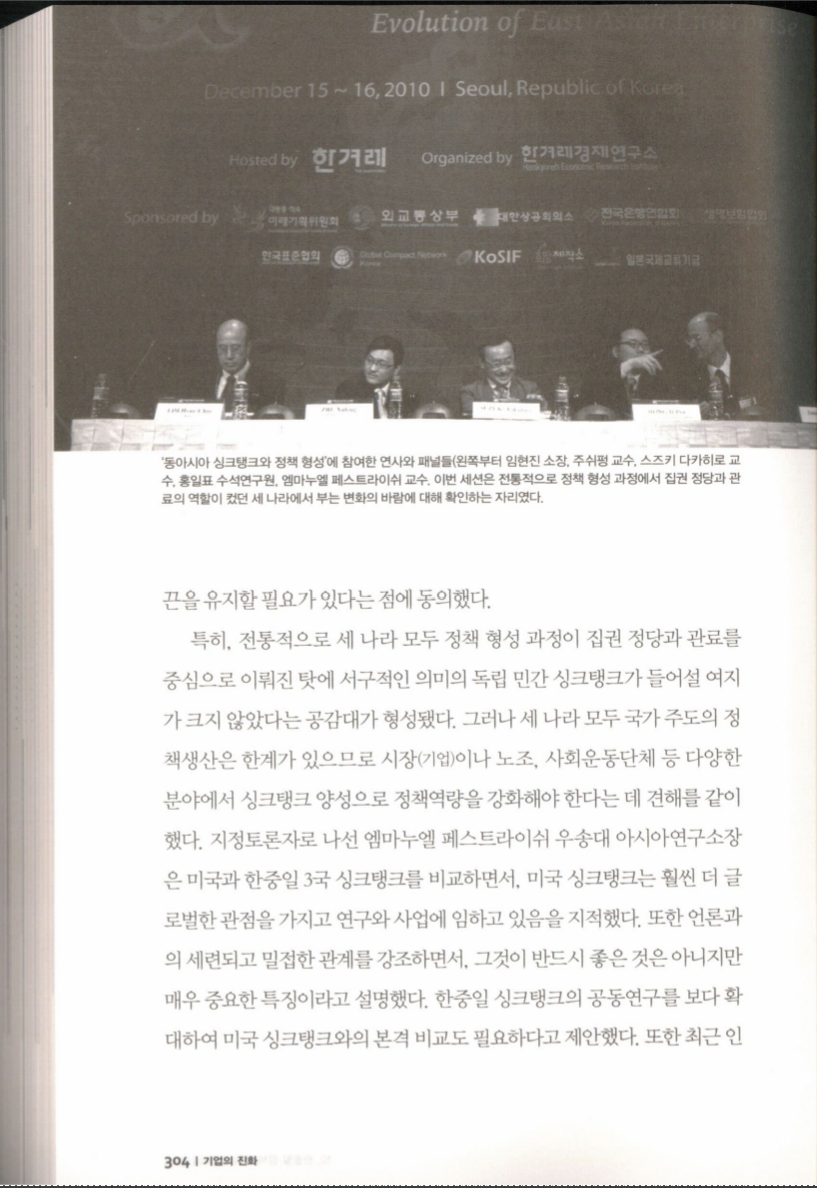
Hangyoreh Economic Research Institute (HERI) released this volume “Evolution of East Asian Enterprise” based on the talks given at the ASIA Future Forum held in December of 2010. I was a member of the panel on NGOs in Asia and their emerging role. The conference brought together a wide range of individuals from China, Japan and Korea concerned with corporate social responsibility and the role of NGOs in building civil society.