Creating a New Image for Daejeon

The four years that I spent in Daejeon were a remarkable experience. Among the various projects, I derived immeasurable pleasure from various projects aimed at raising Daejeon’s cultural profile. Some of that effort was related to work with the Daejeon Metropolitan City government, but much was spontaneous, growing from  my friendship with the artist Yoo Dongjo or my talks with my students. Friends from  Daeheung Dong district of Daejeon–where the artists gather–gave many ideas.

Daejeon means literally a “large field” and refers to to the fertile basin surrounded by mountains that makes up the city. Originally, the cultural centers of the area were around the two Confucian scholarly communities, one in the north in Hoedeok and one to the south in Jinjam. The building of the railroad station in the center and the creation of an artificial new town in the 1920s called Daejeon obscured much of those origins.
Read more

“U.S. Scholar Explores Asian Literature” – Korea Herald

Here is an article regarding the release of my two new books, The Observabale Mundane and The Novels of Park Jiwon, which was published in the Korea Herald on June 27.

U.S. scholar explores Asian literature

An American professor has brought the classical novels of the novelist Park Ji-won of the Joseon period onto the global stage by translating ten short stories into English.

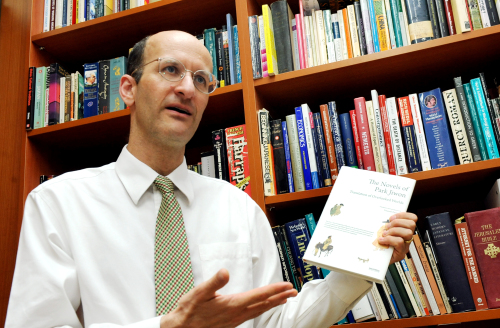
Emanuel Pastreich, who goes by the Korean name Lee Man-yeol, recently published two books in English with Seoul National University Press: “The Novels of Park Jiwon” and “The Observable Mundane, a study of Japanese Chinese novels. He expanded parts of his dissertation on how Chinese vernacular literature impacted Korean and Japanese literature and expanded it into two separate books.


Professor Emanuel Pastreich, director of the Interdisciplinary Studies Program of the Kyung Hee University (Photo: Park Hyun-goo)

Read more

TEPCO’s comment on Fukushima

The Tokyo Electric Power Company (TEPCO) had this to say about Fukushima:

Our deepest sorrows go to those people and their families who are suffering from the Tohoku-Chihou-Taiheiyo-Oki Earthquake and tsunami that struck our nation on March 11th.

Furthermore, I deeply apologize for the distress and inconvenience to those residing in the surrounding areas of the power station, Fukushima Prefecture as well as broader society due to the extensive damage our facilities sustained at Fukushima Daiichi Nuclear Power Station and the rolling blackouts. We had little choice but to implement such measures on account of the tight supply-demand balance of electricity.

Read more

The Greening of America: Innovative Programs to Reinvent the United States

This  article I originally wrote for the Asia-Pacific Business and Technology Report in September 2009.  The publisher of that magazine, Dr. Lakhvinder Singh, is a good friend of mine.  The article is based on a paper I presented at the International Green Growth Forum sponsored by the Korean Ministry of the Environment.

On the campaign trail, Barack Obama made it clear that the environment and alternative energy would be central pillars of his administration. He has since put great effort into promoting an innovative approach to resolving environmental and energy issues, maintaining a focus on a matrix of innovation and policy reform for lowering emissions and reducing dependency on foreign energy supplies, even in the face of cries to address healthcare and economic growth first. Although inertia and political realities have slowed down some parts of the program, reinventing the United States economy and re-imagining the American economy remain important themes.

Some of these themes can be traced back to a report by John D. Podesta of the Center for American Progress entitled “Capturing the Energy Opportunity: Creating a Low-Carbon Economy” (Nov. 27, 2007) that gave concrete suggestions as to how the auction of carbon permits under a greenhouse gas cap-and-trade program could generate 2 million jobs. The Political Economy Research Institute at the University of Massachusetts, Amherst, released a report entitled “Green Recovery: A Program to Create Good Jobs and Start Building a Low-Carbon Economy” in September 2008 that set out a concrete game plan for innovation and job creation through the embrace of green economic principles.

Read more

The Hot House Effect in Public Buildings

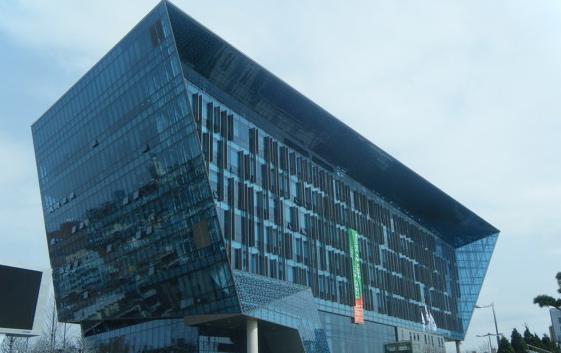
KBS News tonight featured a fascinating report on recent impressive public buildings in Korea that have been designed with little concern for environmental factors. The public buildings discussed include the Yongin City Hall and Yongsan District Hall in Seoul. These impressive towers of glass represent well Korea’s emergence as a cultural and technological power, but the mass of windows has turned parts of the buildings into saunas for employees. The report includes a scene with public officials using personal electric fans at their desks on top of the internal air conditioning.

The problem is one quite familiar to Americans, but we had hoped Korea might avoid this misstep.

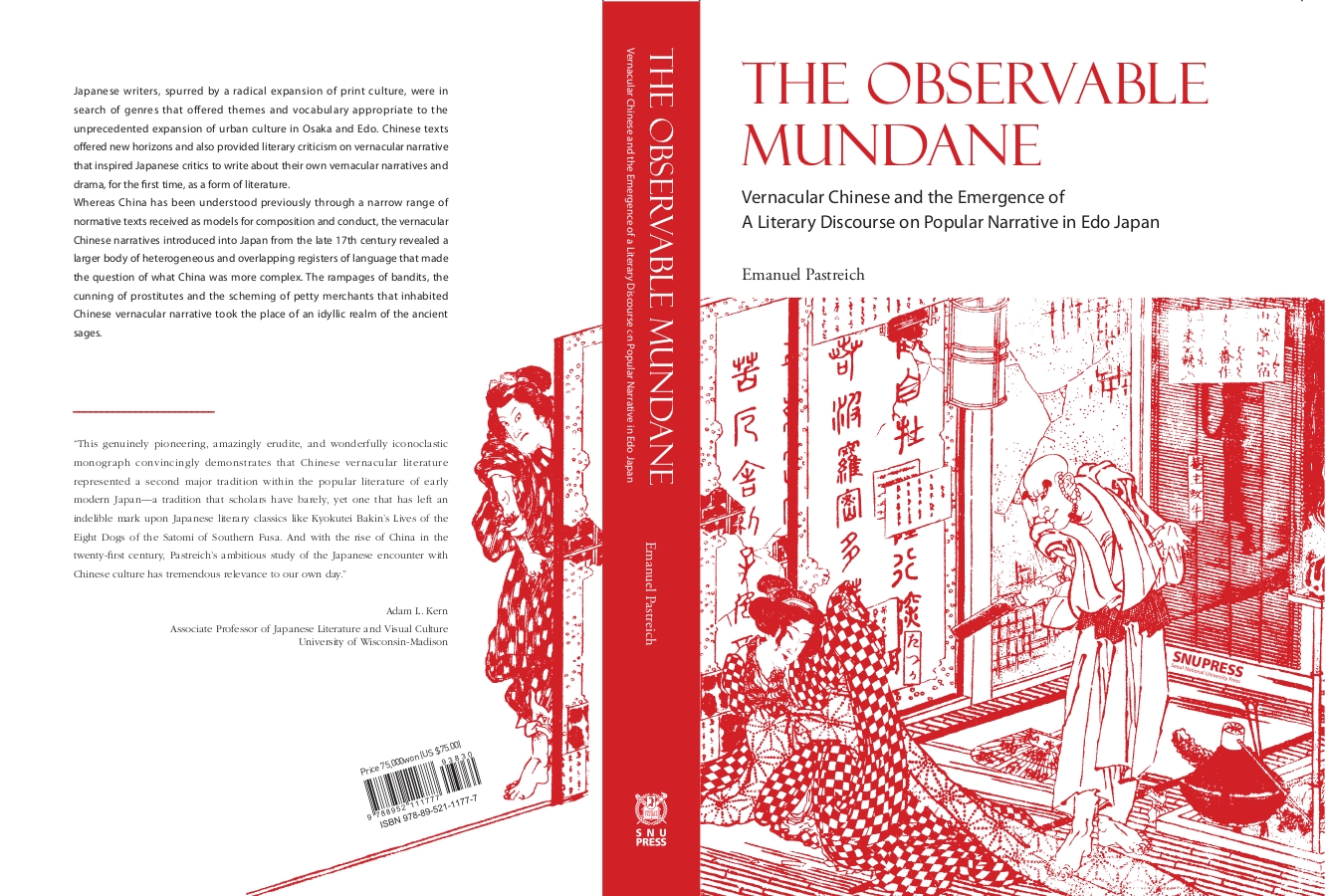
“The Observable Mundane,” study of Chinese vernacular literature in Japan (SNU Press)

Seoul National University Press has finally published my book, The Observable Mundane: Vernacular Chinese and the Emergence of a Literary Discourse on Popular Narrative in Edo Japan.  It is a scholarly study of the impact of Chinese vernacular narratives on the conception of literature among Japanese writers and critics in the Edo period (17th-19th centuries). Emanuel argues that Chinese vernacular literature, because it has some of the great authority of the Chinese tradition, but employed common parole, inspired a new evaluation of the potential of the vernacular that adumbrated the rise of the modern novel. The Observable Mundane is the first book on Japanese literature published by Seoul National University Press.

[twitter-follow screen_name=’epastreich’]

Wenchuan as an Eco-City (in Chinese)

This is a Chinese-language article that I wrote with John Feffer which originally appeared in China News.  The original article can still be found on their web site.

中国新闻周刊

汶川不应只是摆放在陈列室的展览品,在国际社会的帮助下,汶川应被建成一座节能的经济城市

2008年5月12日发生在中国的汶川毁灭性地震,造成整个四川省超过6万人遇难,500万人无家可归,而灾后的重建工作将需要很长时间。虽然当前救援组织和当地政府已经紧急修建了临时住房并提供饮用水,但同样重要的是我们应该开始考虑在救援人员离开后,国际社会应该如何有效在而合适地发挥长久的作用。

Read more

“Will the Next Renaissance Start in Korea?” – Korea IT Times

I wrote an article for the Korea IT Times recently about a possible next renaissance.  Here is the text of the article:

Walking around Anguk Station in Seoul recently, I was struck by the remarkable amount of artistic activity taking place in Korea today. New galleries are sprouting up everywhere featuring some of the most creative work you will find anywhere. Some brave voices to suggest that Seoul is pulling away in Asia, and maybe in the world, as a hub of cultural production not only for TV dramas and pop songs, but also for conceptual art, sculpture and painting.

The combination of this expansion in artistic production with an explosion of new technologies emerging from Korean research institutes and companies raises a more intriguing question: Might there be something even more significant happening beneath the surface? Might Korea lead some larger transformation on a global scale?

Read more

Is China the Nemesis in a New Cold War?

This is an article that I originally wrote for the Northeast Asia Peace and Security Network (NAPSNet) Nautilus Institute which was published on their web site on March 6, 2006.  

I. Introduction

Emanuel Pastreich, visiting scholar at the Center for East Asian Studies, University of Pennsylvania and a Japan Focus associate, writes, “The United States is losing its economic and cultural authority through the lethal mixture of ballooning trade deficits and torture scandals. The danger is that a classic military reflex will be one of the few tools left in the chest at a time when the U.S. needs a far more varied and sophisticated set of responses to negotiate successfully the path ahead.”

The views expressed in this article are those of the author and do not necessarily reflect the official policy or position of the Nautilus Institute. Readers should note that Nautilus seeks a diversity of views and opinions on contentious topics in order to identify common ground.

Read more

Feature on my work in Washington D.C. from the Busan Ilbo (in Korean)

Many people ask me about my work in Washington D.C., especially my role at the Editor-in-Chief of the on-line journal of the Foreign Ministry “Dynamic Korea” and as director of the innovative think tank KORUS House. I am writing a short essay on the topic now, but here is an article from the Busan Ilbo from 2007 that I think may be helpful. The author, Park Suk-ho, refers to me as the “Joseon Dynasty Confucian Scholar of Washington D.C.” I am honored.

“워싱턴의 조선 선비, 페스트라이시 박사”

워싱턴 DC에서 만난 여러 미국인들 가운데 필자의 머리 속에 가장 큰 자리를 차지하고 있는 사람이 한 명 있다.

바로 주미 한국대사관 문화홍보원에서 기획책임자(Chief Coordinator)로 일하고 있는 임마누엘 이 페스트라이시(Emanuel Yi Pastreich) 박사이다. 그는 조지워싱턴대학에서 역사학과 겸임교수로도 일하고 있다.

Read more