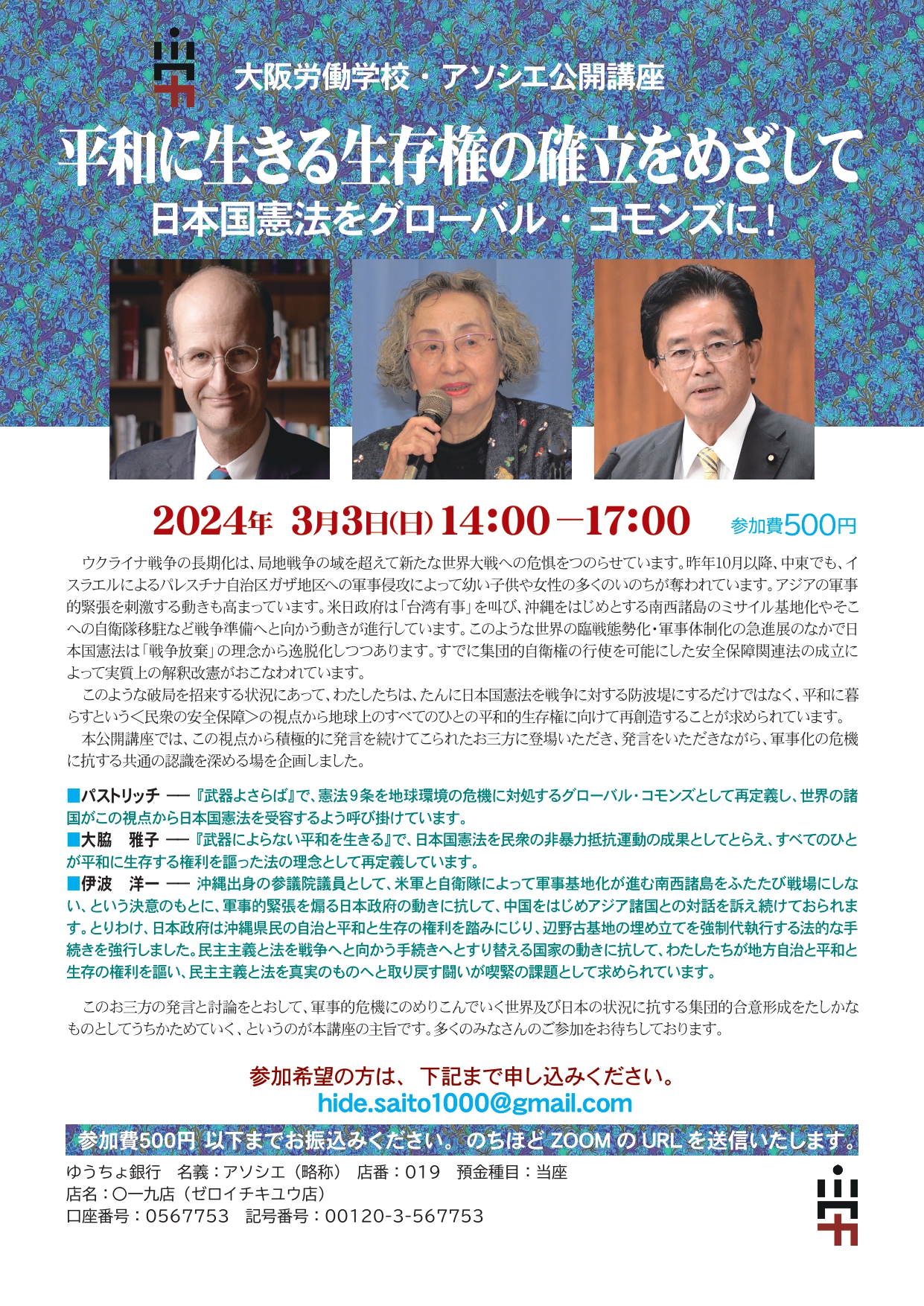
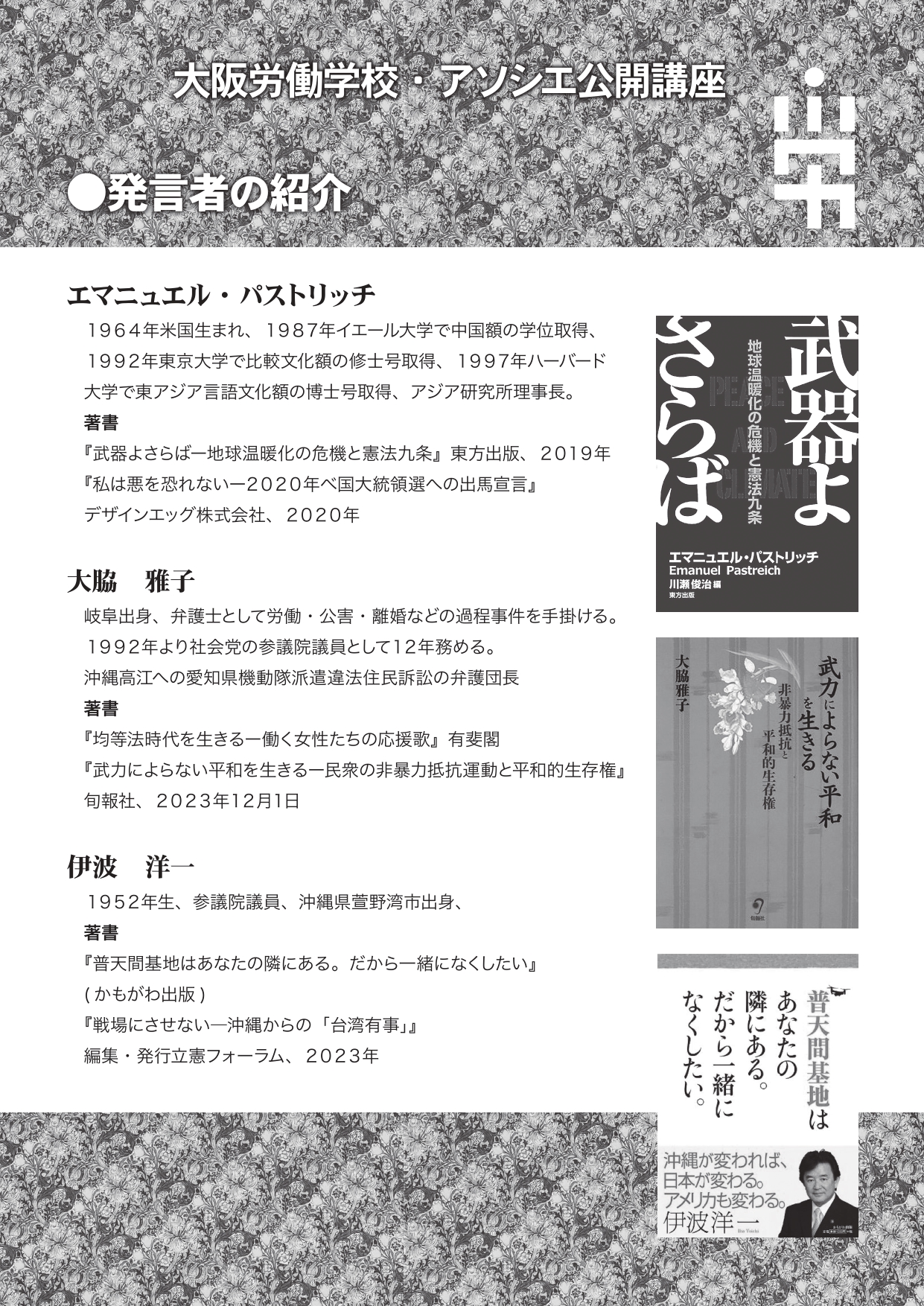
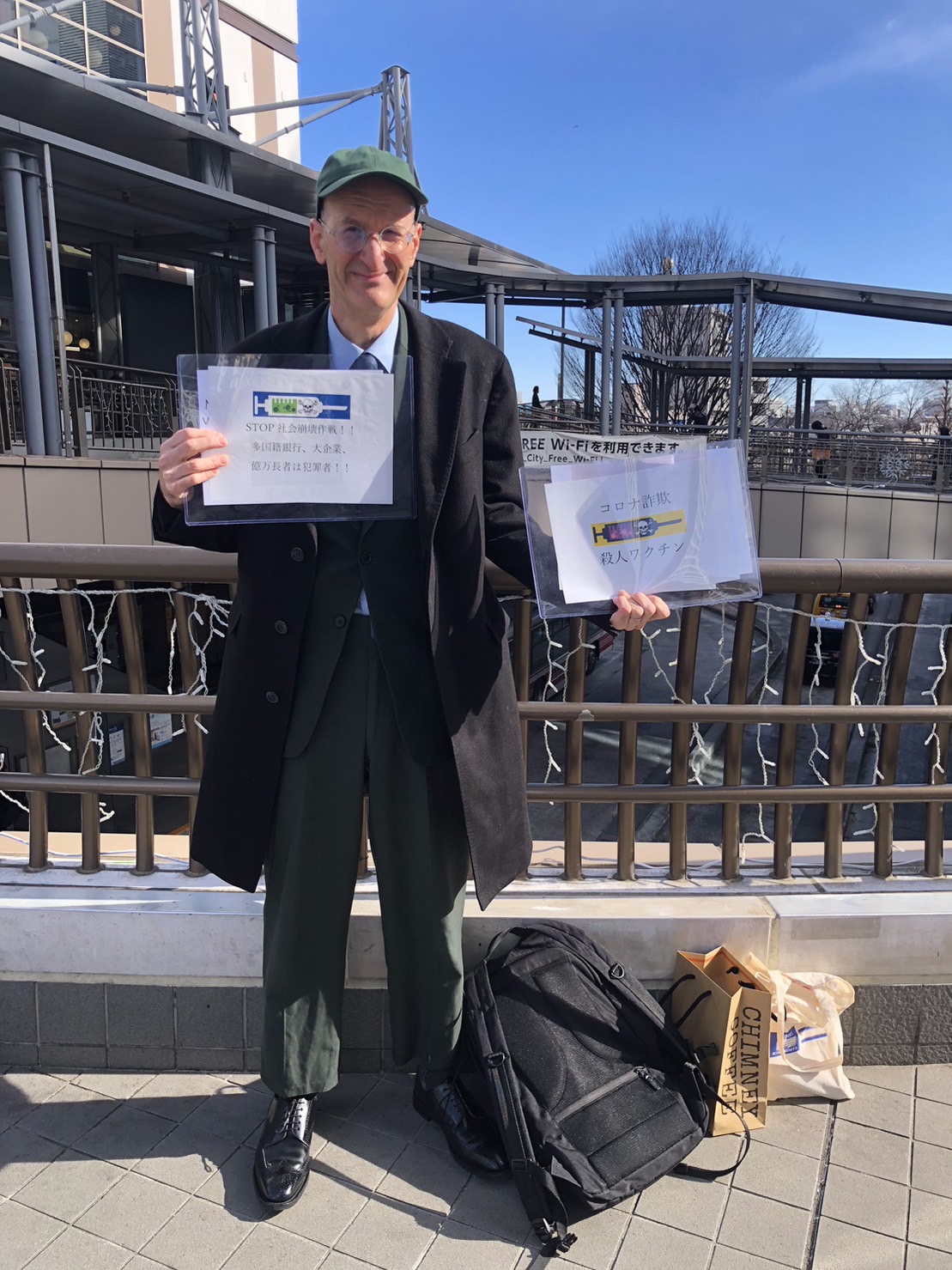
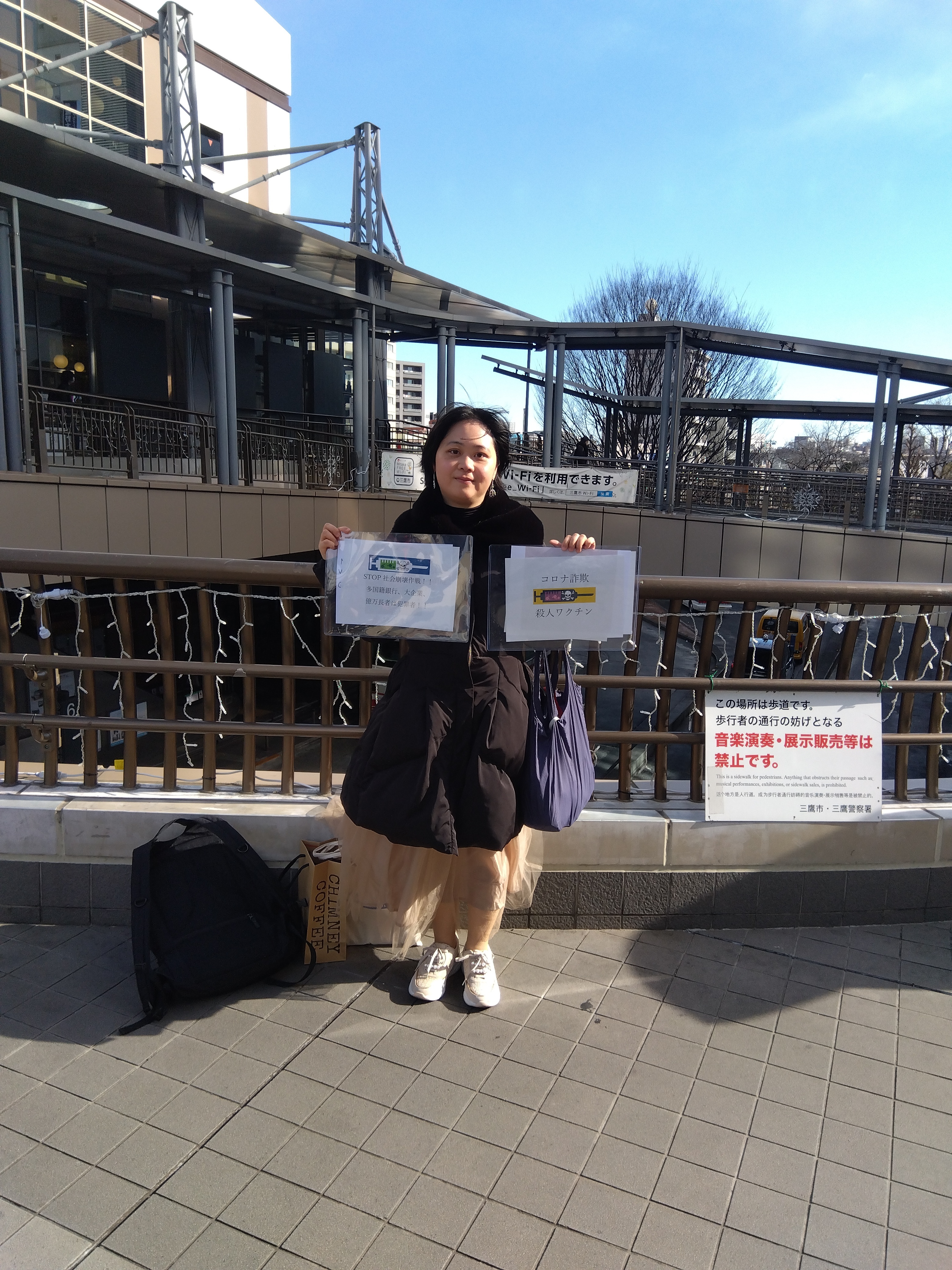
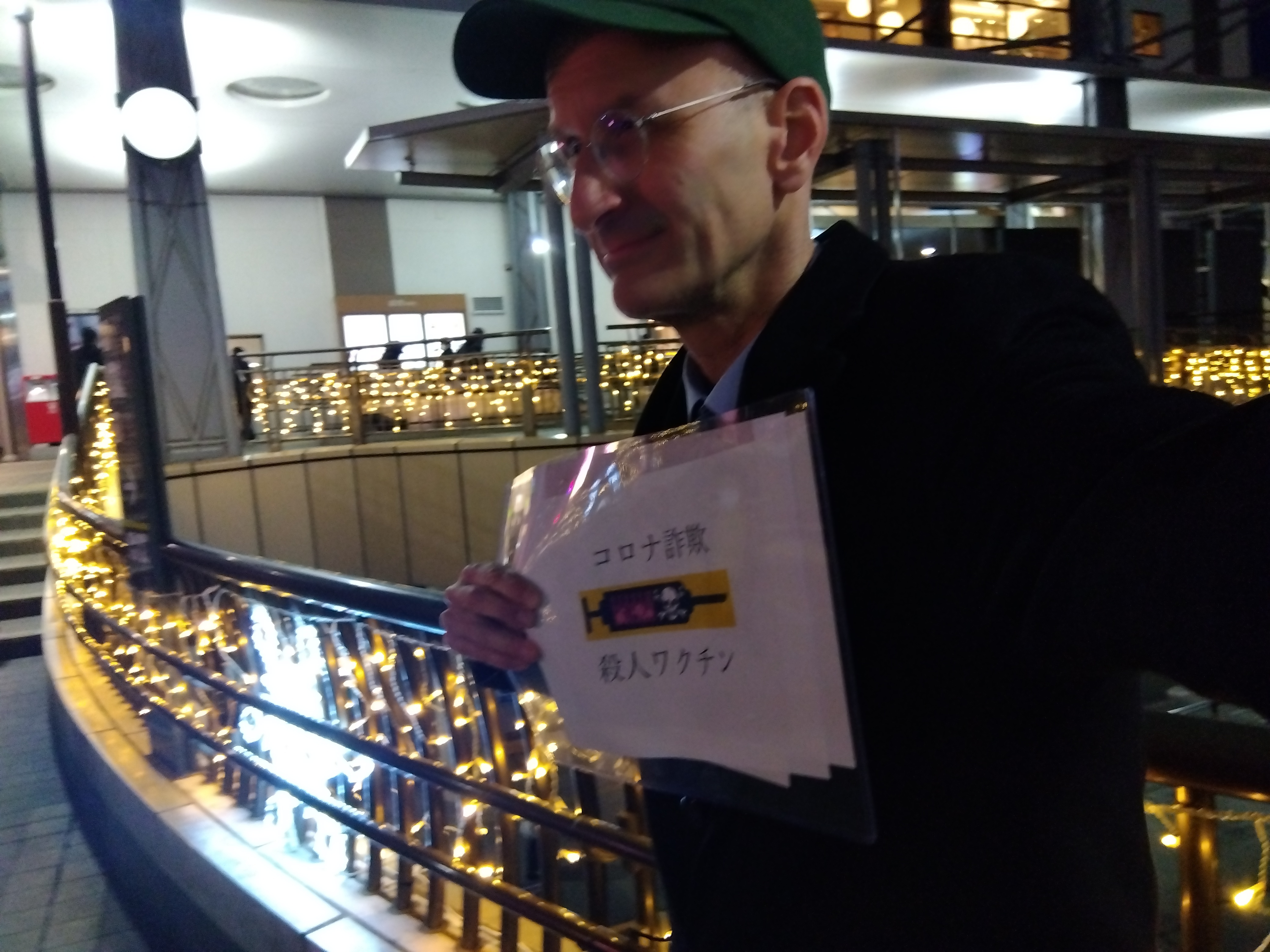
The following letter formally requesting the termination of the secretive Japan-US Joint Committee responsible for deciding through classified directives American and Japanese policy will be submitted to Brigadier General George B. Rowell IV, Deputy Commander for United States Forces Japan, at 10:30 AM on February 1, 2024 at formal gathering. The public is invited to attend (New Sano Hotel, 2-12 Minami Azabu, Minato-ku Tokyo ニュー山王ホテル港区南麻布4丁目12).
This letter is from American citizens and we invite you to add your name. Please send me your name and your state of residence in the United States. Your email address will not be released to anyone, but I will use it to tell you about the results of our effort.
We cannot change the content of the letter (except for grammatical or typographical errors) but we welcome you to share on Substack, or elsewhere, your opinions and suggestions. We also encourage you to send your own letters independent of this one. Please send your name and state to me at Substack, via email at epastreich@protonmail.com, or at Petition · End the Japan-US Joint Committee · Change.orgwhere we will post this letter as well.
The text for the letter from American citizens is as follows:
———————————————————————————
February 1, 2024
Topic: The abolition of the Japan-U.S. Joint Committee
Brigadier General George B. Rowell IV
Deputy Commander, United States Forces Japan
Dear General Rowell:
We are writing you as U.S. citizens who are devoted to constructive, positive, and transparent cooperation between the United States and Japan. We are concerned about the unconstitutional Japan-U.S. Joint Committee (“Nichibei Goudou Iinkai” in Japanese) that dominates U.S.-Japan relations today.
This letter accompanies another letter concerning that selfsame committee that was drafted by a group of thoughtful Japanese citizens and describes its problems in detail.
The secretive Japan-U.S. Joint Committee has taken on malevolent tendencies in recent years, serving as a platform for the determination of policy in secret without any accountability to elected officials, or to the citizens of Japan, or of the United States.
The very concept of a secret Japan-U.S. Joint Committee was unconstitutional and unethical from the beginning. This opaque institution that meets regularly in downtown Tokyo to determine policy between unelected American military officers and Japanese government officials undermines the process of deliberative democracy and the rule of law in both Japan and the United States. Its actions encourage and abet the dangerous trend towards unconstitutional secret governance that has crept through the federal government and military of the United States over the past two decades.
Such secret governance has its origins in the British Empire, with its grotesque mixture of government, private bankers, and mercenaries known as the British East India Company. Such secret, imperial governance is precisely what our nation’s forefathers, men like George Washington and Thomas Jefferson, rightfully rejected when they signed the Declaration of Independence.
The United States of America is a republic, and its government is defined by the Declaration of Independence of 1776 and the Constitution of 1787. Our nation cannot tolerate secret governance by rich and influential individuals, or the privatization of the military as took place in the British Empire. Sadly, that is precisely what the Japan-U.S. Joint Committee practices.
Imposing this unaccountable and secretive institution on our ally Japan is an insulting infringement on Japan’s sovereignty, but it is also unconstitutional on the U.S. side, and violates both the legal and moral imperatives behind the founding of our country.
The oath of enlistment for military officers, which you signed, contains the words, “I do solemnly swear that I will support and defend the Constitution of the United States against all enemies, foreign and domestic.” As citizens of the U.S., we share this commitment to the Constitution.
In other words, the primary duty of the United States Forces Japan is to serve the American people according to the Constitution. Upholding the Constitution demands transparent and accountable government.
Our honorable Japanese colleagues have submitted a letter in defense of the sovereignty of the nation of Japan. This letter contains within it three demands of the U.S. Forces Japan (USFJ), the US military as a whole, and the federal government. We feel that those demands are justified and appropriate.
1) Abolish the Japan-U.S. Joint Committee.
2) Make public all the records of the proceedings of the Japan-U.S. Joint Committee since its founding, and make them accessible to all Japanese citizens.
3) In addition to releasing to the Japanese public all the secret agreements decided on by the Japan-U.S. Joint Committee without the authorization of the citizens of Japan through a democratic process, take immediate action to assure that all such secret agreements are from this day forward null and void.
All three actions are required in light of the extensive examples already revealed in declassified documents of secret agreements made by the Japan-U.S. Joint Committee that violate the constitution and the sovereignty of Japan, and also violate the constitution of the United States of America.
It is critical that our alliance remain between the peoples of the United States and Japan and that it be completely in accord with the constitutions of the two nations.
Our military must follow the Constitution and its members must refuse any secret directives issued within the Japan-U.S. Joint Committee, or elsewhere, that violate either the letter or the spirit of the Constitution. Consultants, corporations, banks, and their representatives can play no role in the decision-making process because our government is defined by that selfsame Constitution.
Finally, it is our responsibility as Americans to consider the malevolent forces at work in the military, and throughout the entire Federal government, that are dragging us away from an economy based on productive and sustainable economic activity of a transparent and morally sound nature, and towards one based on war, expansion, extraction, and domination.
Whether it is the illegal and unconstitutional use of military personnel to sell the weapons of arms manufactures (many of whom pay almost no taxes in the United States) or the demands made on the military by consulting firms and lobbyists representing the super-rich, we must stop such unaccountable governance and endless territorial expansion. The historical records of the last five thousand years tell us exactly what tragic end that path of endless military expansion leads to.
Governance in the United States was compromised in the 20th century by the subversion of the Constitution and federal lawby a vaguely defined concept of national security. The result has been the establishment of a national security state that follows the economic and structural imperatives of imperialism while pretending to uphold the republic defined by the Constitution.
The existence of the Japan-U.S. Joint Committee declares to Americans and the world that the United States is not a republic. It is shameful that we behave like a global empire and treat Japan, supposedly our ally, as a client state.
We call on you to take action regarding the Japan-U.S. Joint Committee today. And we welcome your response to this letter.
Most respectfully,
———————————————————–
The text of the letter from our Japanese colleague and allies is as follows
————————————————
February 1, 2023
Brigadier General George B. Rowell IV
Deputy Commander, United States Forces Japan
Dear General Rowell,
We have gathered here today as Japanese citizens for the purpose of presenting to you, in your capacity as Deputy Commander of the United States Forces Japan, this formal demand for immediate policy changes, specifically as a protest against the Japan-US Joint Committee.
The Japan-US Joint Committee is an organization made up of high ranking officers in the United States Forces Japan and of high ranking officials in the government of Japan that meets in secret at the New Sanno U.S.Force Center in downtown Tokyo on a regular basis.
The following is our formal demand:
When the Treaty of San Francisco that formally established peaceful relations between the United States and Japan took effect on April 28, 1952 the “US-Japan Security Treaty” and the “Administrative Agreement under Article III of the Security Treaty between Japan and the United States of America” also took effect.
The Japan-US Joint Committee was set up as an institution assigned the purpose of carrying out all consultation regarding the administration of the “U.S.–Japan Status of Forces Agreement” (which replaced the “Administrative Agreement” in 1960).
If we considered the intention of the U.S.–Japan Status of Forces Agreement, we would assume that the Japan-US Joint Committee must be a place where a discussion is held in the open about what is in the interests of both nations, and that this discussion would be carried out by members of the Diet (for Japan) and members of the Congress (for the United States) who are empowered with the solemn trust of the citizens of both countries, the citizens in whom the ultimate sovereignty is vested. The members of the committee would thereby represent all of the citizens of the two allied nations.
However, the Japan-US Joint Committee consists of Japanese civil servants who are not elected in any election and unelected American military officers assigned to Japan. Moreover, the meetings are held in absolute secrecy.
We the people of Japan are incensed that this consultative meeting is being carried out in a manner that degrades the sovereignty of Japan as an independent nation.
The members of the Japan-US Joint Committee have no obligation to make public the agenda, or the topics discussed, at the regular meetings, nor to make available any of the documents describing what agreements have been reached.
It is precisely for this reason that the Japan-US Joint Committee is viewed as a black box wherein numerous secret agreements have been made.
As far as all previous meetings of the Japan-US Joint Committee are concerned, it is recorded that an agreement was reached “not to make public the content without a mutual agreement by Japan and the United States.” The reason given for this secrecy is that “there is a concern that the relationship of trust between Japan and the United States might be damaged, that the stable stationing of American troops, and the smooth carrying out of their activities, might be impinged on, and that the safety of Japan might be harmed” if this information were made public.
The result is that all records of the meetings, and all written agreements that result from the meetings, are, in principle, secret and unavailable to the public.
But various secret agreements have been made public as a result of requests following the American Freedom of Information Act in the United States and the documents released demonstrate that these secret agreements reached by the Japan-US Joint Committee openly violate the sovereignty of Japan.
For example, at a meeting of the Japan-US Joint Committee in October, 1953, the subcommittee on criminal proceedings within the special committee on legal jurisdiction carried out deliberations on policy at which they agreed to an “secret agreement relinquishing rights of jurisdiction for Japan,” stating that “regarding criminal actions by members of the US military in Japan, with the exception of extremely important incidents for the nation of Japan, legal jurisdiction will not be exercised.”
The comments of the Japanese representative at that subcommittee, Tsuda Minoru, who was at that time director general for the criminal justice division at the Ministry of Justice, were recorded and they remain in the transcripts made public since then.
Another case made public involves the deliberations at a meeting of the Committee on Commercial Aviation of the Japan-US Joint Committee in May, 1975 which produced an “Agreement concerning traffic control for aviation and transportation.” This agreement resulted in the complete control of the airspace around the Yokota Base, the Iwakuni Base, and the Kadena Base by the United States military in violation of Japanese sovereignty.
Even though the Ministry of Foreign Affairs has formally stated that “even though there may be an agreement of the Japan-US Joint Committee in effect, there is no pressing legal basis for it to take precedence over Japanese aviation law,” the reality today is that aviation management continues to follow exclusively the agreements reached in secret by the Japan-US Joint Committee for takeoff and landing in the airspace at the Yokoda Base and Atsugi Base. Moreover. In addition, air control for the airspace of all of Japan for the altitude of 2450 meters to 7000 meters is reserved for US military aircraft and in placed entirely in the hands of the US military. The result is that Japanese civil aircraft that wish to use that airspace are required to have permission from the US military command.
The cases described above are but two examples of the numerous secret agreements reached at the Japan-US Joint Committee which grant special rights to the US military in Japan. The fact that the records of the meetings cannot be made public means that we have no way of knowing how many other secret agreements have been reached. These secret agreements are kept hidden from the citizens of Japan who have sovereignty in this republic in accord with the constitution. Moreover, the elected representatives of the Japanese people in the Diet, who are entrusted with legislative authority, are also not privy to these agreements.
These egregious special powers and privileges assigned by the Japan-US Joint Committee have no legal basis in the original “U.S.–Japan Status of Forces Agreement” and are by their very nature unacceptable for an independent nation state.
These embargoed agreements decided in secret rooms have eaten away at the very foundations of the rule of law in Japan, creating a world of shadows that is incompatible with the Japanese constitution which must serve as the highest legal authority in the nation.
The grave consequence is that our sovereignty is transgressed and degraded by these secret agreements.
We Japanese of conscience cannot tolerate the reduction of our nation to a vassal nation in blatant violation of our constitution and our sovereignty.
We therefore, in place of the members of the Japanese Diet who have been stripped by the United States and the United States military of the authority granted by our constitution, respectfully request that you, honorable Brigadier General George B. Rowell IV, in your capacity as Deputy Commander of United States Forces Japan, carry out the following actions:
First, abolish the US-Japan Joint Committee.
Second, make public all records of the proceeds of the US-Japan Joint Committee since its founding, and make them accessible to all Japanese citizens.
Third, in addition to releasing to the Japanese public all the secret agreements decided on by the Japan-US Joint Committee without authorization by the citizens of Japan, take immediate action to assure that all such secret agreements are from this moment null and void.
How institutional cancer grew out of the fabrication of the tablet PC used to impeach Park Geun-hye
Author : Heejae Byun
South Korea’s government is engaged in a form of diplomatic and security suicide that defies understanding.
Whereas previous presidents of the left and right understood that it would be fatal to alienate China and Russia, promote war with North Korea, or blindly follow all orders from an increasingly chaotic Washington, President Yoon Suk Yeol is unlike any president in post-war Korea, and perhaps like any politician in Korean history. Whether he is drawing South Korea into preparations for war with China that are destroying the economy, planning for integrated responses to North Korea via missile defense that end South Korea’s sovereignty, or persecuting his opponents of the left and right at home to a degree unseen in the last thirty years, he is truly unique.
The problem is that Yoon is not a diplomat or a politician, but rather a criminal operator who made his way to the top through tricks and deceptions and now the mask has fallen off to reveal an imposter.
The results were clear at the 30th Asia-Pacific Economic Cooperation (APEC) Summit in San Francisco, President Yoon, for all his toady statements, was unable to secure a bilateral meeting with Chinese President Xi Jinping or US President Joe Biden. In light of how President Park Geun-hye, also a pro-American conservative, great deference from President Xi, the decay of Korean diplomacy is clear. [1]
Compared to other pro-US conservative leaders such as Lee Myung-bak and Park Geun-hye, Yoon has emphasized South Korea, the US, and Japan’s trilateral alliance to an unusually high degree. He has gone as far as to verbally attack China and Russia, regressing Northeast Asia back to the Cold War era framework of ROK-US-Japan Vs North Korea-China-Russia.
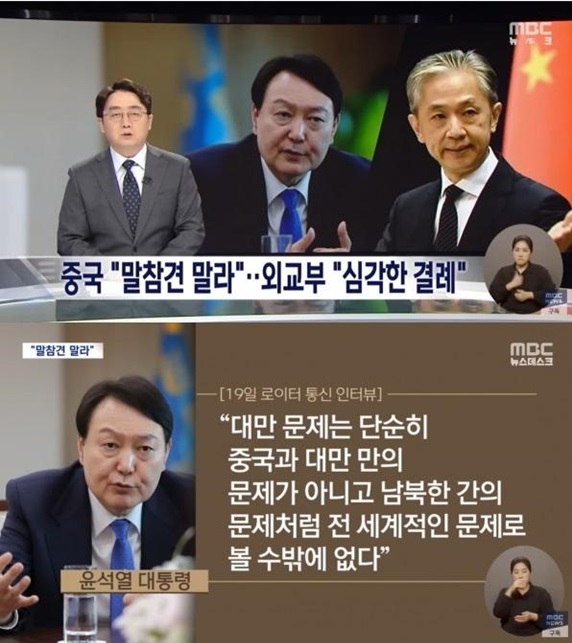
In an interview with Reuters on April 19, 2022, Yoon provocatively brought up the “Cross-Strait issue” and told the reporter: “We are absolutely opposed to changing the status quo by force, along with the international community… (The cross-strait issue) is not simply a matter between China and Taiwan, but a global issue that goes beyond the region, like the issue between North and South Korea. [2]
For China, turning the cross-strait conflict into a global issue like the one between the two Koreas is unacceptable. Therefore, China’s Vice Foreign Minister Qin Gang fiercely responded to Yoon two days later on the 21st. “Those Who Play with Fire over Taiwan Will Burn to Death,” he said. [3]
President Yoon Seok-yul has begun to express strong “anti-Chinese” messages on the cross-strait conflict, something he had never expressed before taking office. To understand the background and history of his anti-China and anti-Russian stance, it is necessary to have a certain understanding of South Korea’s internal affairs and Yoon’s rise to power. The photo is from MBC, a major South Korean broadcaster.
However, Yoon’s bold statement favoring Taiwan over the “Cross-Strait conflict” does not mean the incumbent administration is working closely with the island. Rather, the Taiwanese will feel uneasy with a third party – South Korea in this case – provoking China by bringing up the issue without any prior planning and consultation. Yoon is merely utilizing the “Cross-Strait issue” to embolden the trilateral alliance between the US and Japan to pump up conservative support back home.
Yoon’s actions are souring relations with Russia, a country that has historically been more friendly to South Korea than China. For instance, in the name of supporting Ukraine, Yoon suddenly offered to send arms to the country. In the end, Russia became impatient and invited the solitary North Korean leader, Kim Jong-un, to de facto retaliate against South Korea through diplomatic and security means. But Yoon characterized this act as another “direct provocation,” and has since repeatedly stated that he is willing to engage in armed conflict, raising tensions in Northeast Asia. [4] [5]
Of course, the ROK-US-Japan alliance is a fundamental principle of South Korean conservatives. However, the trilateral alliance does not require South Korea to unnecessarily disengage itself from China and Russia, especially when Seoul needs to seek cooperation from Beijing and Moscow to resolve the North Korean nuclear crisis. Nevertheless, Yoon’s diplomacy is effectively bringing China, Russia, and North Korea closer, and thus destabilizing the region.
-Yoon’s deadly criminal past could shake up Northeast Asia’s diplomatic and security order –
So why is Yoon Seok-yul putting the regional diplomatic and security order at risk? For starters, he is not a conservative by nature.
A former career prosecutor, Yoon first came to prominence in South Korean politics in 2013 while investigating the National Intelligence Service’s(NIS) presidential election meddling scandal in the early days of the Park Geun-hye administration. The allegation was that the NIS used internet posts to help Park win the 2012 presidential election. At the time, prosecutor Yoon attacked the legitimacy of Park Geun-hye’s administration by pushing for excessive investigations into the NIH. This caught the eye of South Korea’s progressive Democratic Party.
After bouncing around from job to job, Yoon became the head of the special prosecutor team investigating Park’s impeachment in 2016 when Park administration’s power waned. The investigation eventually led to Park’s imprisonment for bribery charges and a 22-year prison sentence, making Yoon one of the most important figures in the downfall of the conservative forces.
Yoon quickly rose to the top of the prosecutors’ ranks in the Moon Jae-in administration, becoming the chief prosecutor of the Seoul Central District Prosecutors’ Office. He began gaining the trust of then-President Moon, a liberal, by arresting more than 200 key conservatives, including Park’s predecessor, Lee Myung-bak, and former Supreme Court Chief Justice Yang Seung-tae. He then rose to the crest of the prosecutors’ organization, the Prosecutor General. [6]
However, as soon as Yoon became prosecutor general, he began to run afoul of the Democratic Party’s supporters by investigating the then justice minister, Cho Kuk, who was considered the next presidential candidate. Over the next year or two, Yoon gradually shifted right, eventually winning the support of the conservatives in becoming the president.
In other words, he initially stood on the liberal side imprisoning conservatives, but suddenly joined the conservative side ahead of the 2022 presidential election, causing an identity crisis. For nearly two years since Yoon took office, Yoon’s prosecutors have been probing Lee Jae-myung, the leader of the opposition Democratic Party, on bribery charges. This is quite ironic considering that Yoon himself led the prosecutors and jailed a slew of conservatives as recently as 2018. [7]
More fundamentally, however, Yoon has been embroiled in serious fabrication controversy early in the Park’s impeachment investigation. In late 2016, JTBC, a major South Korean broadcaster, reported on a tablet device as evidence that Choi Soon-sil (her legal name is Choi Seo-won), a civilian and mere friend of Park, had received various classified state information. The network promptly submitted the device to prosecutors after breaking the news, and the prosecution accepted JTBC’s report as a “fact”. The public perceived this as the president arbitrarily handing over power to a civilian, and Park’s qualifications as president were called into question. In fact, within a month of the tablet’s appearance, Park was facing impeachment charges and was forced to step down from the presidency four months after the launch of the impeachment inquiry. [8]
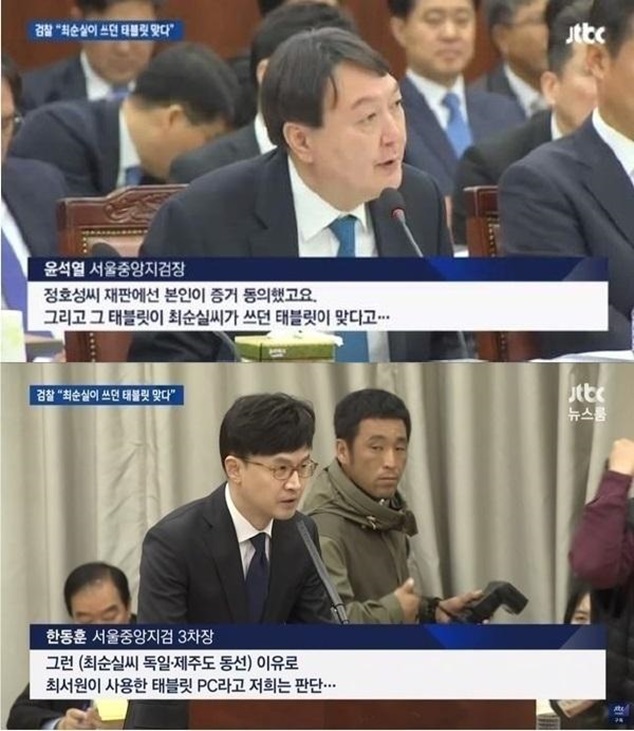
President Yoon Seok-yul and Justice Minister Han Dong-hoon, then-chief prosecutor and then-third-in-command of the Seoul Central District Prosecutors’ Office, respectively, testified during a 2017 (during Moon Jae-In regime) National Assembly oversight hearing that the “Choi Soon-sil tablet” was Ms. Choi’s based on their investigation. The photo is from a report by South Korea’s main broadcaster, JTBC.
However, having already questioned the veracity of JTBC’s reporting and the prosecution’s investigation, I continued investigating the case despite serving a year in prison and undergoing years of trial due to the JTBC lawsuit. Eventually, I obtained conclusive evidence that JTBC and the prosecution had acquired a tablet PC belonging to a Blue House official and fabricated the news report and investigation to attribute the device to Choi Soon-sil. JTBC obtained a real PC that would normally contain confidential Blue House documents and then, in collaboration with the prosecutor’s office, they created a “pseudo-event” making it seem as if a civilian had taken various secrets from the president. That was no easy task, requiring them to fabricate documents regarding various reports and investigations. [9]
To be absolutely clear, Yoon Seok-yeol, the current South Korean president, was a key player in the “tablet manipulation investigation,” a state crime in all senses of the word, from late 2016 to early 2017, and that led to the successful impeachment of President Park.
I have worked together with Choi Soon-sil to launch 20 civil and criminal lawsuits regarding this miscarriage of justice and abuse of power over the past few years. In a recent civil lawsuit, Choi finally forced the court to admit that many of the reports and sensitive materials found on the PC were in fact fabricated.
By supporting Choi’s lawsuits legally and financially, and launching separate lawsuits, I gained access to undisputable evidence of the fabrication of evidence. I filed a complaint against Yoon and his co-conspirator, current Justice Minister Han Dong-hoon, to the Corruption Investigation Office For High-ranking Officials (CIOHO), South Korea’s chief prosecution agency for the investigation of powerful individuals. They launched their investigation this November.
As I was unjustly imprisoned as a result of Yoon and Han’s tablet manipulation investigation, I also filed a civil lawsuit for damages against the two, and that trial is currently underway. [10] [11] [12]
At last Yoon’s crimes of evidence fabrication will be officially exposed. Yoon’s predictable political response is to revert to hardline conservatism to solidify his only base of support. The extremity of his policies, in blatant opposition to Korea’s national interests, means that the diplomatic and security order in Northeast Asia may collapse under the weight of his criminality as policy.
President Yoon’s natural inclination is not to engage in the hard work of policy preparation, working level meetings, or even informal discussions over coffee or tea about where Korea needs to go but rather to come up with some trick to fool everyone and buy off, or frighten off, his opponents.
This criminal politician show could easily deteriorate into a serious Northeast Asian crisis, going even further than current tensions because Yoon would see that as an opportunity to prop up his authority. Granted he has no long-term strategy, Korea’s future would not be all that important for him and his loyal followers.
-Sending journalists to jail like the good old days of military government of South Korea –
President Yoon has gone to great lengths to crack down on the media in South Korea out of fear that they will report on his criminal past. Since the beginning of his administration, Yoon has attempted to replace the management of South Korea’s two public media organizations, KBS and MBC, and has succeeded in doing so at KBS. He has also repeatedly attempted to detain and raid the offices of liberal media outlets such as New Tamsa, News Tapa, and Kyunghyang Newspaper, both of which were foolish enough to report about his giving inconvenient facts. [13] [14]
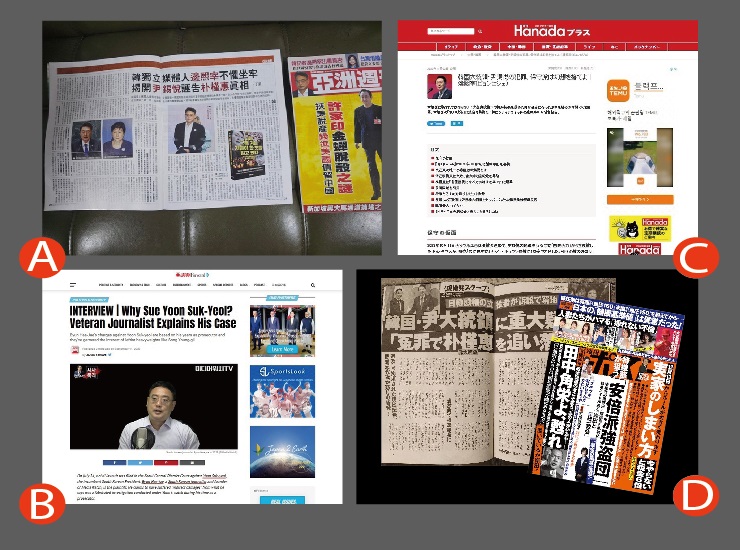
As a result of ongoing repression, the South Korean media has been unable to cover Yoon’s crimes, let alone the fabricated tablet incident that launched his career. Fortunately, this summer and fall, Japan’s conservative media, Japan Forward and Hanada Monthly, Shukan Post (Weekly Post), and Hong Kong’s leading media, The Yazhou Zhoukan (Asia Weekly), have given significant coverage to this story. Unfortunately, the cowardly South Korean media failed to address Yoon’s most damning past crimes, even in the form of quoting these foreign reports. The media has forgone reporting on this issue even when the Yoon administration failed to adequately respond to foreign media reports.
[A] Hong Kong’s leading weekly newspaper ‘Yazhou Zhoukan(Asia Weekly)’ (10/9-10/15/2023) published an interview with Byun Hee-jae regarding the tablet fabrication investigation as its cover story.
[B] On September 11, ‘Japan Forward’, a leading English-language newspaper in Japan, published an interview with Byun Hee-jae on the tablet fabrication investigation. It became the number one most-viewed article in September.
[C] ‘Monthly Hanada’, a leading Japanese monthly magazine, published an article by Byun Hee-jae on the tablet fabrication investigation on November 2 in its online edition.
[D] The December 22, 2023 issue of Shukan Post (Weekly Post), a leading Japanese current affairs magazine with a weekly circulation of 300,000, published a scoop on Yoon’s tablet manipulation investigation.
Although it is natural for South Korea to build on its close relationship with the United States as a central ally, President Yoon has chosen to escalate intentionally hostility towards China, Russia, and North Korea, to cover up his criminal past. Ultimately his gangster diplomacy will be damaging to not only Korea but to the United States and the entire region.
Note
[1]
Lack of Yoon-Xi summit in San Francisco highlights Seoul’s troubled ties with Beijing
The Fall of the Rule of Law in South Korea: The Impeachment of Park Geun-Hye, Part I: The Media, the Tablet, Public Sentiment, Gookjeong Nongdan, and the National Assembly
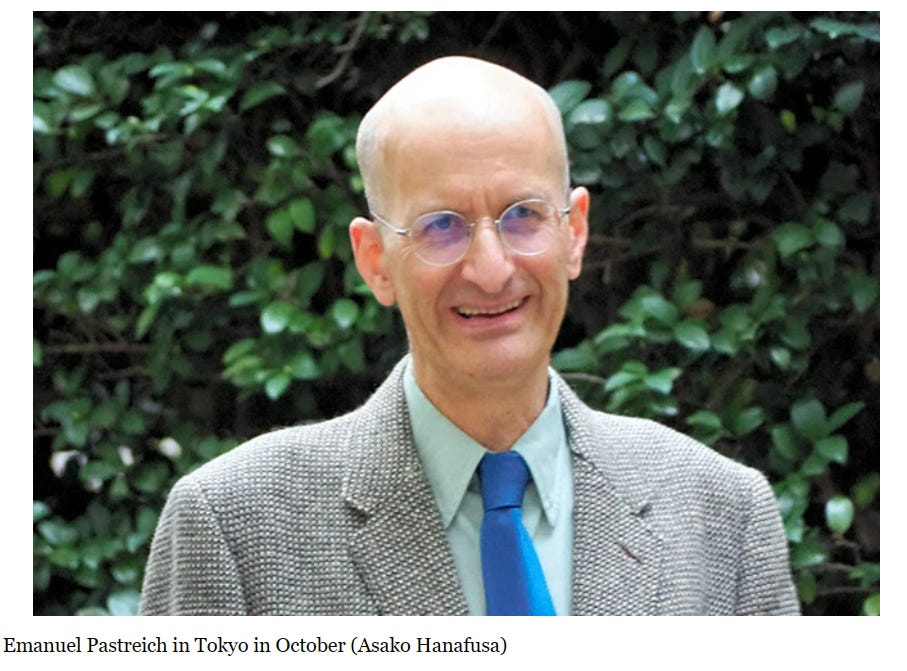
The following interview appeared today in Japan’s Asahi Shimbun Newspaper English language section. This article is the first example of a mainstream media source mentioning my campaign for president ever, anywhere. I wish to express my great thanks to the brave people in Japan who have fought to help us get on the stage and challenge not only the establishment, but also the fake “anti-globalists” who feed at the billionaires trough in secret.
U.S. scholar vowed to scrap nuclear arms in presidential bid
U.S. scholar Emanuel Pastreich took at face value the textbooks claiming that the United States had no choice but to drop atomic bombs on Japan to end World War II and save lives that he read in high school.
After years of research, and visits to Nagasaki and Hiroshima, the expert on East Asian diplomacy is now convinced that the United States owes an apology to Japan for the bombings and must also eliminate its stockpile of nuclear weapons.
Pastreich, president of the think tank Asia Institute, highlighted these issues during his short-lived bid to run as a candidate from the Green Party in the 2024 U.S. presidential election.
“Some people may think my apology was too extreme and others may think it was a brave act,” Pastreich, 59, said in a recent interview with The Asahi Shimbun. “I do not think it was either. I was merely doing my duty as a U.S. presidential candidate.”
I expressed my formal apology in a speech I delivered on Aug. 6, the 78th anniversary of the atomic bombing of Hiroshima.
“As an American, I offer my deep apologies to the Japanese people for this bombing,” I said in the speech, which was later broadcast on YouTube.
I also stated unambiguously, “The atomic bombings were not necessary.”
In my declaration of candidacy for the 2024 U.S. presidential nomination from the Green Party, I made a public promise that “America will get rid of all its nuclear weapons within 10 years.”
Unfortunately, I was unable to gain the necessary support to continue the campaign for the nomination from the Green Party and withdrew at the end of September.
The mainstream American media has not covered my comments or speeches from that period.
Even so, as an American who aspires to become U.S. president, I wanted to apologize for the atomic bombings and to make a public promise that the United States will stop the development and deployment of nuclear weapons.
I was born in the United States and educated in the United States.
The history books I read in high school taught me that “in order to end the war quickly and save lives, we had no choice but to drop the atomic bomb.”
My teachers said the same thing, and so I did not think deeply about the matter at the time.
When I studied in Taiwan (in 1985) for my junior year of college, I encountered the Japanese culture that had been left behind from the colonial period and I was inspired to study about Japan seriously.
After I graduated from Yale, I came to Japan, studied the Japanese language, and then entered the graduate program at the University of Tokyo.
My major was Japanese literature, but I read broadly in modern Japanese history as well.
Those readings gave me insights into what the United States had done in Asia.
I started to have doubts about what Americans did from World War II, to the Korean War, and the Vietnam War, and I asked myself why we continued to expand militarily.
I first visited Nagasaki in 1991. The visit was related to my graduate research on how Chinese culture was imported into Japan through the port of Nagasaki in the 19th century.
I visited the site of the foreign settlement Dejima and Chinatown.
I also stopped by the Nagasaki Atomic Bomb Museum.
That was my first exposure to images of the apocalyptic ruins of Nagasaki and the burned bodies of innocent civilians.
That experience made me realize that the United States is a country capable of doing terrible things like this.
It was clear that dropping the atomic bombs had been a mistake and that it was wrong for the United States to keep nuclear weapons today.
When I had occasion later to visit Hiroshima, those thoughts became only the stronger.
In 2016, Barack Obama became the first sitting U.S. president to visit Hiroshima. U.S. President Joe Biden also visited the city when he attended the Group of Seven summit there in May.
But neither of them apologized for the dropping of the atomic bombs in spite of overwhelming evidence of the criminality of the act.
Many people in the United States perhaps think it is natural that their government takes such a position about the dropping of the atomic bombs, but I do not.
Some people may think my apology was too extreme and others may think it was a brave act.
I do not think it was either. I was merely doing my duty as a U.S. presidential candidate.
It was an apology that meant that we Americans must understand Japan and must not forget the sufferings of the victims of those bombings.
It was an apology meant to keep Americans from accepting as normal that the United States, a signatory to the Treaty on the Non-Proliferation of Nuclear Weapons, has refused to adhere to its obligations.
I have not had the chance to meet with the victims of the atomic bombings or their families. I am sorry I did not make the effort earlier in my career.
I hope that one day I can make an apology in person for the atomic bombings.
I will continue to make public calls for the elimination of nuclear weapons in my capacity as an expert on international relations in East Asia.
(This article is based on an interview by Asako Hanafusa.)
Born in Nashville, Tennessee, Emanuel Pastreich was educated in Chinese literature at Yale University.
He received a master’s degree at the University of Tokyo in comparative culture in 1992 and a Ph.D. in East Asian languages and civilizations from Harvard University in 1997.
He taught Japanese studies at the University of Illinois Urbana-Champaign and George Washington University. He is currently affiliated with Yale University’s Council on East Asian Studies.
Pastreich founded the Asia Institute in 2007 as a platform for global dialogue on contemporary issues.
He declared himself a U.S. presidential candidate as an independent in February 2020.
In August, he was recognized as a registered presidential candidate in the Green Party of the United States, but he had to withdraw after failing to raise sufficient funds.
Pastreich, currently residing in Japan, commutes between Tokyo, Washington and Seoul.