Response to “Is China the Nemesis in a New Cold War?”

This discussion concerns my article “Is China the Nemesis in a New Cold War?” Published five years ago, I think the points about the future of US-China relations remain relevant today.  It was originally published in the Nautilus Institute.  I had input from Charles G. Coutinho, Ph.D. for the original article.

The Nautilus Institute

June 23rd, 2006

Response to “Is China the Nemesis in a New Cold War?”

by Emanuel Yi Pastreich and Charles G. Coutinho, Ph. D.
Response by Emanuel Yi Pastreich

I. Introduction

The following are comments on the essay “Is China the Nemesis in a New Cold War?” by Emanuel Pastreich, visiting scholar at the Center for East Asian Studies, University of Pennsylvania and a Japan Focus associate, which appeared as Policy Forum Online 06-18A: March 6th, 2006.

This report includes comments by Charles G. Coutinho, Ph. D. an independent scholar, having with a doctorate in the department of History at New York University in 1997. specializing in Anglo-American relations during the early Cold War.

Read more

Using Art to Build a Bridge to Post-Tsunami Japan


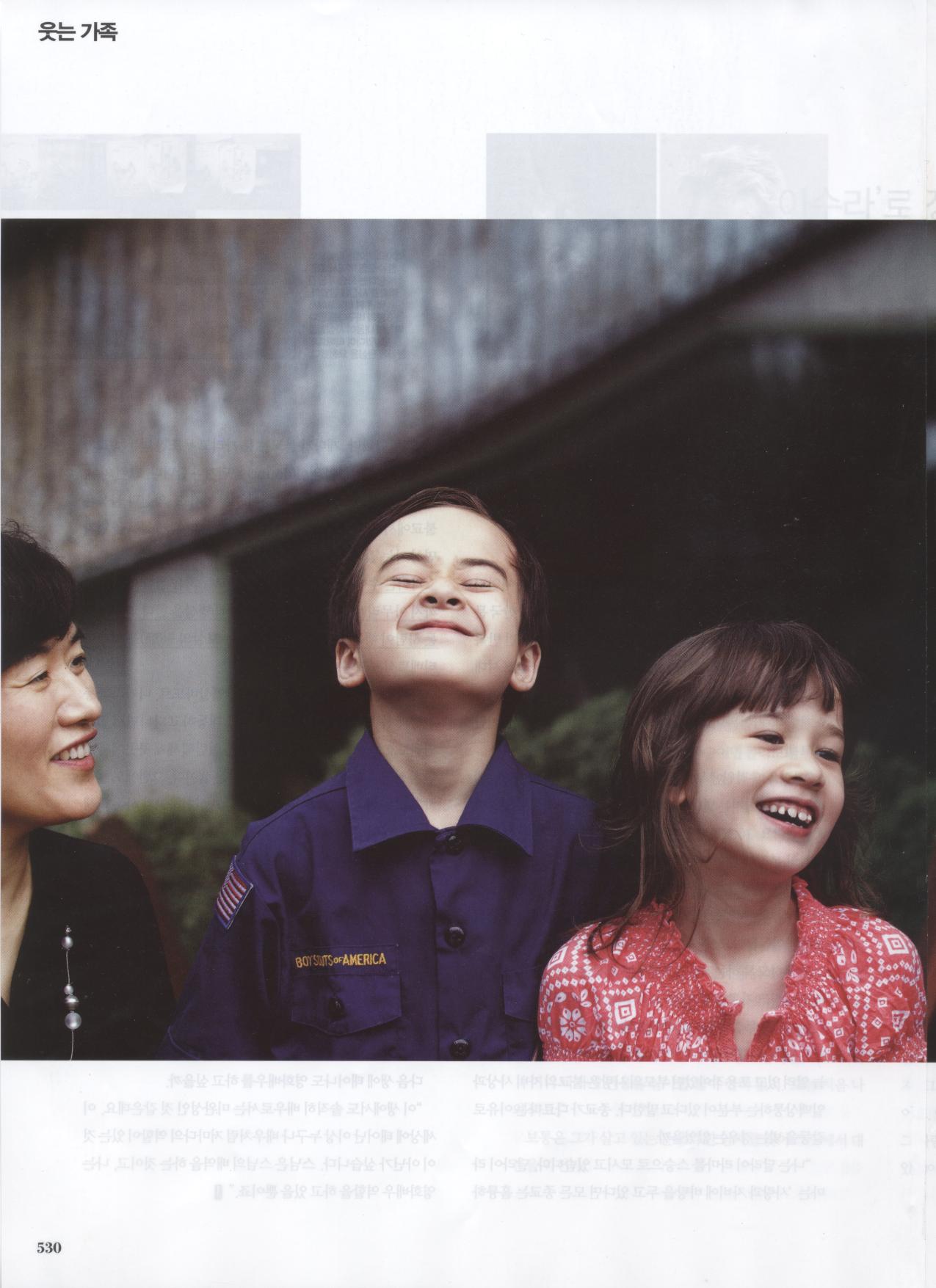
The Fortune Cookies Made by children in Korea

One of the most innovative programs for education that I have found in Seoul  is the “Kids’ Atelier” (어린이 예술 공방) at the Paik Hae Young Gallery in Itaewon. I wrote an article about their excellent programs in the latest edition of Seoul Magazine. This remarkable series of art classes for children creates a total environment in which children learn not only to create art, but also and many other issues in society. Every Saturday, the children gather for a new project with a distinct theme and purpose. The entire space of the house is open to visitors.  The garden, the artwork, the café can be explored by children and parents. The parents who come along with their children can sit in the attractive café and engage in their own intellectual discussions on art, or other topics, with the director and others who stop by. In a sense it is a program for children as part of a “salon culture” that involves everyone.For a detailed description of the Paik Hae Young Gallery, see “Unique Cultural Space Thrives in Itaewon”

Paik Hae Young Gallery recently held a remarkable art project intended to increase exchange with the children in Northeast Japan impacted by the recent tsunami and nuclear disaster. Through a student at Kyung Hee University from Sendai, Honda Nika, I managed to get in touch with an elementary school in Higashi Matsushima, a town half destroyed by the tsunami. Nika’s father made a special effort to introduce me to the principle, Mr. Kudo, and we arranged for a unique artistic exchange: Fortune cookies!

Read more

Life is a Matter of Direction, not Speed

Emanuel's book about life in Korea and the Future of Education

My new book, titled “Life is a Matter of Direction, not Speed” or in Korean “인생은 속도가 아니라 방향이다,” addresses the challenges for young people in Korea and around the world in the context of larger cultural forces and the evolution of education. In the book I also take time to describe my experiences in Korea and explain why I have settled down in this country.  It came out on July 20, 2011, and is published by Nomad Books.  Read on for a Korean-language excerpt.

Read more

The Renaissance for the 21st Century can Happen in Korea

This article originally appeared in the Munhwa Ilbo on August 1st, 2011.   

이만열/경희대 후마니타스 칼리지 교수, 아시아연구소장

최근 서울 안국역 주변 지역을 중심으로 일고 있는 활발한 예술의 흐름을 보다 보면 놀라움을 금치 못한다. 지금 서울은 세계 어디에 내놔도 그 창의성 면에서 돋보이는 작품들을 선보이는 갤러리가 하루가 다르게 늘어가고 있다. 그것은 문화재나 TV 드라마, 가요뿐 아니라 개념예술, 조각, 회화 등의 예술 영역으로 빠르게 확산되고 있다. 이곳 서울에서 일고 있는 문화의 바람이 아시아를 넘어 세계를 향해 나아가고 있는 것만은 확실하다.

Read more

The Economy of Information

I wrote this thought piece in April of 2000 at the very beginning of my consideration of the implications of technology for society and globalization. At the time, I was focused primarily on classical literature, but had been exposed to some discussions about technology at University of Illinois. The essay is erroneously titled “The Economy of Information.” It would be tempting to find a new title, but that act would create a historical inaccuracy. This essay is what led to much of my writings about the internet.

Computer Networks Recapitulate the Human Mind that Gave them Birth

The most interesting, and most powerful confluence in technology is the parallel process of genetic research and computer chip design. Perhaps the more appropriate terms are silicon & carbon engineering. At the very same time that the human genome is being mapped out and a one-to-one correspondence between the specific gene and the trait is imagined, increasingly minute wafer fabrication at a microscopic level is conducted at the same scale as the process of DNA replication. Both carbon and silicon engineering at the microscopic level are developing in parallel. Oddly, silicon engineering seems more and more like carbon engineering (DNA) because unlike previous technologies, like the sewing machine, or the automobile, today’s chip could not be readily replaced if the supporting technology for production disappeared.  That is to say, if you destroyed all parts factories and research laboratories in the automobile industry, you could still produce a vehicle rapidly if you knew the principles of manufacturing. If we lost the factories and data behind a modern silicon wafer, however, we could not reduplicate because the previous generation of computer needed to design it, as the generation before that one was employed before it.

Read more

July 28 Meeting of the Mirae Sotong (Future Communications) Forum

I made a presentation at the Mirae Sotong (Future Communications) Forum  on July 28, 2011 in which I described my thoughts on the “Intellectual Korean Wave.” I suggested that the time has come to go beyond the Korean Wave of pop songs, dramas and Kimchi and start to introduce the best of Korean artists, intellectuals and writers to the world in a serious fashion. See these materials for more in Korean on the talk.  “The Intellectual Korean Wave” is Forthcoming as an article from Korea IT Times and Munhwa Ilbo Newspaper.  The Korean language article follows after the break.

Read more

On Murakami Haruki

A short essay about the time I spent with Murakami Haruki back in the summer of 1993.


On Murakami Haruki


The summer of 1993 followed the very intense period of study that made up my first year at Harvard-a period of readjusting to American society and also American academics. I was selected for a small research grant that allowed me to concentrate on reading in depth the Tale of Genji, the grade medieval Japanese novel, with my advisor for Japanese literature Edwin Cranston. Oki Yasushi, a professor of Chinese literature from University of Tokyo whose classes I had taken previously, was also visiting Harvard. It was a remarkable summer indeed as I remember an unending series of intense discussions about literature and history contemporary society and politics with fellow students and faculty. Harvard over the summer was different than during the year. Graduate ` major institutions around the world poured in.

Read more

The Café Revolution in Korea

When first I came to Korea to study for a year back in 1995, you could walk a mile to find a cup of coffee in Seoul. In the morning, there simply were no places to go out and get coffee and no habit of meeting with individuals for coffee to talk, or simply to read a book.

If one drank coffee, even five years ago, the standard was to rip off the end of a round packet about seven centimeters in length and one centimeter in width. Inside was a delightful coffee mix, famous for its use of transgenetic fats. Then there were the dabang 다방, but those old coffee shops were the domain of men from a previous generation and not particularly welcoming to us.

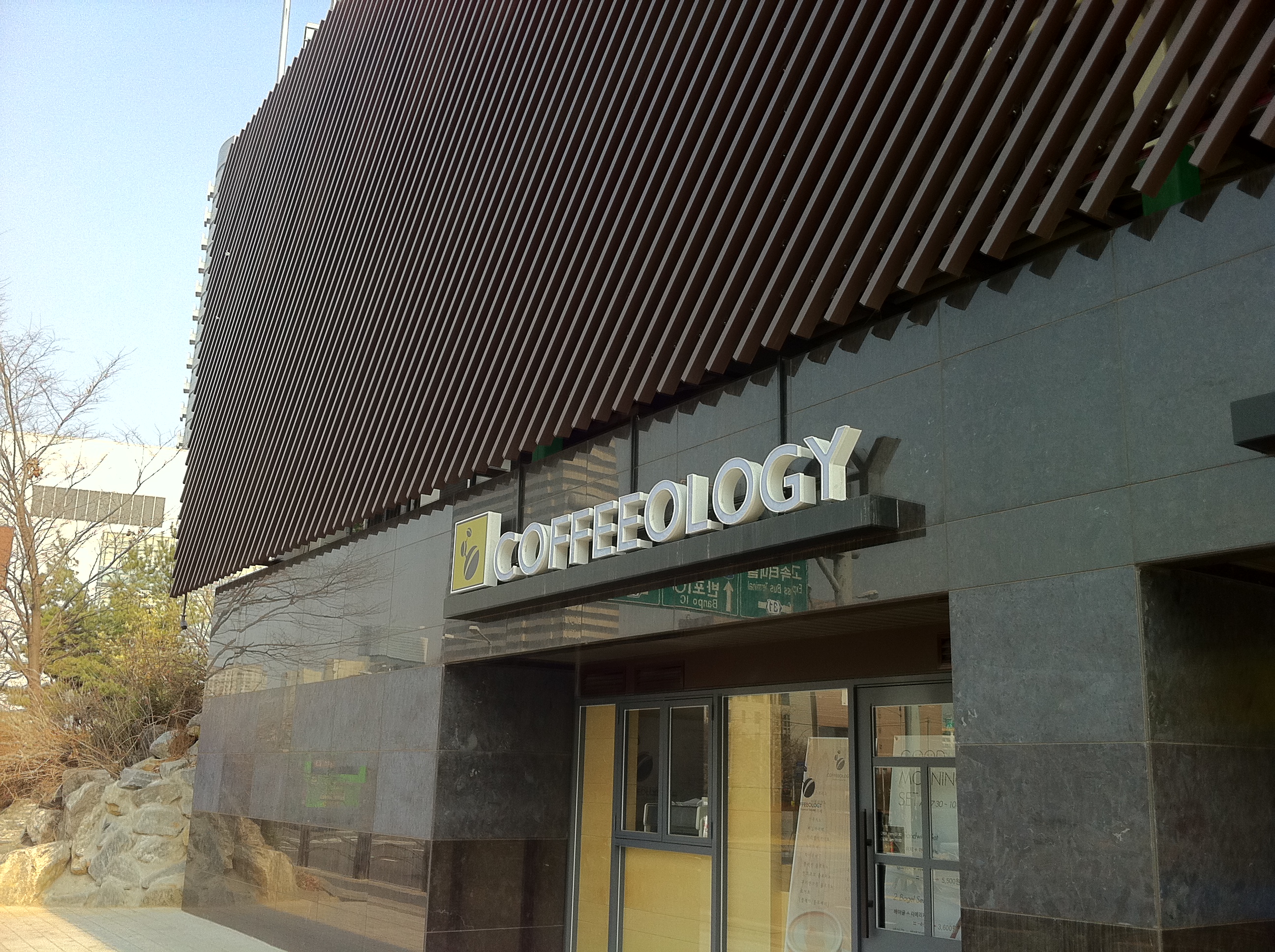
But now coffee shops are springing up everywhere and just about every coffee shop offers café latte and cappuccino—although the quality may vary. In some cases, there seems to be no economic logic to the number of cafes springing up. The pastries also have improved by leaps and bounds, now rivaling what is found in other major metropolitan centers around the world. What we can say is that the coffee shops often do not open until 8:30 or 9:00, so do not go too early.   This particular coffee shop took my fancy. Here we see the long-predicted “death of ideology” when the very concept of ideology becomes a consumer good, proper for a fashionable place to consume espressos .