Occupy Seoul

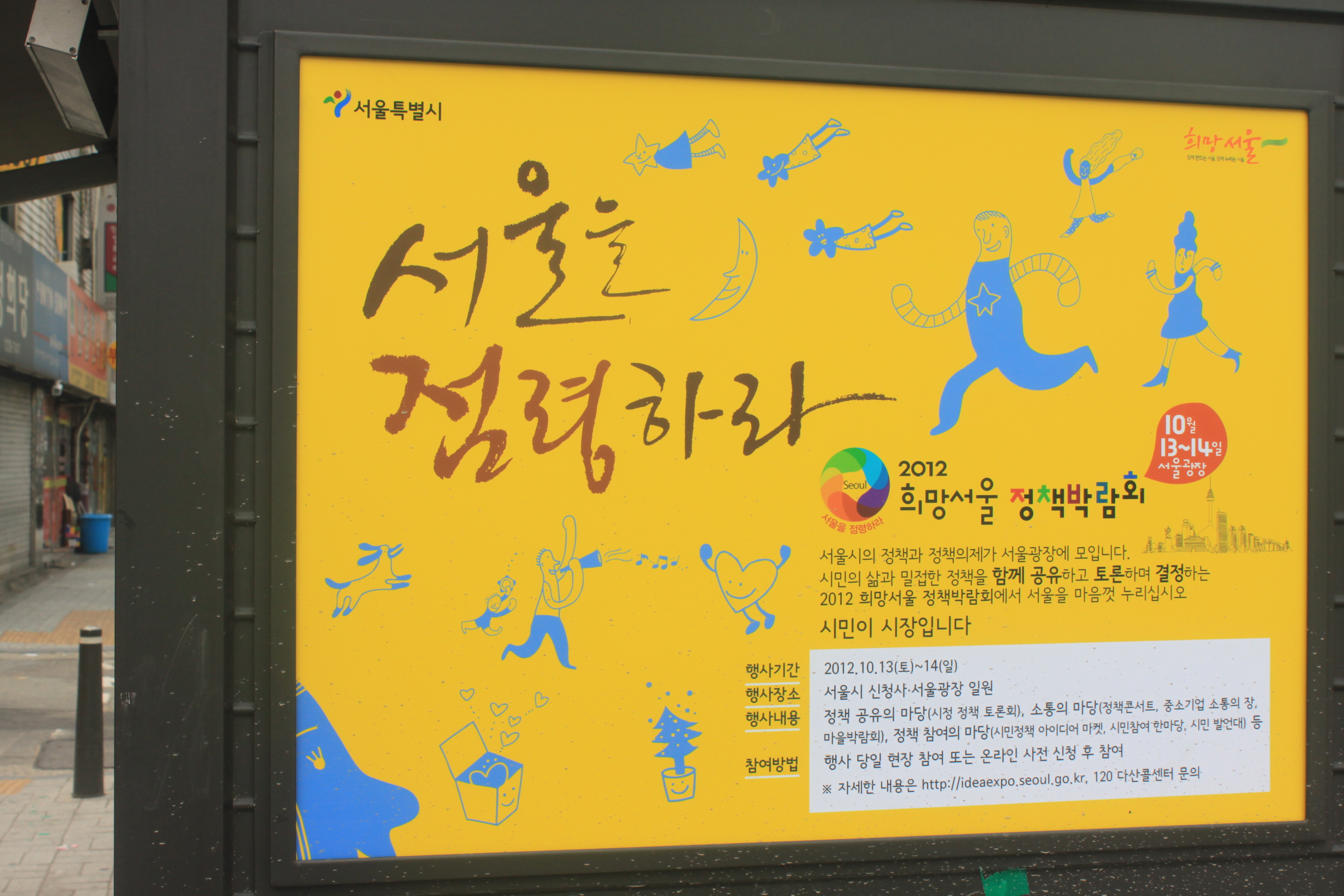
It is fascinating to see that the term “Occupy Seoul” which is associated with protest movements around the world, has been adopted by the City of Seoul as part of its regular administrative policy.

“Occupy Seoul” refers to a “policy expo for a ‘Seoul of Hope'” held October 13-14, 2012.
The event is billed as a “gathering for participation in policy” or “Seminar on City Goverment Policy”
Suggesting that citizens will be able to participate in the policy debate and provide their opinions.

The process for the discussion is described here.


As I did not attend the event, I cannot describe its content or assess the significance of the approach. It is interesting that the City of Seoul was able to adopt this term, however.

A tale of Two Cities: Seoul in 2012

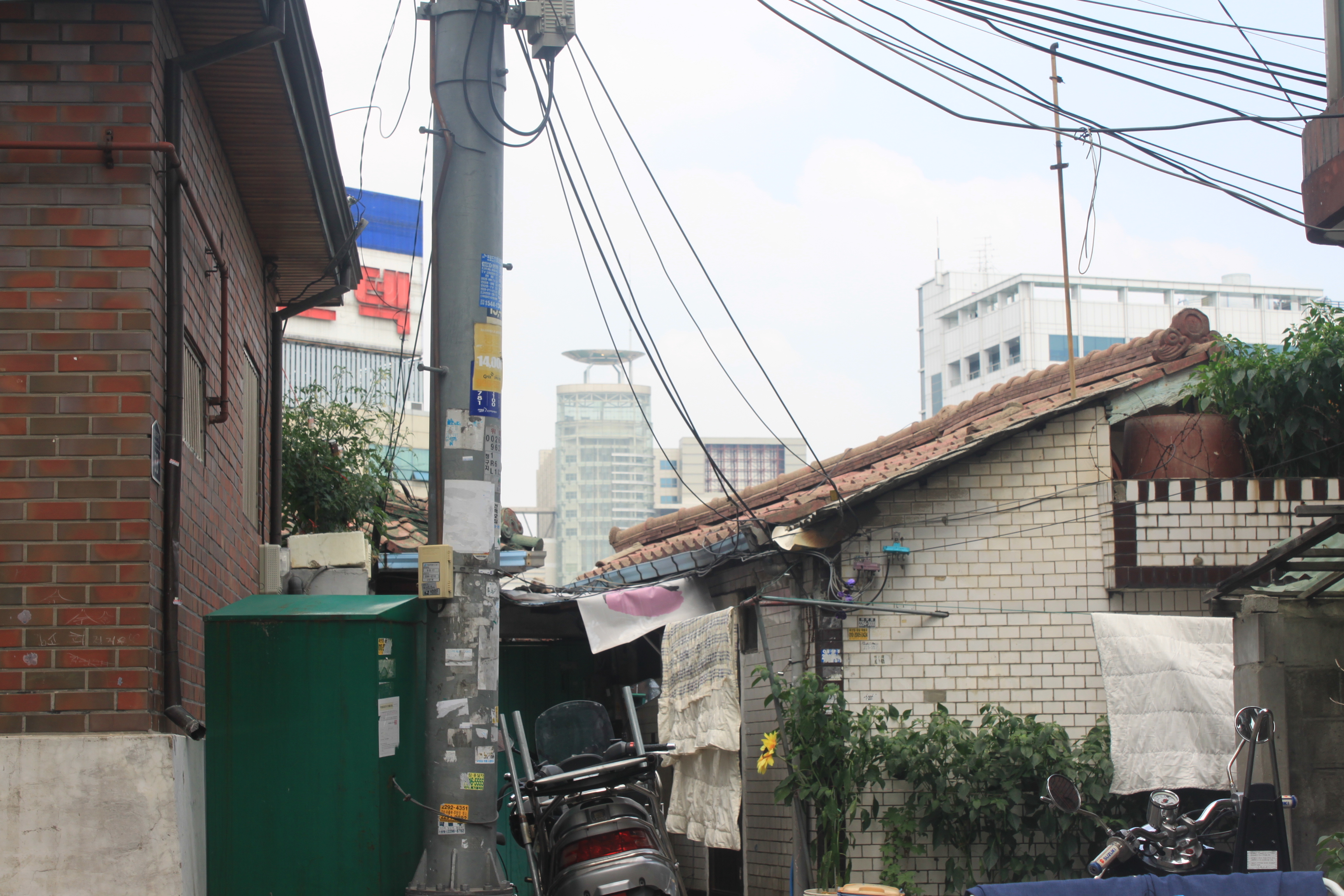
One striking aspect of Seoul these days is the contrast between the traditional world of family neighborhoods of a small scale including many brick houses of one or two stories and family businesses such as plumbers, carpenters and small stores on the one hand and a rapidly growing city of large-scale shopping malls, office buildings and apartments.

Lumber merchant in front of new office building.


The traditional street in Sindang-dong with the larger new developments around the new Dongdaemun History Park behind it.


The two worlds have very little to do with each other and form essentially two sides of Seoul. To some degree, the combination of the two is part of Seoul’s attraction. But at the same time, one cannot help but wonder what exactly powers the sudden rise of the large-scale buildings.

Read more

Asia Institute Seminar with Robert McChesney “Korean Media in Comparative Perspective”

Asia Institute Seminar


May 9, 2012


“Korean Media in Comparative Perspective”


Robert W McChesney

Gutgsell Endowed Professor in the Department of Communication

University of Illinois


Emanuel Pastreich:

The reliability of the mainstream media has become an enormous issue in Korea today as many feel that the newspapers and television broadcasts no longer serve a role of keeping citizens informed. Recently the TV comedy show “I am a Selfish Prick” (“Nanun Ggomsu da”)  was rated as more accurate than the mainstream media—even though most of its content is tongue in cheek. What exactly is the problem with media and how can we approach it?

Robert McChesney:

Firstly, one must begin understanding that the media is a problem for Korean society. By “problem” I do not mean that the media is poor quality or produces dubious content that has negative effects upon our culture, politics, and society. By this framing, if the media were doing a commendable job, there would be no problem. Whether their content is good, bad or a combination, the media is a problem for any society, and an unavoidable one at that.  The problem of the media exists in all societies, regardless of their structure.

Emanuel Pastreich:

So the very existence of media in any country, not just Korea, will bring forth issues that are problematic. Is that is to say there is not a pure state of an objective media that we could reach if we just follow a certain set of policies? To become a democratic society does not make one immune from such problems?

Robert McChesney:

Media are at the center of struggles for power and control in any society, and this is arguably even more the case in democratic nations, where the issue is more up for grabs.

The political nature of the problem of the media in democratic societies is well-known, virtually all theories of self-government are premised on having an informed citizenry, and the creation of such an informed citizenry is the province of the media.  The measure of a media system in political terms is not whether it creates a viable democratic society, but whether the media system, on balance, in the context of the broader social and economic situation, challenges and undermines anti-democratic pressures and tendencies, or whether it reinforces them.  

Read more
How can you have a democracy if you do not know even who your neighbor is?

There is a lot of discussion about how to enrich and restore democracy, whether in Korea or in the United States. Little of that discussion spends much time considering what exactly “democracy” means. The failure to address the nature of democracy makes us blind to the implications of the systems we employ to pursue “democracy.”

Let me put it this way. If we elect dictators every four years and then have the right to dismiss them if they do not do what we thought they would do, is that a democracy? I would say it is not. We are in effect treating politicians like products, like Tide, which we assume will get out stains. And if Tide does not get the stains out, well we can buy another product. We assume of course that we have other choices in shopping, or in elections, to pick something else. Whether we have alternative products, or just the same products with slightly different packaging, remains a serious question.

Read more

“선비정신이 구닥다리? 세계가 탐내는 엘리트 전통이죠” 조선일보

朝鮮日報

2012년 9월 20일


“선비정신이 구닥다리? 세계가 탐내는 엘리트 전통이죠”

정옥자•페스트라이쉬 교수 안동 군자마을서 토크 콘서트

“요즘 싸이의 ‘강남스타일’이 세계를 휩쓸고 있지요. 하지만 그것만으로는 한국의 대표로 삼기에는 부족해요. 썬비(선비) 정신이야말로 한국의 정체성을 대표하는 키워드가 될 수 있다고 생각해요.”(페스트라이쉬 교수)

“제가 대학생 시절일 때만 해도 선비 하면 구닥다리, 시대착오라고 했어요. 수십년이 지나 이런 선비 행사도 열리고 먼 데서 찾아오는 분들이 있는 걸 보면 격세지감을 느낍니다.”(정옥자 교수)


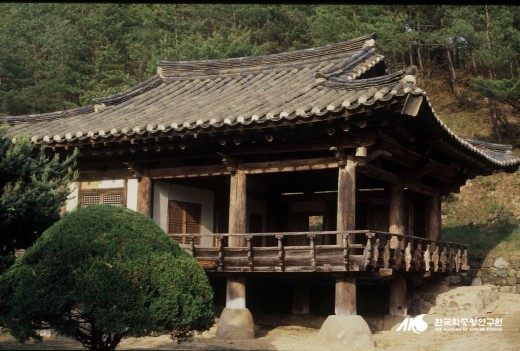
안동 군자마을 탁청정에서 열린 토크 콘서트에서 정옥자(오른쪽) 교수가“한때‘시대착오’로 여겼던 선비 정신에 대한 관심이 되살아나는 것이 반갑다”고 하자, 페스트라이쉬 교수는“선비야말로 세계를 향해 한국이 내놓을 만한 문화 브랜드가 될 수 있다”고 화답했다. /남강호 기자 kangho@chosun.com

Read more

An important question about the status of Chinese ideographs

I have an important question about Chinese ideographs and would very much appreciate your comments or thoughts.
Many Koreans believe that the  Chinese characters were borrowed from China by Koreans and employed in a most unnatural manner for almost all writing until the 20th century. That Chinese writing was, many hold an alien writing form that was at a distance from their own original language.

토크콘서트 “선비정신에서 새로운 리더십의 원형을 찾는다!”


한국국학진흥원  

토크콘서트

선비정신에서 새로운 리더십의 원형을 찾는다!”

– <한국적 리더십, 선비정신을 찾아서>  

정옥자 교수(서울대 명예교수),

임마누엘 페스트라이쉬 (경희대 교수)


일 자: 2012년 9월 19일(수요일) 오후 4시

장 소: 안동 오천 군자마을 탁청정

주 최: 문화체육관광부 ■ 주 관 : 한국국학진흥원 ]

탁청정


Read more

The Gate to the East Rises over Suzhou

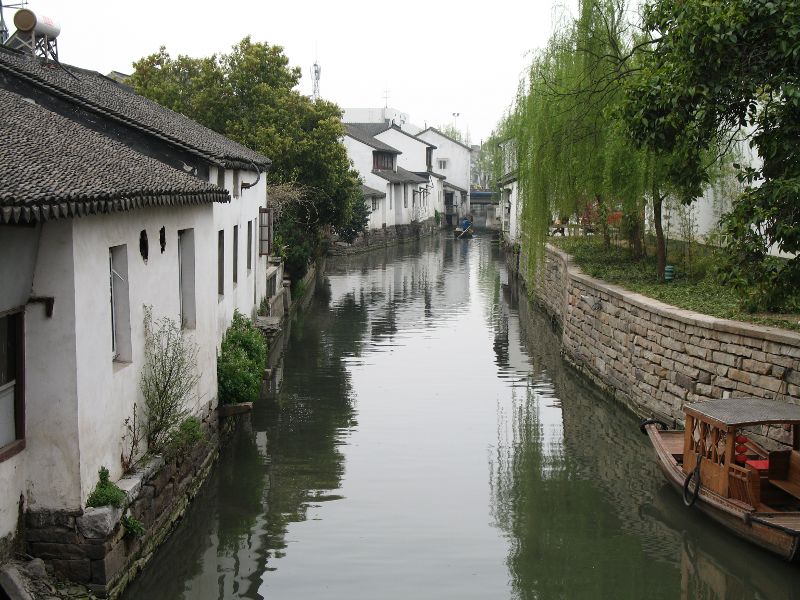
I have not been in Suzhou since 1991. I remember the old canals that I had read about so often were being rebuilt and prettied up in ways that I must say were not exactly to my liking. Suzhou was changing quite rapidly at the time and I felt I could see something slipping away before my eyes.

The canals of Suzhou embody the understated wealth and erudition of this intellectual mecca. If I had to imagine an ideal hope, perhaps Suzhou of the Ming Dynasty would be it.

But now an enormous “Gate to the East” 东方之门 is rising above Suzhou that dwarfs everything else. Two towers come together as one, perhaps symbolizing a marriage of East and West, or of past and present.

The changes are profound, and reminds us that increasing Chinese economic and political self-confidence has not manifested itself in a reaffirmation of traditional Chinese aesthetics, with a few notable exceptions. 

Read more

The New Political Culture of Intimacy: Ahn Chol-Soo’s Book “Thoughts of Ahn Chol-Soo”

I am currently reading Ahn Chol-Soo,s new book  “Thoughts of Ahn Chol-Soo.”

Ahn, who serves as Dean of Graduate Studies at the Institutes for Convergence Technology at Seoul National University, has been engaged in a remarkable political dance for the last year  concerning whether or not he will run for president. He  is someone  who has never held political office before. In the United States, this sort of a political game would  be impossible as no one  who is not committed early on could possibly be a last-minute candidate. With the Korean elections scheduled for December, it is astonishing that someone who has not taken the first step to start a campaign is being compared favorably at times with the conservative party candidate Park Kyun-hye.

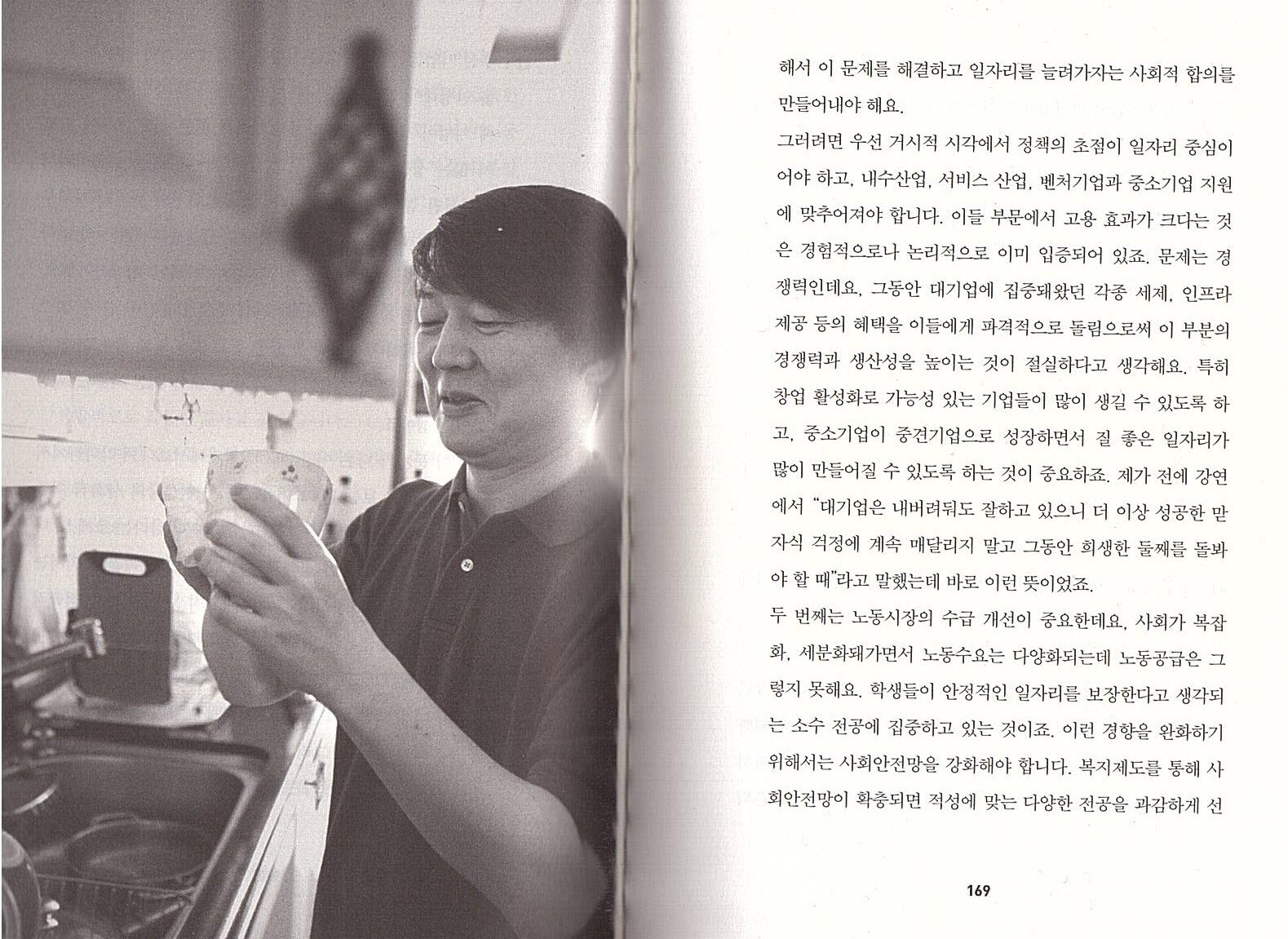
This photograph of Ahn washing dishes is one of many photographs of Ahn Chol-Soo that pepper his new best-seller “Thoughts of Ahn Chol-Soo.” The choice of dish washing is significant at several levels. Most political figures put most of their effort into building up their stature. Here Ahn attempts to create an accessible and intimate image as someone who is a successful businessman, but still perfectly capable of washing his own dishes.

Read more

Pastreich Talk at KBS about the power of Korean Media.

I gave a talk at KBS’s education center in Suwon on the topic of the Korean Wave and the future of KBS on July 24, 2012. The talk was intended for new employees of KBS and there were perhaps 150 young people, fresh out of college, who represent the future of Korean media.

The talk stressed the importance of Korean youth to take advantage of their remarkable cultural influence in the world to create a better future for us all. I gave examples of the impact that Korea can have in either a positive or negative manner, and drew attention to the great depth of the Korean cultural tradition, far beyond current K Pop, to inspire people around Asia and around the world to reach for something greater than consumerism and self-gratification.

The talk encouraged the next generation at KBS to imagine a unique global KBS that reaches beyond its limits, a medium that can go beyond CNN, BBC and Al Jazeera.

The response of the young KBS employees was quite enthusiastic and one even came up to me to tell me about her plans to learn more about China.