科学技術都市間の生態都市連合


科学技術都市間の生態都市連合

(エコ・シティ連合) 

ECOCITY ALLIANCE OF SCIENCE TOWNS

PALO ALTO (UNITED STATES), TSUKUBA (JAPAN) & DAEJEON (KOREA)

パロ・アルト(米国)・つくば市(日本)・テジョン市(韓国)

2009年 1月 1日


コンセプト

今日、ごみの減量化、エネルギー消費の縮小、世界的気候変動への積極的な働きかけ、市民の健康および都市空間の居住性の改善といった、生態学的な観点からの持続的発展の可能な都市環境への欲求が増大しています。 しかし国家を横断した都市間でそのような変革を達成しようとするならば、我々は市民の支持を取り付けた効率的機能用件の必要性に対し、特に関心を示す国々とともに、エコ・シティのモデルとなるいくつかのモデルの確立を鋭敏にかつ迅速に目指さないとなりません。それらのエコ・シティは、ごみ処理・用水管理・自然公園・野生動植物の保護区域・代替エネルギー・絶縁体、交通環境問題など極めて現代的あり、ほとんど環境に負荷をかけない手法を取り込んだ次世代エコ・シティの創造のために講じられるであろう、国家努力のあり方を示すヒントとなるでしょう。

最先端のエコ・シティにとって最適の場所は、第1に、大都市よりコミュニティをすばやく変化させることが可能である、比較的コンパクトな都市です。第2に、その都市は、エコ・シティに関連したすべての分野にわたる最も高度な研究に容易にアクセス可能できることが求められるため、科学技術団地のある地区が存在していることが望まれます。

最後に、環境変動の脅威がグローバルな問題であることから、研究団地から入手可能なテクノロジーを周辺地域から調達し、エコ・シティのモデルを発展させるための努力がグローバルな努力へと結びつくことが求められます。比較することは、すなわち、互いの戦略に関して意見を交換することであり、いくつかの都市間での最先端のエコ・シティを発展させるコストを分担することで相互に大きな利益を得ることができます。さらに、異なる国家間の協調という国際的要素は、国内的にも世界的にもそれらの成果に多くの国々が関心を抱くことになるでしょう。


参 加 者


前述した理由から、エコ・シティ連合の中核となる3つの都市は、スタンフォード大学を抱えシリコンバレーの中心にある米国のパロ・アルト (Palo Alto)市、KAISTの本拠があり韓国の科学技術をリードする大学と諸研究機関を抱える韓国のテジョン(大田)市、筑波大学が設置され, AISTなど科学研究機関を複数かかえる 日本のつくば市からはじめられることが、望まれます。これらの都市は、より大きい地下鉄都市(サンフランシスコ、東京、そしてソウル)に近く、優秀な専門家と研究設備をかかえ、次世代エコ・シティを設立するために必要なすべての分野と関連しています。

Read more

ECOCITY ALLIANCE OF SCIENCE TOWNS (January 2009)

This proposal was made to the cities of Palo Alto, Tsukuba and Daejeon in 2009 and we added Shenzhen in 2010. Although we were able to arrange three meetings between representatives of Palo Alto, Tsukuba and Shenzhen in 2010, ultimately the proposal was not followed up on. I do see the discussion, however, as historically significant and I look forward to a day when we can begin the conversation again.


ECOCITY ALLIANCE OF SCIENCE TOWNS


PALO ALTO (UNITED STATES), TSUKUBA (JAPAN) & DAEJEON (KOREA)


January, 2009


THE CONCEPT

There is a tremendous demand today for an ecologically sustainable urban environment that reduces radically waste, minimizes energy usage, has a positive impact on the world’s climate, and improves the health of citizens and the livability of urban spaces. In order to achieve such a transformation in cities across the country, however, we must first establish several model ecocities quickly which are sensitive to the needs of the particular country and function efficiently with the support of citizens. Those model ecocities will be the inspiration for other efforts within the country to create next-generation ecocities that handle in the most modern and most environmentally nonintrusive manner garbage disposal, water management, parks, wild spaces, alternative energy, insulation, transportation etc.

The best place for a cutting edge ecocity is in a city of relatively small dimensions because it can be transformed more rapidly than larger urban communities. Moreover, that city should be home to a major technology cluster in which access to the most advanced research in all fields relevant to an ecocity are readily available. Finally, because the threat of climate change is global, the effort to develop a model ecocity at the local level using all available technologies from the research cluster should be part of a global effort. Comparing notes, exchanging strategies, even sharing the costs of developing a cutting-edge ecocity between several cities can have great benefits and the international component will draw greater attention to the effort itself domestically and globally.


THE PARTICIPANTS


The three cities that would be at the center of this Ecocity Alliance from the start will be Palo Alto, home to Stanford University and at the center of Silicon Valley, Daejeon, home of KAIST, Korea’s leading technical university and multiple research institutes and Tsukuba (Japan), home of Tsukuba University, RIKEN, AIST and other scientific research institutes. Each of these cities is close to a larger metro city (San Francisco, Tokyo and Seoul, respectively) and each has outstanding faculty and research facilities related to all fields required to establish a next-generation ecocity.


THE SIGNIFICANCE of the Ecocity Alliance


Not only can the three cities share their strategies, their technical expertise and their ideas, the international exchanges between experts, parents and school children engendered by this effort will be a source of excitement and stimulation. Moreover, these exchanges will allow citizens to fully grasp the global nature of the environmental crisis. High school students will have the opportunity travel to the other “sister ecocities” to conduct studies (or perhaps do joint studies with their peers in the other countries via the Internet). Costs for purchasing materials, or hiring consultants, can be split between the three cities.


As each city becomes a model ecocity for its own country, the benefits to the research institutes will only increase, and the livability of the cities will make them more attractive to faculty.


Concrete Steps:

Short term:
Establish closer working relations among Asian countries on environmental and energy issues. Participants will effectively identify possible areas for collaboration and learn from other cities.
Medium term:
Establish benchmarks for ecocities and initiate formal sister ecocity connections; establish a system for objectively evaluating achievements of ecocities using the Yale Index or the UNDP index at the local level.
Efforts will be made to strengthen ties to international organizations, to engage in dialogue on curricular change with educators and students from urban studies and architecture programs, and to encourage practical change in how city planning is viewed on the level of local government.


Long-term:
Demonstrate the impact of local changes on national policy; demonstrate a measurable effect on global environmental indicators; establish global standards for ecocities.
Determine criteria for recognition as 1) beginning ecocity 2) established ecocity 3) advanced ecocity.

Award recognition, opportunities for investment, etc. for cities that reach the advanced level.
Establish an EMN (Ecocity Mayor’s Network).
Publication, in multiple languages, of a manual for setting up an ecocity.

1) To publish materials in multiple languages outlining basic strategies for reducing energy use and improving the environment in coordination with other organizations. These materials are aimed at local government and citizens.
2) To build close working relationships between local governments to discuss common concerns and put forth proposals for cooperation.
3) To arrange for the joint purchases of materials (such as solar cells) in large quantity so as to reduce the cost.
4) To administer a system for the open exchange of information concerning strategies and technologies.
5) To organize ecocity conferences and symposiums.
6) To undertake joint applications by multiple ecocities to international organizations for funding.
7) To establish evaluation criteria for assessing the progress of Ecocities and creating incentives for ecocities in cooperation with central governments and international organizations.
8) To promulgate new standards for measuring growth that take into account environmental factors; also translating and popularizing these standards at the local level. To recommend and to advise in the implementation of careful evaluation programs for environmental issues at the local level using Yale Index, UNDP index or some other standard.
Read more

“기후변화 위협, 이대론 한국의 미래 보장 못 한다” (오마이뉴스 2016년 12월 1일)

오마이뉴스

“기후변화 위협, 이대론 한국의 미래 보장 못 한다”

2016년 12월 1일

임마누엘 페트라이쉬

경제개발 5개년 계획과 같은 국가 주도 미래 계획 짜야

최근 부산과 제주에 들이친 태풍 차바는 막대한 피해를 주면서 이런 종류의 재해에 대비하지 못한 한국의 허술한 실태를 그대로 보여줬다. 과학자들은 향후 30년간 바다의 수온이 상승하면서 점차 이런 대규모 기상이변이 빈번해질 것으로 예측하고 있다.

유럽에서는 이미 기후변화에 따른 영향을 예측하고 대비하기 위한 위원회를 설치하고 운영 중이다. 그렇다면 해수면 상승에 의한 범람 사태에 한국은 어떤 대비책을 마련해두었는가? 없다. 사태는 언제가 되었건 나타날 것이다. 아마도 연안은 해수 범람으로 살 수 없는 지경이 될 것이며 농업 역시 막대한 타격을 입어 농산물 생산량도 줄어들 것이다.

진정 큰 문제는 후자에 있다. 국내 농산물 감소는 외국 농산물을 싼 값에 수입하면 될 일이고, 버려진 농지는 주거용으로 쓰면 된다는 식으로 간단히 말할 수는 없다. 미국과 러시아 등 농산물 생산국에서 나타나는 농지 사막화 현상과 중국이나 인도에서 늘어나는 식량수요에 맞물려 한국의 농산물 수입은 점점 더 어려움을 맞을 것이다. 따라서 향후 기후변화에 대비해 국내 농업의 체질을 개선하는 일이 매우 중대한 과제로 떠오를 것이다.

이제는 단지 재해가 일어난 뒤의 구호체계를 만드는 데서 나아가 주거, 농업을 포함한 모든 인간 활동의 면면에 영향을 미치는 기상이변에 선제적으로 대비하는 장기적 대응책이 필요하다.

30년 후 한국의 미래를 그려 보는 비전의 일환으로, 최상의 인재들이 모여 기술 개발을 위한 5개년 계획을 정치(精緻)하게 구상했던 시절이 있었다. 1962년부터 1981년까지 이어진 경제개발5개년 계획은 5년 단위로 설정된 계획을 통하여 전문 인력을 확보하고 사회 인프라를 구축하며 기술을 획득하는 동시에 당시 한국이 직면한 도전이 무엇인지에 대한 대다수 국민의 동의를 구하기 위해 자원을 동원하는 사업이었다.

그 후 계획은 인프라와 기술력 확보를 지향하는 초점이 사라진 상태로 1996년까지 지속되었다. 물론 2026년까지 이어질 제3차 생명공학 육성법에서 볼 수 있듯이 과학기술에 대한 정부의 장기적 지원은 계속되고 있다고 볼 수도 있겠다.

그렇지만 현재 과학기술 연구개발의 추세는 진정 한국이 직면한 위협에 대응하기 위한 기술 개발이 아니라 세계시장을 겨냥한 상품 개발에 지나치게 주력하는 모습을 보여주고 있다. 한국의 미래를 위한 5개년 계획을 다시 짤 때가 되었다. 새로운 5개년 계획의 최우선 과제는 기후변화에 대응하면서 에너지 소비를 경감하는 작업이 되어야 할 것이다. 계획의 수립을 위해서는 우선 다음과 같은 미래 예측이 선행되어야 할 것이다.

첫째, 10년, 20년, 30년 후 한국이 처하게 될 자연환경은 어떤 상태가 될 것인가? 해수면은 어느 정도 상승할 것이며, 가뭄, 태풍, 돌발홍수는 어떤 빈도로 발생할 것인가? 토양이나 임산, 농산, 수산 자원은 어떤 상태가 될 것인가?

둘째, 현재의 기술 발전을 감안하여 미래 각 시점에 어떤 가용기술을 동원할 수 있을까? 어떻게 그 기술을 가능한 한 빨리 적용하여 탄소가 발생하지 않는 방식으로 예상되는 기후변화의 위협에 대응할 것인가?

셋째, 미래의 기후위협에 대응하기 위해 기술 기반의 새로운 인프라를 설계하고 이용하기 위해서는 시간이 얼마나 필요할까?

수출보다 기후변화 대책이 더 시급

그런 예측에 기반한 계획은 다음과 같은 내용이 될 것이다.

첫번째 5개년 계획은 우선 2021년까지 모든 건물에 태양광 패널을 설치하고 적절한 단열 처리를 의무화하면서 시작되어야 한다. 창문에는 태양광 필름을 부착하게 하고, 보온을 위해서는 신속히 최상의 단열재를 이용할 수 있는 방안을 마련해야 할 것이다. 산업계, 학계 및 정부가 함께 진행할 그 계획은 기술 문제나 상업화 문제뿐 아니라 지역민의 참여가 보장되도록 시민 교육이 병행되어야 할 것이다. 초대형 태풍, 해수면 상승에 대응하여 산림, 해양, 농지를 보호하기 위한 계획들 역시 개별적으로 수립, 시행되어야 한다.

경제개발 계획의 목표가 수출용 상품을 개발하는 것이 되어서는 안 된다. 기후변화의 위협으로부터 국가를 보호하는 것이 주 목표가 되어야 한다. 해수면 상승과 온난화의 위협에 대한 대비는 국가안보 차원에서 상업적 이해관계를 넘어서는 기획이 되어야 할 것이다.

이들 기획을 위한 재원은 가능한 한 국내에서 마련해야 할 것이다. 재원은 국가적 이익과 무관한 투기나 단기적 투자가 아니라, 기후변화에 대한 국가차원의 대응에 필요한 구체적인 수요를 위해 투입되어야 한다.

기후변화라는 압도적인 위협에 직면해서도 조선업, 자동차 산업, 철강 산업, 석유화학공업 등의 산업이 한국의 미래를 보장해 줄 수 있으리라는 기대는 접어야 한다.

기후 변화라는 엄청난 위협에 장기적인 안목으로 대응하기 위해 정부는 유용한 기술을 사회구조의 수요에 맞추기 위해 전시 경제에 준하는 기획과 실천을 통해 용기와 지도력을 보여 주어야 할 것이다. 그 과정에서 예외는 인정될 수 없다.

좀 더 구체적으로, 정부는 화석연료의 수입 의존도를 과감하게 줄여 나가야 한다. 에너지 사용량을 줄이기 위해 효율을 높이고 광범위한 기술을 수용하며 시민들의 의식을 고취하기 위한 구체적인 목표를 설정하는 일련의 5개년 산업 발전 계획을 시행해야 한다.

그리고 매우 빠른 속도로 목표를 달성할 수 있는 기술적인, 관습상의, 정책적인, 그리고 문화적인 체제를 구축하는 노력이 수반되어야 할 것이다. 한국 특유의 문화와 관습에 기반 하여 만들어진 독특한 혁신방식은 그 자체로 전 세계가 공유할 수 있는 소중한 ‘상품’이 될 수도 있겠다.

기후변화에 대응하는 5개년 계획은 기후변화에 대한 적응과 기후변화를 완화시키기 위한 계획이 긴밀하게 연계되어 병행되어야 한다.

계획은 한국인의 문화, 관습 그리고 가치관의 변화를 모색하고 석유 수입으로부터의 해방을 포함하는 금융, 무역, 투자 정책의 대대적인 개혁을 요구한다. 그리고 그 결과는 모범적인 글로벌 모델국가 한국의 등장이 될 것이다.

Read more

“어수선한 시절, 퇴계의 진리를 되새기다” 중앙일보

일본에서 이퇴계 관련 학회에서 기조열설을 했어요.

중앙일보 보도는


“기조 발표한 임마누엘 페스트라이쉬(이만열) 경희대 교수는 “우리 삶의 도덕적 의미를 제어하는 방도를 회복함으로써 우리는 건강한 정치문화를 창출해 낼 수 있다”고 제안해 주목받았다. 이 교수는 “우리 사회가 점점 더 지속 불가능하고, 소비와 충동적인 욕망에 내몰린 단말마적 시각에 머물러 있어서 공동의 미래를 열어갈 비전을 제시할 수 없는 지경에 이르렀다”고 경고했다. 그러면서 “ 신유학(新儒學)의 전통, 특히 퇴계가 주창한 경(敬)의 회복으로 정치인들에게 압력을 불어넣을 수 있다”고 토로했다.”


중앙일보

“어수선한 시절, 퇴계의 진리를 되새기다”

2016년 11월 30일

정재숙


 이 어지럽고 황망한 때에 우리 마음을 그윽하게 이끌어줄 한 말씀은 없는가. 지난 26~27일 일본 후쿠오카 국제회의장에서 열린 제26차 퇴계학(退溪學) 국제학술회의는 정치 격변의 시절에 ‘왜 다시 퇴계인가’를 묻는 자성의 목소리가 높았다. 이광호 국제퇴계학회 회장은 “현대 인류가 처한 위기 상황을 생각하면 이 시대가 요청은 하면서도 찾는 방법을 알지 못하는 인간의 마음, 그 마음의 근원에 관해 500여 년 전 퇴계가 밝힌 진리는 지금 더 절실하다”고 개회의 뜻을 전했다. 주최 측인 한국을 비롯해 일본•중국•캐나다에서 모인 학자와 회원 150여 명은 퇴계 이황(1501~70)이 걸어간 인간의 근원적 혁명의 길을 어떻게 21세기형으로 거듭나게 할 수 있을까, 28편 논문 발표와 토론으로 따졌다.

일본서 퇴계학 국제학술회의 한•중•일•캐나다서 모인 150여 명선생이 닦은 ‘경(敬) 사상’ 열띤 토론 기조 발표한 임마누엘 페스트라이쉬(이만열) 경희대 교수는 “우리 삶의 도덕적 의미를 제어하는 방도를 회복함으로써 우리는 건강한 정치문화를 창출해 낼 수 있다”고 제안해 주목받았다. 이 교수는 “우리 사회가 점점 더 지속 불가능하고, 소비와 충동적인 욕망에 내몰린 단말마적 시각에 머물러 있어서 공동의 미래를 열어갈 비전을 제시할 수 없는 지경에 이르렀다”고 경고했다. 그러면서 “ 신유학(新儒學)의 전통, 특히 퇴계가 주창한 경(敬)의 회복으로 정치인들에게 압력을 불어넣을 수 있다”고 토로했다.

주자(朱子)와 퇴계와 다산(茶山) 정약용의 철학을 비교한 돈 베이커 캐나다 브리티시콜럼비아대학 교수는 “세 학자 모두는 진정으로 인간답다는 것은 우리 동료인 타인들과 타당하게 상호작용하고 타인의 이익을 나의 이익에 우선하는 것을 의미한다고 갈파하고, 이를 실천할 수 있는 능력 배양의 방법을 제안했다”고 설명했다. 베이커 교수는 “우리가 세 분이 제공하는 마음공부의 조언에 귀 기울인다면 이 세상은 보다 나은 곳이 될 것”이라고 결론지었다.

이밖에 곽정례 경희대•김언종 고려대 교수의 ‘조선 유학의 일본 전파 경로에 관한 재론’, 양일모 서울대 교수의 ‘계몽기 한국 잡지의 퇴계 담론과 일본의 지식인’ 발표가 눈길을 끌었다.

참석자들은 퇴계학 국제학술회의 개최 40주년을 기념해 ‘이퇴계 선생 현창비(顯彰碑)’, 위패를 모신 서원 ‘경신당(敬信堂)’이 서있는 쇼교지(正行寺)를 답사했다. 다케하라 치묘(竹原智明) 주지는 “‘경(敬)하지 않음이 없도록 하라’는 퇴계 선생의 정신을 받들며 살아가고 있다”고 인사했다. ‘이퇴계 선생에게 배우는 모임’이 활성화된 일본인의 퇴계 선생 사랑을 확인하는 자리였다.


‘중국의 꿈’은 미국인가 (허핑턴포스트 2016년 11월 30일)

허핑턴포스트

‘중국의 꿈’은 미국인가

2016년 11월 30일

임마누엘 페스트라이쉬

얼마 전에 어느 회의에 참석하기 위해 중국 남경에 다녀왔다. 거기서 안내를 해주는 학생에게 그 유명한’부자묘(夫子廟)’에 데려다 달라고 부탁했다. 도심이 아닌 외곽의 옛 정취가 남아 있는 찻집에서 차라도 마시면서 여유로운 시간을 갖고 싶었기 때문이다.

남경을 방문한 것은 이번이 처음인데 명나라 때까지 ‘금릉(金陵)’이라 불렸던 ‘남경’에 대해서는 적지 않은 연구를 해왔다. 도쿄대학(東京大学)과 하버드대학에서 중국문학을 공부했을 때 남경을 무대로 지어진 시를 많이 읽었다. 17세기의 산문 잡기에 등장하는 진회하(秦淮河)의 아름다운 풍경과 대학시절 소설 『홍루몽(紅楼夢)』을 읽을 때 상상했던 18세기 남경의 죽 늘어선 저택들의 모습이 여전히 뇌리에 스치고 있다.

그러나 시끌벅적한 거리를 걸으며 옛 금릉의 모습을 찾아보고자 했던 나의 노력은 허사로 돌아갔다. 부자묘 주변의 옛 건물은 이미 철거되었고, 그 자리에는 패스트푸드점과 양복점 등이 들어선 볼품없는 콘크리트 구조물들로 채워져 있었다. 질 좋은 고급 차를 파는 곳도 몇 집 있었지만 길가 상점에서 팔고 있는 음식과 기념품들은 방콕이나 L.A에서 파는 것들과 별반 다르지 않았다. 아쉽게도 남경에서 직접 만들었다는 것들은 끝내 찾지 못했다. 시인, 소설가는커녕 장인과 기술자들의 모습까지 이젠 사리지고 없었다.

부자묘의 내부도 옛 정취가 사라졌다. 벽은 석벽과 토벽 대신 콘크리트가 발라져 있었고, 목수의 실력이 나빴는지 벽과 바닥을 잇는 접합부의 마감은 허술했다. 진열된 가구들도 싸구려 느낌이 들었고 벽에는 어디서나 볼 수 있는 식상한 그림들이 여기 저기 걸려 있었다.

나는 남경에서 파리의 노틀담 대성당과 일본의 나라(奈良) 동대사(東大寺)에서 볼 수 있었던, 사람의 마음을 움직이는 역사의 흔적과 끝내 조우하지 못했다. 중국인이라면 누구나가 남경의 과거에 대해 공부해야 한다는 말을 어느 책에선가 읽은 적이 있는데, 거리를 다녀 보니 그 화려했던 남경의 역사와 문화는 흔적조차 찾을 길이 없고, 지금의 남경은 과거와 단절된 낮선 도시라는 느낌마저 들었다.

Read more

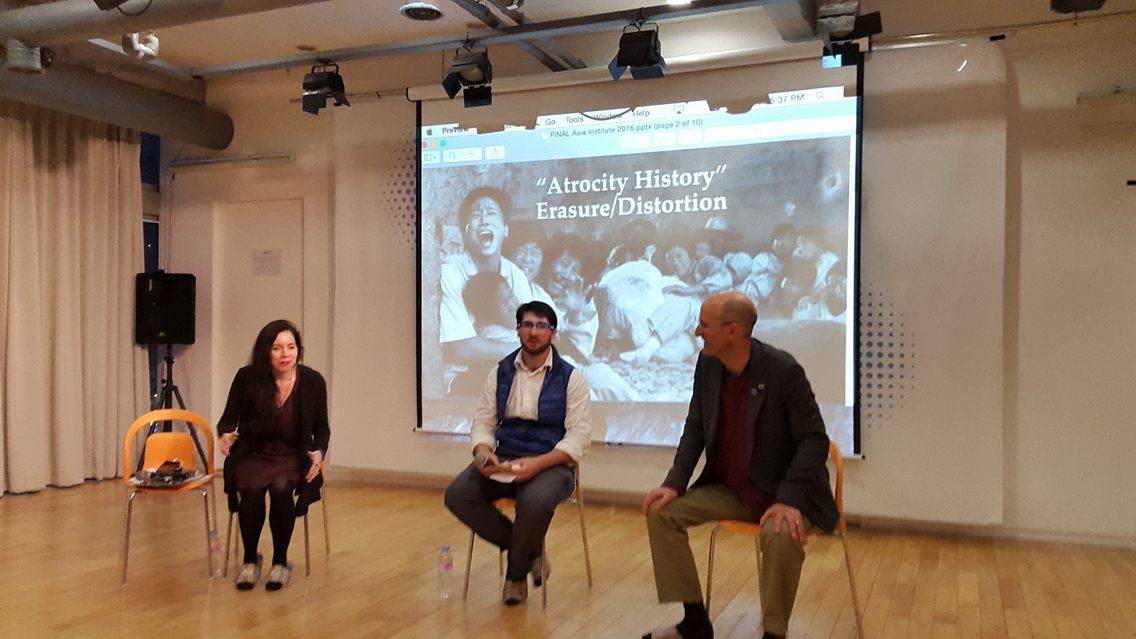
Two remarkable quotes cited by Hope May at tonight’s Asia Institute Seminar on peace, history and memory

Tonight’s seminar by Hope Elizabeth May brought together a collection of academics, diplomats, reporters and concerned citizens for a deeper consideration of what is necessary for true peace in Korea and in Northeast Asia. Dr. May focused on the tradition of peace making that dates back to the Hague Conference of 1907. The seminar suggested how the history of peace, and the tradition of “positive history” could inspire us to use our imaginations to come up with new solutions to today’s challenges.


hope


She Hope May professor of philosophy at Central Michigan University, cited two remarkable quotes.

“The world progresses, in the slow and halting manner in which it does progress, only in proportion to the moral energy exerted by the men and women living in it.”

Jane Addams

Nobel Peace Prize Winner

1931

“Souls interact across time and space. The decisions people make in a difficult hour, the principles they either abide by or abandon in moments of truth, have consequences not just for their own lives, but well beyond.”

Natan Saransky

Soviet dissident

“「中国の夢」:欧米化?それとも新しい道を開く?” (ハフィントンポスト 2016年 11月 23日)

ハフィントンポスト

“「中国の夢」:欧米化?それとも新しい道を開く?”

2016年 11月 23日

エマニュエル・パストリッチ 


最近、会議のため南京へ行くことになった。あの有名な「夫子廟」へ連れて行ってほしいと案内係の学生さんにお願いした。南京は初めてなので、下町の昔ながらの喫茶店でお茶を飲みながらのんびりしたいと思った。

今回南京に来たのは初めてだったが、明の時代まで「金陵」と呼ばれた「南京」のことはよく研究していた。東京大学とハーバード大学で中学文学を勉強したとき、南京を舞台にした詩集をたくさん読んだ。十七世紀の散文雑記で描かれた秦淮河のきれいな景色に印象深く、大学で小説『紅楼夢』を読んだときも、十八世紀の南京の軒を連ねる邸宅が何度も頭に浮かんでいた。

しかし、賑やかな街を歩いて昔の金陵の風貌を探そうとした私の努力は無駄だった。夫子廟辺りは昔の建物が既に取り壊され、ファーストフード店や洋服屋の入っているつまらないコンクリート造建物が立ち並んでいる。確かに上質なお茶を売っている店も何軒かあるが、そこで売られている食べ物やお土産はバンコク、ロサンゼルスのとほぼ変わらない。結局、南京製のものには一つも出会わなかった。詩人、小説家どころか、匠、職人の姿までいつの間にか消えていた。

夫子廟のなかも昔の風貌がなくなった。石壁や土壁の代わりにコンクリートの壁が溢れている。大工さんの腕が悪く、壁と床のつなぎ目がいい加減に仕上げられていた。置かれた家具の作りが悪く、壁に掛けられた絵画があり溢れたものばかりだった。

あの日、南京ではパリのノートルダム大聖堂や日本奈良の東大寺で拝見したような心を動かされる歴史の跡には出会えなかった。南京の過去はすべての中国人が勉強しなければならないとある本の中で読んだ気がしたが、街中を歩いてみたら、その華やかな歴史文化は今の南京とほぼ関わりなくなったように思われる。

案内係の学生さんのおかげで昔風の喫茶店が見つかった。喫茶店を出たとき、悲しい気持ちで胸がいっぱいになった。中国の歴史伝統が次から次へと消えていく。これは文化大革命のせいではなく、消費文化の激しい成長が招いた結果と言っても過言ではない。そしてこの悲しさは確実で深いものだった。

しかし最も悲しいのは、古代中国は持続可能な有機農業によって世界一のシステムを作り出し、国の複雑な官僚制度を支え、多くの人々を養えてきたにも関わらず、その素晴らしい有機農業の伝統が捨てられてしまった。アメリカ農学者フランクリン・ハイラム・キング(F• H• King)がその著書『東アジア四千年の永続農業-中国・朝鮮・日本』(Farmers of Forty Centuries, or Permanent agriculture in China, Korea, and Japan)で、東アジアは確実な永続農業のモデルを作り出しており、アメリカはそれを導入すべきと呼びかけている。一方、中国は致命的な化学肥料と農薬を取り入れたせいで、農業は持続可能なものでなくなった。古代中国の農業文明の素晴らしい知恵が最も必要とされた今、その跡取りが見つからない。

また、消費社会の残酷な価値観の反面、中国人の素朴、節約、親孝行、謙遜の人柄がとても魅力的に思われるが、これらの美徳を求めに中国にきたら、あなたはきっとがっかりするだろう。


米化の夢


欧米文化が受けている悪い影響を減らし、そのあり方を求めるために、多くの欧米人が中国に訪れてくる。同じ目的で、アメリカ社会を支える制度を蝕んでいる物質主義と軍国主義に絶望感を持つ私は、中国文学を勉強することになった。中国の儒学、仏学及び道学思想は、人間のすべてを金銭で評価するアメリカに新しい基準を提供している。

Read more

Defining “Trumpism”

Please let me be the first to coin the word for politics and diplomacy “trumpism.”

Trumpism consists of doing something so far out of left field that it confuses your opponents and allows you to take control of the situation. Trump’s suggestion that he might meet the leader of North Korea, like his enthusiastic reaching out to Putin, is typical of this strategy. But I would like to say it is an extremely high-risk approach and is unlikely to be successful in the long run.

‘Trump may meet N. Korean leader soon’

Korea Times


“朴槿惠因何堕落?” (中央日报 2016年 11月 14日)


中央日报

“朴槿惠因何堕落?”

2016年 11月 14日

贝一明


如果说,我们并不是只想证明“我是对的”,而是关心着今后的道路,则我们的视野应超越目前,不能只盯着使朴总统堕落的丑闻的核心人物。我们应扪心自问,是韩国政治文化中的何种因素纵容了极少数人搞得国家政局飘摇不定。

我们应认识到,假如有影响的有识之士没有在目睹这一史上最差一届政府后仍然无动于衷的话,那么事情也不至于变得如此无法收拾。

我不知道崔顺实这个名字,但却经常听许多政商人士讲过青瓦台见不得人和不负责任的决策,青瓦台在做出重要决定时根本不听专家建议的事已是公开的秘密。韩国的最高层精英们几乎无一例外地对他们应尽的责任义务麻木不仁:他们有必要去呼吁国家在施政时更负责任、有义务帮助无法接触到高级情报的公民去理解多年来无休止的政治危机的本质。

有一点是可以确定的。每当同有影响人士谈话时,我就会听到他们在谈论某些人的名字、在预测谁会被任命为到何种职务,但却从来没听到有谁发出“什么对韩国人最好?”的提问。问题不在于特殊人物或特定的政策,而在于韩国的政治文化。

让我们正视现实吧。当今韩国最大的威胁既不是朝鲜,也不是经济发展停滞抑或政治人物的行径,而是文化颓废的蔓延。在我们的文化当中,个人对民族的未来并不关心,他们贪恋于酒色美食、酒、性快乐、休闲体育,人生的目标就是眼前的满足,奉献的价值已消遁无踪,这是典型的颓废。

悲剧在于,我们旨在刺激消费的不当努力释放了人类追求原始本性的动力,这些动力正取代韩国传统社会所要求的合理性、自制力、正念,成为我们年轻人的行为模式。

只要看上几分钟的电视就可看到当今对韩国造成威胁的离奇古怪的文化颓废了。无所顾忌无节制地大吃大喝、满足感官刺激的画面不停地在上演,身穿在20多年前可能因过于“色情”而遭禁的衣服的女子出现在广告中。

这样一来或许能卖出一些商品,但这样的策略会招致道德的堕落,在所有层次上削弱施政根基。现在,国家政策与国家福址、安保和价值观无关,沦落成了争权夺利的机会。我们应认识到,如果这样的颓废主宰了整个社会,我们的经济政策或技术政策将无法解决这一问题。

“羞耻感”的消失也是这样的韩国文化堕落的根由之一。传统社会将抛弃年迈父母之类的事情视作奇耻大辱。正如“君子必慎其独也”所讲的那样,道德上的义务已深入骨髓。伦理无关乎别人是否耳闻目睹,但上世纪韩国人逐渐认为,这些伦理宣传是禁锢式的、填鸭式的,被视作是与“活在当下”的现代生活格格不入的旧时代的残留。

廉耻的丧失使人们觉得,只要照顾好子女、在工作单位尽到职责自己就活在道德之中。换言之,去思考周围人行动的伦理意义的必要性已不复存在。

还有一个原因。在数字化时代、周边事物不断改变的时代,对因果关系的认同感逐渐降低。我们无法再清晰明了地意识到我们每天所做的事情和我们所处世界发生的事之间的联系了。我们泛泛地认为它们之间没有任何联系。

我们在咖啡馆用的也是一次性杯子,不会首先想到若使用纸杯或塑料杯会对环境有何影响。我们对咖啡馆服务员傲慢无礼,没有意识到我们对待他们的态度在侵害着我们的文化。

我们应恢复韩国儒教文化中的精华部分,最首要的是要认识到,我们的所有行为最终是与道德联系在一起。读书、就餐、谈笑等我们所有的行为都会对社会产生积极影响。只有驾驭生活上的道德含义,我们才能着手建设健康的文化生活。我们无法改变人类的本性,但可以在生活的所有方面重建伦理行为可期的高标准文化,籍此来对政治人物产生压力。

Read more

“The source of a sick political culture” (JoongAng Daily November 14, 2016)

JoongAng Daily

“The source of a sick political culture”

November 14, 2016

Emanuel Pastreich


If we are interested in progress, and not simply in feeling self-righteous, we must look beyond the central players in the recent scandal in the Blue House which has brought down President Park Geun-hye. We need to ask ourselves what was it in the political culture of Korea that allowed a tiny group of people to control national policy and to do so for capricious reasons.

We must recognize that the situation would not have gotten so out of control if educated and influential Koreans had not been so passive when they saw the worst mismanagement of Korean government in recent history. I did not know the name Choi Soon-sil, but I had heard from many people in government and in business about the secretive manner in which policy was handled in the Blue House and the complete lack of accountability. It was no secret that critical decisions were being made without the advice of any experts on a regular basis.

But almost without exception, the best and the brightest of Korea felt that they had no particular responsibility to demand accountability or to help their fellow citizens who did not have access to privileged information to understand the nature of a political crisis that went on for years.

One thing that I can say definitively: in my many conversations with influential figures I heard the names of people and I heard speculation about who would be appointed to this or that position, but I never heard anyone asking “What is best for the Korean people.”

The problem lies in the political culture, and not in particular individuals, or particular policies.

Let us face the truth: the greatest threat to the Republic of Korea today is not North Korea, nor the economic slowdown, nor the actions of individual politicians. The greatest threat is the spread of decadence in the culture. We have a culture wherein individuals feel little concern for the future of the nation and they indulge thoughtlessly in food, in drink, in sexual pleasures, in vacations and sports. The purpose of life has become short-term satisfaction and sacrifice has disappeared as a value. This is classic decadence.

Tragically, in a misconceived effort to create market demand in Korea, we have unleashed the primitive forces in human nature and held them up as a model for our youth, instead of the rationality, self-control and mindfulness that traditional Korea demanded. One need only look at the television for a few minutes to see the grotesque cultural decadence that threatens Korea. Just watch the endless scenes of Koreans stuffing their faces with food in thoughtless indulgence or witness advertisements that feature women clad in a manner that would have been banned as pornography twenty years ago. Such strategies may sell some products, but they create a moral decadence that undermines governance at every level. Policy has ceased to be about the national welfare, security or values, and degenerated into mere opportunities for financial enrichment and amassing power.

One cause of the decline in Korea’s culture is the loss of a sense of shame. In traditional society, certain actions were simply considered to be shameful and wrong, such as the abandonment of an aged parent. The moral imperative was internalized. As the expression goes, “The gentleman should be cautious even when he is alone.”

But over the last century Koreans increasingly have come to view such a stress on ethics to be restrictive and oppressive, to see such behavior as an archaic relic that contrasts poorly with a modern life of instant gratification. But the loss of a sense of shame allows people to feel that if they take care of their children, and fulfill their assigned duties at work, they are acting in a moral manner. That is to say, there is no need to think further about the ethical significance of the actions taken by those around them.

Another factor has been the diminishing awareness of causality, the relationship between actions, in this age of digital representations and constantly shifting images that surround us. We can no longer see clearly the relationship between what we do on a daily basis and what is transpiring in the world around us. More often than not we think there is no relationship.

We drink coffee from throw-away cups — even when sitting at a café — without the slightest clue of how the use of that paper and plastic impacts the environment. We treat the people who serve us at the café in a flippant and disrespectful manner without any concept of how our attitude towards them degrades the culture of our country.

We need to return to the best of the Korean Confucian tradition and recognize above all that every act that we make is ultimately a moral act. Whether reading a book, eating a meal or talking to a friend, all of our actions can have a positive impact on society.

Only by regaining control over the moral significance of our lives can we start to create a healthy political culture. We cannot alter human nature, but we can create pressure on politicians by reestablishing a culture in which high ethical behavior is expected in every aspect of life.

Read more