“汉学家贝逸溟:东方传统文化契合可持续发展之道” 《环境与生活》

今日头条

“汉学家贝逸溟:东方传统文化契合可持续发展之道”

《环境与生活》杂志 

2019年 1月28日


韩国全球治理研究院院长、哈佛大学博士贝逸溟,接受《环境与生活》记者采访

如何治理有生命的地球

贝逸溟博士是土生土长的美国人,早年在哈佛大学攻读东方学取得博士学位,并精通汉语、韩语和日语。他长期关注东亚地区的政治、社会、文化,对中国传统文化浸淫颇深。几个月前,他刚发表了用中文写的《画中的小说——曹雪芹<红楼梦>中的一种文学隐喻》的学术论文。但在韩国定居多年的他,有感于环境问题的重要性,创立了韩国全球治理研究院。两个月前,他刚刚给韩国环境部就环境治理问题做了一次演讲。

采访当天,贝博士全程用流利的普通话与《环境与生活》记者交流。当记者问起他创立的研究院为什么“放眼全球”时,他解释道:“我们现在只有一个地球,我们所有的行为都会影响到地球。很多人没有意识到在日常生活、工作中会有很多浪费的情况,所以我们考虑的是全人类与地球的问题。地球这个词与‘世界’‘国际’有所区别,选择叫地球就是强调我们这个星球小小的、有生命的那种状态。地球是一个很特别的说法。我们人类作为主宰者,为了人类自己的未来,去思考小小的、有生命的地球应该怎么治理。因为我们是在韩国开始研究的,而且与关注环境的年轻人交流比较多。年轻人也比较喜欢‘地球’这个词。”贝博士说,年轻人的参与非常重要,他在研究院经常与年轻人交流,他特别重视年轻人的看法。年轻人不仅了解现在生态环境的问题,也可以为他提供一些新思路,对他的研究有很大贡献。

环境问题也是安全问题

贝逸溟说起自己与环境问题的因缘:“我13年前就开始参与到环境活动中,写关于环境问题的文章。我认为这是一个非常重要而且很危险的问题,但很多人还没意识到环境问题是怎么出现的,也不清楚这与我们所处的文化有什么关系。所以,我是从文化、思想、思考习惯等角度研究环境问题,也从安全保障的角度看问题。比方说在如今的美国,政治、国防、安全方面的预算是很多的,但在环境或气候方面,却没有太多的预算,好像美国人没有想到环境问题其实也是一种安全问题,所以在这方面我也写了几篇文章。”

贝博士在他的文章中写到,韩国国防部里面也需要增加应对气候变化的部门。这是因为军队在现代社会开始转型,在一些非传统安全问题上它可以扮演积极的角色,可以应对突发的自然灾害和紧急事件。这种时候,军队往往可以提供即时、有效的帮助。

贝博士还说:“我现在居住在韩国,我发现韩国军队可以很快地做出改变来应对气候变化,他们的一些燃油车,很快就改为电动车了,但在普通的企业里或社会上,很难做得到这种力度的变革。要求普通的企业明天就用电动车,这就比较难办得到,但如果军方说从明天就开始,他们就真的可以做到马上开始,这种改革是比较容易做得到的。”

在传统文化中找到解答

贝博士本科学习中国文学,并先后在日本和韩国进行比较文化的研究,对东亚地区的文化感情颇深。说起中国近年来的生态文明建设,他也颇为关注。

贝博士说:“我对东方传统文化非常感兴趣,很多时候可以从传统文化里找到环境问题的解决之道。我们有很多个国家、企业、单位、团体,但只有一个地球,而人类对地球是要共有、共用的,所以我们需要一个新的想法。在西方,也有很多人需要新的文明,但是他们不知道,这种与生态环境和谐共生的文化传统在东方的传统——道教、佛教、儒教里面是已经存在的。想要解决环境问题的话,我们可以在这里找到真正的可持续发展之道。比方说风水,很多人认为风水是一种迷信,但是风水本来就是一种生态学的传统,就是探讨天地人三才的关系——它们是如何互相影响的。古人需要考虑的不是明天,也不是明年,而是一百、五百年以后的问题。河水是怎么流的,周边的山会怎么变化,我们的土地应该怎么保存下去?这种长期的对人与自然关系的思考,在中国是非常发达的,可能连很多现在的中国人也不知道。说到生态文明建设,今天的中国在很多方面已经是模范国家了,很多国家可以学习中国的环境政策、方法。我觉得包括美国也一样,再过几年,一定会有美国人来中国学习如何进行环境治理,当然中国未来还可以做得更好。”

近年来,人工智能等新技术的发展也为社会发展、为环境改善带来巨大动力。但贝逸溟对此并没有盲目乐观,他提醒说:“我每天都在使用智能手机,我们离不开这些高新技术,但长期这样的话,人就没有独立的想法,没有独立思考的能力,我们越来越少写字,也不去读书。当然,我们在因特网上也可以阅读文章,但这种了解是比较肤浅的。我们过度使用电脑也许会影响到我们思考的方式。要注意到这个问题,不要让使用网站搜索资料变成一种习惯,如果网站里查不到,你就认为不存在了。”

中国可扮演独特的角色

说到中国在全球生态环境保护方面的角色,贝博士认为,在环境保护事业上,中国是一个特殊的国家,可以在国际社会上成为联结发达国家与发展中国家的桥梁和平台。

贝逸溟说:“在西方,重视保护环境的国家经济实力大多比较强,像德国、瑞典等国。但你会发现,比方说在美国,类似特斯拉那样的电动车是普通的工薪家庭买不起的,新能源汽车与他们没有太大关系。这就导致在一些发达国家,低收入群体被排斥在生态环境保护之外,环保只和一些生活条件非常优裕的群体有关。同样的道理,一部分比较贫穷的国家也显得与环境保护问题不太相关。但是中国不一样,中国所有的阶层都与生态环境问题有关,我觉得这是一个非常重要的地方。就是说中国是比较多样的,不止是北京这样发达的地区,一些经济不好的地区也与生态环境保护高度相关。中国巨大的市场规模可以让新能源汽车的生产成本迅速下降,所以中国可以让发展中国家和发达国家的低收入群体,都加入生态环境保护事业。”

本刊原创,转载请联系《环境与生活》杂志。

责编:郑挺颖

网编:黄皖婷 崔悦

“再考虑中国的科举传统: 智慧与中国治国理念” 多维新闻

多维新闻

“再考虑中国的科举传统: 智慧与中国治国理念“

2019年 12月 8日

贝一明

要找到好工作,就得考个好大学;要考上好大学,先得上个好高中——怀揣此类“理想”的中国青少年陷入了残酷的竞争。这种竞争不仅令众多年轻人失去了自己本该有的生活,更扭曲了学习的本质。教育也因此而变为逼迫我们孤立彼此的隐形战场,而非鼓励人们为挖掘真理、建立更好的社会而合作的乐园。

我常常见到人们拿令学生深感困扰的现代考试系统和古代科举制度作类比:前者是现代人借之以获得社会地位的手段, 而后者则在近2000年的大部分时间内成为国家治理体系的支柱,对文化的各个方面产生了巨大的影响。

这样的类比并不离谱。科举考场后来也变成了人们追权逐利的战场,尤其在十八世纪晚期,政府机关岗位因人口迅速增长而完全饱和之后,情况更是如此。

少数高门贵族垄断了科举之路,他们所借助的,要么是对子孙的高明教导,要么是腐败手段——有时还双管齐下。考试内容被削减为默写词句,堆砌迎合考官心意的华丽辞藻,撰写毫无创造力、想象力可言的文章等。

然而晚清这种遭扭曲的文职官员考录系统无法代表古人设立科举制度的初衷。

我们应当扪心自问,整体受教育人群的目标本该是修习道德哲学,而非研究工商管理、金融或者广告;但是,倘若人人都把进政府部门工作当成最高理想,这样的社会意味着什么?

首先我们必须要问能人体制价值何在,中国科举制经常被奉为该制度的典范,本可在十八、十九世纪供法国、英国和其他国家效仿。将能力与才识作为至高法则的选拔任用体制的确具有巨大的吸引力。

最近人们对中国能人体制的优点大感兴趣,清华大学贝淡宁Daniel Bell 教授的文章便十分有代表性。他在《中国模式:能人政治和民主制 的局限性》(The China  Model: Political Meritocracy  and the  Limits of  Democracy)一书中提出,中国的能人政治可以成为“西方民主”的替代制度。

诚然,唯能是举的政府用人制度或许能够代替让民众为特殊利益集团预定人选投票的“民主制”。如果人们只能根据反映媒体偏见的信息投票,那么这样的制度绝对谈不上公正。

显然,能人体制可以代替贵族政治(的确,前者经常会沦落为后者)和专制制度,这一点毫无疑问。然而起初传统科举制并非为考查专门知识或者实践能力而设立。

晚清革命家认为,只会引经据典的儒家学者百无一用,中国急需的是能够敲定贸易条约、建立邮政系统、修铁路、开钢厂的实干型专家。他们严厉的批评对科举制度影响颇深。

考试的传统保留了下来,一同延续至今的,还有能够决定一个人职业生涯的诸多测试,还有对数学、英语、行政管理,以及会计、金融等专业技能的重视。然而在整个考试系统中,却全然不见道德哲学的踪影。

那么, 科举考试设立之初为何以儒家经典和道德哲学为主要内容?难道是因为当时的学者都已与国家的需要脱节,因手握特权而迷失了自己?

有些人之所以产生这种困惑,是因为他们对科举制度的初心存在根本上的误解,在与之相关的“贤能体制”和英语中的“meritocracy”(英才治国体制)之间划等号。这种想法是错误的,因为从词根词源来分析,“meritocracy”一词由“merit”(价值)和“ cracy”(统治)组成。当然,科举与个人的价值息息相关,但衡量个体价值绝非科举考试的宗旨所在。

汉朝已有通过考试选拔官员的制度。当时此类考试旨在建立智者、贤者为官的国家管理体系,能力与学识并不是考察重点。“智”与“才”,“贤”与“能”之间存在联系,但明确它们之间的差别是推动未来改革的关键。

比起“英才治国”,梳理孔孟之道的哲学家们更加青睐“心智治国”(noocracy)。后者已逐渐不为人知,但古希腊哲学家柏拉图曾将其奉为西方最佳政体。

大多数现代人会觉得“管理政府的应当是智者,而非能者”这种想法太过幼稚,或者还会认为它有危险的精英主义倾向。可是,在对植根于中国深厚文化积淀的这条脉络予以否定之前,我们应当仔细地思考这个问题。

民主很可能会沦落成为令人民被虚假信息牵着走的荒谬制度,魅力非凡的领袖也会堕落为因荒唐决定而生的 最严酷暴政的始作俑者。

所谓的“英才治国体制”,可能会让有能力、高学历,但没有道德罗盘,一心追逐个人或家族利益的人参与国家管理。

政府与企业人员的晋升模式对于建设健康社会来讲至关重要。

孔子和柏拉图都提出过赞成“智者治国”的观点。问题在于,怎样才能实现这种治国模式?

人类都有本性上的弱点,任何体制都无法避免腐败和权力滥用。因此定期开展改革大有必要。

让人们自小接受道德哲学的熏陶,长大后精通人文学科,能够撰写意味深长的文章、针对治国和社会问题提出符合道德原则的解决之道——这种育人理念会产生深远影响,正符合我们当前的需要。

关键在于,我们应当挖掘中国传统治国理念的深刻内涵,而不该只停留于表面 形式。

当然,我们不该强迫大家只读儒家经典,不该强制恢复明清时期采用的科举制度——与那时相比,今天的世界已经迥然不同。我们可以采用一些实验性手段,将哲学和文学融入准公务员以及企业人员教育培训内容,让他们重视自己的行为和社会影响,将高风亮节视为最高目标。

上述受培训者所阅读的书籍不必限于中国传统经典,而应结合现实实际。而且此类教育理应由德才兼备的教师实施,教师的遴选也不该通过由计算机评分的匿名评测草草了事。我们应当让公务员考试更加人性化、有机化,包含更多道德考核内容,更全面地考察受试者是否知晓在现代社会中的处世之道和助民之法。

这种回归儒家传统思想初心的创新可为政府注入大量全新活力,同时给我们的年轻人指明新的方向。

“Merit, wisdom and the Korean tradition of governance” Korea Times

Korea Times

“Merit, wisdom and the Korean tradition of governance”

January 27, 2019

Emanuel Pastreich

https://www.koreatimes.co.kr/www/opinion/2019/01/723_262723.html

The ruthless competition between young Korean to get into good high schools and then be admitted to leading universities as the necessary step to finding superior jobs takes a terrible toll on the lives of many and has distorted the nature of learning.

Education has become a concealed combat that drives us into isolation, rather than the grounds for cooperation among all people for the purpose of discovering the truth or creating a better society.

I have heard frequent comparisons between this obsession with exams in contemporary Korea as a means to achieve social status and the civil service examination system that dominated traditional Korean society. The civil service exam was central to Korean governance in the Joseon Dynasty and it affected all aspects of culture before then.

The analogy between contemporary test-taking and the Confucian civil service exams of the Joseon Dynasty is not entirely wrong. The examination system, especially after the complete saturation of government jobs in the late 18th century due to a rapid rise in population, became the battlefield in a ruthless competition for jobs that were tied to wealth and power.

A few powerful families monopolized the exam systems through access to excellent instruction for their sons, or through corruption, or through both means.

The content of the exams was reduced to the memorization of set phrases, the employment of set flowery language that conformed with the demands of the examiners, and the endless practice of unimaginative model essays.

But the degenerate form of the civil service examination system of the late Joseon does not represent the original intentions of that exam.

Rather, we need to ask ourselves what it meant to have a society in which government service was considered the highest goal and in which being educated in moral philosophy, as opposed to business administration, or finance, or advertising, was presented as the goal for all educated people.

The first question we must ask is about the value of meritocracy that is the part of the examination system most frequently cited. The civil service exam system in Korea, Vietnam and China ― which would become a model also for France, Britain and other countries in the 18th and 19th centuries ― is often held up as the model of meritocracy; rule by the capable and the educated. It has tremendous appeal.

Meritocracy forms a strong alternative to aristocracy (granted that meritocracy often degenerates into aristocracy over time) or tyranny.

There is recent interest in the virtues of meritocracy (especially in the Chinese case), most notably the writings of Daniel Bell of Tsinghua University. He proposes that the current Chinese political meritocracy can serve as an alternative to Western democracy in his book “The China Model: Political Meritocracy and the Limits of Democracy.”

It is certainly true that meritocracy, a system that seeks to promote those with the skills and the ability to govern, may offer an alternative to “democratic” systems wherein citizens vote for leaders who are preselected by special interests. After all, if people vote based only on information supplied by biased media sources, it is hard to consider such a system to be an effective way to select leaders.

The civil service system was subject to withering critiques by reformers in the late Joseon Dynasty who argued that Confucian scholars who were well versed in the classics were unprepared to deal with the challenges of modernization and that the need was for practical experts who could negotiate trade treaties, establish postal systems and run railroads and steel mills.

That legacy lives on, and most tests used today to determine careers and focus on math and the English language, on administration and management, or on specific skills in accounting or in finance.

Moral philosophy has disappeared from exams in the process of modernization.

So why did the civil service examinations focus on the Confucian classics and on moral philosophy? Was it because the scholars had lost touch with the needs of the nation and had lost themselves in their own privilege?

Understanding the nature of the Confucian civil service is difficult because there is a fundamental misunderstanding about the original spirit of the civil service exams.

The term “meritocracy” is a misnomer. Of course the Chinese civil service exams were about merit, but that was not their primary function.

The exams were originally, from their roots in the Han Dynasty, meant to serve as the basis to establish rule by the wise and the ethical, rather than rule by the capable and the erudite. The two goals are related, but grasping the fundamental difference is critical for future reform.

The philosophers who systematized Confucian thought, Confucius and Mencius, were advocating not so much for a meritocracy, as for a noocracy, or “rule by the wise.” Noocracy has become an unfamiliar term, but that goal of creating a nation ruled by the wise and the ethical was also held up by the Greek philosopher Plato as the best form of government.

Most people today would consider the idea that government should be administered by the wise, rather than by the capable, to be either hopelessly naive, or perhaps dangerously elitist, but let us think carefully about this issue before we dismiss this critical assumption in traditional Korean culture.

Democracy can easily degenerate into the people being misled by false information or charismatic leaders into terrible decisions that lead to the worst form of tyranny.

Meritocracy can lead to rule by those who have clear skills and a high level of education, but who have no moral compass and who pursue their personal interests, or their family interests.

Confucius and Plato had a point in advocating for rule by the wise.
How people are promoted in government and business is critical for a healthy society.

The problem is: how do you achieve governance by the wise?

Humans are flawed creatures and there will be corruption and abuse of power in any system. Periodic reform is essential to assure transparency.

The demand that those involved in politics and governance be steeped in moral philosophy from childhood, being familiar with the humanities and capable of writing thoughtfully about how to find ethical solutions to problems in governance and in society is logical and compelling. We need exactly such an approach today.

But we should pursue the spirit of traditional Confucian governance, and not its forms ― especially in later ages.

We should not force everyone to read only the Confucian classics, or to take the exams used in the Joseon Dynasties. The world today is different.

Rather, we can experiment with new approaches to making philosophy and literature part of the training for all those who wish to work in government, or in business, so that they will be aware of their own actions and their impact on society, so that they will see ethical behavior as the highest goal.

The readings for such an education should extend down to the current day, and should not be limited to the Chinese tradition. Moreover, such an education should involve learning from a teacher, a moral and philosophical teacher, and talking with that teacher. We must move beyond the inhuman system of computer-graded anonymous tests. Exams must be more human and more organic. They can refer to abstract principles, but they must be grounded in the moral tests we face in contemporary society.

Such an innovation in the sense of recapturing the original spirit of the Confucian tradition can bring tremendous new vitality to government and to education, giving new hope to youth in Korea, China, Vietnam and around the world.

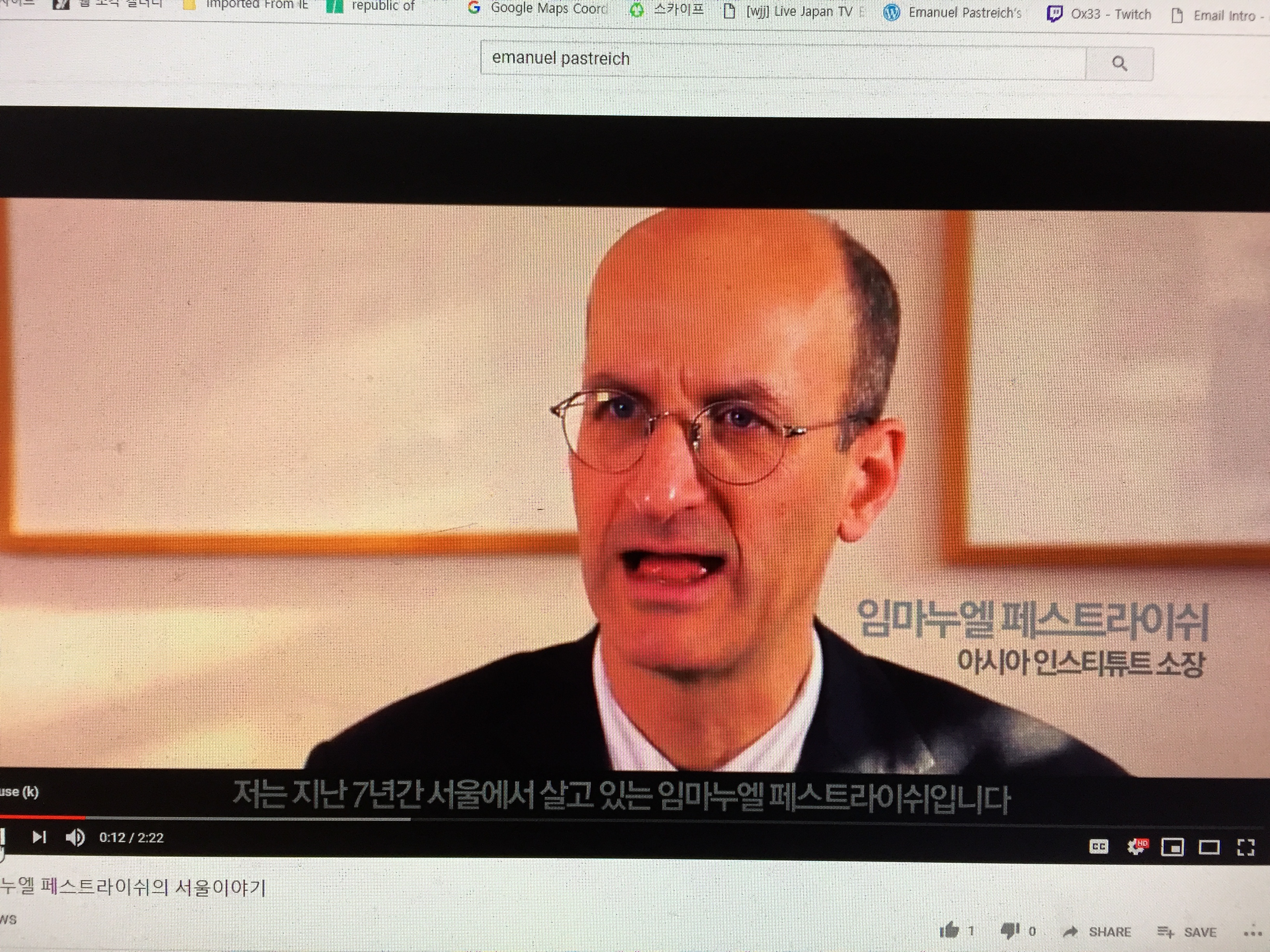
서울이야기: 임마누엘

2018년 12월

서울사람들은 서울에 대해 무슨 생각을 어떻게 할까요? 서울브랜드 아이서울유가 세 번째 생일을 맞아 서울시 홍보대사, 아티스트, 글로벌 기업의 CEO 등 서울에 살고 있는 사람, 서울에서 일하고 있는 사람, 서울을 사랑하는 사람에게 물었습니다. 여덟 번째 인터뷰는 아시아인스티튜트, 임마누엘 페스트라이쉬(이만열) 소장 입니다. 임마누엘 페스트라이쉬 생각은 [서울은 공존이다]

“礼的传统与生态意识的新展望” 多维新闻

“礼的传统与生态意识的新展望”

2019 1 18

一明

可持续农业发展的关键:中国传统理念——礼

作为旨在构建人与人、机构与机构之间和谐关系的行为准则体系,中国传统文化中的“礼”具有十分深远的意义。所谓礼,从广义上讲指诸多礼节规矩,从狭义上讲则指生活中的各种礼仪(如婚丧嫁娶、祭祖祭天等)。不论从哪个角度来看,礼都曾是社会的基石,曾是确定家庭关系,促使一个家庭、一个社群、一个民族乃至一个国家的成员尽职尽责的原则。“礼”曾被视为“修身”(践行礼)、齐家(用礼仪来维系和谐的家庭关系)、治国(以“礼”的原则治理国家)和“平天下”(通过“礼”妥善地处理外交关系,实现世界和平)的中心要素。

在狭义框架内,古时的礼有向族长、君主、上天或神灵敬献食物、珍宝等供品或贡品的意思。当时它还是个人、家庭以及全体人类定期向供给自己食物的生态圈表达感恩之情的方式,因而一饮一食被赋予了深刻涵义,用餐之礼也被用于提醒人们农业的中心地位和生态系统的重要性。

“礼节”之“礼”确定了一系列综合性规则,通过强调日常生活中的道德责任规范人际交往行为、建立健康的社会秩序。一个家庭中长幼之间通过相互问候(从而令社会关系明确化直至为世人所承认)表现出的“礼貌”之“礼”拥有深刻的象征性价值与切实的道德力量。直接从祭典仪式衍生而出的“礼仪之礼”强调人与人之间的关系,保证每个人都被严严实实地笼罩在人造与自然事物的巨大层级网络中,没有人认为自己可以置身事外,就连皇帝也不例外。

这样,礼仪之礼增强了人们之间的平衡感,而这种平衡又同人类世界和自然领域之间的平衡息息相关。在现代化进程中,中国人深感获得了解放和自由,不必再遵循曾牢牢束缚自己手脚的繁文缛节,然而这同时也意味着他们剪断了自己与周围人、与自然世界之间的羁绊。其结果,是身处异化社会中的人们对同胞的剥削愈发残酷,自然环境遭到的破坏愈发严重。

尽管中国有过力图推翻对劳动阶层凶狠剥削的社会主义革命,然而支撑这场革命的马克思主义框架并未将人与自然环境的关系纳入其中。马克思主义思想对于阶级的理解对分析社会矛盾、从而推进改革大有帮助,但是因为改革往往是排山倒海式的,招致的反作用也极大,结果往往不可预测。德国的国家社会主义(希特勒是其中的关键人物)就是如此。由此看来,儒教的渐进改革自有其优越性。而且马克思主义没有意识到环境保护、生态农业等长期问题。

最近中国乃至全世界的贫富差距问题愈演愈烈,倘若孔子的门生看到了,恐怕也会忍不住扼腕叹息。还有,土壤、水资源与山区惨遭破坏,之所以会有这场悲剧,是因为礼文化反复强调的“天人合一”的和谐关系被腐蚀得千疮百孔。

“礼”这一观念并非儒家所独有。它在佛家、道家以及中东地区的萨满教都有深厚的根基,基督教和伊斯兰教义中也有它的影子。也许现代思想文化最大的瑕疵之一,便是缺少用来准确描述“礼”的语言。也就是说,尽管我们假装摆脱了旧时之礼的束缚,迈入了时兴自我表现、直来直往的现代社会,但其实仍无法僭越深深根植于人类文化中的“礼”。再者说,现代社会中也有许多潜移默化的“礼”(买流行的裤子给学校的朋友看的“礼”;买贵的车子表示社会成功的“礼”,还有购物、消费时要遵守的“礼”),只是人们没有视之为“礼”。同时,民众尚未发觉“礼”在团结人心、唤起环保意识、建立政治与精神共享体系等方面的重要作用。

儒家关于“礼”的传统思想——尤其在南宋朱熹(1130——1200)对礼学观点加以整理、规范,并将其与形而上学全面联系之后——为家庭、社群礼仪与国家礼制赋予了新的内涵。应当重视暗含于万物之中的形上秩序、生态系统和人类世界三者的关联,这种观点早就存在,但人们从未将其如此系统化地梳理整合。人类的一举一动与自然之间的关系顿然明朗,人类行为也有了理性参与的意味。

朱熹清晰地阐明了“礼”的重要意义,并将其与铺陈于每一种家庭礼仪背后的形上秩序直接结合在一起。

儒家礼学的巨大潜力在于,它强调个人与自然,食物消耗与对食物来源的认识,以及公民日常生活与整个生态系统之间的关系。倘若它能够得到重新诠释、为我们的时代所用,那么社会所面临的最为严峻的威胁之一——人们将盲目消费作为日常生活的重要一环——或许可以迎刃而解。

现代化、消费与和家庭礼仪:以韩国为例

二十二年前我与韩国妻子结婚时,发现她的家人在一丝不苟、井井有条地遵循儒家礼制,于秋收时分、春节以及先人忌日祭拜祖先。到时全家人都会从韩国各地甚至国外赶回老家,次次不落,不惜推掉其他事务,在汹涌车流中连坐几个小时。做哥哥的会精心摆放牲肉、栗子仁、柿子、苹果、酒和其他食品,布局及所用碗碟均十分讲究,以求与他们珍藏的典籍中的详细图谱相一致——图谱是直接根据《朱子家礼》中的说明而绘制的。当时我被她们家和睦的气氛与对传统的尊重而深深吸引,并为能够以新成员的身份参加祭祖而深感荣幸。

然而,几年之后,我妻子的家人似乎对祭祖仪式有所懈怠。她的哥哥们经常说自己工作太忙,来都不来;孩子们要么只顾跟朋友们出去玩,要么点卯应付一下,随后便冲出门去。自从我岳父去世后,就连桌上的供品也变得敷衍草率。布置供桌的,常常只有几个人,有时甚至只剩下了我自己。

恐怕我们的下一代再也不会履行儒家之礼——也许它会随我岳母这一代人的离世而失传。很难想象我们在诱惑性消费文化中长大的孩子会继承这一传统。这种损失不可小觑,但在越南、日本和中国,情况并没有什么不同。

这样的事情越来越多:年迈的父母被子女抛弃;年幼的孩子要么被父母丢弃,要么被置之不理。总体看来,儒家之礼的凋零不仅导致了中韩两国的社会转型——这种转变完全是恶性的,而且助长了自恋主义文化。这种文化只注重眼前、自我和表象,忽视未来的后果与内在价值。儒家之礼曾经是对连结人们的共同根基的恒久认可,是我们共有的道德义务的具体展现。它的意义绝不仅限于取悦祖先、为家人祈福。

对礼制最猛烈的冲击来自于商业广告。现代广告空洞无物、缺乏底线,从道德内容上讲简直与色情片别无二致,根本没有奉劝人们相互合作、关心弱势群体的作用。满足私欲被奉为理想,被用作哗众取宠、吊胃口、挑起脑干非理性本能的噱头。此类广告是对衣食乃至我们生活中万事万物之神圣性的亵渎,而儒家之礼强调社会成员之间的关系,反映了日常生活的精神层面,与之截然相反。

我们应当规劝人们珍惜每一粒米、每一滴水;劝诱民众像广告中说的那样暴饮暴食是蔑伦悖理的做法。气候正在恶化,我们的社会已经被肤浅的电视节目变成一片沙漠——俭以养德、尊农惜粮是儒家传统思想的精华,而这些节目却反其道而行之。

民众对核战争威胁、气候变化、财富向少数人手中迅速集中等危险问题视而不见,是新型反智文化蔓延的直接结果。我们不再运用严谨科学的方法去分析现代社会乃至我们的私人生活,而正是由于将我们连结在一起、将我们的行为连接至广大社会的礼之羁绊被切断,反智潮流才汹涌而至。

在中韩两国的传统思想中,教育民众、令其清心寡欲十分重要。如今接受过良好教育却沉迷于声色犬马的人太多太多,也许我们应当重新审视传统礼文化,不再将其看作意识形态的枷锁,而是把它当成督促我们对彼此践行承诺的道德法则。

食物、社会和环境

在古代,尤其在朱熹建立自己的礼学体系之后,从社会与环境两个角度来强调食物的价值便成为了礼文化的重要组成部分。肯定食物在生活中的重要性以及我们同祖先和自然的联系,可以提高我们的尊农意识,为日常饮食添加精神层面上的内涵——面对气候变化等环境问题,这一做法具有绝对意义。要解决这些问题,我们或许不必向西方发达国家求助,只需要细细研究儒家传统思想。

从这个角度来看,礼文化拥有无穷的潜力。儒家传统思想中的礼学观点认为日常物品——尤其是食物——具有神性内在。这一观点可以追溯至古时的一种信仰:食物等物品都有物质实体(因此食品可以滋养身处物质世界的我们)与超越物质的内在(因此用作祭品的食物可以供养祖先与神明)。后来该信仰被赋予了这样的内涵:用在祭祀仪式中的食物代表着对农业的重视、对产出食物的环境的珍视,以及对食物中超越物质之内在的认可。千百年来,人们也用祭祀活动来表示对令人类与农耕合而为一的生产过程的尊重。

在传统世界观中,人作为翻耕土地的农民和食物的受惠者而存在,死后又会被安葬于土地之下,最终任身体化作大地的一部分,参与生态循环过程——滋养了我们的食物会以这样的方式滋养我们子孙后代,因此说它是祖先的产物并不为过。

儒家礼学思想并没有明确提及上述过程,但这种对于人类同自然世界关系的理解只是浅浅地埋藏于表象之下。毕竟我们的祖先不仅将生命赐予我们、把农耕技艺传授给我们,还凭借自己的智慧,凭借自己身体化成的沃土创造了我们现有的环境。

世界的现状由以往的历史事件决定,人类后代的未来由我们今天的行动决定,在过去的几百年中,这一过程早就完全偏离了正确的方向,其结果是各种自毁式行为在人类社会层出不穷:人们大量使用塑料制品,食物被当作取乐和消遣的道具而非从中获得营养的资料。人类世界和自然世界被装有空调的钢筋水泥大厦分隔开来,导致人类完全脱离了自然界,且持有一种错误的观念:人应当凌驾于其他动物。上述过程已经被现代人遗忘,文化的连续性因此而遭到严重破坏,同时人们也对以下问题一无所知:食物来自何方、如何产出?上述因果相承的过程对我们的生活有何影响?生态系统的破坏及其对食物供给的影响如今已成为讨论的禁区,人们一直对其避而不谈。

人们在祭祖或祭天仪式结束后分享被撤下供桌的祭品——特别是粮食与农产品,这让祭祀仪式同时成为一场纪念活动,使人类体验得以同提供养分的食品直接发生关联,从而令土壤与食物、水与食物之间的密切互动得到确认。

用以明确人们的日常生活与他人、与大地之间存在何种关系的“礼”,其重要地位在十九世纪晚期——外来的现代化和工业化思想在中国扎根后——受到了猛烈冲击。儒家礼学被贬为阻碍中国快步迈入现代世界的落后文化与迷信糟粕。两代知识分子将清除封建社会的残余思想视为第一要务。在他们看来,祭祖祭天已不再是维系人与人、人与自然、人与农耕之间纽带的途径,而是工厂、火车、汽车、金融机构以及现代全球文化发展之路上的障碍。当时的人们有实现现代化的需要,而这一需要只有通过摆脱对他人和自然世界的依附才能满足。

我至今记得1983年在耶鲁大学上第一堂中国历史课的情形,那节课我听得很认真,学到了以下内容:很遗憾,故步自封的官僚将儒家治国理念与技术观奉为金科玉律,束缚了自己的手脚,阻碍了中国的现代化进程,令中国无法向以批量生产、蒸汽火车、大量工厂与城市扩张为标志的现代世界大步前进。老师还讲,当时正是因为思想落后,中国才被西方远远抛在了身后;也就是说,中国传统文化尽管辉煌灿烂,但也存在严重的缺陷,因此需要向西方借鉴某些重要原则——这是实现文化演进的必要前提。

然而,如今工厂、火车和汽车所使用的煤和汽油与日俱增,因而气候变化、经济与社会扭曲等问题正在我们面前肆虐,更不用提层出不穷的致命武器了。目睹这一切,我们是否还能接受上述论断?左翼和右翼的意识形态中,都能找到上述观点的影子——它深深地扎根于现代人的思想。但我们必须质问自己,时时处处关注环境,重视农业与粮食,要求建立以人为本、将道德原则摆在利益和生产规模之前的经济体系——这样的社会系统与令人和自然遭受持续性剥削的外来现代系统相比,孰优孰劣?

中国古代皇帝和朝鲜王朝的君王都会举行社稷礼。这种祭祀活动既强调了皇帝在开创太平盛世时至高无上的政治地位,又确认了生态系统对人类社会的极端重要性。社稷礼与百姓家中规格最高的祭祖祭天仪式相似。社礼旨在祈求土地神保佑土壤丰饶,让人民衣食无缺,以从根本上保证政治稳定、经济繁荣;稷礼旨在向谷神祈求五谷丰登,令庄稼不受病害、虫灾和旱情的侵扰。

这样的祭祀并不是迷信,而是土地、生长在土地上的庄稼与人类政治经济活动之间本质联系的表达,兼具政治内涵和精神力量——这并不是秘密。这种认知在人类居住地和自然世界之间建立了生态政治上的平衡,但自人类进入现代社会后,该平衡即被打破。现在中国的政党会议中仍有许多仪式,外国也有高官举办的集会,然而这些活动并不具备强调生物圈的重要性以及农业中心地位的意味。

我们的现代化项目并未考虑自然对人类社会的重要性,从而给现代社会招致了极为严重的后果。我们不再用象征性仪式来提醒人们自然和农业对他们的身心福祉有多么重要,提醒他们大地山河、一草一木与人类文明之间有千丝万缕的联系。人们所关心的“环境”不过是一个抽象概念,他们完全不考虑自己丢弃的塑料包装会对真正的环境造成何种影响。我们遭受着富有现代意义的画面和影像的轰炸:高速公路、摩天大厦、汽车、计算机和没有花草树木的风景。商界臆断植物——尤其是庄稼——可以在世界范围内交换、买卖,而不会给我们的文明带来任何影响,农业也被视作过时的落后产业。

然而任何文明都不应割舍土地种植这种生产方式,不该忘记为人们提供食物需要付出多少努力,否则便有沦为消费邪教、完全漠视未来生态环境的危险。那样的文明是极具威胁性和破坏性的。

宋代的儒家思想——尤其在经过朱熹的阐释之后——为社稷之礼和其他强调农业与环境对全民生活重要性的手段奠定了基础。朱熹关注自然世界中人类地位的形上意义,为把生态观念纳入儒家思想的知识与精神层面打下根基。从这个角度来讲,朱子礼学的意义要比佛学更为深远。

朱熹描绘出一套复杂的道德心理体系,该体系与礼仪之践行密不可分,且认为人类寻求启示的实践应当围绕着个人、社会与自然环境的关系而展开,正确认识自己处于其中的环境是自我修养与积极实践的重要目标。

宋朝儒家思想认为,我们如果能够直面本心,就会发现自己与自然亲密无间,因此我们必须对大自然抱有敬意。朱熹将这种心境称为“持敬”,并将其作为修心的重要条件。这种心境因遵守践行礼仪、关心他人、热爱自然等准则而生;这些准则在人们年幼时被学习牢记,在他们成年后被提升至更高的境界。获得持敬之心需要自律、沉思、正念,需要敞开心灵;修得仁心的最后一关便是让自己的本心与自然、与整个自然世界相连。

朱熹在《仁说》一文中表示,人类世界与其他事物的世界之间没有隔阂,二者存在体验和生存形式上的共性。朱熹对此做了如下解释:“彼谓「物我为一」者,可以见仁之无不爱矣,而非仁之所以为体之真也”。大彻大悟的人会觉得一草一木都可亲可敬。在朱熹看来,阻碍人们达到这种境界的,是人类的自私与傲慢,因此人们需要孜孜不倦,克己复礼。所谓“敬”,并不仅仅指敬天地,敬祖先,更指对自然怀有敬畏之心,对自己给自然造成的影响有深刻认识。

结语

近日联合国政府间气候变化专门委员会发布了一篇具有标志性的报告:“全球变暖1.5℃”(“Global Warming of 1.5 C”。比起众媒体轻描淡写的叙述,该报告就不久之后气候变化趋势的预测要骇人听闻得多。报告指出人类正在面临高碳经济的灾难性后果,同时对人们之前的“碳交易计划足以解决气候变化问题”这一想法予以明确否定。

报告并没有提及诸多专家做出的更为悲观的估计,但比其他主流报告都要中肯深刻。然而现代社会极力否认它的重要意义,并对关键问题避而不谈。我们面前的问题,既不是工厂与汽车的碳排放,也不是新兴技术的使用,而是对一种观念和心态的全盘接受:以商品消费的多寡来衡量人生体验意义的轻重。

现代社会中,这种观念浸染了多数人的想法,也在很大程度上决定了民众心中的头等大事。但以往的传统思想,尤其是儒家礼文化中将食物作为人与自然间羁绊的代表这一观念让我们有了其他的选择。虽说我们尚不清楚应当如何重新诠释儒家传统文化,使其为现代社会所用,为整个世界所用,但它拥有巨大的潜力,这一点毋庸置疑。毕竟朱熹的礼学著作在韩国备受青睐,因为它们强调的是普遍性而非特异性。这些著作使得明晓礼仪成为启蒙过程的重要一环,这个环节人人都可参与。

或者我们可以说,朱熹以极有说服力的方式把个体行为与普遍法则整合在一起,而这是今天的我们最迫切需要的。每个人的行动和选择都对保护环境有着至关重要的意义。我们可以从儒家传统文化中找到启示,采取全新的生活模式,以此来化解气候变化危机和食物危机。

“통일대박론, 일제 만주국 개발 방식…약탈적 경협을 넘어야” 경향신문 인터뷰

경향신문

인터뷰

“통일대박론, 일제 만주국 개발 방식…약탈적 경협을 넘어야”

2019년 1월 16일

이만열 이사장의 ‘제대로 된 북한 발전계획’

“북한을 통해 돈을 벌 수 있다는 담론은 문제가 심각하다고 봅니다. 또다른 통일대박론에 불과합니다. 경협의 이익은 남북 시민들에게 돌아가도록 해야 합니다.”

미국 하버드대 언어문화학 박사 출신으로 한국의 ‘선비정신’에 주목한 이만열 아시아인스티튜트 이사장(55·미국명 이매뉴얼 페스트라이시). 2017년 한국 국적까지 취득한 그가 최근 ‘제대로 된 북한 발전계획’이라는 화두를 던졌다.

이 이사장은 지난달 경향신문과 만나 “북한의 풍부한 광물 자원, 값싼 노동력을 활용해 빠른 부를 창출하려는 ‘약탈적인 경협’과는 다른 목소리를 내고 싶다”고 말했다. 정작 주민들이 아닌 외부 투자자들의 배만 불리는 방식으로 북한 개혁·개방이 이뤄져선 안 된다는 것이다.

특히 통일대박론의 뿌리를 일제의 만주국 개발에서 찾았다. 그는 “통일대박론은 당시 한국 부자들이 만주에 투자해 싼 노동력을 활용하고, 석탄 등 자원을 개발하면 일확천금을 얻을 수 있다는 만주개발론과 같은 맥락에 있다”며 “이에 ‘한반도 신경제’나 ‘동북아 경제공동체’ 주장은 이런 대박론부터 넘어야 한다”고 강조했다. 다음은 이 이사장과의 일문일답.


원본보기

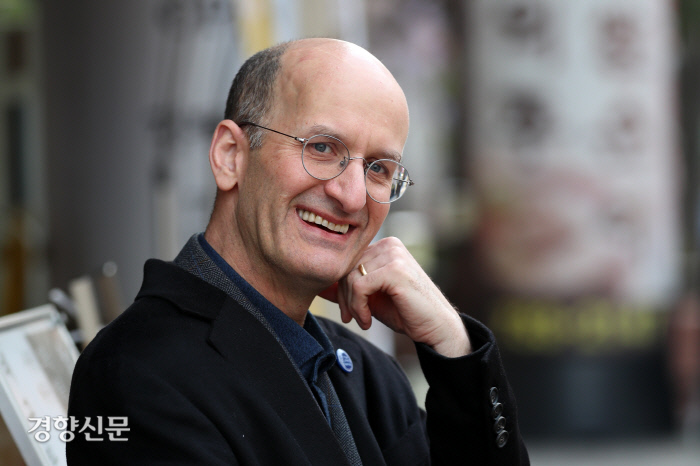
이만열 아시아인스티튜트 이사장이 지난달 20일 서울 중구 정동길에서 경향신문과 인터뷰하면서 포즈를 취하고 있다. 정지윤기자

– 북한 발전 계획에 관심을 가진 계기가 있나.

“2007년 한국에 온 뒤 북한 이야기는 안 했다. 북한 전문가가 많은 데다 저는 지식도 없어 남한 문제에만 집중했다. 그러나 최근 문재인 정부 들어 북한 자원개발, 값싼 노동력 활용 등을 통해 돈을 벌 수 있다는 담론은 문제가 심각하다고 본다. 다른 목소리가 별로 없다고 느껴 내가 목소리를 내야겠다고 생각했다. 남북이 같이 발전소를 짓는다는 아이디어도 나오는데 신재생에너지가 아니라 석탄화력발전소를 염두에 두는 것 같아 실망했다. 미세먼지가 이렇게 심각한 상황에서 석탄화력발전소 건설을 안 하겠다고 선언해야 한다.”

– 한반도신경제구상, 통일경제특구, 동북아 철도공동체 등 논의는 어떻게 보나.

“1970~1980년대 독재 시절이었지만 작은 가게를 하는 사람들은 자기 돈으로 운영을 할 수 있었다. 이제는 대형마트와 경쟁해야 하는 등 20년 전에 비해 독립적 경제력이 많이 떨어졌다. 북한까지 남한식으로 개발하면 안 된다. 남한의 상황도 심각한데 남한 제도를 북한에 도입한다는 것이 우려스럽다. 남북경협은 당연히 해야 하지만 대기업 중심이 아니라 남북 시민사회 간 협력 방식으로 가야 한다.” 

– 북한도 개혁·개방을 할 때 중국·베트남 모델처럼 외자 유치가 필요하지 않나.

“부분적으로 해외투자를 받을 수 있지만 해외자본에 의지하는 것은 반대다. 1960년대 한국은 해외자본에 의지하면 안 된다고 생각하고 해외투자를 엄격하게 관리한 게 도움이 됐다. 단기적 이익만 고려하는 기업의 투자는 한계가 있다.” 

– 문재인 정부는 대통령 직속 북방경제협력위원장에 권구훈 골드만삭스 전무를 위촉했다.

“객관적으로 한반도 발전을 분석해야 하는데 골드만삭스에 있기 때문에 객관성을 유지할 수 있을지 의문이다. 한국 언론에서 이 부분에 대한 비판이 많지 않아서 놀랐다. 남북경협의 청사진은 기업이 아니라 남한 시민, 전문가, 탈북자가 북한 시민과의 대화를 통해 만들어가야 한다.” 

– 문재인 정부도 북한 개혁·개방 시 경제적 이익이 크다고 강조한다.

“박근혜식 통일대박론은 1935년 일제의 만주국하고 조선의 통일 정책에서 시작됐다고 본다. 만주국하고 조선은 하나라는 ‘조만일여(朝滿一如)’를 강조하며 일본이 통일을 시키려고 했다. 당시 한국인 부자들이 만주에서 투자해 싼 노동력을 활용하고, 석탄 등 자원을 개발하면 일확천금을 할 수 있다는 논리다. 조선총독부에서 이를 발표하고 신문 기사에도 나오고 했다. 실제로 남한 부자들은 그 당시 만주에서 돈을 벌었다. 거기에서 공장도 운영하고 개발했다. 하지만 평범한 만주 사람들 삶에는 전혀 관심 없었다. 만주 사람들과 교류하고 더 나은 사회 만들자는 차원이 아니었다. 남북경협의 경우 조만일여식 논리에서 벗어나 북한사회에서 무엇을 배울 수 있을지 고민해야 한다.”

– 통일대박론의 연원이 그렇다면 놀랍다.

“1965년 한·일 청구권 협정 체결 이전에 박정희가 비밀리에 일본에서 기시 노부스케 등을 만나 ‘우리가 만주에선 꿈을 이루지 못했지만 남한에서 다시 한번 해보자. 많이 도와달라’는 취지의 이야기를 했다. 노부스케도 이 이야기를 듣고 매우 반가워했다. 실제로 박정희식 경제개발 5개년 계획은 만주국 전략에 뿌리를 두고 있다. 시민 공동체를 고려하지 않는 만주개발론은 통일대박론과 본질적으로 유사하다.” (일본 아베 신조 총리의 외조부인 노부스케는 만주국에서 산업개발을 추진하고 A급 전범이지만 전후에 무죄로 풀려난 뒤 총리까지 오른 인물이다.)

– 문재인 정부가 이런 역사적 사실에서 얻어야 할 내용은 무엇인가. 

“조만일여, 통일대박론 같은 방식에서 벗어나야 한다. 빈곤한 북한 주민들에게 이익이 돌아가는 대신 국제 투자자들이 혜택을 보는 ‘약탈 경제’ 계획이 지양돼야 한다.”


원본보기

이만열 아시아인스티튜트 이사장이 지난달 20일 서울 중구 정동길에서 경향신문과 인터뷰하면서 포즈를 취하고 있다. 정지윤기자

– 최근 탈북자들과 세미나도 했다고 들었다.

“독일이 통일될 때 문제가 적지 않았다. 동독에서 공동체, 공동농업, 예술활동이 많았지만 통일 이후 다 사라졌다고 한다. 동독에서 서독과 다른 패러다임의 가능성이 있었지만 사라진 것이다. 탈북자들도 공동체적 활동이 없어지고 모든 게 수익 위주로만 되는 사회라면 문제라고 했다.”

– 북한이 가야 할 제3의 길, 대안적 발전 모델은 무엇인가.

“지금 남한이 생각하는 경제는 일본식의 경제다. 성장을 위해선 어쩔 수 없다고 여기는 게 많다. 원래 경제란 표현은 ‘경세제민(經世濟民)’이란 유교사상에서 나온 게 아닌가. 돈을 좇기보다 윤리적 원칙에 따라 나라를 운영하고 시민을 살리자는 의미다. 수많은 한국인들은 경제 분야에서 잘 해 성과를 내고 기부하면 된다고 생각한다. 하지만 내가 생각하는 제3의 길은 협력적인 경제와 사회를 만들자는 것이다. 고유의 경제 공동체 의식과 마을 중심의 나눔 전통을 살리고 현재 전 세계적으로 부상하는 커먼스(Commons·공동체의 규칙에 따라 자원을 공동으로 이용·관리하는 것) 사상을 수용하면 된다.”

– 남북 협력도 이런 방식으로 가능한가.

“충분히 가능하다. 많은 사람이 토론하면 충분히 제3의 협력 방식을 찾을 수 있다고 본다. 사실 대북 제재는 어떻게 보면 북한이 아니라 다른 대안을 고민하는 시민사회에 대한 것이다. 남한 정치인, 경제인은 남북정상회담 수행원 자격으로 북한에 가기도 하는데 다른 협력을 구상하는 사람들은 가지 못한다. 또 일본, 미국, 중국, 남한의 자본은 철도·도로 등 인프라, 자원 개발 등에 대한 준비를 하고 있겠지만 우리는 그 내용이 뭔지, 맞는 방향인지에 대해 알 수가 없다.”

– 올해 상반기 ‘제대로 된 북한 발전계획’에 대한 책을 낸다고 들었다.

“올해 3월 출판을 목표로 하고 있다. 1935년 만주 상황과 현재 상황을 비교해보려고 한다. 그리고 중요한 지점이 빈부격차 문제다. 남북 모두 일반 시민들과 부자들의 격차가 커지고 있다. 미국의 1980년대 남부의 보수적인 주에선 노조를 말살하는 법률이 있었다. 이 법률의 최종 목표는 남부가 아니라 북부였다. 이것과 비슷하게 북한에 적용한 나쁜 정책을 남한에서 하려고 할 가능성이 있다. 증거는 없지만 남한 기업들은 북한에 투자할 때 남한을 생각하고 있을 것이다. 북한 노동자의 임금이 낮으니 남한의 최저임금도 내리자고 할 수도 있다. 북한의 잘못된 개발이 남한 시민에게도 영향을 주는 것이다.”

김지환 기자 baldkim@kyunghyang.com

“Inconvenient parallels between responses to the Holocaust and to climate change” Korea Times

Korea Times

“Inconvenient parallels between responses to the Holocaust and to climate change”

January 13, 2019

Emanuel Pastreich

(with Alexander Krabbe

A comparison between the culture of denial and self-deception that swept Europe during the Holocaust and the disgraceful failure of so-called “advanced nations” to take even the most basic steps to address the catastrophe of climate change may strike readers as a painfully stretched analogy that undermines the authors’ credibility.

Sadly, the resistance to this analogy that we have encounterd suggests the depth of the denial of climate change that lurks among intellectuals, and extends to the entirety of the educated classes around the world. For, if truth be told, the consequences of global warming and the resulting accelerated climate change will be far deadlier for humanity than the Holocaust, leading to the deaths of hundreds of millions, or billions, as agriculture collapses in the face of spreading deserts and the oceans die as a result of warming waters and increasing acidity.

That we can read about this catastrophe in newspapers and refuse to end our thoughtless consumption of fossil fuels and our mindless plunge into a fantasy of immediate gratification without concern for future generations suggests nothing less than mass psychopathology.

The analogy to the Holocaust is imperfect and tentative, but it explains how a shadow has fallen between the knowledge of catastrophe and actual action. It offers precedents for the psychology of educated people who fall over backwards to deny an obvious disaster, who refuse to admit that their daily actions had anything to do with the radical crimes carried out in secret.

We can imagine a future date, if humanity manages to survive in some form, at which this brutal truth of how those with the learning to grasp the problem who pretended that they had nothing to do with this suicidal process will be forced out into the open and the public will be forced to take responsibility for the immensity of the crime that we have committed, and face the bitter fact that we betrayed future generations every time we drove to the market in a car or typed on a computer using energy generated by coal.

The denial of the Holocaust was not limited to the refusal of Germans to acknowledge the systematic rounding up of Jews (and other undesirables) for transport to concentration camps and on to death camps. The denial of this crime spread around the world, including all the nations of Europe. Educated people in France, Spain, Italy, Belgium and elsewhere knew full well that Jews in their country, and elsewhere, were being rounded up and sent to their deaths. It was an open secret. There were a handful of people who pursued the issue, who looked at the facts (disappearing Jews, threats of violence and a rhetoric of annihilation) and were led inevitably to the unpleasant explanation for what was occurring.

Even intellectuals in the relatively free nations of the United States and the U.K. were swept up in the systematic denial of the reports of the Holocaust and those brave eye witnesses who testified as to what was happening were dismissed. Officially, the Allied governments claimed that did not learn about the Holocaust until the first liberations of concentration camps in 1944, but in fact they were fully aware of the number (in the millions) who were being killed by 1942 and deliberately avoided offering any assistance.

Moreover, in 1980 the American historian and journalist Walter Laqueur found out that the British had already cracked the encrypted code of the SS in 1941 and constantly listened to the radio traffic of the Nazis. In 1996 Richard Breitman published British listening records that included success reports from the German “SD-Einsatzgruppen” and police battalions, about the “extermination of the Jews” during the summer of 1941. There was no doubt as to what was happening.

Szmul Zygielbojm of the Polish government took tremendous personal risks in June 1942 to smuggle detailed reports about industrialized mass murder to London. Although the Daily Telegraph did mention his materials eventually, it was on page five of a six page newspaper (similar to the treatment that catastrophic climate change receives these days). Zygielbojm met with “indifference, disbelief or even suspicion,” eventually took his life after his wife and son were killed during the liquidation of the Warsaw Ghetto in 1943.

Refugees trying to escape persecution, such as the passengers of the ship the German liner MS St. Louis that came to the U.S. in 1939 were turned back without any serious discussion of the reasons the passengers were fleeing. The U.S. even turned away 20,000 Jewish children fleeing Nazi Germany in much the way that refugees from climate change (whether in Central America or Syria, or Northern Africa) are turned back without a second thought from the U.S., Canada or Japan today.

The use of Jews as slave labor to aid the German economy (and the economies of other countries), the misuse of the property confiscated from Jews in Germany, and across Europe, profits generated through budgets related to the “Final Solution” project were deep secrets that had real financial benefits.

The point is not to berate the Europeans for what they did then, but rather to suggest that the mentality was strikingly similar to what we see today. Fossil fuels (petroleum and coal above all) are dirty and immoral sources of energy and wealth whose catastrophic implications for the environment have been carefully hidden from sight while the immediate consequences are disguised through misleading reports in the corporate media that understate their deadly implications.

The best and the brightest of so-called “advanced nations” have their fingers all over this crime, whether in the promotion of economic theories that ignore climate change and assume that growth and consumption are necessary, or policy reports that vastly understate the gravity of the situation, or media reports that fail to mention “climate change” when reporting massive hurricanes, forest fires or droughts.

The number of people who are dying now, and who will die in the future, are carefully guarded by these gatekeepers, much as the mass killings of Jews were hidden from the writings of professors, journalists and government officials in Paris and Budapest, in Berlin and Rome, during the 1940s. Similarly, today we see educated people distracted by trivialities like Trump’s temper tantrums, and unable to focus on the disaster that stares them in the face.

We created this cognitive dissidence and we are all guilty. The industry of death around us has been hidden with our permission and with our consent. Factories in China or Vietnam use coal that destroys the ecosystem and pollutes the local region so that rich nations can enjoy inexpensive products without having to consider the price paid by our precious Earth. We pat ourselves on the back for being environmentally friendly because we do not have the domestic pollution we had in the 1960s and 1970s. But the unspeakable damage to our shared ecosystem is the same, whether the factory is in downtown Paris, or in rural Myanmar.

How is such an approach different from the scheme whereby placing the death camps in Poland allowed all of Europe to enjoy a false sense of innocence? As the recent Hungarian movie “1945” (directed by Ferec Torok) shows, the confiscation of the possessions of Jews was a massive industry that was assiduously covered up by those involved. It was too easy to blame the entire project on a small group of SS officers.

The current project of death encompasses the production of petroleum, the entanglement of the U.S. dollar with the use of petroleum, and the creation of fraudulent mechanisms like “carbon trading” that distract us from the necessary steps such as banning the use of fossil fuels. The myth that market mechanisms can solve the problem is embraced by environmental groups that limit their discussions to the most superficial solutions.

Even more grotesque is the transformation of the military in the U.S. (and elsewhere) into a massive consumer of petroleum and massive producer of carbon emissions that devotes its work to promoting wars to secure only more petroleum and natural gas, and thereby to create petroleum wealth for a select few. The generals embrace the mission of “security” while ignoring the real security threat of climate change. The scale of the horror is so great that many prefer to simply play stupid and let the insane project proceed unimpaired.

Today we deny the deaths of millions in wars over oil and the death of tens of millions as the consequence of climate change globally.

We can understand the mass pathology behind the killing of the Jews, or the embrace of fossil fuels, through a comparison with incest. Incest, sexual relations between close family members, is ethically offensive and disruptive behavior in our society. It results in tremendous psychological damage for victims (and at some level all family members involved are victims) that last for a lifetime.

There is a disturbing pattern in incest. Although disputes between family members about money or power often spill out into the open where they can be addressed by the family as a whole, and can be resolved, incest is often swept under the rug. Families try to maintain a semblance of normality for years, or even for decades, pretending that the unspeakable relationship does not exist. The same behavior is true for other forms of child abuse.

Similarly, when addressing the denial of climate change, we must confront the capacity of humans to embrace false narratives at the family level, the national level and the global level that spare them the pain of facing the truth and taking responsibility. We must recognize the ability of humans to deny the truth despite the tremendous damage that such action causes them over the long-term.

Such was most the mentality of thoughtful people in Prague, in Budapest or in Warsaw who felt comfortable sitting at cafes sipping their favorite drinks, reading intellectually complex novels and discussing the weather, or enjoyed the latest movies with friends while avoiding any mention of the mysterious disappearance of Jews from their neighborhood. They even struggled to block out the memories of evictions and roundups they had witnessed.

Of course the Gestapo and other fascist groups were so dangerous that silence was demanded. Yet the totalitarian system could never have been established if citizens had not practiced psychological denial for long enough to allow totalitarian rule to take root. The willingness of educated Germans to ignore the Nazi Party’s actions from 1933 on allowed that organization to establish a system that would eventually make criticism impossible.

Eventually those who tried to help Jews, homosexuals, dissidents, disabled people, Jehovah’s Witnesses, communists, POWs, critical authors, Sinti and Romanies were charged with crimes that demanded immediate and brutal punishment.

Although the Trump administration has made climate change a topic that government officials are not allowed to discuss, let alone respond to, discussing the topic is not illegal yet. Nevertheless, the brutal suppression of the protests against the Keystone SL tar sands pipeline last year, including ridiculously long prison sentences, suggests that it is entirely possible that the debate on climate itself will be criminalized in the years ahead, forcing us to make even more difficult decisions at even greater sacrifice.

We who fight for climate justice must recognize that we may not have much time before not only is radical climate change unavoidable, but also before the discussion of the topic is made impossible. Creating a sustainable future may require profound sacrifice and moral courage that goes beyond any “carbon trading” schemes that have been floated by multinational investment banks.

Climate change is already killing millions around the world, and will kill hundreds of millions in the years ahead. Yet the vast majority of the well-off (and well-off means those who make more than $US40,000 a year) are indifferent to the relationship between their overheated homes, their minivans, their imported cheap products, or their offices with ridiculously high ceilings in the lobbies and glass and steel exteriors that require vast amounts of energy to keep at a comfortable temperature, and climate change. They do not see, or they do not want to see, a link between the hurricanes devastating the coasts, the spreading deserts, the increases in forest fires, and their own daily actions.

In a grotesque burlesque that has become commonplace, we remark to each other as a greeting that the weather is so cold. Yet we are fully aware that today’s winters are so warm that flowers continue to bloom into December, and beyond. We intentionally wear heavy jackets when we go out, willing to put up with the inconvenience because the ritual somehow reassures us that the climate has not changed at all.

The painful pursuit of truth

There were brave men and women who risked their lives, and often more importantly, their relations with their own families and friends, to get the truth out about the Holocaust. More often than not their stories were dismissed as exaggerations. It was assumed that the unfortunate deaths of a few Jews were being exaggerated into a fantastic mass murder. The arguments for dismissing their stories (and such arguments are made even today) were based on the assumption that the fascists could not possibly have engaged in something so terrible and that the populations of Europe could not possibly have allowed something on that scale to happen. In effect, the scale of the crime made the task easier, not harder.

The psychology we see today regarding climate change is identical. The reports produced by scientists based on the scientific method that speak of massive destruction are dismissed or ignored because they are Pollyannish. The rosy predictions made by politicians, television personalities, columnists and businessmen, constructed from self-interest, ego and primitive denial are embraced by many as a precious salve for their deeply troubled collective conscience.

The scale of the catastrophe, which threatens humanity with extinction, is so large that those who embrace the culture of denial find it easy to dismiss. But there is no scientific basis for such dismissal. If anything, multiple mass extinctions from prehistoric times suggest that such scenarios are all too possible. That bitter reality is detailed in Elizabeth Kolbert’s book “The Sixth Extinction: An Unnatural History” (2014). Certainly the current massive die-out of insects, amphibians, and reptiles indicate that the process of extinction is inexorably working its way up the food chain towards us.

It is no longer a secret that a small group of billionaires are making a fortune off of encouraging waste among the population and forcing us to be dependent on fossil fuels, often using taxpayers’ money to subsidize this addiction to a dangerous energy source. They are fully aware of the crime that they are engaged in and they are informed about the coming catastrophe. Yet they march forward towards mass destruction, much as the leaders of the Third Reich did when they started their invasions of Eastern Europe and Russia, knowingly launching a catastrophe that destroyed them as well.

Just as a small group of intellectuals, such as Austrian-German Orientalist Adolf Wahrmund (1827-1913), pushed fake science about Jewish inferiority in Europe from the late 19th century, and tried to convince French and Germans that the contradictions of capitalism could be traced back to racial characteristics of Jews, a circle of fraudulent “experts” have made a fortune from paybacks from fossil fuel industry to push their denial of, or understatement of, climate change.

These professional deniers and scientists for hire such as Fred Seitz, Robert Jastrow (founder of the notorious George C. Marshall Institute) and William Nierenberg pawn off fake science using glossy brochures and fancy PPT presentations with the criminal intention of misleading the public about a national security crisis. The process is immoral and illegal, but even today is described in the media as merely matter of differing opinion ― much as rabid anti-Semitism was treated in Europe from the late 19th century.

Today’s professors, lawyers, doctors or businessmen and reporters contribute to the promotion of a fossil fuel-based economic system that defines the economy in terms of consumption and waste. They are amply rewarded for their work, through consulting contracts, through their connections to corporations pushing automobiles or fossil fuels, or through other financial links. They shamelessly discuss economics while ignoring the impact of wasteful energy consumption on the environment and they promote “free trade” while ignoring the tremendous emissions that result from the transportation of products across the world by container ships. This shameless work forms a perfect parallel to the pseudo-science of racial inferiority promoted by anthropologists and physiologists in pre-war Europe like Houston Stewart Chamberlain (1855-1927) who provided Hitler with his roadmap for systematic “scientific” attacks on Jews.

The Washington Post reported in November 2017, that the U.S. became the biggest polluter per capita in the world and that it has the most climate change deniers of any country. Such an extreme situation could not have been reached without the massive collaboration of countless American intellectuals in this institutionalized death march.

Some intellectuals have written books about the magnitude of climate change that receive attention in the mainstream media. For example, Naomi Klein has written, and spoken, in a persuasive and blunt manner about the scale of the threat to humanity, saying that the Earth is “fucked” by the false promise of perennial growth on a planet with limited resources. Her “This Changes Everything: Capitalism vs. the Climate,” published in 2014, is a rare example of a widely read book that suggests that the economic and ideological assumptions of our society will be fatal.

So also Clive Hamilton, an Australian professor who is a member of the Board of the Climate Change Authority of his country, published a powerful critique of flawed economic policies “Growth Fetish” in 2003, and the trenchant “Requiem for a Species” in 2010. Hamilton suggests that even the experts behind the IPCC (Intergovernmental Panel on Climate Change) have vastly underestimated the dangers ahead because of economic and political pressures.

But most climate change discourse has been laughable and pathetic. The most representative artifacts of this culture of understatement are former Vice President Al Gore’s two inconvenient movies: “An Inconvenient Truth” (2006) and “An Inconvenient Sequel: Truth to Power” (2017). Both films are more a promotion of Al Gore than a serious effort to address the threat of climate change. The saccharine narratives assume unwarranted optimism that multinational corporations that pursue profit can solve this catastrophe if only upper middle-class citizens raise their awareness of climate change. The movie avoids any consideration of serious actions such as the categorical prohibition of the use of fossil fuels, or even heavy taxing of pollution.

The road forward

2018 was a turning point in the modern Holocaust of climate change. The vastly increased warming of the North Pole led to a smaller difference in temperature relative to the equator, which disrupted the Northern Hemisphere’s jet stream. The result has been reduced air circulation at the altitude of nine to 12 kilometers with the consequence of minimal seasonal variations around the world. The resulting extreme rainfall in Italy, the unprecedented drought in Germany, the massive fires in California and Greece show that extreme climate is a reality, but governments, and their citizens are incapable of articulating responses on the appropriate scale.

Most of us lack the bravery, and the intellectual clarity, necessary to face the ugly truth of climate change and its roots in our culture and habits. We have externalized the problem and therefore are unable to move to the next step of changing our behavior so as to make progress.

There is still hope. We see a rising awareness of climate change around the world that makes an honest discussion about the scale of the threat possible. But we cannot allow half-truths and rosy projections to delude us. The struggle ahead will be profound and disorienting. We will have to challenge the consumption-based economics that underpins every aspect of our current ideology. The circumstances may be entirely different, but a moral bravery on a par with that which was required to confront the Holocaust will be demanded of us if we wish to find a solution.

“The Chinese concept of propriety (“li”) as the key to new ecological awareness”

Circles and Squares


“The Chinese concept of propriety (“li”)

as the key to new ecological awareness”

Emanuel Pastreich

January 13, 2019

The Chinese tradition of “li” 礼 has a broad significance as a set of rules that set standards in behavior that create harmony between individuals, and between the institutions of human society. Li, both in general sense of manners and propriety, and in the narrow sense of rituals of life (birth, marriage, funerals, ancestor worship and offerings to Heaven), was the foundation for society and defined family relationships and encouraged responsibility and accountability within the family, the community, the nation and the realm. Li was seen as foundations for governance, for international relations and for all family relations.

In the narrow sense, “li” refers to the offering up of food and other valued objects as sacrifices to the ancestors of a clan, the former emperor or king, or to heaven, or other deities. It served as periodic affirmation of the indebtedness of the individual, of the family and of humanity as a whole to the ecological cycles that produced the food that we consume and gave deeper significance to foodstuff, and the act of eating in a manner that encouraged an awareness of the centrality of agriculture and the importance of the ecosystem.   

“Li” in the sense of “propriety” defines a set of complex rules that governed conduct between people and created a healthy order in society through the reinforcement of moral imperatives in daily life. “Li” in the sense of greeting family member in accord with their position within the family (and thus making social relations explicit, and therefore acknowledged) had profound symbolic value and real ethical power as well. “Li” in the sense of propriety grew directly out of “li” as ritual in that periodic rituals defined relationships and assured that everyone, even the emperor, is neatly woven into a larger hierarchy of things human and natural so that no one can imagine himself or herself to be standing alone.

In this sense, “li” as propriety and ritual reinforced a sense of balance between humans that was intimately connected to the larger balance between the human realm and the natural realm. Chinese felt deeply liberated in the process of modernization in that they gained freedom from these ritual acts which seemed to restrict their actions so severely, but that meant that they no longer felt tied to each other or to the natural world. The result was the growing exploitation of fellow humans in an alienated society and the destruction of the natural environment. Although the socialist revolution in China tried to set right the radical exploitation of labor, it did so within a Marxist framework which did not affirm human relations with the natural environment. More recently, the gap between rich and poor in China, and the world, has gone far beyond what Confucians would have tolerated and the destruction of soil, water and mountains has become a tremendous tragedy precisely because the intimate connection constantly repeated in “li” has been destroyed.

Ritual is not limited to Confucianism. It has strong foundations in Buddhism, in Daoism and in shamanism in East Asia, and for that matter parallels in Christianity and Islam. Perhaps one of the greatest weaknesses in contemporary ideology is our loss of a language to describe ritual. That is to say that although we pretend that we have moved beyond the rituals of the past into a modern age of self-expression and directness, in fact ritual is deeply imbedded in human culture and cannot be overcome. Rather, modern society consists of many rituals that citizens are not aware of as rituals (like the rituals of shopping and of consuming). At the same time, citizens lack awareness of the power of ritual to connect citizens together and to increase their awareness of the environment and to create a political and spiritual commons.

The Confucian ritual tradition, especially after Zhu Xi’s (1130-1200) codification and standardization of ritual practice during the Southern Song Dynasty, and his linkage of ritual with a metaphysical totality, gave family, community and state rituals a new intellectual import. The importance of the relationship between the underlying metaphysical order of things, the ecosystem and the human realm the dates back to ancient times,[1] but it had never been put together in such a systematic manner. Suddenly man’s ties to nature in his every action were made explicit, and intellectually involved.

Zhu Xi unambiguously mapped out the significance of rituals and wedded them directly to an imbricated metaphysical order that lay behind every act in the family rituals.   

The tremendous potential of the Confucian rituals is the manner in which they affirm the relationship between the individual and nature, between the consumption of food and the awareness of its origins, between daily life for the citizen and the ecosystem as a whole. Those rituals, if they can be reinterpreted for our age, offer the potential of a solution to the most serious threat to our society, the growth of mindless consumption as the primary ritual of daily life.

Modernity, consumption and family rituals: The Korean case

When I married my Korean wife twenty two years ago, I discovered that her family practiced the most strict and carefully orchestrated Confucian rituals at the time of the Autumn Harvest and the traditional new year’s for the ancestors, and also on the days of the deaths of ancestors. The entire family would come from across Korea, or even from abroad to be at the parents’ house for the events without fail. They would cancel other engagements and sit through hours of heavy traffic to be present.  The elder boys spent considerable time laying out the meat, peeled chestnuts, persimmons, apples, wine and other foods in the appropriate places, and in the appropriate dish or bowl. All was done in accord with the careful diagrams in books the family treasured. Those diagrams were based directly on Zhu Xi’s instructions for the family rites (jiali 家礼) in Zhuzi Jiali (朱子家礼). At that time, I was attracted to the solidarity of the family and the commitment to tradition in her family, and I was honored to be included in the rituals as a new member of the family.

Over the years, however, the members of my wife’s family have taken far less interest in the rituals; often her brothers do not come at all, saying they are too busy with work. The children also go out to play with their friends, or show up just for a few minutes to show their respects and then rush out the door. So also the placement of the food and other objects on the table for the ceremonies has become far more sloppy since my wife’s father passed away. Often there are only a few people helping to set up the offerings—sometimes only me.

I fear that the Confucian rituals will not be carried out at all by the next generation, perhaps not after my wife’s mother’s generation passes away. It is hard to imagine my children, granted the seductive consumption culture that they have grown up in, carrying on such a tradition. The loss is considerable, but not much different from what we have seen in Vietnam, Japan and China.

Increasingly we hear tales of aged parents who are abandoned by their children, and also of children who are discarded, or neglected, by their parents. The decline of Confucian ritual is not the only cause of this transformation of Chinese and Korean society, nor are the changes entirely negative, but overall, the result has been the growth of a narcissistic culture focused on the immediate, on the self, on image (as opposed to values) and unconcerned with future consequences. Confucian rituals served as a constant affirmation of the common roots that tie people together, and a demonstration of our mutual ethical obligations. The rituals had significance far beyond any effect that pleasing the ancestors might have for the fortune of the family.

The greatest assault on ritual comes from commercial advertising. Rather than adversisements that encourage cooperation and concern for those who have had fewer advantages, current adversiings is vacuous and indulgent, the equivalent of pornography in terms of its ethical content. Selfishness is held up as an ideal and it makes a grotesque appeal to the appetite, to the unreasoning instincts of the brain stem. Such advertising is violation of the sacredness of food and of clothing, of everything in our daily lives. By contrast, Confucian rituals affirmed the relations between members of society and a spiritual aspect in daily life.

We should be encouraging people to value every grain of rice, every drop of water, and it is unethical to suggest to our citizens that they should treat binge eating as something to be emulated. Our climate has been turned into a desert, and our society has been turned into a desert by TV programs that deny what is the best in the Confucian tradition: the ethical imperative for personal frugality and a deep respect for agricultural production. 

The failure of citizens to wrap their minds around the threat of nuclear war, of climate change, of the rapid concentration of wealth and of other dangers is a direct result of a new anti-intellectual culture. We no longer employ rigorous scientific approaches to the analysis of contemporary society, or even to our private lives. But that anti-intellectual trend is a result of our failure to relate our actions to the larger society because we no longer have rituals that bind us together.

Training our citizens to control and moderate their desires was considered to be essential in traditional Korea and China. As I witness so many highly educated people lost in frivolous amusements today, I wonder whether we should see those past f rituals as representing not so much an oppressive ideology as an ethical imperative to affirm commitment to each other through practice.

Food, society and the environment

The affirmation of the value of food in a social and environmental sense was a critical part of ritual , from ancient times, and especially after Zhu Xi. Affirming the importance of food in our lives, and our ties to our ancestors and our ties to nature serves to increase our awareness of the importance of food, even adding a spiritual dimension to the daily eating and drinking of food and beverages. In the face of climate change, such a shift is absolutely necessary. We do not have to go the some advance Western country to find such awareness. We can find it in the Confucian past.

It is in this respect that ritual has so much potential power. Ritual in the Confucian tradition affirms a spiritual essence within the everyday objects, especially in food. In ancient times, this concept can be traced back to a belief that all objects, like food, have an essence which is spiritual (and which feeds the ancestors or nourishes heaven) and an essence with is material (and nourishes us in this material world). The implication for later generations of that view was that food offered up in ritual was a confirmation of the value of agriculture and the maintenance of the environment as a means of producing food, and an affirmation of a spiritual essence within food. The ritual act was also a sign of respect for the process, stretching over hundreds and thousands of years, by which humans and agriculture formed a whole.

In a traditional view of the world, man exists primarily as the farmer who tills the fields and then he consumes the food, and finally he lies, buried, beneath those fields. In the end, his body becoming part of that Earth again and contributed to the process. The food that nourishes us, and will nourish future generations, is literally the product of the ancestors.

Confucian ritual does not refer explicitly to such a process, but such an understanding of the link between the human and the natural realms is buried not far below the surface. After all, as the ancestors passed down to us the skills of farming, they also gave life to us and created our environment not only through their wisdom, but also by becoming a part of the soil.

In the last hundred years, the process by which our world is formed by the events of the past, and our actions impact future generations has been completely lost, leading to profoundly self-destructive acts such as the consumption of plastic products and the use of food as a source of pleasure and distraction, rather than a means of nourishment. The separation of the human realm from the natural one, through sealed buildings with air conditioning, has created an absolute break with the natural world, and a mistaken belief that humans are somehow separate from other animals. That process has been forgotten by the present generation, leading to a radical cultural discontinuity with the past, and also to a glaring ignorance about where food comes from, how it is produced and what impact that process has on our lives. The destruction of the ecosystem and its long-term impact on food is a taboo topic which is never mentioned.  

From early times, and especially since the Song Dynasty, ritual became a metaphysical experience for the individual, for the family, and especially for the intellectual that reaffirmed the organic connection of humans with food, with the environment and with a larger historical and ecological order of being. Of course there were narrower interpretations within the popular culture wherein ritual events served as opportunities to bring good fortune, or to solve immediate worries of women of the household. Such understanding was no in conflict with the metaphysical significance.

The consumption of food after the offering to the ancestors, or to heaven, especially grains and other agricultural produce made ritual a celebration of the process by which human experience is linked to the food that provides nourishment, and thus confirmed the intimate interplay of earth and food, water and food

That critical space of ritual in the lives of Chinese that made clear how one’s daily life was tied to others, and to the earth was subject to a powerful intellectual assault from the late 19th century as the new ideology of modernization and industrialization took root in China. Confucian rituals were dismissed as a backwards superstition that impeded the radical transformation of China into a modern nation[2]. Two generations of Chinese intellectuals made it a top priority to stamp out the lingering traces of an oppressive feudal society. Those events ceased to be a means of affirming man’s connection to nature and to each other, or to agriculture, for them. Ritual was perceived as a barrier to the development of factories, trains and automobiles, financial institutions and a modern global culture. Modernity was something that was required and it could only be achieved by severing attachments to others, and to the natural world.

I remember when I first studied Chinese history at Yale University in 1983. In the course I heard at length about the tragic story of how backwards-looking bureaucrats failed to modernize China because they adhered to rigid Confucian concepts of government, and of technology, which hobbled them and rendered them incapable of embracing the obvious step forward into modernity of mass production, coal-fired trains and factories and the growth of massive cities. I was taught the tragic story of how China fell pathetically behind the West because of such backwards thinking. The implication was that was something essentially flawed about the Chinese cultural tradition, for all its glory, which demanded that essential principles from the West be imported in order to move on to the next, inevitable step of cultural evolution.

But now that we are witnessing  the catastrophe of climate change and see directly the horrible distortions in our economy and in our society that have resulted from the use of coal and petroleum to drive factories, trains and automobiles—not the mention a lethal new generation of weapons—can we continue to cling to that narrative?  It is a hard myth to abandon as it is linked to every aspect of our modern ideology, both ideologies of the right and the left. Yet we must ask whether or not a system in which the engagement with the environment, the focus on agriculture (and specifically food) and the demand for a human-centered economic system in which ethics outweighed profits or scale of production was not superior to the modern system we have imported in which the natural world, and humans as well, are subjects for constant exploitation.

The She and Ji rituals (社稷) performed by the Chinese emperor in Beijing (and the Korean kings of the Joseon Dynasty) served as a unique combination of the assertion of political authority at the highest level in the promotion of the well-being of ordinary citizens with the recognition of the critical importance of the ecosystem for human society. These rituals paralleled the rituals of the family at the highest level. The “She” ritual was intended for the god of the Earth, a spiritual presence who guards the soil so critical to nourishing the crops which nourish the people and undergirds the entire political economy. The “Ji” ritual was intended for the god of the crops, the spiritual presence who protects plants and assures that they mature so as to provide food without suffering from pestilences, insects or droughts.  

The emperor’s offerings were not mere superstition, but rather an explicitly political and spiritual representation of the essential ties between the earth, and the plants that grow in it, and the political and economic activities of humans. Such awareness in the political realm of ecology created a balance between human settlements and the natural world. But that balance has vanished from modern society. There are numerous rituals carried out in party meetings in China today, and the hosting of foreign dignitaries, but none of them affirm the importance of the biosphere or the centrality of agriculture.

The loss of an awareness of the importance of nature for human society in the modernization project has had extremely serious consequences for modern Chinese society. We no longer have any symbolic representations to remind the people of the importance of nature and domestic agriculture to their physical and spiritual wellbeing. We have no symbolic representations, or ritual expressions, of the ties between the earth, water plants and our civilization. People are concerned about the environment in an abstract sense, but give no thought to how every plastic object they throw away impacts the environment. We are bombarded by images of modernity defined in terms of highways, high-rise buildings, automobiles, computers and landscapes completely devoid of plants of any type. It is assumed in the commercial imagination that plants, and specifically crops, are interchangeable and that they can be bought and sold from around the world without any impact on our civilization. Farming is considered a backwards industry of the past.

But a civilization cut free from all awareness of the production of food from the soil, all understanding of the effort required to feed people, is a civilization that is in danger of falling head first into a dangerous cult of consumption and complete disregard for our ecological future. It is a dangerous and destructive civilization indeed.

Song Confucianism, especially as embodied by the teachings of Zhu Xi, provided the basis for the She and Ji rituals and other affirmations of the importance of agriculture and the environment in the lives of all people. The focus of Zhu Xi on the metaphysical significance of man’s position in the natural world set the groundwork for an embrace of ecology in an intellectual and spiritual sense within the Confucian tradition, going further than Buddhism in the criticality assigned.[3]

Zhu Xi described a complex moral psychology, limned through ritual practice, wherein the relationship of the individual, and society, to the natural environment was identified as central to the search for enlightenment. The process of becoming aware of one’s environment was established as a significant goal in self-cultivation and in active practice.

Song Confucianism argued that if we connect to our inborn nature we will see no separation between ourselves and nature and therefore we must treat nature with appropriate reverence. Zhu Xi refers to a mental state of “maintaining reverence” (chi jing持敬) that was the central condition for self-cultivation. This mental state grew from the adherence to rules of propriety and a care for the human and natural world that was taught to young people, but also was meant to be developed to a higher degree in adulthood. Reverence required discipline, focused thinking and mindfulness that opened the mind to the way. The final stage of humaneness, or the final sagehood, required a full embrace of one’s inborn connection to nature and to the entire natural world.

Zhu Xi’s essay “A treatise on Humaneness” (Renshuo 仁说) assumed that there was no separation between the human and the animal world. He saw a commonality not only of experience, but of existence itself between the two realms.[4] Zhu Xi explained “the person of humaneness regards Heaven and Earth and all things as one body. To that person there is nothing that is not oneself.” The enlightened one feels a deep affinity for plants, grasses and trees as living things. For Zhu Xi it was human selfishness and hubris that blocks the awareness of this deep connection and therefore endless effort is required. Reverence was not only reverence for ancestors and Heaven, but also for nature itself and a deep awareness of one’s impact on the environment.

Conclusion

A landmark report from the Intergovernmental Panel on Climate Change convened by the United Nations entitled “Global Warming of 1.5 C” [5]was released recently that presents a far more shocking vision for the immediate future than the corporate media was willing to acknowledge before. The report suggests that humanity faces catastrophic consequences of its carbon-centered economy and makes a clear break with the previous assumption that carbon trading schemes are sufficient to address the problem.

The report avoids much of the far more pessimistic predictions of many experts, but goes further than any mainstream report so far. And yet the ultimate implications of the report have been swept under the rug by a modern society still in deep denial. The problem is not carbon emissions from factories and automobiles, nor it the problem the use of technologies. It is rather the full embrace of an ideology, a mentality, which holds that the consumption of goods defines the significance of one’s human experience.

That destructive ideology underlies most of the assumptions of our modern society and determines the priorities of our citizens to a remarkable degree. Yet the traditions of the past, and especially the close connection between humans and the environment represented by food as described in the rituals of the Confucian tradition, offer an alternative to us. We do not know yet how that Confucian tradition can be reinterpreted for the modern age, and for the entire world, but the potential is most certainly there. After all, Zhu Xi’s writings on ritual were successful in Korea precisely because they emphasized universality, not specificity. They made the ritual part of the process of enlightenment, something that anyone could participate in.

Or we could say that Zhu Xi brought the individual act together with universal principles in a powerful manner. Such a skill is most precisely what we need most desperately today. Every action by the individual, every choice by the individual, is critical to protecting our environment. We can find the inspiration for a new practice in our daily life to address the climate change crisis, and the food crisis, in the Confucian tradition.


[1] The critical terms are “tian” (heaven 天), “di” (earth 地), “ren” (man 人), better known as “sancai” (三才). But “tian” refers not simply to the heaven above, but to the underlying principles of the universe. “Di” is not simply the ground, but the entire ecosystem that humanity must live in harmony with. “Ren” refers to humans and the totality of human civilization.

[2] This intellectual revolution brought on by the work of various Westerners in China is detailed in Jonathan Spence’s study To Change China: Western Advisors in China (Penguin Books, 2002).   

[3] B.C. Keenan. “Reverence and Cheng-Zhu Ecology.” Dao, 2018, pp. 187-201.

[4] IBID, p. 199.

[5] The full report is available at http://www.ipcc.ch/report/sr15/.
「化石化した韓国政治」 ハフィントンポスト

ハフィントンポスト

「化石化した韓国政治」

2019年 1月 9日

エマニュエル パストリッチ

文在寅大統領が9月に平壌を訪れた際、最も印象的だったのは15万人もの平壌市民を動員した巨大な綾羅島メーデー・スタジアムで演説したことである。男女を問わず熱気に包まれた観衆の歓声は多少驚かされるものであったが、文大統領自身もこの熱烈な反応に高揚している様子がはっきりと窺えた。文大統領の述べる言葉のひとつひとつが観衆の歓声でより一層力強さを増したようだった。金正恩委員長について言及する場面では、文大統領と平壌市民はまるで「一体化」しているかのようにも見えた。確かに言えることは、本国の韓国では防弾少年団(BTS)やiKONのコンサートでなければ、このような熱狂的な観衆の姿は見られないということである。

文大統領にとってはとても感極まる瞬間だったことであろう。北朝鮮の演出ではあったが、むしろ、韓国でも支持層集めのために各界の重鎮の前で跪いてお辞儀する意味のない儀式が政治的パフォーマンスになっており、今や慣例になった政治的パフォーマンスは自分がいかに親しみやすい人物であるかを証明するための単なる手段でしかなく、世間の人々の注目を集めるためには全く面識がなくても、また、今後も決して顔を合わせることのない人たちとでも、気軽に一緒にポーズをとる、そんな政治的パフォーマンスはよく使われている。

しかし、文大統領の目に映っていた状況は違う意味のものである。スタジアムに集まった観衆は権力による支配の産物といえるもので、おそらくそう思われてもある程度は仕方がないことではあるが、観衆自体からはみなぎるパワーが感じられた。平凡な北朝鮮市民の政治への献身は単なる独裁政権の証だと一蹴してはならないと私は思っている。大規模な集会や完璧なマスゲームの裏には相当なショーマンシップや心理学的にもただならぬエネルギーが要されるのである。

韓国では今やそういった光景は昔話になってしまったといっても過言ではないだろう。もちろん、2016年に朴槿恵を政権から引きずりおろしたろうそくデモはまだ記憶に新しい。ろうそくデモはハイレベルな政治参加への文化をもたらし、朴槿恵政権を倒すという当初の目標からすれば、成功したといえる。しかし、朴槿恵政権の裏に潜んでいた制度的腐敗、韓国経済に大きな影響力を及ぼすようになり新たに浮上した海外投資銀行、トランプ政権への盲従的な支持や執着、イランと戦争しようとするアメリカ内のネオ・ファシズムに対しての完全沈黙、等の問題は全く改善されていない。文大統領は「ろうそく革命」で誕生した大統領としての神話が消えつつある。

韓国で政治が衰退してしまったのは、人間の経験に基づくファシズム的アプローチや過度な産業主義のせいである。暮らしのありとあらゆる面でサービスが有料提供されるようになった。健全でない文化が韓国の出生率をかつてないほどに低下させてしまい、それに加えて、最近ではイエメン難民への不満が一気に噴き出し、それが移民者への敵対心となった。

結果的に老衰してしまった社会は高齢者が政治をほぼ支配していることを意味している。実際、政財界で決定権を握っているのは70歳以上の男性である。この問題は富の集中によりさらに深刻になってしまった。ほとんどの若者は政治プロセスからは疎外されており、ごく一部の若者しか政治参加への強い意志は見られない。多くの若者は変化への希望を諦めてしまい、スターバックスでコーヒーを飲んだり、ゲームやポルノ等で現実逃避することしか興味を示さなくなってしまった。まさに政治が崩壊してしまったのである。

リベラリズムは80年代の民主化運動や2000年代初めの盧武鉉政権に影響を及ぼした勢いをほぼ失くしてしまった。とりわけ、目につくのはリベラル的な政治論争が狭い範囲のシンボル的問題に限定されてしまったことである。太平洋戦争当時、日本軍が性的虐待を行なった「慰安婦問題」については限りなく議論される一方で、今日、韓国人男性が行なっている移住女性への虐待について関心を示す者はほとんどいない。農民の生計を脅かす自由貿易についてはタブーなテーマになってしまった。

老年期を迎えたリベラル指導者のほとんどが80年代の「民主化運動」の追憶に浸ったままで、今日の労働階級の若者たちが直面している深刻な問題は把握していない。彼らはアメリカの民主党員と同様に、企業との緊密な協力よりは左派からの批判にしか関心を示さない。結局、年老いた指導者たちのほとんどが相当な資産の所有者であり、より公平な社会を作ることよりも自分の身内がよい大学に進学できることにしか余念がないのである。

ところで、つい最近、非常に影響力を持つリベラル系政治家が主催する本のサイン会に招かれた。その会場では今年53歳になる私が最年少参加者であるという事実に衝撃を受けた。絶滅した恐竜のアロサウルスやディメトロドンのように化石化した参加者たちは70、80年代の学生闘争の話を何時間も延々とした後に、その当時の歌を歌いあった。参加者たちは民主主義について語ったり、何人かの保守政治家に対しての批判は行なったが、熾烈な学歴競争社会が支配する悪夢のような世界で必死に生き残ろうと歯を食いしばっている普通の若者たちが直面する現実については一切口にしなかった。

一つ確かなことは、衰退してしまった経済のもとで日々塾通いや仕事に追われる韓国の若者たちはそのイベントについて何も知らなかったということである。しかし、もし、若者たちがそのイベントに招かれたとしても、有意義な時間を持てたと思う者は誰一人としていなかったであろう。

また、先月、リベラル系の書店で友人と一緒にコーヒーを飲む機会があった。その書店に陳列してあった韓国語の教育、経済、社会、文化関連の本はたいへんすばらしかった。書店の社長は現代社会について真剣に考えている知識人であった。しかし、年配の知識人が作った知識空間と現代社会で自分の道を見出そうと孤軍奮闘する一般人の間では埋められない溝があるように見受けられた。韓国各地のカフェやコンビニであくせくと働いている多くの若者は、リベラル系書店にある本を読むことで得られるものがあるはずである。おそらく最近の若者は読書習慣をあまり身に着けていないであろうが、本を読むことで現代社会でも真の価値を見出せることはできるであろう。

確かなことは、若者たちはリベラル系書店が存在することも知らず、書店に埋め尽くされている書籍をあまり身近に感じてないということである。残念ながら、若者たちは自分たちが置かれている大変な境遇への共感を歌謡曲の歌詞から見出そうとしている。よかれと思ってリベラル系書店を営んでいても、高等教育を受けた裕福な経営者には現代社会であくせくする人たちへの接近法はわからないのである。

私は韓国で過ごした11年4ヶ月の間、リベラルな非政府組織(NGO)で活動してきたが、どのNGOでも参加の文化が非常に薄れてきたので、活動からは全部身を引いた。そのNGOからは未だに会費の支払い請求があったり定例会議にも招待を受けたりするが、それ以外の行事には参加する機会もなく、私が積極的に参加して手助けできるものもなかった。会員資格がさほど重要でないことは明らかである。むしろ、定例会議にはリベラルの裕福な寄付者の方が必要に思えた。わかりやすく述べると、リベラルの寄付者はグリンピースの活動家がホッキョクグマを守るキャンペーンを展開するように自分の活動を見守るだけである。グリンピースはホッキョクグマに意見したり会員登録を要請したりすることはなく、リベラル団体は労働階級の人々には加入要請も行なわない。

私が最も力を入れてきたNGOは参与連帯なのだが、ソウルと大田の会員として活動してきた。当時、外国人を含む韓国内の全労働者を対象としたセミナーを開催して、労働者が求める事項についてはよりわかりやすくするべきだと主張してきた。私が求めたのはNGO事務所と参与連帯のホームページにイベントを公示することだけだった。しかし、私の提案は受け入れてもらえなかった。

ところで、4ヶ月前に参与連帯側から脱退理由を問う電話があった。私は理由も説明して、業務担当者に直接会ってもっと積極的に参加できる方法が話し合えたら、また喜んで参加する意志を伝えた。しかし、それに関しての回答は得られなかった。

ならば、韓国の保守主義者の状況はどうかというと、残念なことに、政治の化石化は保守陣営の方がもっと深刻である。光化門広場では保守陣営のデモが定期的に行なわれているのだが、このデモに参加しているのは韓国、アメリカ、イスラエルの国旗を手にする老人たちが大多数である。理由は定かではないが、保守政治家たちが日本との親密な軍事協力を推進しているにもかかわらず、日章旗を手にしている者は見当たらない。

こういった集会では反共、ドナルド・トランプ米大統領のキリスト教界への支援、朴槿恵元大統領の釈放、60、70年代の漢江の奇跡への賞賛、等が主なテーマになっている。デモの参加者の中には朴正煕元大統領の顔写真バッジをつけている老人もよく見かける。韓国が国際貿易依存度を高め、農業を軽視し、化学燃料の大量輸入を推し進めたのは朴正煕元大統領の決定的な大きな過ちだと思っているが、朴正煕元大統領の経済成長へのたゆまない推進力や公教育の整備については未だに大きな成果だと評価されることには理解ができる。

私が理解しがたいのは、一時、左翼の労働党で積極的な活動を行っていた老人たちが経済的自立を主要目標とした朴正煕元大統領と今日の保守政党は関連があると思っていることである。朴正煕元大統領ならば、今日の保守陣営が推進している食品やその他商品の輸入依存度を高めたり、外国の投資銀行が韓国経済を直接干渉できるようにしたとんでもない経済政策は決して認めなかったであろう。保守陣営はマッコーリー・グループのような狙った獲物は決して逃がさない海外金融機関に自国のインフラをやすやすと明け渡している。朴正煕元大統領ならば、社会間接資本施設に対する民間投資法(PPI)を推進したり、韓国経済の中枢を担ってきた自営業者たちが経営難に陥るのを傍観しなかったであろう。

今日の保守主義者は韓国の伝統を破壊して、カジノ宣伝や美容整形の奨励・広告等、女性の役割を性的対象として局限すること以外には何も考えてない破壊的な新自由主義経済の政策だけに執着している。

しかしながら、韓国の保守政治を代表する老人集団にも財産はある。それは米韓同盟である。朝鮮戦争前後の米韓関係は貧しい人たちのために惜しみなく尽くす宣教師や平和支援団体のボランティアたちと民主主義を崩壊させた無慈悲な軍部に挟まれてとても複雑な関係だった。

デモ要員の老人たちはアメリカ政府の実際の政策についてきちんと理解しているわけでもなく、両国の関係が進むべき方向についても実質的な提案ができるようには見受けられない。むしろ、アメリカは急激に発展することよりも、安定かつ予測可能な未来を象徴する対象になった。

保守主義者がアメリカにこういった態度をとるのは、昔、優れた文化や経済力を持ち備えていた明に対して敬意を払って接していた事大主義のやり方を彷彿させるものがある。明は1592年と1598年に豊臣秀吉率いる日本が朝鮮を侵略した際、援軍を出兵させた。明・朝鮮の両国はそういった出来事を通して、関係をさらに確固たるものにした。当時の朝鮮の大多数の知識人にとって明は政治的・文化的権威の源泉になった。しかし、既に加速化していた明の政治・道徳・制度の衰退は17世紀初めには抑えが効かなくなってしまった。朝鮮には明の政治文化の面影が強く残っていたのだが、明自体は国内各地で起こった反乱により一気に弱体化し、結局、1644年には完全に崩壊してしまった。

当時の朝鮮の知識人の大多数はその後も300年にわたって明の文化的権威に忠実に従い、満州族が清王朝を建国してからは誰の目にも朝鮮は窮地に陥っている状況であっても、その当時の保守主義者たちは朝鮮では明の制度を維持したという自負心をもっていた。朝鮮の人々は明末期でも衰退の兆候を認めず、明の権威は明が滅びてからも長い間維持された。韓国には今でも明の最後の皇帝、崇禎帝(1627-1644)の年号を用いる儒教寺院がある。

今日の保守主義者の態度はこれにとても類似しているように見えるのだが、アメリカが朝鮮半島での重要な役割を終えてからも、アメリカに対する忠誠心がずっと維持されるかどうかが気になるところである。保守主義者は自分たちにメリットになるアメリカとの関係が維持されることを望んでいるが、それに関しては今や難しくなった。保守主義者たちは文在寅政権がアメリカとの関係を敬遠していることにとやかく言うよりは、むしろ、北朝鮮指導者と「恋に落ちた」と言うアメリカの大統領に対抗するまでに後退した。

 老人たちが支配するリベラル・保守議論、狭い範囲に限定された議論テーマのせいで、韓国では北朝鮮の開放を上手く活用できる能力が麻痺している。北朝鮮と共に推進できるプロジェクトの提案・実行ができるクリエイティブな若者は多いが、根本的に若者は単なる傍観者でしかなく、若者は自分の生き残りをかけて身を削らなければならない状況に置かれている。北朝鮮は未だに多くの問題を抱えているが、今現在の一番の難題は朝鮮半島の新たな可能性を模索する韓国の人々がどこまで手腕を試せるかどうかである。