“What exactly is it that Koreans are Good at?”

I had a very intriguing conversation on Korea Business Central with Mike Park the other day in which we tried to answer that always elusive question:

“What exactly is it that Koreans are good at?”

The discussion started from a debate on the accuracy of my comments about Naver. Mike noted that:

———————————-

Korea is “globally competitive” and powerful with “single” solutions, but when solutions need to address “plural” or “multiple” groups, Korea is extremely weak.  Hence, “globally not competitive” when it comes to packaging-up and marketing new innovative ideas and concepts to different market segments/consumers.

Read more

Future Communications Forum (The Miso Forum) Wednesday, July 27, 2011

Emanuel will give a presentation at the Miso Forum (Future Communications Forum) on Wednesday, July 27, 2011, in the afternoon at 4:30  PM. The Miso Forum was founded by a group of concerned businessmen, academics and public servants who wish to explore new potentials for a deeper international dialog focused around Korea. I have been impressed by their dedication to the project.

Emanuel’s talk is entitled” “Future Communications: The Intellectual Korean Wave”

The entire conference is conducted in Korean.

The Miso Forum will be held at the Hanguk gisul Center (한국기술센터) (16th floor) –located next to

exit 5 of Seolleung Station on (Line #2). For more information, call: 02 247-8807.

www.koreams.co.kr

The Miso Forum 미래소통포럼

Read more

Take Naver Global Today! (ARTICLE)

Take Naver Global Today!

KOREA IT TIMES

Monday, July 18th, 2011

EMANUEL PASTREICH

http://www.koreabusinesscentral.com/forum/topics/take-naver-global-today

Korea has a unique search engine known as Naver (naver.com) which I frequently employ in my searches to find relevant information about Korea and the world. One need only spend a few minutes using Naver’s convenient maps, informative “café” discussion groups and interactive dictionaries to realize this search engine is unique in the world. The intelligent combination of search features, news features and social networking features in one site is quite powerful. Koreans are extremely picky consumers, but many prefer conducting their searches and socializing through Naver to Google.

Read more

Translation of Murakami Haruki’s Speech at Barcelona in Japan Focus

I watched a video of Murakami Haruki’s Barcelona speech about the Tsunami and Fukushima nuclear accident on the internet about two days after its release. I was struck by this effort by a writer who is best known for his studied distance to engage in the contemporary world in an extremely concrete manner. I felt the speech was so significant that it deserved to be translated into English. I did the translation within a few days and passed it on to John Treat, a professor of Japanese literature at Yale University whom I had the chance to host here in Korea recently. After I discussed the translation a bit with John, I passed it on to my friend Mark Seldon, editor of Japan Focus, suggesting we should publish it in Japan Focus for a wider audience.

Mark recommended that I take the translation down from my website and prepare an authoritative version. I contacted Murakami Haruki’s office, through the introduction of Jay Rubin at Harvard—who is one of Murakami’s primary translators—and discussed the translations and Murakami’s publisher’s policy. This translation is by no means an “authorized edition” but in fact I talked with the office at length and sent the material by email to Murakami Haruki. There are several other versions out there, but I think this one is most accurate.

I spent quite a bit of time with Murakami Haruki back in the summer of 1994 when he was on sabbatical at Harvard for one year. We spent a bit of time together as I describe in my essay “On Murakami Haruki.”

Japan Focus

July 18, 2011

Speaking as an Unrealistic Dreamer

Speech by Murakami Haruki on the occasion of receiving the International Catalunya Prize

Translated by Emanuel Pastreich  


I last visited Barcelona two years ago in the spring. An amazing number of readers gathered when I held a book signing. Long lines formed and I still could not finish signing all the books even after one and a half hours. The reason it took so long is that so many of the female readers wanted to kiss me. That was time consuming.

I have held book signings in many cities around the world, but Barcelona was the only place in the world where the female readers asked for kisses. That one example is sufficient evidence of just what a fantastic city Barcelona is. And what good fortune it is that I have another chance to return to this city whose beautiful streets are resplendent with refined culture and a long history.

Murakami Haruki

But, unfortunately, I am not going to talk about kisses today. I must talk about something a bit more serious.

Read more

Professor Doh Jung-il of Humanitas College

I wrote a few notes to introduce the rector of Humanitas College, where I am currently employed. Professor Doh Jung-il is a remarkable figure embodying the drive of the intelllectual to be engaged, and critical, in today’s society.  


Professor Doh Jung-il, Founding Rector

 Humanitas College, Kyung Hee University


Professor Doh Jung-il has emerged as one of the central public intellectuals arguing for the need for a new public sphere that is far broader than the classroom and intellectuals who are not afraid to address honestly the issues of our time. He has devoted his efforts to forming broad coalitions to support engagement in learning and volunteerism.   

Read more

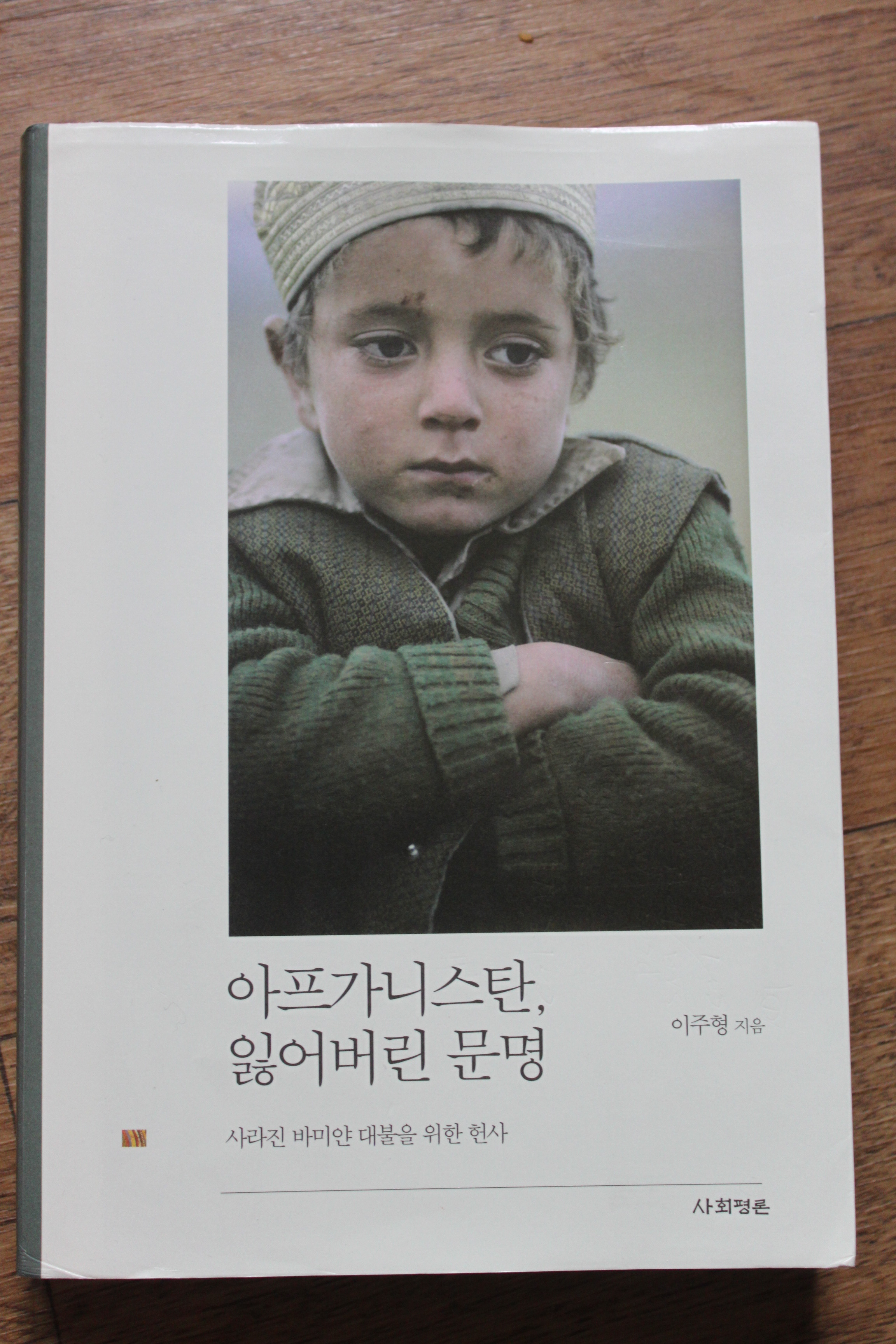
Books: Afghanistan: Lost Civilization: A Tribute the Vanished Buddhas of Bamiyan

I am reading the fascinating book Afghanistan: Lost Civilization: A Tribute the Vanished Buddhas of Bamiyan (아프가니스탄 잃어버린 문명: 진 바미얀 대불을 위 한  헌사) by Ju-hyeong Lee (이주형). This book relates the compelling story of Afghanistan’s struggle to maintain its cultural identify in the face of a constant geopolitical struggles. The book is quite well written and in reflects a rather Korean perspective on Afghanistan’s position as a “roundabout” in a series of routes to power for empires. The descriptions of both daily life and ancient history for Afghanistan are quite moving.

caption

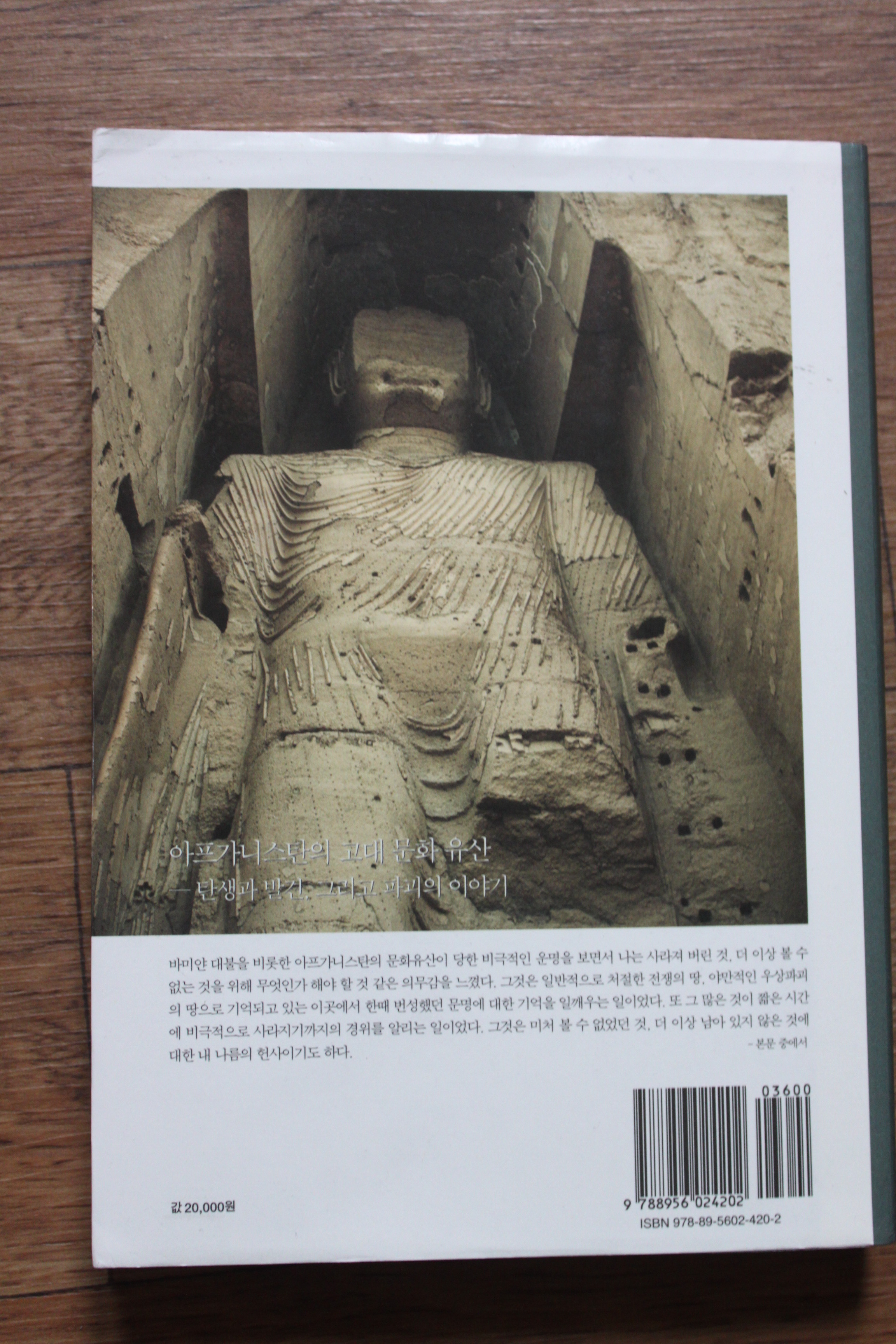
A central theme in the book is the destruction of Buddhist culture by the Taliban, an act with great resonance for Koreans because Korea sees its cultural continuity with the rest of Asia through the prism of the Silk Road. The Silk Road trade route was critical to early pan-Asian Buddhist culture. The destruction of the Buddhas of Bamiyan by the Taliban government stands out in the narrative. The Buddhas of Bamiyan were two statues carved in the side of cliff in the Bamyan Valley which were designated as idols by the Taliban government and destroyed by dynamite in 2001. The statutes dated back to the sixth century and were universally recognized as the height of Gandara art in central Asia by experts.

Professor Lee teachers Buddhist art at Seoul National University and is an expert on central Asia. His book deserves to be translated into English, but the prospects for such translation are not great. Some bits of Korean contemporary culture are trickling out into the world in English versions, but the scholarly and artistic aspects of Korea today are not given a high priority. Moreover, there are not that many people who can do the work. After all, a translation of Afghanistan: Lost Civilization: A Tribute the Vanished Buddhas of Bamiyan ( would have to be of the highest quality to have any chance of finding a global audience and the number of people who do such work could fit in a small room.

caption


At the same time, I do sense that we are on the cusp of what I have designated as the “Intellectual Korean Wave” (지적 인 한류) in a recent interview with EBS. The Korean wave so far has consisted of pop songs, soap operas, movies and fashion. In essence, the Korean Wave is defined as the hip and dynamic youth (and increasingly older) culture of Korea that has swayed Japan, China, Central and Southeast Asia. But increasingly the world of books, high art and culture are making themselves felt. Although most books for sale in the subway station are not that original, there is much coming out in Korea that deserves to be translated, and translated carefully, into in English, how long it will take to start doing so, I do not know. But such a step is essential for Korea’s development.

Emanuel Pastreich

Circles and Squares

July 17, 2011

“U.S.-Korea Relations in the 21st Century; Challenges and Prospects” (talk)

“U.S.-Korea Relations in the 21st Century; Challenges and Prospects”

October 8, 2006

George Washington University

International Council on Korean Studies (ICKS) & Korean-American Professors Association (KAUFA).

A Fractured and Roiled Identity: the Ideological Challenges for Korea in the 21st Century

Introduction

Most analysis of the KoreanPeninsulatreats military and security issues, and occasionally economic issues, as the determining factors for the future of that nation. Although I certainly recognize the importance of those vital aspects of human society, I feel that there is amble evidence, that issues of identity and ideology in the Republicof Korea, and the DPRK as well, will be also significant issues. Today’s ideological fragmentation and radically divergent interpretations of history and society may cause considerable instability within Korean society in the years to come.

In making this claim, I am not suggesting thatKoreais necessarily unique in its ideological fragmentation. We can find indications of radically different epistemologies and historical filiations throughoutEast Asia, and across the globe. Globalization, technology, the expansion of trade and the alienation within society caused by rapid modernization has left its traces across the globe. The fluidity we find in the ideological realm today recalls much of the uncertainty in the world in the 1920s and 1930s.

ICKS oct. 2006 PASTREICH ROK Identity


Seoul: “Paradise sans Poubelle”

Seoul is without doubt increasing its sophistication with astonishing speed. Yet there are a few points that just do not make sense to the expat enjoying life in this city.

For example, why do the police not ticket the delivery men on motorcycles who rush around causing such chaos, and in many cases kill or cripple small children? it would not be hard to raise the bar and protect us all. Almost every time a man on a motorcycle approaches me on a sidewalk I say to him “This is not the road!” (길이 아닙니다!). And in almost every case he responds “Sorry.” Why? Because he knows what he is doing  is wrong.
All we need is for police to start ticketing seriously and this threat to everyone will rapidly disappear–and Korea will shine.

What is fascinating is that the bar is being raised by Seoul local government, Seoul Metro and many other public facilities, but for some reason we just do not manage to do so for those awful delivery men. We have safety doors on the subway platform for a level of safety you will not find many places in the world, but out on the sidewalk, watch out!

And then there is the issue of trashcans.

Korean facilities are increasingly sophisticated and increasingly public architecture and landscaping is improving. At the same time, Seoul parks and streets are littered with trash. Cigarette butts, bottles, wrappers from ice cream bars, beer cans and cardboard. The problem is two-fold. First, Seoul simply does not have any trash cans. People are willing to put up with trash on the ground rather than insisting on trashcans. Planners do not make trashcans a priority.

The decision is a serious mistake.

At the same time, I see extremely educated Koreans simply throw garbage on the ground while walking. Many Korean kids grow up thinking that is just naturalto toss wrappers on the ground. The trend is most disturbing. Sometimes I think the cause may lie with a misinterpretation of “democratization.” Koreans were so happy to escape from the repressive environment of Korea under the strongman Park Chong Hee that being able to just do anything was mistaken for political freedom. President Park may have had many flaws, but when it came to green zones in urban spaces and strict rules for citizens, he was right on the money.

By the way, smaller cities like Gyeongju and Jinju (and many other towns) are as clean, or cleaner, than Japan, so the problem is in part a Seoul problem.

Finally, I want to note that so many food products, bread, kimbap, rice cakes, everything are being wrapped up. More than was true even three years ago.

I almost never see a Korean say he or she does not need a plastic bag when offered one. And very few Koreans bring a cloth bag with them when they shop. Let us hope we see progress on this front going forward.
“DMZs Seen and Unseen” (Talk)

Emanuel Pastreich

April, 2003

Program in Arms Control, Disarmament and International Security

University of Illinois, Urbana-Champaign

DMZs Seen and Unseen;

The Real Challenges of Security and Culture in the 21st Century

We often think of North Korea, or Taiwan, as the last remaining traces of a cold war order that stand on the edge of collapse. We imagine that both problems may be resolved in the next decade, or perhaps even sooner, as economic forces overwhelm military and ideological conventions. Yet I would posit that we are perhaps being misled by our own preconceptions. How can it be that as tensions increase in the United States media and more spending for the military is approved in the Blue House that those on the street in Seoul seem to feel quite at ease with the current process of economic integration between North and South Korea, and an unprecedented group of South Koreans civilians have taken off for a ceremony in Pyongyang? How do we reconcile these divergent events? How can tensions mount between Japanand North Korea(or even South Koreaand Japan) at the same time that economic integration between North Koreaand China, Japanand South Koreacontinues unabated?  Part of the situation derives from misunderstandings. Part of the situation derives from the unique challenge of a   cultural and technological nature posed by the 21st century.

Pastreich on North Korea ACDIS 2003

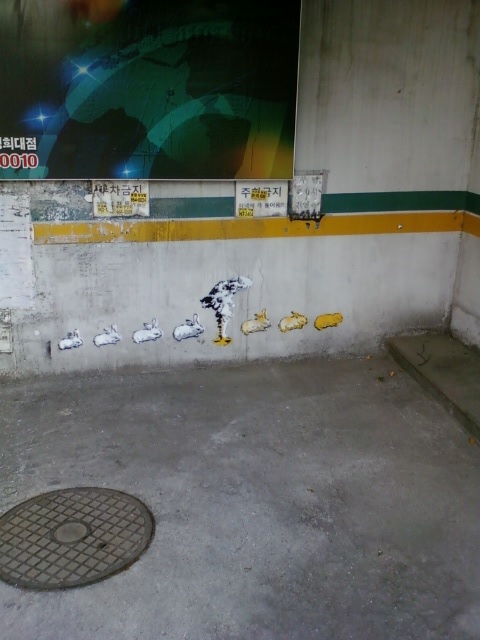
Anti Nuclear Graffiti in Seoul

This cryptic anti-nuclear graffiti is showing up around Seoul, spay painted on walls by an anonymous activist. The reference to a fabled, perhaps apocryphal, tale of a rabbit born in the Fukushima region which had no ears is clear. I had not seen this sort of politically-charged street art around Korea anytime in recent memory.