나는 영광스럽게도 한국의 영어 방송 채널인 아리랑 TV로부터 판문점에서 열렸던 문재인 대통령과 김정은 위원장간의 남북 정상회담에 대한 해설자로 초대되는 기회를 얻었다. 그 방송에서 가장 중요했던 순간은 아마도 두 지도자가 남북한 간의 적대 관계를 끝내고 향후 협력을 위한 경로와 비전을 제시했던 소위 ‘판문점 선언’을 소개하는 짧은 연설을 한 직후에 내가 말을 할 수 있었던 순간이었을 것이다.
나를 인터뷰한 아리랑 뉴스의 앵커가 그 연설을 보고 감동받은 것은 분명했다. 그녀가 생각을 정리한 다음 내게 영어로 질문을 하기까지는 몇 분의 시간이 필요했다.
솔직히 말해서 나는 그 정상회담이 열렸던 2018년 4월27일에 양국 지도자들이 보여주었던 배려행위에서 다소 감동을 받았다. 우리는 이데올로기, 선전, 경제 및 안보 관련 이유로 인해 인위적으로 만들어져서 지난 60여 년간 유지되어 왔던 분단국의 양측 지도자들이 함께 모여서 상대를 어깨너머로 보지 않고 편안하게 서로 이야기하는 것을 보았다. 그 순간 모든 한국인들의 어깨에서 엄청난 부담이 사라지는 것처럼 보였다.
나는 과거 김대중 대통령이나 노무현 대통령이 북한과의 교류를 통해 성취할 수 있었던 것 이상으로 그 순간에 양국간 교량이 구축되었다는 생각이 들었다. 어떤 문제가 앞에 놓여 있더라도 정책적으로 상대를 무조건적으로 악마화했던 암울한 냉전 시대로는 결코 돌아가지 않을 것이라는 확신이 들었다. 물론 그렇게 행동하는 하는 이들이 미국에 많지만 그들은 점점 더 웃음거리가 되고 있다.
이 두 지도자 간의 긴밀한 교류로 인해 남한의 시민들은 거의 자신의 의지와는 반대로 김정은을 미치광이 독재자나 무자비한 인권탄압자 또는 비인도적이고 기괴한 거짓과 범죄의 왕국 지도자가 아닌 평범한 사람으로 보게 되었다. 갑자기 북한 사람들이 어떤 결점을 갖고 있든 상관없이 남한 사람들처럼 보통 사람이 된 것이다. 그리고 그 순간부터 광화문 광장에서 열리는 노인들의 집회를 제외한 모든 곳에서 북한을 악마화하는 표현들이 사라졌다.
한국인들이 어렸을 때부터 반북 사상을 주입 받았고 대부분의 언론들이 그런 상황을 더욱 조장해왔음을 감안한다면 두 지도자가 강요된 엄격한 제한 없이 함께 이야기하는 이 순간은 정말로 획기적이었다.
공동 선언문의 내용도 내게는 인상적이었다. 여기서는 남북한 관계의 완전한 변화와 함께 모든 적대 행위의 종식을 자신 있게 선언했다. 나는 이제껏 평화를 선언하는 방향으로 나아간 그 선언문이 트럼프 행정부나 미국 정부의 입장을 전반적으로 반영하지 않았다고 확신한다. 아마도 한국 정부는 미국의 제안을 거절하거나 트럼프 행정부에 미리 사본을 보여주지 않았을 가능성이 매우 높다.
이번 공동 선언의 본문은 독창적이고 고무적이었으며 당연히 한국어로 작성되었다. 초안 작성자는 미국이나 일본, 중국이 듣고 싶어 했던 것을 예측하려고 시도하지 않았다. 실제로 미국에 대한 언급은 전혀 없었는데 나는 이것이 매우 적절한 결정이었다고 생각했다. 그러나 적어도 트럼프 행정부를 기쁘게 하기 위해서 미국과의 관계에 대해 어느 정도 언급하기를 많은 시청자들이 기대했을 것으로 나는 확신한다.
그러나 나는 초기 열정을 가졌었던 이번 정상 회담에 대해서 실제로는 매우 불편하게 느끼고 있다. 나는 그 이상으로 나아갈 것이다. 나는 결과적으로 어떠한 도덕적이고 지적인 혼란을 느꼈다.
어쨌든 나는 아시아에서 일하는 미국인 전문가이고 미국이 동아시아에서 중요한 역할을 할 것이며 내가 객관적인 관찰자로서 기여할 것이라는 가정 하에 경력을 시작했다. 그렇지만 지난 17년간 부시, 오바마, 트럼프 정부를 거치며 지속되어 왔던 미국의 역겨운 군국주의로 인해 내 조국에 대한 환멸을 느꼈을 뿐만 아니라 미국이 이 지역에서 긍정적인 역할을 해왔는지에 대한 심각한 의문을 갖게 되었다. 그러한 의심은 지난 60년간 전 세계에서 행해왔던 불법적이고 파괴적인 행동을 확인하는 기밀 자료들이 공개됨에 따라 더욱 증폭되었다.
우리가 정상 회담을 보았을 때조차도 내 마음 속에서는 ‘한국에 관해 말하고 있는 나는 누구인가?’, ‘내가 모르는 사이에 한국인들을 계속 분단된 상태로 만든 과정에 어떤 식으로든 관여하지 않았을까?’ 라는 의문이 계속 떠올랐다. 말할 필요도 없이 15년 전이었다면 나는 그러한 의문을 결코 갖지 않았을 것이다.
따라서 정상회담에 대해 논평을 하는 것은 객관적 분석을 제시하는 문제가 아니었다. 어느 정도까지는 예일대, 도쿄대, 하버드대의 아시아학 연구 과정에 있는 엘리트 프로그램의 결과물로 나의 지지를 보여주는 것만으로는 충분하지 않았다. 나는 실존적인 난제에 직면했다.
그러나 판문점 정상 회담에는 단지 미국의 무관함이 증가하고 있는 것 이상으로 보다 가시적인 것들이 있었다. 나는 토의된 주제들에 대해서는 만족했지만 누락된 주제들로 인해 매우 불안했다.
나는 마치 한국인들이 시간왜곡 속에서 살고 있는 것처럼 어느 순간에 느끼게 되었다. 그들은 김대중 대통령과 김정일 간의 정상 회담이 있었던 2000년으로 어떻게든 돌아왔으며 문 대통령과 김정은이 그때 이루지 못했던 것들을 성취하고 있다고 생각하고 있다. 그러나 현재의 세계는 2000년 당시와는 완전히 다르다. 기술의 급속한 발전, 빈부 격차의 증가 또는 기후변화의 위협 여부와 상관없이 우리는 한반도의 미래에 대한 논의에서 중심에 놓여야 할 일련의 엄청난 위험들에 직면해 있다.
그러나 내가 들었던 내용은 신뢰 구축, 경제 교류, 정부 간 연락 사무소 개설 및 적대 행위의 종식에 관한 것이 전부였다. 물론 그들은 진지했으며 분명하게 표현하는 것이 좋다. 그렇지만 우리는 다루기 편한 문제만이 아니라 실제 문제들에 초점을 맞출 필요가 있다.
우선 이번 정상회담은 잘못된 전제 하에서 진행되었다. 이 지역의 평화를 위해서 북한이 핵무기를 포기하는 것이 필요하다는 가정 하에 모든 것이 수립되었다. 미국 또한 비핵화에 참여한다는 모든 제안은 비웃음거리가 되었으며 진보적인 언론에서조차 언급되지 않았다. 그러나 미국이 비핵화에 참여하지 않는다면 핵전쟁의 위험은 북한이 아닌 미국과 러시아 또는 미국과 중국 간 문제이므로 정말로 무관할 것이다.
지난 1994년 제네바 합의 협상 당시에 미국은 국제법을 대부분 준수했으며 다양한 무기 통제 협약에 전념했다. 미국의 주장에 문제가 있다 하더라도 북한은 국제법을 따르지 않는 것처럼 보였다.
현재 트럼프 행정부는 무기 통제에 관한 대부분의 협정을 존중하지 않을 뿐만 아니라 선제 예방공격을 통해 러시아 미사일이나 중국 미사일을 타격하겠다고 적극적으로 위협하고 있다. 미국이 서명한 핵확산금지조약(NPT)을 노골적으로 위반하면서 미국 핵무기를 폐기하기 보다는 아니라 개조하고 있다. 끝으로 미국은 해외에서 수많은 불법적인 전쟁에 관여하고 다른 국가들에게 내정간섭을 해왔다. 또한 미국은 NPT 밖에서 핵무기를 유지하려는 이스라엘과 인도의 노력을 지지했다.
양국 지도자들은 동북아의 진정한 안보 위협인 중국, 일본, 한국, 러시아, 미국 간에 벌어지는 무시무시한 군비 경쟁 문제를 어떻게 해결할 것인가에 대해서도 논의할 수 없다. 이러한 군비 경쟁 강화로 인해 핵전쟁을 포함한 전쟁 위험이 급격히 높아지고 있으며 미국에 의한 북한, 러시아 및 중국에 대한 노골적인 군사적 위협은 더 갈등을 초래할 위험이 있다. 이러한 위험한 상황을 우선 해결하고 포괄적인 해결방안을 제시해야 한다.
또한 이번 정상회담에서는 한반도의 기후 변화로 인해 발생할 수 있는 치명적인 재앙에 대해 언급하지 않았다. 남북한은 향후 5년간 탄소 배출량을 크게 줄일 계획을 즉각 시행하고 한반도를 황폐화시킬 해수면 상승 및 증가하고 있는 사막화 문제에 대해서도 준비해야 하는 것이 합리적이다. 수조 달러 규모가 소요될 두 프로젝트 모두 미룰 수 없다.
그러나 한국의 대북 교류를 주도하는 것은 NGO가 아니라 북한의 광범위한 석탄 매장량에 매력을 느끼고 저비용으로 공장을 가동하기 위해 다수의 석탄 발전소를 건설할 수 있다고 가정하는 기업들이다. 이 과정에서 기후 과학자들이 제기하는 심각한 경고는 무시되고 있다.
남북한 및 전 세계에서 극소수의 부자들에 의해 부의 독점이 점점 심화되고 있는 현상은 오늘날 매우 심각한 문제이다. 이 문제는 이번 정상 회담에서 다루어지지 않았으며 문 대통령의 국내 정책에서도 심각하게 다루어지지 않고 있다. 이 지역에서 증가하고 있는 경제적 불평등은 북한이 몇 가지 핵무기를 보유하는 것보다도 더 위험한 위협이 되고 있다.
궁극적으로 이번 판문점 정상 회담은 회담 자체 및 그 의미에 대해 확신하지 못하는 균형을 잃은 것으로 평가할 수 있다. 이번 회담이 역사적인 전환점이 될 것이라고 생각할 수 있겠지만 또한 트럼프 행정부가 중국과의 전쟁 준비를 은폐하고 한국인들과 세계인들의 관심을 돌리기 위한 수단으로 이용된다고 볼 수도 있다. 분명히 말할 수 있는 것은 한국인들이 트럼프에 대해 무엇이든 신뢰할 수 있다고 가정하는 데에서 충격을 받았다는 사실이다.
정보를 얻는 유일한 방식인 한국의 언론을 통해서 북한과의 미래 약속에 관한 논의를 지켜보는 것은 매우 혼란스럽고 불편한 과정이다. 이들 매체에서는 도널드 트럼프 미국 대통령과 마이크 폼페이오 국무장관을 평양 당국과의 관계 정상화에 진정으로 관심을 표명하는 정치인으로 북한의 비핵화와 국제사회 진입에만 관심이 있는 것으로 소개하고 있다.
그러나 미국과 유럽에 있는 나의 친구들은 전혀 트럼프를 그렇게 인식하고 있지 않다. 화석 연료나 프라이빗 뱅킹과 같은 파괴적인 사업으로 돈을 벌어들이는 극소수의 억만장자들을 대표하는 그와 그의 전시 내각은 미국 건국 이래 가장 부패한 정부를 구성했다. 그들이 사용한 통치 방식은 전체주의 정부로 극소수의 억만장자들에 의한 부의 통제를 공고히 하면서 우선은 이란과 그 다음으로는 러시아 및 중국과 대규모 전쟁 즉 세계 대전을 준비하고 있음을 보여주는 증거인데 이는 국내 통제를 강화하고 군사 장비 및 무기 판매와 전세계 광물 자원의 전용을 통해 부를 창출하는 수단이 되고 있다.
트럼프는 정부의 모든 권한을 무력화하고 공공 기관의 민영화와 감세를 통해 다국적 기업이 부를 창출할 수 있도록 허용했을 뿐만 아니라 끝없는 전쟁, 부유층에 대한 감세 및 교도소와 군대 자체의 급진적 민영화를 촉진하면서 임기 2년을 보냈다.
트럼프가 신뢰할 수 있다고 말하는 것은 없으며 그는 이러한 기후변화 시대에 인류 전체를 쓰러뜨리려고 위협하는 타락한 제국의 얼굴이다. 이 사기꾼이 평양 당국과의 대화 노력으로 노벨 평화상을 수상할 수 있다는 얘기를 어떻게 그처럼 많은 평범한 한국인들과 일본인들이 진지하게 받아들이는지 이해하기 어렵다. 그렇다고 그가 노벨 평화상을 수상할 수 없다는 말은 아니다. 담당 기관이 너무도 부패하고 타락하여 그러한 냉소적인 결과가 전적으로 가능할 수도 있을 것이다.
그러나 트럼프의 본거지 워싱턴 DC 현지에서 실제로 그를 지켜본 많은 이들은 최근 새로 전개된 사건들이 훨씬 더 불안한 패턴임을 시사한다. ‘평양 책략’은 군사 분쟁과 세계 대전을 위한 체계적인 계획으로부터 한국과 일본 및 세계인들의 주위를 딴 데로 돌리려는 수단으로 미래의 평화를 위한다는 명목 하에 내어놓은 거대한 카니발 쇼처럼 보인다. 아마도 그런 전쟁은 결코 일어나지 않을 것이다. 아마도 그것은 일련의 분류된 지침보다 더 나아갈 수는 없겠지만 그렇다고 실제 상황으로 가정하지 않을 이유는 없다.
우리는 국가 차원에서 시민들로 하여금 석유에 의존하도록 강요하기 위해 경제적 및 법적 수단을 적극적으로 사용하고 신재생 에너지로 나아가려는 모든 노력을 무산시키려고 하는 도널드 트럼프와 그의 지지자들의 결정에 심오한 의미가 있음을 상기해야 한다. 그것은 이들이 보통 사람들의 미래를 돌보지 않는 이기적인 인간들이라는 것만을 의미하지 않는다. 그들은 심각한 정신병으로 고통 받고 있으며 우리가 알고 있는 인류 문명을 종식시킴으로써 어쩌면 인류의 멸망으로도 이어질 수 있는 계획을 기꺼이 수행할 수 있음을 의미한다. 그들이 갖고 있는 정치, 경제 권력을 통해 그와 같은 위험한 정책을 추진할 수 있다면 그들은 세계 대전과 핵전쟁을 마다하지 않을 것이다. 그들이 그렇게 할 수 있다고 우리가 믿을만한 모든 이유들이 있다.
우리는 현재 미국 정부가 민주주의가 아닌 사이코패스주의 다시 말해 사이코패스들에 의해 운영되는 정부로 현실을 제대로 파악하지 못하고 자기 파괴적이며 재앙을 초래할 조치들을 전적으로 취할 수 있는 정부라는 냉혹한 현실을 받아들여야 한다. 그들은 다른 사람들에 대해 공감을 느끼지 못하고 그들 자신을 존중하지 않기 때문이다.
도널드 트럼프 대통령과 김정은 위원장이 만난 2018년 6월12일 싱가포르 정상 회담은 트럼프 행정부의 국제 관계에 대한 “스펙터클 정책” 접근 방식을 완벽하게 구현했다. ‘성조기’와 북한의 ‘인공기’가 교대로 나타나도록 엉성하게 설계된 회의장 배경을 보았을 때 나는 꿈의 세계에 깊이 빠져 있다고 생각했다. 그러나 나는 간단하게 잠에서 깨어날 수 없었다.
복잡하고 역사적으로 중요한 이번 정상 회담은 몇 명의 아마추어들에 의해 졸속으로 이루어졌다. 이제 우리는 진실에 직면하고 있다. 성급하고 엉성하며 엉망으로 이루어졌던 미북 정상 회담은 너무 일찍 실상이 드러났으며 그에 따른 무시무시한 결과물은 우리에게 “먹을 것을 달라!”며 외치고 있다.
이 회담은 액면 이하로 할인 판매한다는 중고차 세일즈맨의 속임수처럼 한량들과 식객들을 놓친 바람잡이와 포주들이 함께 모여 내놓은 정책으로 이루어진 국제관계였다.
그러나 당신이 무슨 말을 하더라도 가장 확실한 것은 그 합의가 원점으로 돌아가지 않을 것이며 북한과의 일종의 합의가 어쩌면 대규모로 이어질 수도 있을 것이라는 점이다.
이번 회담은 전반적으로 트럼프 대통령이 가장 좋아하는 표현 수단인 프로복싱 세계 헤비급 타이틀 매치와 같은 방식으로 판매되었다. 트럼프는 해리 해리스 주한 미국 대사 지명자나 마이크 멀린 전 합참의장과 같이 계속 투덜거리며 전쟁을 주장해온 매파들의 도움을 통해 그의 생각대로 회담이 진행되지 않을 경우 상당히 치명적인 결과로 이어질 수 있음을 계속 암시해왔다. 이 정상 회담의 사전 준비는 큰 상금이 걸린 싸움과 유사했을 뿐이다.
트럼프는 이러한 흥미 있고 무시무시한 일상에서 책임이 따르고 감상이 아닌 세부사항으로 그를 지루하게 만드는 실제 정책 입안보다 훨씬 편안함을 느꼈을 것이다.
그러나 그 모든 우스꽝스러운 순간 동안 진행된 본 정상회담은 전혀 재미가 없었다. 카를 폰 클라우제비츠의 유명한 구절을 비틀어 해석해보면 “전쟁은 다른 수단에 의한 무능함의 연속이다.”라고 말할 수 있다.
그리고 트럼프 대통령은 그가 김정은에게 보여주었을 것으로 가정되는 동영상을 소개했는데, 그 내용은 급진적이고 과도한 개발 및 국민들(소비자와 저임금 노동자)의 착취 또는 미국과의 전면전 사이에서 국가가 선택을 해야 하는 상황으로 되어 있다.
김정은과 트럼프 모두 이번 회담에서 긴장해 있는 모습이 눈에 역력했다. 김정은에게서 그런 모습이 더욱 두드러졌는데 그것은 단지 그가 수십 년 동안 카지노를 운영한 경험이 없었기 때문이다. 그것은 전형적인 트럼프의 시간이었다. 의심스러울 때는 판돈을 두 배로 하라. 그러면 모두가 뒤를 따를 것이다. 그들이 말하는 것처럼 “몽유병자들의 세상에서 장님은 왕이다.”
이러한 페블 비치와 리얼리티 TV를 혼합한 행사의 장소로 싱가포르가 선정된 것은 우연이 아니었다. 싱가포르는 국가가 아니지만 아시아, 중동 및 동남아의 글로벌 자본이 이번 정상 회담이 열렸던 카펠라 호텔과 같은 고급 호텔의 초현실적 세계로 들어가는 공간이다. 싱가포르는 가난한 사람들이 거의 없고 외부인 출입 제한 주택지와 같이 지역 내 문제들로부터 스스로를 조심스럽게 차단시켜왔던 곳으로 ‘사형이 있는 디즈니랜드’ 라는 농담으로 묘사되기도 했다. 싱가포르는 그런 초현실적 정상 회담을 위한 완벽한 장소이다.
이 독점적 행사는 북한을 국제 사회로 초청한 것이라기보다는 차라리 김정은을 억만장자 클럽으로 불러 환영한 것이라고 할 수 있다. 인권과 관련해 몇 가지 질문이 있었지만 결핵과 영양실조에 대해서는 언급되지 않았다.
본 회담의 전체적인 과정은 청중의 양심이 아니라 기본 욕구에 호소하는 식으로 매우 반지성적인 방식으로 이루어졌다. 정상회담 후 열린 트럼프의 기자회견은 부풀려진 감정과 연관되는 것들로 채워졌으며 어떤 논리도 찾을 수 없었다. 계획되지 않은 정상 회담은 날림으로 이루어진 정치적 계책에 불과했다.
트럼프의 말과 행동은 정상 회담 이후 기본적으로 동일했는데 막연하게 돌파구를 암시하고 평화 이야기를 했지만 그가 6개월 내에 전쟁 위협으로 돌아가지 않을 것이라는 제도적 보장은 없었다. 트럼프 행정부는 구속력이 있는 모든 계약 및 합의를 무시, 경멸하는 것으로 유명하다. 2017년 트럼프는 UN에서 행한 연설에서 북한을 “완전히 파괴할 것”이라고 말했다.
2018년 9월 트럼프의 UN 연설에서는 이란에게 전쟁 위협을 가한 반면에 북한에 대해서는 어떤 약속도 하지 않은 채 찬사를 늘어놓았다.
당시 그는 “미국은 미국인들에 의해 통치된다. 우리는 글로벌리즘 이데올로기를 거부하며 애국심의 교리를 수용한다.”고 말했다.
그는 세계 인류 공동체에 명령을 내릴 수 있는 보편적 법 규정을 찾으려는 모든 노력에 대해 공개적으로 경멸을 나타내면서 법적 구속력의 반환을 제안했다.
트럼프 치하에서 미국으로 인해 야기된 위험에 우리는 어떤 식으로 대응할 수 있을 것인가?
우리는 정치적 무술을 연습해야 한다. 우리는 트럼프와 김정은이 자기 홍보를 위해 우리에게 던졌던 힘을 가져와서 새롭고 긍정적인 방향으로 능숙하게 방향을 바꾸어야 한다. 이러한 방향 전환을 위해서는 우리가 시민들의 엄청난 집중과 주의가 필요하다.
우리가 한반도에서 진정하고 지속 가능한 평화를 구축하기 위해서는 적어도 전쟁 수행에 비견될 정도로 많은 용기와 헌신이 필요하다는 것을 잊지 말아야 한다.
문재인 대통령이 지난 9월 평양을 방문했을 때 가장 눈에 띄었던 장면은 거대한 5.1 경기장에서 그를 응원하기 위해 모인 15만 명의 평양 시민들을 앞에 두고 한 연설이었다. 이 열성적인 남녀 군중한테서 나오는 열정은 그 강도 면에서 놀랄만한 것이었으며, 문 대통령 자신도 이러한 반응에 영향을 받았음을 알 수 있었다.
문 대통령이 발언하는 모든 단어는 청중들의 무제한적인 환호를 통해 강조되고 부각되었다. 김일성을 인용했을 때에는 문 대통령과 군중들이 ‘하나의 몸’인 듯 보였다. 한 가지 확실한 것은 한국에서는 방탄소년단(BTS)이나 아이콘(iKON)의 콘서트가 아니면, 이 정도의 열정에 찬 대중을 결코 볼 수 없을 것이라는 점이다.
나는 문 대통령에게 그 순간이 매혹적이었을 것으로 생각한다. 문제는 북한의 음모가 결코 아니었다. 오히려 한국에서는 정치인들이 축복을 받기 위해 권력과 돈을 가진 사람들 앞에서 절을 하는 공허한 의식이 정치적 관례가 되었고, 그러한 관례는 자신이 얼마나 접근하기 쉬운 사람인가를 증명하고, 사람들의 이목을 끌기 위해 정치인들이 전혀 만난 적이 없으며, 향후에도 결코 다시 만날 일이 없을 젊은이들 및 평범한 사람들과 함께 공개적으로 포즈를 취하는 또 다른 의식으로 강조되곤 한다.
그러나 문 대통령이 직면한 상황은 달랐다. 그곳에 모인 군중들이 권력의 지배를 받았다고 말할 수 있을 것이고, 아마도 그러한 주장이 어느 정도는 사실이겠지만, 군중 자체는 엄청난 힘을 갖고 있다. 나는 평범한 북한 사람들의 정치에 대한 헌신을 단순히 독재 정권의 표식으로 일축할 수 없다고 본다. 대규모 집회와 완벽하게 조정된 댄스 루틴 뒤의 모든 쇼맨십과 강압에는 ‘참여 심리학’을 암시하는 뚜렷한 에너지가 있다.
한국에서 그런 공간이 사라졌다는 것은 과장이 아닐 것이다. 우리는 2016년에 박근혜 정부를 무너뜨린 촛불 집회를 아직 기억하고 있다. 그 항의 시위는 높은 수준의 정치 참여를 나타냈으며, 박근혜 정부를 무너뜨렸다는 좁은 의미의 목표에서 보면 성공했다. 그러나 박근혜 정부 뒤에 숨어 있는 제도적 부패, 국내 경제에서 강력한 영향력을 행사하는 주역으로 부상한 해외 투자은행들, 트럼프 행정부 지시에 대한 맹종과 집착, 이란과의 전쟁을 위해 미국 내 네오 파시스트 운동에 관련한 완전한 침묵 등의 문제는 거의 개선되지 않았다. ‘촛불 혁명’ 대통령으로서 갖는 문 대통령의 신화는 사라져 버렸다.
한국에서 정치가 쇠퇴하게 된 것은 인간의 경험에 대한 페티시즘적 접근 방식과 지나친 상업주의에 따른 결과이다.
삶의 모든 측면은 유료로 제공되는 일종의 서비스나 움직이면서 즐기는 일종의 황홀감으로 제공된다.
이러한 건강하지 못한 문화는 한국의 출생률이 절대적 최저점에 도달한 바로 그 순간에 자리 잡았으며,
최근 예멘 출신 난민에 대한 항의에서 표출되듯 이민자에 대한 적개심 결합되었다.
더욱 노쇠해진 사회는 고령자가 정치 과정 대부분을 지배한다는 것을 의미한다.
실제로 정치 경제의 많은 부분을 결정하는 것은
70세 이상 남성들이다.
이 문제는 부(副)의 집중으로 인해 더욱 악화되고 있다.
대다수 젊은이들은 정치 과정에서 소외되고 있으며,
극히 일부만이 참여하려는 강한 의지를 갖고 있다.
많은 이들은 변화에 대한 희망을 포기했다.
대신 게임과 포르노,
기타 현실 도피적 행위에 빠져드는 것과 같은 방종한 생활을 하고 있다.
그야말로 정치가 붕괴되었다.
진보주의 운동은
1980년대의 민주화 운동이나
2000년대 초 노무현 정부에 활력을 불어넣었던 열정을 상당 부분 잃어버렸다.
특히 진보적인 정치적 논쟁이 좁은 범위의 상징적 문제들로 한정되었다는 사실이 눈에 띈다.
태평양 전쟁 당시 일본인이 성적으로 학대한
‘위안부’에 대한 논의는 끝없이 이어지지만,
오늘날 한국 남성에 의해 자행되고 있는 외국인 여성 학대에 대해 관심 갖는 이는 거의 없다.
또한 자유무역이 농업 및 노동자들의 일상생활에 미치는 영향은 금기 주제가 되었다.
노년에 접어든 진보 정치 지도자 중 다수는
1980년대
‘민주화 운동’이라는 향수에 빠진 채 현재 한국의 노동 계급 젊은이들이 직면한 진정한 문제를 모르고 있다.
그들은 미국 민주당원들과 마찬가지로 그들은 기업과의 긴밀한 협력보다는 좌파로부터의 비판에 더욱 관심이 있다.
결국 그러한 나이 든 지도자들 중 다수는 상당히 부유해졌으며 더 공정한 사회를 만드는 것보다는 자신들의 자녀나 손자를 좋은 대학에 진학시키는 데에 더욱 신경을 쓰고 있다.
최근 영향력이 큰 진보 정치 활동가들이 주최한 책 사인회에 초대를 받았다.
그 자리에서 올해
53세인 내가 참석자 중 최연소자라는 사실을 알고 충격을 받았다.
멸종한 파충류 알로사우루스와 디메트로돈처럼 화석화된 이들은 그곳에 모여서 자신들이
70년대와
80년대에 만났던 학생들의 투쟁에 대해 몇 시간 동안 장황하게 늘어놓은 다음 그 시대의 노래를 불렀다.
그들은 민주주의에 대해 이야기하고 몇몇 보수 정치인들에 대해 비난했지만,
일반 청년들이 직면한 악몽과 같은 세계에 직면한 일반 청년들이 저하된 현대 교육 하에서 살아남으려고 애쓰고 있는 것에 대해서는 일체의 말을 하지 않았다.
한 가지 분명한 것은 쇠퇴하고 있는 경제 체제의 최전선에서 탐욕스러운 학원들과 그들을 고용해야 하는 기업들의 거만한 무관심 사이에 끼어있는 있는 한국 젊은이들이 그 행사에 대해 전혀 듣지 못했다는 사실이다.
나이 든 진보주의자들이 청년들을 행사에 초대했다면,
행사 참석으로 인해 많은 이익을 본 사람이 거의 없었을 것으로 생각한다.
지난달 진보적인 서점에서 친구를 만나 커피 한 잔을 마셨다.
그곳에 진열된 한국어로 쓰인 교육,
경제,
사회 및 문화에 관한 책들은 훌륭했다.
서점 주인은 현대 사회에 대해 깊이 생각하고 있는 가장 사려 깊은 지식인이었다.
그러나 그러한 나이 든 지식인들이 만든 지적 공간과 혼란스러운 사회에서 방향을 찾기 위해 고군분투하고 있는 일반인들의 세계 사이에는 메울 수 없는 틈이 있는 것처럼 보였다.
한국 전역의 카페와 편의점에서 일하며 혼란스러워하는 많은 젊은이들은 그 서점에 있는 책의 내용을 통해 큰 이익을 얻게 될 것이다.
아마도 그들은 독서하는 습관을 갖고 있지 않겠지만 그러한 글들에서 찾을 수 있는 현대 한국 사회에 대한 정직한 평가는 많은 가치가 있을 것이다.
내가 확신하는 것은 그 젊은이들이 그러한 진보적인 서점의 존재에 대해 알지 못하며 서점이 세워진 것을 매우 낯설게 여길 것이라는 점이다.
애석하게도 그들은 대중가요의 가사에서 자신들이 처해 있는 어려움에 대한 공감을 찾으려고 노력하고 있다.
좋은 의도에서 그러한 서점을 운영하는 고등 교육을 받고 부유한 사람들은 무자비한 사회에서 허우적거리는 사람들에게 접근하는 방법을 모른다.
나는 한국에서 살았던
11년 동안
4개의 진보적 비정부기구(NGO)에 참여했지만,
모든 곳에서 참여 문화가 사라진 것을 느껴 그만두었다.
그 NGO들은 내가 월 회비를 지급할 것을 기대했으며,
나는 연례 모임에 초대받았지만,
그 외의 다른 행사에는 참석할 기회가 없었으며,
내가 적극적으로 참여해서 도움을 제공할 방법이 없었다.
회원 자격이 그다지 중요하지 않음이 분명해졌다.
오히려 연례 모임에서는 진보적 성향의 부유한 기부자들이 더 중요한 것으로 보였다.
다시 말해 이런 진보적 기부자들은 마치 그린피스 활동가들이 북극곰을 구하기 위한 캠페인을 하는 것처럼 자신들의 진보적 활동을 바라보고 있다.
그린피스는 북극곰에게 의견을 말하거나 회원이 되도록 요청하지 않으며 진보적 단체들은 노동 계급 사람들에게 가입을 요청하지 않았다.
내가 가장 큰 노력을 기울였던 NGO는 참여연대로,
대전과 서울에서 회원으로 참여했었다.
당시 나는 한국의 외국인 노동자를 포함한 외국인들을 대상으로 세미나를 개최하여 그들이 필요로 하는 것과 관심사에 대해 더 많이 알 수 있게 해야 한다고 제안했다.
내게 필요했던 것은 사무실과 참여연대 홈페이지에 이벤트를 게시하는 것이 전부였다.
하지만 제안은 거절당했다.
4개월 전, 참여연대 측으로부터 회원 탈퇴 이유를 묻는 전화를 받았다. 나는 이유를 설명하면서 또한 내가 행정 담당자들과 만나 더욱 적극적으로 참여할 수 있는 방법을 논의할 수 있다면, 기꺼이 다시 참여할 것이라고 말했다. 그 이후 나는 그들의 답변을 전혀 듣지 못했다.
그렇다면 한국 보수주의자들의 상황은 어떨까? 불행하게도 그러한 정치의 화석화 과정은 보수 진영이 더욱 심각하다. 광화문 광장에서는 보수 진영의 보수적인 항의 시위가 정기적으로 벌어지고 있는데 여기에 참석하는 이들은 한국, 미국, 이스라엘 깃발을 손에 든 노인들이 대부분이다. 왜 그런지 모르겠지만 일본과의 긴밀한 군사 협력을 위해 보수 정치인들 간에 정책이 추진되고 있음에도 불구하고 일장기를 들고 있는 이들은 찾을 수 없다.
이러한 집회들에서는 주로 반공, 도널드 트럼프 미국 대통령에 대한 기독교계의 지원, 박정희 전 대통령의 국방 정책, 1960년대와 1970년대 한국의 발전 모델에 대한 찬양 등이 주요 주제가 되고 있다.
시위 참석자 중에서 박정희 전 대통령의 사진이 부착된 배지를 착용한 노인들을 흔히 볼 수 있다. 나는 한국의 국제 무역 의존도를 높이고 농업을 경시하며 화석 연료를 대규모로 수입하기로 한 박 전 대통령의 결정이 큰 실수였다고 생각하지만, 그의 경제 성장을 위한 끊임없는 추진력과 공교육에 대한 공약이 여전히 성공적이었다는 평가를 받는 것을 이해할 수 있다.
내가 이해하기 힘든 사실은 이 노인들이 한때 좌익 남로당에서 적극적으로 활동했고, 경제적 자립을 주요 목표로 삼았던 박 전 대통령을 현재의 보수 정당들과 연관 짓는 것이다. 박 전 대통령이었다면, 현재 보수 진영에서 추진하고 있는 수입 식품 및 기타 중요한 물자에 대한 의존도를 높이고 외국의 투자 은행들이 한국 경제에 직접 간섭하도록 허용하고 있는 황당한 경제 정책을 결코 지지하지 않았을 것이다. 그들은 맥쿼리 그룹과 같이 포식성을 갖고 있는 해외 금융 기관에게 자국의 인프라를 기꺼이 팔아넘기고 있다. 박 전 대통령이었으면 민관합작투자 인프라 법(PPI Act)을 수용하거나 한국 경제의 중추 역할을 했던 영세 자영업자들이 망하도록 방관하지 않았을 것이다.
오늘날 보수주의자들은 한국의 전통을 파괴하고 카지노 홍보나 성형수술의 장려 또는 광고에서 성적 대상으로 여성의 역할을 국한시키는 것 외에는 어떤 것도 생각하지 않는 파괴적인 신자유주의 경제 정책만을 고집하고 있다.
그러나 한국 보수 정치에서 노인 집단의 가장 중요한 주요 자산은 한미 동맹이다. 한미 관계는 가난한 사람들을 위해 끊임없이 노력한 선교사들 및 평화봉사단 자원 봉사자들과 한국 전쟁 이전 시대에 민주적 과정을 붕괴시킨 무자비한 군부 인사들이 어우러진 매우 복잡한 관계였다.
노인 시위대는 실제 미국 정부의 정책에 대해 제대로 이해를 하지 못하거나 양국 관계가 나아가야 할 방향에 대해 진정하고 실질적인 제안을 하지 못하고 있는 것으로 보인다. 오히려 미국은 급격한 발전보다는 안정되고 예측 가능한 과거를 상징하는 비유가 되었다.
미국에 대한 보수주의자들의 이러한 태도를 통해 가장 생생하게 떠올릴 수 있는 것은 과거 한국인들이 우수한 문화 및 경제력을 갖추었던 명나라를 형님으로 섬기며 예를 갖추었던 사대주의 방식이다. 결국 명나라는 1592년과 1598년 사이에 조선이 도요토미 히데요시가 이끄는 일본으로부터 침략을 당했을 때 구원병을 보내기에 이르렀다. 양국 관계를 공고히 하는 일련의 캠페인을 통해 깊은 유대 관계가 형성되었다. 당시 대부분의 한국 지식인들에게 있어 명나라는 정치적·문화적 권위의 원천이 되었다. 그러나 이미 가속화되고 있던 명나라의 정치, 도덕 및 제도적 쇠퇴는 17세기 초반 절정에 이르렀다. 명나라 정치 문화의 문화적 특징이 한국에 강하게 남아 있었지만, 명나라 자체는 국내 곳곳에서 일어난 반란으로 인해 갈가리 찢어졌고 결국 1644년 정치 단위로서는 완전히 파편화되어 붕괴되었다.
당시 한국 지식인의 대다수는 그 후 300여 년 동안 명나라의 문화적 권위에 충실했으며, 만주족이 청 왕조를 설립함으로써 한국 보수주의자들의 눈에는 천명이 위태롭게 된 이후에도 한국에 있는 기관을 유지했다는 사실에 자부심을 갖고 있다. 한국인들은 명 말기에도 쇠퇴하고 있는 징후들을 인정하지 않았으며, 명나라의 권위는 멸망한 이후에도 오랫동안 유지되었다. 한국에는 현재까지도 명의 마지막 황제 숭정제(1627~1644)의 연호를 계속 사용하는 유교 서원들이 있다.
현재 보수주의 운동가들의 태도는 이와 상당히 유사해 보였는데 나는 미국이 한반도에서 의미 있는 역할을 그만둔 이후에도 미국에 대한 그러한 충성심이 계속 유지될 것인지 여부가 궁금했다. 보수주의자들은 그들에게 이익이 되는 미국과의 관계를 유지하기 원하지만 그것은 이미 사라졌다. 그들은 문재인 정부가 현실에 직면할 것을 요구하기보다는 오히려 북한의 지도자와 ‘사랑에 빠졌음’을 말하는 미국 대통령에 맞서 과거에 대한 그들 자신의 신화로 후퇴하고 있다.
노인들에 의한 진보와 보수 담론의 지배 및 좁은 범위로 한정된 주제의 제한으로 인해 한국은 북한의 개방을 잘 활용할 능력이 마비되었다. 북한과 함께할 많은 프로젝트를 제안 및 실행할 수 있는 창조적인 젊은이들이 많이 있지만, 근본적으로 그들은 방관자로 남아있으며 갈수록 살아남기 위해 투쟁을 해야 하는 상황에 처해 있다. 북한은 많은 문제를 갖고 있지만 가장 큰 난제는 한반도의 새로운 가능성을 상상하는 남한 사람들의 능력이다.
The debate about North Korea’s
future has been reduced to a fight between those on the one hand who favor
expanding cooperation with North Korea and thereby increasing investment,
business activities, transport networks, electric grids and energy ties, and
those on the other hand who feel that North Korea has not completely
denuclearized, that it cannot be trusted by the international community because
it is run by a totalitarian government that does not embrace democracy, free
markets and open borders like advanced nations do.
This simplistic argument has filled the media over the last
year and it has been effective because of the near total collapse of debate
among citizens concerning current affairs outside of what the media presents.
Unlike Korea before, there are no groups of dissent or
students gathering in cafes in Insadong to discuss forbidden books like there
were in the 1970s or 1980s, or regular debates at NGO meetings, or even debates
on policy, the environment or the future of the country going on at home over
the dinner table, or among friends at school, or even in cafes. The passive
reception of information, entertaining and harmless information, via cell phone
has become the norm for a passive population.
If the press describes policy is described as
“liberal,” or as “conservative,” that ruling is accepted to
be so by much of the population. We have achieved what Princeton professor
Sheldon Wolin refers to as “inverted totalitarianism,” a state of
politics in which the day to day discourse on issues is profoundly limited by
hidden forces like the commercial media or the pressure of advertising, that a
totalitarian system is ushered in even though there is no dictator standing at
the top of the government to enforce obedience. Rather, corporate forces
pushing profit-driven agendas have created an environment in which it is
natural to ignore daily the most critical issues of the age.
We are no longer readers; many of us cannot focus for more
than 10 minutes. The corporate media has become the common space for obtaining
information and social media just offers pictures of cats and chocolate cakes,
and occasional references to pre-digested mush from the corporate media.
The collapse in discourse on shared concerns in South Korea
means that serious questions about the collapse of the local economy, about the
overwhelming influence of foreign investment banks, about the catastrophe of
climate change and its handmaiden fine dust, and about the dangerous drive for
world war undertaken by some in the United States, are now taboo topics in the
media.
That limited domestic debate has profound implications on how
the developing relations with North Korea are perceived, what exactly
unification will mean, and how they will be carried out. For example, the media
presented us glowing images of President Moon Jae-in and Chairman Kim Jung-eun
embracing, related stories of the historical cooperation between the military
on both sides in removing weapons from the sides of the DMZ, and presented
scenes in which clean buildings in Pyongyang are shown in a positive light.
All that content was positive. But implied in the narrative
was that North Koreans who have lived in a closed feudalistic state-socialist
state, cut off from the world, will now be allowed to enjoy the pleasures of a
consumer society and to live it up in the manner that their much more fortunate
southern brothers and sisters have been doing.
But South Korea is no paradise. The tremendous social,
cultural and economic forces in the South, most prominently the deep alienation
of much of its population that has resulted in a high suicide rate, the
self-abuse and abuse of others in daily life, a rapacious employment system
wherein young people, if they find work at all, are tracked for jobs at coffee
shops or convenience stores that offer them no chance to serve society, to gain
advanced training or to or make real decisions. Every aspect of life has become
a for-profit commercial show and the people are exhausted.
Moreover, the entire ideology of the “democracy and
market economy” that South Korea and the United States will supposedly
present to North Korea as a means of saving that country from poverty and
isolation is collapsing around the world. In the United States, Japan, South Korea
and in Europe, the modified capitalism that evolved in response to the
challenge of socialism in the 1930s and 1940s has reverted to its more
dangerous predatory form ― looking more like the 1890s than the 1990s. We need
only look at the strife in France to get a taste of what awaits us in Korea,
and elsewhere when the contradictions grow more pronounced.
Today markets play a minor role in these so-called
“advanced economies.” The super rich dominate economic activities,
and have established a financial feudalism wherein those members of the elite
can borrow as much money as they want and invest it as they wish but the vast
majority of citizens are only allowed extremely limited high-interest loans.
The process by which private banks and other funds created this nightmare world
is left out of most media and the true decision makers behind policy decisions
are obscured.
At the very moment that the newspapers speak of the great
market economy that is going to be introduced into North Korea, that beast is a
dying species in South Korea, in France or in the United States. As described
in Peter Phillip’s carefully researched book “Giants: The Global Power
Elite,” the super rich and their enablers now form a mutual protection
society within which they buy each other’s’ stock, and lend each other money at
low rates. Ordinary people, on the other hand, are expected to complete
ruthlessly for a dwindling number of poorly paid jobs. This exploitative system
is the product of the “fourth industrial revolution,” we are told, by
which (dictated by God and not by global institutional investors) technology
demands a massive degrading of workers’ status.
So what are the issues that are swept under the rug by the
media during the headlong rush to embrace North Korea and launch a new age of
cooperation? First and foremost, we are not learning any of the dirty deals of
who will finance what, and why, and who will make what profits.
If a train is going to be run from North Korea to South
Korea, if oil or natural gas is going to be piped through North Korea to South
Korea, we need to know. Who owns the pipes? Who owns the oil? How will it be
sold and how will the profits be divided up? If the pipe is being paid for with
taxpayers’ money, will taxpayers get part of the returns?
We literally know nothing about what contracts are being
discussed by corporations, or about what agreements the government is
negotiating with North Korea. Demands for transparency are especially critical
at this moment because a move from a state-owned system in which a mine or a
factory belongs to the government to a capital-driven system in which a single
corporation, or even an individual could have absolute control over such
resources, could be catastrophic. It will create even greater poverty, an even
greater concentration of wealth in the North and the South.
It would be good to know which multinational banks and
sovereign wealth funds might invest in North Korea and under what conditions?
What protection will North Koreans, or South Koreans, have if the investors do
not hold to their agreements? Are the contracts that have been signed (or will
be signed) going to be made public?
If there are plans to build factories in North Korea, we
should be asking: Who will finance those factories? Where will the profits go?
Who will own them? What rights will the workers be granted and what share of
profits will they get? What steps are being taken to protect the health of the
workers, or to assess the impact of the factories on the environment?
North Koreans do not have the expertise to assess the
environmental impact of mining for coal, gold, iron and rare minerals, so
experts and NGOs must be involved in assessing the process. Currently they are
not being granted visas to visit North Korea at all.
But then again, South Koreans, Japanese, Chinese and
Americans did not care all that much about what has been done in Vietnam or
Myanmar that may have been similar to what may happen in North Korea. We did
not ask ourselves what the impact of the private exploitation of nationalized
property in Vietnam meant for ordinary Vietnamese. So far we are told that
Vietnam is thriving, but is that an accurate picture, and was industrialization
positive for the environment or for ordinary workers?
As a general rule, we do not discuss, or even think about,
the damage to the environment, or the injury to workers, or other long-time
costs that lie behind the cheap clothes we buy and throw away, the cheap
plastic items we consume, the cheap smart phones and speakers and sunglasses
that we think nothing of tossing in the garbage. To put it bluntly, our
consumer society has blinded us to the true cost of things. This is a serious
problem in the age of unification.
North Korea will bring that reality back to us. Building 20
or 30 thirty coal-powered power plants in North Korea will be not only
catastrophic for the ecosystem, and contribute to global warming, it will make
the already dangerous air in Seoul even more lethal to people’s health. If
pollution from factories is subject to little regulation in North Korea in the
pursuit of profit, not only with South Korea get the pollution, South Korean
factories will no doubt follow the precedent set in North Korea.
We must remember that poor wages and poor environmental
protection in North Korea will be quickly imported into South Korea, which
already is suffering from increasingly poor air quality.
If North Korean laborers have no rights and cannot organize,
South Korean companies are likely to follow that model and exploit South Korean
workers. To put it another way, we are being sold a myth that North Korea will
open up and become freer, happier and wealthier like South Korea. But the truth
is that South Koreans themselves are less and less free and less and less happy
and wealthy following the current developmental model.
Or could it be that the plan being put together by investment
banks and corporations for North Korean economic development is not about
helping North Korean people at all. Perhaps they are planning for North Korea much
as they would plan for Mongolia or Vietnam. There is no concern for people
beyond profitability.
The concentration of wealth is the most important issue after
climate change that we need to consider when we address the challenge of
unification. The concentration of wealth in the hands of the few is increasing
globally, and particularly it is increasing in South Korea and in China. That
process damages the rule of law and creates a culture in which ordinary
citizens are compelled by a twisted culture to admire the indulgence and the
waste and extravagance of the super rich because a corrupt media bombards them
with such images.
The mainstream media narrative is that North Koreans are poor
and that the big economic gap will be between South and North. In standard
economic terms, this situation is an undeniable fact.
Yet we already know that some North Koreans find the
selfishness, the competitiveness and the lack of concern for others in daily
life in South Korea to be so unbearable that they have wanted to go back. Many
South Koreans who visit North Korea are deeply touched by the lack of
commercialization, the lack of a competitive culture and the value given to
art, gymnastics and writing as an end in itself.
There is a bigger issue. If wealth is increasing concentrated
in the hands of the few, as the trends described in Thomas Piketty’s book
“Capital in the Twenty-First Century” suggest, then it is likely that
the true divide in Korea will not be between the poor and malnourished North Koreans
and their prosperous and healthy South Koreans, but rather between ordinary
Koreans in the North and South who are increasingly poor, and a tiny handful of
the super rich.
I am not trying to deny the existence of tremendous gaps
between the North and South today, but rather to suggest that the economic
distortions caused by the concentration of wealth are even greater.
Such trends suggest that we need to address an extremely
different set of problems on the Korean Peninsula and that there is not a
chance in hell that we will reproduce the “Miracle of the Han River”
in Pyongyang under the current circumstances. Social and economic justice will
be a bigger issue than material progress in the years ahead.
The unification task must involve a meaningful response to
negative impact on ordinary people of an economic system that subsidizes the
cheap transport of goods through trade routes around the world and undermines
the local economies, an economy in which cheap finance is available only to
large corporations.
The result for South Korea of the decay of an open economy
has been the collapse of local stores, local factories, local pharmacies, local
bakeries and the growth of Starbucks, convenience stores, chain bakeries and
other businesses funded by large corporations that can take massive losses for
years because of the low-cost finance they receive, and thereby eliminate
family-run businesses.
Working in these chain businesses means the employees are not
guaranteed long-term employment or adequate retirement and health benefits.
They have no role in decision-making over administration and finance, and they
do not get any ownership of the branch in which they work.
This is a tremendous setback from the family-owned stores
that were once so common, but are increasingly being driven into bankruptcy. If
this is the economics that we are planning to introduce to the North, it should
say no while it still can. After all, the primary issue for North Korea is
where it will be in 20 or 50y years, not what thrills its citizens can get
today from the introduction of video games or K Pop idols.
What is “unification?”
Central to the confusion concerning the ultimate meaning of
unification is the vague and misleading comparisons made to the unification of
Germany in 1990. This fairytale comparison is popular when talking with
foreigners over soju late at night and it always follows the same plot: East
Germany was hopelessly behind West Germany economically and unification
improved the lives of people in East Germany and it made Germany a more
prosperous and powerful nation. Korea can also derive such benefits, but
because the gap in income and in industrial development between East and West
Germany was not as great at that between North and South Korea, Korean
unification should therefore proceed more slowly.
The gap in income and development between North and South is
cited as a justification of the exploitation of low-paid North Koreans by South
Korean and international firms as part of the long process of unification. But if
North Koreans are poorly paid, and if they are not allowed to accumulate
specialized skills, or save money, that process is more likely to result in a
decline in living standards for all Koreans than it is to make North Koreans
wealthier. Encouraging North Koreans to waste their tiny incomes on fast food
and cell phones will make things worse for them.
And how exactly did South Korea come to enjoy the relative
economic prosperity that it has had the last few decades? That process is
obscured by the term “miracle” as in “miracle of the Han
River.” It was many contradictory things but it was not a miracle.
Economic growth was in part a result of the plans for rapid
industrialization undertaken under President Park Chung-hee. Looking back, that
rapid industrialization that left South Korea so dependent on fossil fuel and
on imported agricultural products seems less of a blessing now, but we must
admit that the policy was effective.
President Park effectively employed the Manchurian
development model to speed development and compel all citizens to participate
in the national project as if they were all part of an enormous military.
But the key to rapid industrialization was the manner in
which the government took the control of capital away from foreign banks, and
away from big business, and put it firmly under the control of government
bureaucrats who were committed ideologically to a long-term developmental
model. Park ruthlessly restricted Koreans’ ability to send their money outside
Korea, and he compelled them to place their savings (and saving was encouraged
by state-sponsored campaigns) in government-administrated savings plans that
financed development.
He also made sure the government controlled the flow of
capital into South Korea so it could be focused on growing industries and
technologies, on building infrastructure and education. It could not be used
for short-term speculative purposes such as is being planned for North Korea
now.
There were positives and negatives to Park’s approach. What
we can say for sure is that South Korea’s government and business community are
not considering such a model for the development of North Korea. There has been
literally no mention of how the education level of North Koreans will be
increased through long-term projects, or how civil society will be developed,
or green zones established. The need to cultivate a new generation of North
Korean intellectuals is not even mentioned. Perhaps this is true in part
because intellectuals have become so disposable in South Korea.
The fact that conglomerates are involved in discussing North
Korea’s development at all is a major conflict of interest. After all, those
business interests are by their very nature focused on short-term profits and
have no role to play in planning for North Korea’s future. It would be entirely
appropriate to limit the discussion about North Korea’s development to
government officials and specialists with no conflict of interest and a
commitment to ethical governance.
Let us turn back to the Germany’s unification in 1990. This
took place a long time ago, in a distant universe. At that time, the economic
system and industrial production in Western Europe supported a far broader
distribution of wealth and unions and government regulation made the exploitation
of citizens (at home and abroad) that we see today virtually impossible. The
check on the economy enforced by the communist bloc meant the concentration of
wealth did not become as radical as it has become today.
What was ballyhooed as the triumph of capitalism in 1990 was
rather the sign of the relative strength of a strong social welfare state
compared with bureaucratic socialism. But that welfare state would never have
developed in Germany (or in France and Scandinavia) without the constant
pressure and critique from those committed to a radical or revolutionary
socialist agenda. That is to say that the capitalism that won the day in 1990
was a modified and watered-down capitalism. The absence of the challenge from
the communist bloc meant that it would degenerate back into its original lethal
form over the next 30 years.
That nightmare world of concentrated capital that pushes an
empty consumer culture on citizens cannot be separated from the onset of
radical climate change. Unfortunately, when the media mentions climate change
at all, it is suggested to be something many years in the future, even though
scientific experts suggest that we have very little time left.
The response to climate change must be at the center of
unification policy; and yet government officials and businessmen blithely
assume that North Korea has a few dirty decades to develop without any concern
for the environment. Such language is a dangerous fraud, but it is no worse
than encouraging the use of coal in South Korea, or in Southeast Asia.
Another myth is that the divided Korean Peninsula, and
specifically North Korea, is the last remnant of the Cold War. But is North
Korea the last remnant of the old socialist system that lingers on in a new
order powered by the freedom of open markets, the open exchange of ideas, and
the realization of one’s own potential through a democratic process? Those
fighting in the streets of Paris against the government in France today
certainly do not see the world that way.
Those who struggle against the massive agribusinesses that
are destroying our natural environment and that are driving traditional farmers
into destitution do not see such a paradise in the Western world. Of course it
is true that North Korea has walked along the wrong path for too long, mired in
corruption and its citizens subject to oppression. But we can be certain that
the solution to this will not come from ruthless multinational banks that push
policy through think tanks and on to governments.
Consider the most powerful symbol of the tragic division of
the Korean nation: the
Demilitarized Zone, or DMZ.
For the older generation, the DMZ represents the tragic
division between the socialist and capitalist worlds, between state control of
the economy and democratic and free societies.
For them the DMZ is a monument to the personal suffering and
the divisions of the past that have already been overcome in Europe and
elsewhere. The DMZ lingers on, strangely, in an age in which borders are
melting away in the age of the internet, of free trade and tourism and the
remarkable integration of the world by free trade over the last 30 years.
That is a powerful way of describing the DMZ. But might there
be other ways of looking at that wall?
If you asked someone from a younger generation, the answer
might be that this DMZ is not a remnant from the past, but rather a harbinger
of something that is coming ― the restriction of the movement of ordinary
people at a time that capital, products and the superrich are free to go
wherever they want, wherever there is a profit to be made.
We see the offspring of the DMZ in the walls put up around
Gaza in Palestine and in the massive wall that Donald Trump is erecting between
the United States and Mexico. These walls block out poor people, and they
resolve the economic conflicts created by global investment, through the use of
force
There are also walls going up right around us, the walls that
surround the gated communities where the rich live, walls that make sure that
those who enjoy a comfortable life can avoid running into people who are not
their equals. Those walls suggest a radical fragmentation within our society,
whether in Korea or elsewhere, into small groups that share narrow interests.
The hidden precedents for unification policy
As we dive deeper into the unification project, we need to
consider what exactly might be the model for unification that lurks in the
subconscious of the South Koreans in government and in business who are making
the plans. Of course, they may talk about German unification, but that process
is quite distant from the history of the Korean Peninsula and from their
instinctual responses.
The economic, political and social unification of Korea has
happened before. There were the previous unifications of the peninsula under
the Silla Dynasty or the Goryeo Dynasty, but those precedents for unification
are too far in the past to have an immediate impact on how Koreans respond.
But what is it that is hidden beneath the surface of the
Korean consciousness, just out of reach, but that deeply formed how Koreans
think about economic development and about what unification might mean?
The more recent precedent for a massive economic and
political unification project can be found rather in the 1936 “First
Agreement for Cooperation between Manchuria and Korea (dai ichiji mancho kyotei
第一次?朝協定) issued by the Japanese governor of Korea. This agreement set in
motion the “Manchuria and Korea as one” (?朝一如) vision for the rapid
industrialization of both regions and their effective economic and cultural
unification.
Korean newspapers in the late 1930s were full of reports
about how Manchuria offered a tremendous opportunity for Korean businesses to
take advantage of cheap Manchurian labor, and to exploit the natural resources
of Manchuria (coal, minerals and rich soil) to make a quick fortune.
When former President Park Geun-hye spoke of a
“bonanza” (daebak대박) to be found in unification with North Korea back in 2014, the
term she employed seemed a bit odd. But in fact, it was literally a modern
translation of the expression popular in Korea in the 1930s to describe the
economic opportunities offered by Manchuria to “snatch up a thousand
pieces of gold” (일확천금 一攫千金).
President Park probably was not thinking specifically about
economic and political integration between Korea and Manchuria in the 1930s
when she made that comment. But that process was the source of many Korean
family fortunes that continue to the present day. A subtle resonance was most
certainly audible. The concept was perhaps imbedded in her subconscious.
After all, her father, the former President Park Chung-hee,
learned about politics and economics, and found his path to power as an
ambitious young man who ran off to Manchuria to take advantage of that economic
boom. Just as many Americans were drawn by the siren call of “Go
West!” in the 19th century, so were Koreans drawn to Manchuria’s open
skies in the 1930s.
The parallels between how North Korea’s development is
explained to South Koreans today and how Manchuria’s development was sold to
Koreans in the 1930s are disturbing.
But we do not have to follow that tragic path this time. We
have the ability to find our own way and to create new models for the
development of the Korean Peninsula and of the region that do not depend on
exploitation or massive capital investment.
Unification must be a citizens’ movement. It must be an
exchange between people that allows them to realize their full potential
without any concern for the returns given to venture capitalists. Unification
should be a cultural movement that revitalizes culture and expression so
citizens can express a vision and then realize it. It should be a youth
movement that allows youth from across the peninsula to join forces and to
create a society in which they are empowered.
Unification should be a peace movement that seeks to direct
attention towards social issues, environmental issues and other concerns that
are shared by all, and away from militarism and great power competition.
On December 4, the Governance Department of the Office of the Director General, invited Professor Emanuel Pastreich, President of the Asia Institute as a speaker for a Green Bag Seminar at the GGGI Seoul headquarters.
Emanuel Pastreich on North Korea, security and climate change
During the Seminar, Professor Pastreich talked about North Korea’s potential as both the threat and opportunity in dealing with the adverse effects of climate change. He also discussed the resolution of tension in Northeast Asia through a complete redefinition of the concept of “security” that draws on highlighting the threat of climate change to the region. Specifically, he raised a question to ponder about how the future development of North Korea should be focused so that it sets a model for collaboration as a response to climate change and gives future debate on security a new relevancy.
Emanuel Pastreich with Keeyong Chung,
Director, Governance & Hyoeun Jenny Kim,
Deputy Director-General and Head of Green Growth Planning and Implementation Division
Furthermore, he underscored the importance of China-Japan-Korea (CJK) cooperation in global issues such as climate change through a joint effort by the three governments. He noted that GGGI also has been playing a facilitating role in the CJK initiative with the progress with its relationship with Japan. He believes that intergovernmental organizations like GGGI have a key role to play in tackling global climate change such as climate change.
The Seminar was attended by colleagues at the Seoul HQ and country offices.
새롭게 부상하는 북한이 지속 가능하고 협력적인 경제 및 사회 발전의 새로운 벤치마크를 국제사회에 제공할 수 있을까? 지정학적 변화와 새로운 기술 덕분에 국가 ‘커먼스(The commons)’에 대한 아이디어는 점점 더 실현 가능한 것으로 보인다. 남북한 관계가 급속도로 변하고 있기 때문에 이 긴급한 문제는 더 이상 화해 과정의 다음 단계가 아니라, 정치적•경제적 및 문화적 인식에서 한반도가 향하고 있는 곳이다.
새로운 개념과 기술과 함께 제도적 변화를 향한 ‘은둔의 왕국’의 문이 열리고 있다. 정부에 대한 새로운 접근과 새로운 기반 시설 구축은 다른 국가들이 북한을 모델로 삼을 수 있는 고무적인 실험이 될 것이다.
“Prospects for the Korean Peninsula in a rapidly shifting geopolitical environment”
John Feffer
Director
Foreign Policy in Focus
Thursday, November 1, 2018
6:30-8:30 PM
6th floor
Global Cyber University
You are invited to a talk by John Feffer, the director of Foreign Policy in Focus and a leading analyst of international relations in the United States. We will listen to John’s insights on current trends in Washington D.C. (and around the world) and their implications for the future of the Korean Peninsula. What will be the roles of the United States, Japan, China, and South Korea in the future of the Korean nation and the region of Northeast Asia?
Opening remarks by
David Tizzard
Assistant Professor
Seoul Women’s University
Closing remarks by
Emanuel Pastreich
Director of the Earth Management Institute
Support from
The Earth Management Institute
The Asia Institute
Commons Foundation
John Feffer
Bio
John Feffer is the director of Foreign Policy in Focus at the Institute for Policy Studies. He is a leading analyst on international relations with a focus on American foreign Policy.
He has written a book entitled “North Korea; South Korea” that addresses critical issues on the peninsula.
He is also the author of the recent dystopian novel, Splinterlands.
He is a senior associate at the Asia Institute in Seoul and has been both a Writing Fellow at Provisions Library in Washington, DC and a PanTech fellow in Korean Studies at Stanford University. He is a former associate editor of World Policy Journal. He has worked as an international affairs representative in Eastern Europe and East Asia for the American Friends Service Committee. He has also worked for the AFSC on such issues as the global economy, gun control, women and workplace, and domestic politics. He has served as a consultant for Foreign Policy in Focus, the Institute for Policy Studies, and the Friends Committee on National Legislation, among other organizations.
Location:
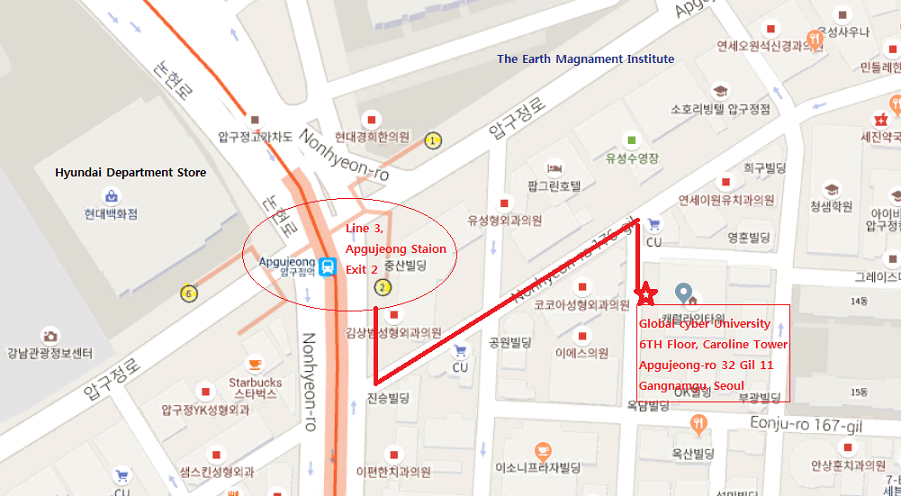
글로벌사이버대학교 (서울캠퍼스 압구정로 32길 11 캘럴라인타원) 6층
6th floor, Caroline Tower, Apgujeong-ro 32 gil, 11, Gangnam-gu Seoul
MAP for Global Cyber University (Apgujeong Station)