Emanuel’s talk on Networked science at the Asia Research Network’s summer seminar at Ashi no Ko in Japan

I presented a paper on Michael Nielsen’s new book: “Reinventing Discovery: The New Era of Networked Science” at the second annual summer seminar for young Asian researchers of the Asia Research Network. I have worked with the Asia Research Network informally for the last two years, but this was my first chance to see first-hand their work.

The Asia Research Network grew out of the collaboration between Professor Hara Masahiko at Riken (and Tokyo Institute of Technology) and Professor Haewon Lee of Hanyang University on nano materials. The joint research laboratory of Riken and Hanyang University in Seoul is the most significant example of sustained collaboration between Japan and Korea. Significantly, the Asia Research Network http://www.asianrn.org/ is growing rapidly and promises to be a platform for a new level of collaboration in Asia.

Read more

Mitt Romney on Obama’s failed promise to heal the planet

Republican Party candidate for President Mitt  Romney summed up his strategy in this remark after his acceptance speech at the Republican National Convention on August 30, 2012:.

“President Obama promised to begin to slow the rise of the oceans and heal the planet. My promise is to help you and your family.”

The implications of the use of the past tense in this sentence are profound; “promised to” as opposed to “promises to” suggests that Obama has already failed in his promise. We are not looking at a simple contrast of Obama as a polar bear hugger and Romney as a man who cares about you. If that was the case, there would not be any need to employ the past tense. The implication is on the surface that Obama made a promise he could not keep. That implication suggests that the concern with rising oceans may not be entirely misplaced.

Read more

“16 Steps to address the environmental crisis: Things you have already thought of!” (essay)

16 Steps to address the environmental crisis

Steps that you have already thought of, but that you have never seen written down anywhere!

Emanuel Pastreich

August 19, 2012

One of the great tragedies of our age is the ineffectiveness of efforts to address the environmental issues of our day. People are distracted from the problem of climate change by a specious debate about whether climate change is as dangerous, or dramatic, as some would claim, or whether it might be less severe, even a part of natural processes. That discussion is a remarkable waste of time. Even if you believed there was no climate change whatsoever (which is hard to argue considering that the Middle East was once fertile farmland), the crisis of overpopulation, water scarcity and pollution of ground water, the destruction of forests and ecosystems, over-fishing and damage to the atmosphere itself is more than enough to suggest radical change is taking place in our environment that puts us all at risk.

Read more

Peace on the Peninsula through Art: Park Sidong’s Seokjangni Art Museum on the DMZ

Peace on the Peninsula through Art

Park Sidong’s Seokjangni Art Museum on the DMZ 

I first visited Park Sidong’s remarkable   Seokjangni Art Museum on the DMZ in March, 2012 after attending a seminar held at a military outpost overlooking North Korea. I was on a panel with artists and scholars discussing how an innovative residency for artists held right on the DMZ could serve as the first step towards bringing peace to the peninsula. The idea struck a chord with me. Could it be that rather than holding yet another seminar or writing yet another op-ed, just having artists practicing art could help facilitate the cultural and ideological shifts required to move beyond the current stalemate? I think there is that  chance.


The sculpture greeting the visitor


Read more

“The Great Green Wall and the Fight against Desertification in China”

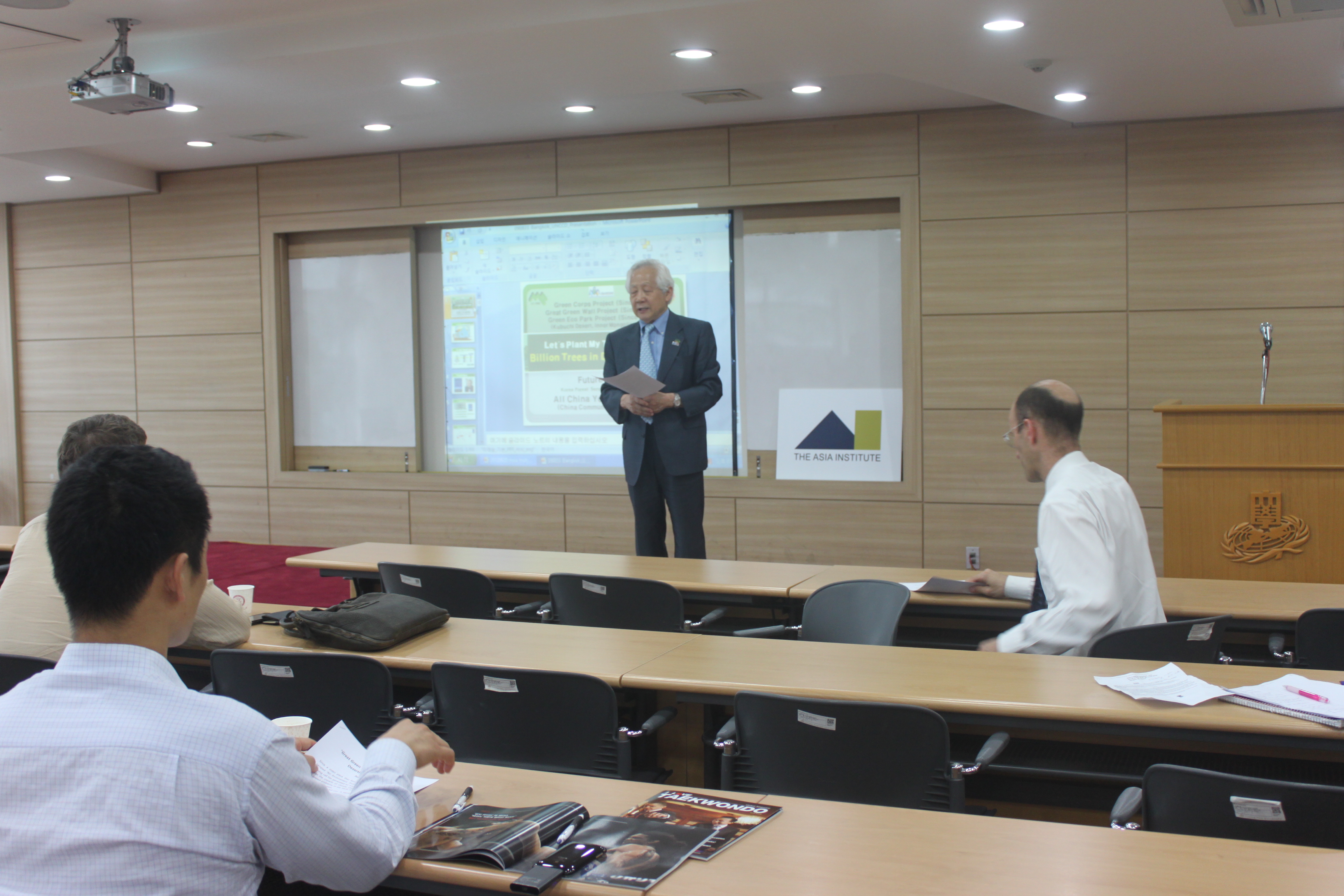
Opening remarks
Thursday, June 28, 2012

Asia Institute Seminar

“The Great Green Wall and the Fight against Desertification in China”

The Asia Institute seminar on the noble fight against desertification was a wake-call for all of us. I must admit that although I was pleased by the enthusiasm of the participants, I was shocked that we did not have a larger crowd. After all, the spread of deserts in China is perhaps the most serious challenge facing East Asia today and is a crisis that calls for a global solution.


Lecture by Ambassador Kwon

Yet attendance was less than for our seminar on nuclear power in North Korea—an important topic, but not anywhere as significant.

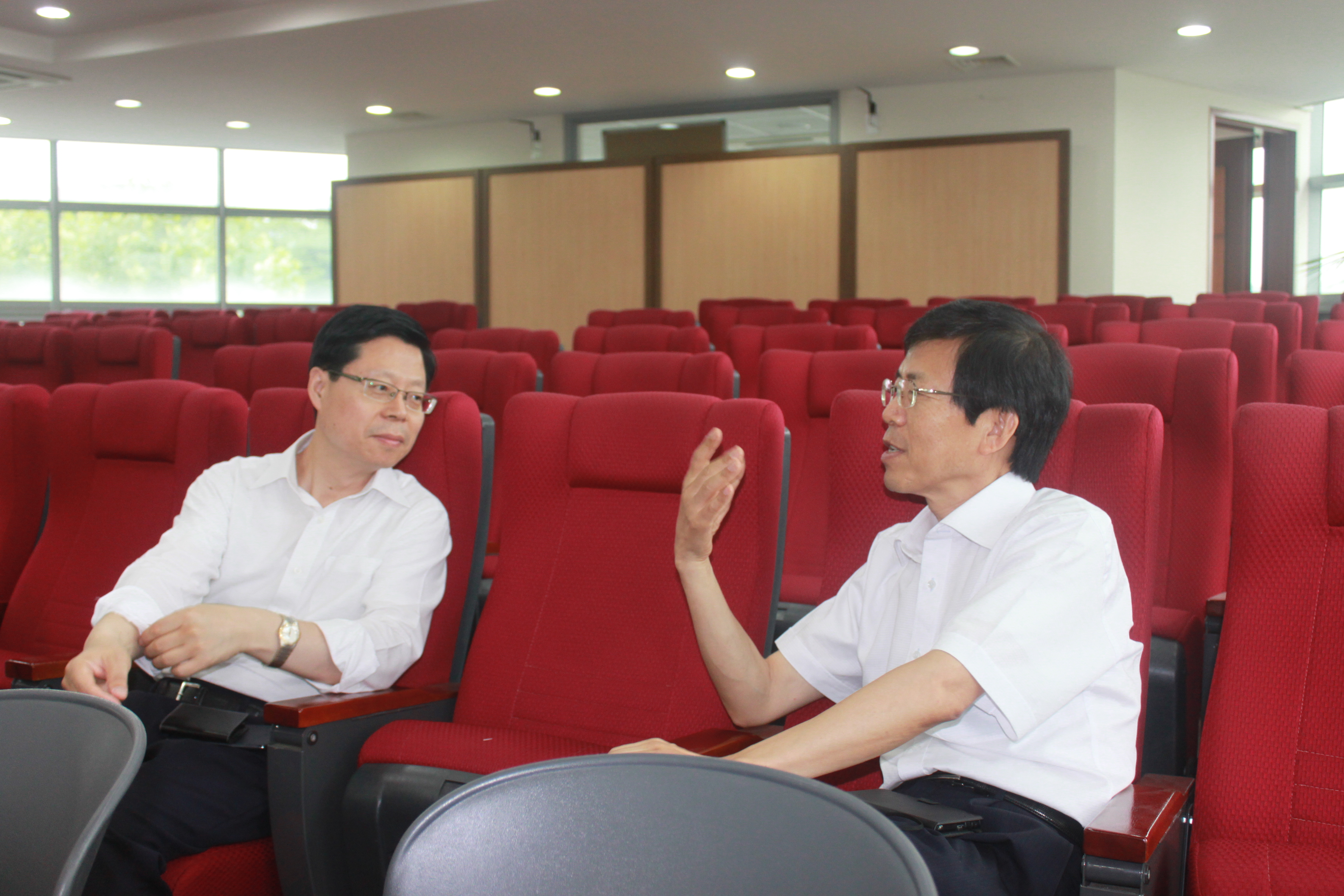
Kwak Sang-soo of Korea Research Institute for Bioscience and Biotechnology talks with David Seol, advisor to Asia Institute for external relations.

Ambassador Kwon Byunghyun spoke about his NGO Future Forest which

Read more

“The Korean Dream” (article in the Hangyoreh, June, 24, 2012)

The Hangyoreh


June 24, 2012


The Korean Dream


Emanuel Pastreich

 The United States became the major cultural force in the world during the 1950s and 1960s, putting forth through its media and its cultural institutions an image of a better life in a free society. The United States offered a powerful vision of a society wherein the individual could realize his or her dreams without the terrible institutional and cultural limits that hold back so many. That image of a good life in the United States was known as the “American Dream.” The American Dream was accompanied by significant intellectual and ethical content such as democratic process, social responsibility, the rule of law and excellence in scholarship and the arts that inspired the world to strive for something greater.

Not everything in the United States was as perfect as the vision given to the world. There were dark aspects of the United States such the hypocrisy of racial discrimination in a nation that spoke of equality and the ruthless pursuit of national interest in a nation that spoke of universal values. Nevertheless, the American Dream inspired people around the world to strive for something greater, to raise their standards for education, for fairness and for democracy to a new level. They stepped forward to demand changes in their countries, to innovate and to create a new society in every corner of the world.

Read more

Asia Institute Gathering to talk about the Environment with Youth (Friday, June 15, 2012)

Asia Institute Gathering

Please do join us for an informal gathering for students to discuss this most critical topic:

What youth can do for the environment?”

Your presence would be greatly valued, and your suggestions as to what can meaningful responses to the environmental crisis.

(Hosted by Emanuel Pastreich, Professor of Humanitas College)

Friday, June 15

5 PM

Location Room #209 (second Floor) Neo-Renaissance Hall

Kyung Hee University (Hoegi-dong)

Read more

Asia Institute Seminar “The Great Green Wall and the Fight against Desertification in China” JUNE 28, 2012

Asia Institute Seminar


 The Great Green Wall and the Fight against Desertification in China

Report to the Rio +20 United Nations Conference on Sustainable Development


Thursday, June 28, 2012

6:30-7:30 PM

Read more

Talk on how Korea can learn from the past in implementing a program to work together with China to combat the spread of deserts (Saturday, May 26, 2012)

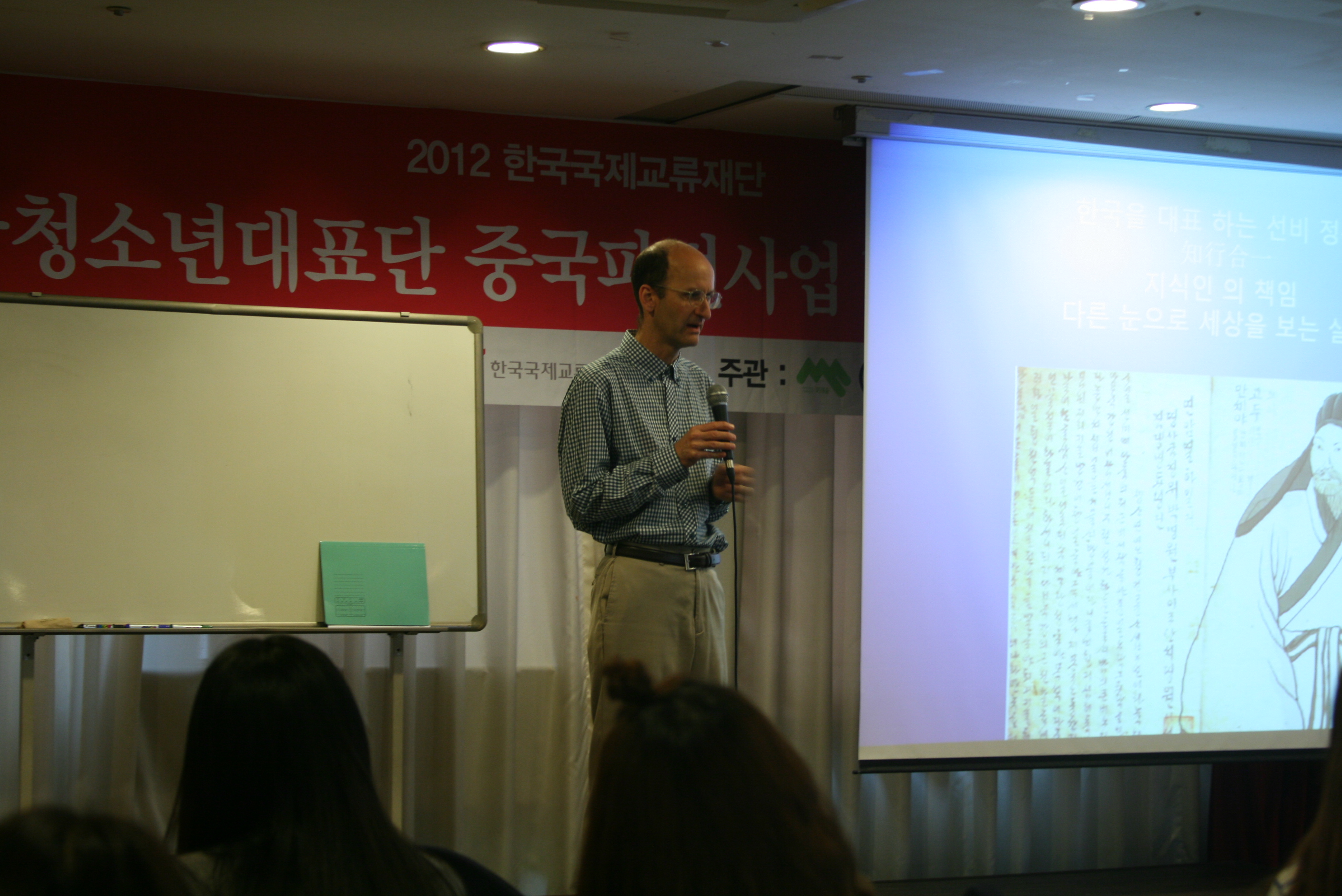
Emanuel addresses Korean college students in Future Forest set to travel to China to work in anti-desertifcation efforts.

I gave a talk for a group of Korean college students preparing to travel to China where they will work together with Chinese students on anti-desertification projects in July. The students are from universities across Korea and the event was sponsored by the Korea Foundation and Future Forest, the NGO dedicated to Korea-China cooperation on environmental issues of which I am a member. This new effort to bring together young people from Korea and China represents the initiative of the Asia Institute to build close networks between people of different nations that parallel technological and logistical integration. 

Read more

Sungmisan School in Seoul: A remarkable Approach to education.

I had a chance to visit the Sungmisan School (성미산학교) in Seoul today for their yearly festival and I spoke a few minutes with one of its founders, Yu Chang-bok (유창복) and the current principle Park Bok-seon (박복선).

Founded in 1996, Sungmisan School is one of the best-known of the alternative schools in Korea, running a program from nursery school through high school—and there is even a plan to establish a university. The school puts a tremendous emphasis on the role of students in society, and particularly courses related to the environment and agriculture (while the school is located in the middle of Seoul).

Read more