Emanuel’s talk on the problem with islands: Solutions for the Senkaku-Diaoyu Conflict

“The Problem with Islands:

Long term solutions for the Sengaku-Diaoyu conflict”


Emanuel Pastreich

Director

The Asia Institute

November 2, 2012


The Senkaku Islands (Diaoyu Islands in Chinese) are a set of uninhabited islands not far from Taiwan, the coast of Fujian, People’s Republic of China, and the Japanese island of Yonaguni in Okinawa that have become the site for remarkable dispute between China, Taiwan and Japan. The collision between the Chinese fishing trawler Minjinyu and a Japanese coast guard vessel on the morning of September 7, 2010 (and the subsequent detention and release of the captain of Minjinyu) made a long-brewing dispute over territory into a cause célèbre in China that has taken the form of a series of protests in both China and Japan of a severity not seen in since the Cultural Revolution.

The announcement by the City of Tokyo that it would buy the Senkaku Islands from its private owners, thus conflating private real estate with national territoriality, set off an even more virulent set of protests in China in 2012 that have created a sense of distrust and foreboding in Asia at a time when many looked forward to an age of increasing economic and cultural exchange. 2012 was slated for a series of celebrations to commemorate the fortieth anniversary of the normalization of relations between Japan and the People’s Public of China. All of those events have been cancelled or postponed. In fact, even an innocent conference of comparative literature to which I had been invited was abruptly cancelled. On the Japanese side as well, protests are planned and emotions have run high—a marked contrast to previous demonstrations that were widely ignored in Japan.

[more]

Link to original paper

“The Moral Equivalent of War: Joining with our Chinese Neighbors to Stop the Spread of Deserts in Northeast Asia” by Ambassador Kwon Byung Hyun

This article by Ambassador Kown Byung Hyun, the founder of Future Forests, explains vividly the effort to get youth in both Korea and China involved in the enormous project of confronting the threat of desertification. Future Forests is a close partner of Asia Institute and this article presents quite well the important work that Ambassador Kwon has undertaken.


Ecocity Media

November 2, 2012

link to original article


The Moral Equivalent of War: Joining with our Chinese Neighbors to Stop the Spread of Deserts in Northeast Asia

By Ambassador Kwon Byung Hyun
Former South Korean ambassador to China
Founder & President Future Forest


It seems as if we are constantly preparing to fight the last war and completely unprepared for new challenges. But one needs only travel to the edge of the Kubuchi Desert in Inner Mongolia to see that mankind faces threats on an unprecedented scale that call our for our united action. We must use the full extent of our imagination to come up with solutions to this crisis through new global alliances that require us to completely rethink terms like “security” as we create a new civilization that can lead humans from the dark night of endless consumption to a hopeful future.

My engagement in the long-term effort to stop the spread of deserts in China started from a very distinct personal experience. When I arrived in Beijing in 1998 to serve as ambassador to China, I was greeted by the yellow dust storms. The gales that brought in the sand and dust were very powerful and it was no small shock to see Beijing’s skies preternaturally darkened. I received a phone call from my daughter the next day and she told that the Seoul sky had been covered by the same sandstorm that had blown over from China. I realized that she was talking about same storm I had just witnessed. That phone call awakened me to the crisis. I saw for the first time that we all confronted a common problem that transcends national boundaries. I saw clearly that the problem of the yellow dust I saw in Beijing was my problem, and my family’s problem. It was not just a problem for the Chinese to solve.

Read more

Emanuel’s thoughts on the Korea China University Student Forum and the Environment

As part of my ongoing work as adviser for Future Forests, the NGO dedicated to combating the spread of deserts in China, and throughout the world, I was invited to serve as the judge for a series of talks by Chinese and Korean students about how we can come together to fight the environmental crisis—most specifically desertification in Northern China. The series of talks were held at Sungkyunkwan University on October 24, 2012 and featured five teams making PowerPoint presentations about

Korea China University Student Forum, October 24, 2012


A tale of Two Cities: Seoul in 2012

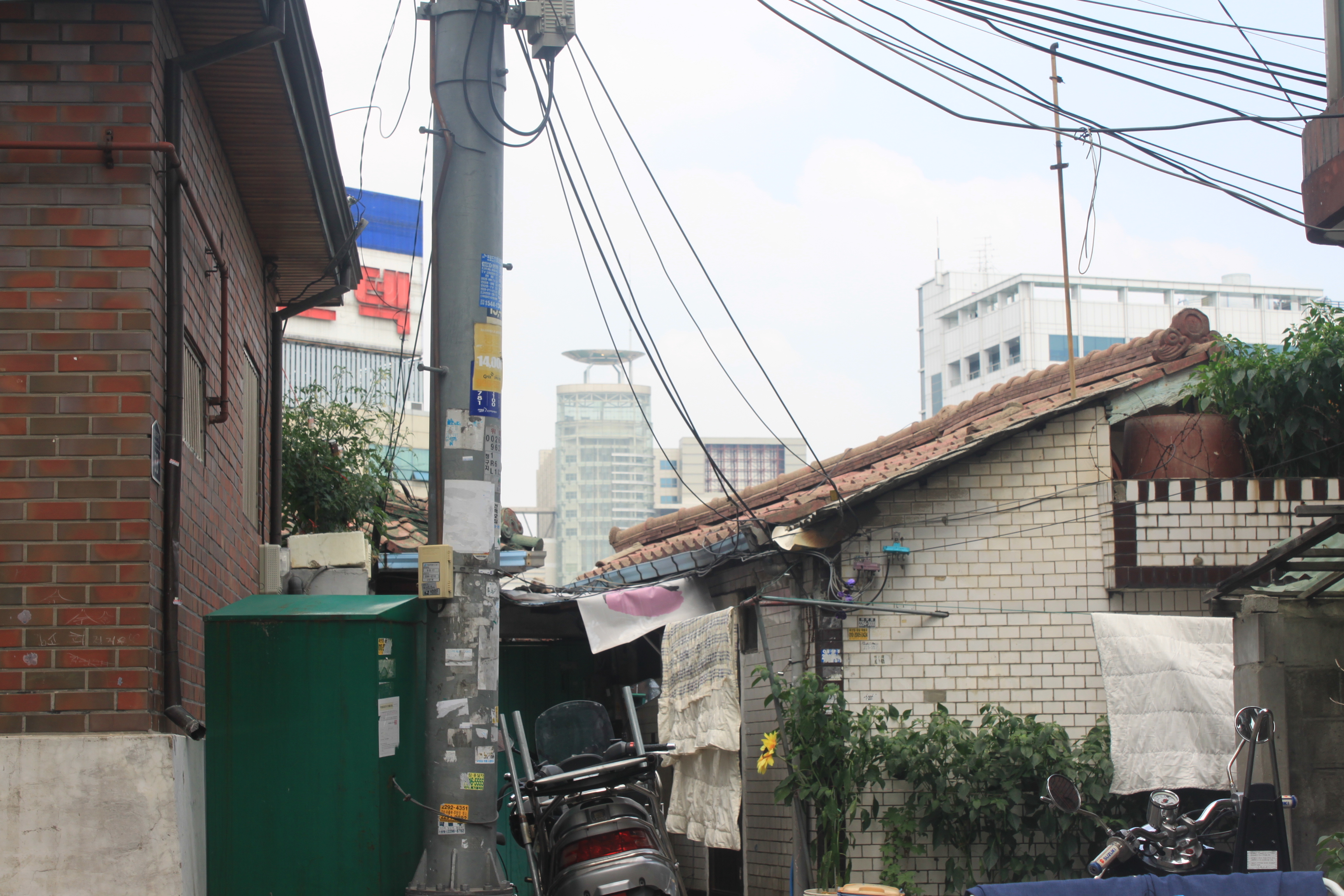
One striking aspect of Seoul these days is the contrast between the traditional world of family neighborhoods of a small scale including many brick houses of one or two stories and family businesses such as plumbers, carpenters and small stores on the one hand and a rapidly growing city of large-scale shopping malls, office buildings and apartments.

Lumber merchant in front of new office building.


The traditional street in Sindang-dong with the larger new developments around the new Dongdaemun History Park behind it.


The two worlds have very little to do with each other and form essentially two sides of Seoul. To some degree, the combination of the two is part of Seoul’s attraction. But at the same time, one cannot help but wonder what exactly powers the sudden rise of the large-scale buildings.

Read more

“From Pacific Pivot to Green Revolution” in Foreign Policy in Focus

Foreign Policy in Focus

“From Pacific Pivot to Green Revolution”

By John Feffer and Emanuel Pastreich

October 4, 2012

The low rolling hills of the Dalateqi region of Inner Mongolia spread out gently behind a delightful painted farmhouse. Goats and cows graze peacefully on the surrounding fields. But walk due west just 100 meters from the farmhouse and you’ll confront a far less pastoral reality: endless waves of sand, absent any sign of life, that stretch as far as the eye can see.

This is the Kubuchi desert, a monster born of climate change that is slouching inexorably east toward Beijing, 800 kilometers away. Unchecked, it will engulf China’s capital in the not-so-distant future. This beast might not be visible yet in Washington, but strong winds carry its sand to Beijing and Seoul, and some makes it all the way to the east coast of the United States.

Read more

“Looking at Free Trade and Korea’s Position in a Globalized World ” Asia Institute Seminar with Mark Kingwell


“Looking at Free Trade and Korea’s Position in a Globalized World ”


Asia Institute Seminar with Mark Kingwell

May 10, 2012


Mark Kingwell

Professor

Department of Philosophy

University of Toronto


Emanuel Pastreich:

Free Trade agreements, especially with the United States, seem to raise very strong emotional responses in Korea. Koreans associate them with mad cow disease and undue influence of multinational corporations. And yet, oddly, trade agreements with Europe or India have not resulted in that degree of protest.

It seems many see trade liberalization, specifically the KORUS FTA with the United States, as opening the flood gates for influence by American multinational corporations and the import of unhealthy foodstuff. The import of American goods will put Koreans out of work and result in greater interference of the United States in Korea at the local level.

And yet, when it comes to trade, things are not exactly what many people think they are. Many Korean companies are themselves powerful multinationals and the balance of power between the United States and Korea, is far from obvious.

Koreans run around worrying that Americans will come in and just buy up valuable Korean companies and dominate the nation. But in fact, Korea is likely to invest far more in the United States than the United States could possibly invest in Korea over the next decade. If there is a problem in trade, it cannot be reduced to an America vs. Korea equation.


Mark Kingwell:

Some years ago, Canadians went through a similar debate concerning the North American Free Trade Agreement (NAFTA) with the United States and Mexico; but there are two significant differences between Canada’s relationship with the United States and Korea’s.  First, Canada is a resource-rich country. Our historical identity is as lumbermen and hewers of wood or drawers of water and will likely continue to determine our future, at least its immediate version, with respect to the rest of the world.  

Read more

“도시건설에 풍수를 입히자” (매일경제신문)

매일경제신문 글로벌포커스  2012년 9월 17일

이만열 경희대 후마니타스칼리지 교수

“도시건설에 풍수를 입히자”

대도시의 성장은 오늘날 아시아 국가들이 겪는 가장 위태로운 변화 중 하나이다. 한국은 국내에서 지속발전 가능한 생태적 도시를 개발함과 동시에 아시아 지역의 생태도시 개발을 촉진하는 역할을 맡아야 한다. 아시아 여러 나라들이 서울과 같은 도시를 벤치마킹하는 사례가 증가하면서 한국이 큰 영향력을 끼칠 기회가 증가하고 있다. 한국의 도시들을 생태학적으로 더욱 효과적으로 만드는 데 매우 유용한 접근법은 `풍수`의 전통을 도시계획에 응용해 지속발전 가능한 환경을 창출하는 것이다.

Read more

Lecture on the future of Korean cities at JSB

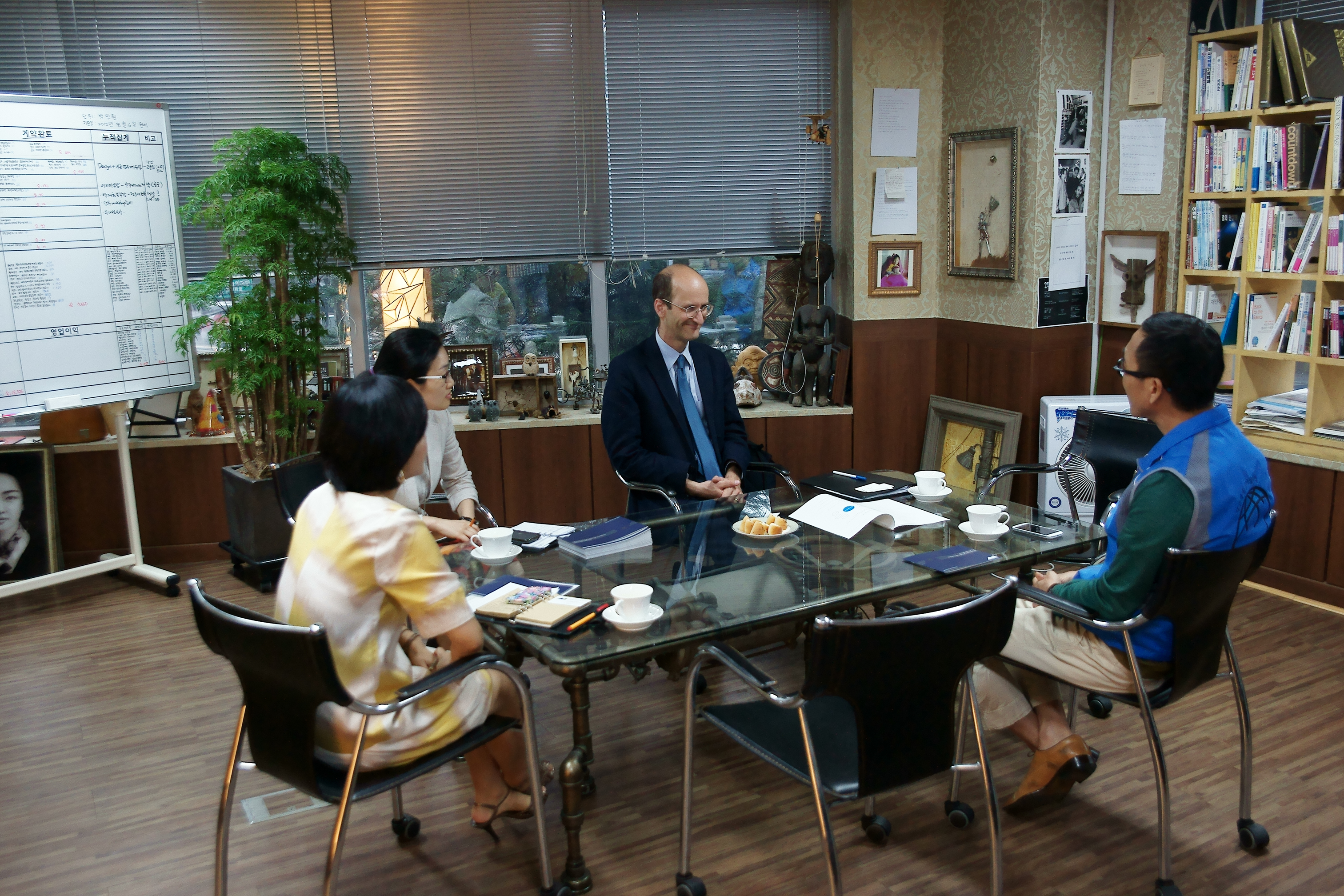
I was invited to give a talk at JSB Incorporated, one of the most innovative companies in Seoul working on environmental design on August 30, 2012. I had a chance to speak at length with the CEO Choi Jaejung, a remarkable figure who is known for his love of art and the environment (both he and his wife are artists) and his open style of administration.

Read more

JSB도시환경 특강: “도시의 미래, 변화를 위한 방향은 무엇인가?”

2012년 8월 30일


명사 초대석

JSB도시환경

도시의 미래, 변화를 위한 방향은 무엇인가?”


경희대 후마니타스 칼리지 이만열 교수


급변하는 우리네 도시의 모습을 보면 미래 모습은 감히 상상조차 되지 않을 때가 있습니다. 그래서 이번 3/4분기 명사초대석에는 도시의 미래에 대해, 그 올바른 방향성에 대해 말씀해 주실 분을 모셨습니다.


JSB도시환경 최재정 대표님 과 같이 말씀 나누는 순간

경희대 후마니타스 칼리지 이만열 교수님께서는 대만, 일본, 미국에서 유학하며 동아시아 언어와 문화에 대해 공부하셨고, 현재는 우송대학교 아시아연구소장을 겸직하며 도시의 생태·문화적 발전을 위해 다방면으로 힘쓰고 계십니다. 이번 명사초대석에서는 ‘도시의 미래, 변화를 위한 방향은 무엇인가?’라는 주제로 강의를 진행하셨습니다.

Read more