Scholars of the World Speak out about Korea’s Future from Dasan Books

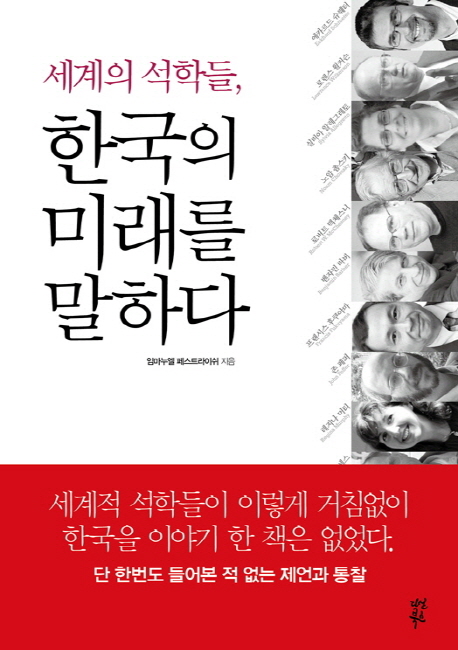
Scholars of the World Speak out about Korea’s Future
Dasan Books
October, 2012
Edited by Emanuel Pastreich

Scholars of the World Speak out about Korea’s Future is a book in Korean language that presents the insights of distinguished scholars from around the world concerning contemporary issues in Korean politics, society and the economy. Released six weeks before the Korean national election, it treats issues such as education, social welfare, populism and North Korea that have been raised in the course of the campaign.
For the first time, a group of international experts present their views about the specifics of Korean society and the relationship of Korean domestic issues to larger global trends. Emanuel Pastreich, associate professor at Kyung Hee University and director of the Asia Institute, interviewed Benjamin Barber, Noam Chomsky, Francis Fukuyama, Lawrence Wilkerson and other important figures in an effort to give Korean readers an insights into how the problems they are faced are linked to larger global trends.

Read more

“The Crisis in Education in Korea and the World” Asia Institute Seminar with Peter Hershock

“The Crisis in Education in Korea and the World” 

September 15, 2012

Dr. Peter Hershock
Director, Asian Studies Development Program
East-West Center
University of Hawaii, Manoa

Author of

Changing Education: Leadership, Innovation and Development in a Globalizing Asia Pacific

Emanuel Pastreich
Director
The Asia Institute


Peter Hershock:
Some of the problems we face in education are new, but many have a long history and we must consider more comprehensive changes that go beyond individual students and teachers if we want to make any headway. We have to find concrete ways of disentangling ourselves from the past, from assumptions about education that date back to the 16th century.
Emanuel Pastreich:
What exactly changed about education back in the 16th century that was the cause of problems in education today?
Peter Hershock:
How we school people today is for the most part a global system. That system may vary from place to place and its relationship with government, and with parents, also varies. The universal assumption is that education has to do with students moving through a curricula. This idea was framed originally by Peter

Read more

“The Challenges of Korean Education in Historical Perspective” Asia Institute Seminar with Professor Michael Seth

Asia Institute Seminar

Interview of Michael Seth

 “The Challenges of Korean Education in Historical Perspective”

September 4, 2012


Speaker

Michael Seth

Professor

Department of History

James Madison University

Emanuel Pastreich:

Koreans are quite aware of the problems in Korean education, and yet they are having great trouble coming up with solutions to those problems.  Why is education reform so difficult?

Michael Seth:

KOreans put great emphasis on gaining and maintaining social status. Social status is not a feel-good luxury, but essential for one’s career and one’s livelihood, and that has been the case for  

Read more

“The Challenges and Opportunities in Korean Education” Asia Institute Seminar with Regina Murphy

Asia Institute Seminar 


Interview with Regina Murphy


“The Challenges and Opportunities in Korean Education”


October 1, 2012


Regina Murphy

Senior Lecturer

Education Department

St. Patrick’s College

Dublin City University

Dublin, Ireland


Emanuel Pastreich

Have you had any experience with Korea in the course of your research and your activities in education?

Regina Murphy

I was at a conference on arts education in Seoul that provided me the opportunity to learn a bit about how Korean education is approached, or at least something about the culture of those involved in education. I remember distinctly the extremely advanced audio-visual equipment that the conference centre employed and overall the Korean conference as one of the most technologically advanced and well-organized conference I have ever attended. Nevertheless, I received the distinct impression that the Koreans were not so interested in music and art education—my field of expertise.

Read more

“16 Steps to address the environmental crisis: Things you have already thought of!” (essay)

16 Steps to address the environmental crisis

Steps that you have already thought of, but that you have never seen written down anywhere!

Emanuel Pastreich

August 19, 2012

One of the great tragedies of our age is the ineffectiveness of efforts to address the environmental issues of our day. People are distracted from the problem of climate change by a specious debate about whether climate change is as dangerous, or dramatic, as some would claim, or whether it might be less severe, even a part of natural processes. That discussion is a remarkable waste of time. Even if you believed there was no climate change whatsoever (which is hard to argue considering that the Middle East was once fertile farmland), the crisis of overpopulation, water scarcity and pollution of ground water, the destruction of forests and ecosystems, over-fishing and damage to the atmosphere itself is more than enough to suggest radical change is taking place in our environment that puts us all at risk.

Read more

Seoul Metro strives to make commuters more civilized

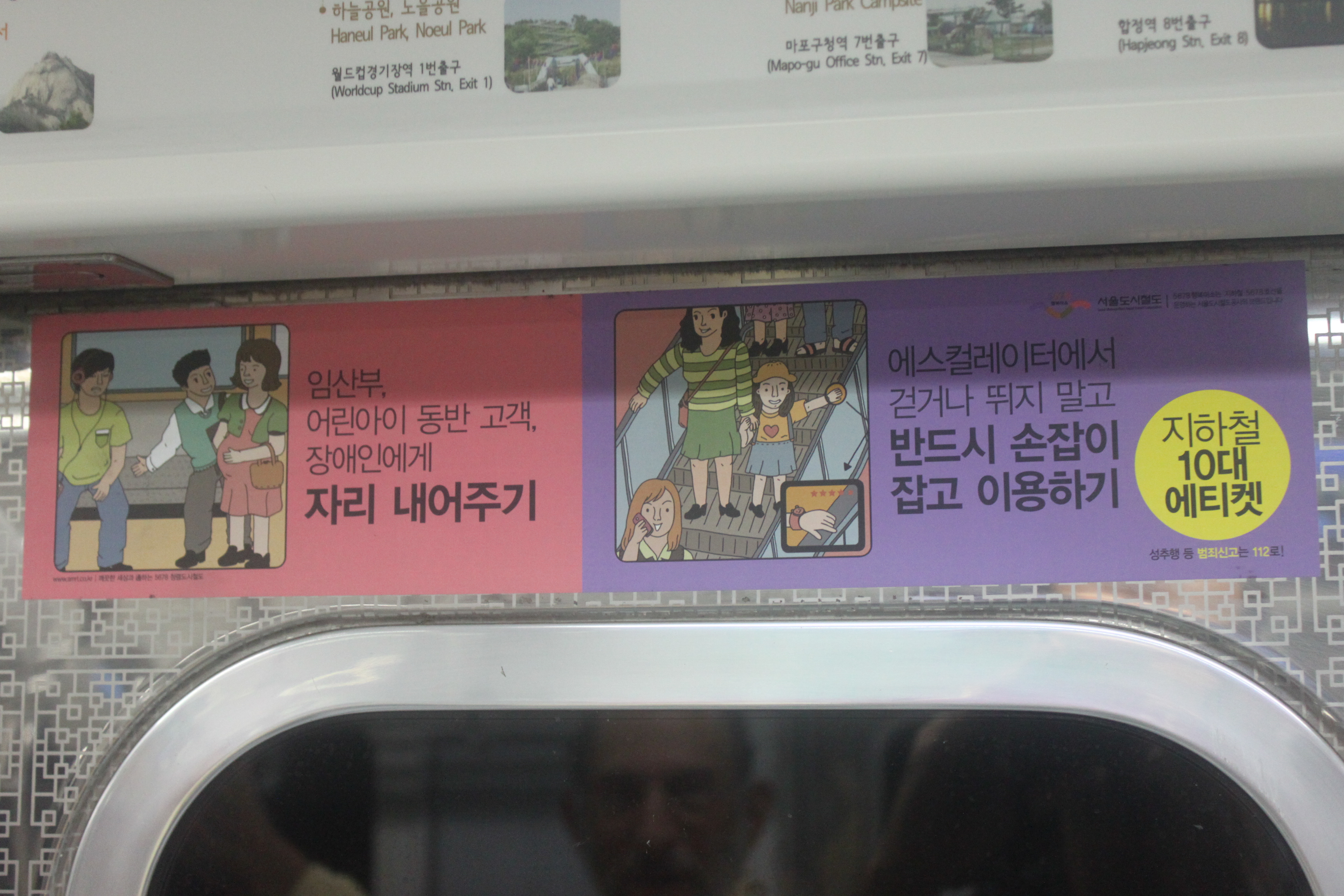
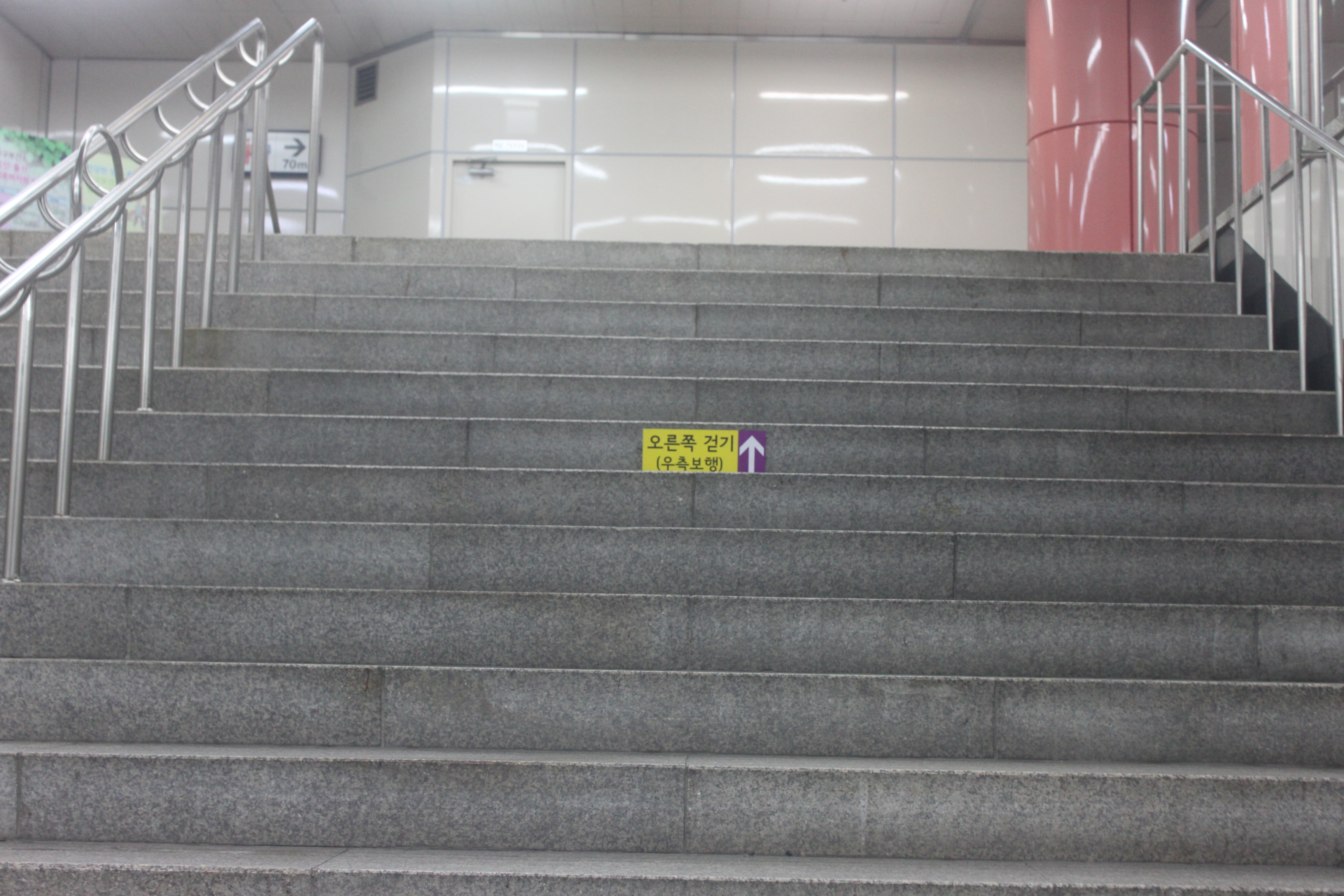
One unique aspect of Korea is the degree to which government sees it as its job (often in a positive sense) to change culture and habits so as to create a more cultured, civilized, society. The most striking effort over the last two years is the push to get Koreans to line up to get on trains and to walk up and down staircases on the right side. The process has had considerable impact on Korea where people did not line up, or walk on the right side, previously.

Attractive new signage in the Seoul Metro encouraging consideration for other passengers.

Read more

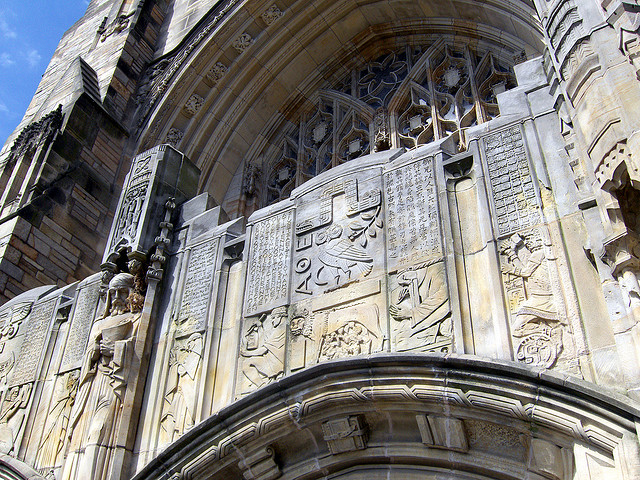
The Chinese inscription above the entrance to Sterling Memorial Library

The stone inscriptions at Yale spoke to me as an undergraduate, particularly the haunting carvings of the Sterling Memorial Library. This enormous bibliographic cathedral is a mixture of late Art Deco and Gothic Revival that was designed by James Gamble Rogers and completed early in the depression in 1931.

Above all, the carvings over the main entrance to Sterling Memorial Library made the deepest impression on me as I passed through them almost every day. From left to right above the right door stand four tablets with ancient scripts: Arabic, Greek, Chinese and Mayan passages with their respective scribes standing below.

Read more