“Promoting the Seonbi Spirit” Korea Magazine, June, 2014

KOREA MAGAZINE

JUNE 1, 2014


“Promoting the Seonbi Spirit”


INTERVIEW WITH EMANUEL PASTREICH OF THE ASIA INSTITUTE


There is a tremendous tradition in Korea of the intellectual as an organic and responsible part of society, a tradition that produced many great scholars who were willing to sacrifice themselves in the interest ofcountry and to make their learning into something for everyone,” explains Emanuel Pastreich.

This is the seonbi spirit, he says. Pastreich is well versed in the subject, given that he is an expert on comparative Asian studies, is a professor at Kyung Hee University’s College of International Studies and serves as a director at the pan- Asian think tank, the Asia Institute. As he explains, “Whether Yi Sun-sin and the armies of righteousness that rose up when the king had fled after the Hideyoshi invasions, or Dasan Jeong Yak-yong and his attempts at agrarian reform under King Jeongjo, Korea has a remarkable tradition of intellectuals dedicated to political causes.” It is for this reason, he says, that Korea is so democratic.

Read more

“섬을 둘러싼 ‘中日 분쟁’의 역사적 고찰” (인사이트 2014년 5월 30일)

인사이트

“섬을 둘러싼 ‘中日 분쟁’의 역사적 고찰”

2014년 5월 30일

임마누엘 페스트라이쉬


 조어도열도(釣魚島列島)/센카쿠열도와역사

15 세기에 유럽에서 시작되어서 전 세계적으로 확장된 급진적 팽창주의의 전통을 일본이 답습했던 것과는 달리 중국은 그러한 전통을 가지고 있지는 않지만, 우리는 중국 역시 다른 국가와 민족을 향한 무력의 역사를 주기적으로 행해왔다는 것을 그들의 역사에서 확실히 발견할 수 있다. 그것은 인류가 가지고 있는 본성의 하나로서 그리 놀라울 일이 아니라고 본다.비록 남중국해에 많은 섬들이 영토분쟁의 긴장상태에 있긴 하지만, 이해하기 쉬운 예로서 그 지역 긴장의 가장 큰 원인이 되고 있는 조어도열도[釣魚島列島](또는 센카쿠 열도)에 집중해보기로 하겠다.

내가 조어도열도[釣魚島列島](또는 센카쿠 열도)에 관해 언급하고자 하는 것은 중국이나 대한민국이 일본이나 다른 나라들과의 사이에 가지고 있는 분쟁과 관련이 있기 때문이다. 물론 조어도열도[釣魚島列島](또는 센카쿠 열도)에 대한 논란은 역사에 그 뿌리를 두고 있다.

이 섬들은 중국인들에게 일본 제국주의에 대한 기억과 중국의 영토 보전에 대해 일본이 묵살하고 있다는 것을 환기시킨다. 그러한 기억들은, 가족을 통해 전해졌든지 아니면 책이나 영화를 통해 배웠던지 간에 일본의 행동에 중국인들이 어떻게 반응하는가 하는 것에 계속해서 영향을 끼친다.

하지만, 발생하고 있는 사건이 그저 역사의 문제라고 말하는 것은 충분한 설명이 되지 못하며, 아마 심지어 오해의 소지까지 있다고 생각한다.

중요한 문제는 무엇이 최근 들어 심각한 도서[島嶼]분쟁을 발생하게 했는가 하는 것이다. 조어도열도[釣魚島列島](또는 센카쿠 열도)는 오키나와, 대만과 중국 본토 사이에 위치하고 있다. 이 위치는 대만과 오키나와의 양쪽 모두에게 잠재적으로 쟁점이 되는 지역이라는 점에서 중요하다.

Read more

“The Professor’s Role” (Joongang Daily May 12, 2014)

Joongang Daily
May 12, 2014

“The Professor’s Role”

Emanuel Pastreich

One of the greatest attractions for me about Korea is the status that professors enjoy in this country. I am not talking about just the respectful manner in which students speak to teachers; that is a pleasant, but not particularly significant, aspect of Korean culture. I am talking rather about the broad role that professors play in policy and industry. Professors serve on government committees, and the position of professor is a standard platform for launching a political career. In a sense, the rank of “Dr.” seems to outrank just about any other position in this society.

Korea stands in marked contrast to the United States, where the status of intellectuals has been much diminished over the last fifty years. Whereas American presidents like Franklin D. Roosevelt and Harry Truman appointed many professors to high positions, those days are long gone in my country. But the tradition remains in Korea.

Although I am delighted to live in a country that values intellectuals, my experience as a professor has also brought me face to face with the profound contradictions in the actual role of the professor that undermine the critical role of intellectuals in society.

Professors, I learned, are not evaluated by their peers in a written format that captures the complexity and subtlety of their role, but rather are assessed according to inflexible checklists that have little, or nothing, to do with what the responsibility of the intellectual should be.

There are three categories for evaluating professors at the university: teaching, research and service. In the case of teaching, the courses are so large that it is essentially impossible to talk with any real intimacy with students. The role of the professor is now to provide letters of recommendation for future employment or further education without actually having worked closely with that student and to provide a grade for the course. My teaching performance is evaluated by students using a survey that encourages students to see professors as performers.

Sadly, a close relationship wherein the professor guides the student in understanding the world and prepares him for the challenges of a rapidly changing society is not relevant in the evaluation of the professor-although such relations with students would be the most valuable thing a professor could do.

Moreover, the relationship of teacher and student is limited entirely to the course itself with little of the lifelong relationship that made Korean learning great over the last 500 years. There is no incentive at all for the professor to tell the student about harsh truths so as to help him or her to survive in what looks like a very grim future. Telling students pleasant myths helps one in getting a good evaluation, but it is a deep disservice to the students themselves.

Then there is research. I was shocked when I was told last year that I should not bother reporting articles unless they are published in English, in Science Citation Index (SCI) or Social Sciences Citation Index (SSCI) journals. These journals have magically been declared to have “impact” (even though their readership is extremely small) and are considered “A grade.” But, in fact, many world-class journals are not included in these mysterious lists, and although I wrote in SSCI journals 10 years ago, I have stopped because I find that books and other journals have far more influence.

Oddly, although the complexity of a scholar’s research activities can only be evaluated by his peers, the evaluation is left up to a check list made up by people who know nothing about the field.

The scholar who publishes 10 mediocre articles in SSCI journals (which is easy to do) is favored over the scholar who publishes one game-changing paper in an obscure journal. Needless to say, Charles Darwin’s theory of evolution or Galileo Galilei’s heliocentric model for the solar system were not easily published in the scientific journals of the time. Today, scholars agree that much of the best writing is found on blogs and in many other unconventional places.

In addition, it is assumed in evaluations that research written in English is the most important. In the humanities, obviously, the best journals in French literature are in French, and the best journals in Chinese history are in Chinese. But English is not even the only language for science. Although many scientists publish primarily in English, in the field of botany, for example, some of the best journals are written in Japanese. There is an increasing amount of first-class work in science that is published exclusively in Chinese, Japanese, Korean and other languages – the fact that American scholars do not know about that scholarship does not reduce its significance.

I thought that I would do well in the “service” category as I participate in many volunteer activities related to the environment and civil society. But I discovered that only bureaucratic duties in the department count as “service.” That is to say that if intellectuals do their duty by calling attention to important issues for ordinary people, issues that ordinary people do not have the expertise or the time to fully comprehend, that effort is irrelevant in the assessment of a professor’s contributions.

Korea has a glorious history of academies called hyanggyo that produced great scholars who were also intellectuals of conscience. Scholars in those academies were evaluated by other scholars according to the quality of their writings and their ethical stance. That tradition of scholarship, in which the academies were fiercely independent and committed to a long-term vision of learning as an ethical pursuit, should be a model for us. It is precisely the combination of ethics and scholarship that distinguishes Korean academics. To tear the two apart is to destroy the very appeal of Korea’s universities.


Read more

“세계 석학 3인의 냉철한 시선” (레이디경향 2014년 5월호)

레이디경향

“세계 석학 3인의 냉철한 시선 ‘한국, 한국인을 말한다’”

2014년 5월


링크


“임마누엘 페스트라이쉬:  문화를 ‘광고’하는 한국인”

최근 뉴욕타임스에 실린 ‘불고기 광고’가 논란이 된 적이 있다. 한 나라의 전통음식이 과연 광고의 대상인가에 대해 많은 외국인들이 의아해했다. 우리나라의 문화를 세계인에게 알리고자 하는 기특한 발상이긴 했지만, 보는 이의 공감을 얻으며 다가가는 방법은 없을까?

임마누엘 페스트라이쉬(50) 교수는 한국을 사랑하는 대표적인 지한파 미국인 인문학자다. 그는 일리노이대학교, 도쿄대학교, 조지워싱턴대학교 등 세계 명문 대학 교수를 거쳐 2011년부터 경희대 교수로 재직 중이다. 일본, 중국, 대만 등 다양한 동아시아 문화를 연구하다 결국 한국에 터를 잡은 만큼 우리 문화에 대한 애정이 각별하다. 특히 선비 정신이나 연암 박지원, 다산 정약용에 관심이 많아 2011년에는 연암 박지원의 단편소설을 영어로 번역해 미국에서 출판하기도 했다.

20140507154536_5_lady05_250

“이렇게까지 한국과 연을 맺게 될지 몰랐어요. 아이들이 한국 학교에 다니면서 한국 사회에 친구들이 생기고, 저도 제자들이 하나둘 늘면서 한국에 대한 학문적 관심이 사랑으로 진화했어요.”

Read more

“진정한 교수의 역할이 무엇일까” (중앙일보 2014년 4월 29일)

중앙일보


“진정한 교수의 역할이 무엇일까”

2014년 4월 29일

임마누엘 패스트라이쉬 (이만열) 

 링크 


한국 문화의 매력 가운데 교수가 누리는 사회적 지위를 꼽을 수 있다. 한국에선 교수가 정부 정책 심의에 큰 역할을 하고, 기업 자문도 하는 등 지식인으로 대접하는 분위기다. 외국인인 나도 ‘박사’라는 직함으로 상당한 대우를 받고 있다.

대한민국에서 지식인들의 지위는, 지난 50여 년간 훨씬 약화되고 있는 미국과는 크게 다르다. 프랭클린 루스벨트나 해리 트루먼 같은 미국 대통령들이 많은 교수를 요직에 임명한 것은 옛날 이야기다. 그런 의미에서 나는 한국과 같은 나라를 동경해 왔고, 그런 나라에 사는 것을 기쁘게 생각한다.

Read more

“미국의 동아시아 재균형” (인사이트 2014년 4월 27일)

“미국의 동아시아 재균형”

인사이트

2014년 4월 27일

【Emanuel Pastreich 경희대 국제대학 교수】

2014년 3월 26일 아시아인스티튜트는 워싱턴에서 세미나를 열었습니다. 특히 미국의 동북아에서의 역할을 100년 단위로 토론했습니다. 특히 발표자들은 한중미일이 협력해서 어떻게 기후변화에 대처할 수 있는지를 고민 했습니다.

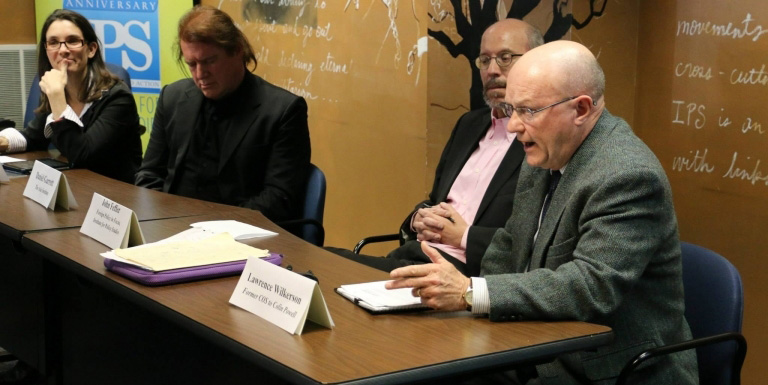
북한전문가이며 저자인 존 페퍼 (John Feffer), 미국무부 장관 전 보좌관 로렌스 윌커슨(Lawrence Wilkerson), 미국무부 전 참모총장(former Secretary of State Colin Powell’s chief of staff), 코네티컷대학교 역사학과 교수 알렉시스 더든(Alexis Dudden), 전외교관 겸 아시아인스티튜트 연구원(Daniel Garrett)들이 모여서 이 주제를 토론했습니다.

 워싱턴에서 열린 아시아인스티튜트 세미나에서 Alexis Dudden, Daniel Garrett, John Feffer, Lawrence Wilkerson의 모습
워싱턴에서 열린 아시아인스티튜트 세미나에서 Alexis Dudden, Daniel Garrett, John Feffer, Lawrence Wilkerson의 모습


이 세미나는 건설적이며 집중적인 방식으로 미국과 동아시아의 긴밀한 관계를 증진시켜나가기 위한 아시아 인스티튜트의 노력에 바탕을 두고 있습니다. 아시아 전환(Pivot to Asia)은 미국 경제, 정치, 안보 문제에 있어 필수적입니다.

이 지역 재균형은 항공모함 순찰이나 미사일 방어 기술 수출의 결과로 일어나는 것이 아닙니다. 전문가를 비롯한 다양한 분야의 사람들이 미국과 동아시아를 잇는 긴밀한 인적 네트워크를 구축하는 것이야말로 가장 의미 있는 효과를 가져올 것입니다.

동아시아는 유럽과 중동에 비해 너무도 오랫동안 미국의 관심에서 소외되어 왔습니다. 미국인들에게 아시아는 그들이 소비하는 제품들이 만들어지는 곳 정도로 여겨질 뿐이고, 동아시아 언어를 유창하게 구사하는 것이나 아시아 미디어에는 별다른 관심이 없습니다.

그래서 미국과 아시아의 관계는 제한적입니다.

미국은 동아시아의 정부, 대학, 비정부 기구의 수많은 컨퍼런스와 회의, 협업 프로젝트에 크게 관여하지 않습니다. 고위급 관료가 무역 협정 논의를 위해 가끔씩 방문하지만, 미국의 고등학생 축구부나 체스 챔피언이 도쿄나 베이징을 찾는 일은 드뭅니다.

동아시아와의 일상적인 관계나 과학에서 지방 정부 교류에 이르기까지 다양한 분야의 협력이 부재한 상황은 전문가가 보기에 매우 안타깝습니다.

아시아 전환은 이전의 미국과 아시아의 관계와는 근본적으로 다릅니다. 오늘날 미국은 70년대 아시아 재단 활동처럼 해외개발과 자금, 노하우를 동아시아에 일방적으로 베풀 필요가 없습니다.

미국은 동아시아 국가를 동등한 파트너로 인식하고, 심지어 몇몇 분야에서는 이들 국가가 미국을 앞선다는 것을 주지해야 합니다.

미국은 동아시아 국가들과 많은 것을 주고받을 수 있으며, 단기적으로는 정치적인 긴장에 직면할지라도 항상 장기적인 관계를 염두에 두어야 합니다.

장기적인 관계를 만들기 위해 미국은 지난 50년간의 유럽과 유지해온 관계처럼 동아시아 국가들과 동등한 파트너가 되어야 합니다.

어떤 사람들은 100년을 내다보는 장기 계획의 실효성을 의심합니다. 지난 20년간 미국의 미래를 구상함에 있어 단기적인 생각이 지배적이었습니다. 장기적인 계획을 불신하는 접근법은 비단 외교 정책에만 국한된 것이 아닙니다.

사고의 전환

미국 문화 전반에 퍼져있는 이 불신은 소비자의 태도로 국제 관계를 바라보도록 종용합니다. 다른 나라와의 관계에서 개인의 인지도를 높여 어떻게 이득을 얻을 것인지에 대한 고려가 중시되는 것입니다.

기후변화처럼 30~50년에 걸쳐 서서히 일어나는 대규모 안보 위협을 감안할 때, 지금은 사고의 전환이 절실합니다. 데이빗 몽고메리가 자신의 저서 『흙』(Dirt)에서 이야기했듯, 해마다 1퍼센트의 표토가 유실되고 있습니다.

이는 별로 크지 않은 수치 같지만, 그 속도대로라면 50년 후엔 표토의 절반이 유실될 것입니다. 인간 생존에서 表土가 갖는 중요성, 표토가 복원되는 데 100년의 시간이 걸리는 것을 고려한다면, 이는 북핵 문제보다 더 심각한 문제일 것입니다.

그러나 이러한 위기는 단기적인 사고에서는 간과되기에 십상입니다.

우리의 상상력을 사로잡는 수많은 신기술이 순식간에 기적과도 같은 일을 만들어 낼 수 있는 오늘날, 미사일 방어 프로그램으로는 막기 어려운 장기적인 위협이 서서히 다가오고 있다는 것은 비극이 아닐 수 없습니다.

그러한 위협은 우리 눈에 잘 보이지 않습니다. 식물들은 정지해 있는 것처럼 보이지만, 이는 느린 움직임을 포착하지 못하는 우리의 눈이 만들어내는 착각입니다. 자연환경 속에서 속도가 느린 변화에 무감각한 것은 치명적입니다.

제가 알기에 미국의 싱크탱크처럼 100년 단위로 안보와 국제 사회 참여에 대한 논의를 하는 기관이 별로 없습니다. 이런 점에서 장기적인 안보에 대한 논의는 다른 국가들의 관점을 확장시키는 데 도움을 줄 것입니다.

7대손 원칙

장기적인 안보를 생각함에 있어 ‘7대손 원칙’이라 불리는 인디언들의 전통을 참고할 필요가 있습니다. 즉, 우리는 우리의 결정이 7대손, 즉 먼 후세에게 어떤 영향을 미칠지 고려해야 합니다.

2014년 미국토목학회는 미국의 사회 기반 시설 품질에 D+를 주었습니다. 하지만 여기에 ‘7대손 원칙’을 적용해보면, F를 받았어야 하는 건지도 모릅니다.

아시아에서 미국의 역할을 생각할 때, 저는 어릴 적 아버지가 들려주신 말씀을 떠올립니다. 아버지는 일 년 이상 같은 일을 하지 말라고 말씀하셨습니다.

이는 전직의 말씀 아니고 한 조직에서 계속 같은 직위에 머물지라도, 지속적으로 혁신하고 자신의 업무 방식을 변화시키며, 새로운 현안과 상황에 적응하라는 의미였습니다.

미국도 끊임없이 한국 및 일본과 공조하며, 동아시아 기후변화 위협에 대한 포괄적이며 장기적인 전략을 수립해야 합니다.

동북중국 사막화는 동아시아 생태계를 파괴하고 있습니다. 미세먼지에 인한 공해는 위협적인 수준에 다다랐으며, 경제 구조의 재조정까지 요할 정도입니다. 해양사막화도 심각합니다. 진정한 행동이 촉구되는 때입니다.

그리고 미국은 한중일 그리고 다른 아시아 국가들과 공조하여 후쿠시마 원전 사태에 대처하기 위한 백년대계를 세워야 합니다. 아시아인스티튜트도 이 문제에 적극적입니다. 이는 기자회견이나 정치적 쇼로는 해결할 수 없습니다.

많은 사람이 오랜 기간에 걸쳐 구체적이고 집중적인 프로젝트 속에서 협력해야 합니다.

그러나 동아시아의 압도적인 안보 위협을 목도하며, 미국의 많은 사람들은 실제적인 것보다 새로운 위협에 더 신경을 씁니다. 그들은 새로운 냉전을 상정하면서, 미 국방부의 기존 구조를 정당화합니다.

오늘날의 현실적인 위협에 맞춰 제도와 이론을 개선하기 위한 사고의 재조정이나 구조 개편에는 관심이 없습니다. 냉전구도는 국내 경제와 사회는 물론 국가 안보에 대한 사고를 크게 왜곡시켰습니다.

우리는 30~50년의 시간을 두고 동아시아 기후변화에 대처할 수 있는 계획을 세워야 합니다. 그러한 장기 환경 프로젝트는 경제에 새로운 안정을 가져다줄 것이며, 장기적인 인적 관계를 강화할 것입니다. 이는 궁극적으로 국제 관계 안정화에도 기여할 것입니다.

미국은 동아시아 국가들과 공조하여, 이 분야에 대처하기 위한 관리 모델로서 아시아 사이버스페이스 행정에 대한 근본적인 합의를 이끌어낼 수 있을 것입니다. 정보 보전과 인터넷 중립성의 확보를 통해, 미국은 동아시아와 협력적인 관계를 맺어야 합니다.

마지막으로 미국은 한중일 그리고 다른 국가와 공조하여 통일 한반도의 미래를 함께 구축해나가야 합니다. 이는 사회, 경제의 기존 구분을 뛰어넘는 새로운 제도와 문화를 만드는 희망이 될 것입니다.

한반도 평화 구축에 미국이 기여할 수 있는 부분은 많습니다. 이는 6자 회담 참여와 같은 외교 분야에만 국한되지 않습니다. 생태 운동가, 도시 계획자, 고교 교사, 비정부 기구 활동가 등 다양한 미국인들이 동아시아와 한반도 미래에 기여할 수 있습니다.

이 세미나는 동아시아에서 미국의 역할을 고민하는 도전적인 토론의 장이 될 것입니다. 많은 사람들의 관점과 제언이 새로운 미래로 향하는 길을 만들어내기를 희망합니다.


링크 
Read more

“Looking at Reunification through a Range Finder” (Business Korea)

“Looking at Reunification through a Range Finder”


Business Korea

April 17, 2014


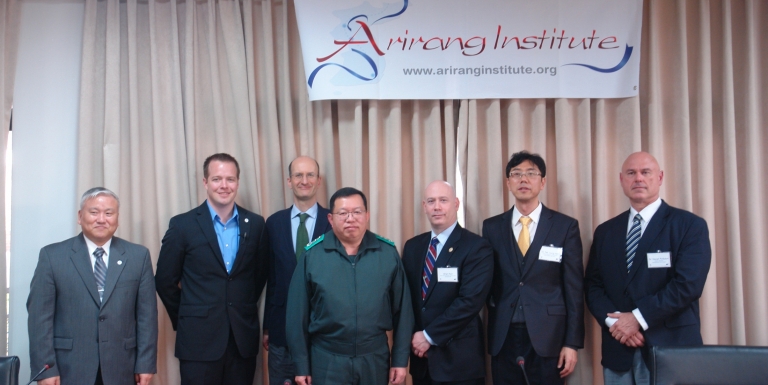
In the recent back and forth between pundits over how to get the Six Party Talks back on track and over the pros and cons of President Park Geun-hye’s recent speech in Dresden, the problem of developing a long-term vision for the security of a unified Korea that involves the military has been overlooked. Hoping to address this critical point, The Arirang Institute and the Asia Institute held a seminar on April 9 at the University of North Korean Studies, bringing together leading experts, including current military commanders, for an honest discussion of the larger implications of reunification for the region.

Daniel Pinkston, renowned North Korea expert and current deputy project director for Northeast Asia at the International Crisis Group, opened the discussion with the topic of conditions for integrating North Korea into the larger regional security architecture. Pinkston stressed that the biggest barrier is simply the uncooperative behavior of North Koreans. He suggested that there is an unfortunate tendency for Pyongyang officials to project their own paranoia on the rest of the world, thereby blocking new avenues for dialog. Pinkston suggested that there is tremendous potential for cooperative approaches to security that would bring North Korea back into the region in a serious manner, but stressed that deterrence will still be necessary as long as the North continues is provocations.

Tak Sung-han, the head of North Korean research at the Korea Institute for Defense Analyses, drew attention to the misunderstanding of the North Korean nuclear weapons programs found among analysts outside of Korea. He described how the current program for economic growth in Pyongyang, the “Byungjin” policy, combines the development of nuclear weapons and economic advancement as part of one program. North Koreans have been told by their government, Tak explained, that such weapons can be developed without any additional burdens to the economy. Therefore, unlike pundits in the international community who think North Korea must make a choice between either the economy or the military, many Pyongyang bureaucrats assume that the two must advance together. “Nuclear weapons,” Dr. Tak explained, “are not just a means to get some foreign currency, but a goal that is part of a comprehensive developmental strategy.”

Dr. Emanuel Pastreich, director of the Asia Institute, suggested that the primary problem is that we have become so accustomed to North Korea as the central issue in security for the region that we are blind to profound shifts such as the development of drones or the encroachment of deserts and other forms of climate change that are transforming the equation. Pastreich noted that because North Korea “serves as the bad boy and the explicit threat, Pyongyang has become the keystone in an imbricated security architecture that assures stability in Northeast Asia. To start hacking away at the foundations of such architecture, even if the intentions are good, is perceived as risky business.”

Michael Lammbrau, Seoul Bureau Representative of the Arirang Institute, spoke about the power of social networks and how it is not enough to merely connect with each other online, through Facebook and Twitter, but rather that individuals and groups must actually connect in person in order to build trust, understanding, and a sense of shared sacrifice between diverse groups of individuals on controversial topics.

Left to right: Rev. Joseph Park; Michael Lammbrau, Arirang Institute; Emanuel Pastreich, Asia Institute; General Chun In-Bum, ROK Army; Bryan Port, USFK; Tak Sung-Han, Korea Institute for Defense Analyses; Daniel Pinkston, International Crisis Group. - See more at: http://www.businesskorea.co.kr/article/4141/military-assessment-looking-reunification-through-range-finder
Left to right: Rev. Joseph Park; Michael Lammbrau, Arirang Institute; Emanuel Pastreich, Asia Institute; General Chun In-Bum, ROK Army; Bryan Port, USFK; Tak Sung-Han, Korea Institute for Defense Analyses; Daniel Pinkston, International Crisis Group.

Read more

“The Problem with Islands” (perspectives on the Senkaku Problem)

“The Problem with Islands”

Emanuel Pastreich
The Asia Institute

April 6, 2014

Several Chinese friends have asked me write about the issue of islands, specifically the Diaoyutai Islands that have come to completely dominate the discussions of Chinese if one asks about Japan. They asked me to write about the Diaoyutai Islands because they felt that I can be objective. In a sense I am objective as a speaker, but perhaps I am not objective in the sense that they imagine.
As an American, I can say a few words about islands. Let us talk about the Hawaii Islands that the United States made a territory in 1893. They were made a territory, and eventually a state, after an illegal coup staged to overthrow the independent government of Hawaii under Queen Liliʻuokalani. More importantly, we know that the land occupied by the United States today, almost all of it possessed by people who came from Europe, once belonged to native people, the Navaho, the Cherokee, the Sioux and many other tribes whose names have been forgotten. Their land was taken away from them in the most unethical manner. It was taken by theft, through broken treaties, and in many cases through wanton murder and thievery.
And today, where do we stand? Many Americans have forgotten that history. And Chinese are not all that interested either in how the United States was built. Such cruelty is not new in human history, and expansionism is found in many so-called “advanced countries.” But I doubt that such behavior is something uniquely American, or Japanese. It is part of the cruelty of human nature and is manifested in the countries that, for domestic reasons choose military and economic expansion. Without such expansion, Europe and the United States could not have become so prosperous, nor could Japan.

Read more

“America’s Homegrown Terror” (Foreign Policy in Focus April 7, 2014)

Foreign Policy in Focus

April 7, 2014

“America’s Homegrown Terror”


Emanuel Pastreich & John Feffer


The U.S. security complex is up in arms about cyberhackers and foreign terrorists targeting America’s vulnerable infrastructure. Think tank reports have highlighted the chinks in homeland security represented by unsecured ports, dams, and power plants. We’ve been bombarded by stories about outdated software that is subject to hacking and the vulnerability of our communities to bioterrorism. Reports such as the Heritage Foundation’s “Microbes and Mass Casualties: Defending America Against Bioterrorism” describe a United States that could be brought to its knees by its adversaries unless significant investments are made in “hardening” these targets.

But the greatest dangers for the United States do not lurk in terrorist cells in the mountains surrounding Kandahar that are planning on assaults on American targets. Rather, our vulnerabilities are homegrown. The United States plays host to thousands of nuclear weapons, toxic chemical dumps, radioactive waste storage facilities, complex pipelines and refineries, offshore oil rigs, and many other potentially dangerous facilities that require constant maintenance and highly trained and motivated experts to keep them running safely.

The United States currently lacks safety protocols and effective inspection regimes for the dangerous materials it has amassed over the last 60 years. We don’t have enough inspectors and regulators to engage in the work of assessing the safety and security of ports, bridges, pipelines, power plants, and railways. The rapid decline in the financial, educational, and institutional infrastructure of the United States represents the greatest threat to the safety of Americans today.

Read more

“Facebook and the Future of Global Governance” Truthout

Truthout

April 3, 2014

“Facebook and the Future of Global Governance”


Emanuel Pastreich


facebook-01-700x392


Facebook has become a critical platform for international exchange that allows people around the world to seek out peers with similar interests and to begin serious exchanges with them about how to create a better world. Although Facebook is a for-profit organization that treats its users as potential advertisers and uses personal information gathered from postings as a private commodity for sale to third parties, nevertheless Facebook is still the best means to reach out to a broad audience and to develop a global audience.

Facebook was not intended for serious intellectual and political exchange. At present, you cannot easily seek out other people with common interests (or by region) using a search on Facebook and you cannot systematically store the materials that you send or receive through Facebook for easy reference. Information posted is designed to essentially disappear within a few days. In addition, there is no way for third parties to develop original apps to run on Facebook that would allow users to expand its functionality or customize their pages. There are many ways that those actually using Facebook can carry out the innovations necessary to make it a meaningful means of sharing information. 

Read more