“중국인 없는 한국, 돌파구는 어디에?” (아시아투데이 ATOO TV)
아시아투데이
ATOO TV
“중국인 없는 한국, 돌파구는 어디에?”
2017년 3월 19일
아시아투데이 김유민 PD•김은영 기자 = 고고도미사일방어체계(THAAD•사드) 발사대 2기가 6일 국내에 반입되면서 한국이 사드 배치에 속도를 내고 있는 가운데, 이에 대한 중국의 경제 보복 논란이 최근 심화되고 있다.
이와 관련, 아시아투데이 상임고문인 임마누엘 페스트라이쉬 경희대 교수는 6일 한•중 관계 전문가인 썬트랜스글로브의 김해선 대표와 만나 중국 정부의 보복성 경제 조치의 실태 및 대책을 논의했다. 김 대표는 한중친선협회 이사로 다년간 중국에 진출하려는 기업들의 컨설팅을 해왔다.
임마누엘 페스트라이쉬:
한국 정부의 사드 배치 발표 이후 중국 당국은 다양한 ‘한한령(限韓令)’을 내리고 있다. 오늘 이에 대해 구체적으로 논의해보려고 한다.
김해선:
한국이 지난해 7월 사드 배치를 발표하면서 바로 우리나라 국민들의 상용 여권 비자 발급이 까다로워졌다. 중국 정부는 공식적으로는 그렇게 한 적이 없다고 부인하고 있지만 실제로 그렇다. 또 중국 정부가 지정한 전기차배터리 공식업체에서 중국에 공장을 둔 삼성•LG가 제외됐다. 그리고 중국 여행국은 한국행 전세기도 갑자기 취소했다. 이달 들어서는 중국의 단체 관광객들이 한국 여행 패키지를 선택하는 것조차 제한하는 등의 조치들을 취하고 있다.
임마누엘 페스트라이쉬:
어떤 의미에서는 중국과의 갈등을 신속히 해결해야 할 필요도 있지만, 동시에 그만큼 한국이 중국에 의존하고 있다는 것도 알게 돼서 장기적으로 그 부분도 바뀔 필요가 있다고 느낀다.
김해선:
중국 정부가 한국에 대해 불리한 정책을 세우고는 있지만, 만일 한국도 중국에 대해 경제적 제재를 가한다면 중국도 결코 유리하기만 한 입장은 아니다. 특히 반도체•LCD디스플레이 등은 중국이 한국에 수입을 많은 부분 의존하고 있는데 그런 제품들을 수입하지 못하게 되면 완제품을 생산해서 다시 외국으로 수출하는 데 문제가 생길 수 있다.
임마누엘 페스트라이쉬:
그런 경우 그 부품을 한국 말고 일본에 의뢰할 수도 있나?
김해선:
다른 지역도 있을 수 있지만 기존의 공급 라인을 바꾼다는 게 쉽지만은 않다. 그리고 한국의 부품이 질적으로 우수하면서 가격 경쟁력도 있기 때문에 갑자기 생산 라인을 바꾼다는 게 중국 입장에서는 유리하지 않을 것이라고 본다. 교수님은 한국 정부가 이러한 시기에 어떤 입장을 취하면 좋겠다고 생각하나.
임마누엘 페스트라이쉬:
문제를 쉽게 마법처럼 해결할 순 없다고 본다. 다만 한국이 반성할 계기도 된다고 생각한다. 그만큼 중국 시장에 의존하고 있고, 중국 기업과 확실히 계약 등을 맺지 않은 경우도 있다. 인맥뿐만 아니라 체계적으로 한•중 관계를 관리할 필요가 있다. 멀리 보는 장기적인 전략이 있어야 한다. 앞으로 5년, 10년, 20년을 어떻게 개발해갈 것인지 한국 쪽에서 확실한 비전이 있다면 이런 단기적인 타격으로 인한 후유증이 없을 것 같다.
김해선:
그동안 한류스타를 비롯해 ‘태양의 후예’ ‘별에서 온 그대’ 등 드라마들이 중국에서 많은 인기를 얻으면서 한국은 문화 사업을 통해 많은 이익을 얻었다. 그런데 지난해 말 오페라가수 조수미의 중국 콘서트 일정이 취소되는 등 갑작스럽게 문화적 제재를 받음으로써 이젠 중국에 대해 그렇게 쉽게만 접근해선 안되겠다는 일종의 경계령을 받았다고 할 수 있다. 최근 내가 만나는 지인들은 ‘이제는 중국에 대해 좀더 체계적으로 공부를 해야겠다’ ‘정책을 세워도 장기적으로 세워야겠다’고 말한다. 중국은 단계별로 이런 조치를 취하고 있지 않나. 우리보다 한발 더 앞서서 계획을 세워서 ‘언제까지 무엇을 하겠다’는 계획 하에 주도적으로 움직였다고 볼 수 있다.
임마누엘 페스트라이쉬:
중국 측에서는 한한령을 ‘1년 몇개월하겠다’는 식으로 계획하고 있고 장기적으로 할 생각은 없을 수도 있는데, 한국 측에서는 장기적으로 생각하지 않고 오늘 아니면 내일 뭐할지 고민하고 있는 것 같다. 그런 부분이 잘 안 맞는 듯하다.
김해선:
우리가 너무 급하게 준비가 안된 상태에서 이런 일들을 겪다 보니 그런 측면이 있다. 또 한국 정부도 사드에 대해 계속해서 반복적으로 발표를 하고 있는데 이런 건 중국 정부에 자극이 될 수 있다.
임마누엘 페스트라이쉬:
또 한가지 이야기하고 싶은 건 관광이다. 중국인 관광객은 한국 경제에 여러모로 도움이 되지만 장기적으로 봤을 때 중국인 관광 가이드쪽으로만 치중하는 건 바람직하지 않다고 본다. 요즘에는 제3 국가 사람들이 서울에 왔을 때 무시당하는 느낌도 든다고 한다. 거의 중국인 관광객만 생각하고 있어서다. 이번 일을 계기로 관광이 무엇인지, 또 앞으로 어떻게 좀더 개발하고 체계적으로 만들어갈지 고민하고, 중국인들도 당연히 중요하지만 무조건 중국인 위주가 아닌 다양한 관광을 만들면 좋겠다.
임마누엘 페스트라이쉬:
지난해 한국을 방문한 외국인 관광객 1600만 명 중 절반인 800만 명 정도가 중국인이었다. 명동에는 한집 건너 한집이 화장품 가게 아닌가. 잘 되면 유지될 수 있겠지만 이렇게 한한령으로 중국 관광객들이 더 이상 안 들어오게 되면 그동안 투자해놓은 가게들은 어떻게 될까. 지금 면세점만 하더라도 약 4조 원의 손실을 볼 수 있다고 한다. 한국에서 중국인 관광객들의 소비 규모가 10조 원에 이르기 때문이다. 관광•문화•경제 등 다양한 면에서 한쪽에 너무 치우치거나 의존하지 않도록 다변화해야 한다.
임마누엘 페스트라이쉬:
지금 중국인 관광객들의 코스를 보면 면세점•백화점에 들렀다가, 카지노에서 술 마시고 그 다음에는 인삼 등을 사서 돌아가는 식이다. 이런 것은 한국 경제에 도움이 되는 데 한계가 있다. 면세점에서 파는 물건들도 한국 제품이 아니라 많은 경우 미국•유럽 제품이다. 또 카지노 자체의 경제 효과도 한계가 크다. 원스탑으로 면세점뿐만 아니라 다양하게 관광을 준비해야 할 필요가 있을 것 같다.
김해선:
문화적 교류와 관련해서도 꼭 우리만 가서 돈을 벌게 아니라 팝스타들을 비롯해 클래식•전통음악 쪽으로도 다양한 분야의 문화인들을 초청해서 그들에게서 배우고, 또 그들도 이익을 낼 수 있게끔 문화 사업을 다양화한다면 중국 정부가 이를 막진 않을 것이라고 본다.
임마누엘 페스트라이쉬:
그렇다면 전반적으로 어떻게 해야 당면한 문제를 풀 수 있나.
김해선:
한국은 사드 배치와 관련해 공식적인 채널을 통해 반복적으로 이야기하고 있는데, 비공식적인 외교도 꼭 필요하다고 본다. 예를 들어 중국 알리바바의 마윈 회장이 미국으로 가서 ‘100만 개 일자리 창출하겠다’고 말한 건 민간의, 비공식적 외교다. 우리도 한•중관계에 있어 정치적•공식적 채널을 이용할 뿐만 아니라 비공식적인 민간 외교가 필요하다. 또 중국 전문가들이 비공식적으로 중국의 고위 관계자들에게 사드 배치와 관련한 한국의 입장을 전달해 부드럽게 문제를 해결할 수 있다고 본다. 교수님은 어떻게 생각하나.
임마누엘 페스트라이쉬:
한국은 특히 하나의 중국 정책과 관련해 미국과 별도로 발언할 수 있었지만 침묵을 지켰다. 만일 그때 한국이 트럼프와 다른 입장을 확실히 표했다면 사드 문제 자체는 주목받지 않았을 수도 있는데, 그렇게 하지 않았기 때문에 많은 중국 정치인들이 미국과 한국의 입장이 같다고 보는 오해가 있었다고 생각한다. 한국은 부분적으로 미국과 일치하는 부분도 있겠지만 독자적인 입장을 가져야 한다. 이스라엘•프랑스•독일 등은 미국과 긴밀하면서도 때론 전혀 다른 자기 입장을 내기도 한다. 필리핀의 두테르테 대통령도 완전히 미국에 반대했다가도 여전히 미국과 교류•협력하고 있지 않나.
김해선:
그렇다. 또 어떻게 보면 지금 우리의 약점은 박근혜 대통령 탄핵 문제 등으로 컨트롤타워가 부재한 것 아닌가. 그런 문제들 때문에 중국 정부가 더 강력하게 나오는 경향도 있다. 그럴수록 사드 문제에 대해서는 과도기가 지나고 난 뒤 국민적인 단합된 의견으로 부드럽게 넘어갈 수 있다고 본다. 감정을 다치지 않으면서도 다양한 메시지를 전달할 수 있다고 생각한다.
임마누엘 페스트라이쉬:
한국의 대학교나 싱크탱크, 정부기관 등은 지난 한두 달 사이 충분히 한•중•미 전문가들과 별도로 모여 토론하는 세미나 등도 할 수 있었다. 그런데 한국에서 이를 다양하게 논의하는 자리가 없었다고 생각한다. 중국이나 미국에서 사람들을 불러와 이 문제를 객관적으로 토론하는 기회가 많아졌으면 좋겠다. 또 언론들도 문제를 너무 단순화하지 않았으면 좋겠다.
김해선:
정치는 정치인들이 풀더라도 경제는 협력 관계를 지속하는 게 중요하다. 많은 정치인들이 경제적 타격을 고려해 경제인들에게 불이익이 가지 않도록 중국과 화합할 수 있는 부드러운 정책을 펼쳤으면 하는 바람이다.
Short note from Noam Chomsky
March 12, 2017
Emanuel Pastreich:
Many youth feel trapped. They feel that they live in a system that puts them at a disadvantage and does little to help them. They feel misunderstood and they feel that there is an absolute gap between themselves and those who seem to be deciding how things are done, how society is run. Why do they feel that way?
Noam Chomsky:
Contemporary neoliberalism has created what some call a “precariat” – people living a precarious existence, on their own, cast in a hostile market system with little solidarity, mutual support, stability and security.
“The day after the removal” (JoongAng Daily March 15, 2017)
JoongAng Daily
“The day after the removal”
March 15, 2017
Emanuel Pastreich
The protests on the day after President Park’s impeachment took the most disturbing form. A large crowd gathered in Gwanghwamun Square to celebrate the unanimous decision for impeachment of the constitutional court. The protest resembled a carnival of celebration, but there were those who actively promoting other issues like the release of the black list, the removal of the Terminal High Altitude Area Defense (Thaad) antimissile system, the rejection of nuclear power and demands for more profound changes in Korean society. For them, impeachment is merely the first step in a more profound political transformation.
There was a line of police buses that blocked the boulevard. This time the police buses were not keeping protesters away from the Blue House, but rather separating the anti-Park protesters from a group of pro-Park protesters who gathered around city hall with their Korean flags (and some American flags) who were led on by rousing speeches in defense of President Park against what they perceive as a political vendetta by an irresponsible group who wish to lead the country astray.
The division of downtown Seoul into East and West reveals more profound fragmentation in Korean society, resulting in part from the growth of a superannuated society which produces a deep gulf in the basic assumptions about how the nation should be run. There are now unresolvable gaps in terms of what is assumed to be true concerning such incidents as the sinking of the Sewol Ferry, the actions of President Park and the imprisonment of the leftist politician Lee Seok-gi.
Cooperation in the Future of East Asian Security (April 12 TAI Seminar)

The Asia Institute
&
The Tomorrow
Present
Wed, April 12, 2017
5-6 PM
Cooperation in the Future of East Asian Security
How the United States can work together with Korea, Japan & China
Opening Remarks:
Rei-Kyung Lee
Chairman
The Tomorrow
Presentation:
Emanuel Pastreich
Director
The Asia Institute
Response:
Lee Jong-heon
Deputy Secretary General
Trilateral Cooperation Secretariat
Although the media is full of reports about increasing tensions in East Asia, the rapid development of technology and the impact of climate change is such that there is increasingly a need for global cooperation in security especially in the fields of non-traditional security. This seminar brings together a group of experts and world citizens to discuss how the United States and Korea can cooperate with China and Japan to respond to new security challenges such as cyber attacks, drones, organized crime, immigration challenges, spreading deserts, and other risks related to the onset of climate change. The seminar will also touch on the possible uses for an East Asian arms control treaty and other general agreements on emerging technologies.
Sookmyung Women’s University

Centennial Hall
608 CENTENNIAL HALL
“한국 국정원 개혁을 위한 10가지 원칙” 중앙일보 2017년 3월 15일
중앙일보
“한국 국정원 개혁을 위한 10가지 원칙”
2017년 3월 15일
임마누엘 페스트라이쉬
헌법재판소를 불법 사찰했다는 루머가 국가정보원을 다시 스포트라이트 속으로 밀어 넣었다.
이번에는 정보기관 개혁이 정쟁거리나 선정적인 기사거리가 아니라 국가안보 주제로 부상할 수 있다. 우리는 정보기관이 믿을 만하고 정확한 정보를 입법자들과 시민에게 제공하도록 만들 방안을 대승적으로 살펴야 한다. ‘가짜 뉴스’ 같은 왜곡된 정보가 판치는 인터넷 정글의 시대에 정책 안정성을 확보하고 선정주의적 매체에 대한 관리들의 의존도를 줄이려면 더더욱 정확하고 객관적인 정보 출처가 필요하다.
쉽지 않은 개혁을 위한 원칙이 몇 가지 있다. 첫째, 최고 인재들이 당장의 정치적인 이득보다는 실제 도전에 맞서야 한다. 미국은 9•11 테러 이후 막대한 자금을 정보 분야에 쏟아부어 획기적 발전을 거두는가 싶더니 이내 질적인 저하가 발생했다. 정보분석의 핵심인 ‘인간’이 등한시됐다. 정치권의 눈을 사로잡은 것은 수십억 달러 프로젝트에 포함된 컴퓨터와 인공위성이었다. 컴퓨터 기술력도 중요하지만 한국은 컴퓨터가 우리를 미혹하도록 방치하면 안 된다.
둘째, 경제적•기술적 변화가 우리나라를 어떻게 변용시키는지를 역사성 있는 통찰력으로 파악하는 분석가들이 필요하다. 데이터 분석으로 세계 추세에 대한 통찰을 제시할 수 있는 사람이 많이 필요하다. 그들은 탄탄한 인문학•문학•역사•철학 지식으로 무장해야 한다. 쓸모 있는 정보는 의미 있는 정보다. 숨 가쁜 기술 발전이 사회의 본질을 바꾸고 있다. 정적(靜的) 모델을 탈피하고 미래학 관점을 더 많이 도입해야 한다.
中央日报
“韩国情院改革十大原则”
2017年 3.月 15日
贝一明
对宪法法院进行窃听的传言再次将韩国的国家情报院推上了风口浪尖。
这一次,情报机构改革可能会成为一项国家安保议题,而不是政争或制造轰动新闻报道的素材。我们要从大局出发来考察相关方案,以使情报机构能够获得信任、能够向立法者及公众提供准确的情报。在这样一个“假新闻”等被歪曲的信息大行其道的互联网丛林时代,要想确保政策的稳健性、减少官员们对炒作式媒体的依赖程度,就更加需要一个准确且客观的情报来源。
在推行艰难的改革方面,有这么几条原则。第一,最顶级人才当前要去克服的是现实挑战,而非眼前的政治利害冲突。美国在9·11恐袭之后向情报部门投入了巨资,暂时获得重大进展,结果却未取得良好成效。作为情报分析的核心——“人才”受到了忽视,而受到政界重视的是用于几十亿美元项目中的电脑和人造卫星。电脑技术固然重要,但韩国不能过于迷信电脑而误入歧途。
「韓国国家情報院改革のための10つの原則」 中央日報 2017年 3.月 15日”
中央日報
「韓国国家情報院改革のための10つの原則」
2017年 3.月 15日”
エマニュエル パストリッチ
憲法裁判所を不法査察したというデマが国家情報院を再びスポットライトの中心に追いやった。今回は情報機関の改革が政争のネタや扇情的な記事のネタではなく国家安保の主題に浮上しかねない。われわれは情報機関が信じるに値する正確な情報を立法者と市民に提供するよう作った方案を大乗的に点検しなくてはならない。「偽ニュース」のような、わい曲された情報が横行しているインターネットジャングルの時代に、政策安定性を確保して扇情主義的なメディアに対する役人たちの依存度を減らすには、もっと正確で客観的な情報ソースが必要だ。
容易ではない改革のための原則がいくつかある。1つ目、最高の人材が当面の政治的利益よりも実際の挑戦に立ち向かうべきだ。米国は、9・11テロ以降、莫大な資金を情報分野に注ぎ込んで画期的な発展を収めるかのように見えたが、間もなく質的な低下が発生した。情報分析の核心である「人間」が軽視された。政界の目を引きつけたのは数十億ドルのプロジェクトに含まれたコンピュータと人工衛星だった。コンピュータ技術力も重要だが、韓国はコンピュータが人間を惑わすがままにしておいてはいけない。
“Has the Conservative Party in South Korea Lost its Grip on Power?” Emanuel @ The Real News
The Real News
March 16, 2017
“Has the Conservative Party in South Korea Lost its Grip on Power?”
Jaisal Noor Interviews
Emanuel Pastreich
South Korea Conservatives
South Korea is continuing to feel the aftershocks of the impeachment and ouster of its conservative president, which followed months of protest after she was implicated in corruption. On Wednesday, South Korea’s prosecutor summoned former conservative President Park for questioning in the country’s far-reaching bribery scandal.
All this comes at a time when tensions are escalating between North and South Korea and the United States. South Korea, under pressure from the U.S., agreed to deploy the controversial THAAD missile defense system and is carrying out joint operations, which includes hundreds of thousands of troops with the United States. This prompted Chinese Foreign Minister Wang Ye to question, quote, “If the two sides — referring to the U.S. and North Korea — are really ready for a head-on collision.”
A snap election must be held in two months and the Liberal Party is highly favored. That said, it’s still unknown what other factors may play into the process.
INTER: Describe what the scene is right now, because on the one hand, you have domestic instability in South Korea, there’s going to be a new president elected within two months. At the same time, things are… some have described it as the worst situation between North Korea and the United States and South Korea in some time now. What does it feel like to be there? Describe the mood and the scene there.
EMANUEL PASTREICH: Well, I think, of course, the protests have died down and people are back to work. So, it is normal in that respect. However, these two aspects, both the increasing tensions with North Korea, and also combined with U.S. relations with China, which have of course become much worse under the Trump administration. And China has responded by limiting economic business interactions with South Korea, which has had a tremendous impact on the economy. You can see the economy, I think, is being seriously affected now. So, I think there’s a lot of anxiety and concern about what will happen.
There is a little bit of hope that a new president, and may be the end of the 10-year Conservative presidencies in a row, that this might bring some new opportunities. But I think over all, its overshadowed by a certain degree of angst and foreboding concerning the future particularly of the Korean Peninsula, but also that as the Trump administration is increasingly had to take some more bellicose view of China. And has downplayed, I think, the previous efforts to engage and encourage cooperation, that there are deep, deep worries.
INTER: And so, what party does this favor, this instability, favor? Because we’ve seen in many elections around the world instability leads to the rise of the right. And, of course, the right seems to be quite discredited now, although, you know, supporters of Park remain steadfast.
So, I want to ask you: what could the larger geopolitical implications be if there is a liberal or progressive candidate that wins the election coming up?
EMANUEL PASTREICH: Right. Well, Korea, I think, is somewhat different from the United… well, I wouldn’t say it’s different fundamentally, but that there hasn’t been the rise of a charismatic right wing crypto-populist candidate in Korea yet. We don’t see anyone like that. I think Korea as a whole has undergone a very serious issue of superannuated society. One of the most rapidly aging societies in the world, and that support for President Park now or former President Park is really limited, and primarily with people in their say, over 60, who remember how her father, President Pak Chong-hee, who was a very authoritarian and also charismatic political leader built Korea up, that there’s a certain nostalgia for that.
But I think the odds of a Conservative win — the parties, by the way, in Korea, change rapidly. It’s not like the United States, where we’ve had Republican and Democrats for the last 130 years. But rather… or more but rather, depending on the election, people will make out new names. But the politicians don’t change. The conservative side seems unlikely to win, but there is a scenario, because there are two large parties. There’s the People’s Party of Ahn Cheol-soo, and then there’s the Minjoo, or Democratic Party, and if both parties run, both field candidates, and they both do well, you have a three-way split, there is an opportunity or a possibility that the conservatives might be able to win a third term.
INTER: And so, you know, to be clear, what would the impact be? What would the result be if there is a hot conflict between North and South Korea? Because we’ve seen these rising tensions — the North Korean missile tests, which are happening. Now there are these joint operations that are happening between South Korea and the U.S. Hundreds of thousands of troops are taking part in that. So, if there is a hot conflict, even with this missile defense system they’re testing now, from what I’ve read it’s only about 50% effective.
So, just for our viewers to understand, what would that impact be?
EMANUEL PASTREICH: Well, I think people are more concerned about it now than they have been previously, in part because the Trump administration is both inexperienced and, unfortunately, unpredictable. Being unpredictable is a positive if you’re in pro-wrestling. But in international relations, and other fields, it’s much better to be predictable.
So, there is an increased risk. I think we don’t know, there have been incidents on the DMZ previously, right? With shootings or the use of artillery. And so, some small contingent incident is possible. But something larger, a bigger conflict, certainly cannot be ruled out. But actually, since we haven’t had one on an enormous scale since the Korean War, doesn’t mean it can’t happen, and there are forces that… I think what’s most worrisome is the United States used to have a much more stable policy.
But we’ve been invading a lot of countries, as you know, recently, so it’s sort of stable architecture of a divided North and South Korea, and a mutually economically engaged United States and China, and a relatively peaceful and not militarily ambitious Japan, that these sort of set factors for the last 50 years are all in play now. None of them are guaranteed as stable.
If there actually was a conflict — I’m not a fortune-teller, so I can’t tell you what would happen — but I think the danger that it would lead to some confrontation including China or that the United States’ response, like THAAD, for example, THAAD of course is not an active attack on North Korea or on China, but it’s very present. It’s perceived as a threatening decision by Beijing.
INTER: And, finally… I’m sorry to interrupt, but we just have a minute left. We wanted to ask you, it’s on a lot of people’s minds. Why impeachment removal of a conservative president in South Korea, but not the United States yet. Talk about the parallels and the differences.
EMANUEL PASTREICH: Well, it’s a fascinating question. And Korea has been relatively transparent, and the Constitutional Court that rendered the ruling, was all made up of appointees by the conservative government. So, I think there was a real responsiveness to the overwhelming anger and outrage among the population. And there were continuous, very well organized demonstrations, peaceful demonstrations. The United States, we hear a lot about impeachment, but the actual process, or the potential, you just don’t really see anything happening, at least that’s my impression.
So, however, the larger geopolitical implications of this shift, because Korea is both divided in North and South, but also conservative, progressive within the country, we still don’t know, and there are some worrisome aspects of this.
「判事の全員一致、米国ではありえず」パストリッチ NNA ASIA 共同通信
 NNA ASIA アジア経済ニュース
共同通信
2017/03/13
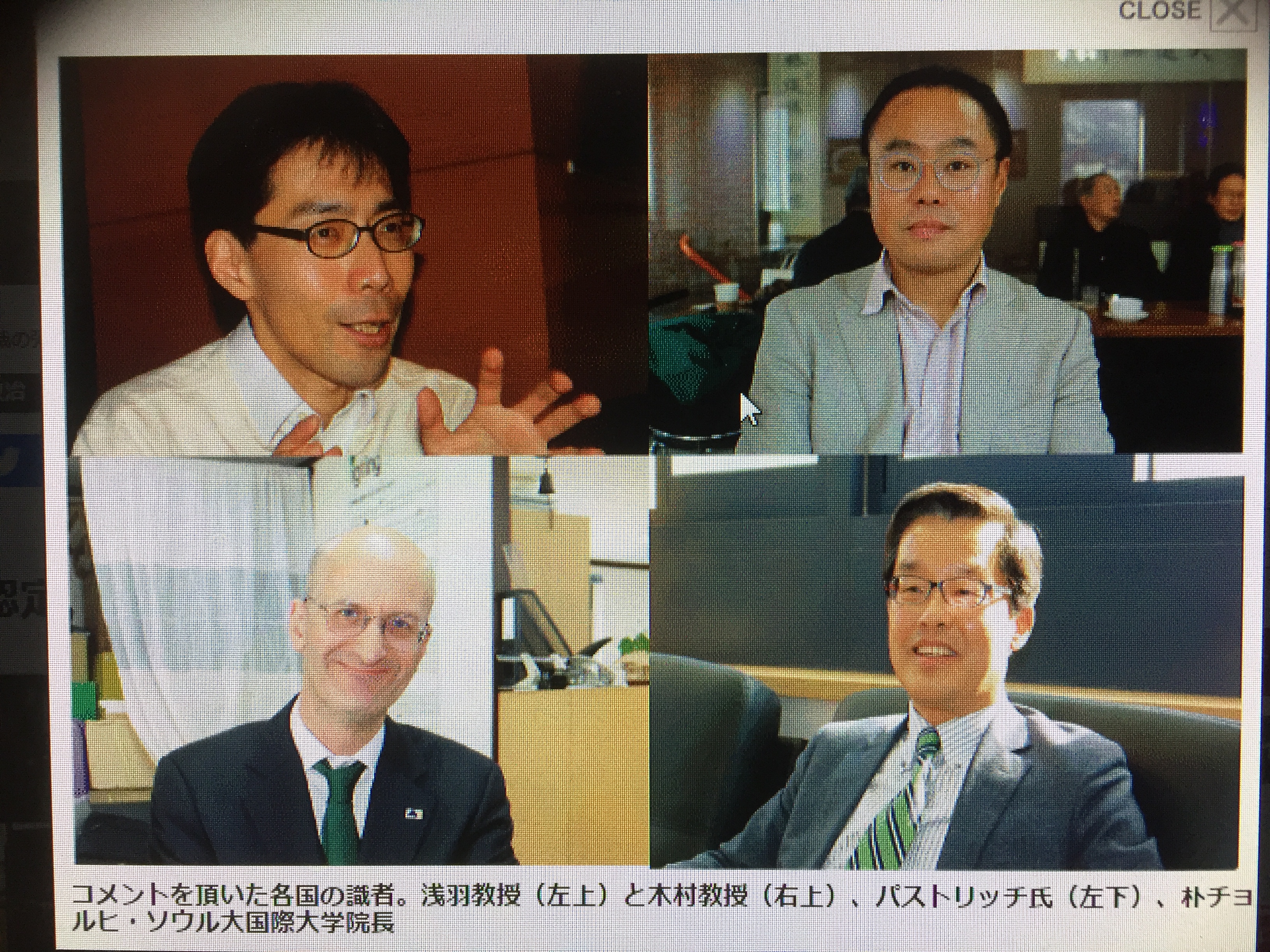
憲法裁の弾劾認定、識者はこう見る
■「判事の全員一致、米国ではありえず」
パストリッチ・慶熙大学副教授
日本文学専攻、アメリカで10年間教授をつとめた。民間シンクタンク、アジア・インスティテュート所長
大統領の弾劾が成立したことは米国人にとって驚きだっただろう。米国には弾劾された大統領がいない。ウオーターゲート事件で追い込まれたニクソン元大統領は弾劾前に辞任を選び、その後赦免された。朴氏にも国の混乱を回避する選択肢があったのではないか。
米国の場合、進歩と保守の基本的な思考方式はあまりにも違うので対話はまず不可能。米最高裁の判事が自らの理念や主義よりも民意を優先することはありえない。民意を反映しやすいのは韓国の司法制度の長所と言えるが、一方で、判事の判断基準は曖昧になりがちだ。
憲法裁判所の李貞美所長代行が決定文を読み上げる様子は、芝居を見ているような面白さがあった。決定文の最後になって弾劾認定ということが分かった。韓国人には感動を与える効果があったようだが、最初に結論を述べる米国スタイルと比べると違和感を覚えた。
また、朴氏の疑惑に関連する調査と裁判が長期化する場合は、共に民主党が大統領選挙に向けた政策論争を曖昧にするなど政治的に利用される恐れもある。今回の弾劾認定は韓国の誤った政治文化の改革につながらなければ意味がない。「大統領不在」の長期化による外交の停滞も心配だ。
■「安定政権が誕生すれば、日韓関係改善も」
木村幹・神戸大学教授
比較政治史
弾劾が認定されたことで保守派の崩壊は決定的となり、革新系「共に民主党」での党内選挙が実質的な大統領選挙となる可能性が高くなった。現状では文在寅氏が圧倒的に優勢だが、「文氏が大統領になると日韓関係が一層悪化する」とみるのは早計だ。日韓関係が良好だった時期を分析すると、いずれも大統領の支持率が高かった時期と重なる。保守か進歩(革新)かはあまり関係ない。実際、日韓関係が「過去最悪」と言われた2011~15年は保守政権だった。
文氏が圧倒的な支持を背景に安定的な政権を作ることができれば、日韓関係が改善に向かう可能性は十分ある。文氏は盧武鉉政権時代に青瓦台(大統領府)で秘書室長を務めたことのある人物で政権運営のノウハウを知っている。朴氏と前回の大統領選挙を戦ったことで「身体検査」も済んでおり、これ以上、スキャンダルが出るとは考えにくい。ある意味で、最も安定した政権を作れる条件を備えているといえる。懸念があるとすれば、北朝鮮に対する融和的な姿勢だ。開城工業団地の稼働を再開する可能性は高い。しかし今の朝鮮半島情勢を考えれば、それくらいしか打つ手がないともいえる。
ただし、国民の期待が大きい分、次期大統領が受けるプレッシャーはかなりのものとなるだろう。経済の低成長や格差の拡大など社会全体に閉塞感が漂っているが、次期大統領が打てる政策の幅は限定されており、期待が一気に失望に変わる恐れがある。憲法裁の今回の判断で、大統領弾劾に対するハードルが低くなったのも気がかりだ。
■「選挙サイクルが変わり、政治行動に変化」
浅羽祐樹・新潟県立大学大学院教授
韓国政治学
「ろうそくデモ」と「太極旗デモ」に韓国社会が分裂していた中で、憲法裁判官8人が全員一致で罷免を決定したことは、紛争の最終解決者として国論を統合する上で、意味が大きい。日本では「法よりも民意を優先する」として韓国に対して否定的なイメージを持ちやすいが、「弾劾」の制度趣旨を考えれば、民意をある程度反映するのはむしろ当然だ。89ページに及ぶ憲法裁の決定文を読んで、法理検討を丁寧に行い韓国の法制度が十分に機能したという印象をもった。
朴氏の罷免により、民主化後30年続いた選挙サイクルが変化する。5月に大統領選挙が実施され、次期大統領の任期は当選と同時に始まる。これまでの12月選出、2月就任という選挙時期にずれが生じることになる。韓国の政治家は選挙のタイミングによって影響を受けるため、4年ごとの総選挙や統一地方選挙、与野党内の統制力などにも大きく影響してくる。ゲームのルールが変わることで、政治家の戦略や行動パターンも当然変化してくる。さらに、次期政権では憲法改正が焦点になる。
5月の大統領選挙については、「共に民主党」の党内予備選が事実上の本選となるだろう。予備選は文在寅前代表と安熙正・忠清南道知事との争いとなるが、文前代表が当選する可能性が高い。ポートフォリオ(分散投資)は必要だが、チップの張り方にはその都度メリハリが必要だ。
文前代表が次期大統領になれば、日韓関係のさらなる冷え込みが懸念される。15年の慰安婦合意に関して、破棄とはいわないまでもプラスアルファの再交渉を求めてくる恐れがある。ただ、安保分野では北朝鮮の核問題やミサイル発射を念頭に、昨年11月に締結した日韓の軍事情報包括保護協定(GSOMIA)などで引き続き連携していくものとみられる。
■「極めて常識的かつ合理的な判断」
朴チョルヒ・ソウル大学国際大学院院長
国際政治学
憲法裁の判断は民意に沿った極めて常識的かつ合理的なものだった。
憲法上与えられた大統領の権限を尊重しながらも、弾劾訴追を巡る争点の一つ一つを法律に従って判断していったためだ。「自らの手で勝ち取った民主主義を守ることができた」と国民は胸をなでおろした。
弾劾の是非を巡り分裂した国民が一つになるのは簡単ではないが、60日後の大統領選挙に向かって徐々にまとまりを取り戻すだろう。弾劾に反対するデモも盛り上がったが、彼らは何があっても朴氏を守ろうとするグループであって、本当の意味で保守派とは呼べない。今後も憲法裁の判断に異議を唱えれば唱えるほど、孤立を深めることになるはずだ。
現状では文在寅氏が次期大統領になる可能性が高い。日韓関係は厳しくなるだろうが、すでに最悪の日韓関係を経験した後なので、十分に免疫はできている。ただ「文氏=反日」という考えは一度捨てた方がいい。盧武鉉元大統領は反米のイメージが強いが、政策だけで見ると後にも先にもないくらいの親米政権だった。米韓自由貿易協定(FTA)交渉を開始したのが好例だ。
また長嶺安政大使が一時帰国する原因となった少女像にはこだわりすぎない方がいいだろう。新たに少女像が釜山に設置されたのは遺憾だが、撤去を大使帰国の前提条件にすると、慰安婦問題の解決を日本との対話の前提条件とした朴氏の時のように日韓関係が再び膠着する恐れがある。