Some bus lines in Seoul now feature English, Chinese and Japanese in recognition of Seoul’s emergence as an international city. My kids take it for granted but for someone who has watched Korea for fifteen years, it is quite a striking change.
Some bus lines in Seoul now feature English, Chinese and Japanese in recognition of Seoul’s emergence as an international city. My kids take it for granted but for someone who has watched Korea for fifteen years, it is quite a striking change.
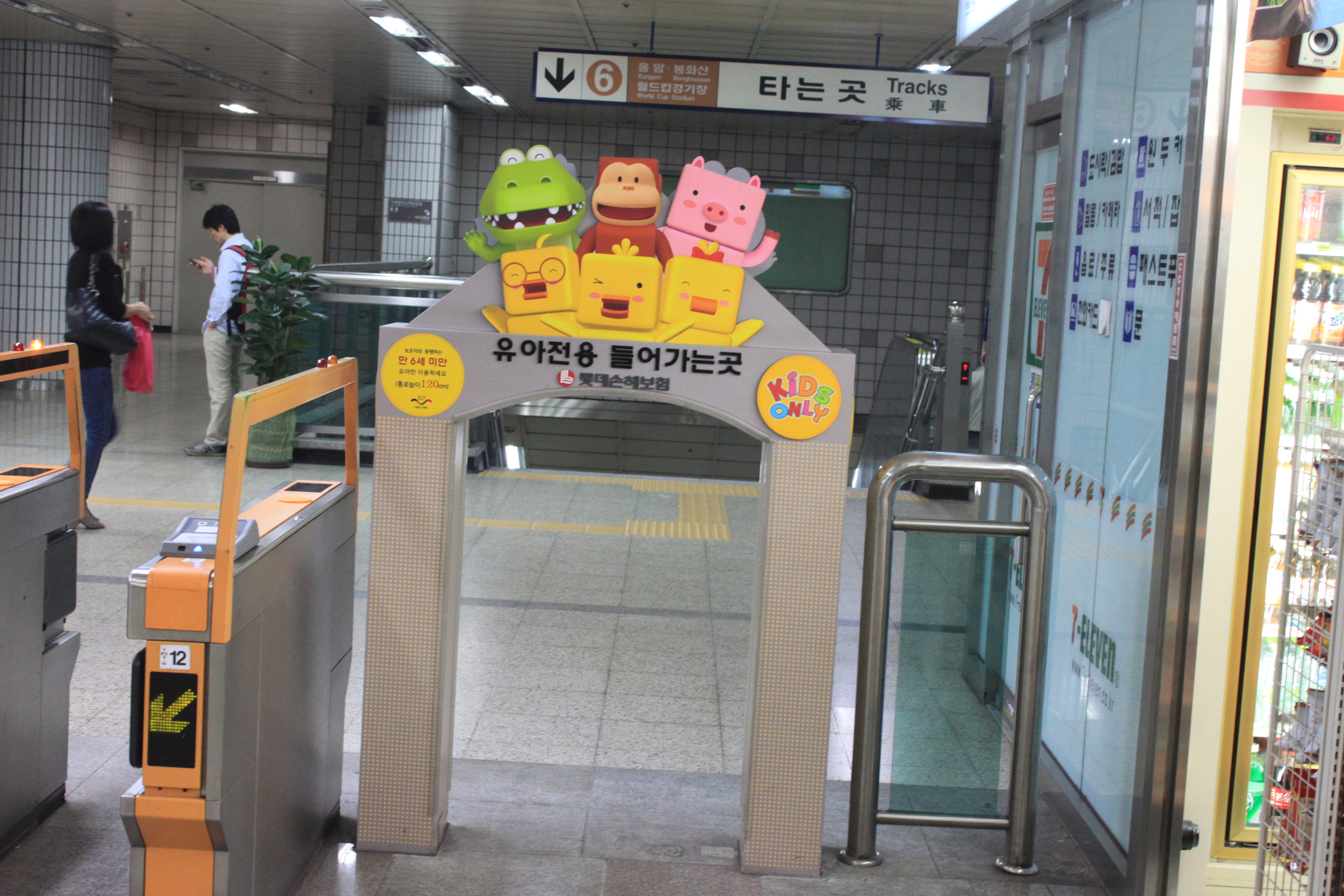
Yet another post about Korea’s amazing Seoul Metro. Of course I am most aware of Seoul Metro because I use it to travel every day, but I must say that Seoul Metro is one of the most creative efforts to make the daily commute of millions of people esthetically rich. The displays of art, the plants growing everywhere (including an amazing wall of green plants at Hanyang Station in the restrooms) and the music is most enjoyable. This special portal for children deserves special mention. In the rather cold modern city, some people are thinking about the commute from the perspective of children.
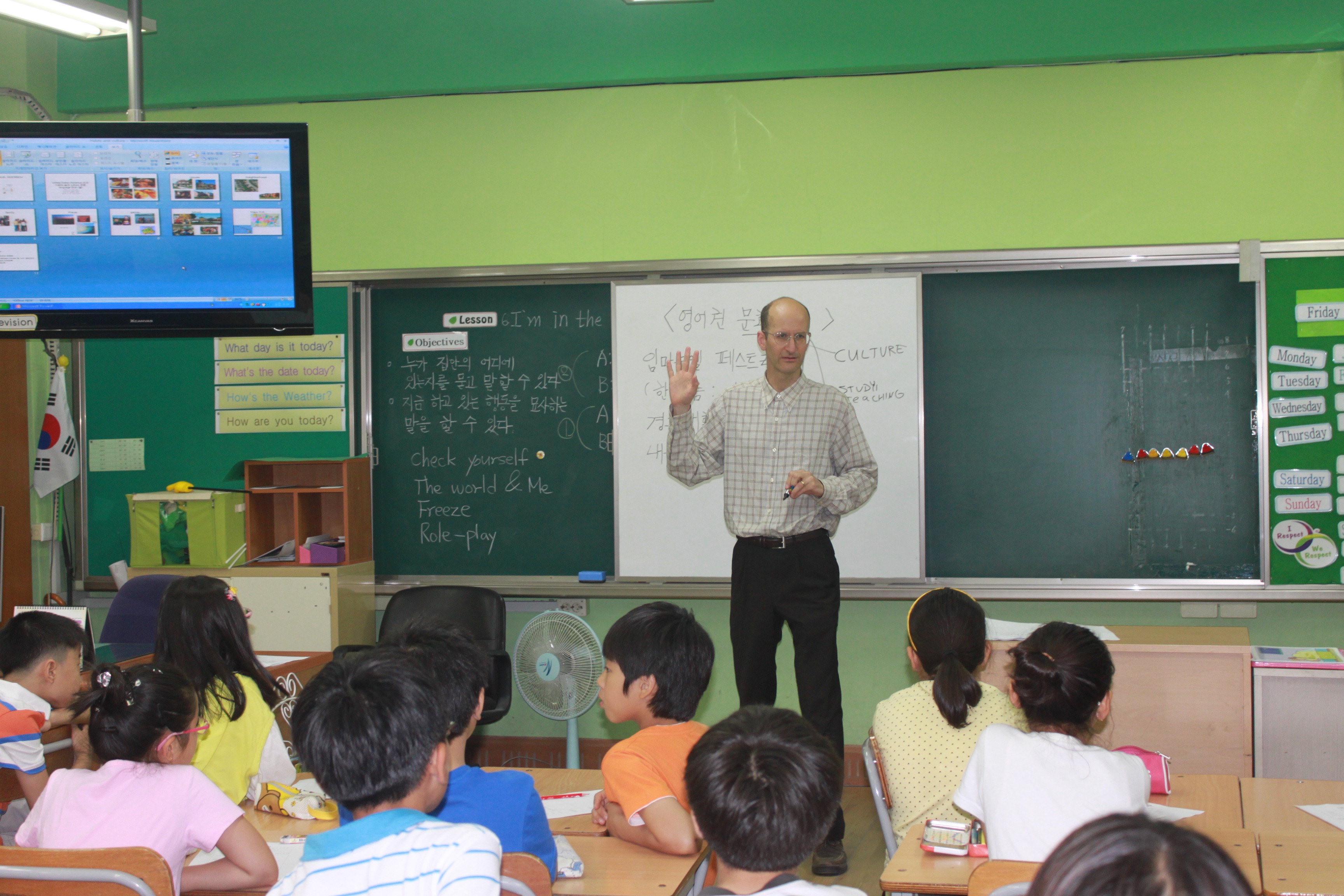
I am teaching English at my children’s elementary school on Saturdays. I have been quite impressed with the solidity of Korean elementary education and am enjoying working with the teachers. There is already one American English teacher who teaches at Changchung Elementary School. My class is meant as a comparison of Korean and American culture and habits. The students are quite responsive. Interestingly, they are broken up into six groups and I am supposed to give them points by groups for their participation. Some of the kids speak English quite well and many enthusiastically ask questions. Because we want to include everyone in the discussion, they are not required to speak in English to ask a question.
[twitter-follow screen_name=’epastreich’]
I originally wrote this article with Eric Marler for OhmyNews, and it was published on May 3, 2006. The article can still be found online here.
“Political Passivity Undermines US: Parallels with the predicament of late Imperial China”
A distinguished historian wrote thus about a world power that had slipped into irreversible decline as a result of its citizens turning inward and its elite refusing to concern themselves with the fate of the nation:
“When intellectual irresponsibility and moral degradation fell to this level, it meant that scholars had become oblivious to their duties to the society and had lost track of the importance of the unity of knowledge and action. The society was deprived of real leadership. That the general decline of morality in the government was due in part to this very intellectual delinquency is an unavoidable conclusion.”
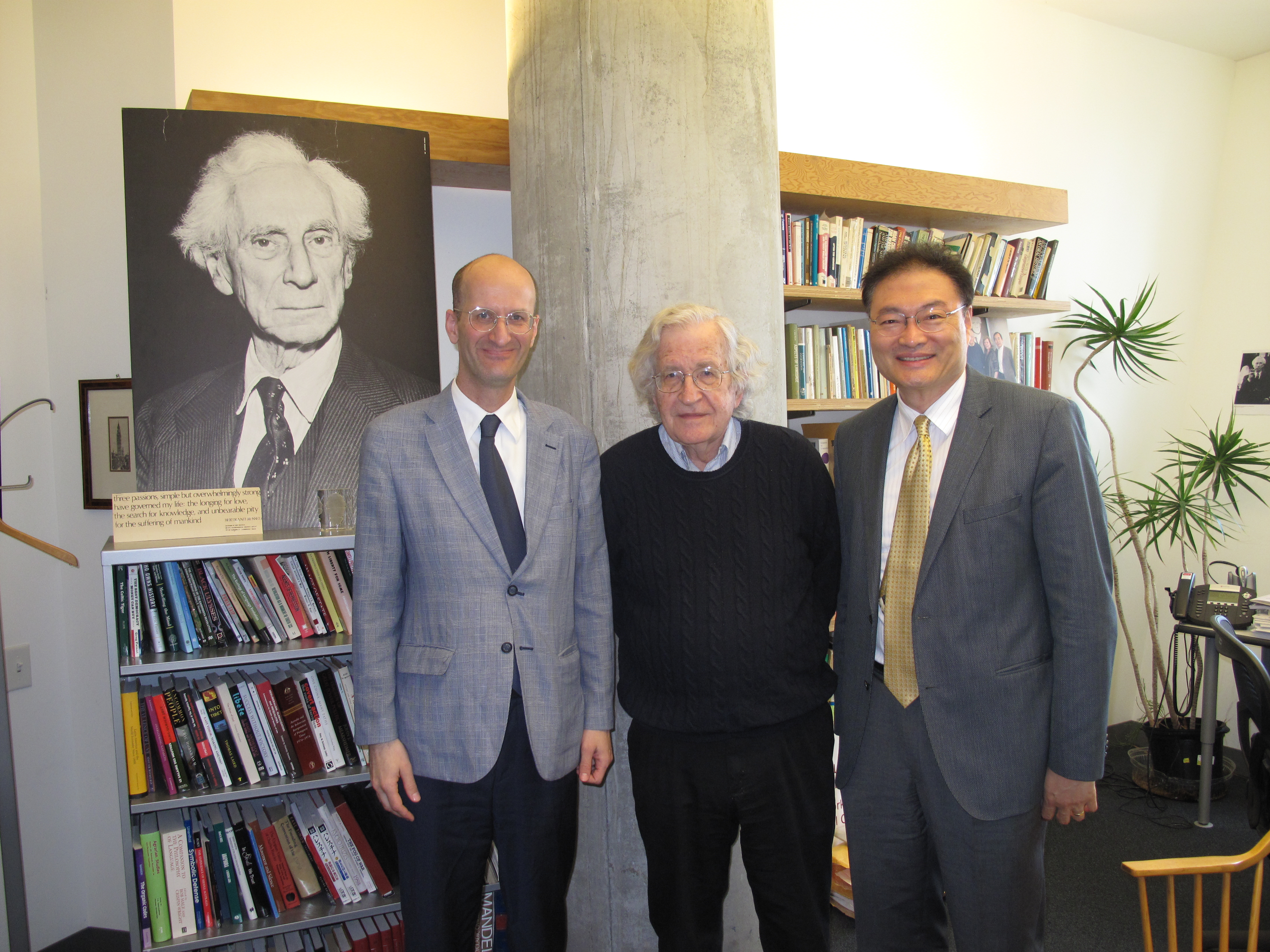
I corresponded with Noam Chomsky about five years ago frequently and started up the conversation again over the last few months. We had never had the occasion to meet in person, but on my recent visit to MIT as part of the larger effort to promote global collaboration in technology convergence I managed to meet him at his office. Here is a picture which includes also my close friend Eugene Pak of Seoul National University’s AICT (Advanced Institutes of Convergence Technology). A fourth member of the group is Bertrand Russell, logician, political activist and author of “Has Man a Future.” I read that book as a child when I found it in the library of my aunt Jeanne in Luxembourg. Clearly Noam has him included in all portraits taken to indicate the spirit behind what he is doing today.
Interesting, the Wikipedia biography for Bertrand Russell has no mention of Noam Chomsky.
Kyung Hee University recently held a meeting to discuss the proposed raise in tuition. Representatives from various student groups were invited and a serious discussion on tuition rates ensued. I was unable to attend, but my understanding is that Kyung Hee University was the only university to actually engage in such a dialog. I also understand that the raise in tuition was substantially reduced.
The Media Center at Kyung Hee University recently featured the video interview with Kim Seong-ung (김성운) the guard who stands watch at the entrance to the international campus of Kyung Hee University. The interview falls under the category “People Around Us” and is a thoughtful introduction to a member of the community.
I have been quite impressed by the Kyung Hee tradition of inclusion and respect for labor. I wonder whether any other university would have produced such a video. You can see the video for yourself here.
I originally wrote this article for Seoul Magazine and it was published on November 1, 2010. I have republished it here.
Recently, there has been discussion about environmentally friendly ICT (information and communications technology) in Korea. The focus falls on energy-efficient electronic devices and a new generation of smart grids in which electricity will be directed by computers to avoid waste. But there has been a hesitation to take the plunge, to embrace ICT as the central medium for resolving the pressing issue of our time: the massive consumption of fossil fuels for the transportation required by our modern life. If Korea can bring together its expertise in multiple technological fields to make Internet-mediated exchange so effective that the need to commute by car or plane is eliminated, it can become the leading nation in the fight to preserve the environment and reduce energy usage.
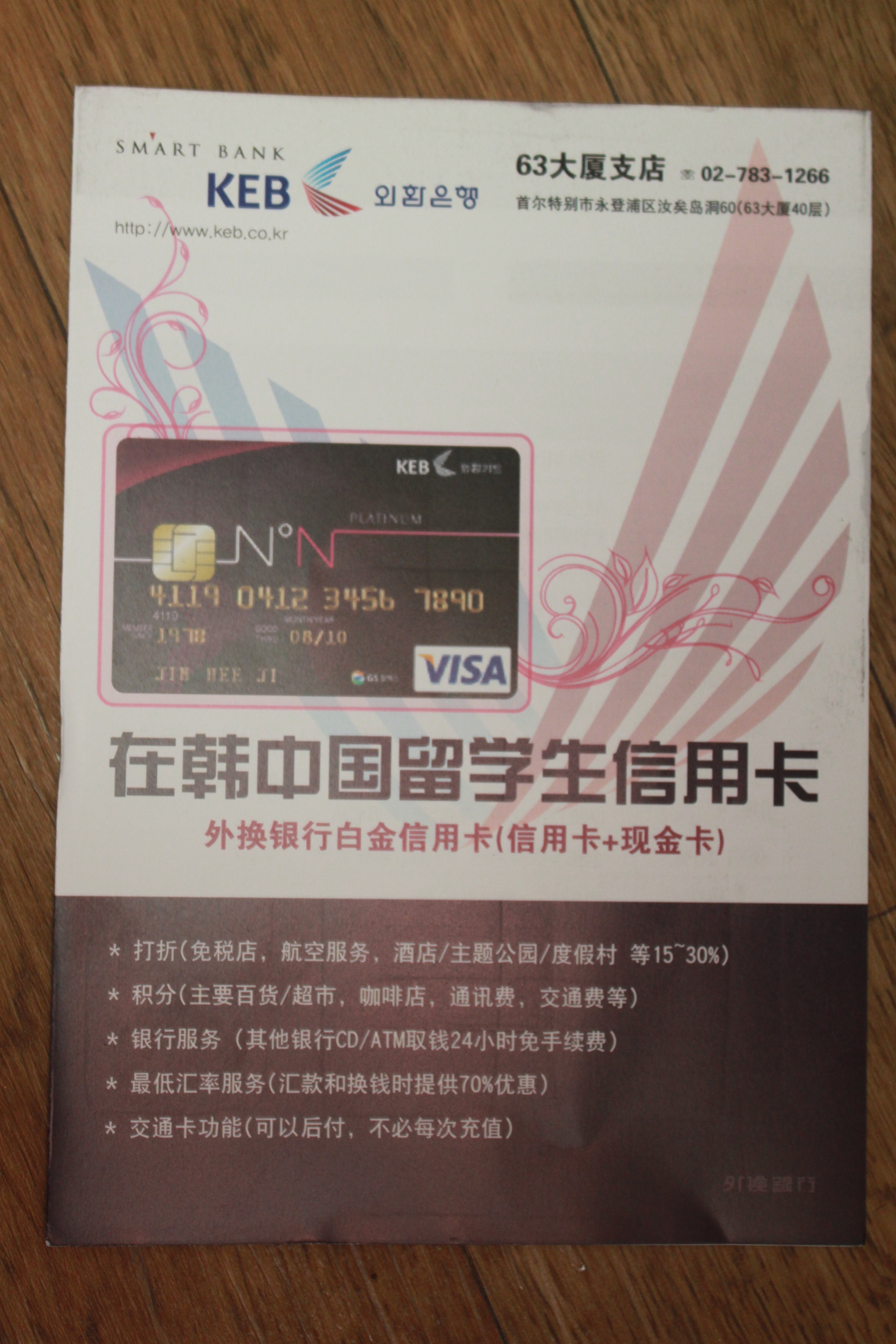
The campuses of Korean universities are filled with these fliers for a new credit card from the Korean Foreign Exchange Bank targeting Chinese students. I have heard that Chinese students at Korean universities in many cases have more disposable income than Korean counterparts. The flier is entirely in Chinese and offers a variety of benefits including discounts at stores and restaurants. The financial world of Korea is being remade quite quickly indeed.
福島原発以降の再建というのは人間がロケットにのって月に行くのと同じようなことだと思います。私たちがまず大胆な計画を建てて、あらゆる技術をその目的に適用するために集中してがんばれば、望みが生じます。いまは不可能だと思われることでも、技術融合を通してそのうち可能になると思います。もしかしたら思ったよりはやく解決方法が見つかるかもしれません。でも大きなヴィジョンがないかぎり、なかなか進まないでしょう。
例えば今のところは放射能に汚染された土地は100年や200年は使えないだろうと常識的に考えられています。福島原発あたりの農地がどうなるかまだはっきり論じられていませんが、すぐにはつかえません。でも全世界の技術をあわせていろんな角度からその問題に取り組めば、方法があるかもしれません。ちかごろの技術は先例のない速さで進んでいるので、もしかして融合的な方法を取り入れれば、モットモット早く解決できるかもしれません。生命工学とナノ工学をあわせれば土壌を清瀞する技術を新しく開発できるかもしれません。ただし、国際的な共同研究が絶対必要であり、その研究はお金儲けのためではありません。
農業も早く復興できるかもしれません。いわゆる垂直農業があります。完全に保護されている室内で水と資源を永遠に再利用する形で運営される農業ですが、今のところは本格的に始まっていません。もしかしたら、垂直農業施設に放射能保護設備をつければ、原発の付近でも農業ができるかもしれません。同じように、室内漁業も可能かもしれません。そのために想像力と意志と技術をあわせて乗り出すしかありません。
そしてロボット開発のことですが、今のところ放射線が多い環境で作業できるロボットは多くありません。放射線に強い電子回路が特に無いからです。ゆっくり測定できるロボットは今のところ福島で活動しているそうですが、土を掘ったり、建物と囲いを立てたりできる対放射装置のあるロボットはまだまだありません。でも集中して努力すれば開発可能かもしれないし、電子回路ではなくその他の方法でロボットを操ることもありうることです。
もしも国際技術開発連合を組んで福島原発内で活動できるロボット・プロトタイプを開発しようと決心するなら、うまくいけば、技術融合を使ってそのような特殊ロボットの開発が思ったより早くできるかもしれません。なぜかというと単純な機械工学の問題ではないからです。様々な分野の知識と理解を合わせて進めるべきプロジェクトです。
最後ではないですが、原発の六面:上下南北東西に放射能物質を防ぐ材料の囲いを設置して、土にも海にも淡水にも汚れる恐れがない完璧な離隔システムを開発すればいいと思います。今のところは夢みたいな話ですが、ナノ工学と先端ロボット技術を合わせれば、5年以内にそのような完璧な隔離材料で作られた囲いが可能かも知れません。モットはやくできるかもしれません。
今のところは具体的な提案が難しいかもしれませんが、国際社会の多くの協力を得て一緒にがんばれば、解決できるかもしれません。