Video
Korean Federation of Industry
International Management Institute
Morning Lecture
Emanuel Pastreich
Director
The Asia Institute
(in Korean)
Video
Korean Federation of Industry
International Management Institute
Morning Lecture
Emanuel Pastreich
Director
The Asia Institute
(in Korean)
The Hangyoreh
June 24, 2012
The Korean Dream
Emanuel Pastreich
The United States became the major cultural force in the world during the 1950s and 1960s, putting forth through its media and its cultural institutions an image of a better life in a free society. The United States offered a powerful vision of a society wherein the individual could realize his or her dreams without the terrible institutional and cultural limits that hold back so many. That image of a good life in the United States was known as the “American Dream.” The American Dream was accompanied by significant intellectual and ethical content such as democratic process, social responsibility, the rule of law and excellence in scholarship and the arts that inspired the world to strive for something greater.
Not everything in the United States was as perfect as the vision given to the world. There were dark aspects of the United States such the hypocrisy of racial discrimination in a nation that spoke of equality and the ruthless pursuit of national interest in a nation that spoke of universal values. Nevertheless, the American Dream inspired people around the world to strive for something greater, to raise their standards for education, for fairness and for democracy to a new level. They stepped forward to demand changes in their countries, to innovate and to create a new society in every corner of the world.
A leading figure in speech recognition technology with a focus on Asia, Professor Mark Hasegawa-Johnson visited Seoul for a series of meetings arranged by the Asia Institute. Professor Hasegawa-Johnson works at the Beckmann Institute at University of Illinois, Urbana-Champaign.
Video of Asia Institute Seminar
“Revisiting Nuclear Safety and Nuclear Security in North Korea”
Thursday, March 22, 2012
Seoul, Korea
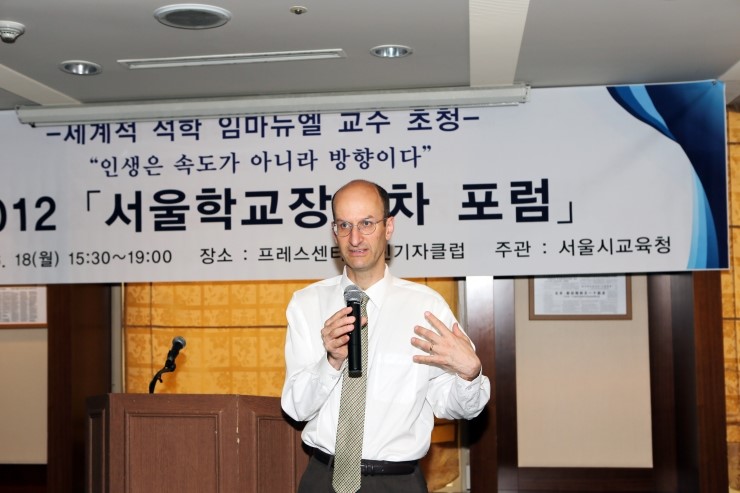
I gave a talk about education and culture on June 17, 2012 in front of a group of about one hundred principals of elementary and high schools in Seoul organized by the Seoul Metropolitan Office of Education (서울시교육청). This “Principals Forum” was the first of its kind, a voluntary gathering of principals from around Seoul to exchange opinions on how education can be improved in Korea.
Here is a recent discussion at Asia Institute on the decision in Korea to permit a textbook that purposely omits evolution (see “South Korea Surrenders to Creationist Demands”) The point I try to make is the absolute difference between science and technology, as the great Rudi Volti stressed. Confusing the two is one of the tragedies of our age.
한국 교육의 위기
올해 들어 KAIST 학생의 4번째 자살 소식은 다시금 한국 교육시스템에 근본적인 문제가 있다는 것을 드러냈다. 이는 단순히 시험과정이나 학생들이 소화해야 하는 엄청난 교과 학습량의 문제가 아니다.
그동안 KAIST는 세계 대학순위에 있어 수직 상승으로 각종 언론의 주목을 받아 왔다. 하지만 그 이면을 들여다보면 인간적인 경험이나 정신적인 성장은 배제되어 왔다. 학교의 명성과 숫자에 불과한 대학 서열을 위해 학생들의 희생이 계속되어온 것이다. 학생들은 마치 품질 좋은 메모리칩이나 탄소나노튜브처럼 높은 효율로 ‘생산’되고 있다. 엄청난 스트레스 아래 높은 학점과 좋은 직업 외에는 아무 것도 생각할 여유가 없었다. 심지어 삶의 궁극적인 목적이 무엇인지는 모른 채 학교 당국의 목표에 끌려갔다.
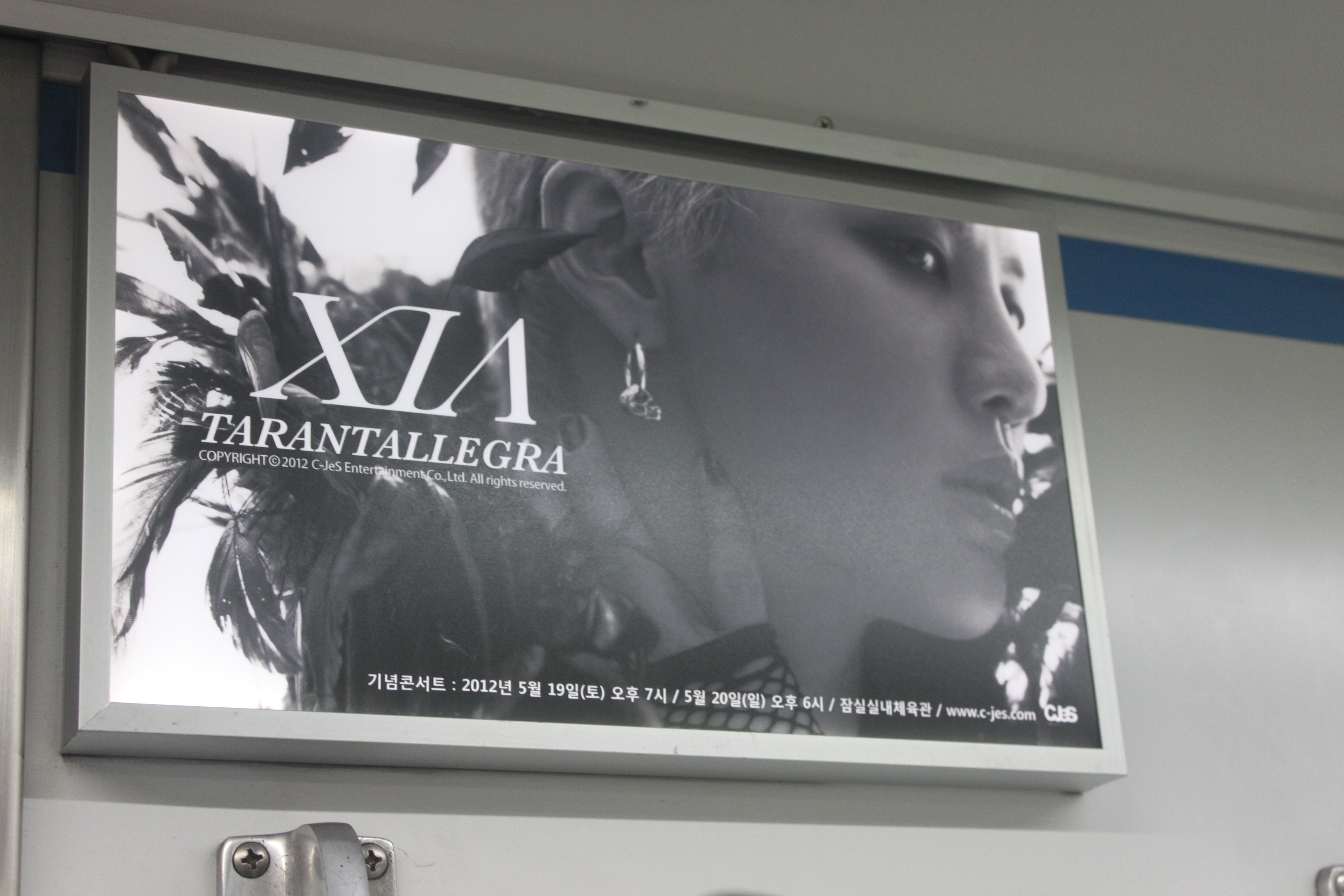
A selection of intriguing new posters from the Seoul subway.
June 9, 2012
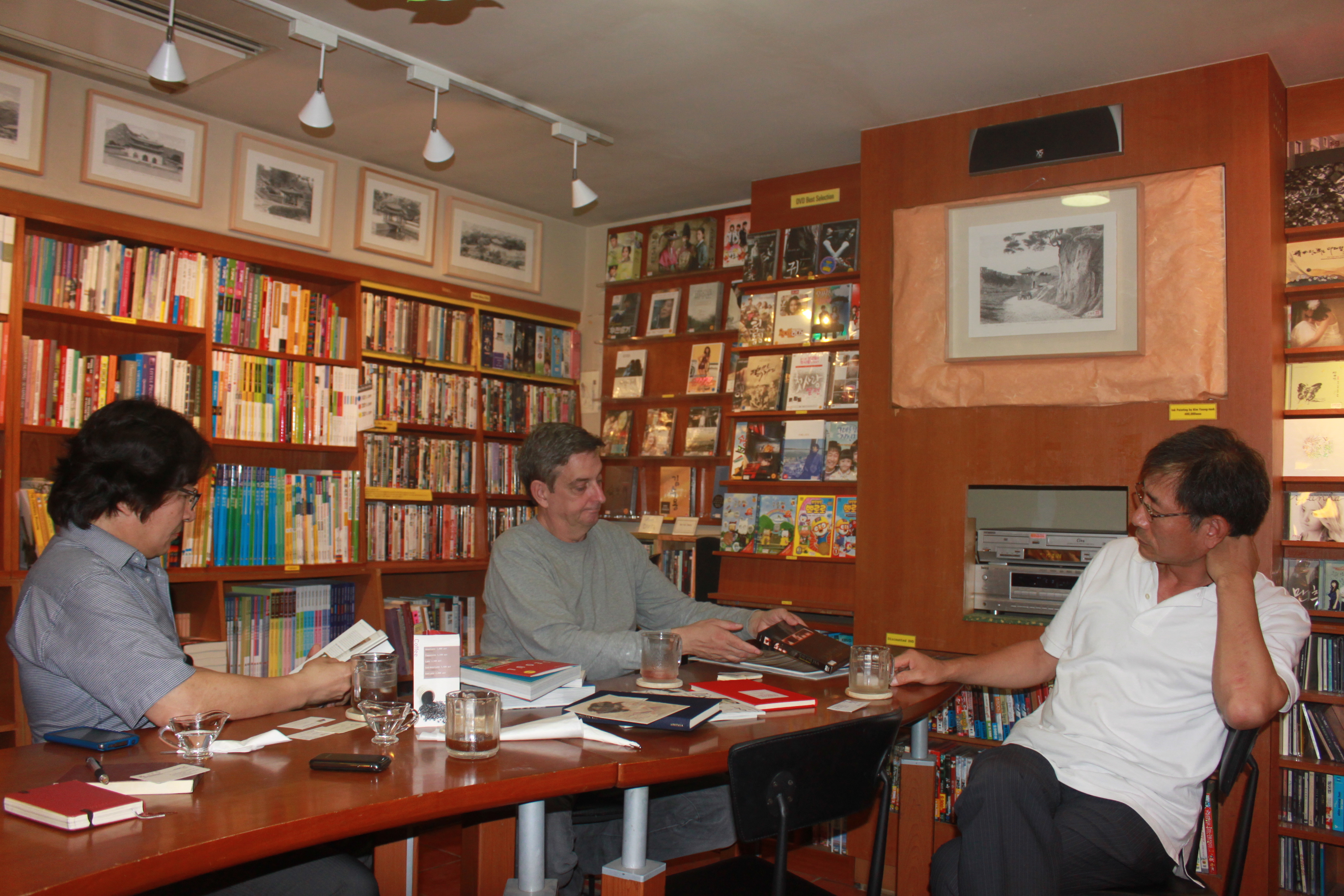
John Treat, Professor of Japanese literature at Yale University (from my original department of East Asian Languages and Literatures), Hank Kim, owner of Seoul Selection publishing, Gu-yong Lee president of Korean Literary Management and the poet Seung Shin Lee met together on Saturday for a cup of coffee at Seoul Selection’s underground café near Gyungbok Palace.
“과학기술 패러다임의 변화와 행정 체제” 시리즈1 패널 토론회
“The Paradigm Shift for Science and Technology & the Future Administrative Regime”
June 28, 2012 2:30-5:30 PM
National Assembly Library, Basement, First floor