“The Professor’s Role” (Joongang Daily May 12, 2014)

Joongang Daily
May 12, 2014

“The Professor’s Role”

Emanuel Pastreich

One of the greatest attractions for me about Korea is the status that professors enjoy in this country. I am not talking about just the respectful manner in which students speak to teachers; that is a pleasant, but not particularly significant, aspect of Korean culture. I am talking rather about the broad role that professors play in policy and industry. Professors serve on government committees, and the position of professor is a standard platform for launching a political career. In a sense, the rank of “Dr.” seems to outrank just about any other position in this society.

Korea stands in marked contrast to the United States, where the status of intellectuals has been much diminished over the last fifty years. Whereas American presidents like Franklin D. Roosevelt and Harry Truman appointed many professors to high positions, those days are long gone in my country. But the tradition remains in Korea.

Although I am delighted to live in a country that values intellectuals, my experience as a professor has also brought me face to face with the profound contradictions in the actual role of the professor that undermine the critical role of intellectuals in society.

Professors, I learned, are not evaluated by their peers in a written format that captures the complexity and subtlety of their role, but rather are assessed according to inflexible checklists that have little, or nothing, to do with what the responsibility of the intellectual should be.

There are three categories for evaluating professors at the university: teaching, research and service. In the case of teaching, the courses are so large that it is essentially impossible to talk with any real intimacy with students. The role of the professor is now to provide letters of recommendation for future employment or further education without actually having worked closely with that student and to provide a grade for the course. My teaching performance is evaluated by students using a survey that encourages students to see professors as performers.

Sadly, a close relationship wherein the professor guides the student in understanding the world and prepares him for the challenges of a rapidly changing society is not relevant in the evaluation of the professor-although such relations with students would be the most valuable thing a professor could do.

Moreover, the relationship of teacher and student is limited entirely to the course itself with little of the lifelong relationship that made Korean learning great over the last 500 years. There is no incentive at all for the professor to tell the student about harsh truths so as to help him or her to survive in what looks like a very grim future. Telling students pleasant myths helps one in getting a good evaluation, but it is a deep disservice to the students themselves.

Then there is research. I was shocked when I was told last year that I should not bother reporting articles unless they are published in English, in Science Citation Index (SCI) or Social Sciences Citation Index (SSCI) journals. These journals have magically been declared to have “impact” (even though their readership is extremely small) and are considered “A grade.” But, in fact, many world-class journals are not included in these mysterious lists, and although I wrote in SSCI journals 10 years ago, I have stopped because I find that books and other journals have far more influence.

Oddly, although the complexity of a scholar’s research activities can only be evaluated by his peers, the evaluation is left up to a check list made up by people who know nothing about the field.

The scholar who publishes 10 mediocre articles in SSCI journals (which is easy to do) is favored over the scholar who publishes one game-changing paper in an obscure journal. Needless to say, Charles Darwin’s theory of evolution or Galileo Galilei’s heliocentric model for the solar system were not easily published in the scientific journals of the time. Today, scholars agree that much of the best writing is found on blogs and in many other unconventional places.

In addition, it is assumed in evaluations that research written in English is the most important. In the humanities, obviously, the best journals in French literature are in French, and the best journals in Chinese history are in Chinese. But English is not even the only language for science. Although many scientists publish primarily in English, in the field of botany, for example, some of the best journals are written in Japanese. There is an increasing amount of first-class work in science that is published exclusively in Chinese, Japanese, Korean and other languages – the fact that American scholars do not know about that scholarship does not reduce its significance.

I thought that I would do well in the “service” category as I participate in many volunteer activities related to the environment and civil society. But I discovered that only bureaucratic duties in the department count as “service.” That is to say that if intellectuals do their duty by calling attention to important issues for ordinary people, issues that ordinary people do not have the expertise or the time to fully comprehend, that effort is irrelevant in the assessment of a professor’s contributions.

Korea has a glorious history of academies called hyanggyo that produced great scholars who were also intellectuals of conscience. Scholars in those academies were evaluated by other scholars according to the quality of their writings and their ethical stance. That tradition of scholarship, in which the academies were fiercely independent and committed to a long-term vision of learning as an ethical pursuit, should be a model for us. It is precisely the combination of ethics and scholarship that distinguishes Korean academics. To tear the two apart is to destroy the very appeal of Korea’s universities.
 

Read more

“세계 석학 3인의 냉철한 시선” (레이디경향 2014년 5월호)

레이디경향

“세계 석학 3인의 냉철한 시선 ‘한국, 한국인을 말한다’”

2014년 5월


링크


“임마누엘 페스트라이쉬:  문화를 ‘광고’하는 한국인”

최근 뉴욕타임스에 실린 ‘불고기 광고’가 논란이 된 적이 있다. 한 나라의 전통음식이 과연 광고의 대상인가에 대해 많은 외국인들이 의아해했다. 우리나라의 문화를 세계인에게 알리고자 하는 기특한 발상이긴 했지만, 보는 이의 공감을 얻으며 다가가는 방법은 없을까?

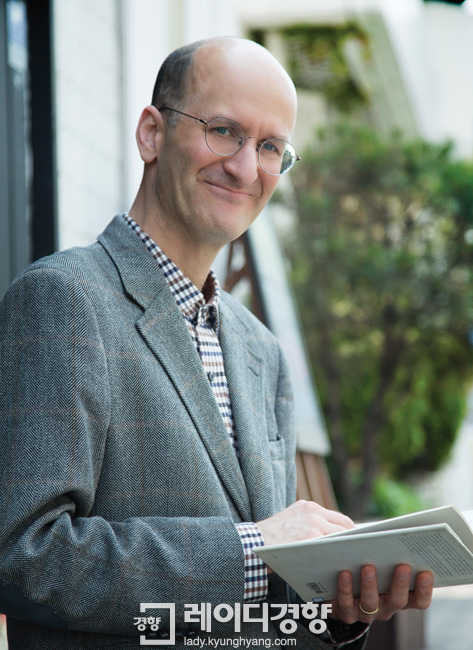
임마누엘 페스트라이쉬(50) 교수는 한국을 사랑하는 대표적인 지한파 미국인 인문학자다. 그는 일리노이대학교, 도쿄대학교, 조지워싱턴대학교 등 세계 명문 대학 교수를 거쳐 2011년부터 경희대 교수로 재직 중이다. 일본, 중국, 대만 등 다양한 동아시아 문화를 연구하다 결국 한국에 터를 잡은 만큼 우리 문화에 대한 애정이 각별하다. 특히 선비 정신이나 연암 박지원, 다산 정약용에 관심이 많아 2011년에는 연암 박지원의 단편소설을 영어로 번역해 미국에서 출판하기도 했다.

20140507154536_5_lady05_250

“이렇게까지 한국과 연을 맺게 될지 몰랐어요. 아이들이 한국 학교에 다니면서 한국 사회에 친구들이 생기고, 저도 제자들이 하나둘 늘면서 한국에 대한 학문적 관심이 사랑으로 진화했어요.”

Read more

Emanuel’s presentation “The United States Re-Balancing in East Asia: Climate Change and Durable Commitment” (May 17, 2014 @ HUFS)

“East Asia in a Changing International System”

Saturday, May 17, 2014

KOREA INTERNATIONAL STUDIES ASSOCIATION

Hankuk University of Foreign Studies,

Graduate School Bldg. 226

Plenary Panel 2:

11:15-12:15


 “Environmental Change and the Future of East Asia”


Chair and Discussant: Mason Richey

Emanuel Pastreich

(Asia Institute, Director; Professor, Kyung Hee Univ.)

“The United States Re-Balancing in East Asia: Climate Change and Durable Commitment”

Rasmus Karlsson

(HUFS)

“Festina Lente as a Key to Global Decarbonization

The real reason I am a vegetarian: So all Chinese also will become vegetarians

Many Koreans ask me why I am a vegetarian, and why I increasingly follow a more strict diet. They find it puzzling because Americans are assumed to be great meat lovers, and it is also assumed by many that meat eating is essential to good health and to being a cultivated and civilized person. I have to admit that at this point that I find the eating of meat to be distinctly uncivilized, although I tolerate the habit of my close family and friends. My sister Milena is the only one in my family who pursues this ideal.


Koreans assume first and foremost that I am a vegetarian because I am concerned about my health. The assumption is that I either think I will be healthier if I do not meat.


This assumption is not incorrect. I do feel that I am healthier for not eating meat, although perhaps not for the reasons that people assume. It is not so much that I believe eating meat in moderation is still bad for your health, but rather that I believe, based on credible reports, that the meat we eat is full of antibiotics,steroids, hormones and  other chemicals (which are increasingly poorly regulated) that are clearly bad for our health.


But that is not the main reason.

Read more

세계대학으로서의 서울대학 (페스트라이쉬 의 제안) 2000년 6월

“세계대학으로서의 서울대학: 첨단기술과 인문학의 결합”

2000년 6월 15일 

Emanuel Pastreich (임마누엘 페스트라이쉬) 

조교수 

일리노이대학교 동아시아 언어문화과 


서울대학교, 일리노이대학교, 북경대학교, 동경대학교간의 첨단 컴퓨터기술이 가동되는 화상회의 및 인터넷 통신을 통한 동시적 연계교육프로그램

향후 2년에 걸쳐 서울대학교, 일리노이대학교, 북경대학교, 동경대학교의 인문학부 강좌는 최첨단 컴퓨터기술을 통해 상기대학의 학생과 교수진들에게 개방될 것이다. 서울대학교는 본교의 세계수준의 컴퓨터공학과 고도의 인터넷기술 등을 활용함으로써 상기 4개 대학에서 영어, 중국어, 일본어, 한국어 등으로 진행되는 수업을 학생들에게 제공하는 세계최초의 교육기관이 될 것이다.

비록 이와 같은 국제적 링크가 궁극적으로는 대학전체의 교육프로그램으로 확산되겠지만 우리가 시도하는 초기단계에서는 주로 인문학, 좀더 구체적으로 말하면 동아시아연구에 집중될 것이다. 영어로만 진행되는 몇몇 강도 높은 세미나로 이루어지는 단기 실험적 프로그램을 거치면서 우선적으로 동아시아연구 대학원생들에게 다양한 수업을 제공하는 수준높은 프로그램으로 확립될것이다. 이런 방법을 통한다면 한국 어느 대학에서도 가능하지 않은 많은 강좌가 제공될수 있을 것이다.이것은 컴퓨터과학 분야에서 서울대학교가 가진 엄청난 잇점에 힘입어 서울대학교의 인문학프로그램이 전환되는 것이며 동아시아 연구분야에서는 세계대학들의 부러움을 살만한 프로그램을 제공할 것이다. 동아시아와 그 외 지역의 대학들이 참여함으로써 인문학과 자연과학 분야에서 일류 학자들을 양성할 수 있으며, 어떤 동아시아연구와 제반 학과와도 경쟁할 수 있는 프로그램을 만들 수 있다.

Read more

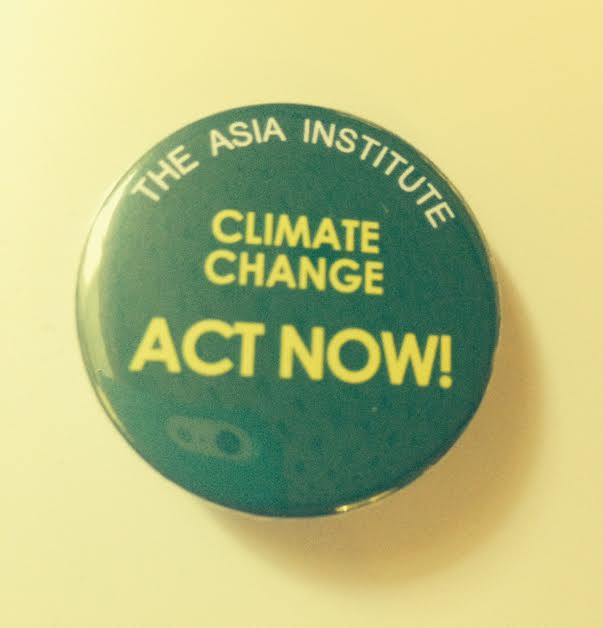
“Climate Change: Act Now!” Pin from the Asia Institute

The Asia Institute released its “Climate Change: Act Now!” pin today. The pin is a chance for our friends to show the world that they are committed to making the small steps necessary to move the world in a sustainable direction.


The pin is just a 2000 Won donation away. Come to our next event and get one.


climate change act now!

For a list of actions you can take, see Emanuel’s article:


“16 Steps to address the environmental crisis”

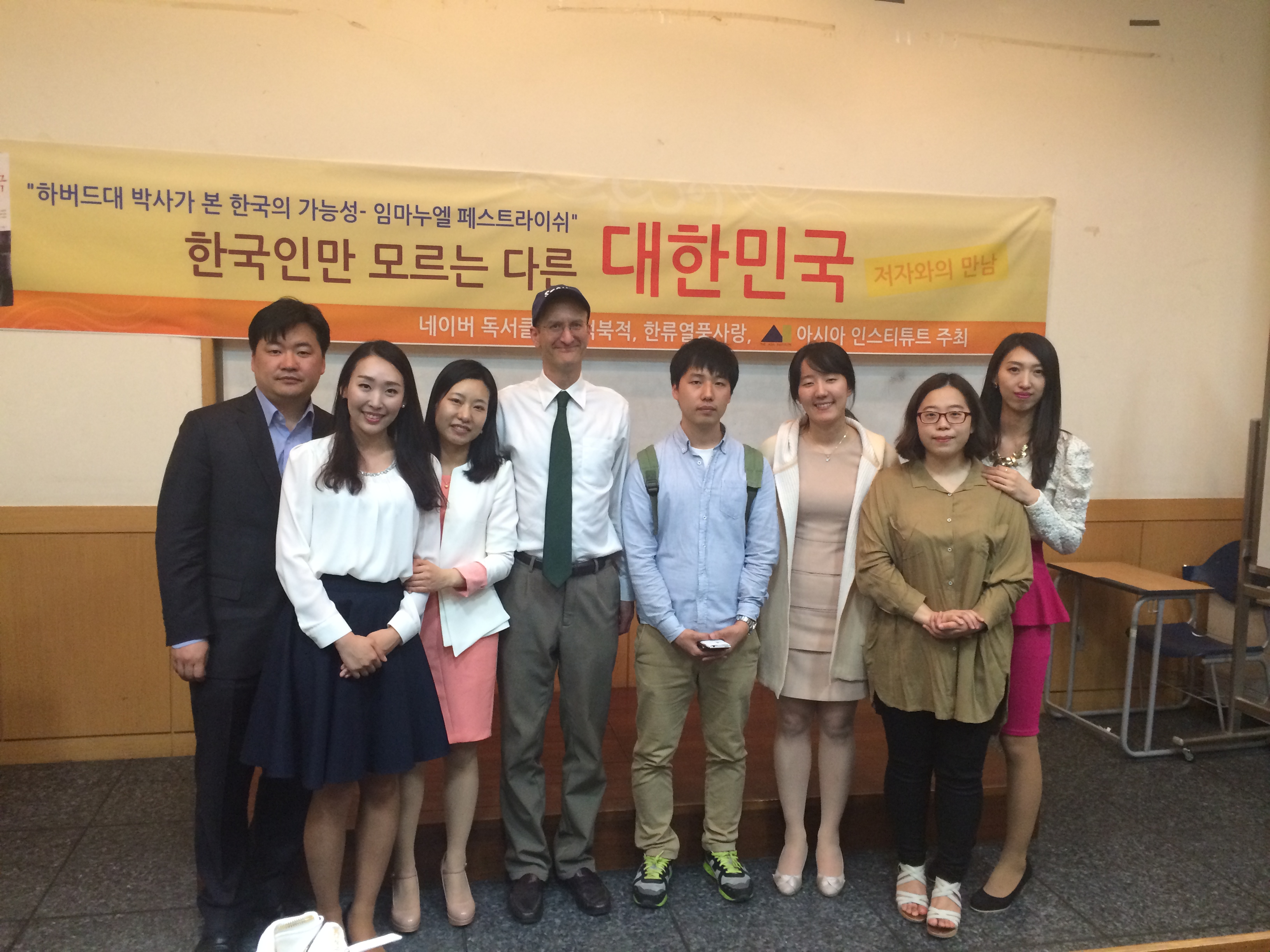
Discussion on “Another Republic of Korea” sponsored by Naver Book Club & The Asia Institute

“Another Republic of Korea” Discussion at Sookmyung University 

April 26, 2014


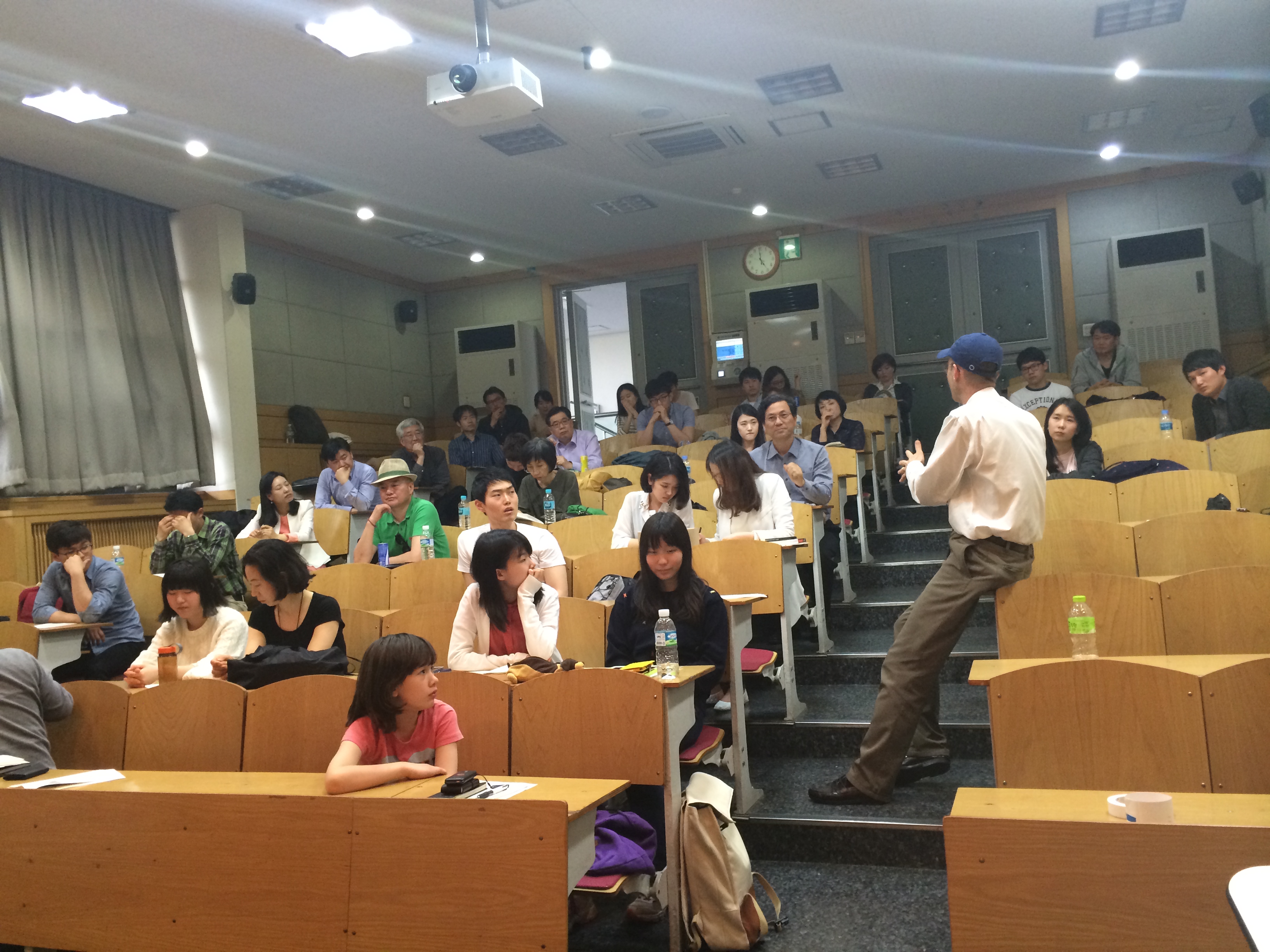
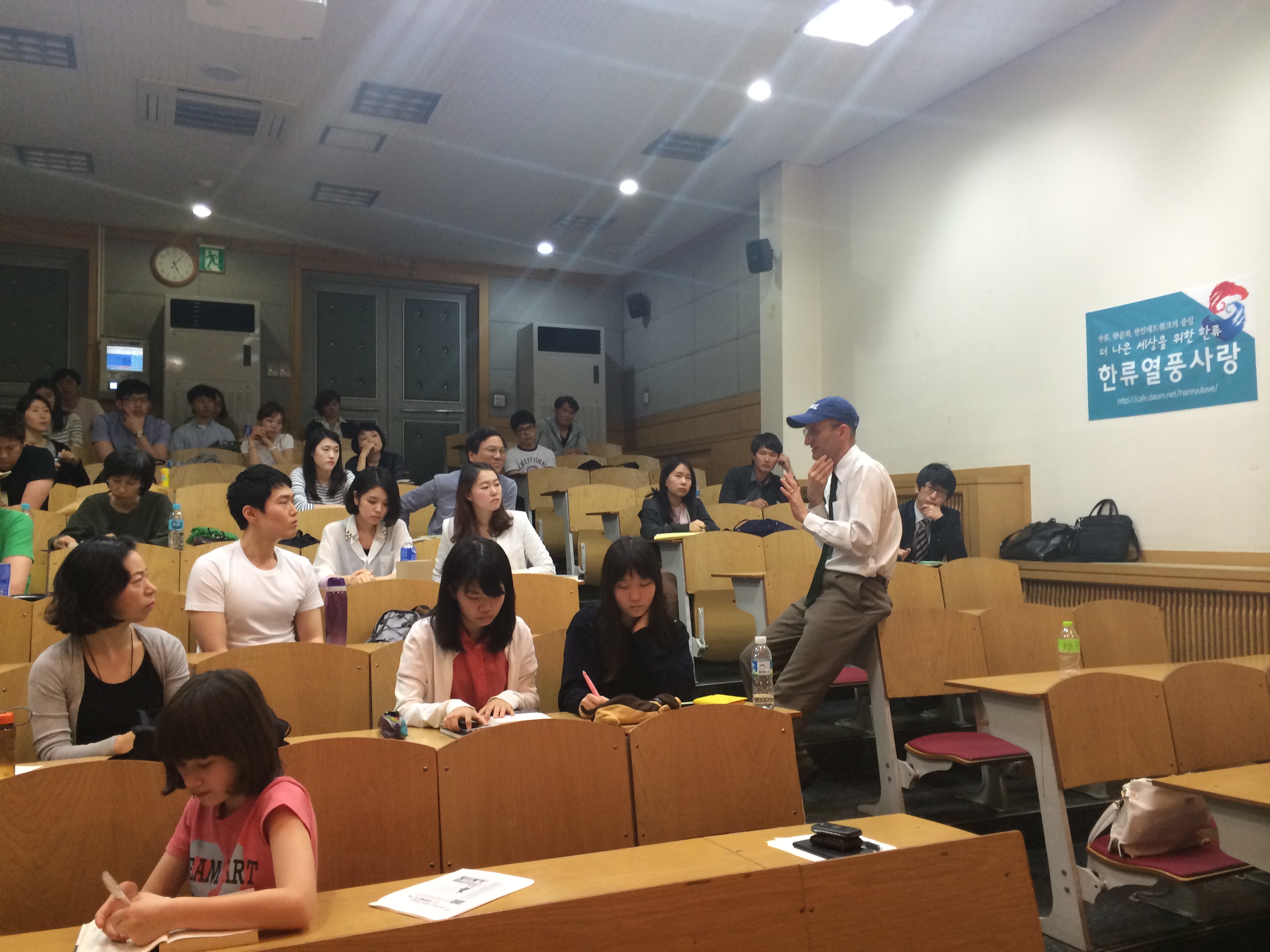
On April 26, 2014, the Naver Book Club and the Asia Institute joined forces to host a discussion on “Another Republic of Korea” (다른 대한민국) that built on Emanuel’s recent book in Korean by that title. The talk was a chance for a diverse audience, including many high school students, to discuss how Korea could become a more dynamic, more responsive and more human society.


Much of the discussion between the members of the audience concerned the larger symbolic meaning of the sinking of the Sewol Ferry sinking  and the needless deaths of so many students. It was a rather emotional moment in which Koreans from different backgrounds expressed their profound disappointment with the culture of contemporary Korea and their worries about the future that awaits us.


The event ceased to be a lecture after the first ten minutes

IMG_7771

The organizers
The organizers


“진정한 교수의 역할이 무엇일까” (중앙일보 2014년 4월 29일)

중앙일보


“진정한 교수의 역할이 무엇일까”

2014년 4월 29일

임마누엘 패스트라이쉬 (이만열) 

 링크 


한국 문화의 매력 가운데 교수가 누리는 사회적 지위를 꼽을 수 있다. 한국에선 교수가 정부 정책 심의에 큰 역할을 하고, 기업 자문도 하는 등 지식인으로 대접하는 분위기다. 외국인인 나도 ‘박사’라는 직함으로 상당한 대우를 받고 있다.

대한민국에서 지식인들의 지위는, 지난 50여 년간 훨씬 약화되고 있는 미국과는 크게 다르다. 프랭클린 루스벨트나 해리 트루먼 같은 미국 대통령들이 많은 교수를 요직에 임명한 것은 옛날 이야기다. 그런 의미에서 나는 한국과 같은 나라를 동경해 왔고, 그런 나라에 사는 것을 기쁘게 생각한다.

Read more

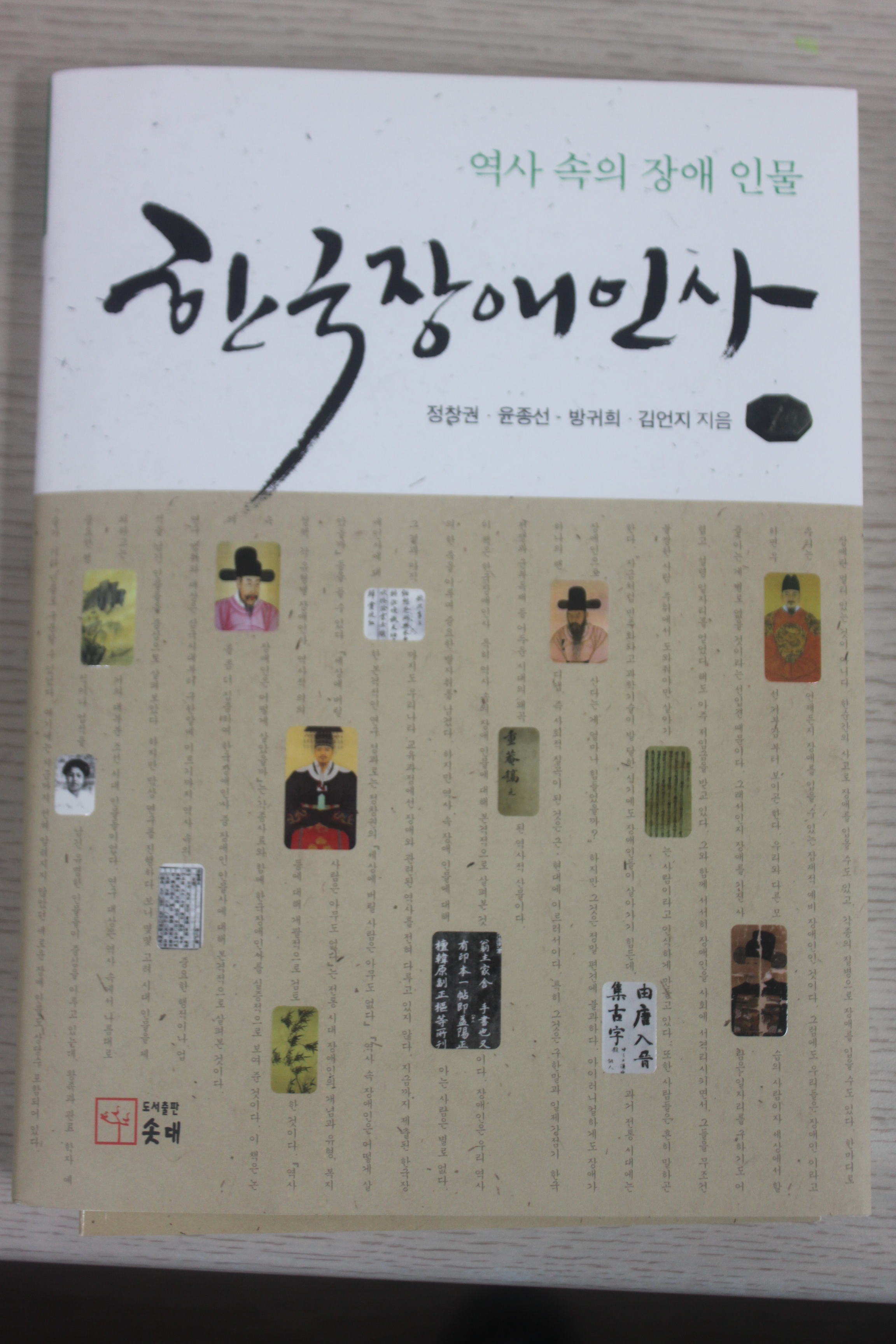
“History of the Handicapped in Korea”

This remarkable new book serves as a possible textbook for use in high school or university that presents in a systematic manner a history of handicapped people in Korea. The book includes such luminary figures as King Sejong (who lost his eyesight) but also the very humble experience of handicapped people in traditional Korea who struggled to create a meaningful life for themselves. The book offers the possibility of a sense of belonging for the handicapped as part of a long tradition. It also holds up possible role models from the past to inspire and give a sense that today’s struggles are not new, but rather part of a long history.


(Sotdae 솟대Publishers, 2014 )

"History of the Handicapped in Korea"
“History of the Handicapped in Korea”