“Revising U.S. Grand Strategy Toward China” (Council on Foreign Relations)

Here a link to the special report from Carnegie Endowment entitled

“Revising U.S. Grand Strategy Toward China”


Council on Foreign Relations


(by Robert D. Blackwill & Ashley J. Tellis)


which has been much discussed recently.


I have not read it all, but it strikes me as a rather complex document. In parts it seems rather positive in direction:

“In this context, take into account the negative consequences for each
country’s formidable domestic challenges if the United States and
China seriously mismanage their relationship. Imagine the tumultuous
effects on the global economy. Consider the dramatic increase in tension
throughout Asia and the fact that no country in this vast region
wants to have to choose between China and the United States. Envision
the corrosive impact on U.S.-China collaboration on climate change.
Picture the fallout over attempts to deal with the nuclear weapons programs of North Korea and Iran.”

“With this in mind, the U.S.-China discourse should be more
candid, high level, and private than current practice—no rows of officials
principally trading sermons across the table in Washington or
Beijing. Bureaucracies wish to do today what they did yesterday, and
wish to do tomorrow what they did today. It is, therefore, inevitable
that representatives from Washington and Beijing routinely mount
bills of indictment regarding the other side. All are familiar with these
calcified and endlessly repeated talking points.”

But at the same time there are multiple sections in which a militaristic response, a modified containment policy, is proposed without any particular justification.

As I have said before, China is 1 in 5 people in the world. It is integrated into the global economy at every level. There is no containment possible. But don’t worry, there is plenty of work to do. Start with climate change. Climate change is mentioned only three times in the document, and there only as one of a list of areas for possible cooperation.
Read more

Mongmin Simsho (Essential Notes on Leadership) for the modern age

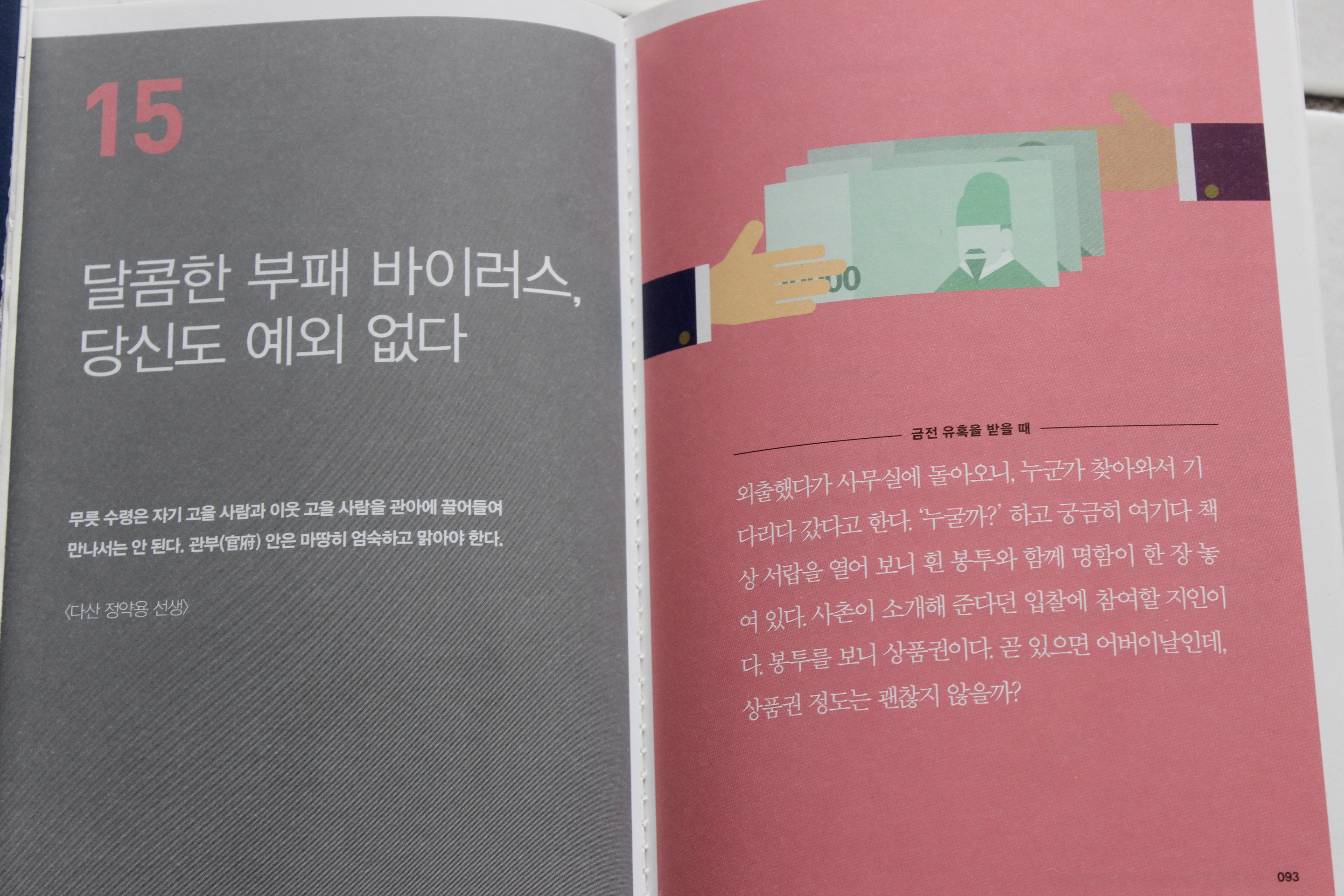
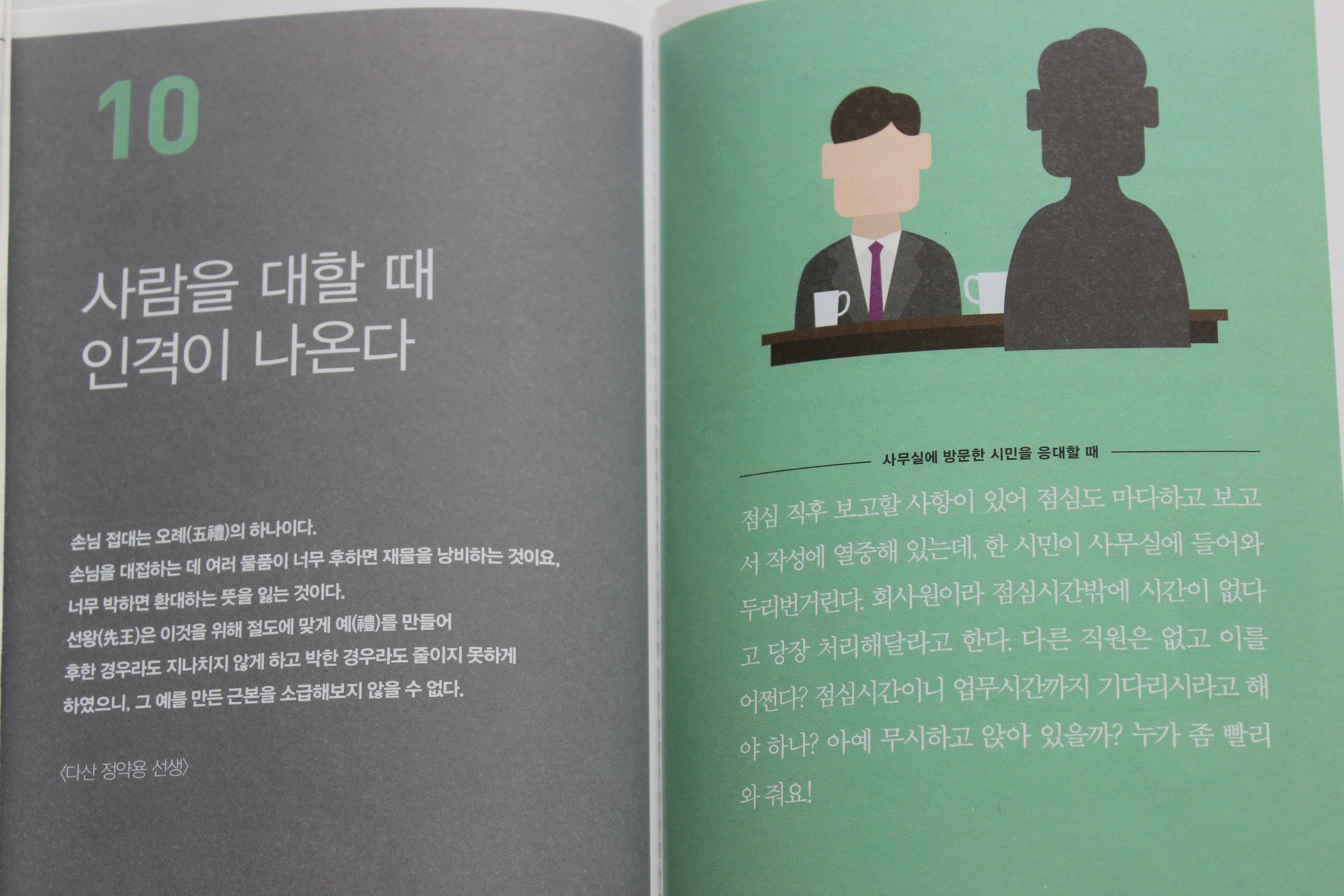
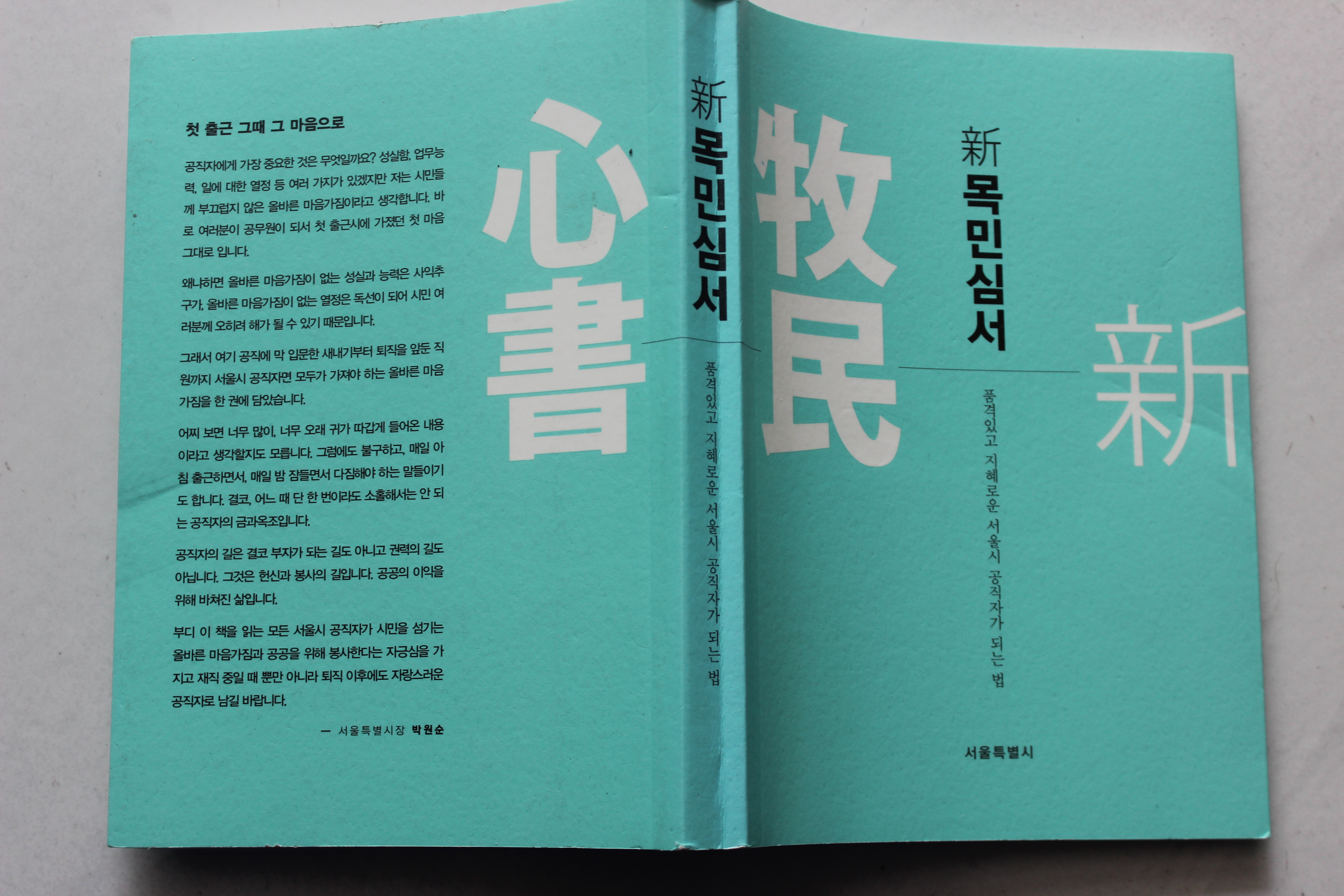
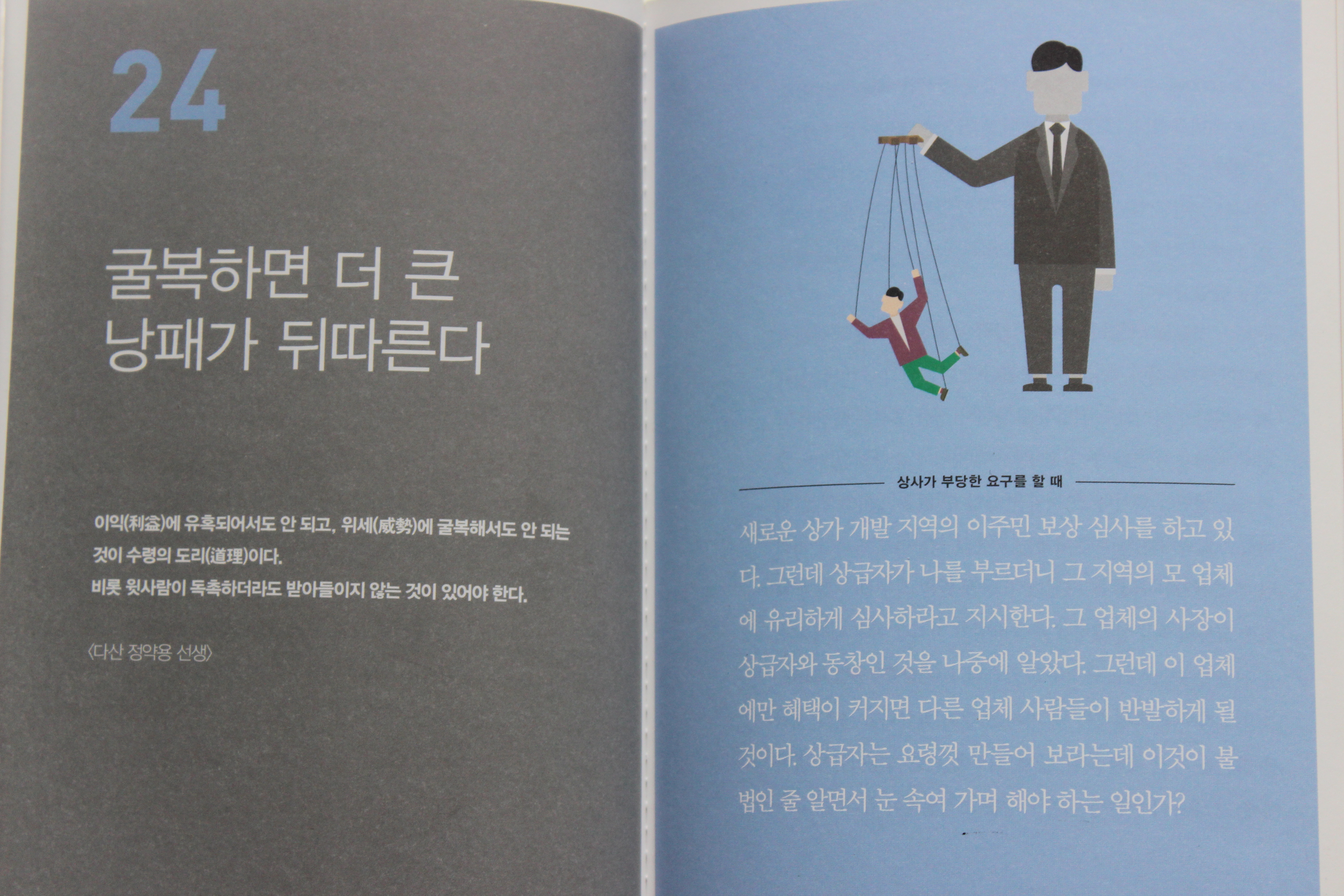
I was much impressed when Seoul City Government issued a new version of Mokmin Simsho that is updated to the ethical challenges of being a public official in this day and age. The book presents specific ethical traps and challenges, based loosely on those within the original book, but adapts them to contemporary society. The text stresses how corrupt acts often do not appear corrupt on the surface and that it is a challenge for the government official to remain pure and set forth a model for probity.

Jeong Yak-yong was a towering intellectual figure of the late eighteenth century in Korea who was a rigorous scholar and deeply immersed in the challenges of effecting good government in his own age. His book Mokmin Simsho 牧民心書 (Heartfelt Notes on Leadership) is included in a collection of Jeong’s writing compiled in 1818.

Mokmin Simsho was intended for government officials, especially those from rural areas who might not have had the advantages of elaborate educations in the Confucian classics.

The work presents simple ethical rules for working as a public official and presents clear essays on the importance of government work. Most importantly, Mokmin Simsho gives very concrete examples of how to respond to conflicts of interest and attempts to promote corruption.

This updated text is striking because it is so concrete and applied. There are many vague discussions of Confucianism and its value in China, and elsewhere, but few efforts to actually make the tradition accessible. Finally, I am struck by this book because it draws attention to the root of Korean success. Koreans are not successful because they work hard, or because they have deep feelings, or they us chopsticks. Korean success is above all a result of the tremendous tradition of good governance from the fourteenth to eighteenth century in Korea.

Mokmin Simsho (Essential Notes on Leadership) by Jeong Yak-yong updated by Seoul Metropolitan Government.

IMG_2894IMG_2895IMG_2896

“为何在首尔无法形成世界谈论和思潮?” (中央日报 2014年 2月 4日)

中央日报

“为何在首尔无法形成世界谈论和思潮?”

2014年 2月 4日


贝一明


最近在国际大赛上展现英姿的韩国女职业高尔夫选手、活跃在国际政治舞台上的联合国秘书长潘基文以及世界银行行长金墉等令韩国备受瞩目。韩国的飞速发展是明显的事实。但作为像笔者一样久居韩国的人,无法理解虽然韩国人接受良好的教育,享受优越的基础设施,但韩国在影响世界的可能性中仍留有空缺。

例如,笔者研究中国学,生活在韩国,特别是首尔,能够享受许多便利。因为在首尔几乎能够随时与所有领域(历史、文学、经济、人类学等)的专家见面。如果大家在首尔召开中国、日本或是韩国诗文学研讨会,能够轻易地召集在各领域拥有相当专业见地的专家。在东京、北京、上海以及波士顿,能够一次召集到这些领域的专家并非易事。可以说唯有在韩国才是可能的事情。

Read more

“外国人眼中的 ‘统一大发’” (中央日报 2014年 3月 4日)

中央日报

“外国人眼中的 ‘统一大发’”

贝一明

2014年 3月 4日


“统一大发”曾在韩国人之间成为一个热门话题。但外国人似乎不知道这样的大机遇在哪里。当然,韩半岛的统一在建设全新国家的意义上,可以唤起国际社会和青少年的关注和热情。如果想要成功实现统一,就一定需要海内外的积极参与和热情。

但笔者希望可以从关于朝韩统一的视角开始重新进行整理。朝韩统一超出韩半岛的范围,在世界的未来和国际地政学上也是一项重大革新。当然,就像朝鲜地下埋藏的丰富煤炭和稀土类等地下资源,如果实现统一,就会有掌握在手中的明确利益。但这取决于如何利用资源,因此,不能断言就一定会给经济带来积极影响。

Read more

“Superrich” in Seoul

Imagine my surprise when I saw this newspaper in Seoul yesterday. The entirety is dedicated to an open glorification of the exotic lives of the super rich. I doubt that the super rich actually read it, but you never know. It seems to be an effort to catch the wave, as it were, as our society is increasing dominated by these powerful figures. Some will be angry, but others come to embrace this new social, and increasingly cultural reality.

New Newspaper in Seoul entitled "Superrich" which claims to be "stories about the 0.01% fabulously wealthy"
New Newspaper in Seoul entitled “Superrich” which claims to be “stories about the 0.01% fabulously wealthy”
Superrich owners of toy companies.

“내가 경험한 서울 | 강남 스타일과 강북 스타일” (2015년 05월 01일 허핑턴포스트 )

허핑턴포스트 

“내가 경험한 서울 | <2> 강남 스타일과 강북 스타일”

2015년 05월 01일 

임마누엘 페스트라이쉬


아주 단순하게 말한다면 서울은 서로 경쟁하는 두 가지 전통으로 나눠져 있다고 할 수 있다. 서로 대립하기보다는 경쟁하는 이들은 서울 전역에 복합 문화 공간을 만들어 내고 있다.

가족이 같이 운영하는 상점이나 좁은 골목을 따라 이웃들이 모여 사는 서울의 북쪽은 옛 서울의 “강북 스타일”이다. 그러나 강북이란 단어에는 단순히 ‘옛 서울’ 그 이상의 의미가 담겨 있다. 강북 스타일에는 기존 학교 시스템을 거부하는 대안 학교, 사회적 기업, 노동자, 예술가 그리고 작가들의 콜라보레이션, 넒은 의미의 독립 예술과 음악 등 실험적이고 창조적인 노력의 의미가 담겨 있다.

강북이란 말의 문자적 의미는 서울을 크게 두 지역으로 나누고 있는 “한강의 북쪽”이란 뜻이다. 강북은 1980년대 강북의 인구를 분산하기 위해 논과 과수원이었던 한강의 남쪽을 개발하기 이전까지는 서울 전체를 가리키는 말이었다. 물론 “구시가지”라고 해서 전부 오래된 것은 아니다. 도시의 중심은 오래되었지만 궁궐을 포함하여 많은 건물들이 1592년부터 7년간 계속된 임진왜란 때 불타 없어졌다. 임진왜란 이후에 지어진 많은 건물들은 1920년 대에서 1930년대 일제 강점기를 거치며 다시 재개발되었고 이후 1950년에서 1953년까지의 한국 전쟁 동안 전쟁 첫 해에만 서울을 뺏기고 빼앗는 과정이 4번이나 되풀이되면서 도시의 거의 대부분이 파괴되었다. 지금의 서울은 1970년대와 1980년대 진행된 재개발 계획의 결과이다.

이상하게도, 예술가와 시인들을 매료시키는 서울의 오래된 지역에는 1960년대와 1970년대 지어진 집들이 많다. 겉으로는 새것처럼 보이지만 서울은 오랜 역사를 간직한 도시이다.

강남은 서울의 또 다른 반인 한강 남쪽 지역을 말한다. 급격히 발전한 이 지역은 1980년대와 1990년대 아무것도 없던 지역에 대규모 부동산 개발이 이루어지면서 한국에 미국식 고속도로, 아파트 단지, 그리고 페스트푸드 상점이 소개되었고 새로운 경제적 부를 향한 노력을 보여주는 곳이 되었다. “강남 스타일”이란 말은 가수 싸이의 동명 히트곡으로 유명해졌다. 강남은 수입 자동차 쇼룸, 비싼 레스토랑, 카페, 그리고 비싼 옷과 신발 상점들이 줄지어 있는 호화로운 로데오 거리가 있는 지역이다. 강남 스타일은 끝없는 소비와 꿈의 추구를 통해 만들어진다. 세련된 공간 안에서 돈이 지위가 되는 곳이다.

Read more

“永别了 东亚武器” (中央日报 2014年 11月 22日 )

中央日报

“永别了 东亚武器”

贝一明

2014年 11月 22日

2014年11月在中国北京举行的APEC峰会上,中美就应对气候变化问题达成协议。这在东亚地区持续紧张关系的局面中,表现出具有建设性的未来蓝图和希望。然而尽管APEC峰会上做过那些积极的演讲和宣言,很多专家还是很担忧东亚地区的未来。韩中日三国间的领土纷争和历史问题以及资源问题等是矛盾的根源依旧存在,由此带来的势力均衡问题和军事费用支出剧增等严重现象,可悲的是东亚安全矛盾对谁都没有帮助。但是还有希望的是探寻和平方案依然存在。

东亚和平商讨的起点便是源自这个地区精英们的觉醒。现在东亚地区的精英们没有经历过战争的惨烈,也没正经受到必须要阻止战争的教育。这是东亚危险且不必要的矛盾又加剧的背景之一。令人惋惜的是如今的亚洲,呈现出与第一次世界大战爆发前欧洲类似的状况。欧洲国家经历了两次帝国主义时代矛盾最大化的世界大战,目睹了数千万生命死亡的场景,在认识到核战争是多么可怕之后的1970年代,才开始为了防止战争发生而进行协商。

Read more

“A potential dynamic duo: AIIB & GCF” (JoongAng Daily, April 30, 2015)

“A potential dynamic duo”


Joongang Daily

April 30, 2015 

Emanuel Pastreich


Koreans perceive themselves to be stuck between the Bretton Woods financial system the United States created after the Second World War and an emerging new financial order centered on the Asia Infrastructure Investment Bank (AIIB), led by China and joined by a host of major countries.

On the one hand, Korea has benefited greatly from the global trade system that developed thanks to the Bretton Woods system and a close alliance with the United States. Yong Kim, a Korean, is president of the World Bank. At the same time, China has become the dominant economic power in Asia and Korea’s most important trading partner.

The attraction of the AIIB, as a possible source for funding infrastructure projects of value to Korean companies, is simply irresistible.

But could it be that what Koreans see as a tragic choice between the U.S. and Chinese camps is really more a lack of imagination than a true dilemma? Could it be that Korea, rather than being a passive player in a geopolitical shakedown, can serve as a key nation in defining what exactly the AIIB will be and keep it on a positive track as it develops? 

Read more

贝一明:‘从美国的观点来看的中国社会稳定‘ 于  中国学术研讨会 2:00-2:40 PM

中国学术研讨会

 ‘中国社会的稳定结构: 过去、现在与未来’

中国学术研讨会

地点: 韩国外国语大学 报告厅(강연실, 教授会馆1层)

六月 十二日

下午 演讲 (下午 两点 到 两点四十分

贝一明 (庆熙大学 国际大学 教授; 亚洲研究所 所长)


‘从美国的观点来看的中国社会稳定结构’

由于中国社会稳定可以影响全球的新秩序,中国社会稳定已成为最近全世界瞩目的热点话题。因此,韩国外国语大学中国研究所将举办国际学术研讨会,希望诸多学者参加交换意见。我们所真诚邀请您出席研讨会以及发表论文。

4、联系方式

– 联系人:金仁植(韩国外大中国研究所责任研究员,法学博士)

– 联系电话:02-2173-3498,3499 / 010-4918-0760

Read more

“서울은 원래 마을이었다” 이만열 @ 세바시

2015년 4월 3일

세바시 (“세상을 바꾸는 시간”)

“서울은 원래 마을이었다”

임마누엘 페스트라이쉬 아시아 인스티튜트 소장   ‘한국 사람들은 행복합니까?’ 한국에서 살고있는 임마누엘 페스트라이쉬 교수의 질문입니다. 높은 자살율, 우울증, 고독감.. 한국사회의 많은 문제점을 해결하기 위해 우리는 외국의 사례, 외국의 전문가들을 찾습니다. 하지만 임마누엘 교수는 오히려 한국 사회의 전통 문화 속에 그 해결책이 있다고 말합니다. 서울의 숨은 골목을 천천히 산책하듯이 그가 안내하는 또 다른 서울의 풍경을 만나봅니다. 외국인의 눈에 비친 한국, 서울, 그리고 소중한 공동체의 가치에 대한 이야기입니다.

Read more