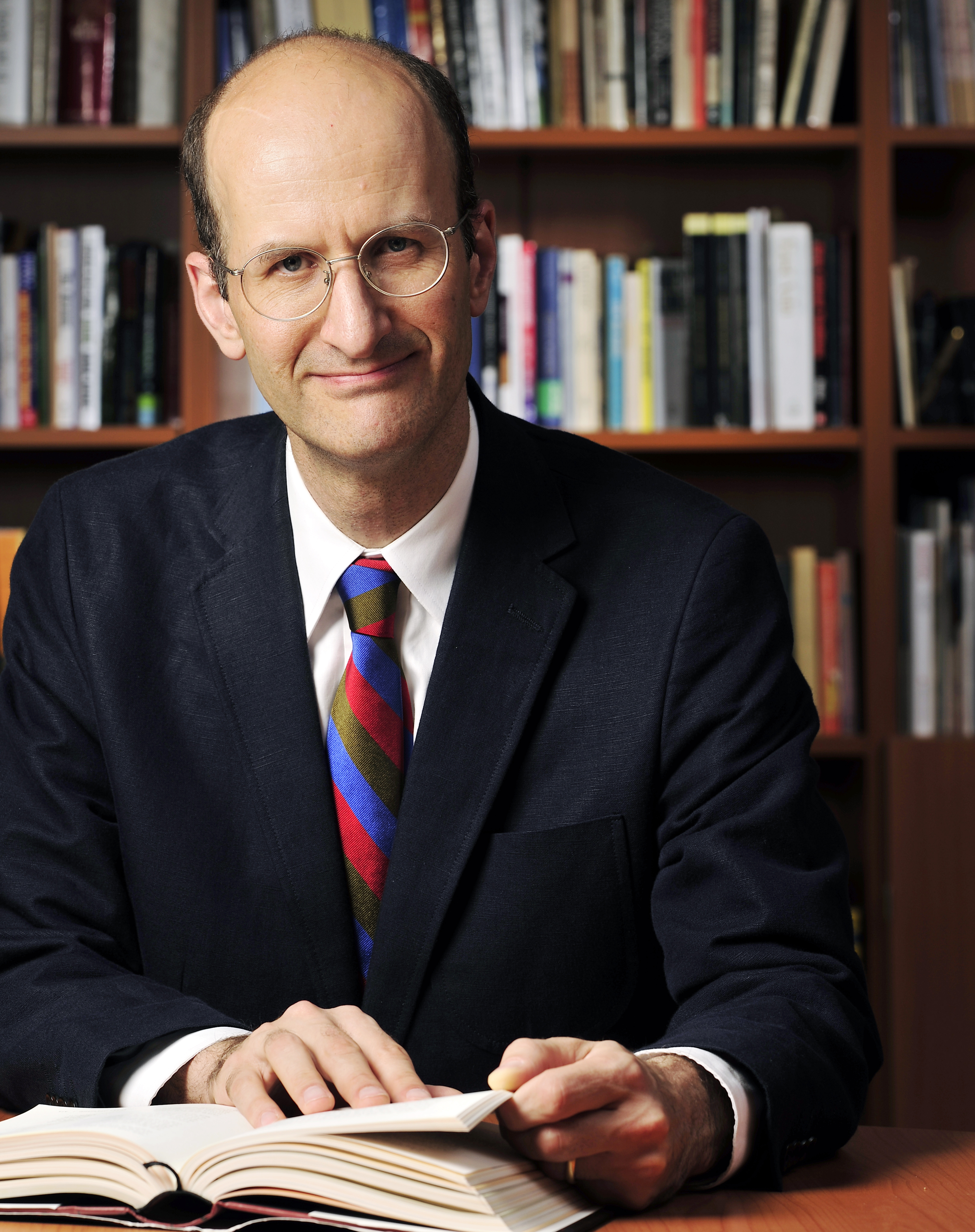
Emanuel Pastreich will make his first public speech at this press event, announcing his candidacy and answering questions from the press concerning his intentions and the larger implications of this campaign for the United States, for Northeast Asia and for the world. Questions from the press and concerned citizens are welcome.
Emanuel Pastreich started his career as a professor at University of Illinois in 1998. Since then, he has established himself as an advocate for deep engagement with Asia, for rational approaches to security and diplomacy, for the end to the speculative economy and to the obsession with growth, and for an immediate response to the climate crisis.
WHO Director-General’s Statement on IHR Emergency Committee on Novel Coronavirus
Director-General Tedros Adhanom Ghebreyesus
2020/02/05
Good evening to everyone in the room, and to everyone online.
Over the past few weeks, we have witnessed the emergence of a previously unknown pathogen, which has escalated into an unprecedented outbreak, and which has been met by an unprecedented response.
As I have said repeatedly since my return from Beijing, the Chinese government is to be congratulated for the extraordinary measures it has taken to contain the outbreak, despite the severe social and economic impact those measures are having on the Chinese people.
We would have seen many more cases outside China by now – and probably deaths – if it were not for the government’s efforts, and the progress they have made to protect their own people and the people of the world.
The speed with which China detected the outbreak, isolated the virus, sequenced the genome and shared it with WHO and the world are very impressive, and beyond words. So is China’s commitment to transparency and to supporting other countries.
In many ways, China is actually setting a new standard for outbreak response. It’s not an exaggeration.
I also offer my profound respect and thanks to the thousands of brave health professionals and all frontline responders, who in the midst of the Spring Festival, are working 24/7 to treat the sick, save lives and bring this outbreak under control.
Thanks to their efforts, the number of cases in the rest of the world so far has remained relatively small.
There are now 98 cases in 18 countries outside China, including 8 cases of human-to-human transmission in four countries: Germany, Japan, Viet Nam and the United States of America.
So far we have not seen any deaths outside China, for which we must all be grateful. Although these numbers are still relatively small compared to the number of cases in China, we must all act together now to limit further spread.
The vast majority of cases outside China have a travel history to Wuhan, or contact with someone with a travel history to Wuhan.
We don’t know what sort of damage this virus could do if it were to spread in a country with a weaker health system.
We must act now to help countries prepare for that possibility.
For all of these reasons, I am declaring a public health emergency of international concern over the global outbreak of novel coronavirus.
The main reason for this declaration is not because of what is happening in China, but because of what is happening in other countries.
Our greatest concern is the potential for the virus to spread to countries with weaker health systems, and which are ill-prepared to deal with it.
Let me be clear: this declaration is not a vote of no confidence in China. On the contrary, WHO continues to have confidence in China’s capacity to control the outbreak.
As you know, I was in China just a few days ago, where I met with President Xi Jinping. I left in absolutely no doubt about China’s commitment to transparency, and to protecting the world’s people.
To the people of China and to all of those around the world who have been affected by this outbreak, we want you to know that the world stands with you. We are working diligently with national and international public health partners to bring this outbreak under control as fast as possible.
In total, there are now 7834 confirmed cases, including 7736 in China, representing almost 99% of all reported cases worldwide. 170 people have lost their lives to this outbreak, all of them in China.
We must remember that these are people, not numbers.
More important than the declaration of a public health emergency are the committee’s recommendations for preventing the spread of the virus and ensuring a measured and evidence-based response.
I would like to summarize those recommendations in seven key areas.
First, there is no reason for measures that unnecessarily interfere with international travel and trade. WHO doesn’t recommend limiting trade and movement.
We call on all countries to implement decisions that are evidence-based and consistent. WHO stands ready to provide advice to any country that is considering which measures to take.
Second, we must support countries with weaker health systems.
Third, accelerate the development of vaccines, therapeutics and diagnostics.
Fourth, combat the spread of rumours and misinformation.
Fifth, review preparedness plans, identify gaps and evaluate the resources needed to identify, isolate and care for cases, and prevent transmission.
Sixth, share data, knowledge and experience with WHO and the world.
And seventh, the only way we will defeat this outbreak is for all countries to work together in a spirit of solidarity and cooperation. We are all in this together, and we can only stop it together.
We must away from money that is backed by petroleum and coal. After the gold standard, increasingly the source of value behind currency has become petroleum . At the local level, We can start with barter and other green currencies that allow us to create fossil-fuel free economic exchange. Eventually those local economies will undergird a global economy.
Hard to imagine that there was a Federal organization dedicated to helping ordinary citizens and rebuilding the economy that was empowered to tell corporations what to do. But believe it. It happened before and it could happen again. It is, to use an Americanism, “as American as apple pie.”
The United States faces an unmitigated catastrophe in Northeast
Asia today that is the result of a thoughtless trade war with China, companion
tariff battles with Japan and South Korea, and an effort to promote China as a
military threat that have undercut a broad range of cooperative efforts. We are
watching in silence the metastasis of benign neglect into malignant neglect.
Asians may be reticent to speak, but perceptions of Washington as a destructive
force are spreading rapidly.
The administration’s governance by Twitter and a new vision of “Trump
first” for the international community is but the acceleration of the
trend toward short-term profits that has buried the tradition of
internationalism in the United States that is embodied in the Statue of
Liberty, the hosting of the United Nations headquarters and our support for
global treaties addressing non-proliferation, trade and terrorism.
This crisis in Northeast Asia was not made in Pyongyang ― rather, Washington’s
model of greed and narcissism has found new hosts in Asian capitals.
Do we really need to spend taxpayers’ dollars to promote a new “cold
war” in Asia that will most likely result in the United States being
pushed out of the region altogether, rather than restoring some lost prestige?
And Japan is postulating possible military conflicts with South Korea. We have
no time to waste before we set out in a new direction so as to avoid an
unimaginable nightmare of an arms race and economic warfare between South
Korea, Japan, China and other nations. Such a development could mean many
things, including an end of the U.S. role in the region.
This crisis in Northeast Asia will not be solved by a gaudy summit meeting, or
by some act of Congress. What we need is a vision for the future of Northeast
Asia that is transformative, one that offers palpable hope for a way forward.
The Japanese philosopher Ogyu Sorai wrote that there are two kinds of chess
masters: those who know the rules so perfectly that they can win every game
effortlessly and those who make up the rules by which chess is played.
The latter approach is distinctively unfamiliar. We are accustomed to
maintaining the world order established at the end of World War II, not making
up a new order. But our eroding position in East Asia cannot be turned around
by gradual reform. We must fundamentally alter the U.S. role in East Asia.
And just as we start to struggle to define an American role in Asia that is not
conditional on the demonization of others, an answer comes to us from somewhere
unexpected.
The world was rocked by a series of climate strikes, peaking with the moving
speech of Greta Thunberg at the United Nations’ Climate Action Summit. Tens of
thousands of passionate youth demanded a fundamental change in all our
economic, political and cultural assumptions in order to save us from the
catastrophe of climate change. They know the consequences will be worst for
them.
That demand for fundamental change in our world offers a priceless opportunity
to redefine the U.S. role in Northeast Asia and to resolve the confrontation
with China, and to encourage cooperation between Korea and Japan.
The U.S. must recognize that climate change itself is the primary threat in
Northeast Asia, whether rising seas, warming oceans, spreading deserts or
raging tropical storms. Many are dying and millions will die in the years
ahead.
But to achieve this fundamental shift in the concept of security requires us to
change all our assumptions ― which is exactly what Greta demanded.
It means that the U.S. must move away from a military that is focused on
planes, ships, bullets and missiles and redefine its security mission as
rapidly making our country free of fossil fuels, restoring forests and
protecting the ecosystems of oceans and rivers. Whereas the U.S. military is
one of the greatest polluters now, it could be re-engineered to devote its
efforts to cleaning up pollution and enforcing a ban on oil drilling and the
use of coal.
Such a vision seems too fantastic to work. But the crisis is literally so great
as to demand that we rethink everything.
In the case of East Asia, as the U.S. military shifts its mission to mitigating
climate change (planting trees, protecting the ecosystem, making sure that
businesses do not destroy the Earth’s precious resources for profit) and away
from conventional warfare, we will find that our military can cooperate with
the militaries of Japan and Korea on multiple fronts. Military-military
cooperation with China will be a no-brainer as the militaries focus in on
adaptation to, and mitigation of, climate change.
The
military is not set up so serve such a transformative role. If anything, it
clings to outdated ideas about security and defense. But if the military
started to function in such a manner, it could implement such a shift more
rapidly than the civilian sector.
The military can set up long-term budgets to develop
technologies without concern for profits, it can determine that all electricity
must be generated by solar or wind power by next month and then make it happen.
We can combine American, Korean, Japanese knowhow to come up with those
solutions and move away from a dangerous military buildup that does nothing to
address climate change.