Emanuel argues in this article for Korea Literature Translation Institute that the Korean classics, and the Korean classical tradition should be the next focus for the Korean Wave.
Emanuel argues in this article for Korea Literature Translation Institute that the Korean classics, and the Korean classical tradition should be the next focus for the Korean Wave.
WEDNESDAY, OCTOBER 3, 2012 4:00 PM
Emanuel Pastreich
Associate Professor of Humanities, Humanitas College at Kyung Hee University
“The Observable Mundane: The Reception of Chinese Vernacular Narrative in Korea and Japan“
EAST ASIA COLLOQUIUM SERIES
Council on East Asian Studies, Yale University
Location: Room 312, Hall of Graduate Studies (320 York Street)
details
October 1, 2012 at 4:30 pm
Emanuel Pastreich
Kyung Hee University
“The Reception of Chinese Vernacular Narrative in Korea and Japan”
East Asian Studies Program., Princeton University
Location: 202 Jones Hall
Details
The National Library of Korea selected my book “Life is a Matter of Direction, not Speed” (인생은 속도아니라 방향이다) for its list of 100 books to read this summer vacation.
For the full list and background see
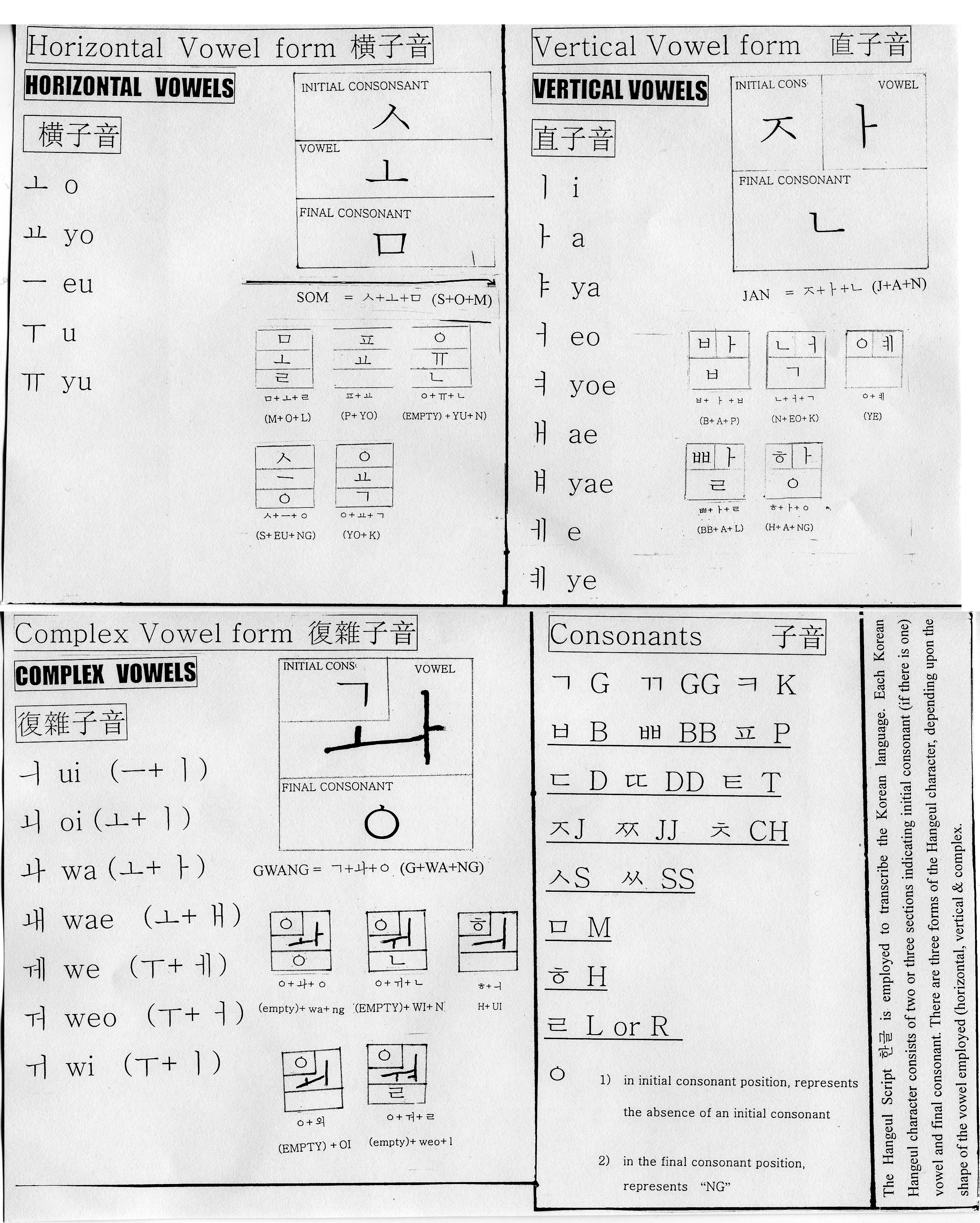
I made this chart for understanding the hangul script back in 1995. I was learning Korean myself at the time and felt frustrated that hangul was not taught in a systematic manner. This simple chart (here designed for Chinese and Japanese speakers as well) is above all systematic. Hangul are broken down into three forms: horizontal, vertical and complex, according to the shape of the vowel.
April 27, 2012
Asia Institute Seminar “The Past, Present and Future of Money”
Professor Marc Shell, Irving Babbitt Professor of Comparative Literature at Harvard University, delivered a compelling talk at the Asia Institute Seminar “The Past, Present and Future of Money” on April 27, 2012 in which he described the cultural, political, ideological and aesthetic aspects of money in historical perspective. 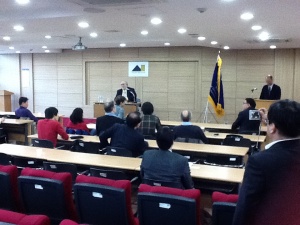
“The Rise of Consumption and the Demise of Causality”
Emanuel Pastreich
There are two enormous challenges today that seem unrelated and yet perhaps can be directly connected through a more profound consideration of the impact of technology on society: the rise of consumption culture and the demise of causality in our thinking, specifically with reference to the impact of our actions on the environment.
The first challenge is the challenge of greed and consumption. There is a deep need among people to consume that has assumed a crisis level in advanced industrial nations, reaching a level completely out of line with either the economic situation (which is dire) or human needs. That need to consume is spreading rapidly. It is common to attribute this situation to “greed” without much consideration for what it is that generates greed, how that act has its own social, historical and even physiological aspects.
June 9, 2012
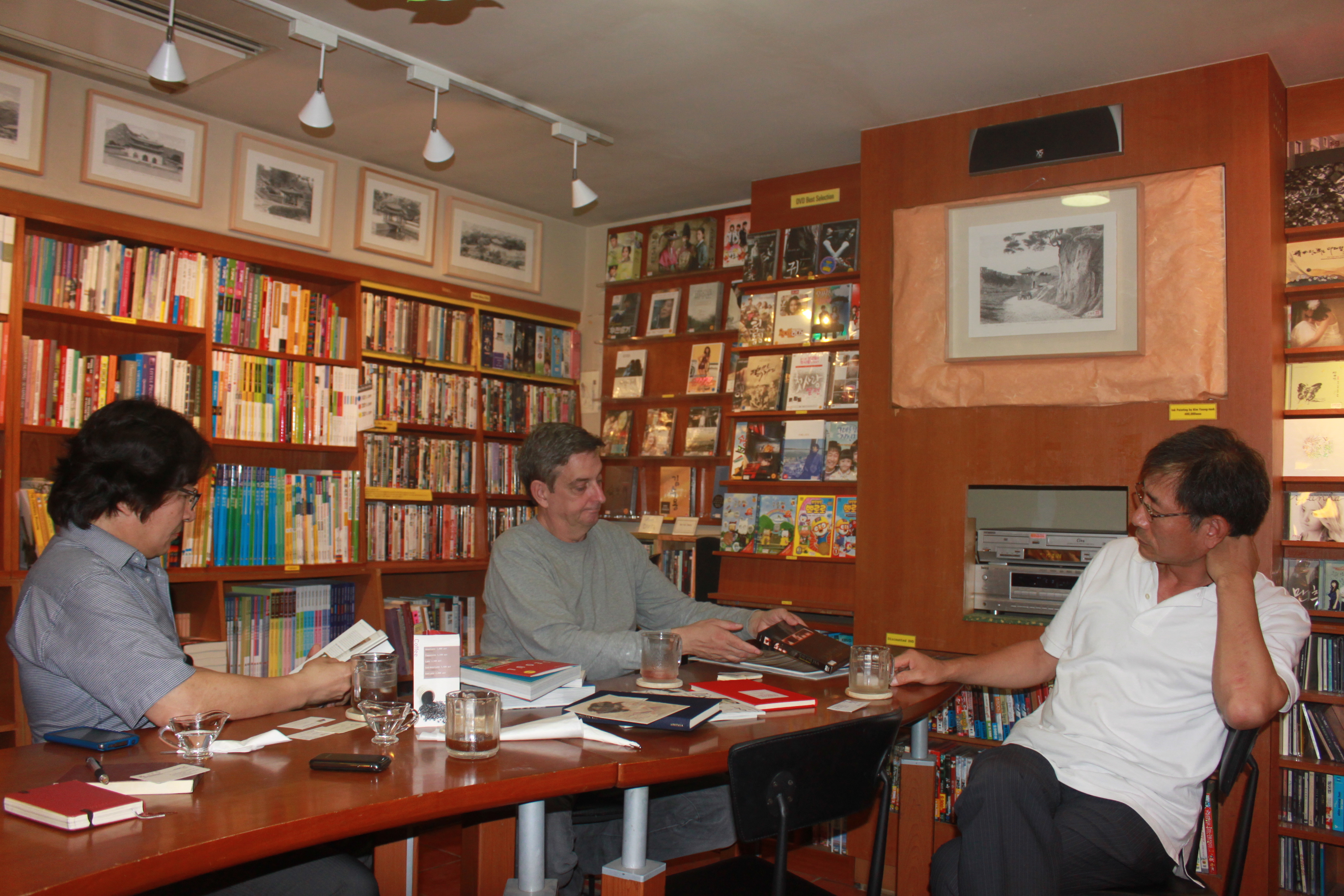
John Treat, Professor of Japanese literature at Yale University (from my original department of East Asian Languages and Literatures), Hank Kim, owner of Seoul Selection publishing, Gu-yong Lee president of Korean Literary Management and the poet Seung Shin Lee met together on Saturday for a cup of coffee at Seoul Selection’s underground café near Gyungbok Palace.
2012년 6월 7일 예일대학교 동아시아 언어‧문학 존 트리트 교수님 (일본문학전공) 께서 경희대에서 예일대 학한국 전망 관련 해서 특강 하셨어요. 명문 예일대학교는 아직 한국학이 없는 이유를 설명 하시고 예일대와 한국의 인연을 소개 하셨어요. 교수 하고 학생과 매우 유익 한 문답도 하셨어요.
발표문 요약:
존 트리트
동아시아 언어‧문학
예일대학교
예일대 한국학 연구의 과거, 현재 그리고 미래
Professor John Treat of East Asian Languages and Literature at Yale, my original department and the department of Professor Steven Owen at Harvard University, delivered this talk to a group of Kyung Hee students and faculty on June 7, 2012 at the Kyung Hee University library.
East Asian Languages and Literature at Yale is the most solid program for learning Asian languages in the United States. Because the program requires undergraduates to take a course in either literary Chinese or literary Japanese, it has never attracted a large number of students. In my year, 1987, there were four majors.
The discussion about the history of Korean studies in the United States, and its evolving nature, was fascinating. Sadly, Yale University does not yet have a Korean studies program, although Professor Treat is working hard to build one.