Why Catalonia today and then?

Anyone observing the recent suppression of the independence vote in Catalonia by the Spanish Government should be reminded immediately that this is not the first bid of Catalonia for independence. In fact you cannot understand what is happening today if you do not grasp what happened in the region that declared independence from 1936 until it was brought down by the Fascists in 1939 under the name of “Revolutionary Catalonia.”


Lori_Blog_004_Collection2012.jpg

I highly recommend George Orwell’s autobiographical record Homage to Catalonia for a day by day account of the effort to resist Fascism in that region. You can find the text of the book here. Of course the current politics are far from the radical views of the communists and anarchists who tried to create a classless society in Catalonia at the time. Yet the effort to break out of an increasingly restricted social environment was perhaps similar to what we are seeing today. I wonder why nothing about that period in history is mentioned in any of the news accounts about current events.


Seminar “Endgame: A Hard Debate on the North Korean Nuclear Threat” at The Korean Foundation for Advanced Studies

I received this invitation to a seminar on the nuclear threat from North Korea entitled “Endgame: A Hard Debate on the North Korean Nuclear Threat” from the Korean Foundation for Advanced Studies. I was deeply disappointed that I cannot attend because of a conflict with my classes. I wanted to attend the seminar so that I could stand up in the middle of the discussion and state loudly and clearly that this rigged up “hard debate” between American and Chinese scholar does not in any way represent the views of either the American people, or American experts on East Asia.

Rather the “hard debate” is a fabricated one in which representatives of think tanks that have been bought off by military contractors and the super rich parade their false and misleading data about the “threat” of North Korea, making it look like the United States and North Korea, or China, are so far apart that their is no dialog possible. This is not policy, but rather a criminal form of corruption and collusion with for profit organizations.

Above all, I wanted to demand that I be included in the discussion as an expert who actually knows Korean language, who actually knows what he is talking about and who is not deeply in the pocket of military contractors.

The Chinese speakers invited, Jia Qingguo (Peking University) and Zhang Duosheng (China International Institute for strategic Society ), are rather diplomatic personalities and are unlikely to mention that the United States is in violation of international law and in violation of the Nonproliferation Treaty itself. They will not bring up just how dangerous and irresponsible US policy is under the so-called Trump administration. F

ormer Korean Foreign minister Professor Yoon Young-kwan is even more diplomatic and even less likely to mention the criminal actions of the Trump administration.

Bruce Klingner of the Heritage Foundation is a nice guy, but has been presenting arguments about North Korea that make no sense over the last few years, skewed to make it look like the problems originated in Pyongyang. He is a smart guy and he obviously knows that what he is saying is untrue.

Gary Samore, Executive Director for Research at the Belfer Center at Harvard University is equally compromised and even more ignorant of Korea.

Sadly, I cannot attend the event, but I hope that other Americans will go and shout out, if necessary, that this debate between China and the United States does not represent the American people. Tell them all that these  two “experts” who don’t speak a word of Korean and have been consistently promoting an unnecessary confrontation with North Korea are not qualified to represent our country.


Korean Foundation for Advanced Studies

“Endgame: A Hard Debate on the North Korean Nuclear Threat”

Tuesday October 17, 2:50-4:10 PM

@ Changchung Arena 장충 에래나

(near Shilla Hotel; Dongguk University, Line 3)


22089103_871815216308295_6521748736053019062_n

Our Demon-Haunted World

Here is a haunting quote from Carl Sagan that my close friend from Lowell High School (and fellow member there of the astronomy club and the Science Club) John McDonald sent to me.


Carl Sagan

The Demon-Haunted World

“I have a foreboding of an America in my children’s or grandchildren’s time — when the United States is a service and information economy; when nearly all the manufacturing industries have slipped away to other countries; when awesome technological powers are in the hands of a very few, and no one representing the public interest can even grasp the issues; when the people have lost the ability to set their own agendas or knowledgeably question those in authority; when, clutching our crystals and nervously consulting our horoscopes, our critical faculties in decline, unable to distinguish between what feels good and what’s true, we slide, almost without noticing, back into superstition and darkness…

The dumbing down of American is most evident in the slow decay of substantive content in the enormously influential media, the 30 second sound bites (now down to 10 seconds or less), lowest common denominator programming, credulous presentations on pseudoscience and superstition, but especially a kind of celebration of ignorance”

In an age of climate change, should we ban automobile advertising?

I have a question for you. We banned cigarette advertisement when we found out the cigarette smoking causes cancer. The decision was based on objective scientific research, not the studies provided by cigarette companies.

We did not make cigarettes illegal, but we made it hard to promote them through advertising.

celebrity-smoking-ad_barbara-stanwyck-lm

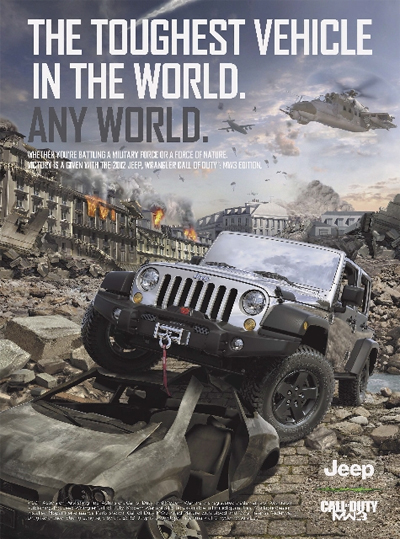
Now we know that climate change is a threat to human survival with confirmation through extensive research. The signs are already out there for you to see. Do you think we should ban the sexy promotions of driving in automobiles around the world found on television and in newspapers?

si-lexus

Jeep-Call-of-Duty-Ad-11-7-11


THAAD as a totem

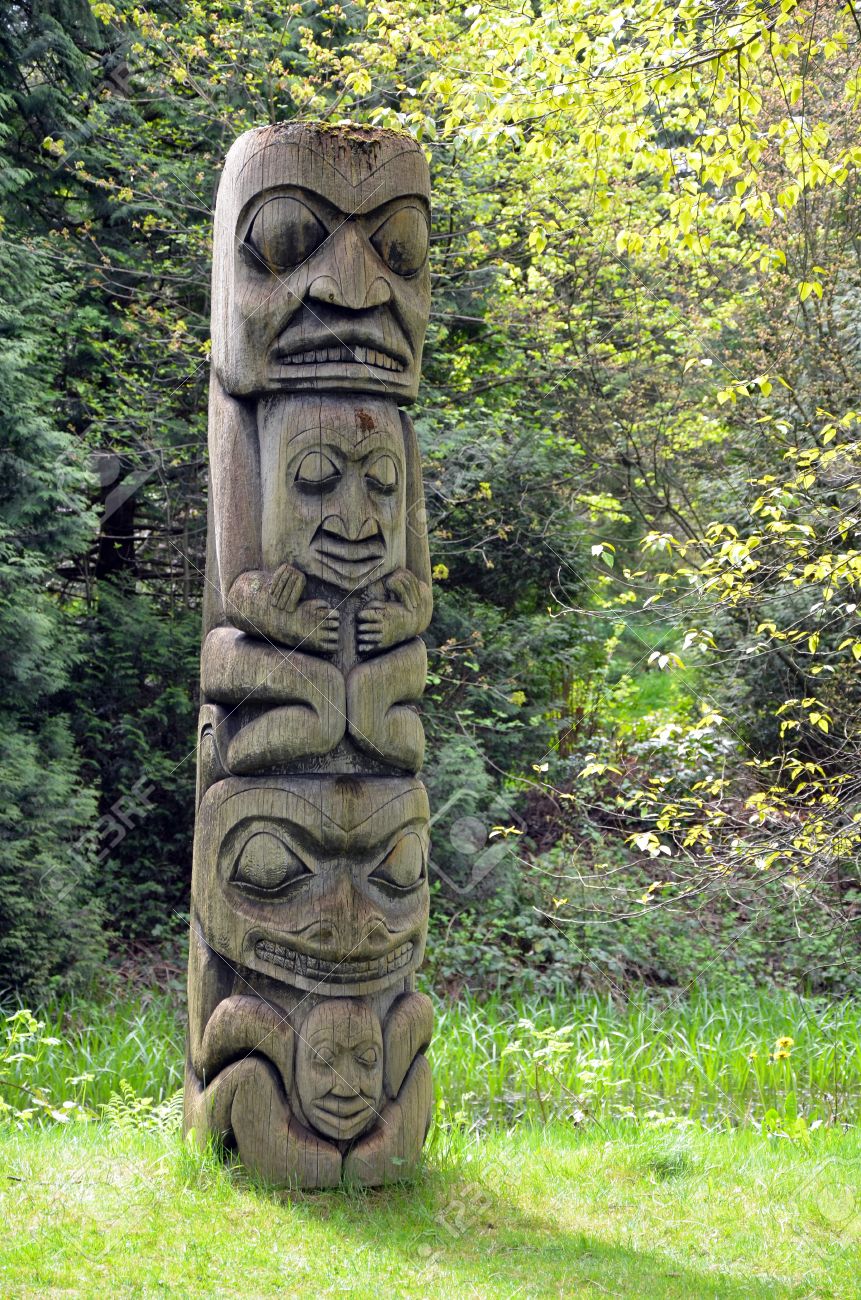
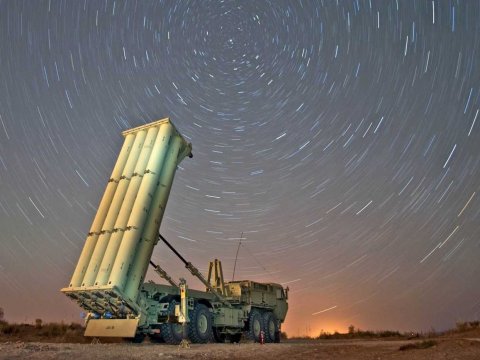
Watching recent reporting about the planned US missile-defense system THAAD being deployed in South Korea,  the debate is completely absent any attempt to consider what exactly the function of THAAD is and what its role is in the true security of South Korea. In fact, there is almost no discussion about whether a missile attack from North Korea is likely at all, or what other security threats might be out there. It seems rather that THAAD has become a totem (bad or good) before which one prays in the hope that it will bestow magical powers.


13375849-Weathered-totem-pole-in-pacific-northwest-forest-Stock-Photo-tribal


thaad-missile-lockheed-martin

Changes so slow they are invisible to us

Sadly, people cannot perceive slow changes in our society. Because they do not study history, or read books for that matter, the “coup in slow motion” is all but invisible for most citizens, and most intellectuals, having been reduced to the sellers of wears, rather than the leaders of a broad social discourse, can do virtually nothing.

Back to the stone age

Emanuel Pastreich 

April 9, 2017 


Of course we may end up back in the stone age as a result of nuclear war. I certainly would not rule that out. but there is another possibility. Perhaps this final cycle in the evolution of technology will lead us back to the culture of the hunter-gathers. 


We are witnessing the 4th industrial revolution, a process by which the entire act of making tools is being automated and spread around the world. We are at risk of losing human control of the process of manufacturing itself as computers expand their capacity. The disruption such a change is making in our society is so immense that it is hard for us to grasp it.


If humans are no longer needed to manufacture, what will be left for us?


One can see the automation of production as the start of a post- modern world, but in a sense we are returning to the stone age. If we are left out of the cycle of manufacturing tools, then we are just like the hunter gatherers of prehistoric times, even if the world around us is radically different. Technology is no longer our possession. Perhaps we are possessed by technology, or perhaps not.

The real mistakes of socialism

Here is a short list of what I think were the major mistakes made in socialist approaches to addressing poor distribution of wealth and other contradictions


Lack of spiritual engagement, denial that human experience must have a spiritual depth and therefore only reinforcing a materialist perspective, even while trying to redistribute wealth (thus assuming basic values of capitalism)

1) Emphasis on monetary value. Assuming value can be converted into cash, into numbers

2) Embrace of an industrial society and assumption that the organization of the industrailized society is the best

3) Lack of recognition for, and approval of,  traditional ways of living and their wisdom.

4) Assuming the myth of modernity as an absolute break and a modern life is absolutely superior

5) Ignoring impact of industry or policy on the environment.

6) Ignoring the role of local government and of local village economies

7) Allowing for a centralization of the economic structures that made it easy for people to take over large units, privatize them and become billionaires overnight. The failure of socialism to build in guards against this abuse was a big mistake.

8) Lack of balance of powers between different parts of government to avoid concentration of power in one institution
9) Mistaken assumption that because markets are exploitative that there is no use for markets.

The function of Art in Korea

Art and culture in Korea tends to be a product for consumption, and increasingly a commodity. To have art on the wall is a way of showing others that one has more money, that one is more sophisticated, demonstrating that one is from a higher class. And sadly that culture, that art has been overwhelmingly Western because the West is assumed to be superior.

The problem is rather how does one establish a strong identity for Koreans? The solution is not a simple question of elementary school teachers telling students how great King Sejong was, or stressing how much feeling (정) Koreans have. The primary issue is rather for Koreans to see their culture, their art, as being something more than a commodity. Culture should not be something static, something that one “possesses” like bars of gold. Korean culture is not merely a collection of habits, ideas and patterns collected over 5000 years of history. That sort of culture is more the storage vault of an art museum.

The full range of that culture must be presented constantly for the present day, constantly reinterpreted for citizens of contemporary Korea. But making it modern does not mean making it into a commodity, something that can be sold to anyone. That sort of vivid reinterpretation of Korea’s past to meet the needs of the present is what is most sadly missing around us.

There are several ways to make Korean identity more vital. Let me provide one. If Koreans see that their lives are a model for what others do in other countries, that if Koreans care for the environment, are not wasteful and are not corrupt, that people in Vietnam, and Mongolia and Uzbekistan will see that model and emulate it (or vice versa will copy Korea’s worst habits). Then culture becomes something ethical, something bigger than just consuming for pleasure.

Korean cultural identity is what is produced in the process of applying the full range of Korea’s past to address the new challenges of the present day.

Being a Korean is the process of doing one’s best to find in the full complexity of culture and history parts that will make a better future. The sense of history, of mission, and of purpose can transform Korea and its identity. But it cannot be done by building big monuments to dead people. That past must be interpreted for the present, and above all for young people.


Multicultural Korea

Koreans must take control of their own historical and geographical narrative and create our own history by reading the past against the present, projecting the truths hidden in previous experience onto the challenges of the current day so as to help us to understand the complexity of past culture. But we must avoid falling back, out of laziness, on a simple form of cultural determination, or a racist or ethnic purity argument.

We live in an extremely uncertain time when economic disruptions are going to make people’s lives more stressful and more painful. There will be a profound need to belong to something, to find something simple that connects us all now that we have drifted so far apart. Without any doubt, arguments about how we are all one people, with one blood, will be immensely popular for many and there are already signs of an anti-foreigner mood in some places in Korea. Those trends are dangerous, if they are perhaps inevitable. But Korea is not in a position to accept such arguments, no matter how pleasing they may sound. Korea has an extremely low birth rate and will need the help of its increasing multi-ethnic citizenship.

There is simply no way for Korea to turn to such an isolationist xenophobic culture. What we need, rather, to expand Korean culture to include people from other nations, to make the traditions of Korea universal 보편적 and accessible. Korean identity must evolve and expand to include those newcomers and in that process of changing will Korean identity be produced.