Environment
Emanuel’s presentation “The United States Re-Balancing in East Asia: Climate Change and Durable Commitment” (May 17, 2014 @ HUFS)
“East Asia in a Changing International System”
Saturday, May 17, 2014
KOREA INTERNATIONAL STUDIES ASSOCIATION
Hankuk University of Foreign Studies,
Graduate School Bldg. 226
Plenary Panel 2:
11:15-12:15
“Environmental Change and the Future of East Asia”
Chair and Discussant: Mason Richey
Emanuel Pastreich
(Asia Institute, Director; Professor, Kyung Hee Univ.)
“The United States Re-Balancing in East Asia: Climate Change and Durable Commitment”
Rasmus Karlsson
(HUFS)
“Festina Lente as a Key to Global Decarbonization”
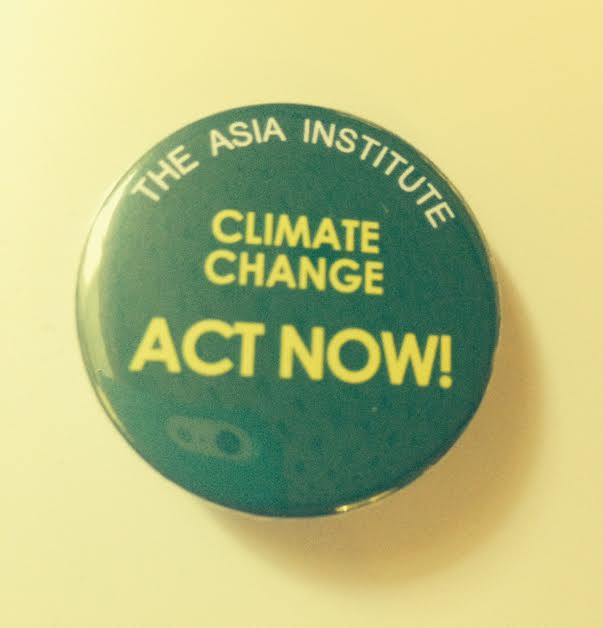
“Climate Change: Act Now!” Pin from the Asia Institute
The Asia Institute released its “Climate Change: Act Now!” pin today. The pin is a chance for our friends to show the world that they are committed to making the small steps necessary to move the world in a sustainable direction.
The pin is just a 2000 Won donation away. Come to our next event and get one.
For a list of actions you can take, see Emanuel’s article:
“16 Steps to address the environmental crisis”
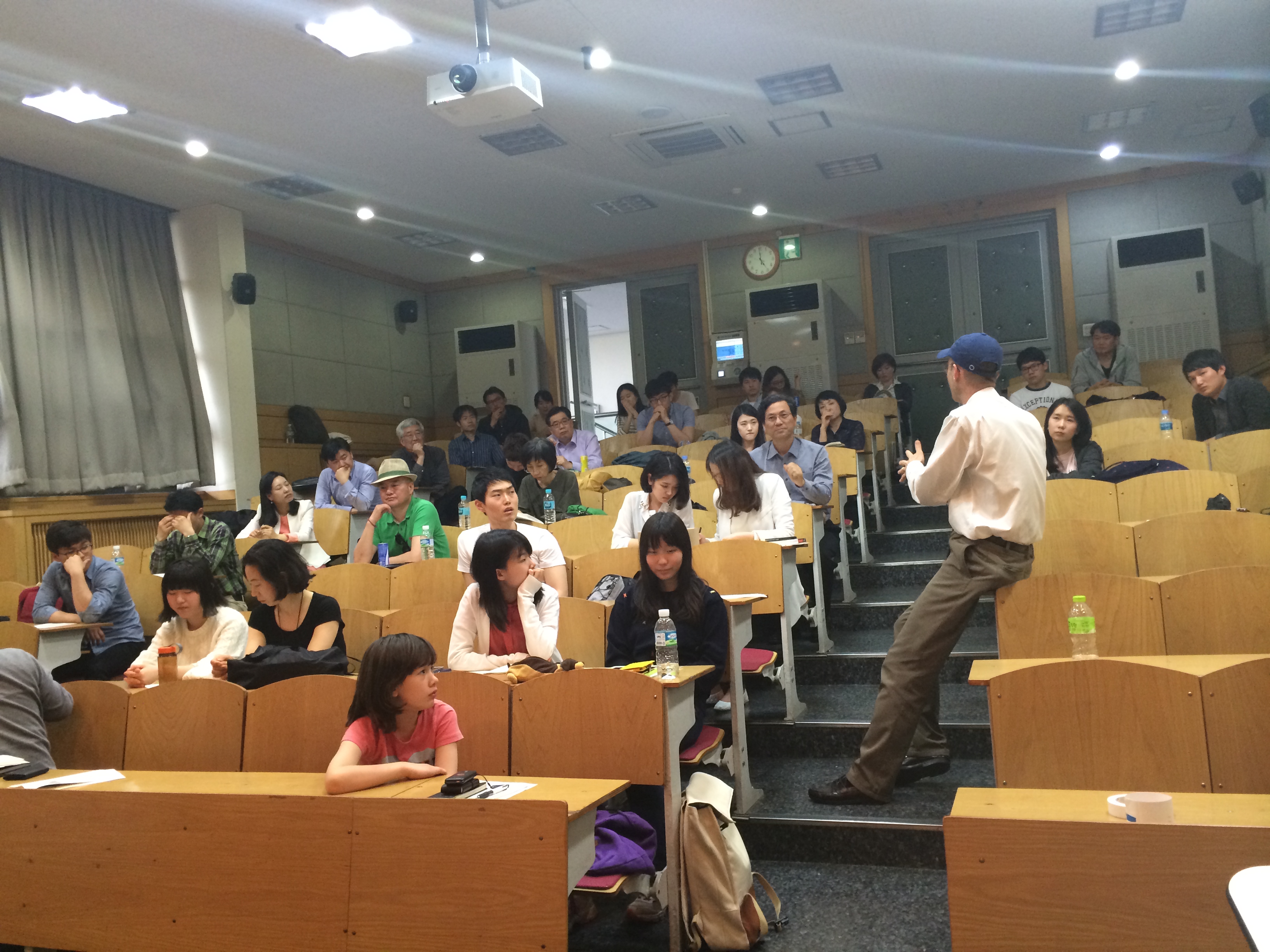
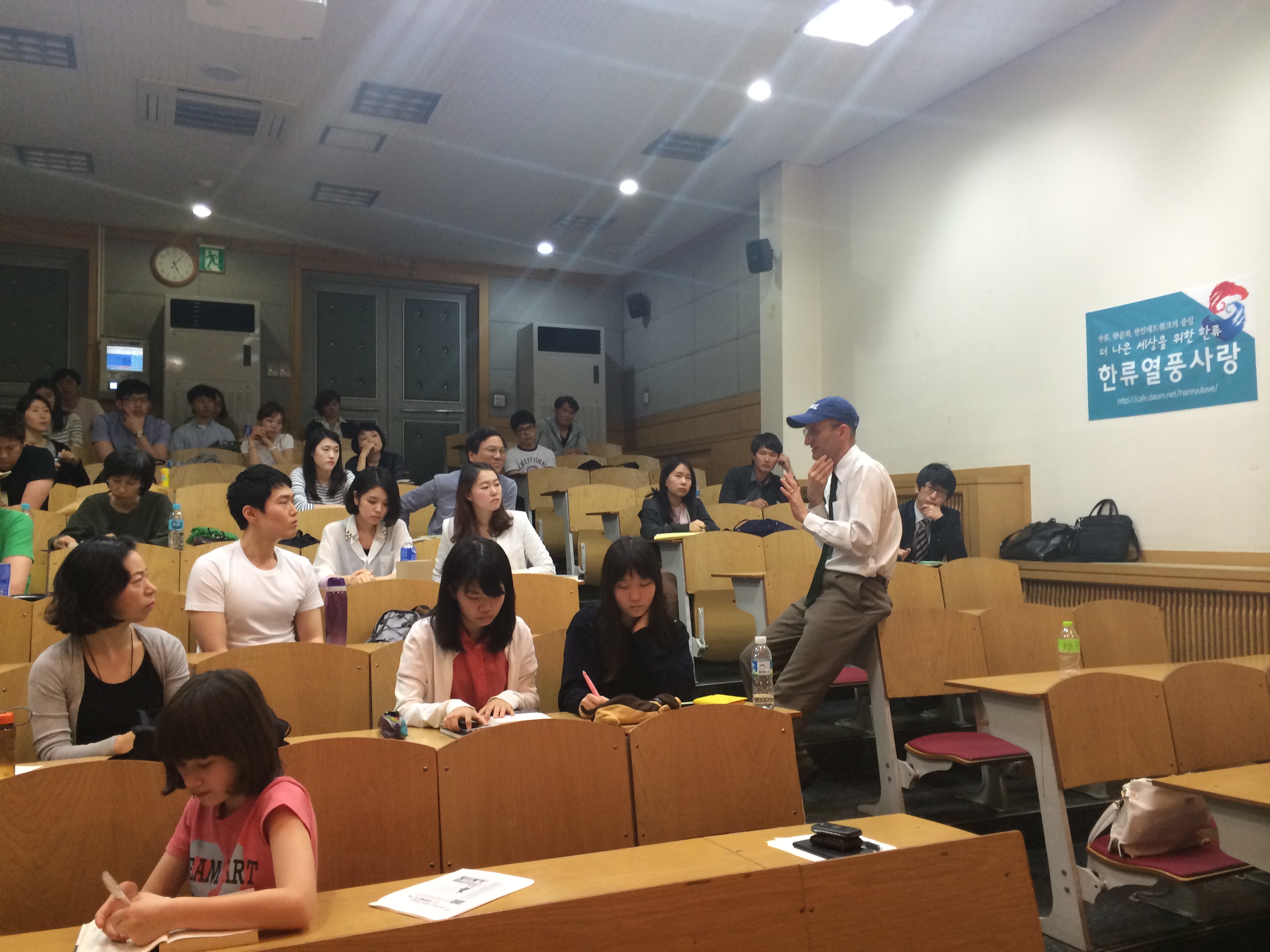
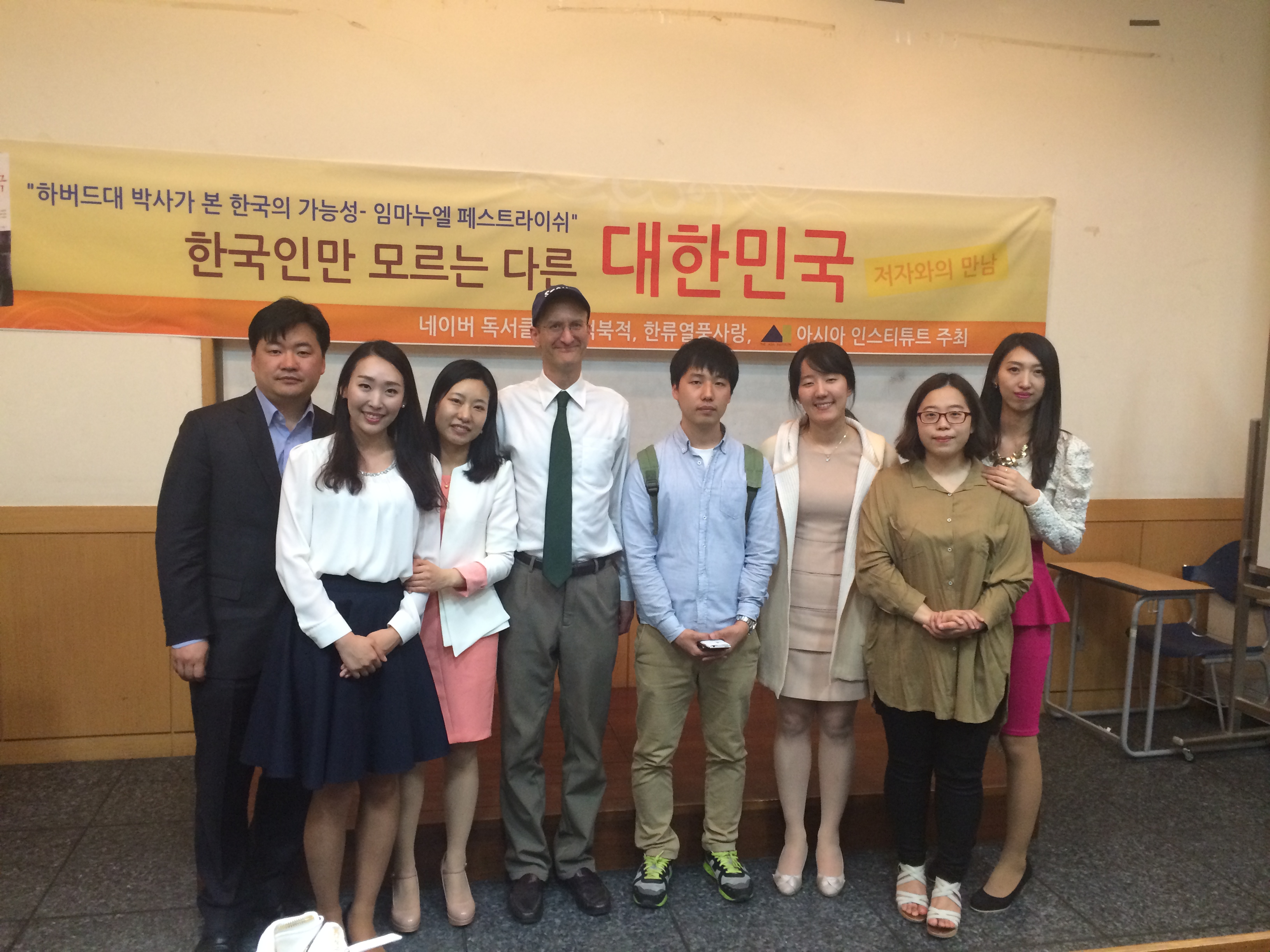
Discussion on “Another Republic of Korea” sponsored by Naver Book Club & The Asia Institute
“Another Republic of Korea” Discussion at Sookmyung University
April 26, 2014
On April 26, 2014, the Naver Book Club and the Asia Institute joined forces to host a discussion on “Another Republic of Korea” (다른 대한민국) that built on Emanuel’s recent book in Korean by that title. The talk was a chance for a diverse audience, including many high school students, to discuss how Korea could become a more dynamic, more responsive and more human society.
Much of the discussion between the members of the audience concerned the larger symbolic meaning of the sinking of the Sewol Ferry sinking and the needless deaths of so many students. It was a rather emotional moment in which Koreans from different backgrounds expressed their profound disappointment with the culture of contemporary Korea and their worries about the future that awaits us.
“America’s Homegrown Terror” (Foreign Policy in Focus April 7, 2014)
Foreign Policy in Focus
April 7, 2014
“America’s Homegrown Terror”
Emanuel Pastreich & John Feffer
The U.S. security complex is up in arms about cyberhackers and foreign terrorists targeting America’s vulnerable infrastructure. Think tank reports have highlighted the chinks in homeland security represented by unsecured ports, dams, and power plants. We’ve been bombarded by stories about outdated software that is subject to hacking and the vulnerability of our communities to bioterrorism. Reports such as the Heritage Foundation’s “Microbes and Mass Casualties: Defending America Against Bioterrorism” describe a United States that could be brought to its knees by its adversaries unless significant investments are made in “hardening” these targets.
But the greatest dangers for the United States do not lurk in terrorist cells in the mountains surrounding Kandahar that are planning on assaults on American targets. Rather, our vulnerabilities are homegrown. The United States plays host to thousands of nuclear weapons, toxic chemical dumps, radioactive waste storage facilities, complex pipelines and refineries, offshore oil rigs, and many other potentially dangerous facilities that require constant maintenance and highly trained and motivated experts to keep them running safely.
The United States currently lacks safety protocols and effective inspection regimes for the dangerous materials it has amassed over the last 60 years. We don’t have enough inspectors and regulators to engage in the work of assessing the safety and security of ports, bridges, pipelines, power plants, and railways. The rapid decline in the financial, educational, and institutional infrastructure of the United States represents the greatest threat to the safety of Americans today.
“ì¿ ë¶€ì¹˜ 사막과 ìƒíƒœê³„ 복월 ì¸ì‚¬ì´íŠ¸ 2014.02.11
인사이트
“쿠부치 사막과 생태계 복원”
2014-02-11 18:14:57
<워싱턴에서는 아직 쿠부치 사막이 보이지 않지만, 사막의 모래는 강한 바람을 타고
베이징과 서울은 물론, 일부는 미국의 동부 해안까지 이동한다.>
중국 내몽골 다라터치의 산뜻하게 페인트칠한 농가 뒤편으로는 완만하게 이어진 낮은 구릉이 펼쳐지고, 들판에는 소와 양들이 한가로이 풀을 뜯고 있다.
그러나 농가의 서쪽 방향으로 100미터 정도만 걸어가면 이런 전원적인 현실과는 동떨어진 풍경과 마주하게 된다. 바로 눈 닿는 곳까지 끝없이 펼쳐진 모래의 물결, 생명의 징후가 전무(全無)한 쿠부치 사막이다.
북경으로 진격하는 쿠부치 사막
기후변화가 초래한 흉악한 산물인 쿠부치 사막은 지금도 800킬로미터 떨어진 베이징을 향해 가차 없이 동진(東進)하고 있다. 만약 사막의 동진을 이대로 둔다면 머지않은 장래에 중국의 수도인 베이징마저 점령 당하게 될 것이다.
워싱턴에서는 아직 쿠부치 사막이 보이지 않지만, 사막의 모래는 강한 바람을 타고 베이징과 서울은 물론, 일부는 미국의 동부 해안까지 이동한다.
사막화는 인류의 삶을 심각하게 위협하고 있고 모든 대륙에서 사막은 점점 더 빠른 속도로 커지고 있다. 1970년대 초기에 서아프리카 사헬 지역이 그랬듯이 미국도 1920년대 대평원에 불어 닥친 먼지폭풍(Dust Bowl)으로 엄청난 생명과 재산 손실을 입었다.
그러나 기후변화는 아시아, 아프리카, 호주, 미주 전역에서 수백 만, 궁극적으로는 수십억 명의 환경난민을 초래하는 등 사막화를 새로운 차원의 위협으로 키워 가고 있다.
말리와 부르키나파소에서는 확장하는 사막으로 인해 전체 인구의 6분의 1이 이미 난민으로 전락했고, 유엔환경계획(UNEP)에 따르면 소리 없이 확대되는 모래 사막으로 전 세계가 지불해야 하는 비용이 연간 420억 달러에 달한다고 한다.
점점 커져가는 사막은 메말라가는 바다와 녹아내리는 극지 빙하, 지구상의 동식물 감소와 함께 우리의 세계를 알 수 없는 상황으로 만들고 있다. 어쩌면 NASA의 화성탐사로봇 큐리오시티가 보내온 척박한 사진 속 풍경은 우리의 비극적인 미래의 단편일지도 모른다.
과소평가된 사막의 위협
하지만 워싱턴 싱크탱크의 웹사이트만으로는 사막화가 세계 종말의 전조라는 사실을 눈치채기 어렵다. 브루킹스 연구소에서 ‘미사일’이라는 키워드로 검색했을 때 1,380개의 결과를 찾아냈지만 ‘사막화’ 검색 결과는 24개에 불과했다.
헤리티지 재단 웹사이트에서는 ‘미사일’에 대해 2,966개를, ‘사막화’에 대해서는 단 3개의 검색 결과가 표시됐다. 사막화와 같은 위협은 이미 수많은 사람들의 목숨을 앗아갔고 앞으로도 수십 년 안에 더 많은 사람들의 목숨을 빼앗아 갈 것이지만, 일부의 목숨을 겨냥하는 테러리즘이나 미사일 공격 등 전통적인 안보 위협만큼 큰 관심이나 지원은 받지 못하고 있는 상황이다.
America’s Future Role in Asia (Chosun Ilbo, January 1, 2014)
Chosun Ilbo
January 1, 2014
America’s Future Role in Asia
(translation of article published in the Korean language)
During his recent visit to Korea, Vice President Joseph Biden remarked, “America is a Pacific power – a resident Pacific power – and we are going nowhere.”
I could not agree more with Vice President Biden. The United States should be a “resident Pacific Power.” Since I started studying Chinese language at Yale University I felt that the future of the United States lay with Asia. I have had the opportunity to learn about that vision of a United States committed to a Pacific age from such Asia experts as Edwin Reischauer, James Laney, Donald Gregg and Ezra Vogel.
But as I imagine the future role of the United States in Asia, I am reminded of what my father told me as a young boy. My father said repeatedly, “Never do the same job for more than one year.” He did not mean you should quit your job every year! What he meant was that although one has the same title in the same organization, one must constantly innovate, transforming how one works and adapting to new issues and circumstances. That advice applies to the role of the United States in East Asia today. That role is vital and increasing in importance. But the nature of that role must shift fundamentally in response to demands of this age.
The “Daejeon: Three Rivers” Mug Cup
The “Daejeon: Three Rivers” Mug Cup
The Asia Institute launches the “Daejeon Three Rivers” mug cup in honor of the remarkable city of Daejeon. Surrounded by mountains and defined by three beautiful rivers, the Gapcheon River, the Yudeungcheon River and the Daejeoncheon River, Daejeon is perfectly represented by its ecosystem in these attractive mugs. Produced by the Asia Institute in recognition of Daejeon’s beauty and history, the mugs make perfect Christmas presents as the only commemorative goods for the city Daejeon available anywhere.
The mug cups are of the highest quality.


PLEASE ORDER TODAY!!!!
Prices:
Set of 4: |
40,000 Won |
Set of 20: |
190,000 Won |
Individual cup |
12,000 Won |
As our director Park Kyungho must prepare and often deliver the mug cups, we ask that you order a set of 4 or a set of 20.
For orders, please contact
Park Kyungho 박경호 국장
External Director
The Asia Institute
Cell: 010 2825-1908
Email: pkjuls@daum.net
“The Real North Korean Threat” in Foreign Policy in Focus (September 23, 2013)
Foreign Policy in Focus
September 23, 2013
“The Real North Korean Threat”
Emanuel Pastreich
http://fpif.org/real-north-korean-threat/
There is a terrible danger lurking just over the DMZ that threatens the Republic of Korea and Northeast Asia. That threat demands an immediate response that is focused and forceful, as well as a long-term strategy that will bring together all members of the international community for a campaign dedicated to the permanent containment of this threat.
It is not North Korea’s Taepodong ICBM systems, nor its Musudan or Nodong missiles that I have in mind. Nor do I refer to the nuclear weapons that recently were tested as part of Pyongyang’s high-stakes diplomatic cat-and-mouse game with the international community. Although the danger of an arms race in Northeast Asia is serious, humanity faces another, potentially more devastating peril—one for which we have yet to begin to make required strategic preparations.
I refer to the spread of deserts and semi-desert regions in North Korea as a result of the reckless logging of forests, the misuse of soil, and irresponsible farming practices. These ecological dead zones, where few plants can survive, are spreading. As desertification worsens, this ecological nightmare will have serious, perhaps irreversible, repercussions in South Korea and throughout the region.
Professor Kim Seoung-il of Seoul National University estimates that over 1 million hectares of forests in North Korea have been lost over the last 20 years, leading to a nearly irreversible loss of soil and an endless series of floods and droughts.
“일본 원전 사고 복구작업은 세계 각국 첨단기술이 융합될 장을 마련해준다” ( 뉴수위크)
뉴수위크
2013년 9월 16일
“일본 원전 사고 복구작업은 세계 각국 첨단기술이 융합될 장을 마련해준다”
EMANUEL PASTREICH 임마누엘 페스트라이쉬
지진과 쓰나미가 일본 후쿠시마의 원자력 발전소를 파괴한지 2년도 넘는 시간이 흘렀다. 후쿠시마 원전 사고는 아시아태평양 지역의 공공보건에 가장 심각한 위협 중 하나다. 역사상 가장 심각한 방사능 유출 사고로 기록될 가능성이 크다. 후쿠시마 제1원전에서는 아직도 방사능이 흘러나와 지하수로 스며들고 있어 태평양 전체를 오염시킬 위험도 있다.
최근 도쿄전력은 방사선이 지하수와 해수로 흘러들어가는 것을 막을 기술이 부족하다고 밝히며 일본 정부에 지원을 요청했다. 이 위기를 극복하려면 수십년에 걸친 국제사회의 협력이 필요하다는 사실은 명백하다. 그럼에도 일본은 그런 협력체계를 구축하는 일을 시작조차 하지 않은 상태다.
후쿠시마 원전 사고 해결은 1960년대 우주 경쟁에 비견될 수 있다. 그 시기에는 인류를 달에 보내기 위해 각국에서 첨단기술의 향연이 펼쳐졌다. 이에는 물론 장기간에 걸친 연구가 필요했다. 이번 후쿠시마 사고 복구작업에서는 그런 노력이 국제적으로 이뤄져야 한다. 수많은 사람의 생명이 달린 문제이기 때문이다. 후쿠시마 사태는 핵 비확산, 테러리즘, 경제위기 못지 않은 관심을 받아 마땅한 주제다.
이 문제 해결을 위해선 한국, 미국, 중국, 일본과 그밖의 국가들에서 가장 뛰어난 인재들이 모여 장기적인 계획을 마련해야 한다. 공학, 생물학, 농업학, 철학, 역사, 도시 디자인 등 다양한 분야의 전문가가 필요하다. 이들은 지역사회 재건, 주민 재정착, 방사선 유출 제어, 오염된 토양과 물 정화 등 다양한 층위에서 협력을 펼칠 것이다.
후쿠시마 사고는 인류의 큰 재앙이지만, 동시에 불의의 사고에 맞닥뜨렸을 때 가동할 수 있는 국제 네트워크를 구축할 기회를 제공했다. 이번 노력에서 마련한 돌파구는 페르시아만의 석유 제거나 기후 변화 같은 다른 장기 프로젝트에도 활용될 수 있다.
한국은 후쿠시마 위기에 적극 대응해 세부 계획을 세우고 세계 각국 정부, 연구단, 사업체