“CARE FOR OUR COMMON HOME”
THE POTENTIAL OF POPE FRANCIS’S ENCYCLICAL LETTER ON CLIMATE CHANGE
It was exactly 60 years ago that Bertrand Russell and Albert Einstein gathered together with a group of leading intellectuals in London to draft and sign a manifesto in which they denounced the dangerous drive toward war between the world’s Communist and anti-Communist factions. The signers of this manifesto included leading Nobel Prize winners such as Hideki Yukawa and Linus Pauling.
They were blunt, equating the drive for war and reckless talk of the use of nuclear weapons sweeping the United States and the Soviet Union at the time, as endangering all of humanity. The manifesto argued that advancements in technology, specifically the invention of the atomic bomb, had set human history on a new and likely disastrous course.
The manifesto stated in harsh terms the choice confronting humanity:
Here, then, is the problem which we present to you, stark and dreadful and inescapable: Shall we put an end to the human race; or shall mankind renounce war?
The Russell-Einstein Manifesto forced a serious reconsideration of the dangerous strategic direction in which the United States was heading at that time and was the beginning of a recalibration of the concept of security that would lead to the signing of the Nonproliferation Treaty in 1968 and the arms control talks of the 1970s.
But we take little comfort in those accomplishments today. The United States has completely forgotten about its obligations under the Nonproliferation Treaty, and the words “arms control” have disappeared from the conversation on security. The last year has seen the United States confront Russia in Ukraine to such a degree that many have spoken about the risks of nuclear war.
As a result, on June 16 of this year Russia announced that it will add 40 new ICBMs in response to the investment of the United States over the last two years in upgrading its nuclear forces.
Similar tensions have emerged between Japan and China over the Senkaku/Diaoyutai Isles and between the United States and China over the South China Sea. Discussions about the possibility of war with China are showing up in the Western media with increasing frequency, and a deeply disturbing push to militarize American relations with Asia is emerging.
But this time, the dangers of nuclear war are complemented by an equal, or greater, threat: climate change. Even the commander of the U.S. Pacific Command, Admiral Samuel Locklear, told the Boston Globe in 2013 that climate change “is probably the most likely thing that is going to happen . . . that will cripple the security environment, probably more likely than the other scenarios we all often talk about.’’
More recently, Pope Francis issued a detailed, and blunt, encyclical dedicated to the threat of climate change in which he charged:
It is remarkable how weak international political responses (to climate change) have been. Consequently the most one can expect is superficial rhetoric, sporadic acts of philanthropy and perfunctory expressions of concern for the environment, whereas any genuine attempt by groups within society to introduce change is viewed as a nuisance based on romantic illusions or an obstacle to be circumvented.
In view of the growing risk that in future wars weapons, nuclear and otherwise, will be employed that threaten the continued existence of humanity, we urge the governments of the world to realize, and to acknowledge publicly, that their purpose cannot be furthered by a world war, and we urge them, consequently, to find peaceful means for the settlement of all matters of dispute between them. We also propose that all governments of the world begin to convert those resources previously allocated to preparations for destructive conflict to a new constructive purpose: the mitigation of climate change and the creation of a new sustainable civilization on a global scale.
This effort is endorsed by Foreign Policy in Focus, the Asia Institute, and World Beyond War, and is being launched on July 9, 2015.
You can sign, and ask everyone you know to sign, this declaration here:
http://diy.rootsaction.org/p/man
“Last January the famous Doomsday Clock was moved two minutes closer to midnight, the closest it has been since a major war scare 30 years ago. The accompanying declaration, which warned that the constant threat of nuclear war and “unchecked climate change” severely threaten human civilization, brings to mind the grim warning to the people of the world just 50 years ago by Bertrand Russell and Albert Einstein, calling on them to face a choice that is “stark and dreadful and inescapable: Shall we put an end to the human race; or shall mankind renounce war?” In all of human history, there has never been a choice like the one we face today.”
Noam Chomsky
Professor Emeritus
Massachusetts Institute of Technology
English
http://www.asia-institute.org/2015/07/08/2647/
Huffington Post
“President Park’s Upcoming Visit to the United States”
June 2, 2015
Several Korean friends have asked my advice about what President Park Geun Hye should do for her upcoming visit to the United States this June. From what they say, it seems as if Koreans are assuming that President Park must somehow reaffirm the alliance in light of the overwhelming success of Japanese Prime Minister Abe Shinzo’s recent visit and the “new honeymoon” between Tokyo and Washington that is supposedly in full swing.
Although there is clearly an alignment between certain interest groups in Washington and Tokyo, the pomp accompanying the meetings between Abe and Obama struck most everyone as being rather forced and the results of the discussions was ambiguous.
It is true that Prime Minister Abe addressed both houses of congress and he received much applause. But the congress in the United States is at a historic nadir in terms of the trust that the American people put in it. Most Americans feel that congress is completely out of touch with their needs. So much so that Princeton University issued a report entitled “Testing Theories of American Politics: Elites, Interest Groups and Average Citizens” which suggests that congress rarely represents the concerns and interests of average Americans. .
Prime Minister Abe was welcomed to the United States by a petition signed by 200 scholars of Japanese studies that calls for “as full and unbiased an accounting of past wrongs as possible.” This unambiguous critique of Japanese revisionism was produced by experts including Ezra Vogel, a professor at Harvard University who has worked closely with Japan on economic and security issues for decades.
For that matter, the much ballyhooed Transpacific Trade Partnership promoted by the United States and Japan remains stalled, and unpopular, in both countries.
It is true that the two leaders announced historically significant military guidelines that will allow the Japanese and American military to work in close coordination around the world. But there is far from a consensus in the United States (whatever congress may say) that there is an urgent need for Japan to assume such a role, or that the dismantling of Japan’s peace constitution will make Asia safer.
Above all, President Park should remember that her visit is important not because it comes after Abe’s visit, but rather because it comes before President Xi Jinping’s visit in October.
A comparison between Obama’s meeting with Abe last month and his meeting with China’s Xi Jinping in November of last year is helpful. A personal rapport between Obama and Xi was palpable and some speculate that Obama found Xi’s thinking to be more congenial than that of the anti-science isolationists who now dominate the Republican Party. US-China negotiations were not easy, but they were serious. There was none of the grand spectacles that Prime Minister Abe was treated to, but the two sides produced historic agreements for military-military cooperation and a joint response to climate change that were welcomed by almost every nation in the world.
The best approach for President Park in the build up to her trip, and during her trip, is to subtly shift the nature of the dialog on security for Northeast Asia to issues which appeal to a broad spectrum of Americans–even some of the most vocal members of congress take no interest. Korea has no choice but to promote a different vision for Asia than the wrong-headed, destructive and wasteful drive to militarize Japan and confront China over issues that are not a direct threat to Korea or the United States. And perhaps Korea is the only country that is positioned to make such an argument effectively.
President Park should take with her a plane full of experts in critical fields such as climate change, human trafficking, non-proliferation and cybercrime and the team should engage in low-key discussions with their peers in Washington and elsewhere so as to produce substantial, but not flashy, results. She should not, by any means, try to “out Abe” Abe.
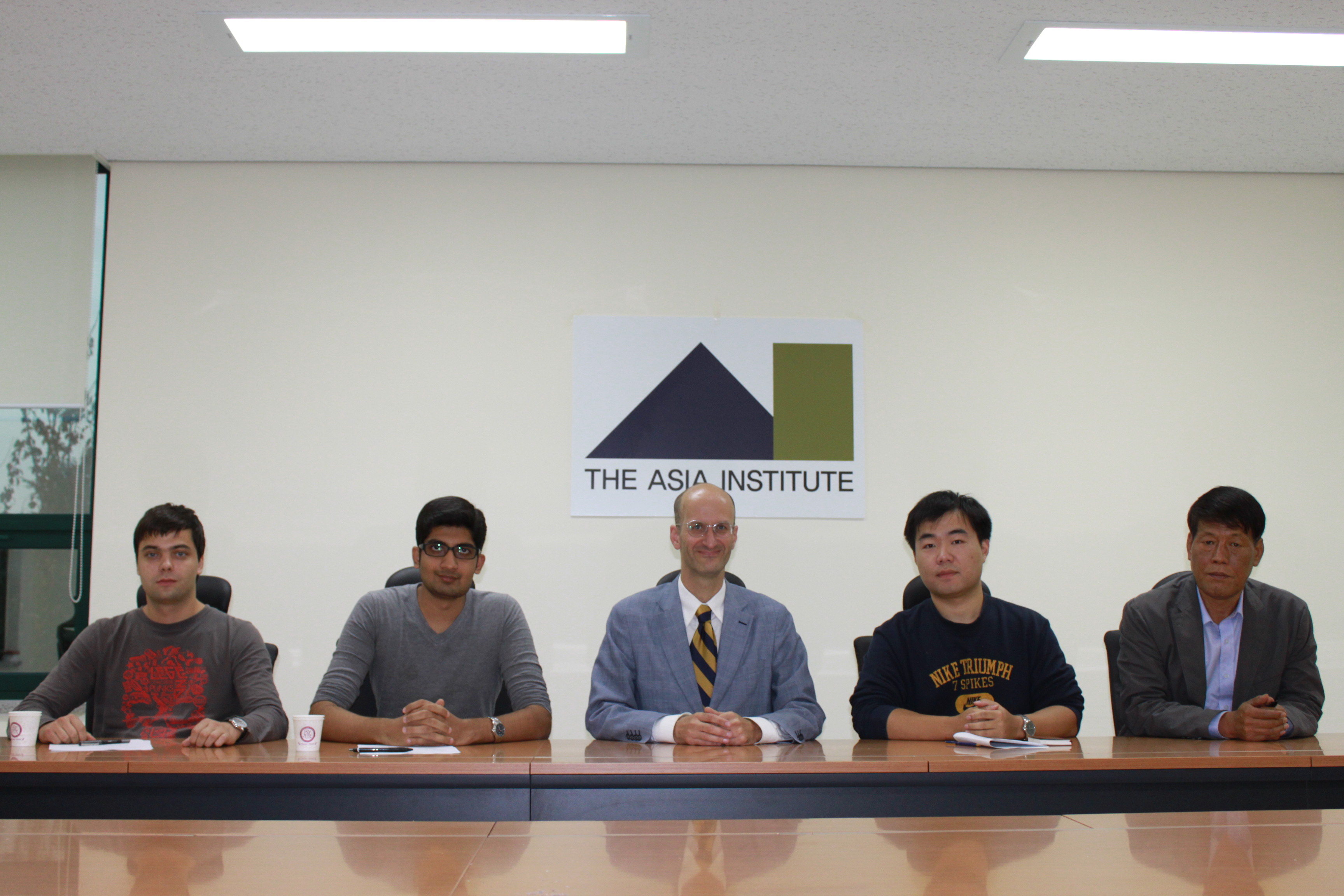
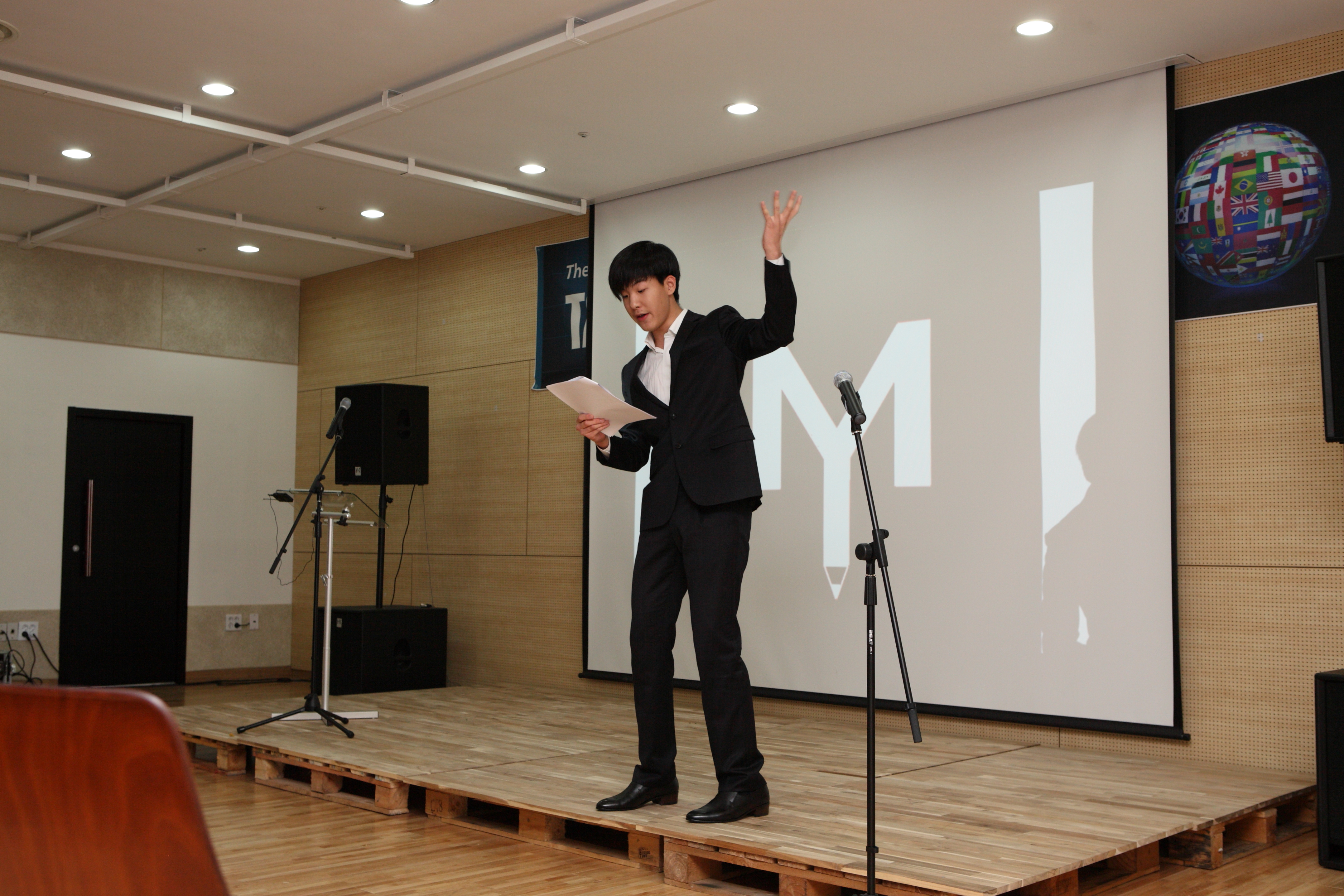

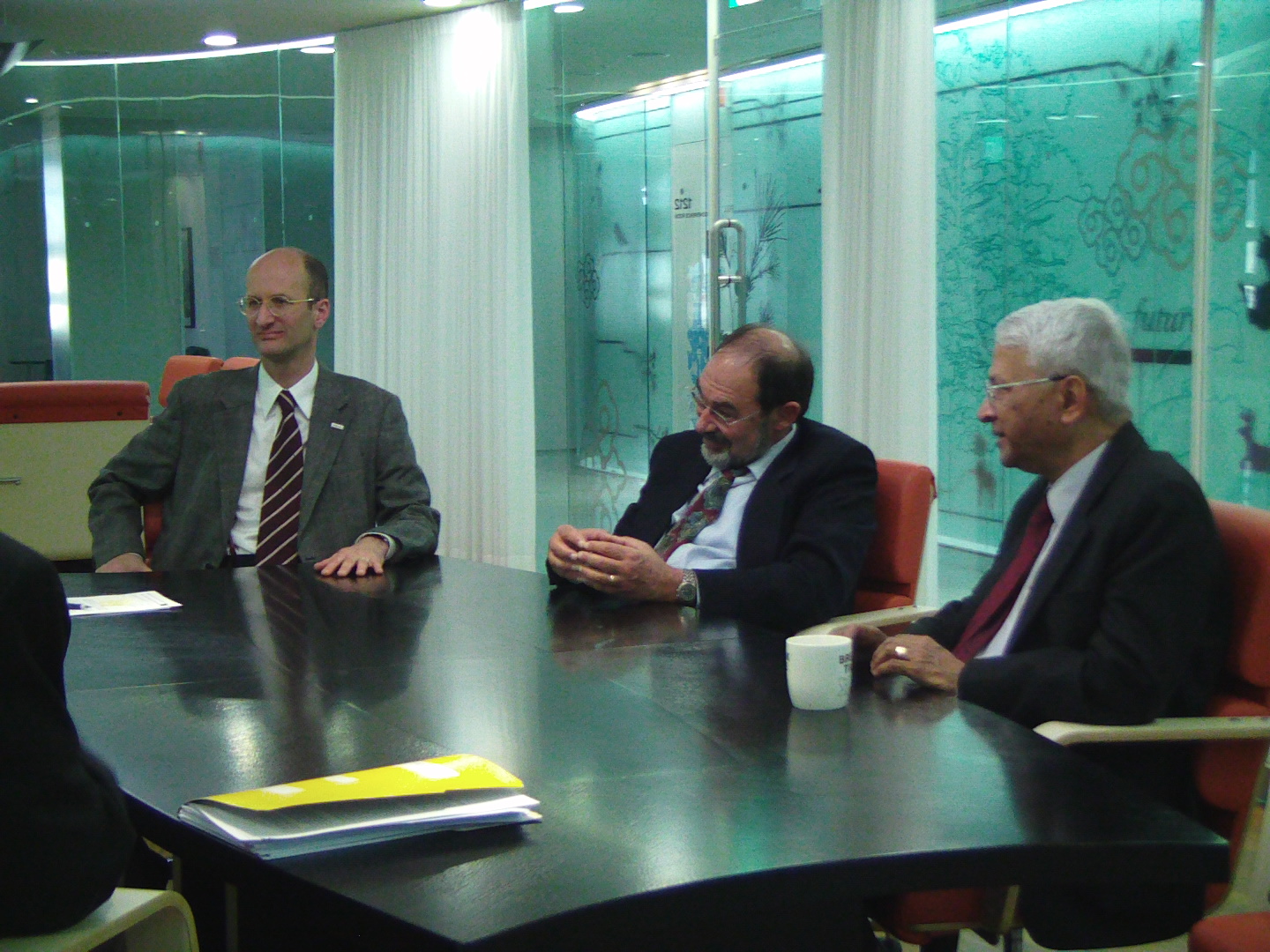
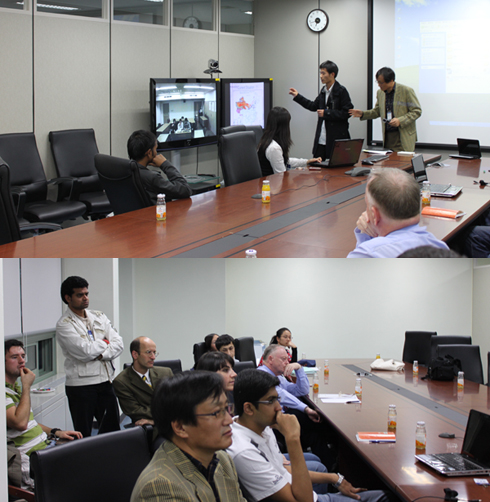
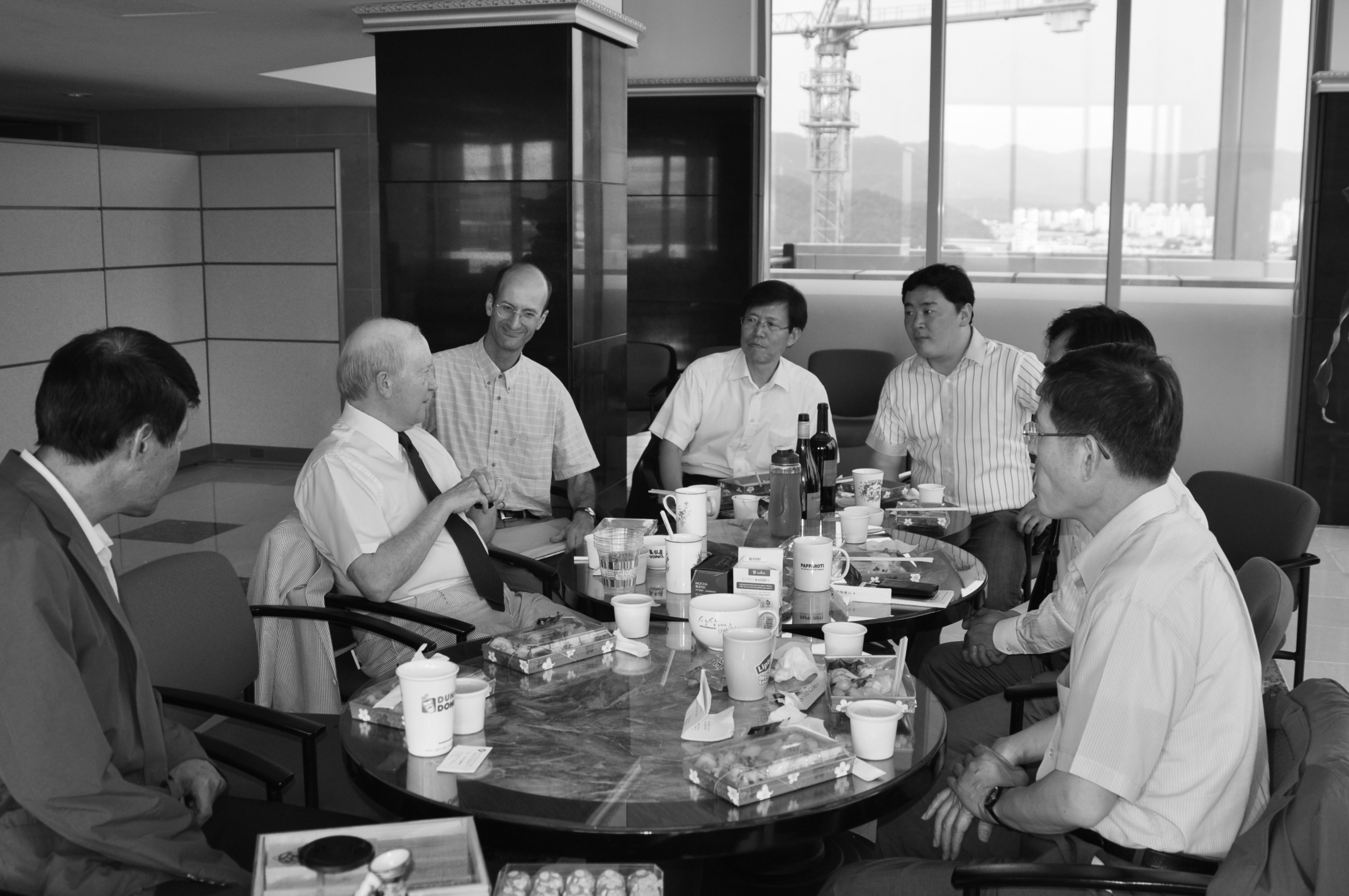
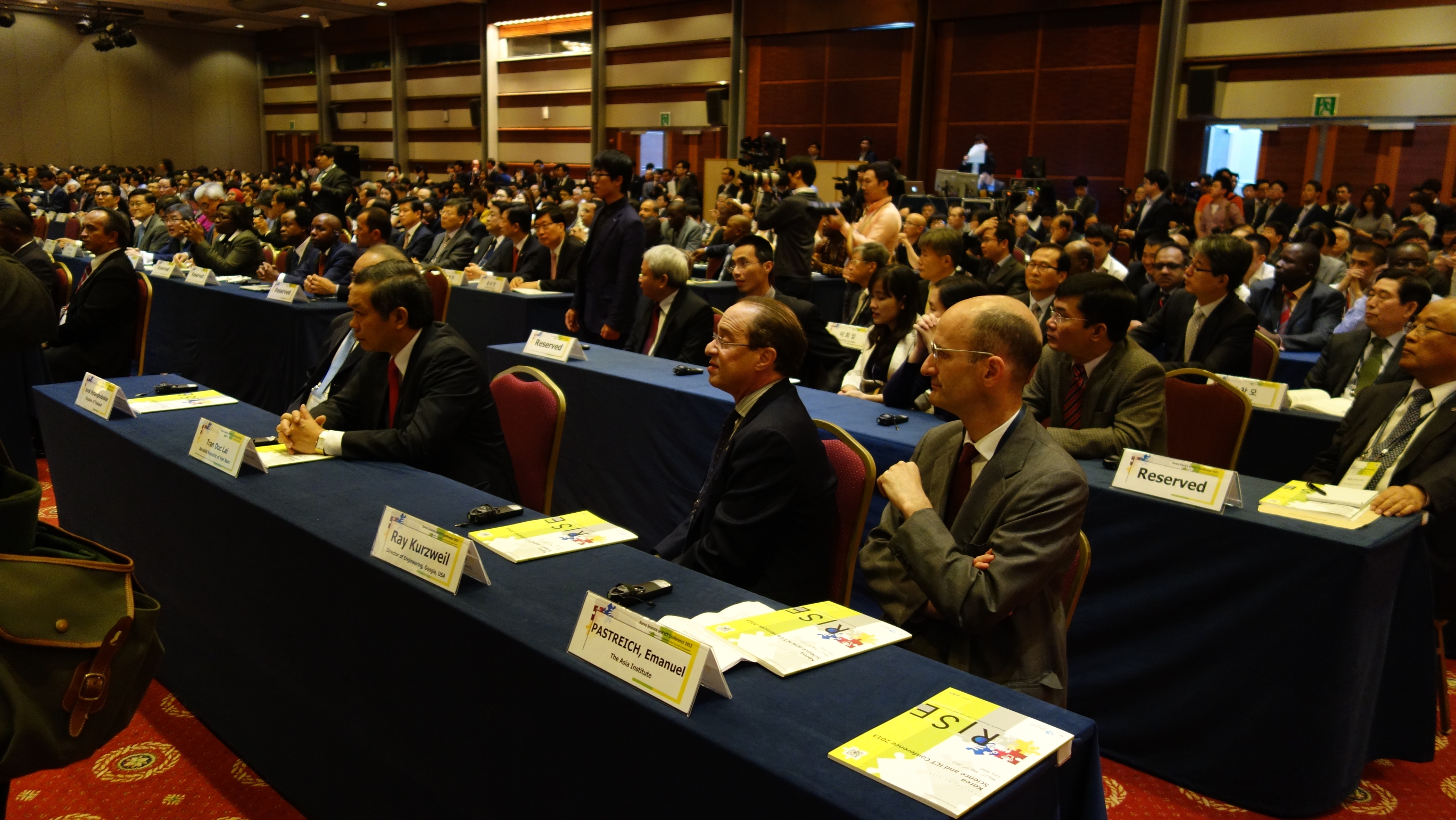
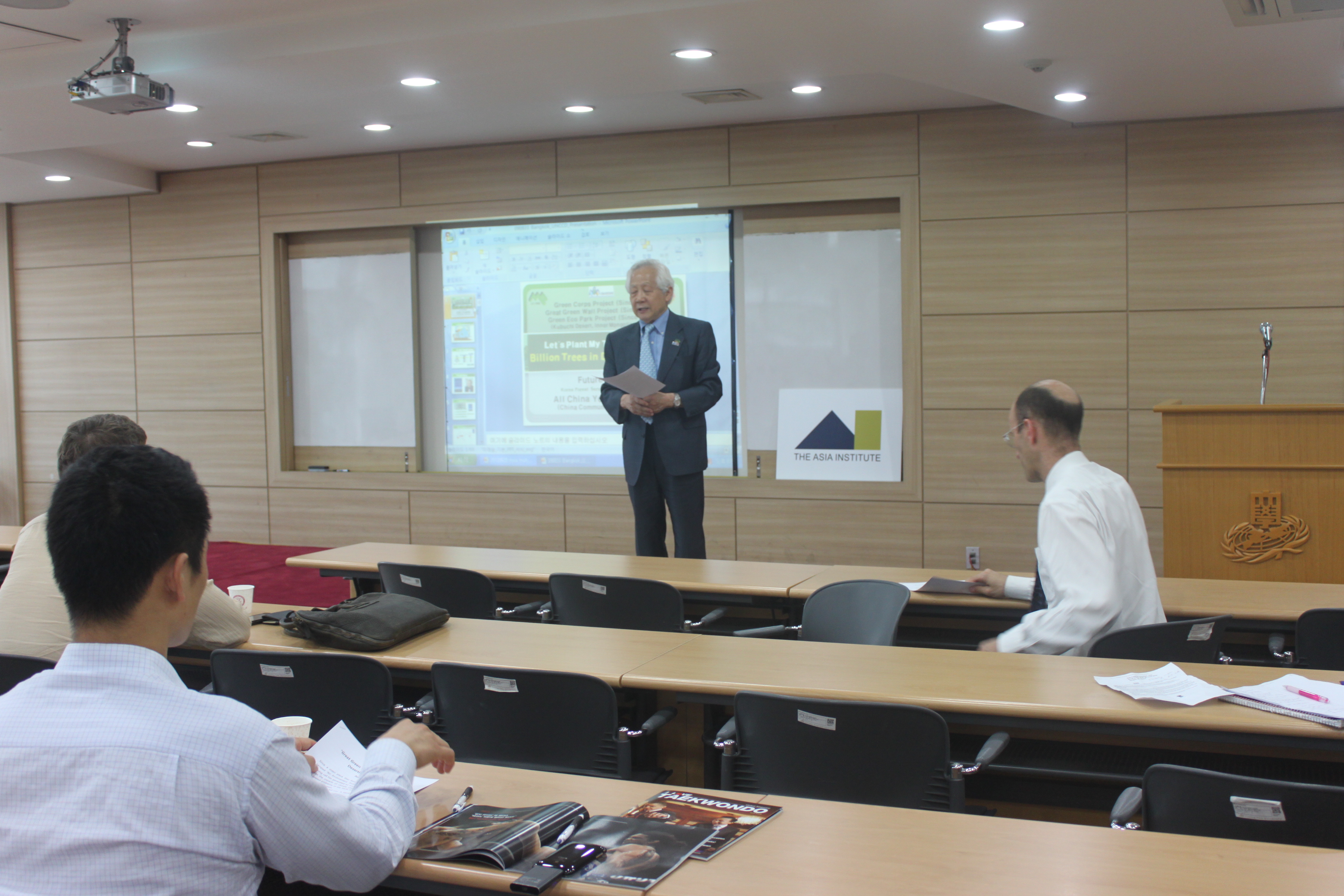
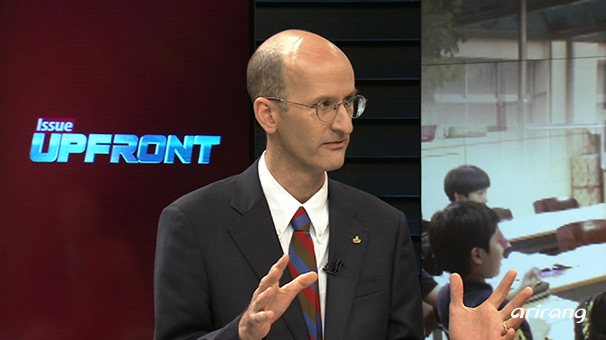
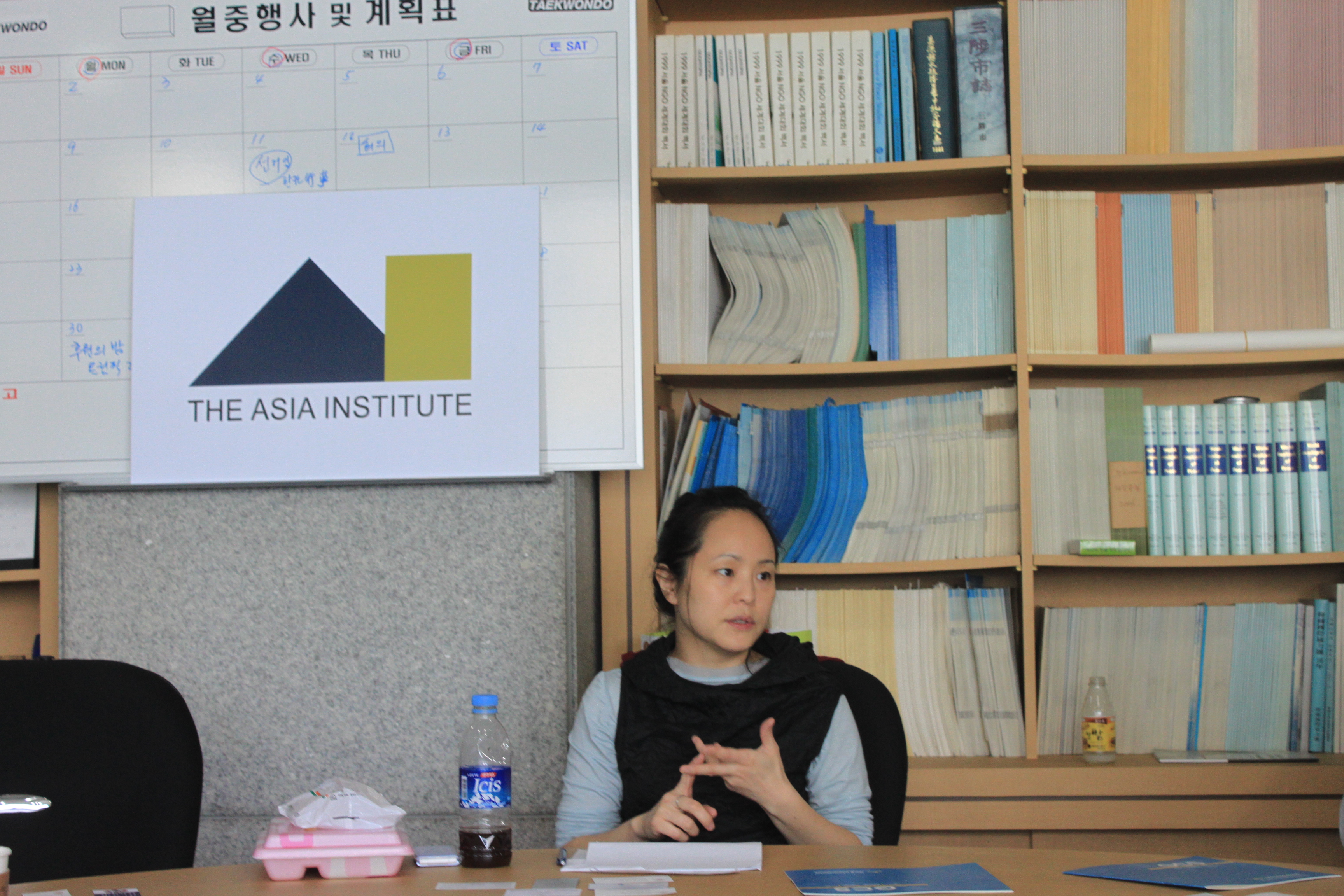
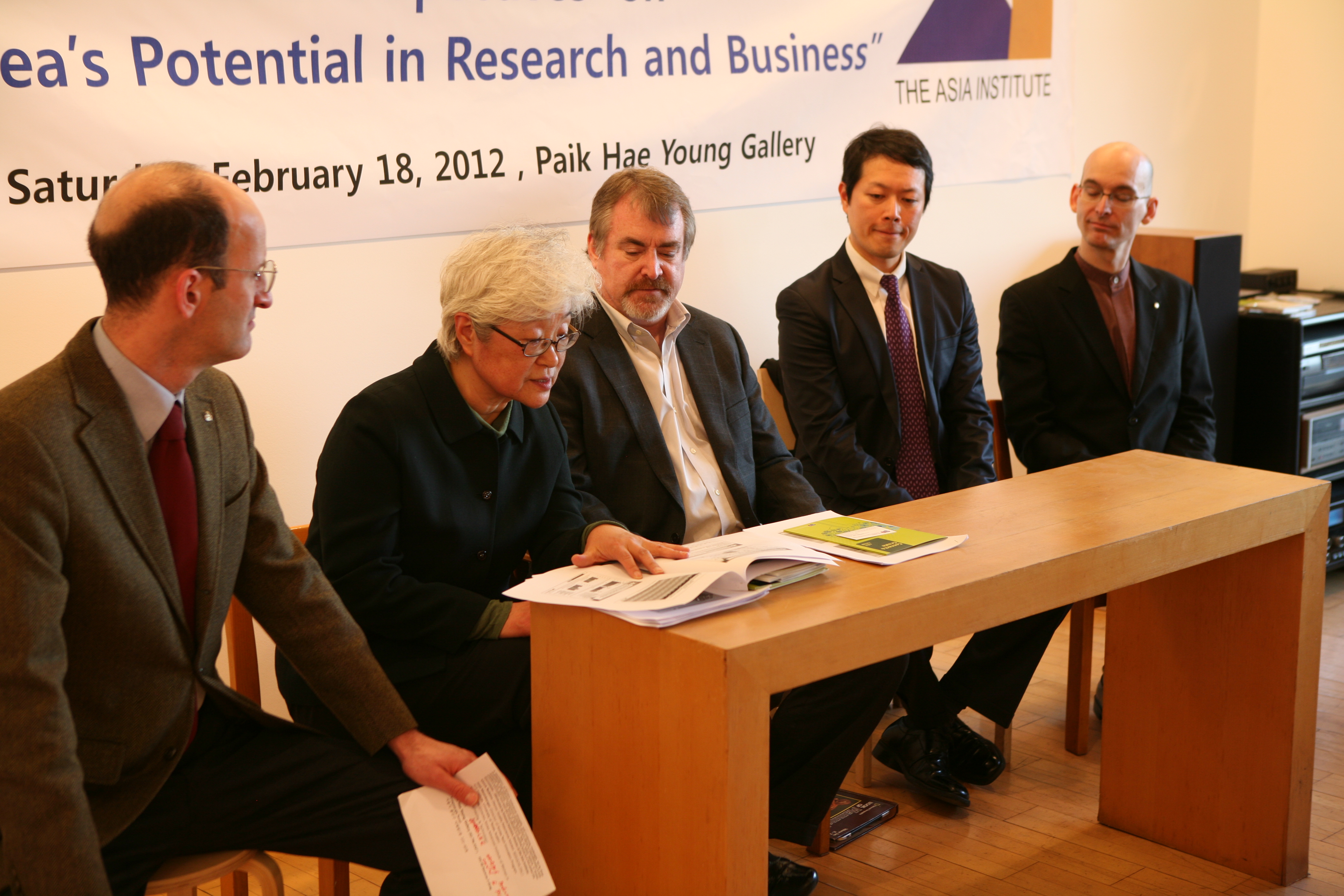
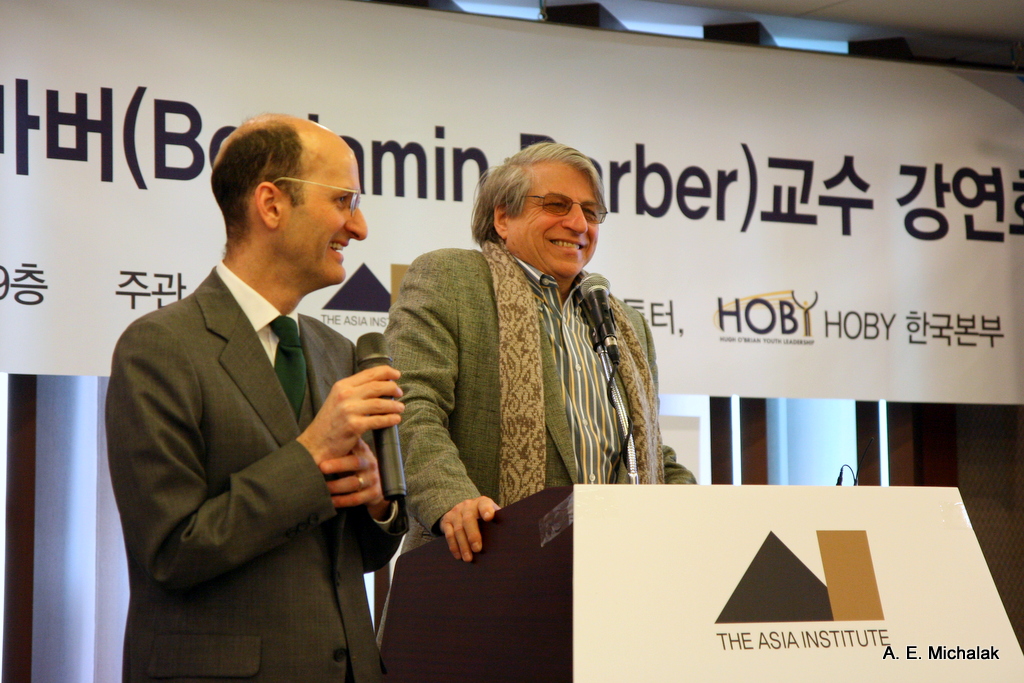
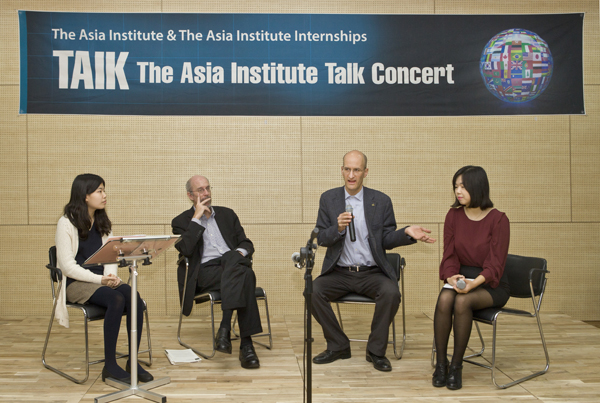
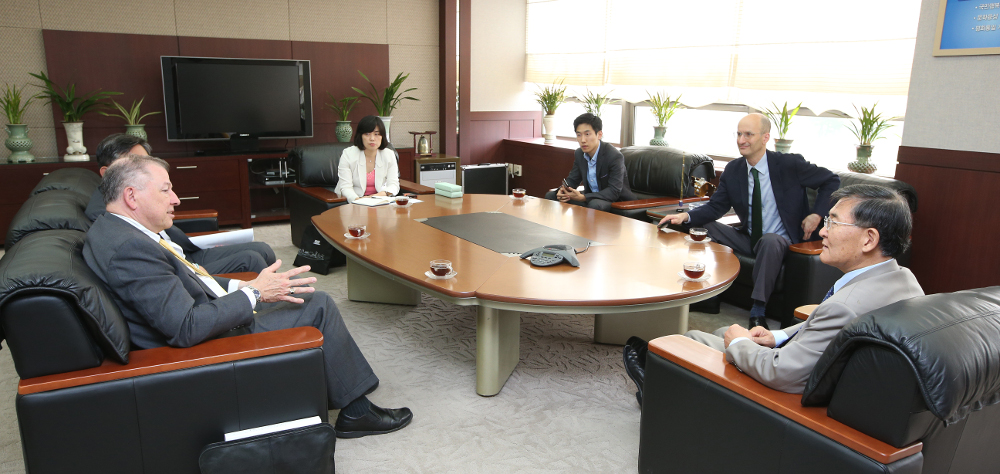
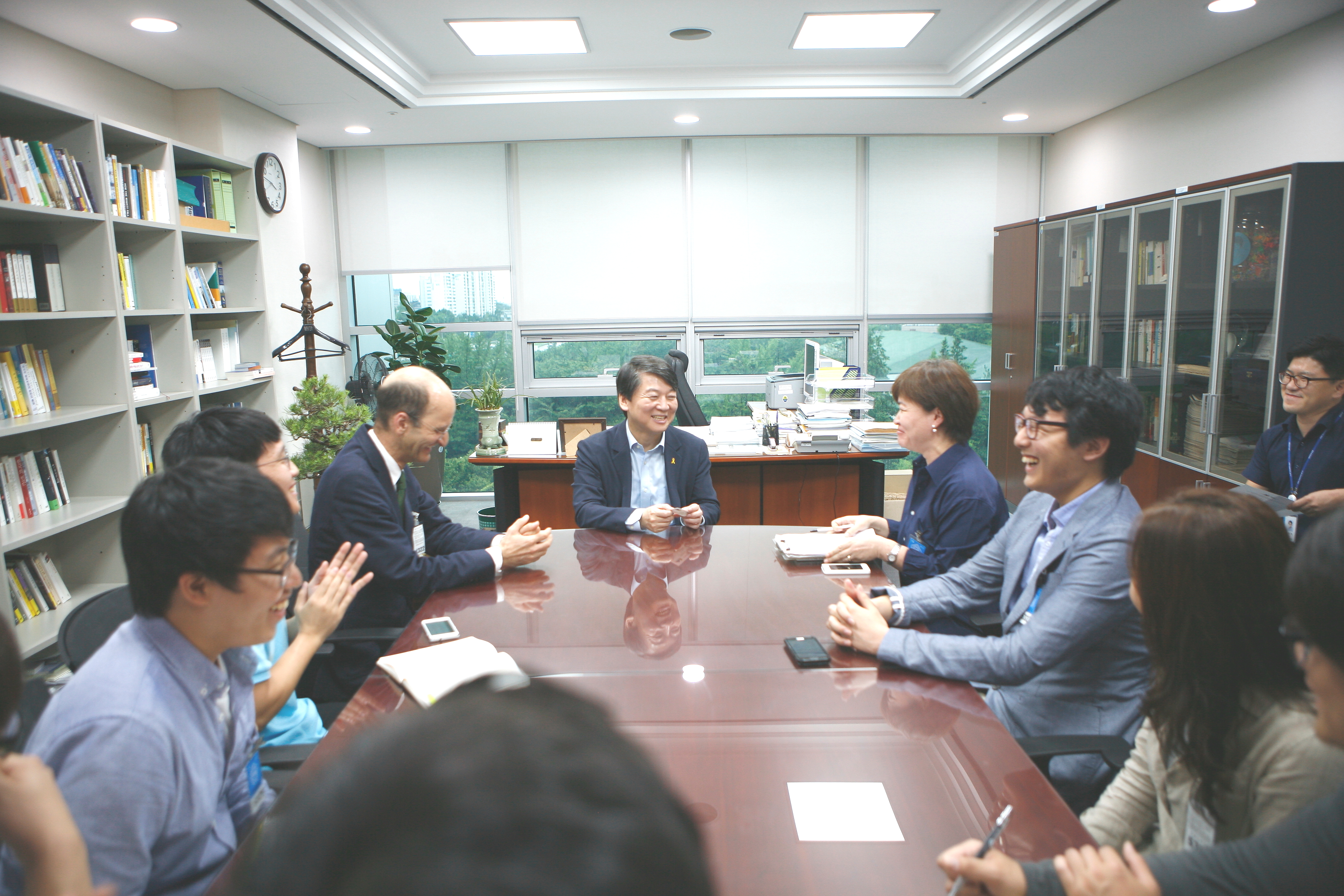
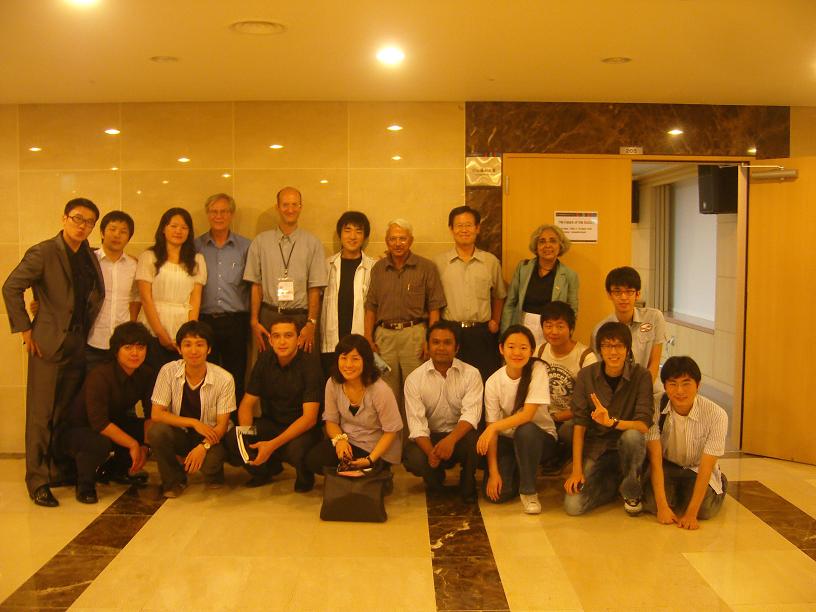

Participants:
Discussion Members:
Jingyu GAO (China)
LeoYao LU (China)
Myeongsu Ryu TODA (ROK)
Sunny Chan Yiu LAM (HK)
Shi Pong LEE (HK)
Yumiko SHIMOGAKI (Japan)
Moderator:
Emanuel Pastreich (United States)
(Director, The Asia Institute)
(Based on a series of discussions held on October 5, November 15, November 22, and December 6, 2014)
Opening Remarks by Emanuel Pastreich (United States)
This seminar presented us with a valuable opportunity to learn about each other, and also to learn about our own perspectives and our own biases. We came to the question of democracy, and specifically the case of Hong Kong, with a general impression the issue based on how we saw it presented in the media. But in fact that are many aspects of politics in Hong Kong and of democracy today that we do not understand all that well. The very term “democracy” is not a given like “tomato” or “oxygen” but rather a vague term subject to an infinite number of interpretations. The value of this effort by youth from many different countries to create a platform for an honest and non-political discussion about the important issues of our age is critical to our future and it is an honor to be here today for this event.
I was struck by the sincerity of the questions raised and the care of the responses given in the course of this discussion. There was a sincerity that was striking about the discussion and I was touched by the clear desire of the students to understand the problems in Hong Kong in a larger context. By extending their discussion to all of Asia, and avoiding a narrow definition of democracy, they have opened the way to a constructive dialog that will extend to the rest of Asia, and to the world.
Youth in Hong Kong are facing incredible pressures. They face economic pressures related to the breakdown of the economic system that supported their parents; political pressures related to the immense influence that other nations have on Hong Kong because of its links to global capital; social pressures related to an aging society and the profound alienation among young people today.

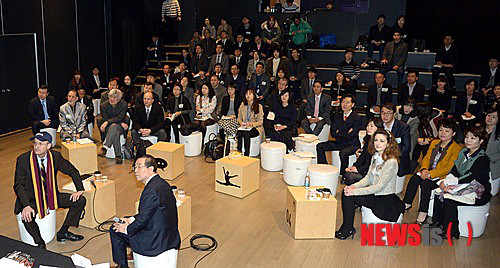
Saturday, March 14, 2015 6-8 PM
@ W Stage WCO (Anguk, Seoul)
Ogan Gurel
A Director, Samsung Institute of Advanced Technology

Matthew Weigand
Managing Editor, Business Korea

Discussant:
Dahyeon Rosie Kim
Seoul International School

Moderated by Gabriel Pettyjohn
Researcher at The Asia Institute
Cyberspace is a double-edged sword. On the one hand it offers the potential for greater communication and deeper exchange beyond the limitations of physical space. On the other hand, cyberspace is open to manipulation which can make it an extremely unstable, and potentially misleading, medium for communication.
Cyberspace is growing at a rapid rate in East Asia. Korea, China and Japan are the center for IT globally and feature one of the highest concentrations of highly literate citizens in the world,. We ask in this seminar whether future agreements regarding governance and accuracy in information within cyberspace could be the key to integration and peaceful development in East Asia? Might there be room for innovation in East Asia concerning network neutrality and the next generation of cybersecurity that could serve as a model for the rest of the world?
We invite the audience to join us in an open discussion concerning how network neutrality, distance learning, diplomacy and the use of big data can be further developed in East Asia as a means of confidence building.
Sponsors:
RSVP
young@asia-institute.org

February 15th, 2015
The next generation is facing the challenges and opportunities born of a rapidly globalizing world, climate change and the rise of the Internet. It is in this context that Sookmyung Women’s University and The Asia Institute will host a forum exclusively for teenagers from Korea, and throughout East Asia, in which they can gather to discuss in earnest the various issues that the world faces, and while interacting with renowned experts in related fields, come up with their own proposals for a better world for themselves and future generations. This unique event can serve as a critical moment in their lives, a stepping stone as they set forth to become global leaders. This East Asia Youth Leadership Forum is focused on the critical question of social networks.
To give thoughtful high school students first-hand experience participating in a world-class international forum, thereby allowing them to grasp the significance of international to a degree not possible in the classroom, and have an opportunity to express their opinions on important policy issues in a serious debate. To listen to lectures by world-renowned experts both online and offline, thereby gaining new insights into possible solutions to current global challenges; to actively participate in debates concerning the most recent developments into a broad range of fields from politics and economics to technology and culture. To establish an international network that includes committed students from other countries and schools throughout Asia for the purpose of building a brighter future of all. With these objectives in mind, Sookmyung Women’s University and The Asia Institute have organized this international forum for thoughtful and committed youth dedicated to making a difference. We welcome participants from inside Korea and around the world who are ready to meet this challenge. We will do our best to launch you on a successful path towards leadership in politics, economics, arts, academia, technology and diplomacy.
On-line social networks such as Facebook and Twitter have taken off at a tremendous rate around the world over the last ten year years and have evolved into a major part of the daily lives of many youth. The tremendous potential of social networks for communication, friendship and creativity attracts us. Nevertheless, much of the cooperation on social networks remains superficial and self-indulgent. The opportunities for forming networks around the world to promote deep communication and collaboration are underplayed or ignored. Oddly, youth are more likely to employ social networks to show each other photographs of cafe lattes or fat cats and dogs than to talk about how we can build a better world. In this one-day forum and workshop, youth from Korea and around the world will come together to consider the potential of on-line social networks and make creative and relevant proposals for how the full potential of this technology can be realized. The forum will include lectures by outstanding experts and also opportunities to work together with other thoughtful and capable youth to build a better world.
The 2nd East Asia Youth Leadership Forum
제 2 회 동아시아 청소년 글로벌 리더쉽 포럼
“Social Networks and the Potential of Youth”
소셜 네트워크와 청소년의 가능성
21세기에 들어서서 인터넷의 발달과 더불어 점차적으로 일원화되는 세계 속에서, 증가하는 대한민국의 청소년들이 세계 각국의 청소년들과 함께 현재의 세계가 처하고 있는 다양한 문제들을 주제로 토론하면서 관련 전문가들의 의견을 접하고 긍정적으로 가능한 해결책을 도모함으로써 더욱 더 살기 좋은 세상을 만드는데 일조할 글로벌 리더로 성장하기 위한 발판을 마련하기 위한 글로벌 청소년 포럼이다.
*이러한 주요 목적을 가지고 국내외의 학생들을 국제기구 진출 및, 정치, 경제,학문, 예술, 경제, 외교등 각 분야에서 넓은 국제무대로 진출하는 대한민국의 인재들을 지속적으로 키워내는 한국을 대표하는 청소년 국제 포럼으로 자리잡고자 함
Professor Marc Shell of the department of comparative literature at Harvard University visited Seoul (December 16-26, 2014) to deliver a series of lectures and meet with students and experts. Professor Shell’s recent book “Islandology” considers the cultural and rhetorical importance of islands in human history, looking at examples from ancient Greece to contemporary Denmark. The book features a section on Korea and specifically on the islands of Seoul.