Harnessing Energy, Korea’s Future

This article I originally wrote for the JoongAng Daily in 2008.  They published it on June 12.

We can certainly empathize with the desire of young Koreans to actively participate in the political process and address the serious problems resulting from profound changes in the global economy. Nevertheless, there is a danger that the Koreans who filled the streets with their protests against the import of American beef are being distracted from a far more serious threat to Korea’s well-being. Let us urge concerned Koreans to focus their energy on the problem of Korea’s economic survival in an age of high energy costs.

Korea, a nation without natural resources whose economy is built around exports, will find it far hard to compete if oil reaches $200 a barrel. Moreover, Korea’s logistics system, and much of its public transportation, is based on the American model: highways and automobile transportation are at the center while regional trains and energy efficient buses are almost non-existent. We are witnessing just the first signs of a serious dislocation in Korean society that will increase with the cost of petroleum.

Read more

Driven by Moore’s Law

On December 13, 2010, I participated in a relay interview on Korea Business Centeral.  This was an interesting experience for me as the entire process was done online.  The original interview can be found on the KBC web site.  I have reprinted it here.

Vince Rubino: I have heard you have a bit of experience in Asia, stretching back to the 1980’s, can you tell us a little about your history here?

Emanuel  Pastreich: Well there is a lot I could say about myself and Asia. I started at Yale in 1983 and was intrigued by China because I went to Lowell High School in San Francisco. That high school was about 75% Asian, so I was sometimes the only Caucasian in the classe. When I arrived at Yale, I got it in my head that in some future age Americans would have to read and write Chinese because the world will have changing radically. I wanted to get it right. So I tried to teach myself Chinese day and night.

I went to Taiwan for my junior year, and then after graduating I moved on to Japan where I eventually received my MA from University of Tokyo before returning to the US in 1992. What is perhaps unusual about my work in Taiwan and Japan is that I did all my classes and papers in Chinese and Japanese respectively. I wrote a 250 page MA thesis in Japanese, for example. It was required, but of course I chose to enter a program that required me to write such a thesis. Doing my work in the original language was very important to me. And I recommend that anyone who takes Asia seriously should enter a degree program that requires him to write in the native language.

Vincent Rubino: You recently published a book here in Korea, isn’t that right?

Emanuel  Pastreich: I have two books coming out from Seoul National University Press next month.

Vincent Rubino: Tell us about the two books.

Emanuel Pastreich: One is a collection of translations of novels of the 18th century Korean novelist Bak Jiweon and the other is a study of Chinese vernacular novels and their impact in Japan in the 18th and 19th centuries. Both works are based on my previous work as a professor of comparative Asian literature while at University of Illinois, Urbana-Champaign.

Vincent Rubino: What language are these particular works published in?

Emanuel  Pastreich: Both books are in English. Seoul National University is making a serious effort to enter English language publishing these days.  I write in Korean as well, but primarily articles.

Vincent Rubino: Speaking of Korean, what is it that brought you to Korea?

Emanuel  Pastreich: Originally,  I was writing a dissertation on Chinese and Japanese novels and came to feel that I had to understand something about the Korean tradition in literature to do my research accurately. But once I started to look at Korean literature, it became clear that I had to learn to speak Korean fluently. So I came here in 1995 and threw myself into language study, and learning about Korea. Along the way, I came to appreciate many aspects of Korea, especially the friendships I made here. That led me to take Korea even more more seriously. But in fact when I started as an assistant professor at University of Illinois, I was a professor Japanese literature.  I came back to Korea in 1007 after ten years in the US. This is my first time working in Korea: a different experience

Vincent Rubino: Indeed! What a very deep experience you have had here.

Emanuel Pastreich: Well, the truth is that know much less about Korea and how it works than many members of KBC. My main advantage is that I can speak and read pretty technical Korean. That is a skill that can make all the difference in some contexts. Being able to sit down and answer, in Korean, 15 e-mails rapidly makes a big difference. But it can be misleading. I don’t necessarily know Korea better than experts who have worked on Korea for years, I just know the language.

Vincent Rubino: What are your main projects these days?

Emanuel  Pastreich: These days I consider technology convergence to be my serious effort, with a continuing interest in the question of “the future of the research institute.” For fun I have my Daejeon T Shirt and coffee mug. But both of those efforts are part of a larger effort to engage in Korea and the world at multiple levels. Right now I am working with Daejeon Metropolitan City and Gwangju Metropolitan City, and giving talks at the research institutes.

Vincent Rubino: I have noticed you have something of a philosophical bent as well, Emanuel!

Emanuel Pastreich: Interesting point. Yes, I think I am a rather odd person in that respect. I both want to be involved in the details of policy and thinking about what the best way to deal with problems right now is. At the same time, I also want to sit back and watch with detachment the evolution of civilization and technology over time. After all, whatever exciting projects we engage in now, our work is like building sand castles on the beach. Most efforts cannot last forever against the tides of change. But maybe in the future, some people will remember the castles we built and try to build them again at later dates. Sand castles keep emerging throughout history. Whatever our plan is, it is based on the efforts of those who came before us.

I am most taken by Moore’s Law these days and how it drives the changes we see around us.

Vincent Rubino: How does Moore’s Law apply to your work in Korea?

Emanuel  Pastreich: Well, we see vast range of technologies emerging in Korea. People once looked down on Korean research institutes because they lacked “basic research.” Suddenly we are finding that research institutes around the world are moving from basic research towards commercialization, and even towards marketing. This puts Korea in a strong position.

The reason for the shifts in R&D can be attributed to financial limitations, or market forces, but I think there is something beneath the surface going on. Moore’s law states that the number of circuits you can place on a microprocessor doubles every two years. Moore’s Law has held for 50 years.The result is that you can do more computer calculations, hold more memory, for less and less cost. As a result, the primary issue is no longer producing technology. We are producing more technology than we know what to do with. The question then becomes how can we can apply that technology. And as that task also becomes easier and easier over time, we will find ourselves working more and more on how to market the technologies we produce. I would go out on a limb and say that Moore’s law will eventually make patents relatively unimportant.

Vincent Rubino: Wow!  That is a bold statement.

Emanuel  Pastreich: moreover, Moore’s law is a primary force driving the Korean economy. Drive out to Asan and take a look at Samsung Electronics’ new display fabrication plants. You will find that the generation 8 plant is at full production. Next to it is the generation 9 factory: almost completed and ready to go on line in three months. Next to that is generation 10: half built. Next to the generation 10 plant is the site of the future   generation 11 plant: a hole in the ground. There is an ineluctable drive to create the next generation of technology. Market forces? Maybe, but I personally think there is something else at work here. The relentless drive of Moore’s law to produce new technologies lies beneath the surface. And Korea is ground zero in this new order

Vincent Rubino: This is a titillating idea, Emanuel.  You are definitely onto something here.

Emanuel  Pastreich: In terms of my work in Korea, I first worked as advisor to the governor of Chungnam Province. Then I started to advise the Daejeon Metropolitan City on FDI and internationalization (which I still do). I have conducted five research projects with three research institutes, helped found the Daejeon Environment Forum and now I am working on a possible convergence forum. And I write articles. One representative article is “To Take the Lead Globally, Korea Must Build the Ferrari of hand-held Devices”   http://www.biztechreport.com/story/722-take-lead-globally-korea-mus….

Vincent Rubino: I have not caught up on all my reading yet, Emanuel.  I think YOU are an example of Moore’s law, writing articles faster than I can read them.

Emanuel  Pastreich. Well we are all driven by Moore’s Law. I am writing an article on that very issue.

Vincent Rubino: I look forward to reading more.

Emanuel  Pastreich: Korea is fascinating because Koreans do so many things so well, but have some unexpected blind spots. They are excellent at engineering devices, but have great trouble figuring out how to make good use of people. That is why I find the work so interesting here.

Vincent Rubino: On that note, as I final question, what advice or recommendations would you have for a foreigner who is FOB (fresh off the boat) here in Korea?

Emanuel  Pastreich: Well, I think you should expect to go through several sets of friends as you become more familiar with Korea. That is a reality. You cannot expect to have profound friendships immediately. But you meet a greater variety of people at the beginning, which is also good.

I find Korea more difficult than Japan on a day to day basis. Things just don’t work the way I want them to. But when I sit down and think about it, in fact I have many, many more Korean friends than Japanese friends, even though I lived in Japan for more than six years and spent almost all my time with Japanese people. You need to think about how to take advantage of your own skills in your work here. For example, I find that as an American, I am better at horizontal networking than Koreans. I use that skill to introduce Koreans to other Koreans. That gives me value for  them. Here is a simple thing you can do. Offer to make and English language Facebook entry for a Korean friend you want to work with. It doesn’t take long, but it establishes a relationship. It is symbolic and valuable act. Try to remember the names of the family members of Koreans you meet. And always remember, you may feel as if Koreans are unfeeling to you, but in fact if you were a foreigner living in your own country who spoke little or no English, you might feel pretty alienated too. That last point is important keep in mind to avoid the destructive “everything is done wrong in Korea” syndrome.

Vincent Rubino: Very wise and helpful advice, Emanuel. Thank you very much for taking the time to do this interview.


[twitter-follow screen_name=’epastreich’]
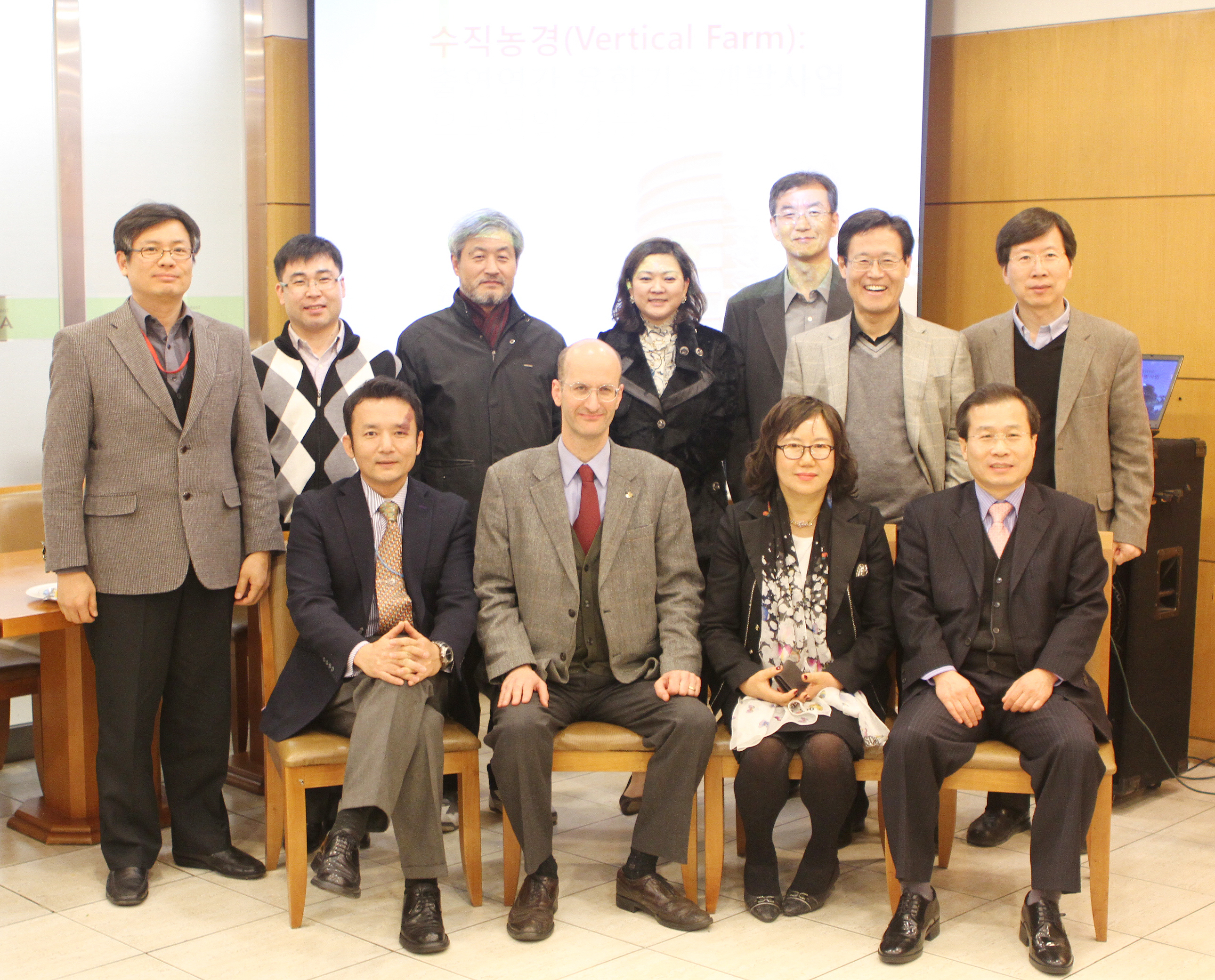
“Global Convergence Forum” featured in Korea IT Times

Global Convergence Forum – ‘Industry Convergence is the Key’

KOREA IT TIMES

Tuesday, March 22nd, 2011

KIM YEA-RIM

The Global Convergence Forum (GCF), first started last December with about 22 members from different academic and industrial fields, had their sixth meeting on March 17.

This time the forum was held in Daejeon with Liu Jang-ryol, Director, Division of Biological Resource Management at Korea Research Institute of Bioscience and Biotechnology (KRIBB), explaining ‘the business possibilities of convergence technology development project for vertical farming’ and Yoo Catherine, CEO of Biz Holdings, presenting ‘the joint venture project between Korea and Malaysia to build an industrial complex within Malaysia’s Cyberjaya.’

“Although Korea has some of the best breeding and cultivation technologies in the world, more and more industrial

farmers are leaving their farms. Korea has achieved enormous development through economies of scale mainly led by conglomerates; and I believe the same could happen in agriculture once the big corporations start paying attention to the industry,” says Dr. Liu Jang-ryol. “What, then, is the kind of agriculture that those corporations will be interested in? The answer is vertical farm.”

First proposed by the American ecologist Dickson Despommier, vertical farm refers to the cultivation method that grows

crops in an artificial environment. It can be applied to almost all kinds of plants; allows the space to be used for leisure or tourist purposes; and also enables year-round production.

Dr. Liu argues, “In terms of energy, water, and environmental conservation, Korea can become more competitive with

vertical farming as part of the green

growth and environmentally-friendly development agenda.” In fact, vertical farms have on average 10 to 12 times higher productivity – a building of approximately 99 m², or of a total of 13,223 m², can produce food for around 50,000 people, virtually making it a food base for the community.

One crucial advantage of this technology is in its optimized use of water. By reusing the water based on plants’ transpiration, Dr. Liu explains, not a single drop of water is wasted within vertical farms. He adds that it will consequently reduce the necessity of reservoir construction as well.

Furthermore, vertical farming does not produce any harmful gas since it recovers methane from hydrop

onics buildings and then the energy is reused. Reduced logistics costs is another merit, and the buildings can also become a landmark of the city used for education and tourism, which explains why vertical farms are often cited as an alternative architecture for the future.

The shortage of agricultural land is pushing Korea to take immediate measures for the country’s agricultural industry. With the technological and economic competence, Korea indeed has outstanding conditions to build vertical farms and this new technology can become a driving force for the country’s agriculture.

As a self-proclaimed hub of Northeast Asia, what should be the next step for South Korea to take in order to enhance its global standing? According to Yoo Catherine, CEO of Biz Holdings, the answer is to target the Islam market by setting up a joint venture using the technologies of small and medium businesses in Korea and the capital power of Malaysia.

“Malaysia is a multi-religious country that embraces Islam, Buddhism and Christianity, which results in a broad r

ange of culture. Cultural diversity leads to synergy in many ways, and we believe this country could become our strategic center,” says Ms. Yoo.

Cyberjaya is a well-known tourist attraction in Malaysia. Ri-City, in particular, is the place where Ms. Yoo is planning to build an industrial complex where innovative and creative ideas from Korean companies will be introduced.

Producing about 30,000 graduates from six colleges every year, Cyberjaya is also known for its high-quality of life with political stability as well as a rich labor force equipped with diverse culture and multilingualism. In addition, as Ms. Yoo explains, the area is very accessible thanks to the smooth traffic.

Ms. Yoo’s ultimate goal is to export Korean culture after discovering small and medium businesses with highly competitive technology and then placing them in the industrial complex within Ri-City, a city full of potential and possibilities. Amidst these efforts she is making, Ms. Yoo is planning to open the RABIT Forum in the coming April with the help of the Malaysian Embassy.

http://www.koreaittimes.com/story/13658/global-convergence-forum-%E2%80%98industry-convergence-key%E2%80%99?sms_ss=facebook&at_xt=4db0cd528c85a197%2C0

Sovereignty, Wealth, Culture and Technology: Mainland China and Taiwan Grapple with the Parameters of Nation State in the 21st Century

In 2005, while still at the University of Illinois, I published the article in the journal Historia Actual.  The full text of the paper is available online here.  I have reposted the abstract below:

This paper introduces the historical background of the present confrontations and negotiations between Taiwan and the mainland in terms of Formosa’s (“the beautiful island” in Portuguese) convoluted relations with the Portugal and Holland, survivors of the Ming dynasty, the Qing dynasty (1644-1911), Japan, and the United States. The foreign interests who have had control of Taiwan make its sovereignty more complex. A consideration of the relationship of the Nationalist Republic of China and the Communist People’s Republic of China is also included. The debate on culture, economics and political control between their two political entities is informed past events, and a concern for the present legitimacy of both entities. Moreover, the challenges of globalization further complicate the picture in that the odd convergence of economic and cultural convergence with political tensions may be representative of the conflicts we will encounter in this century. The paper considers the economic, cultural, and technological ties that continue to bind Taiwan and the mainland despite serious differences and closes with a short consideration of possibilities for a long-term peaceful solution.

And again, here is the full text.

[twitter-follow screen_name=’epastreich’]

Interview with Joseph Nye and Emanuel Pastreich (December 2006) in Korean

Interview with Joseph Nye and Emanuel Pastreich

Segye Ilbo Newspaper (in Korean)

2006.12.31 (일) 

세계일보

北核… 中 급부상… 국제사회 태풍의 눈으로”

해외석학 동북아정세 진단


조지프 나이 교수

프린스턴대 졸 △영국 옥스퍼드대 수학 △하버드대 정치학박사 △미 국방부 국제안보 담당 차관보 △국가정보위(NIC) 위원장 △하버드대 케네디스쿨 학장 △하버드대 석좌교수 △저서 ‘소프트 파워’ 등 다수


이매뉴얼 페스트라이시 교수

예일대 졸 △일본 도쿄대 석사 △서울대, 대만국립대 수학 △하버드대 문학박사 △하버드대, 버클리대, 일리노이대 교수 △조지워싱턴대 역사학과 교수 △저서 ‘중국 문학이 한국과 일본에 미친 영향’ 등


한반도와 동아시아는 올해 국제사회에서 태풍의 핵이 될 것으로 전망된다. 북한 핵 문제와 예측 불가능한 북한의 장래, 이라크 사태 여파에 따른 미국의 위상 추락, 중국의 급속한 부상과 일본의 영향력 확대 등으로 이 지역의 향배가 국제사회의 흐름을 좌우하는 핵심 변수가 될 것으로 보인다. 미국의 대표적인 석학인 조지프 나이 하버드대 케네디스쿨 석좌교수와 동아시아 전문가인 이매뉴얼 페스트라이시 조지워싱턴대 역사학과 교수의 대담을 통해 올해 한반도와 동아시아의 정세를 진단해 본다.

페스트라이시 교수

미국이 북한 문제를 다루면서 일관성을 보여주지 못했다는 지적이 있습니다. 그 예로 미국은 북한의 대량살상무기를 결코 용인하지 않겠다는 입장을 보이면서도 핵확산금지조약(NPT)을 탈퇴한 북한과 적극적으로 협상하지 않았고, 세계의 핵무기 감축을 위한 노력을 게을리 했다는 것입니다. 이런 일관성의 부재로 우리가 중대한 문제에 직면해 있는 게 아닐까요. 우리의 정책이 합당해야 될 텐데 말이지요.

나이 교수

우리가 모두 인식하고 있는 일이지만 비확산 체제 자체에도 일관성이 없는 측면이 내포돼 있다고 봅니다. 1968년 이전에 핵무기를 보유한 국가들은 그 같은 무기를 보유할 수 있도록 허용되고 있습니다. 그렇지만 인도나 파키스탄과 같은 나라들은 NPT에 가입한 적이 없으면서 핵무기를 보유하고 있습니다. 북한은 이 조약에 서명했지만 나중에 위반을 했지요. 그렇게 됨으로써 북한은 특수한 범주에 들어 있는 셈입니다.

현 단계에서 성공을 거둘 수 있는 가장 바람직한 방안은 6자회담을 활용하는 것이고, 당근과 채찍을 조합해서 북한을 설득해 핵 실험과 플루토늄 생산을 동결토록 하고, 국제원자력기구(IAEA) 사찰단이 북한으로 되돌아갈 수 있도록 하는 것입니다. 장기적으로 볼 때 우리가 다시 한반도 비핵화 비전으로 되돌아갈 기회는 남아 있다고 봅니다.

페스트라이시 교수

물론 북한에 어떻게 대처할 것인가 하는 문제는 동아시아에서의 미국 방위전략과 연계돼 있을 것입니다. 그런 점에서 작은 변화가 매우 중대한 전환을 모색하는 것처럼 인식되고 있는 것도 사실입니다. 주한미군 감축 문제가 그런 경우에 해당될 것입니다. 이 문제는 전시 작전통제권 문제 논의 과정에서 뜨거운 쟁점이 되지 않습니까. 저는 21세기에 한반도와 동북아의 안보 이슈에 관한 논의가 모호한 상태로 남아 있다는 점이 우려됩니다.

나이 교수

일반적으로 말해서 미국은 동아시아에서 안보 공약을 유지해야 하고, 한국을 비롯한 이 지역 미군 주둔 국가들이 원하는 한 미군을 상주해야 한다는 게 제 소신입니다. 우리가 한발 물러나 이 지역의 균형자로서 장기적인 고려를 한다면 한국이 주한미군의 지속적인 주둔을 희망하고, 미국이 그 같은 중대한 역할을 하는 것이 합당한 것입니다. 한국은 정치•경제적으로 거대 국가인 중국과 일본 사이에 끼여 있지 않습니까.

페스트라이시 교수

동아시아 국가들 사이에서 인적, 사회적, 문화적 교류가 갈수록 활발해지는데도 정치적인 차원에서 긴장은 더욱 고조되고 있습니다. 한국과 일본 간에 많은 학생들이 교류하고 있지만 언론과 기존 사회 체제의 일원들에게서는 깊은 적대감이 표출되고 있습니다. 이런 모순의 원인은 무엇이며, 또 어떻게 해결해야 할지 모르겠습니다.

나이 교수

다행스럽게도 시장의 원리로 동아시아 지역에서 상당한 정도의 경제 통합이 이뤄지고 있습니다. 이 지역에서는 정치적으로 서로를 의심하고, 이것이 민족주의와 국내 정치 갈등을 촉발하는 그런 유산이 남아 있는데도 말이지요. 고이즈미 준이치로(小泉純一郞) 전 일본 총리가 야스쿠니신사를 참배했음에도 불구하고 중국과 일본 간 무역과 투자가 줄지 않았다는 것은 흥미로운 일입니다. 페스트라이시 박사가 지적한 그 같은 모순된 행동은 아베 신조(安倍晋三) 총리가 중국과 한국을 최초의 방문국으로 선정해 새로운 관계 발전을 위한 분위기를 조성했다는 사실을 감안할 때는 그렇게 두드러진 게 아닐 것입니다. 우리는 앞으로 사태가 어떻게 전개되는지 좀 더 지켜볼 필요가 있습니다.

페스트라이시 교수

저로서도 진정한 관계 개선이 이뤄졌으면 좋겠습니다. 많은 한국 사람들은 동아시아에 유럽연합(EU)과 같은 체제가 출범하기를 바라고 있습니다. 비록 많은 장애가 있겠지만 이 지역을 통틀어 그런 생각을 가진 사람들이 있습니다. 장기적으로 볼 때 동아시아의 개방 체제가 바람직하고, 실현 가능하다고 봅니까. 그 같은 가능성은 논의할 가치가 있습니까, 아니면 현재 우리가 직면한 문제에 초점을 맞춰야 합니까.

나이 교수

동아시아에 EU와 유사한 기구가 만들어질 가능성에 대해서는 회의적으로 보고 있습니다. 유럽은 50여년 전부터 지역통합을 시작했습니다. 반면 동아시아는 냉전으로 갈라져 있었고, 1930년대부터 시작된 상호 불신을 완전히 극복하지 못하고 있습니다. 이것은 통합을 위한 토대가 아직까지 동아시아에 마련돼 있지 않다는 것을 의미합니다. 제가 볼 때 보다 유용한 구상은 유럽안보협력기구(OSCE)를 모델로 한 ‘동북아안보대화(East Asian Security Dialogue)’를 만드는 것입니다. 6자회담의 경험을 통해 대화와 신뢰 구축의 노력을 축적할 수 있을 것이고, 이를 발전시켜 상호 관심사에 관한 중요한 이슈를 논의하는 대화 체제를 가동할 수 있을 것입니다.

페스트라이시 교수

동아시아에서의 한일 갈등이라는 구체적인 사례에 초점을 맞춰 보지요. 어느 한편으로는 교류가 보다 조직적이고 순조로워 일상적인 두 나라 간 접촉이 증가하고 통합돼 가고 있습니다. 이는 경제적으로뿐 아니라 문화•사회적으로도 그렇습니다. 반면 한국에서는 일본에 대한 깊은 적대감이 표출되고 ‘일본은 위협’이라는 인식이 있습니다. 일본에서도 한국에 대한 불신이 자리 잡고 있습니다. 현재의 한일 관계를 어떻게 보아야 할까요.

나이 교수

우리는 한국과 일본이 일본의 식민지 지배 역사에 얽힌 뿌리 깊은 문제를 해결하지 못해 왔다는 사실을 주시할 필요가 있습니다. 그 같은 문제들은 좀처럼 사라지지 않고 있어요. 이와 동시에 한일 양국 간 경제•사회적인 관계가 발전돼 가는 분명한 현상이 나타나고 있지 않습니까. 혹자는 일본에서 한국의 ‘소프트 파워’가 성장하고, 한국에서도 마찬가지로 일본의 소프트 파워가 커지면 그 같은 과거사 갈등을 누그러뜨리는 변화를 가져오는 데 도움이 될 것이라고 말하고 있습니다.

페스트라이시 교수

동아시아 지역이 향후 10∼20년 사이에 어떻게 안정을 찾아가고, 예측가능하게 될지 생각해 볼 필요가 있을 것 같은데 어떻게 전망합니까.

나이 교수

동북아 지역은 예측이 불가능한 북한과 강대국 중국의 급부상으로 여전히 갈등이 폭발할 수 있는 잠재적 요소를 안고 있습니다. 하지만 동북아 지역은 중동에 비하면 덜 위험하다는 게 제 판단입니다. 중동에서는 비국가단체들이 다양한 국가들과 긴밀한 상호 연대를 맺으면서 여러 유형의 적대 행위를 하고 있습니다. 이처럼 복잡하고 통제하기 어려운 마찰이 훨씬 더 우려스러운 것입니다.

페스트라이시 교수

테러와 비국가단체, 환경 파괴, 에너지 안보, 에이즈(후천성면역결핍증)를 비롯한 질병 문제 등 수많은 걱정거리가 있습니다. 이런 상황에서 우리가 핵무기 위협에만 초점을 맞춘 6자회담 이외에 다른 이슈를 정례적으로 논의할 대화 창구를 마련해야 하지 않을까요.

나이 교수

제가 보기에 핵 확산 문제는 향후 15년 사이에 국제사회에서 가장 중요한 3∼4대 위협의 하나가 될 것입니다. 핵 확산 문제와 함께 핵 테러, 중동 산유국의 위기 가능성, 지구 기후변화 영향, 에이즈와 같은 질병 등이 핵심 위협이 될 것입니다. 우리는 이 같은 모든 문제에 지금 대처해야 하고, 이들 중 어느 한 가지도 무시할 수가 없을 것입니다.

정리=국기연 워싱턴특파원

kuk@segye.com 국기연 가자

http://cafe338.daum.net/_c21_/bbs_search_read?grpid=9bXg&fldid=3blj&contentval=000CBzzzzzzzzzzzzzzzzzzzzzzzzz&nenc=7.CSbt8bSd47XQ3mQVW7Lw00&fenc=5B81-inpQ.I0&q=&nil_profile=cafetop&nil_menu=sch_updw


[twitter-follow screen_name=’epastreich’]


“What is China? What is America?” (in Chinese)

“What is China? What is America?” (in Chinese)


Green Grants

March 9, 2004


An article describing the remarkable merger of the United States and China in economic, cultural and technological respects. The article foreshadows the arguments made in Zachary Karabell’s book Superfusion: How China & America Became One Economy & Why the World’s Prosperity Depends on It (Simon & Schuster, 2009), which it predates by five years.
 

http://www.greengrants.org.cn/poster/show.php?id=121


日期:2004.03.09

贝一明 Emanuel Pastreich


何谓中国,何谓美国?


根须相连的两棵树


“一方面以熟知的思想范畴思考,另一方面体察其不足,没有什么比这更为人性的了。成 问题的是,我们依旧生活在我们宿素所理解的人性世界中”


欧文•豪


Irving Howe New York Review of Books, August 15, 1991, p. 53


我们常常使用“中国”这个词,而没有深 入 思考 其意义。这 很 自然。如果我们对 使用的词语考虑 过 多,我们很可能 会面对一切事物张口结舌。然而,有时候我们必 须退后,冷眼回顾历史的长期发展。我们必须观察, 在这个年代人类关系如何演进,而 观察的结果往往阻碍我们理解的企图。我们必须按中国的观念,做一些“正名”的工 作,也就是重新命名以便使“名”不会脱离“物”太远。也就是,我们必须集中于“美 国”与“中国”这两个概念。这样,我们便能够弄清这两个概念的意义是如何变化的。

说到“中国”这个词,我们所想到的是一个有特定疆土,特定语言,文化与政府的 特 定 国家。我们 “不过大脑” 地这么认为。我们需要一点时间回顾并认识有关国家的 观念相对而言是新的。尽管从石器时期的祖先走出洞穴直到未来,文化、血缘、语言以 及自我利益的联系维系着 人类,我们仍无法确定我们看到的地图上的 疆界,在未来人 们眼里是否具有与现在同样的意义。

中国已 扩张出其疆界。从物质层面,有华人移民与海外留学人员。从文化层面,有武 术、中餐与道家思想;从技术与结构层面, 则通过互联网。我在 整理 Outlook Express里的 e-mail 时,总是问题重重。我有一个名为“中国”的文件夹, 专门存放 发自中国的e-mail。起初的想法就是将来自中国的消息全放在一个文件夹中。这似乎完 全符合逻辑。但是我也收到一些居住在美国以及其 它 地方的中国朋友的中文 信件。 而对于有些朋友来说,中国与美国,或者中国与日本都是他们的居住地。也有一些美国 朋友住在中国。谁应该属于 哪个 文件夹,我自己也说不清。

“中国”这个概念正向四面八方扩展。今天,几乎任何国家都有重要的中文出版物。中 国本土人口占世界人口的五分之一。大部分中国人居住在一个 清晰的地理疆域内,但 也有很多分布在世界各地。移民过去意味着离开中国.但是今天,随着 互联 网的普 及,应该说“中国”这个概念的外延正以无法预计的趋势膨胀。地理意义上的所谓 “中国”乃是一个更大的文化与信息网络的一部分。

美国同样是影响遍布全球的政治与文化实体。其影响方式更多因为文化生产的优势,不 象中国多因为移民。虽然两国之间有竞争,但是也常有合作。文化领域的相似性更多于 差异性。两国固有的内在逻辑与风俗习惯均被全球范围内更大的社区所 理解。尽管美 国的文化传统在近150年内 是 全球各个国家 受教育者的(行为)范式,直到19世 纪中叶, 中国文化传统在东亚的运作方式与今天的美国文化运作是完全相同的,并且今 天正在逐渐恢复 其往日的地位。如果一定要找出二者的差异,我认为美国文化圈代表 正式的文化,而中国则代表非正式文化(显 然全球范围内还有其他文化网络存在,但 我不具备谈论他们)。美国文化传统蔓延全球,其趋势是主导主流文化:即世界在日常 新闻中如何呈现 我们在谈论最近局势时使用何种术语。又如中国的期刊文章中有相 当部分原文是以英语写的。而且我们还惊奇地发现二十年前中国的媒体严厉地批评美 国,而今天则很多时候避免这种做法。

中国的文化网络更倾向于非正式化与个人化。某种程度上,这种文化给全世界华人一个 共同而可靠的文化基础。它更注重文化身份而非硬性事实. 最近, 中国也已经成为日渐 重要的信息之源. 尽管存在一些障碍与紧张,中国文化网络较以往甚至更具有渗透力, 对其他文化更为开放。目前, 在美国和全球其他国家有一部分人,他们并不具有中国 血统,但是他们视自己为中国传统的一部分, 并从中国汲取信息. 这些人为数不多,但 是正在急剧增加。可以说,我们生活在一个激动人心的历史时刻。

中国文化传统是 包容性的,并且在这方面有别于韩国与日本。来自周边地区的人们时间久了也能成“中国”或“华”的一部分。这就是为什么如此多的人现在认定自己为“汉”。我经常 被 中国人和我讲汉语 的强烈意愿以及象对待另外一个中国人一样对 待我的方式触动。这方面使得中国传统与世界上其他传统不同,而与美国文化甚为相似。其中有一部分文化传统同时存在于美中文化网络,也即两个文化网络存在交汇的共同部分。[JH1] 一个人可以同?背晌?忻牢幕?囊徊糠?.

这种个人身份认同的复杂集合正急速增长,并且如果仔细观察,还能察觉出这其中一种 交汇点。一个人 可以同时是文化与经济网络的多重集合的一部分。这种交汇点不易定 位, 因为它发生在不同层面。在某个层面上, 一个人可以是美国文化网络的一部分,在 另一个层面上, 也可以是中国文化网络的一部分。想想每个人看 何种 电视节目,每个 人听 何种 音乐?人们以什么做为个人经验比较的参照?每个人从何处获取信息?这些 不同的层面如何整合进我们的主观经验。?这些问题引出个人经验中的多重层面。无论 在美国还是中华人民共和国,很多人正日益同时 整合进 不同网络之中。

全球化是 当前面临的挑战。我们正身处其中,因此我们不能清楚地指出未来会是怎 样。(这种现象类似“不识庐山真面目,只缘身在此山中”)。很可能全球化将有利有 弊,将来历史学家回顾历史可能难以肯定 其终极意义。全球化的开端可以上溯到16世 纪,或者更早。世界上有过多次剧烈变动的时刻,这些时刻都发生 在以往的 的物理上 或哲学上的分界以及观念受到质疑的时候。从这方面讲,我们目前的经历不是没有先例 的。不过,这些剧变并没有发生在我们的生活当中。另外,科技的革命带来全球化的 加速 以及其社会内涵的深刻变化。从未有过如此多的不用顾虑地理位置的连结.

全球化也因其相互矛盾的 后 果而令人迷惑。比如,全球化同时制造出巨大的整合与碎 裂。我们将其全球化视为全世界范围内符号与国际化通用概念的一致。比如你们能从语 言与概念层面完全明白我什么,这种一致在历史上是空前的。国际性的机构的功能正 在扩大,而且国家之间的联系与合作也是空前的。

同时,组成这些国家的社会日益出现碎片化的迹象。这种 现象 恰好与经济与科技日益 紧密联系的趋势同时出现。在写作本文时,我已在电脑前待了数小时。我收到了来自世 界各地的电子邮件。我阅读中文与韩文网页。但是,我已经有数月没有与邻居打交道 了。我同时 被整合入一个更大的 系统,同时也被我的本地 系统疏离。这种国际性的

融合与 地方性 的 碎片化 在全球所有的社会都 有极强的含义。特别在倚重科技的中国和美国.

邻里的社区活动在美国或中国正急剧减少。Theda Skocpol在Diminished Democracy 一 书中讨论了 社区变化的本质。她指出:现在的时代,我们与我们身边的组织与 地方性 的社团联系越来越少。在中国的城市也存在类似现象。在我们通过因特网在全球范围内 建立联系的同时,我们所居社区的大型组织活动减少了。我们可能进入了一个具有重大 意义的全新全球范围的社会 互动模式。虽然如此,人类 并没有变化,所有的缺点, 所有的与 特性 依然存在,仅仅是存在方式在改变。

因此,全球化对于中国与美国有何意味?我们正看到两个在全球伸展的庞大的文化、经 济与社会的实体的崛起:中国与美国。他们不是仅有的两个实体,但到目前为止是最 大。这两个实体互相支撑互相依赖。遗憾的是,很多身处美国文化网络中的美国人对中 国网络的存在完全视而不见,不仅忽视了其相当可观的范围,最重要是忽视了其对于美 国的影响。因此美中紧密相连但是 仍 没有意识到自己是对方的一部分。他们是竞争者,但是他们的根须互相缠绕以致不能分离。

今天中国与美国是一对 有趣的 伙伴。就社会 变化 的速度而言,他们的地位完全调 换了。1903年的中国处于一个稳定、保守的文化氛围中,变化 缓慢,城镇的外观多年 来一 成 不变。而那时候的美国处于史无前例的社会急剧转形时期。那时候的美国拥有 汽车、电气化与大众传媒,而同时期的中国 则显得落后 并极力保持传统。1903的中国 街道与其100年前一样。而1903年的美国街道在其100年前可能根本不存在。

今天 是 中国在飞速变化??赡鼙浠?乃俣裙?臁V泄?硕源吮浠?械愣?坊柩刍?, 对 “中国”以及“中国人”的含义 不再有把握.。二十年前的常规,今天已经不再适用。 甚至二年前明晰的规则在今天也不再适用。如果你今天去上海,一年后再去,你会 看 到一个不同的城市。中国人很 愿意 看到 社会结构中的基本变动,即便有一定的风 险。不但如此,在论辩中所用的修辞也倾向 着眼于中国 的未来 。

然而,美国的一些城镇看起来还与50年前差不多。美国有很多地区已 很发达.,但是依 然有很多地区发展缓慢。而且美国人将我们已 失落 的过去 想象为理想社会。这种历 史观与中国传统观点十分相似。 中国与美国的普通民众都将自己的国家看作世界的中心。如果通过比较,我们很惊讶 地发现原来两个国家关系是如此紧密。 何以如此?最重要的因素在于:经济/科技融合

的速度以及中美文化融合的速度存在差异。中国人与美国人 不认为思考他们 处 在同 一个经济 体系 中 。毕竟,中国人已经花费了几千年时间来思考自己中国人作为一个 整体, 做为中国人这个问题。美国则是一个相对新的政治实体(尽管其体制的建立比中 国早),但是美国人仍花了二百年的时间将美国看做一个整体。现在,作为全球化的结 果,没有相应的文化理解伴随,大量的整合已然发生。我们发现我们置身于一个需要具 有全球性视角的世界。在这个世界,所有的政治事务都必须从全球角度处理,但是我们 没有时间去发展一个相应的全球性的文化。这就是我们目前面临的挑战。


“Political Passivity Undermines US: Parallels with the predicament of late Imperial China” (article)

I originally wrote this article with Eric Marler for OhmyNews, and it was published on May 3, 2006.  The article can still be found online here.


“Political Passivity Undermines US: Parallels with the predicament of late Imperial China”

A distinguished historian wrote thus about a world power that had slipped into irreversible decline as a result of its citizens turning inward and its elite refusing to concern themselves with the fate of the nation:

“When intellectual irresponsibility and moral degradation fell to this level, it meant that scholars had become oblivious to their duties to the society and had lost track of the importance of the unity of knowledge and action. The society was deprived of real leadership. That the general decline of morality in the government was due in part to this very intellectual delinquency is an unavoidable conclusion.”

Read more

ICT Convergence can make Korea the Environmental Leader of the World

I originally wrote this article for Seoul Magazine and it was published on November 1, 2010.  I have republished it here.

Recently, there has been discussion about environmentally friendly ICT (information and communications technology) in Korea. The focus falls on energy-efficient electronic devices and a new generation of smart grids in which electricity will be directed by computers to avoid waste. But there has been a hesitation to take the plunge, to embrace ICT as the central medium for resolving the pressing issue of our time: the massive consumption of fossil fuels for the transportation required by our modern life. If Korea can bring together its expertise in multiple technological fields to make Internet-mediated exchange so effective that the need to commute by car or plane is eliminated, it can become the leading nation in the fight to preserve the environment and reduce energy usage.

Read more

“Daejeon: Environmental Capital of Asia”

“Daejeon: Environmental Capital of Asia”

( with Han Jeonghun)

OHMYNEWS International

January 10, 2008

http://english.ohmynews.com/ArticleView/article_view.asp?menu=A11100&no=381436&rel_no=1&back_url=


No one would expect that it would be Daejeon, of all cities, that would take a leading role in adopting policies to reduce the consumption of energy, mitigate pollution and implement aggressive recycling policies, but it is easy to see that because Daejeon is blessed with such remarkable scientific resources, it is poised to become the environmental capital of Korea and serve, eventually, as a model for all cities in East Asia that are now engaged in the battle to rid themselves of the specter of environmental degradation and the addiction to imported oil.

The first step towards this goal is simple: a contest for elementary school children asking for an answer to this question: “What is the best way for Daejeon to reduce its use of energy and reduce pollution?” The winner will be given a scholarship for university. The essays will be published in all of the newspapers. And it will be made clear that freedom from oil and pollution is critical to our city’s future.

The next step for us will be a careful survey of all the technologies that have been developed in Daejeon and research underway at universities or government research centers that is relevant to energy conservation and pollution reduction. The most valuable and practical technologies and strategies will be identified, analyzed and a plan put forth for their application in Daejeon. That process will require considerable imagination, as the applications of technologies being developed to the reduction of energy consumption or elimination of pollution may not be immediately obvious. For example, technologies developed at the Korea Institute of Machinery and Materials or Korea Aerospace Research Institute may allow us to build highly efficient electric bikes that will reduce automobile traffic.

Daejeon will not only be a center for research, it will become a testing ground for the applications of the new technologies developed here. Experimental trains with minimum emissions and maximum efficiency will be built using special computer coordinated tracks. New cutting-edge heating systems will be subject to large-scale testing in Daejeon to see whether we can cut down inefficiency. Space-age insulation materials will be added to all new housing to bring down heat loss, and the next generation of solar cells will be seen first in Daejeon.

Daejeon will rapidly become a showroom for advanced energy and pollution technologies available nowhere else. We can expect global attention and increased interest in the region. Moreover, Daejeon can become a leader in environmental technologies as a result: a field that promises to grow exponentially as the environmental problems of China, India and the developing world are confronted over the next decade.

We should think of this effort as equivalent of the plan to put a man on the moon. We will declare that Daejeon will be the greenest city in Asia in 8 years and will cut its energy use and pollution emissions by half in spite of anticipated growth. We will then have a clear, and difficult goal. We can then focus on using every technology that we have at hand to realize that ultimate goal.

Let us consider the concrete steps we should take:

We should conduct a survey of technologies with applications to reducing energy consumption and pollution.

Technologies that reduce emissions; technologies that reduce energy waste; technologies that insolate homes; technologies that generate energy cheaply and cleanly; technologies for collecting and processing garbage; technologies for reducing garbage in the first place; technologies for making transportation more efficient; technologies for cleaning up pollution, etc.

We can then identify which of those technologies can be applied effectively in Daejeon as part of an experimental run before global application. We should consider which technologies can be readily applied in China and India, but at the same time, we should also aim for a global standard, undertaking projects without precedent. Daejeon will become the center in Asia for environmental technologies.

Establishment of a center for environmental issues in Daejeon that will coordinate the development and implication of these technologies.

Identify companies or organizations that can cheaply and effectively produce and distribute these new technologies in Daejeon.

Promote policies and habits that reduce energy consumption and eliminate pollution in Daejeon.

Technologies related to the environment will be immensely valuable in the years ahead. If Daejeon leads the way, we can become a center for the world economy over the next 15 years.