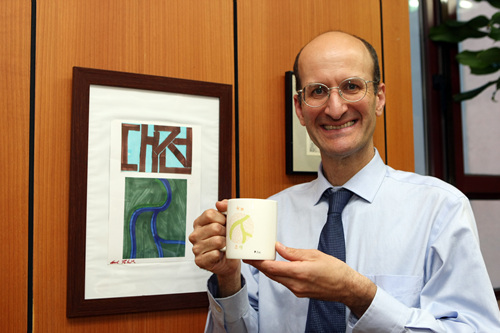
“Greed, Capitalism and the Second Law of Thermodynamics” in The Hangyoreh

The Hangyoreh

March 4, 2013


Greed, Capitalism and the Second Law of Thermodynamics


By Emanuel Pastreich


Many lament  our consumer culture and the ruthlessness and selfishness of today‘s people. The phenomenon of blind consumption is undeniable, and its damage to the ecosystem and to humanity itself is increasingly the primary threat we face. But the ultimate cause of such consumption is far from clear. In fact, one of the biggest mistakes that people make is to assume that because a trend is manifest that it necessarily has a single cause. Simple trends can be generated through the interference of complex factors.

There is great enthusiasm for employing the word “capitalism” to describe the run-away quality of contemporary consumer society, and increasingly that term is used by groups that we think of as both left and right.

But the word “capitalism” is rather ambiguous and its use obscures as much as it illuminates. To start with, that term suggests that the problems we are facing today, from climate change to the destabilization of markets and the disruption of economic systems through the globalization of production and distribution, are somehow just a repeat of the industrial revolution that socialists and communists denounced as “capitalism” in the nineteenth century.

Read more

Asia Institute Report: “Proposal for a Constitution of Information”


The Asia Institute released a report on March 3, 2013 in which it makes a proposal for a “constitution of information” to respond to the challenges posed by the information revolution.

Proposal for a Constitution of Information

March 3, 2013

Emanuel Pastreich


Introduction


When David Petraeus resigned as CIA director afteran extramarital affair with his biographer Paula Broadwell was exposed, the problem of information security gained national attention. The public release of personal e-mails in order to impugn someone at the very heart of the American intelligence community raised awareness of e-mail privacy issues and generated a welcome debate on the need for greater safeguards. The problem of e-mail security, however, is only the tip of the iceberg of a far more serious problem involving information with which we have not started to grapple. We will face devastating existential questionsin the years ahead as human civilization enters a potentially catastrophic transformation—one driven not by the foibles of man, but rather by the exponential increase in our capability to gather, store, share, alter and fabricate information of every form, coupled with a sharp drop in the cost of doing so.Such basic issues as how we determine what is true and what is real, who controls institutions and organizations, and what has significance for us in an intellectual and spiritual sense will become increasingly problematic. The emerging challenge cannot be solved simply by updating the 1986 “Electronic Communications Privacy Act” to meet the demands of the present day;[1] it will require a rethinking of our society and culture and new, unprecedented, institutions to respond to the challenge. International Data Corporation estimated the…

Full report here.

“홍익인간에서 한국교육의 미래를 찾다” (동아일보 기고문)

동아일보

2013년2월13일

“홍익인간에서 한국교육의 미래를 찾다”

link

한국교육은 장점이 많다. 교육열이 높고 교사와 교재의 수준도 뛰어나다. 다만 결과와 등수만 중시하는 경쟁 위주의 교육제도는 문제다. 학생들은 서로 협력하기보다 1등만을 요구받는다. 인간의 가치도 숫자로만 결정된다. 이런 경향은 교육의 상대평가제도에서도 나타난다. 한국사회가 근대화 과정을 거치면서 생활수준을 연봉이나 경제 성장과 같은 수치로 판단하게 됐고 이게 교육에까지 영향을 미쳐 상대평가제도가 도입됐다. 그러나 인간에 대한 이해와 깨달음은 숫자로만 설명할 수 있는 게 아니다. 개인적으로 한국교육의 문제는 두 가지 착각에서 비롯됐다고 생각한다. 첫 번째는 경쟁을 해야만 선진국에 도달할 수 있다고 믿는 것이다. 하지만 이제 한국도 선진국이다. 어떤 부분에서는 미국보다 낫다.

Read more


The Huffington Post

January 21, 2013

Congratulations on Your Monster-Hit Gangnam Style, Psy!

Now It Is Time to Become a Vegetarian and Ride a Bicycle


Emanuel Pastreich

Director
The Asia Institute


Mr. Psy
YG Entertainment
397-5 Hapjeong-dong Mapo-gu
Seoul, Republic of Korea

Dear Psy,

Congratulations on your monster hit “Gangnam Style!” Your music video is the first in history to reach one billion hits on the Internet and it has shaken the world to its core. You have seized the zeitgeist by the horns, channeling the vitality and the contradictions of Seoul’s nouveau-riche south end into some of the most stunning dance routines and biting parodies of life in the fast lane I have ever seen. Bravo!

Read more

Selected Publications of the Asia Institute

Please Feel free to download from the link below the recently released publications from the Asia Institute.

The manuscript has been slightly revised.

Selected Publications of the Asia Institute

Read more

“Tragedy of the Age of Surfaces” in The Hankyoreh

the-hankyoreh

“Tragedy of the Age of Surfaces”

Emanuel Pastreich


The Hankyoreh Newspaper

January 3, 2013 

We live in an age of surfaces;  a tragic age of surfaces. What exactly does that mean? It means that computers have become so sophisticated that the videos, the photographic images and the logos for products they produce are perfect, as are the PC monitors, mobile phones, headsets and just about every other item in the house. In such a world as this, the world we live in, if you were to make something with your hands it would seem innately out of place when seen next to the perfectly shaped objects that you can obtain at a convenience store. That is to say you could labor for days and never draw as perfect a line as you see on the wrapper of a ramen package that you throw away.

As a result, we have become accustomed to perfect surfaces, perfect designs, and flawless, if boring, layout in all the products that surround us. I would certainly not say that having products around one that are perfectly designed, from the bowl you use for your cereal to the gossip magazine you read in the evening, is bad in itself, but over time such a “perfect world” is a terrible burden, especially for young people. Young people are encouraged to be creative in school, to be innovative, but in fact nothing that you can make with your own hands measures up to the perfection found in the design of everyday things.

As a result, our ability to be creative, to create new things, becomes extremely limited after the second grade of primary school. We cannot compete in our own actions with what we are exposed to, and even those who go on to be artists find themselves, knowingly or unknowingly, copying perfect examples of art that they see in photographs.

But the tragedy is deeper than that. More often than not surface is mistaken for depth and young people become obsessed with looking good, with conforming to certain established appearances that they see around them. Of course the “creative bohemian” may be one of those looks, but ultimately the issue becomes one of how one appears, not what one actually does or thinks. You can dress up like an artist, but you cannot create anything. The pressure to look perfect has become enormous, to look like avatars in games or idols in posters.

And as a result of such pressures, we see a tremendous increase in plastic surgery among young people. That practice takes its hidden and muffled toll on the soul. Young women and men feel compelled to spend money to force their bodies conform to the ideal human bodies that they see in movies and comic books. The fact that those human bodies they observe are not natural to start with is a secondary issue. That unnatural beauty has become the natural look in an age of hyper mechanical reproduction.

The tragedy of embracing surfaces and leaving behind the depth of experience has a terrible price, no matter how great the initial thrill may be. A person caught up in the world of surfaces finds no way to express himself or herself directly, lest he or she create an rip, a tear, in the perfect surface of being. They are, after all, competing directly in the search for perfection with the perfectly rendered unreal world. Not much of a chance of finding happiness in that existence. Ultimately, one will feel ashamed of being oneself, of being human.

All throughout Seoul we find young men and women laughing together in seemingly intimate groups, dressed up to be glamorous; striving to be perfect. They act as if all they care about is talking to their close friends, but all they actually think about it how they appear to the strangers they pass by.

But when I look at their eyes, I can see that they are not laughing at all. That laughter they produce through years of practice is a ritual of surfaces; their eyes are mostly sad. Trapped inside the surface of things, such young people cannot even allow themselves to feel sad, to express their own inner worries. And so the tragedy of surfaces is complete.

The oppressive world of trying to seem like someone else creating stresses that cannot be escaped. The first step towards a solution is recognizing the terrible tragedy of surfaces that haunts our youth and allowing them to look sad even when walking in a crowd.


original text

“희망의이유 70] 임마누엘교수의한국표류기” 환경연합 함께 사는 길

함께사는

환경연합

2012 11


희망의이유 70] 임마누엘교수의한국표류기


photo 3

미국에서 태어나고 자란 임마누엘 페스트라이쉬(49세) 씨는 어려서부터 슈퍼맨보다는 공자, 맹자에 더 끌렸다. 그들의 사상과 가르침을 배우고자 스물두 살의 임마누엘은 눈앞에 높인 쉬운 길을 포기하고 대만으로 건너갔다. 영어를 내려놓고 그 나라의 말과 글을 배우고 그 나라의 말과 글로 그들의 가르침과 사상, 고전문학들을 알아갔다. 그래도 부족했던지 그는 대만에서 일본으로 건너가 일본의 고전문학과 문화를 배웠다. 일본을 거쳐 한국을 찾은 그는 박지원의 소설을 읽고 정약용의 사상에 고개를 끄덕이며 한국을 마음에 담았다. 20대를 대만, 일본, 한국에서 보내고 서른두 살 임마누엘 씨는 미국으로 돌아가 그가 배운 것들을 펼쳤다.
그리고 어느덧 중년의 신사가 된 그는 한국을 다시 찾았다. 젊은 날 그가 배운 한국의 고전문학과 전통을 한국 학생들에게 전하기 위해서다. 

Read more

“A new kind of scholar breaks ground in Korea” in Asia Times

The Asia Times

December 1, 2012


“A new kind of scholar breaks ground in Korea”
By Subadra Arvind

An American expat has found an odd niche in Seoul as a commentator on Korean culture, history and policy not for foreigners, but for Koreans. His name is Emanuel Pastreich, and he writes books in Korean and lectures to government and business leaders about how Korea can make full use of its remarkable assets from organic farming to traditional houses.

Pastreich is employed as a professor at Kyung Hee University and is the founder of The Asia Institute, a think tank based in Seoul. In his best-selling book, Scholars of the World Speak out about Korea, he interviewed leading intellectuals like Francis

Read more

Emanuel’s article in Korea times: “Taking Korean language global: Start with dictionaries”

KOREA TIMES


November 25, 2012

Taking Korean language global: Start with dictionaries

One needs to look no further than the Korean-English and English-Korean dictionary to see where we must start if we want to truly internationalize the teaching of Korean language. Most English-Korean and Korean-English dictionaries (all dictionaries that I have ever seen) are written in a manner that discourages foreigners from learning Korean. I think that it would be easy to create truly foreigner-friendly dictionaries and the investment could revolutionize the status of Korean language around the world.

Most Korean-English and English-Korean dictionaries are difficult or impossible for foreigners to use for the simple reason that they were designed for native speakers of Korean. Such an approach creates a tremendous barrier to learning the Korean language. For example, if you pick up an English-Korean dictionary and look up the word “happy,” this is what you will find: The word “happy” in English is followed by definitions of its various usages in English, given entirely in Korean. These definitions are incomprehensible for a beginning student and even difficult for an intermediate student. These definitions are useless as the international student does not want to know what “happy” means, but rather how to say it idiomatically in Korean.

Read more

“From Pacific Pivot to Green Revolution” in Foreign Policy in Focus

Foreign Policy in Focus

“From Pacific Pivot to Green Revolution”

By John Feffer and Emanuel Pastreich

October 4, 2012

The low rolling hills of the Dalateqi region of Inner Mongolia spread out gently behind a delightful painted farmhouse. Goats and cows graze peacefully on the surrounding fields. But walk due west just 100 meters from the farmhouse and you’ll confront a far less pastoral reality: endless waves of sand, absent any sign of life, that stretch as far as the eye can see.

This is the Kubuchi desert, a monster born of climate change that is slouching inexorably east toward Beijing, 800 kilometers away. Unchecked, it will engulf China’s capital in the not-so-distant future. This beast might not be visible yet in Washington, but strong winds carry its sand to Beijing and Seoul, and some makes it all the way to the east coast of the United States.

Read more