“The source of a sick political culture” (JoongAng Daily November 14, 2016)

JoongAng Daily

“The source of a sick political culture”

November 14, 2016

Emanuel Pastreich


If we are interested in progress, and not simply in feeling self-righteous, we must look beyond the central players in the recent scandal in the Blue House which has brought down President Park Geun-hye. We need to ask ourselves what was it in the political culture of Korea that allowed a tiny group of people to control national policy and to do so for capricious reasons.

We must recognize that the situation would not have gotten so out of control if educated and influential Koreans had not been so passive when they saw the worst mismanagement of Korean government in recent history. I did not know the name Choi Soon-sil, but I had heard from many people in government and in business about the secretive manner in which policy was handled in the Blue House and the complete lack of accountability. It was no secret that critical decisions were being made without the advice of any experts on a regular basis.

But almost without exception, the best and the brightest of Korea felt that they had no particular responsibility to demand accountability or to help their fellow citizens who did not have access to privileged information to understand the nature of a political crisis that went on for years.

One thing that I can say definitively: in my many conversations with influential figures I heard the names of people and I heard speculation about who would be appointed to this or that position, but I never heard anyone asking “What is best for the Korean people.”

The problem lies in the political culture, and not in particular individuals, or particular policies.

Let us face the truth: the greatest threat to the Republic of Korea today is not North Korea, nor the economic slowdown, nor the actions of individual politicians. The greatest threat is the spread of decadence in the culture. We have a culture wherein individuals feel little concern for the future of the nation and they indulge thoughtlessly in food, in drink, in sexual pleasures, in vacations and sports. The purpose of life has become short-term satisfaction and sacrifice has disappeared as a value. This is classic decadence.

Tragically, in a misconceived effort to create market demand in Korea, we have unleashed the primitive forces in human nature and held them up as a model for our youth, instead of the rationality, self-control and mindfulness that traditional Korea demanded. One need only look at the television for a few minutes to see the grotesque cultural decadence that threatens Korea. Just watch the endless scenes of Koreans stuffing their faces with food in thoughtless indulgence or witness advertisements that feature women clad in a manner that would have been banned as pornography twenty years ago. Such strategies may sell some products, but they create a moral decadence that undermines governance at every level. Policy has ceased to be about the national welfare, security or values, and degenerated into mere opportunities for financial enrichment and amassing power.

One cause of the decline in Korea’s culture is the loss of a sense of shame. In traditional society, certain actions were simply considered to be shameful and wrong, such as the abandonment of an aged parent. The moral imperative was internalized. As the expression goes, “The gentleman should be cautious even when he is alone.”

But over the last century Koreans increasingly have come to view such a stress on ethics to be restrictive and oppressive, to see such behavior as an archaic relic that contrasts poorly with a modern life of instant gratification. But the loss of a sense of shame allows people to feel that if they take care of their children, and fulfill their assigned duties at work, they are acting in a moral manner. That is to say, there is no need to think further about the ethical significance of the actions taken by those around them.

Another factor has been the diminishing awareness of causality, the relationship between actions, in this age of digital representations and constantly shifting images that surround us. We can no longer see clearly the relationship between what we do on a daily basis and what is transpiring in the world around us. More often than not we think there is no relationship.

We drink coffee from throw-away cups — even when sitting at a café — without the slightest clue of how the use of that paper and plastic impacts the environment. We treat the people who serve us at the café in a flippant and disrespectful manner without any concept of how our attitude towards them degrades the culture of our country.

We need to return to the best of the Korean Confucian tradition and recognize above all that every act that we make is ultimately a moral act. Whether reading a book, eating a meal or talking to a friend, all of our actions can have a positive impact on society.

Only by regaining control over the moral significance of our lives can we start to create a healthy political culture. We cannot alter human nature, but we can create pressure on politicians by reestablishing a culture in which high ethical behavior is expected in every aspect of life.

Read more

“Bring back the five-year plan” (JoongAng Daily October 27, 2016)

JoongAng Daily

“Bring back the five-year plan”

October 27, 2016

Emanuel Pastreich

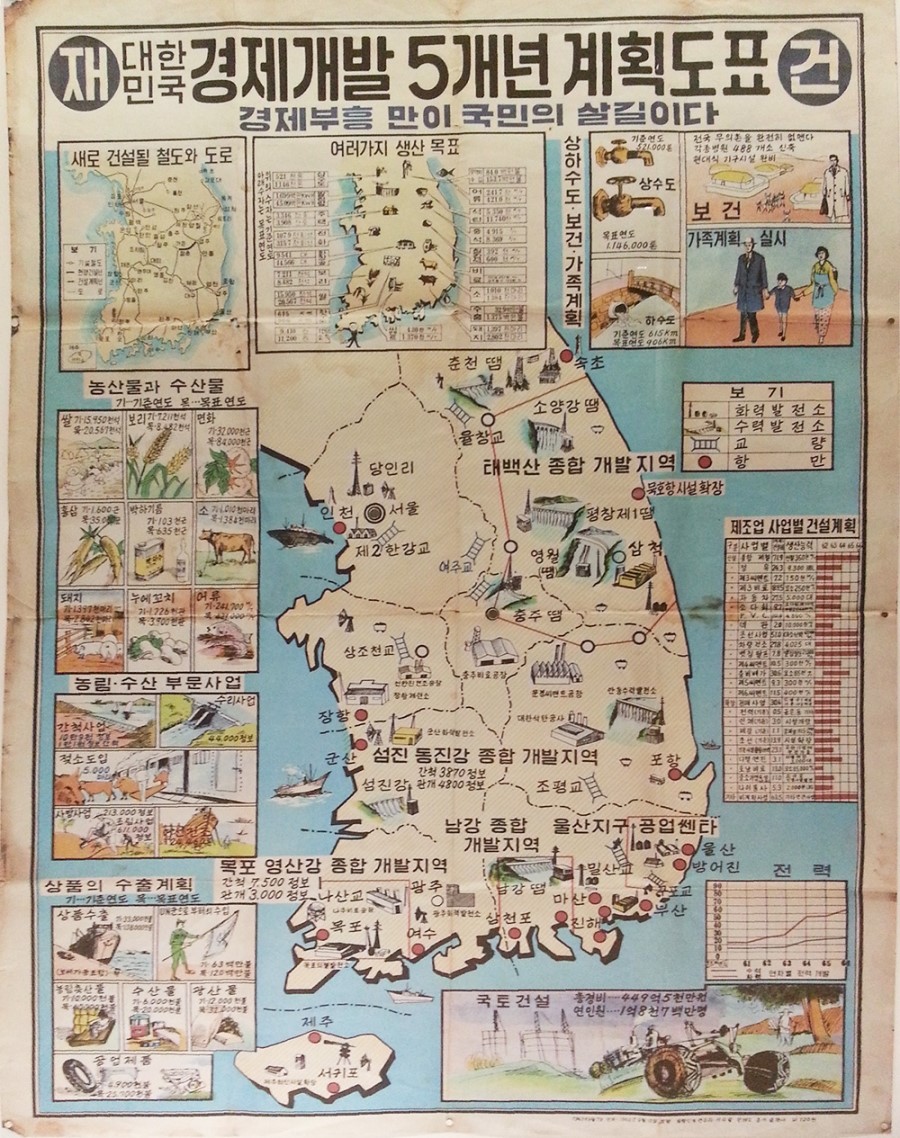
There was a time when Korea’s best and brightest drafted meticulous five-year plans for the development of technologies as part of a 30-year vision for Korea’s future needs. Starting in 1962 and continuing until 1981, these plans set out goals and mobilized resources to build expertise, construct infrastructure, obtain technology and assure a broad understanding among the population of the challenges that Korea faced.

Such five-year plans continued until 1996, although they lost their focus on infrastructure and technology. However, long-term government support for science and technology remains in place, such as the “basic plan for developing biotechnology” through 2026.

Such research and development, however, focused too much on creating products for global markets, rather than technology aimed at addressing directly the threats that Korea faces.

The time has come for the re-establishment of five-year plans for Korea, but with the adaptation to climate change, and the mitigation of energy consumption, as the primary goal.

But development should consist of forecasting the future and planning for it based on three points.

First, what will be the state of the environment in Korea in 10, 20 or 30 years? What will be the sea level and the frequency of droughts, super-storms and flash floods? What will be the state of the soil, of forests, of agricultural land and of fish populations?

Second, what technologies will be available by that future date granted the current rate of technological evolution? How can those technologies be implemented quickly to assure that Korea is carbon-free and can respond to threats?

Third, how long will it take to design and implement the new infrastructure based on that technology so as to respond in time to future climate threats?

We should start with a five-year plan that requires all buildings to employ solar panels and be properly insulated by 2021. The plan would involve industry, academia and government and cover technology, commercialization, citizens’ education and urban planning with a focus on empowering local groups to participate. Solar film to place on windows and cutting-edge insulation materials should be quickly adopted. Other plans should be implemented for the response to super-storms, to rising sea levels, and to protect forests and oceans and farmland.

These five-year plans should not be aimed only at producing products for export, but rather at meeting the challenges of protecting Korea against the threats of climate change. Preparations for responding to rising seas and a warmer climate must be carried out as a national security agenda without a fixation on markets.

Finance for these projects must be generated increasingly within Korea, and finance must be increasingly directed toward the concrete demands of the response to climate change at the national level, and not toward speculation or short-term investments unrelated to the national interest.

Ultimately, this crisis may force us to go back to the drawing board and ask whether industries like shipbuilding, automobile manufacturing, steel and petrochemicals will lead Korea’s future in light of the overwhelming threat of climate change. The government must show bravery, true leadership, by mapping out the equivalent of a war-time economy to integrate emerging technologies with infrastructure demands to respond over the long term to this profound threat. There can be no sacred cows.

The government must put in place a series of five-year plans for industrial development with a set of concrete goals for reducing dependence on imported fossil fuels, increasing insulation, efficiency, awareness and the broad adoption of new technologies, and more importantly, systems of technology, habits, policy and culture that will allow Korea to reach its goals very rapidly. Moreover, the manner in which Korea innovates to achieve these goals more rapidly than other industrialized nations will become in itself a valuable product that Korea can share with the world.

Two sets of five-year plans should be put in place. One for adaptation to climate change and one for mitigation of climate change. Both are equally important, and both must be closely linked to be successful. Moreover, the plans require a change in the culture, the habits, the assumptions of Koreans, and also massive reforms in finance, trade and investment policy that will set Korea free of oil money and petroleum imports and make it a global model.

“경제개발 5개년 계획을 부활시키자” (중앙일보 2016년 10월 22일)


중앙일보

“경제개발 5개년 계획을 부활시키자”

2016년 10월 22일

%e7%bb%8f%e6%b5%8e%e5%bc%80%e5%8f%915%e4%b8%aa%e5%b9%b4%e8%ae%a1%e5%88%92

임마누엘 패스트라이쉬


한국 최고의 인재들이 꼼꼼하게 기술개발 계획을 짜던 때가 있었다. 경제개발 5개년 계획은 한국에 앞으로 무엇이 필요할지를 판단해 30년 앞을 내다보는 비전을 제시했다. 1962년에 시작돼 81년까지 지속된 박정희 전 대통령의 경제개발 5개년 계획은 목표 설정을 바탕으로 전문성 확보, 인프라 건설, 기술 획득을 위한 재원을 동원했다. 경제개발 계획은 또한 국민에게 한국이 직면한 도전이 무엇인지 폭넓게 이해시켰다.

5개년 계획은 인프라와 기술에 대한 포커스가 사라진 채로 96년까지 계속되다 결국 중단됐다. 하지만 과학기술에 대한 정부의 장기적인 지원은 유지되고 있다. 예컨대 2026년에 끝나는 제3차 생명공학 육성 기본계획이 좋은 예다.

하지만 지금까지 연구개발(R&D)은 세계시장을 겨냥한 상품을 개발하는 데 지나치게 주력한 반면, 한국이 직면한 위협을 정면으로 대응하는 데는 상대적으로 소홀했다.

한국의 미래를 위해 5개년 계획을 다시 수립할 때가 왔다. 새로운 5개년 계획은 기후변화에 대한 적응과 에너지 소비의 경감을 일차적인 목표로 삼아야 한다.

새로운 발전 계획은 미래 예측과 다음 세 가지 측면의 미래 계획 수립으로 구성돼야 한다.

   첫째, 10년•20년•30년 후 한국이 처한 환경은 어떤 상태일 것인가. 해수면은 어느 정도까지 상승할 것인가. 가뭄, 수퍼 태풍, 돌발 홍수는 어느 정도의 빈도로 발생할 것인가. 토양•삼림•농지•수산자원은 어떤 상태일까.

둘째, 현재의 기술 발전 속도를 감안하면 미래의 각 시점에서 어떤 기술이 가용할 것인가. 어떻게 하면 이용 가능한 기술을 신속하게 투입해 한국이 카본프리(carbon-free)를 달성하고 여러 위협에 대응할 수 있을 것인가.

셋째, 미래의 기후 위협에 대응하기 위해 기술 기반의 새로운 인프라를 설계하고 건설하려면 어느 정도의 시간이 필요할 것인가.

첫 번째 5개년 계획은 2021년까지 모든 빌딩에 태양광 패널을 설치하고 적절한 단열 처리를 의무화하는 것으로 시작해야 한다. 산업계•학계•정부가 참가하는 5개년 계획에는 기술, 상업화, 시민 교육과 도시계획이 포괄돼야 하며 각 지역의 그룹에 대한 권력부여(empowerment)에 포커스가 맞춰져야 한다. 창문에 부착하는 태양광 필름과 최첨단 단열재를 신속하게 채택해야 한다. 수퍼 태풍, 해수면 상승, 삼림•해양•농지 보호 문제에 대응하기 위한 다른 계획도 실시돼야 한다.

이들 경제개발 5개년 계획의 목표는 수출용 상품을 생산하는 것에 국한하면 안 된다. 기후변화의 위협으로부터 한국을 보호하는 데 필요한 대응책을 마련하는 게 주요 목표가 돼야 한다. 해수면 상승과 지구온난화에 대응하기 위한 대비는 국가안보 어젠다 차원에서 실행돼야 하며 시장성에 집착하지 말아야 한다.

이들 프로젝트를 위한 재원은 한국에서 창출되는 부분이 점진적으로 증가해야 한다. 또한 재원을 점차적으로 투입할 대상은 국가이익과 무관한 투기나 단기 투자가 아니라 국가 차원의 기후변화 대응에 필요한 구체적인 수요여야 한다.

궁극적으로 기후변화는 우리로 하여금 원점에서 출발하도록 만들지도 모른다. 모든 것을 압도하는 기후변화의 위협을 감안했을 때 우리는 조선업•자동차제조업•철강업•석유화학공업 같은 산업들이 과연 한국의 미래를 이끌 수 있을지 묻게 될 것이다.

장기간에 걸쳐 기후변화라는 이 엄청난 위협에 대응하려면 정부는 신흥 기술을 인프라 수요와 통합하기 위해 전시경제를 방불케 하는 경제체제를 계획해야 한다. 정부는 용기와 진정한 리더십을 보여줘야 하는 것이다. 성역(聖域)은 없을 것이다.

정부는 화석연료 수입 의존도를 축소하고 단열 처리, 효율성, 의식 고취, 광범위한 신기술 수용을 확대하는 데 필요한 구체적인 목표를 설정하는 일련의 5개년 산업 발전 계획을 시행해야 한다. 무엇보다 중요한 것은 한국이 지극히 빠른 속도로 목표를 달성하게 하는 기술•습관•정책•문화의 체제를 수립하는 것이다.

한국이 다른 산업국가들보다 이러한 목표들을 보다 빨리 달성하게 만드는 한국만의 혁신 방식 자체가 세계와 공유할 수 있는 소중한 ‘상품’이 될 것이다.

두 가지 5개년 계획을 병행해 실시해야 한다. ‘기후변화 적응(adaptation to climate change)’을 위한 계획과 ‘기후변화 완화(mitigation of climate change)’를 위한 계획이다. 두 계획 모두 동등하게 중요하며, 두 계획이 긴밀하게 연계돼야 성공할 수 있다.

계획은 한국인의 문화•습관•가정(假定•assumption)의 변화와 한국을 오일머니와 석유 수입으로부터 자유롭게 하고 한국을 글로벌 모델로 만들 금융•무역•투자 정책의 대대적인 개혁을 요구한다.

Read more

“Korean Studies and Public Diplomacy” {JoongAng Daily October 4, 2016)

JoongAng Daily

“Korean Studies and Public Diplomacy”

October 4, 2016


Emanuel Pastreich


When I started college at Yale in 1983, I wanted to learn about Asia. I ended up majoring in Chinese and then started Japanese language my senior year. There was no Korean program at that time at Yale.

Today, Yale has Korean language, but students cannot major in Korean studies because there is still not a single faculty member in that field. The loss for Korea is significant as many young students at Yale will go on to play important roles in business and government but will not have a chance to take a course in Korean literature, history, philosophy or art history as undergraduates.

The recent passage of the public diplomacy law suggests there is a commitment by the Korean government to address such serious weaknesses as the general lack of expertise about Korea abroad. Perhaps this funding can be directed toward building up Korean studies in the United States, which lags behind Chinese studies and Japanese studies in breadth and depth. But I must say I was disappointed to see in the wording of the law that its purpose is “to help raise the profile and the national image of Korea in the international community.”

When I started studying Chinese, and then Japanese, it had nothing to do with the Chinese or Japanese governments “raising the national image” but rather with values, the philosophical and aesthetic principles that I associated with those two nations. Advertising about Korean food and talks at Harvard by Psy are ineffective for raising long-lasting respect for Korean culture and are counterproductive. To suggest that Korea is something fun waiting to be consumed is much less effective than introducing it as a set of values that has stood the test of time and will offer deep insights for those willing to make the effort.

We must also understand that countries like France, Britain and Japan had a long colonial history in which they actively promoted the superiority of their culture as a means of social control over their colonies. That bitter tradition has little to recommend to it, but it did permit those nations to start creating a mythology, a mystique, about their culture early on. Korea has come late to this game and did not start to invest in promoting its culture abroad until the 1990s, whereas France or Germany had made massive investments more than a century before then.

Read more

George Washington is rolling over in his grave tonight

I have been reading through Washington’s farewell address. He writes very succinctly about the problems that the United States faces today as a result allowing itself to be seduced into this imperial structure of alliance. He notes the internal corruption that results from external engagements. It seems as if the United States is beyond any simple cure at this point. 
 
Washington notes:
 
In the execution of such a plan, nothing is more essential than that permanent, inveterate antipathies against particular nations, and passionate attachments for others, should be excluded; and that, in place of them, just and amicable feelings towards all should be cultivated. The nation which indulges towards another a habitual hatred or a habitual fondness is in some degree a slave. It is a slave to its animosity or to its affection, either of which is sufficient to lead it astray from its duty and its interest. Antipathy in one nation against another disposes each more readily to offer insult and injury, to lay hold of slight causes of umbrage, and to be haughty and intractable, when accidental or trifling occasions of dispute occur. Hence, frequent collisions, obstinate, envenomed, and bloody contests. The nation, prompted by ill-will and resentment, sometimes impels to war the government, contrary to the best calculations of policy. The government sometimes participates in the national propensity, and adopts through passion what reason would reject; at other times it makes the animosity of the nation subservient to projects of hostility instigated by pride, ambition, and other sinister and pernicious motives. The peace often, sometimes perhaps the liberty, of nations, has been the victim.
 
So likewise, a passionate attachment of one nation for another produces a variety of evils. Sympathy for the favorite nation, facilitating the illusion of an imaginary common interest in cases where no real common interest exists, and infusing into one the enmities of the other, betrays the former into a participation in the quarrels and wars of the latter without adequate inducement or justification. It leads also to concessions to the favorite nation of privileges denied to others which is apt doubly to injure the nation making the concessions; by unnecessarily parting with what ought to have been retained, and by exciting jealousy, ill-will, and a disposition to retaliate, in the parties from whom equal privileges are withheld. And it gives to ambitious, corrupted, or deluded citizens (who devote themselves to the favorite nation), facility to betray or sacrifice the interests of their own country, without odium, sometimes even with popularity; gilding, with the appearances of a virtuous sense of obligation, a commendable deference for public opinion, or a laudable zeal for public good, the base or foolish compliances of ambition, corruption, or infatuation.
 

Read more

“Korea’s impulse economy” (JoongAng Daily September 12, 2016)

JoongAng Daily

“Korea’s impulse economy”

September 12, 2016

Emanuel Pastreich


There I was standing in the stationary store the other day, lined up to purchase pens, pencils and some printer paper before the start of classes. When I reached the counter, I was struck by a gaudy stack of candy bars and other sweet treats. But this is a stationary store, I thought, why am I seeing all these unhealthy snacks?

The answer is obvious: the candy bars are placed in the most visible place, even though they have nothing do to with stationary supplies, because retailers hope that customers will impulsively buy them even though they have no need for them, and they are not nutritious.

You would never have found candy bars piled up in a stationary store in Korea 15 years ago. Back then stationary stores had a clear purpose of supplying people with the paper and pens that they needed to conduct their business, or to pursue their studies.

All that has changed forever. Stationary stores are about tempting people to buy things that they do not need, and that impulsive behavior is considered essential to successful business.

The same principle holds true in bookstores. Once places where students burrowed away to read books about politics, literature and philosophy, now the books are being replaced by stuffed animals, backpacks and trivial accessories.

And every restaurant hangs a sign in front featuring glowing photographs of tasty foods designed to appeal to casual pedestrian’s cravings.

We have adopted a new normal, the assumption that the economy should be focused not on what people need, nor on what is good for our society, but rather on making money persuading people to buy impulsively through an appeal to their most base desires, without a concern for whether the purchase is necessary.

The dangers that result from making impulse and short-term satisfaction the driving force for the economy are tremendous. Human activity has no greater meaning than satisfying base cravings and imagined needs. The citizen becomes a consumer who has no higher ethical purpose for his actions; there is no longer a greater national plan than to consume without thinking about the future, and thereby to generate profits.

Such an approach to economics is alien to Korean culture. The central values of Korea are restraint, humility and an understated self-control in dress and in daily life. Such a culture of restraint extended even to the well-off families who lived in relatively modest homes in traditional Korea (certainly compared with the chateaus and town houses of their peers in Europe).

Thrifty Koreans valued every single grain of rice and threw nothing away. It was the simple and unadorned worth of simple objects that was central to Korean aesthetics.

The tragedy of an economy of impulse is not just the needless waste, but rather the loss of any sense of “why” in the lives of people. They just do things because others do so, they are consumers, but not citizens or family members. For that matter, the understanding of causality will ultimately break down, with people feeling that events simply happen without any relationship to their own actions.

Many young people are pushed to consume, but they do not know why they do so. They feel compelled to engage in such behavior because of social pressure, or because of marketing, but they derive no satisfaction for it. The individual feels increasingly alone, without meaningful friends or meaningful possessions.

There is a darker implication of an economy based on impulse. It encourages cultural decadence, a decadence that creeps into all aspects of society, conservative and liberal, and eats away at the ability of individuals to determine right and wrong, to conceive of a better society or make moral judgment.

As we lose the ability to think for ourselves, to control our own actions and to articulate a response to serious social problems, we cease to be members of a society.

A generation of Koreans raised to think that impulsive actions are a positive will not have the patience or the self-control to wrestle with contradictory facts or separate complex truths from convenient fictions. We risk losing the ability to imagine a future for our society and to work actively for that goal. Indulgence will lead us into fatal passivity, and we will find ourselves dragged along by developments that are beyond our capacity to understand.
Read more

Climate change and the sin of false monumentality

 I have been so deeply disturbed at the spectacle of civilized men and women walking by indifferent in the streets of Seoul, indifferent to the worsening air quality and to the rise in temperatures as a result of the acceleration of climate change.  They are like their brothers and sisters around the world. I think that at some level they know something is wrong. But the respond by simply laughing and acting like they are enjoying themselves. No degree of logic can break through to them.

It seems to be a rule of thumb in Seoul that one mentions the unusually hot weather when meeting people, but does not say anything about climate change at all, as if it were a forbidden topic, something akin to incest or child abuse  that must not be mentioned.

Even more disturbing is the drive in Seoul to build more big buildings and drive more cars, bigger cars, perhaps in the hope that such actions will help the economy, but they are rather a nail in our coffin: every single skyscraper, every single automobile.

The greatest sin is false monumentality, the frailty of humans to think that building something bigger than required will enhance our experiences and make life more significant, make our civilization more complete. But it is a treacherous lie; and now the truth is out.

I feel a pain every time I am given a disposable cup, every time I ride an automobile and every time I take an airplane. I am seriously thinking of declaring I will never fly again, but I lack the bravery, and fear the tremendous isolation that will result. I recently designed a new pin for the Asia Institute that will be available from next week. Do let me know if you would like one.

stop-climate-change-2

But there is no easy solution for this predicament. All I am sure of is that the solution must start with me. And of course Korea has in its past of frugality and respect for nature and for objects the solution to that problem. But in the blind rush into modernity, many Koreans have lost sight of that prize.

It is in this context that I started rereading E. F. Schumacher’s classic book Small is Beautiful: Economics as if People Mattered. I am even more deeply appreciative of the wisdom in this book, and even more deeply disgusted that we have not been able to do anything since it was first published in 1973. I was impressed by the following quote at the opening of Small is Beautiful which I think sums up the emptiness of our project and the need to find spiritual content, for material things can never fill the terrible chasm in our commercialized lives.


Few can contemplate with a sense of exhilaration the splendid achievements of practical energy and technical skill, which, from the latter part of the seventeenth century, were transforming the face of material civilization, and of which England was the daring, in not too scrupulous, pioneer. If, however, economic ambitions are good servants, they are bad masters.

The most obvious facts are the most easily forgotten. Both the existing economic order and too many of the projects advanced for reconstructing it break down through their neglect of the truism that, since even quite common men have souls, no increase in material wealth will compensate them for arrangements which insult their self-respect and impair their freedom. A reasonable estimate of economic organization must allow for the fact that, unless industry is to be paralyzed by recurrent revolts on the part of outraged human nature, it must satisfy criteria which are not purely economic.


(

(H. Tawney Religion and the Rise of Capitalism)

“한국이 독자적인 안보정책을 표방할 때가 왔다” (중앙일보 2016년 8월 20일)

중앙일보

“한국이 독자적인 안보정책을 표방할 때가 왔다”

2016년 8월 20일


임마누엪 페스트라이쉬


한국은 지금 갈림길에 섰다. 한국은 지난 60년 동안 미국이 주도하는 안보 구도를 추종한 덕분에 성공했다. 하지만 미국 자체가 점차 양극화됨에 따라 그러한 접근법을 따르는 게 더 어렵게 될 것이다. 현재 안보에 대한 민주당과 공화당의 관점은 간격이 너무 벌어졌기 때문에 무엇이 미국 정책인지 확인하는 게 불가능하다. 도널드 트럼프와 힐러리 클린턴이 표방하는 외교정책에 대한 의견은 타협점을 허용하지 않는다.

대다수 미국인은 워싱턴의 정책 결정 과정이 여론을 전혀 반영하지 않으며 가장 능력 있는 인사들이 배제됐다고 느낀다.

미국의 중동•아프리카•유럽•동아시아 정책은 미국과 국제사회에서 점점 더 많은 논란을 부르고 있다. 예를 들면 랜드(RAND)연구소가 발표한 보고서인 ‘중국과의 전쟁: 생각할 수 없는 일에 대한 생각 ’은 너무나 적대적이고 도발적이기 때문에 한국에는 공개적으로 이 보고서를 비난하고, 미국 내에서 미•중 협력을 무시하며 위험한 도발을 모색하는 사람들을 비판하는 것 외에 다른 선택이 없다.

한국은 즉각적으로 국가안보와 지역안보를 위한 비전을 분명히 제시하기 시작해야 한다. 한국의 비전은 점점 더 부패의 정도가 심각해지고 있는 워싱턴의 싱크탱크에서 나올 수 없다. 동시에 한국은 장기적인 안보 정책 합의에 도달하기 위해 아시아의 핵심 국가들과 대화에 착수해야 한다.


한국의 안보 정책 제안은 예지력이 있고 영감을 주는 것이어야 한다. 유엔 헌장의 원칙에 기반해야 하며 기후변화와 드론•사이버 공격 같은 새로운 기술이 제기하는 점증하는 위협에 집중해야 한다.

한국이 그런 과감한 주장을 펼치면 비판을 받게 될 것이다. 하지만 현시점에서 비판을 회피하려는 시도는 한국의 국익과 어긋날 것이다. 오히려 한국이 용감하게 글로벌 안보 비전을 제시한다면 한국은 침묵하는 다수가 존중하는 나라가 될 것이며, 미국•일본•중국 등 예상치 못한 여러 나라에서 예상치 못한 친구를 발견하게 될 것이다.

한국의 안보 정책은 정확히 어떤 내용이어야 할까. 우리는 총이나 대포 같은 무기가 계속 어떤 기능을 할 것이라고 상정해야 한다. 하지만 안보 위협의 근본적 변화를 정확히 감지하지 못하고 큰 비용을 들여가며 전쟁에 시대착오적으로 대비한다면 우리는 심각한 위협에 빠질 수 있다.

기후변화 대응을 위해서는 우리의 국부(國富)를 확대 투입하는 것 외에 선택의 여지가 없다. 기후변화는 미래의 분쟁에서 한 요소로 작용하는 데 그치지 않을 것이다. 기후변화 완화와 적응은 안보적 고려의 중심이 될 것이다. 우리는 안보 개념을 다시 생각해야 한다. 한국의 글로벌 리더십은 한국이 다른 나라들보다 어느 정도까지 빨리 이러한 전환을 달성하느냐에 달렸다. 한국의 제안이 일부 미국 고위 관료를 자극할 것이라는 사실이 우리의 시야를 가리면 안 된다. 미국의 많은 전문가가 그러한 입장을 취하는 한국을 더욱 존중하게 될 것이다.

한국은 리더십을 발휘해 차세대 무기체계의 점증하는 파괴 잠재력이 미사일•핵무기 같은 무기 개발을 제한하기 위해 우리가 선의의 조약을 체결할 것을 요구한다고 주장해야 한다. 그렇게 주장해야 하는 이유는 기후변화 대응 비용 때문에 그러한 무기체계를 지탱할 자금이 없으며 조약이 유일하게 효과적인 무기 통제 수단이기 때문이다.

우리는 또한 미래 분쟁의 본질을 변화시킬 드론(특히 마이크로•나노 드론)과 로봇의 위협에 대응하기 위해 상당한 재원을 투입해야 한다. 벌떼 같은 수많은 소형 드론의 무리는 비국가행위자(non-state actors)가 무방비 상태인 우리를 겨냥해 지극히 파괴적인 분쟁을 개시하는 것을 허용할 수 있다.

사이버 전쟁과 3차원 인쇄도 유사한 도전이다. 우리는 이런 기술을 이차적인 이슈가 아니라 미래 분쟁의 잠재적인 핵심으로 간주해야 한다. 드론과 결합된 사이버 전쟁의 궁극적 의미는 일방이 핵무기가 포함된 상대편의 모든 무기를 접수해 분쟁에 사용할 수 있다는 것이다. 리스크가 너무 크기 때문에 어떤 경우에는 수동으로 작동되는 무기로 되돌아가야 할 것이다.

이러한 기술은 민족국가보다는 세계 곳곳에서 유유상종하는 비국가행위자들이 활용할 가능성이 크다. 그들은 동아시아 국가안보 정책을 뒷받침한 국가 대(對) 국가 분쟁에 대한 기본적인 가정을 무시하며 대규모 분쟁을 일으킬 수 있다.

마지막으로, 한국은 미래형 안보 접근 차원에서 완전한 에너지 독립을 향해 용감하게 발걸음을 내디뎌야 할 것이다. 한국은 군용 에너지를 석유•가스•석탄 수입에 의존하고 있기 때문에 해상 운송이 불가능하게 되는 경우에 지극히 취약하게 된다. 한국은 세계에서 가장 수준 높은 태양력•풍력 발전 체제를 개발해 전체 군사체제와 통합해야 한다. 그래야 에너지 공급 차단이 분쟁 대응 능력에 아무런 영향을 미치지 않는다. 로저 소킨의 영화 ‘짐(The Burden)’이 보여줬듯이 미 군부에서 가장 사려 깊은 사람들 중 많은 수가 화석 연료에 대한 의존이 전략적 취약점이라고 생각한다. 한국은 창의성과 용기로 우리를 새로운 방향으로 이끌어야 한다.

Read more

“Chinese Dream: Western Imitation or Radical Alternative?” (Foreign Policy in Focus August 12, 2016)

Foreign Policy in Focus

“Chinese Dream: Western Imitation or Radical Alternative?”

August 12, 2016


Emanuel Pastreich


When I arrived in Nanjing to attend a conference recently, I asked the student assigned to show me around whether he could take me to the famed Confucian temple Fuzimiao in the old city. It was my first visit to Nanjing, and I wanted to explore its back streets and perhaps stop at a traditional tea house.

I knew Nanjing — or Jinling as it was known before the Ming Dynasty —even though I had never visited before. I had read many poems set in Nanjing when studying Chinese literature at the University of Tokyo and at Harvard University. The landscape of the Qinghuai River was familiar to me from seventeenth-century miscellanies, and I had fantasized about the sprawling mansions of Nanjing in the eighteenth century when I read the novel Dream of the Red Chamber in college.

But my quest for traces of old Jinling in the frenetic streets of contemporary Nanjing was a failure. All traditional buildings around the Fuzimiao Confucian Temple have been torn down and replaced with bland concrete buildings housing fast food restaurants and shops selling t-shirts. Although some stores had fine teas, for the most part the food and the gear available was not much different from that found in Bangkok, or in Los Angeles for that matter. Nothing was manufactured in Nanjing. The city has lost its community of artisans and craftsmen, not to mention its poets and novelists.

The interior of the Fuzimiao Confucian Temple did not feel authentic. The walls were formed from poured concrete, not stone or plaster. The woodwork was cut by rough hands, and the corners where the floor met the walls were not carefully finished. The furniture was poorly crafted and the calligraphy hanging on the walls mediocre.

I found no grand history that afternoon in Nanjing, nothing like the relics of an inspiring past that you find at Notre Dame in Paris or around the Todaiji Temple in Nara. I got the impression from some explanations that I read that Nanjing’s past is something that Chinese are obligated to read about, but not much in that civilization is relevant to the present day.

My student guide was extremely helpful in the search for a traditional teahouse, but I came away with a feeling of deep sadness that so much of traditional China has been lost—not so much because of the Cultural Revolution but from the growth of a ruthless consumer culture. This sadness was most certainly not sentimentality.

The true tragedy is that China had at one time offered the world the most sophisticated system for supporting a complex bureaucracy and a large population entirely on the basis of fully sustainable organic agriculture. When the American agronomist F. H. King wrote the bookFarmers of Forty Centuries, or Permanent Agriculture in China, Korea, and Japan in 1911, he argued that East Asia offered a model for truly sustainable agriculture that the United States should adopt as soon as possible. Tragically, China has imported the lethal American mix of fertilizer and pesticides that makes nothing sustainable. The Chinese wisdom of agriculture has been lost on young people at exactly the moment it is most needed.

So also, the Chinese traditions of modesty and low consumption, respect for the elderly, and personal humility have tremendous appeal as an alternative to a ruthless consumer society. But if you come to China looking for these virtues, you will be disappointed.


The West Dreams of China

Many Westerners are seeking in China an alternative to the deep malaise that infects Western culture. It was a similar impetus that inspired me to study Chinese literature: a disillusionment with the materialism and militarism that were slowly eating away at the institutions that make up the United States. Confucianism, Buddhism, and Daoism offer Americans an alternative to a society in which the individual’s every action is calculated in monetary terms.

I was inspired by China as a student because of the appeal of frugality and the commitment to the unity of learning and ethical practice. Many of the great Confucian scholars made it a practice only to eat what they needed and to refrain from indulgence. Even well-off Chinese avoided waste and ostentation and considered literature and philosophy to be the highest calling. China represented a civilization dedicated to tranquility in which villages maintained a careful harmony with nature that assured their survival for centuries.

But when I visit China today, I find the same blind worship of the false gods that I wanted to leave behind in the United States. I am shocked to see the pointless waste of food at restaurants in China, and the impulsive, needless purchase of unnecessary products and accessories by Chinese. Such actions would have been seen as shameful by Chinese 100 years ago—and such consumption is shameful today in this age of radical climate change. Today most young Chinese throw away plastic bottles and bags like their American peers, without a thought for the consequences.

Most tragically, Chinese bureaucrats also evaluate success according to the same twisted economic theories and fetishisms that have done such damage in the West. Chinese are drawn to fancy department stores packed with disposable goods, and they view flashy fighter planes as symbols of national power. I am sensitive to this shift because as an American I have watched my own country lose its way, its citizens seeking shelter from the harsher realities of society in consumer fantasies.

America has failed miserably to set an ethical model for the world. Not only has my country engaged in a series of illegal wars for over almost two decades, Americans have become so narcissistic that they make no effort to set higher standards for the world to follow in terms of environmental policy or their concern for those who do not have the benefits of wealth.

China, meanwhile, is setting the pace for developing nations around the world today. The nations of Africa and Asia turn to China as a model of successful development and receive an increasing amount of aid from Beijing. China has an impact on the world unlike any other country because one out of five people live in China. China’s culture is impacting nations in Africa and South America directly, and many from developing nations are scrambling to learn Chinese.

China has the tremendous wisdom and depth in its culture, a long tradition of sustainable agriculture and low-consumption intellectual engagement that could provide an alternative for development. China is not offering a fundamental alternative to the consumption-based U.S. model.


The Chinese Dream

Many Chinese imagine a strong China that can stand up for its interests and leave behind forever the humiliations it suffered after the Opium Wars (1839-1842; 1856-1860). The desire on the part of Chinese to build up national strength to resist foreign powers is understandable. Unfortunately, the assertion of national power often takes the form of imitating the trappings of national power so loved by the United States, such as the building of aircraft carriers and tanks, rather than a commitment to addressing real security threats like climate change.

The debate in China has been whether China should further embrace neoliberalism, or revive its Maoist traditions. The return to traditional approaches to economics, ecology, and governance have not been considered as a third way. President Xi Jinping introduced the “Chinese Dream” in the midst of the debate on how far to take Chinese globalization.

Xi used the term “Chinese Dream” (Zhongguomeng) in November 2012 after the 18th National Congress of the Communist Party of China, predicting a “rejuvenation of China” that would take the form of “a dream of the whole nation, as well as of every individual.” Although the dream was presented as a spiritual challenge to citizens to work together for a better country, and a better world, for many Chinese the “Chinese dream” means simply a rich China packed with big cars, long highways, soaring skyscrapers, and stores packed with consumer goods. They dream of a day that they can eat at expensive restaurants and order so much food that they leave piles of it behind. Many see Chinese see the Western good life as progress even as we observe all around us signs of impending doom.

We should not glorify traditional China, given the rigidity of Confucian teaching in the late imperial period and the severe limitations on the activities of women. At the same time, Chinese should see their past not as something to overcome but as an inspiration for the future. Chinese culture assumed that students were to be trained to read poetry from childhood and should study ethics and philosophy, rather than business administration and marketing. Intellectuals were expected to maintain a commitment to society and to good governance, and government officials were expected to be intellectuals who valued the humanities above all. What we need is something closer to what E. F. Schumacher referred to as the “middle way” between “materialist heedlessness” and “traditional immobility” in his book Small is Beautiful: Economics as if People Mattered.

China did not grow economically by exploiting the peoples of the world and their natural resources in the way that Europeans and Americans did, and still do. Perhaps we can imagine a world in the future in which China, rather than joining the club of rapacious globalists, returns to its original roots in a sustainable economy that values the humanities and wisdom above all, and reinterpret this as a “Chinese dream” for all Chinese as well as for the developing world.

The Chinese must incorporate into their dream a focus on long-term economic and environmental justice — values that in many respects form the core of the Confucian and Daoist tradition. China should draw on its tradition of ecology and political ethics as the foundation for a new worldview that offers alternatives to “economic growth” metrics and “consumer indexes.” China has the philosophical foundations — the aesthetic — required to build such an intellectual institution. Chinese in the Ming and Qing dynasty were entirely capable of formulating and implementing agricultural and irrigation plans spanning centuries.

Perhaps the rediscovery of traditional Chinese concepts of sustainable agriculture will serve as the necessary stimulus to create a “synthesis that will fuse economics and environmentalism in a way that fundamentally reorients both disciplines,” as John Feffer suggested in his article “The New Marx.” The question is whether Chinese are ready to recognize the treasure that they already hold in their hands.

Whether China is equipped to play a lead role in the world is not relevant. China has been thrust to center stage by circumstances, ready or not. The deep decay of American culture over the last three decades, combined with the striking irresponsibility of American intellectuals, has left the United States embroiled in international and domestic problems that will prevent it from such central role in the international community, regardless of what American media may say.

China is the only country that has the financial assets, the expertise in the sciences, the scale and the depth in its institutions and culture to play such a global role. Moreover, because China was a hegemon in Asia, but not a colonial power in the sense that England, France, Spain, and Germany were, there is a chance that China will promote a level playing field around the world. But that last point is far from guaranteed. The critical question is whether China has the creativity and the moral authority to stand back from the excitement of wealth and power and critically assess how its traditional culture offers a viable alternative for both China and the world.

The majority of Chinese still have not grasped the fact that it is now China’s responsibility, and not merely its opportunity, to advocate for the rule of law, for a peaceful world, and for a better sustainable future around the world. Some countries choose to offer an alternative, and some countries have that responsibility thrust upon them. China finds itself in the latter position, and the world awaits China’s decision.


The Future of “One Belt One Road”

Exactly at this moment, when China is called upon to play a central role in the global economy, the country has launched its “One Belt One Road” project. China has invited nations from around the world to participate in this project to promote integration and cooperation among the nations of Eurasia.

The “One Belt One Road” has focused on infrastructure and resource development so far. These projects can sometimes be useful for developing a sustainable future, but in many cases are not. Emphasis has been placed on increasing the flow of oil, gas, and other raw materials into China to fuel further growth and investment. The Asian Infrastructure Investment Bank (AIIB), the New Silk Road Fund (NSRF), the Shanghai Cooperation Organization (SCO), the Silk Road Gold Fund, and the Mining Industry Development Fund have little to do with preserving the environment. This drive towards consumption as national strength does not bode well as Chinese consumption of food and fuel has such an impact on the entire world, as Lester Brown has demonstrated in his book Who will Feed China?

Still, the project is just beginning, and China may ultimately use this project to establish new institutions, policies, and habits that lead the Earth in the right direction.

“One Belt One Road” is an unprecedented opportunity for two reasons. It is an opportunity to establish a new international community that follows directly the prescriptions of the United Nations charter, a tradition that has been all but forgotten in Europe and the United States. But it also offers us the possibility of establishing institutions for global governance appropriate to a densely integrated Earth that are not dominated by private equity funds and multinational corporations in the manner that the World Bank is.

The “One Belt One Road” project requires global cooperation and cannot be dictated by China. That fact also offers a rare chance to create new institutions of consensus that are not run by superpowers, but that potential can only be realized if other nations take the project seriously as a plan for humanity, not just a chance to make money.

China should also think more profoundly about the common term for this project, the “new silk road.” The term “silk road” harkens back to the overland trade between China and the rest of Eurasia in the Tang Dynasty through trading centers such as Samarkand and Andijon and over the sea route connecting China with India, Persia, and Africa. But the silk road was not just about money and trade. The silk road also refers to the profound cultural exchanges between China, central Asia, India, and Persia that resulted in the flowering of Buddhist philosophy, the exquisite murals of the Dunhuang Caves, the delicate porcelain and sculpture of Changan, and the lyrical poetry of Li Bai and Du Fu in Tang Dynasty that set the course for the rest of Chinese literary history.

Might this new silk road avoid the well-worn path of Western-style economic development and put its sights on achieving the highest levels of cultural expression? Or could it put more emphasis on organic farming than on building dozens of new airports? Might joint projects to improve the production of sustainable energy replace the extraction of fuel and metals?

At the moment there are few indications of such a shift. But China has demonstrated such radical transformations in the past. China has the solution in its past, although many Chinese are unaware of it. Perhaps China’s past offers that last opportunity for our tortured world.

Read more

“The truth about our palaces” (JoongAng Daily August 1, 2016)

JoongAng Daily

“The truth about our palaces”

August 1, 2016


Emanuel Pastreich


It was the fifth time I had overheard the same conversation from Chinese tourists visiting Gyeongbok Palace. One of the group remarked in a dismissive tone that Korean palaces are so small and simple compared with the impressive edifices that dominate the Forbidden City in Beijing.

Korean friends have confessed to me that they are a bit ashamed when they hear such remarks from Chinese visitors. But I have never felt there was anything to be ashamed about in the planning of the ancient city of Hanyang (Seoul). One of the greatest strengths of Korean democracy can be traced back to the beginning of the Joseon Dynasty and that was the clear limits on the power of the king that stood in notable contrast to the unlimited power of the emperor in China. The palaces, first Gyeongbok and then Changdeok, were designed to give the impression of dignity, but not to overwhelm the observer, or to suggest that the king had super-human status. In contrast, the massive Forbidden City, which by its very name implies it is off limits, Korean palaces are not much larger than the homes of the scholar officials on the northern side of the city (Bukchon) and the houses of the scholar officials are not much bigger than the homes of commoners.

Read more