Perhaps one of the most remarkable changes in Seoul can be seen at the Shilla Hotel. A series of plaques have gone up around the gardens surrounding the Shilla hotel that explain its history in Chinese. The signs are remarkable not only for the details they give about the history of Seoul and of the Shilla Hotel, as well as facts about the visits of Chinese statesmen. The signs are unique in that they exist only in Chinese and there are no English plaques accompanying them. That new practice stands in contrast to what we find at the much older statue of the founder of Samsung Lee Byung-Chul to be found behind the Shilla Hotel which has explanations from another age in English, Japanese and Korean.
This plaque identities on of the eight scenes of Changchung (which I had never heard of before), the “108 Steps of Buddhist liberation from troubles.”
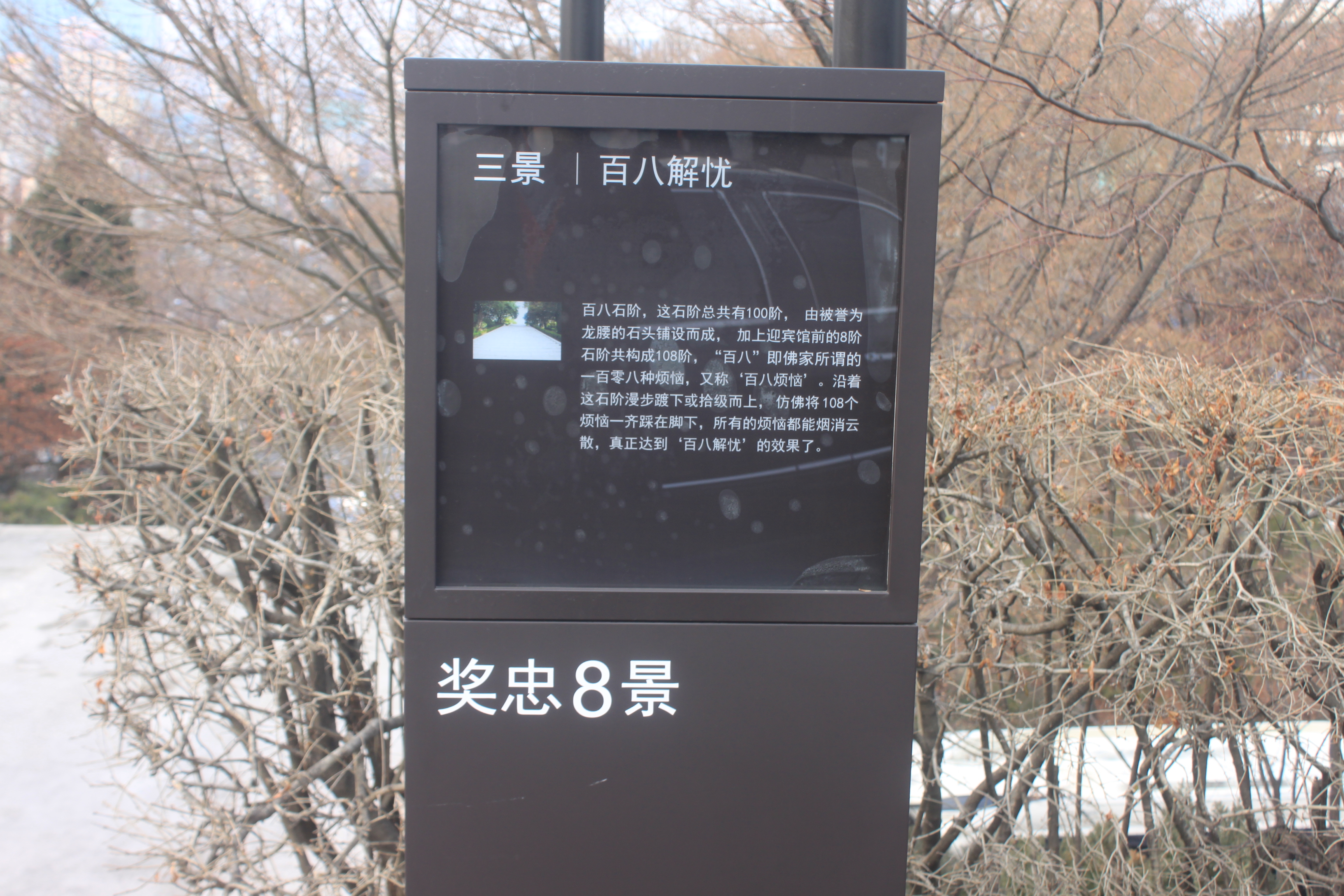
I do not know when the plaques went up, but I do not think they are more than six months old. What I can say definitively is that Chinese have become by far the most dominant group of foreigners around the Shilla Hotel and that increasingly the tour guides at important places in Seoul are primarily speakers of Chinese. This rapid shift runs at odds with the general fascination of Koreans with the United States and the obsession with English in this country.
Korea’s status as “little brother” – or as the cultural part of China that, weirdly, is not currently part of China, in the eyes of Chinese at least – is returning.
Just as Canada’s chief danger is not its perceived enemies, but the USA, Korea’s chief danger is now and has always been its two neighbours. China among them.
The fate of countries or ethnic groups that fall into China’s sphere of influence is not pretty.