The Balancer: Roh Moo-hyun’s Vision of Korean Politics and the Future of Northeast Asia

Here is an article I originally wrote for Japan Focus back in August, 2005.  The article can still be viewed on their web site.

The President of the Republic of Korea is unique as a politician in the media age, both in embracing the potential of the Internet and refusing to pander to the sound bite. He spends hours on-line each week promoting his vision of e-government. The website of the Cheong Wa Dae presidential residence, the Korean equivalent of the White House, features a picture of Roh typing away furiously at his laptop. Roh, who has authored a biography of Abraham Lincoln, on whom he models himself, and like Lincoln, crafts speeches of great intellectual complexity. Roh also sees himself as the leader of a nation divided between North and South, and fragmented within. He works on the assumption that concepts and ideals can transform a society.

Moreover, Roh’s lack of concern about criticism or bad press is remarkable. Repeatedly he has demonstrated that he is perfectly willing to accept blame, even risk his tenure in office, in the effort to implement his policies. Since his rise from relative obscurity to win in the presidential election on December 19, 2002, Roh has encountered unprecedented resistance within Korea from entrenched factions that see his attempts to transform the Korean government as a threat, direct or indirect. He has stepped on many toes in his pursuit of an ideal of new Korea. Although his selflessness has earned the respect of many, he has often failed to speak in a language that is easily grasped by corporate figures, bureaucrats and local politicians accustomed to a far more venal political tradition.

Read more

June 30 Reception for the Publication of Two Books by SNU

Publication Reception 출판 기념회

Reception commemorating the release of two books from

Seoul National University Press written by Emanuel Pastreich (이만열 교수님)

of  Kyung Hee University’s Humanitas College.

The Novels of Park Jiwon: Translations of Overlooked Worlds

&

The Observable Mundane: Vernacular Chinese and the Emergence of a Literary Discourse on Popular Narrative in Edo


Time:  June 30th Thursday, 5pm–7pm

(초대일시: 6월 30일 목요일, 오후 5시-7시)


Place:  PAIK HAE YOUNG GALLERY


PAIK HAE YOUNG GALLERY

101-40 Itaewon, 1-Dong

Yongsan-Gu, Seoul 140-201

T. 82-2-796-9347  F. 82-2-796-9348

paikhy@paikhygallery.com

www.paikhygallery.com

Directions from Itaewon Subway Station(line 6) Exit #2
Walk toward till you see the Fire Station across and turn left at the Chosun Antique.

Walk up to the hill about 5 mins to the Grand Hyatt Hotel direction.

Follow the yellow line and you will see the white building of Paik Hae Young Gallery.

SEE ATTACHMENT for details and MAP 

SNU PRESS RECEPTION INVITATION

Visit to Beckman Institute at University of Illinois & West Campus at Yale University

I visited University of Illinois, Urbana-Champaign and Yale University with Eugene Pak, director for research and development at Seoul National University AICT (Advanced Institutes of Convergence Technology) at the end of May (2011).

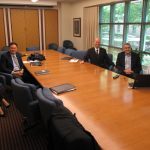
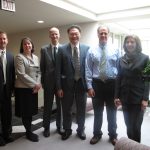
In the first picture, we pose with  Professor Scott Stobel, Vice President for West Campus at Yale University. Professor Stobel took time to show us the very impressive facilities at West Campus and to describe such new innovations as the Biodesign Institute. When Bayer decided to sell its primary research center in North America, Yale had the foresight to purchase it, and, in effect, double to size of its campus. We also toured the Yale Medical School.

The second photo is of a presentation at the Beckman Institute at University of Illinois, Urbana-Champaign, by Professor Kevin Kim. Professor Kim  introduced his work on drug delivery systems. The Director of the Beckman Institute, Dr. Art Kramer, also met with us to discuss future cooperation with Korea in convergence technology. I had a chance to see several close friends at University of Illinois. Also included in the picture are the associate dean of Electrical Engineering Bruce Vojak, and researcher Soo Choi.

Harnessing Energy, Korea’s Future

This article I originally wrote for the JoongAng Daily in 2008.  They published it on June 12.

We can certainly empathize with the desire of young Koreans to actively participate in the political process and address the serious problems resulting from profound changes in the global economy. Nevertheless, there is a danger that the Koreans who filled the streets with their protests against the import of American beef are being distracted from a far more serious threat to Korea’s well-being. Let us urge concerned Koreans to focus their energy on the problem of Korea’s economic survival in an age of high energy costs.

Korea, a nation without natural resources whose economy is built around exports, will find it far hard to compete if oil reaches $200 a barrel. Moreover, Korea’s logistics system, and much of its public transportation, is based on the American model: highways and automobile transportation are at the center while regional trains and energy efficient buses are almost non-existent. We are witnessing just the first signs of a serious dislocation in Korean society that will increase with the cost of petroleum.

Read more

Driven by Moore’s Law

On December 13, 2010, I participated in a relay interview on Korea Business Centeral.  This was an interesting experience for me as the entire process was done online.  The original interview can be found on the KBC web site.  I have reprinted it here.

Vince Rubino: I have heard you have a bit of experience in Asia, stretching back to the 1980’s, can you tell us a little about your history here?

Emanuel  Pastreich: Well there is a lot I could say about myself and Asia. I started at Yale in 1983 and was intrigued by China because I went to Lowell High School in San Francisco. That high school was about 75% Asian, so I was sometimes the only Caucasian in the classe. When I arrived at Yale, I got it in my head that in some future age Americans would have to read and write Chinese because the world will have changing radically. I wanted to get it right. So I tried to teach myself Chinese day and night.

I went to Taiwan for my junior year, and then after graduating I moved on to Japan where I eventually received my MA from University of Tokyo before returning to the US in 1992. What is perhaps unusual about my work in Taiwan and Japan is that I did all my classes and papers in Chinese and Japanese respectively. I wrote a 250 page MA thesis in Japanese, for example. It was required, but of course I chose to enter a program that required me to write such a thesis. Doing my work in the original language was very important to me. And I recommend that anyone who takes Asia seriously should enter a degree program that requires him to write in the native language.

Vincent Rubino: You recently published a book here in Korea, isn’t that right?

Emanuel  Pastreich: I have two books coming out from Seoul National University Press next month.

Vincent Rubino: Tell us about the two books.

Emanuel Pastreich: One is a collection of translations of novels of the 18th century Korean novelist Bak Jiweon and the other is a study of Chinese vernacular novels and their impact in Japan in the 18th and 19th centuries. Both works are based on my previous work as a professor of comparative Asian literature while at University of Illinois, Urbana-Champaign.

Vincent Rubino: What language are these particular works published in?

Emanuel  Pastreich: Both books are in English. Seoul National University is making a serious effort to enter English language publishing these days.  I write in Korean as well, but primarily articles.

Vincent Rubino: Speaking of Korean, what is it that brought you to Korea?

Emanuel  Pastreich: Originally,  I was writing a dissertation on Chinese and Japanese novels and came to feel that I had to understand something about the Korean tradition in literature to do my research accurately. But once I started to look at Korean literature, it became clear that I had to learn to speak Korean fluently. So I came here in 1995 and threw myself into language study, and learning about Korea. Along the way, I came to appreciate many aspects of Korea, especially the friendships I made here. That led me to take Korea even more more seriously. But in fact when I started as an assistant professor at University of Illinois, I was a professor Japanese literature.  I came back to Korea in 1007 after ten years in the US. This is my first time working in Korea: a different experience

Vincent Rubino: Indeed! What a very deep experience you have had here.

Emanuel Pastreich: Well, the truth is that know much less about Korea and how it works than many members of KBC. My main advantage is that I can speak and read pretty technical Korean. That is a skill that can make all the difference in some contexts. Being able to sit down and answer, in Korean, 15 e-mails rapidly makes a big difference. But it can be misleading. I don’t necessarily know Korea better than experts who have worked on Korea for years, I just know the language.

Vincent Rubino: What are your main projects these days?

Emanuel  Pastreich: These days I consider technology convergence to be my serious effort, with a continuing interest in the question of “the future of the research institute.” For fun I have my Daejeon T Shirt and coffee mug. But both of those efforts are part of a larger effort to engage in Korea and the world at multiple levels. Right now I am working with Daejeon Metropolitan City and Gwangju Metropolitan City, and giving talks at the research institutes.

Vincent Rubino: I have noticed you have something of a philosophical bent as well, Emanuel!

Emanuel Pastreich: Interesting point. Yes, I think I am a rather odd person in that respect. I both want to be involved in the details of policy and thinking about what the best way to deal with problems right now is. At the same time, I also want to sit back and watch with detachment the evolution of civilization and technology over time. After all, whatever exciting projects we engage in now, our work is like building sand castles on the beach. Most efforts cannot last forever against the tides of change. But maybe in the future, some people will remember the castles we built and try to build them again at later dates. Sand castles keep emerging throughout history. Whatever our plan is, it is based on the efforts of those who came before us.

I am most taken by Moore’s Law these days and how it drives the changes we see around us.

Vincent Rubino: How does Moore’s Law apply to your work in Korea?

Emanuel  Pastreich: Well, we see vast range of technologies emerging in Korea. People once looked down on Korean research institutes because they lacked “basic research.” Suddenly we are finding that research institutes around the world are moving from basic research towards commercialization, and even towards marketing. This puts Korea in a strong position.

The reason for the shifts in R&D can be attributed to financial limitations, or market forces, but I think there is something beneath the surface going on. Moore’s law states that the number of circuits you can place on a microprocessor doubles every two years. Moore’s Law has held for 50 years.The result is that you can do more computer calculations, hold more memory, for less and less cost. As a result, the primary issue is no longer producing technology. We are producing more technology than we know what to do with. The question then becomes how can we can apply that technology. And as that task also becomes easier and easier over time, we will find ourselves working more and more on how to market the technologies we produce. I would go out on a limb and say that Moore’s law will eventually make patents relatively unimportant.

Vincent Rubino: Wow!  That is a bold statement.

Emanuel  Pastreich: moreover, Moore’s law is a primary force driving the Korean economy. Drive out to Asan and take a look at Samsung Electronics’ new display fabrication plants. You will find that the generation 8 plant is at full production. Next to it is the generation 9 factory: almost completed and ready to go on line in three months. Next to that is generation 10: half built. Next to the generation 10 plant is the site of the future   generation 11 plant: a hole in the ground. There is an ineluctable drive to create the next generation of technology. Market forces? Maybe, but I personally think there is something else at work here. The relentless drive of Moore’s law to produce new technologies lies beneath the surface. And Korea is ground zero in this new order

Vincent Rubino: This is a titillating idea, Emanuel.  You are definitely onto something here.

Emanuel  Pastreich: In terms of my work in Korea, I first worked as advisor to the governor of Chungnam Province. Then I started to advise the Daejeon Metropolitan City on FDI and internationalization (which I still do). I have conducted five research projects with three research institutes, helped found the Daejeon Environment Forum and now I am working on a possible convergence forum. And I write articles. One representative article is “To Take the Lead Globally, Korea Must Build the Ferrari of hand-held Devices”   http://www.biztechreport.com/story/722-take-lead-globally-korea-mus….

Vincent Rubino: I have not caught up on all my reading yet, Emanuel.  I think YOU are an example of Moore’s law, writing articles faster than I can read them.

Emanuel  Pastreich. Well we are all driven by Moore’s Law. I am writing an article on that very issue.

Vincent Rubino: I look forward to reading more.

Emanuel  Pastreich: Korea is fascinating because Koreans do so many things so well, but have some unexpected blind spots. They are excellent at engineering devices, but have great trouble figuring out how to make good use of people. That is why I find the work so interesting here.

Vincent Rubino: On that note, as I final question, what advice or recommendations would you have for a foreigner who is FOB (fresh off the boat) here in Korea?

Emanuel  Pastreich: Well, I think you should expect to go through several sets of friends as you become more familiar with Korea. That is a reality. You cannot expect to have profound friendships immediately. But you meet a greater variety of people at the beginning, which is also good.

I find Korea more difficult than Japan on a day to day basis. Things just don’t work the way I want them to. But when I sit down and think about it, in fact I have many, many more Korean friends than Japanese friends, even though I lived in Japan for more than six years and spent almost all my time with Japanese people. You need to think about how to take advantage of your own skills in your work here. For example, I find that as an American, I am better at horizontal networking than Koreans. I use that skill to introduce Koreans to other Koreans. That gives me value for  them. Here is a simple thing you can do. Offer to make and English language Facebook entry for a Korean friend you want to work with. It doesn’t take long, but it establishes a relationship. It is symbolic and valuable act. Try to remember the names of the family members of Koreans you meet. And always remember, you may feel as if Koreans are unfeeling to you, but in fact if you were a foreigner living in your own country who spoke little or no English, you might feel pretty alienated too. That last point is important keep in mind to avoid the destructive “everything is done wrong in Korea” syndrome.

Vincent Rubino: Very wise and helpful advice, Emanuel. Thank you very much for taking the time to do this interview.


[twitter-follow screen_name=’epastreich’]

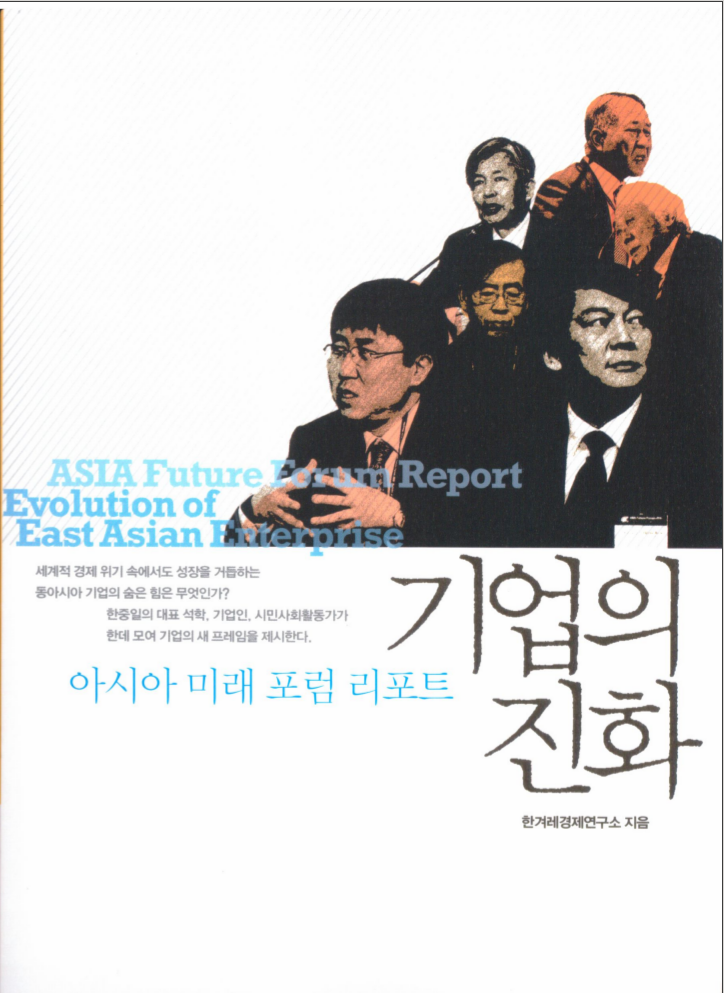
Evolution of East Asian Enterprise from Hangyoreh Economic Research Institute

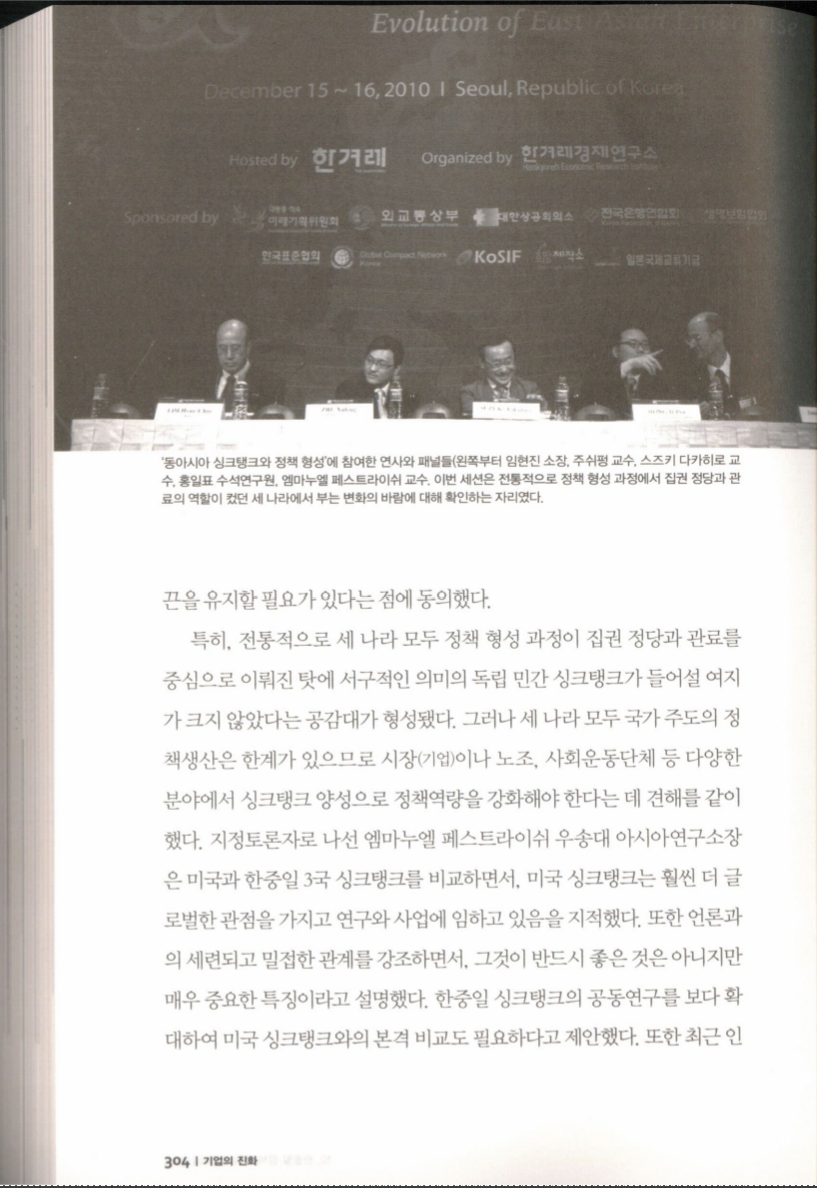
Hangyoreh Economic Research Institute (HERI) released this volume “Evolution of East Asian Enterprise” based on the talks given at the ASIA Future Forum held in December of 2010. I was a member of the panel on NGOs in Asia and their emerging role. The conference brought together a wide range of individuals from China, Japan and Korea concerned with corporate social responsibility and the role of NGOs in building civil society.


「東アジアの安全保障に関する考察」

グローバリゼーションと東アジア

「東アジアの安全保障に関する考察」

エマニュエル・パストリッチ

2008年 11月 3日

Ⅰ 東アジアの当面する新たな課題

東アジアの面する新たな課題

われわれは北朝鮮の非核化やテロとのたたかいの議論にばかり目を向け、東アジアでそれらと 同じように深刻ないくつもの脅威に十分な注意を払ってこなかったのではないだろうか。現在、そ うした脅威は日増しに高まっており、数年後には他の諸問題をも押しのける重要性をもつ可能性 がある。東アジアにおける安全保障についてのパラダイムの再検討は、今やわれわれすべてにとっ て差し迫った課題である。ところが、この「東アジア」という概念やそれに関わる仮定自体が、従来 の国民国家のパラダイムに立脚したものであるため、それらはことがらを説明するよりも、むしろ不 鮮明にしている。われわれは、今日の個人、組織、社会、地域経済がどのように機能しているかに ついての新しいモデルを提示し、それによって経済と技術のリンケージのインパクト、消費社会へ の影響、さらに環境悪化や大気汚染の脅威といったものを説明する必要がある。

われわれは個人、企業、国家および非政府組織のあいだの基本関係の変化を深刻に受け止め ねばならない。しかしそのことは、国民国家が消滅したということを意味するのではなく、むしろそ れを構成する諸要素間の関係が根本的に変化を遂げたということなのである。また、それらの変 化があまりにも深部で起こっているため、本質的なことがらが多くの人々の目に映らないという問 題がある。たとえば、もしわれわれが様々な製品の製造、流通、消費地を正確にマッピングすれば、 それはグローバル経済がどのように作動しているかについての正確な記述となるであろう。しかし それは、ほとんどの人々にとってまったく疎遠なものに映ることもまた事実である。同じように、海洋 や大気汚染のパターン、漁業の乱獲の帰結、気候変動の農業に対するインパクト、人口増加圧力 といった問題も重要であるが、何となくぼんやりと受け止められている。

アメリカと東アジアとの関係は、地球の社会・文化的構造の変化から直接的なインパクトを受け ている。こうした変化の多くは、フランシス・ケアンクロス (Franses Cairncross) が「距離の消 滅」と呼んだものから生まれており、それは世界全体に当てはまるが、東アジアにおける技術や社 会の変化の早さは他の地域と比べものにならないぐらい早い。さらに東アジアは世界経済の駆動 力でもあり、アメリカ経済にとっても重要な地域となりつつある。したがって、ある地域関係に対す る認識とその現実とのギャップは、この東アジアにおいて最も大きくなる。企業、NGO、地方政府、 中央政府のあいだの相互的な結びつきという太い鉄の檻に囲まれていることこそ、東アジアとい う動物の15年前と現在とを根本的に隔てるものなのである。

世界の変化を捉える際の理解のたち遅れは、一つには、日常的に接するものが、製品流通や情 報伝達の複雑な網の目を感じさせないほど持続性を持つということによる。われわれの住む通り や家並みは相変わらず以前のままであったりする。しかし、われわれは今日、いわば「巨大な分裂 と統合」ともいうべきものに直面している。実際、われわれは世界の諸機関や企業が未曾有の規 模で合従連衡を行うのを目の当たりにしている。こうした統合への傾向は、情報の伝達・蓄積技 術の急速な高度化によって促進され、社会や地域の経済システムによる規制をなぎ倒して出現し てきた。さらに航空運賃と配送コストの急激な下落は、取扱量の少ない製品の長距離輸送さえを も容易にし、地方経済は今やかつては想像できなかったほど相互に結びつきを持つようになった。 銀行業、製造業、メディア企業、運輸業、さらに政府、準政府組織などが地球的規模でより広く深く 展開を遂げている。

しかし、こうした変化は同様に強い程度で社会分裂に否応なく向かう傾向を伴っている。様々な 国、都市、場合によっては街区ごとでさえますます異なった領域に分断され、しばしば社会的交流 や相互関心は希薄となる。現代の東アジアを覆う高層ビルのアパート郡は、かつての生き生きとし た強い結束力をもった地域共同体を疎外された集合住宅に変えてしまった。同時に、インターネッ トは諸個人がそれぞれ異なった世界観をもつことを可能にするが、他方、その個人的な見解が彼 らの日常接している人々と共有されることはないという問題を生み出している。富と所得の格差拡 大とそれに対する認識は表面には表れにくい根本的な分断を生み出している。東アジアじゅうの 多くの人々が、社会からの根本的な疎外を感じとっている。 しかし、どのような自己認識をもつかということと、社会および国際関係をどう理解するかとはま ったく別問題である。地域社会の分裂によって地域共同体はまるでお互いが地球の反対側にいる かのような距離ができてしまった。同時に、実際に海の向こう側にいる個人や組織が技術的・文化 的に密度の濃い結びつきを強めている。こうした転換は根が深く、かつて誰も経験したことがなく、 多くの人々にとってその本質が見えない。

21世紀におけるアジア念の危機  

この数年間のAPECなどの国際会議や六カ国協議などを見ていると、「アメリカ」「中国」「韓 国」と呼ばれる具体的な主体が存在するという印象を与える。メディアやアカデミズムは、現代の技術革新、貿易数量と旅行者の急増をひっきりなしに書きたてている。しかし、彼らは、そうした変 化のもたらした国民国家の根本的な変貌を解明する点では二の足を踏んでいる。儀式的な記者 会見や政府高官の公式訪問などの報道が与える印象は強いが、それと同じように、伝統的な国 家が衰退し、国際的な利害集団のネットワークに取って代わるという転換から完全に目を覆うこと はできない。国際関係論研究の当面の課題は、貿易を取り仕切り、情報と世論のために資金を出 しているプレイヤーを正確に描き出し特定することである。  

要するに、われわれが目にしているのはNGO、企業、銀行、個人、金融ネットワーク、組織犯罪シ ンジケートの網の目であり、それらは個々の国民国家の国内的・地域的文脈を超えて協力しあい 取引をしている。したがって、国内的な視点からの要求は伝統的な民族的アイデンティティを保持 しようとする新たなグループの強い自己主張によって担われる。問題は、グローバリゼーションが こうした新たな勢力配置の深刻な不安定性を除去しえないということである。たしかにグローバリ ゼーションを我田引水に用い、アウトソーシングや安い商品によって地域経済を破壊する人々がい ることは事実であるが、グローバリゼーションはそれ自身としては究極的には中立的な現象であり その最終的な影響がどのようなものであるかは未解明の大きな問題である。むしろ最大の問題は、 こうした商品や情報が分配される新たなパターンや、政治を規定する政治的・経済的プレイヤー の新たなハイアラーキーを理解するための概念的なマップが一般の人々の手にないことである。 目に見えない勢力が世界を形成していることについて多くの人々が気づいてはいるが、それを理 解するための概念的なフレームワークがないため、東アジアの不安定性はよりいっそう深まり、政 治家やデマゴーグが人々を誘導しやすい状況が生まれている。  

韓国、中国、日本、ヴェトナム、タイ、モンゴルおよびアメリカでは、相互の制度や文化の面よりも 、 経済レベルでの一体化のスピードを速めている。私はこうした現象を中米関係に関する最近の論 文で以下のように指摘した。

「アメリカと中国の一体化は、流通システムとコンピュータ・ベースのビジネス・ネットワークの統 合という形をとっているが、それは根本的に異なったこれら2つの社会組織をごちゃ混ぜに接ぎ木 したものである。この新たな生物は自らの異質な性格も、向かうべき方向性も理解できない。ウォ ールマートなど超国家企業は、ロジスティックスや流通によって二つの国を結びつける。つまり、工 場、貿易港、輸送船、貨物列車、トラック、倉庫などが織りなす不明瞭な世界が、これら二つの国に 相互浸透し、サプライ・ネットワークを支える。 China Shipping Container Linesという米中 経済システムに関わるあまりなじみのない名前の巨大企業はオハイオ州に本拠を置いているが、 同社が所有するコンテナの輸送拠点は中西部あたりでみられる類似の企業の施設よりも、むしろ 中国国内の施設とよく似ている」[1]

ジュリアン・デラサンテリス (Julian Delasantellis) は、「グローバリゼーションの真の化身は、 いまでは大型船から荷揚げするためにひっきりなしに行き来する標準20ないし40立方フィートの コンテナ船である」と述べている2 。デラサンテリスによれば、このような貿易のインパクトと安価な 製品への依存は不安定性をもたらすが、この問題こそ国際関係の最重要の問題として解明され ねばならない課題である。  

東アジアおよびその他世界における各国の相互浸透や流通システムは、これまでにない様相を 呈しつつある。例えば、韓国はヴェトナムなどの途上国とも密接な経済関係を結ぼうとしており、そ の提携はいわゆる先進諸国との関係と同様の重要性をもつ。流通システムの統合によって、韓国 と日本のように文化的には著しく異なる国々が経済レベルにおいて不断に結びつくし、さらには日 本の農家の男性と東南アジアの女性との婚姻が社会的統合をも生み出すしつつある。こうした変 化もまた深い文化的・社会的意義を持つ。  

トーマス・フリードマン (Thomas Friedman)はその著書『フラット化する世界』 3 において、 中国・インドその他がグローバルな製造・流通のサプライチェーンに参入することによって、国家間 の社会・経済的障壁が除去され、新たなネットワークが創造されると指摘している。その結果、そ れぞれの民族国家が自国の論理に基づいた政策を追求することが、貿易や金融上の取引面から 見て難しくなりつつある。通信技術の急速な発展とその価格低下によって国境の意味はますます かつての意味を失いつつある。諸要素のより大きな組み合わせが、あらゆる国内経済にインパクト を及ぼす。東アジアにおける分配と消費の統合とその深化は、工場、倉庫、港湾など流通システム のネットワークを生み出し、それによって諸国家は従来の主権概念と矛盾する大きな広がりを持っ たひとつの構築物となろうとしている。  

こうした現状を正確に描こうとするインセンティブは、メディアにもまたアカデミズムの世界にも 欠けているように思われる。しかし金融、生産、流通の新たな展開を理解することは、不可能では ない。私自身の経験からも、客観的にこうした東アジアにおける諸国家の経済的・社会的諸関係 を描こうと試みた際に、聴衆からよい反応が得られなかったことがしばしばある。こうした反応は、 私の議論が間違っているとか、聞き手が反感を持っているとかではなく、私の議論が国際関係論 の既存の概念と異質であることによる。

東アジアの新たな加者  

今日の社会経済生活に影響を及ぼす諸力の新しい組み合わせを理解するために、まず手始め に、東アジアに共通してみられる構造的変化について検討してみたい。孔子には「正名」 (zhengming) という考え方が見られるが、それはつまり社会的・政治的現象とそれを叙述する 2 Julian Delasantellis “Trinkets and treasure: China tames the US” Asia Times, August 30, 2007, http://atimes.com/atimes/China/IH31Ad02.html. 3 Friedman, Thomas. The Earth is Flat, A Brief History of the 21st Century, New York: Farrar, Straus & Giroux, 2005.(『フラット化する社会』上・下、伏見威蕃訳、日本経済 新聞社、2006 年) 用語とのギャップを埋める知的努力を意味する。本論もその努力につながるものでありたいと願う ものである。東アジアの地域的安定にとって最も大きな脅威は、けっして北朝鮮の核開発計画や 中国の軍事的拡大ではない。最も教育水準の高い人々のあいだにすら国家の性格についての無 理解が根強く存在し、これこそがまさに近い将来、未曾有の緊張と軋轢を許すものなのである。

第1に、世界中で影響力を拡大しつつあるNGOは東アジアにおいても重要なプレイヤーとなり つつある。 女性問題、歴史認識、環境保護、社会的公正、医療、開発など、あらゆる問題がNGO のネットワークにおいて国際的視野から議論されている。商業メディアが事実報道を制限すれば、 地域的な問題についての正確な情報源としてのNGOの役割は否応なしに高まる。NGOは必ずし も地域市民の自発的な活動が生み出したものではなく、政府や企業の関係者の必要から生み出 されたものも多く、場合によっては、一般には支持されがたい政策を糊塗したり正当化したりする こともある。4 しかしそのことについても国際関係の研究においては分析対象とされることはまれ である。 過去数年間だけでもあまりにも多くの新しいNGOが設立されているので、それらをフォローする だけでも大変な作業である。既存の利益集団に対する闘争をますます NGO が担うようになって いる。この傾向はアメリカ国内においてもっとも顕著であるが、同時に世界的な傾向でもある。 NGO の影響力の広がりは民営化へ拍車をかけることにつながり、さらにそれが中立的な情報 源としての政府の役割に対する信頼を損なっている。 NGO のネットワークは、政府に対立する代 替案――それがつねに客観的とは限らないが――を模索する市民のニーズから生まれる。例え ば、韓国や日本の地域共同体組織はインターネットを利用して環境対策に協力して取り組み、驚く ほど共通の理解をえている。各種研究機関やシンクタンクもアジアで発言を強めている。こうした 結束力の強い組織が、貿易や安全保障、通信といった表舞台の中心領域にまで及びつつある。

第2に、政府や企業に対抗して存在感を増している非政府組織は、狭い意味での NGO だけ ではない。 NGO の鬼子である組織犯罪の広がりがそれである。その組織は、国際的な結びつ きを持ち、国民国家の腐敗構造がその台頭の後押しをしている。こうした犯罪シンジケートの広が りは、ポストモダンな未来への突入というよりは、1世紀前への逆戻りである。20世紀前半、旧満 州のような高大なアジアの地域もかつては自らの権益をめぐって相争う盗賊、軍閥、企業に支配 されていた。そうした過去への復帰という可能性も否定できない。

第3に、既に述べたように、東アジアにおけるメディアの統合と同質化は、東アジアの社会政治 学的風景にも大きなインパクトを与えた。この10年あまりのあいだ報道は国境を超えて同質化し てしまい、中国でさえも主要報道機関が日本やアメリカでの報道にもとづいて経済記事を掲載す ることもしばしばである。こうした共通性は、イデオロギー的な対立が深刻であった15年前には想 像することもできなかったほどである。かつての中国の報道は社会主義的な原理にもとづき、日本、 韓国、アメリカの報道とはちがった解釈を強要していた。共産主義、資本主義、あるいはリベラル 派のいずれの立場を取るかによって経済や社会問題についての見解が異なり、韓国と中国との 4 以下の研究を参照、People for the American Way, “Buying a Movement”, 1996.この 研究ではアメリカでのNGOを通じた政策への働きかけの具体的方法が明らかにされている。 あいだでも現実問題に対する議論が真っ向からぶつかったが、現在ではそのようなことはなく、批 判的な言説が衰退していることも手伝って、多くの問題について両者に堅いコンセンサスがある。  

韓国と日本のメディアは、領土問題や歴史問題などでぶつかり合うこともあるが、その他の国際 問題については一般的に共通な見方を保持している。中国もまた六カ国協議の報道などでも大 同小異の観がある。世界中のニュース報道が同じ情報源、同じデータに基づいている。それらが 用いる用語や概念もまた共通である。その理由の一つは、英語情報の統一的な配信システムが できあがっており、それが地域的な報道にも影響を及ぼしていることがあげられる。アジアでもメデ ィア企業の統合が進み、古い独占的なメディアの支配体制を打ち破っている。このように情報の信 頼性は低くなり、情報操作の機会も大きくなっている。

第4に、東アジアでは地方政府の役割も重要性を高めているが、これもまたあまり十分に研究さ れているとはいえない。日本の県、韓国の道、中国の省に相当する地方政府は国際関係において 重要な役割を演じている。東アジアの各地方政府は、地方や都市レベルで複雑に入り組んだ取り 決めを交わし、直接的な協力関係を築きあげている。多くの場合そうした協定は象徴的なもので あるが、なかには政策的影響の可能性が大きいものもあり、意思決定過程を中央政府から徐々に 引き離そうという動きもある。中央政府は貿易や経済開発に関する国家政策策定の主導権を確 保しようとやっきであるが、地方政府はますますその領域に食い込み状況が複雑化している。  

地方政府が明確にイニシアティブを握る主要な分野は外国人直接投資( FDI )である。多くの 地方政府が外国資本の誘致をめぐって他の地方政府と熾烈な競争をくり広げている。自らの地 域に企業を誘致するための宣伝物のために莫大な予算を確保し、知事や市長は海外の投資家 から資金をえようと世界中を駆け回り、他の地方政府や中央政府、国際企業と協定を結ぼうとし ている。こうして地方政府が外国の地方政府と密接な経済関係を結び、それが政策決定に最終 的に影響を及ぼす可能性が強まっている。  

地方政府の努力は FDI にとどまらない。ツーリズム、輸出、対外的な PR 活動やロビイングな ども東アジアの地方政府にとってますます重要な活動領域と考えられている。地方政府は、経済 開発の独自の活路を見出そうと懸命である。しかし、こうした努力は、 FDI に対する批判とと同 様に、地元からの強い反発をも招いている。地方政府がこうした問題に有効に対処できるかどう かは明らかでない。しかし、彼らがそれに取り組みつつあるということ自体が、地方政府の役割に 対する見方を一新するものであり、政策決定過程についてもある程度そのようなことがいえる。地 方政府はますます中央政府をひな形にして、とくに、国際関係や経済取引の面での役割を強める ことに注力することが予想される。たとえば、韓国や日本の市長や知事が集まる回数が政府首脳 の会合の数を大幅に上るようになれば、地方政府こそが重要な交渉の中心的な部分を占めるこ とになることになるかもしれない。

最後に、地方政府の積極的な役割とともに注目すべきは、都市国家の役割である。それは軍事 力も大した領土もないが、経済的政治的関係をうまく管理し、自主的な外交によって重要な国際 的役割を果たす政治体制である。アジアにおける都市国家の典型例はシンガポールであり、同国 はその顕著な経済的成功によって多くの国の模範となった。シンガポールの安定的な国内政治

環境は他のアジア諸国の目標となった。香港は、シンガポールほどの自律性はないが、経済セク ターの主要部分がイギリス統治時代にもまして地方政府によってコントロールされている点で共 通性をもっている。他のアジアの経済特区、たとえば深圳(中国)、インチョン(仁川、韓国)などは 自律的な開発モデルとして国際的にも注目されてきた。こうした経済特区は、教育も医療も国際 的な水準を提供しており、その周囲地域とは異なる。そうした地域は外国人には住みやすいが、国 民国家としては深刻な解体状況を意味するものでもある。

技術革新とその意義

すでに述べたような東アジアの統合と解体の傾向の両方に及ぼす技術のインパクトを過小評 価してはならないであろう。国際レベルにおける統合と集中の矛盾や地方レベルの社会的解体と 自律化という動きは、通信技術、とりわけインターネットの発達によってもっともよく説明される。個 人が一人で巨大な機関の洗練されたヴィジュアルなサイトをつくり、それをインターネットをつうじ て宣伝することができるということは、グローバルな競争舞台の存在を意味するが、そこは同時に 情報の統制や操作を主な手段とし権力と影響力の確保が行われている領域でもある。こうしたト レンドは、起業活動と個人主義を促進するとともに、政府組織、企業、および社会全体の複雑でイ ンフォーマルな指揮系統の解体過程をも助長する。それはまた情報の経済がグレシャムの法則に 従うように、支配的で陳腐な言説の支配に門戸を開くものとなる。

所得格差の拡大や情報操作の結果生じる社会的解体は、それ自体が圧倒的な統合過程を伴 うがゆえに一般にその傾向が判然としない。社会や制度の小部分への分解が情報の分散的な流 れを生み出す一方で、ますます少数の情報を管理する主体が情報を一元的に統制しようとしてい る。インターネットはこうした状況のもとで、個人が自ら政策に影響を及ぼすことを可能にするもの であるため、既存の支配勢力は自己の影響力の喪失を恐れその動きを制限したいと考える。しか し、こうした傾向は大多数にとっては表現の自由に対する抑圧と映る。インターネットはまた少数の 発言力を場合によっては過度なほどに強める。またこうした少数グループが自己の正当性を主張 しうる力が解体過程をさらに助長する。

フランシス・ケアンクロスがその著書『国境なき世界』[原題、「距離の消滅」 The death of distance ][2]で述べているように、コミュニケーション技術は個人と集団や国家との関係を根本 的に再編した。ケアンクロスは現在のコミュニケーションの状態を1910年時点の自動車と対比さ せ、われわれがいま、これからきわめて大きな意義をもつ社会的な大転換の戸口に立っているの だとしている。ケアンクロスは、人類は技術変化によって過去2世紀のあいだに3つの継起的な革 命を経験しているとという。その第1は19世紀における物資の輸送コストの急減、第2は20世紀に おける人的輸送コストの急減、そして第3は21世紀における情報コストの急減である。この最後の

変化によって世界中の異なった利益集団は相互に緊密に結びつくことができるようになり、それ によって国境はもはや決定的な重要性をもたなくなった。しかし同時に、映画やメディアの世界で は伝統的な国民国家に対する幻想的なイメージがむしろ人気を呼び、国民国家に対する愛着を 呼び起こしている。おそらく複雑に結びついた利益集団が漠然と支配する世界政治の混乱したイ メージに人々はうんざりしているのであろう。

雇用の喪失と、「距離の消滅」がもたらした経済統合とによって、世界的な労働移動の波が起 っている。東南アジアや中国から韓国、日本、シンガポールなどへよりよい生活を求めた労働移動 が生じ、その結果、1920年代以来最大の社会的流動化と国境の崩壊が起っている。労働移動は 経済統合が生み出した経済的・社会的再編の一つの結果であるが、この問題は東アジアにおけ る重要な政策的規定要因となっている。韓国、日本その他の国において、移民は地域的な異文化 的集団を形成し、国内政策の議論に複雑な影響を及ぼす6 。ますます多くの人々が、それぞれの 国における既存の伝統的市民概念にあてはまらなくなりつつある。

イデオロギの腐敗とその意味

東アジアの経済、社会、政治、および文化をめぐる議論状況の変化は、国民国家の既存のモデ ルでは十分考慮されていなかった新たな主体の台頭と密接に関連している。それは通信技術の 発達――新しい諸組織が自己のメッセージや見解の発信することを可能にするとともに、旧制度 と秩序の解体をも促す――の結果でもある。こうした変化の主要な原因として最後に付け加える べきものは、各地域においてこれまで政治や社会の議論を支配してきたイデオロギーの腐敗とい う問題である。

共産主義イデオロギーとそれに反発する反共イデオロギーに端的に見られるように、個人や組 織はよりよいと自ら判断する方向へ導くための世界観やモティベーションの観念的な土台を作ろ うとする。一般的にイデオロギーの腐敗とは、それが通信技術の発達からくるのか、あるいは既存 の制度の解体からくるのかは別にしても、現在の世界観が、倫理的判断あるいは政治指導者や 諸集団にとっての将来的観点から見て、意味を失っている状態を指す。1920年代から1980年代 まで、学会、ジャーナリズム、政治家、官僚は共産主義と資本主義の陣営に分かれて相互に非難 合戦を繰り返した。こうした非難は誠実さを欠いた場合もあるが、イデオロギーの健全なバランス を維持し、たまに部屋の空気を入れ換えるという目的には役に立つものであった。しかしそのよう なバランスはもはや消滅してしまった。  

従来のイデオロギーの後退は、いま決して世界がありのままに捉えられている――それが実際 に可能であるかどうかは別として――ということを意味しない。それどころか、議論はますます混乱 の度を増し、われわれは、人々がすでに述べたような世界の根本的な転換について、説明はおろ 6経済統合は韓国、日本、中国都心部の出生率の低下とあいまって労働移動に拍車をかけている。 この点に関して参照[3]

 か考えることさえできなくなっているという事態に直面している。問題は教育や情報へのアクセス という問題ではない。実際、学歴の高い人々の多くが、9・11同時多発テロや地球温暖化にまった く無理解であるということがある。むしろ、政治の現状に対する批判的分析からイデオロギー的支 柱を取り去ることで、人々は些末な議論に埋没し、直面する真の脅威から完全に目を背けてしまっ ている。

韓国、日本、台湾(中華民国)の資本主義、民主主義、反共主義の主張の根源は中国やロシア の共産主義との直接的な対抗という枠を超えたところにあったように思われる。こうした主張は倹 約と勤勉、人間性と誠実性、さらに集団に対する個人の犠牲を重んじるものである。「アジアの奇 跡」と呼ばれた経済成長の根底にあったものはこうした質であり、それは共通のイデオロギー的 原理に結びつけられ、朴正煕や蒋介石によって粗雑に表明された類のものである。

近年におけるイデオロギーの腐敗の帰結は、世界を理解するための建造物がなくなったために 生まれた巨大な思考上の格差の出現である。イデオロギーや美的感覚は抽象的概念として主流 派の政治学の言説から消え失せてしまったため、われわれは現在の歴史的局面を批判的に捉え ることが難しくなっている。地球温暖化の深刻さ、政治的腐敗、情報の質的低下などが大多数の 市民にとって見えなくなっている。われわれが直面している問題のまさにその背後にイデオロギー と美的感覚の問題が存在していることについて、私はしばしば指摘してきた。イデオロギーと美的 感覚の問題は思考の基底部分に存在するため、それらを道具として用いなければ表面的な考察 の域をでないのである。したがって現在、現状の問題を把握するためのイデオロギーが存在してお らず、したがって多くの人々にその所在が分からないのである。

東アジアの統合から見えてくるものは、現代の新味に乏しい均質な美的感覚であり、容易に複 製可能な情報の価値下落であり、さらには相互理解のギャップを埋めようとする儀式の繰り返し である。すなわち現代の均質な美的感覚とは、現代社会のシンボルである高層ビルや消費とコン ビニ文化であり、それらは異なった世界を想像することを難しくする理由を説明している。複製によ る情報の価値下落とは、画像やテキストの価値が初めから値崩れをおこし、誰もそれらを注意深く 扱おうとしなくなったということである。最後に、政治的儀式とは六カ国協議に見られるように、議 論の中身よりも開催そのものが重大なことであるかのように大きく取り上げられるような現実を指 す。

むすび

本稿では、東アジアの社会的・政治的・経済的転換に影響を及ぼす重要な変化をみてきた。変 貌著しい世界を把握するために数年前に耳目を引いたレトリックは姿を消したが、現実の転換の プロセスが消滅したわけではもちろんない。むしろ多くの場合、それは深く多様な根っこを張りめ ぐらしているといえる。  本稿が今世紀の東アジアと世界の真の安全保障問題に関する本格的な検討に資するもので あることを願う。われわれは転換期のレトリックを乗り越え、変化を注意深く考察すべきであり、そ のことによってのみ、われわれは新たな国際関係を築くためのアプローチへと進むことができるで あろう。


[1]  “The Alliance of Frankenstein: China and the United States in the 21st Century” in Foreign Policy in Focus (http://www.fpif.org/fpiftxt/4066) March 9, 2007. 3

[2] Frances Cairncross. The Death of Distance. Harvard Business School, Cambridge, 1997.(『国境なき世界―コミュニケーション革命で変わる経済活動のシナリオ』ト ッパン、1998 年)

[3] Glenda Roberts’ “Labor Migration to Japan: Comparative Perspectives on Demography and the Sense of Crisis.” Japan Focus, September 2007: japanfocus.org/products/details/w2519.

For a full version please download this PDF:

パストリッチ論文 globalization
Ionizing Radiation Toxicology Report by Vince Rubino

Here is a report by my colleague Vince Rubino who is a reseacher at the Korean Institute for Toxicology about the toxicology and radiation of the Fukushima Nuclear Power Plant incident.  Here’s a quote:

The tsunami damaged Fukushima nuclear power plant has released radioactive materials into the environment including nuclear fuel cycle fission products such as cesium-137 and activation products such as cobalt-60.  These radioactive material releases increase the likely-hood of exposure to low-level ionizing radiation in the general population.  The Japanese Ministry of Health, Labor and Welfare has announced radioactivity exceeding legal limits has been detected in milk certain vegetables produced in the Fukushima area, and measurements made in a number of locations have shown the presence of radioactive material on the ground. Tokyo drinking water exceeded the safe level for infants.  Seawater near the Fukushima plant has been found to have elevated levels of iodine-131, far beyond legal limits.  Cesium-134 and 137 concentrations have also been discovered to be far beyond the legal limit near the damaged power plant.  Many factors go into the determination of whether or not there is harm to people or other organisms that may be exposed to ionizing radiation. Factors include the type, intensity and duration of the radiation exposure, as well as the state of health, age, sex, diet and other variables related to the person or organism.  The study of the mechanisms by which radiation exerts toxicological effects is an evolving field of toxicology.  Research utilizing convergence technology can focus on identifying biomarkers and improving understanding of the specific mechanisms by which ionizing radiation generates toxicologically relevant end points.  Published reviews of the biological effects of radiation and more in-depth discussion are available.

The full version of the report is in PDF format and can be downloaded here: Ionizing Radiation Toxicology by Vince Rubino.

“Global Convergence Forum” featured in Korea IT Times

Global Convergence Forum – ‘Industry Convergence is the Key’

KOREA IT TIMES

Tuesday, March 22nd, 2011

KIM YEA-RIM

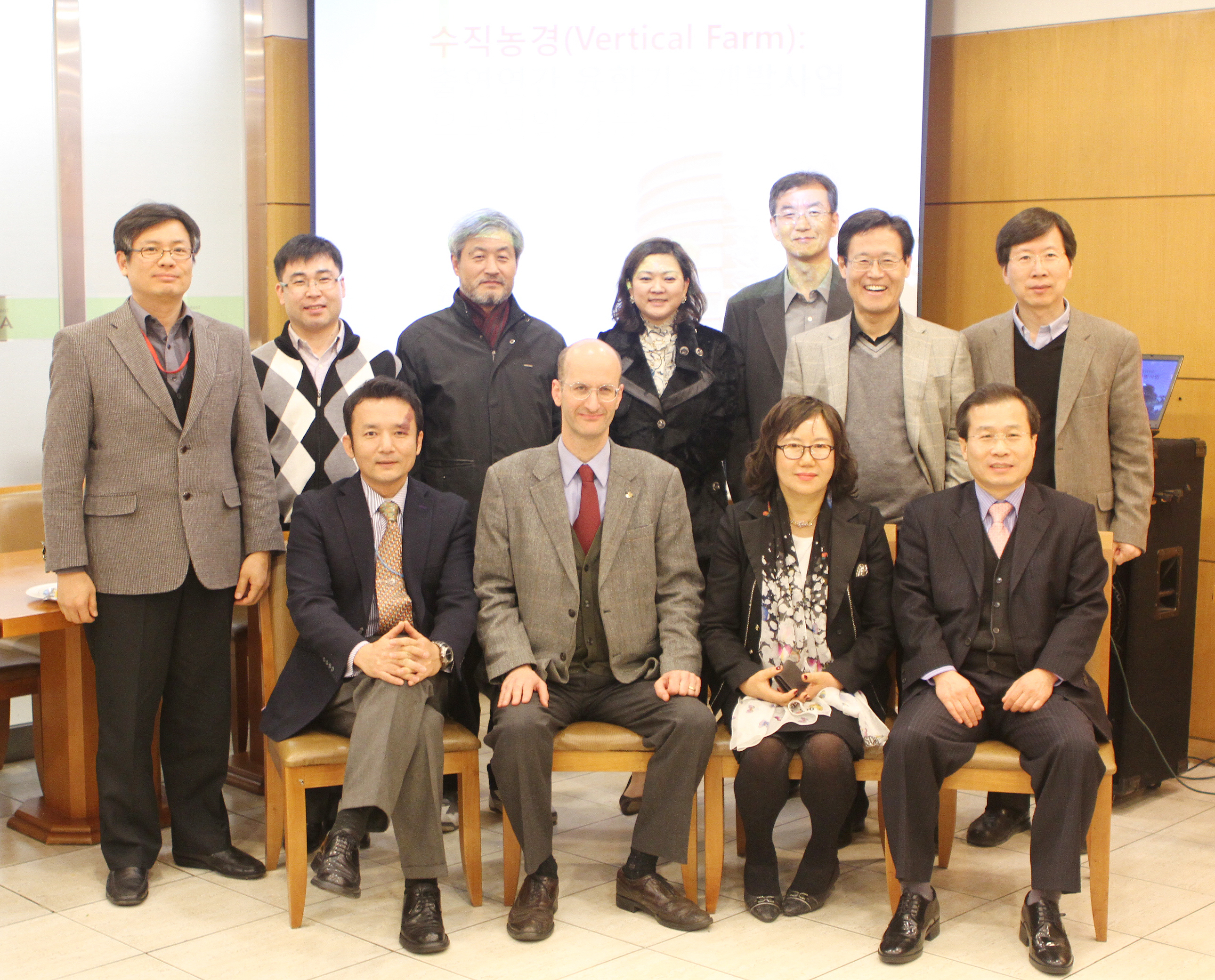
The Global Convergence Forum (GCF), first started last December with about 22 members from different academic and industrial fields, had their sixth meeting on March 17.

This time the forum was held in Daejeon with Liu Jang-ryol, Director, Division of Biological Resource Management at Korea Research Institute of Bioscience and Biotechnology (KRIBB), explaining ‘the business possibilities of convergence technology development project for vertical farming’ and Yoo Catherine, CEO of Biz Holdings, presenting ‘the joint venture project between Korea and Malaysia to build an industrial complex within Malaysia’s Cyberjaya.’

“Although Korea has some of the best breeding and cultivation technologies in the world, more and more industrial

farmers are leaving their farms. Korea has achieved enormous development through economies of scale mainly led by conglomerates; and I believe the same could happen in agriculture once the big corporations start paying attention to the industry,” says Dr. Liu Jang-ryol. “What, then, is the kind of agriculture that those corporations will be interested in? The answer is vertical farm.”

First proposed by the American ecologist Dickson Despommier, vertical farm refers to the cultivation method that grows

crops in an artificial environment. It can be applied to almost all kinds of plants; allows the space to be used for leisure or tourist purposes; and also enables year-round production.

Dr. Liu argues, “In terms of energy, water, and environmental conservation, Korea can become more competitive with

vertical farming as part of the green

growth and environmentally-friendly development agenda.” In fact, vertical farms have on average 10 to 12 times higher productivity – a building of approximately 99 m², or of a total of 13,223 m², can produce food for around 50,000 people, virtually making it a food base for the community.

One crucial advantage of this technology is in its optimized use of water. By reusing the water based on plants’ transpiration, Dr. Liu explains, not a single drop of water is wasted within vertical farms. He adds that it will consequently reduce the necessity of reservoir construction as well.

Furthermore, vertical farming does not produce any harmful gas since it recovers methane from hydrop

onics buildings and then the energy is reused. Reduced logistics costs is another merit, and the buildings can also become a landmark of the city used for education and tourism, which explains why vertical farms are often cited as an alternative architecture for the future.

The shortage of agricultural land is pushing Korea to take immediate measures for the country’s agricultural industry. With the technological and economic competence, Korea indeed has outstanding conditions to build vertical farms and this new technology can become a driving force for the country’s agriculture.

As a self-proclaimed hub of Northeast Asia, what should be the next step for South Korea to take in order to enhance its global standing? According to Yoo Catherine, CEO of Biz Holdings, the answer is to target the Islam market by setting up a joint venture using the technologies of small and medium businesses in Korea and the capital power of Malaysia.

“Malaysia is a multi-religious country that embraces Islam, Buddhism and Christianity, which results in a broad r

ange of culture. Cultural diversity leads to synergy in many ways, and we believe this country could become our strategic center,” says Ms. Yoo.

Cyberjaya is a well-known tourist attraction in Malaysia. Ri-City, in particular, is the place where Ms. Yoo is planning to build an industrial complex where innovative and creative ideas from Korean companies will be introduced.

Producing about 30,000 graduates from six colleges every year, Cyberjaya is also known for its high-quality of life with political stability as well as a rich labor force equipped with diverse culture and multilingualism. In addition, as Ms. Yoo explains, the area is very accessible thanks to the smooth traffic.

Ms. Yoo’s ultimate goal is to export Korean culture after discovering small and medium businesses with highly competitive technology and then placing them in the industrial complex within Ri-City, a city full of potential and possibilities. Amidst these efforts she is making, Ms. Yoo is planning to open the RABIT Forum in the coming April with the help of the Malaysian Embassy.

http://www.koreaittimes.com/story/13658/global-convergence-forum-%E2%80%98industry-convergence-key%E2%80%99?sms_ss=facebook&at_xt=4db0cd528c85a197%2C0

Sovereignty, Wealth, Culture and Technology: Mainland China and Taiwan Grapple with the Parameters of Nation State in the 21st Century

In 2005, while still at the University of Illinois, I published the article in the journal Historia Actual.  The full text of the paper is available online here.  I have reposted the abstract below:

This paper introduces the historical background of the present confrontations and negotiations between Taiwan and the mainland in terms of Formosa’s (“the beautiful island” in Portuguese) convoluted relations with the Portugal and Holland, survivors of the Ming dynasty, the Qing dynasty (1644-1911), Japan, and the United States. The foreign interests who have had control of Taiwan make its sovereignty more complex. A consideration of the relationship of the Nationalist Republic of China and the Communist People’s Republic of China is also included. The debate on culture, economics and political control between their two political entities is informed past events, and a concern for the present legitimacy of both entities. Moreover, the challenges of globalization further complicate the picture in that the odd convergence of economic and cultural convergence with political tensions may be representative of the conflicts we will encounter in this century. The paper considers the economic, cultural, and technological ties that continue to bind Taiwan and the mainland despite serious differences and closes with a short consideration of possibilities for a long-term peaceful solution.

And again, here is the full text.

[twitter-follow screen_name=’epastreich’]