“韓国・日本、東シナ海タンカー沈没事故に共に対処せよ” 中央日報

中央日報

“韓国・日本、東シナ海タンカー沈没事故に共に対処せよ”

2018年 3日 2月

エマニュエル・パストリッチ

地球経営研究院院長


ことし1月、東シナ海で起きた船舶事故は環境被害につながるおそれがある。パナマ船籍のタンカーが中国貨物船「CFクリスタル」号と衝突して毒性有害物質であるコンデンセート(揮発性液体炭化水素)が100万バレル近く流出したためだ。この危険な化学物質は事故海域の東シナ海を越えて移動しながら海洋生態系を破壊している。8年前にメキシコ湾で発生し、未だ問題が残っているブリティッシュペトロリアム(BP)のディープウォーター・ホライズン原油掘削施設崩壊事件の次に大きな被害をもたらす恐れのある惨事だ。生態系破壊の側面で見れば、東アジア地域で発生した最悪の危険なことだと見なすことができる。

Read more

  “한•일, 동중국해 유조선 침몰사고에 함께 대처하라”  중앙일보

 중앙일보

“한•일, 동중국해 유조선 침몰사고에 함께 대처하라”

2018년 3월 2일

임마누엘 페스트라이쉬

지구경영연구원 원장


지난 1월 동중국해에서 일어난 선박사고는 환경재앙으로 이어질 수 있다. 파나마 선적의 유조선이 중국 화물선 ‘창펑수이징’호와 충돌해 독성 유해 물질인 콘덴세이트(휘발성 액체탄화수소)가 100만 배럴 가까이 유출됐기 때문이다. 이 위험한 화학 물질은 사고 해역인 동중국해를 넘어 이동하면서 해양 생태계를 파괴하고 있다. 8년 전 멕시코만에서 발생해 아직도 문제가 남아 있는 브리티시페트롤리엄(BP)의 딥 워터 호라이즌 원유 시추 시설 붕괴 사건 다음으로 큰 피해를 낼 수 있는 참사다. 생태계 파괴 측면에서 볼 때 동아시아 지역에서 발생한 최악의 위험한 일이라고 볼 수 있다.

Read more

대한민국이 모르는 대한민국 – 임마누엘 페스트라이쉬 교수 SBS 제정임의 문답쇼,힘]

SBS

제정임의 문답쇼,힘]‘한국 전문가’

2018년 3월 2일

임마누엘 교수
한국인보다 한국을 더 잘 아는 외국인 임마누엘 페스트라이쉬 교수가 SBSCNBC ‘제정임의 문답쇼,힘’ (Human Impact)에 출연한다.
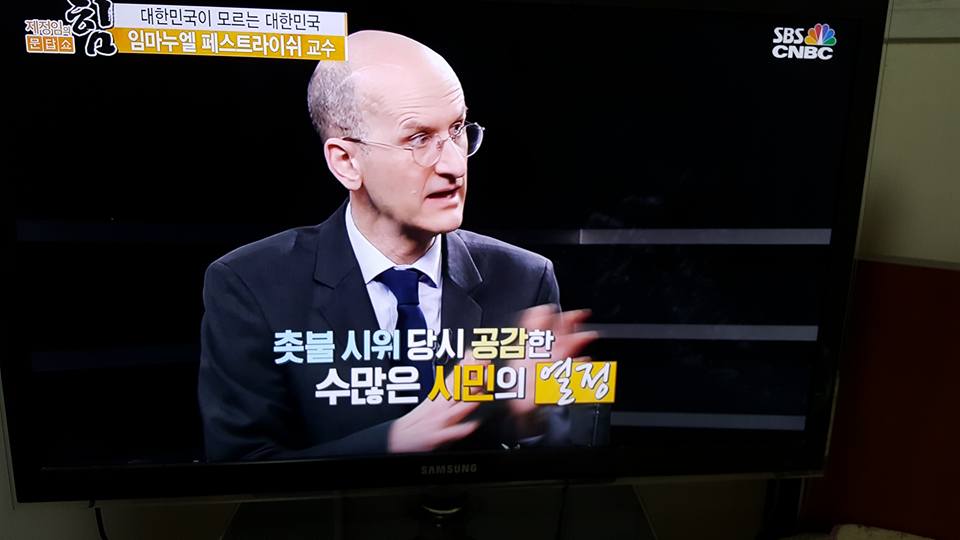
한국인보다 한국을 더 잘 아는 외국인 임마누엘


28279897_1867534956611877_6262288165299027395_n


단비뉴스

2018년 3월 2일


“은퇴연금이 걱정인 한국 지식인에게”
[제정임의 문답쇼, 힘] 임마누엘 페스트라이쉬 경희대 교수


“좋은 교육 받고 잘 사는 한국 사람들은 교수 되고, 돈 벌고, 자기 은퇴연금 생각하고, 맛있는 음식 먹고, 자기중심의 욕망에 빠져서 나라나 사회를 생각하지 않아요. (과거 한국의) 선비는 희생이 따르더라도 사회를 위해 책임감을 갖고 노력하는 지성인이었죠. 지식인이라면 배운 걸 실천하고 사회를 위해 공헌해야 하는데, 지금 한국의 많은 지식인들은 그런 의식이 전혀 없어요.”

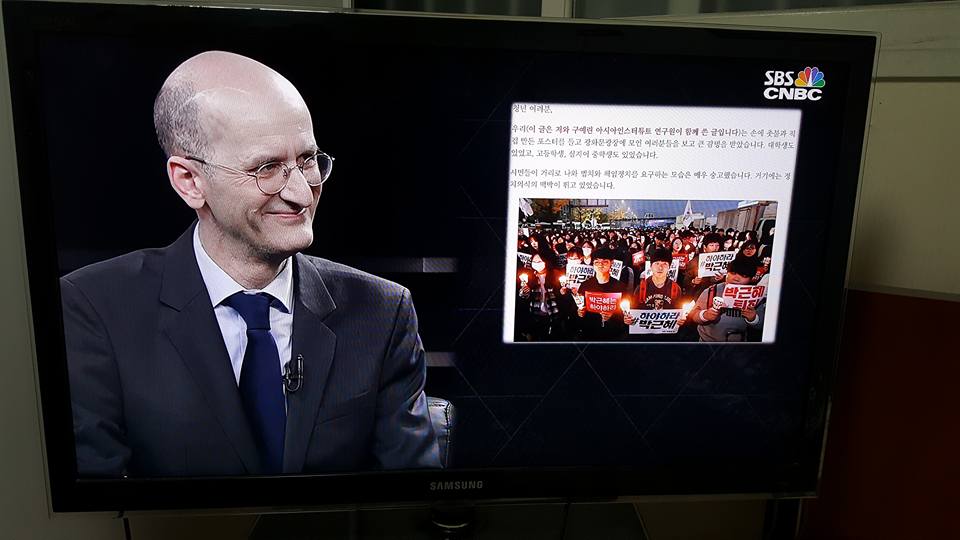
한·중·일 문화에 정통한 연구자로서 언론기고와 출판, 강연을 통해 한국 사회의 문제점을 날카롭게 지적해온 임마누엘 페스트라이쉬(54·한국명 이만열) 경희대 국제대학 교수가 1일 SBSCNBC <제정임의 문답쇼, 힘>에 출연했다. 그는 개인적 출세와 안락한 삶에 집착할 뿐 사회적 책임을 다하려는 자세가 부족한 한국 지식인을 비판하고, 기후변화와 외교전략 등 당면 현안에 대해 거침없이 의견을 밝혔다.

지식의 실천과 사회공헌 중시했던 ‘선비정신’ 회복해야

미국 하버드대에서 동아시아 전공으로 박사학위를 받은 뒤 일리노이대 등을 거쳐 2007년부터 국내 대학에서 강의해 온 그는 “한국 문화에서 가장 매력적인 것이 선비정신”이라고 말했다. ‘지식인의 핵심적 역할은 사회를 위해 학문을 실천하는 것’이라고 규정한 그는 조선 후기 실학자인 연암 박지원과 다산 정약용처럼 오늘날의 지식인들이 공동체의 문제에 관심을 갖고 적극적으로 발언해야 한다고 주장했다.


지난 1995년 한국에 교환학생으로 와서 연암의 소설을 탐독한 뒤 ‘양반전’ 등 여러 단편을 영어로 번역 소개하기도 한 그는 “거지와 가난한 농민 등을 일부러 주인공으로 만든 연암은 평등한 사회를 지향하는 인식도 있었던 사람”이라고 평가했다. 그는 “그 시절 권위만 생각하고 윤리의식이 없는 양반이 ‘자격증’에 불과했던 것처럼 현대사회에서도 사회적 책임감이 없는 교수·법조인 등은 명칭에 불과하다”고 일갈했다.

촛불정신 일상에서 이어가지 못하면 ‘1960년’ 반복

촛불시위가 한창이던 지난해 1월 ‘촛불을 든 한국의 젊은이들에게’라는 칼럼을 써서 주목받았던 페스트라이쉬 교수는 이날 인터뷰에서도 “정치를 직업정치인에게만 맡겨 놓고 시민이 관심을 돌리면 근본적인 개혁을 이룰 수 없다”고 경고했다. 그는 “촛불시위 당시 한국 시민들의 열정에 공감했지만, 자칫하면 1960년 4·19 혁명 직후의 실패를 반복할 수 있다는 생각이 들었다”고 회고했다. 그는 촛불혁명으로 정권을 바꿨다고 끝난 게 아니며, 일상 속에서 지속적으로 정치를 감시해야 진정한 발전을 이룰 수 있다고 강조했다.

평소 한국 언론을 향해 ‘질 낮은 기사를 쏟아내는 레드오션’이라고 비판해 온 페스트라이쉬 교수는 “한국에 정착한 10년 동안 점점 볼만한 기사, 진실을 추구하는 기사가 줄어들고 홍보성 기사가 늘고 있다”고 성토했다. 그는 “한국 기자들은 똑똑하지만 시민들이 꼭 알아야 할 심각한 이슈를 제대로 기사화하지 않는다”고 힐난했다. 그는 “(언론) 변화의 시작은 결국 시민”이라며 “열심히 취재하는 기자들을 시민들이 응원하고 독려해야 더 좋은 언론이 생긴다”고 강조했다.

해수면상승·식량위기 부르는 기후변화는 ‘안보문제’

페스트라이쉬 교수는 점점 심각해지고 있는 기후변화에 대해 “안보 차원의 대응이 필요하다”고 역설했다. 그는 “많은 전문가들이 기후변화를 (현재 인류가 당면한) 가장 심각한 문제로 지적하고 있지만 언론은 주목하지 않는다”며 “한국도 물 부족 문제가 심각하고, (지구온난화로) 해수면 상승이 계속되면 15~20년 후 부산·인천·울산 등 해변 도시들이 매우 심각한 상황에 처할 수 있을 것”이라고 우려했다.

그는 “호주·미국·남미 등 값싼 농산물을 수출하던 국가들이 머지않아 사막화와 기상재해 등으로 더 이상 싼값에 수출할 수 없게 될 것”이라며 기후변화가 초래할 식량안보 위기를 경고하기도 했다. 그는 이에 대비해 국내 농업에 진지하게 관심을 갖고 대책을 마련해야 한다고 주장했다. 그는 석유 전량 수입 등 에너지의 대외의존도가 절대적으로 높은 한국은 태양열, 풍력 등에 과감히 투자하지 않으면 전쟁 등 비상시에 꼼짝 못 하는 위기를 겪을 것이라며 정부가 강력한 리더십을 갖고 재생에너지 체제로 전환해야 한다고 역설했다.

한국 외교, ‘새우콤플렉스’ 벗고 독자전략 세워야

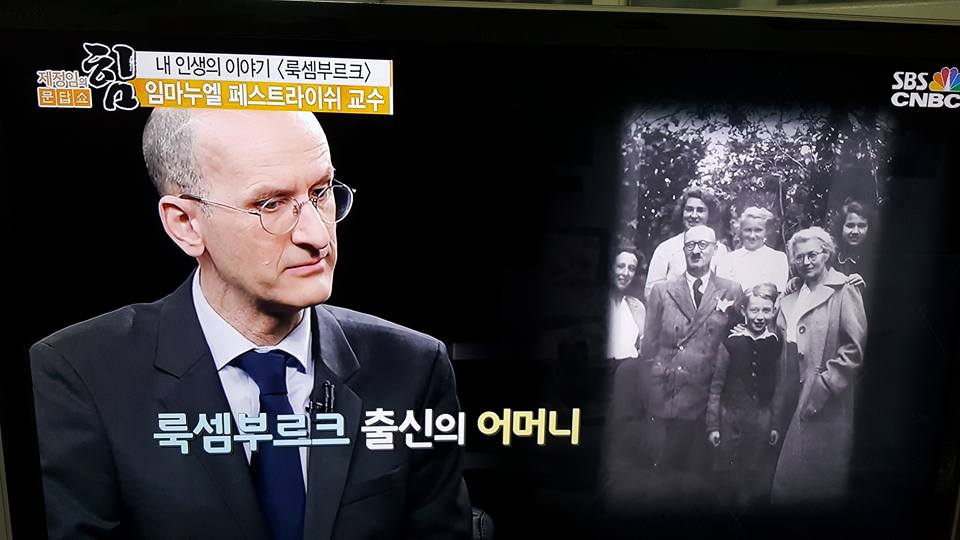
페스트라이쉬 교수는 전통적인 패권국 미국과 떠오르는 강국 중국 사이에 낀 한국의 외교 현실에 대해서도 조언했다. 그는 어머니의 고향인 룩셈부르크가 프랑스, 독일 사이에 낀 작은 나라의 처지를 극복하고 세계 최고 수준의 국민소득을 달성한 것처럼 한국은 고래 사이에서 등 터진다는 ‘새우 콤플렉스’에서 벗어나야 한다고 강조했다. 그는 “(미국 같은) 강대국을 모방하고 그들의 입장을 쫓아가기보다 한국만의 입장과 전략을 가져야 한다”며 “나라 규모가 작아서 힘이 없다, 아무것도 못 한다는 생각은 큰 실수”라고 말했다.

페스트라이쉬 교수는 “한국 사람들은 자기 역사를 잊고 외국에서 배우려 하지만, 사실 고려·조선 때만 해도 섬세하면서도 세련된 외교 전략이 있었다”고 말했다. 그는 “요즘 한국 외교에는 그런 고민이 보이지 않는다”며 “외국 사람들도 한국의 독자적 입장과 생각을 기대하는 만큼 과거의 경험을 재해석해 독자적인 외교 전략을 수립할 필요가 있다”고 제언했다.


28471808_1867535046611868_417966492670872687_n28577043_1867534913278548_7646291977186202795_n


Haebangchon T-shirts on sale

The Asia Institute is proud to announce the sale of our original Haebangchon T-shirts.

Please be sure to order them for your self, your family, and all your friends.


Price: 12,000 KRW

28167394_1745718552116598_6298017277343209636_n

We also have Haebangchon stickers for sale & Itaewon stickers as well.

Stickers: 1000 Won each


27718876_1732831336738653_1495491496_n

itaewon-C7

For all orders, please contact:

top.tier.editorial@gmail.com

Empty Grocery stores in Seoul

It does not take much digging to see a tremendous tragedy unfolding in Korean society today, and yet it is a topic that is studiously avoided not only at coffee with friends at Starbucks, but also in the newspapers, or the TV news broadcasts that serve to distract people from reality.

image1 (22)

In every neighborhood of Seoul, family-run grocery stores are shutting down. I have seen it around me and it troubles me deeply. I watched in our previous neighborhood a group of brave and creative people try to start a bakery. They did not last long, and later the family-owned bakeries disappeared soon after.

These stores are the last holdout of ordinary people who run their own company and make decisions for themselves about what they will buy and how they will organize the space around them. They are being driven out of business. In a sense, it is the end of democracy:  now no one in the local community has any say over how things are run.

I do not know the details of why these stores are closing down right now so quickly. I  welcome your input.

Perhaps they are being squeezed by the distribution system. Or perhaps they cannot compete with the convenience stores that have access to massive capital and can afford to go for months, or years, running a deficit in order to drive competitors out of business. That is the Amazon model, but it is also the Google model. It goes far back in history and sadly few around these days know much about how that game was played before, or how it was fought.

The result will be quite predictable: more and more people working at convenience stores or driving taxis, or working in some other job that does not allow them to make any decisions as to how the business is run but forces them to just follow rules dictated from above. The resulting poverty not only in terms of the income available to ordinary people, but also the loss of diversity in neighborhood cultures is quite clear. The cities are becoming deserts.

It is interesting to compare with the interiors of banks which are quite attractive, clean and spacious. Often there are many empty luxurious seats in the bank waiting rooms. There may be await at the bank for those of us with checking accounts trying to send money abroad, but next door there are sweet young women in the commercial section who sit alone all day long waiting for the business person, or the VIP, who comes once in a blue moon. But we should not make fun of these banks. They do at least offer some employment.

I would only warn those of the upper middle class who assumed that these massive economic rifts created by the financialization of our economy, do not assume that your career will not follow the same course. A competitive market economy driven by profit knows no limits. There will never be a day when those planning for stock market profits will sit down and reflect on how they have gone too far: complete  social collapse will come much sooner.

“清洁能源与人类的未来” 观察者

观察者
“清洁能源与人类的未来”
2018年 2月 9日

贝一明

听说中国政府计划于不久的将来在全国范围内用电动汽车取代燃油汽车,这个消息令我振奋不已,我认为这是一次历史性的转变。奇怪的是,美国媒体对朝鲜核武威胁进行了连篇累牍的报道,却对如此重要的进展置若罔闻。

中国计划至2020年,共投入3600万美元进行可再生能源的发展。如今中国已经在太阳能与风能的开发与生产方面居于主导地位。如果某些国家认为靠设计几款花哨的新型智能手机与跑车就能拯救它们的经济,它们会大失所望。这种经济上的转变是根本性的,做出错误判断的国家可能会倒退几百年。

Read more

“大学的经济学课程是否过于冷漠?” 观察者

观察者
“大学的经济学课程是否过于冷漠?”
2018年 2月 7日

贝一明


虽然长期从事中国文学研究,我并未在中国而是在韩国的大学教书。我带的本科生几乎都上经济学课,可能中国的本科生也是类似情况。这真让我羡慕。遗憾的是,我以前没有机会学经济学,如今在这方面也没有底气。所以我有意在自己的韩国与东亚史课堂上问学生一些经济现象方面的问题——我是真的不懂。

Read more

“Bringing the world together to respond to the East China Sea oil spill” The Korea Times


The Korea Times

“Bringing the world together to respond to the East China Sea oil spill”

February 17, 2018

Emanuel Pastreich


Last month’s oil spill in the East China Sea has produced the greatest ecological disaster to hit East Asia. The East China Sea spill is only surpassed in the history of oil spills by the BP Deepwater Horizon spill in the Gulf of Mexico, a catastrophe from which the ecosystem is still far from recovering.

The collision of a Panamanian tanker, carrying Iranian petroleum, and the Chinese cargo ship CF Crystal on January 6 released almost a million barrels of condensate, an acutely toxic chemical that is highly volatile.

Condensate spreads quickly and is much harder to contain than crude. It spreads with water currents, exposing all marine organisms in its path. Never has such a large amount of condensate been released into the environment. It will kill or poison a wide range of marine animals, moving far beyond the expanding oil spill in the East China Sea.

If we combine this disaster with the degradation of the biosphere brought about by warming oceans, the acidification of seawater and overfishing, we are confronted with a catastrophe.

Yet you would never guess that anything had ever happened from reading the newspapers in Korea and Japan, let alone those of the United States and China. The overwhelming focus has been on the PyeongChang Olympics, with a few words about a nuclear threat from North Korea thrown in here and there. Even the antics of Donald Trump seem to be far more important than this devastating spill.

As of this moment, I have not seen any advisories about eating seafood products, and the governments of Korea and Japan have not established rigorous inspection regimes for marine produce.

For that matter, a keyword search of Jeju Island’s leading newspapers Halla Ilbo and Jeju Ilbo revealed almost no articles about the risks posed by this disaster. Newspapers in Okinawa and Kyushu, the regions likely to suffer the most serious consequences, had more reports, but they were incidental and not investigative.

Denial and distraction are not going to make this catastrophe go away. There is a serious risk that hundreds of thousands of people will be subject to tremendous health risks from contaminated seafood, and from contaminated water. Entire fishing communities will be economically devastated, and their inhabitants will be in danger.

We do not have much time to end this taboo. It is time for Korea, Japan, China and the entire international community to come together and to talk honestly about how we will clean up this disaster and how the ecosystem will be restored over the next few decades. That process will require close cooperation and the development of new technologies and new treatments. We will have to work together, as a team, to assure the safety and health of residents in the areas immediately affected, and to tell the region honestly how they will be impacted.

This oil spill, more than the North Korean nuclear weapons program, is shaping up to be a major security issue for the region that will require hundreds of billions of dollars over the next decade or more.

It is essential that we put together a comprehensive plan to respond to this oil spill quickly and implement it rapidly and systematically. We must use scientific means to assess the dangers and to give reliable information to the world.

We need global cooperation to come up with a solution for the short term, the medium term and the long term. We must bring together players from government, research and industry in all the nations impacted to formulate and to implement a response. We also need citizens to be involved in the process, both providing information to experts and paying close attention to expert opinions and to other information related to the oil spill.

In the long term, we must strengthen regulations concerning the shipping of petroleum products. Most importantly, we must recognize that this tragedy was unnecessary and that we must quickly end the use of such dangerous fossil fuels that kill tens of thousands in Asia, not only through oil spills, but through air pollution.

This effort requires a literal revolution in the nature of government. Government around the world is increasingly weak, responding primarily to the demands of corporations, not citizens. Governments lack the expertise for analysis, and also are unable to carry out long-term plans. Politicians are only interested in the next election. Academics are forced by evaluation systems to spend their time writing for obscure academic publications and are discouraged from interacting with the public, or with government officials, who most need their help.

Citizens are distracted from facts by social media and by entertainment that has blocked out real news. We wander around blinded by a forest of electronic stimuli that induces impulsive purchases and indulges the grotesque cult of self. There is no space left for serious contemplation of the future of our Earth.

Will the United Nations handle this crisis? I would not hold my breath. The U.N. was not permitted to play a role in the clean-up after the BP Deepwater Horizon spill. And it has not been able to handle much else over the past few decades. Its funding has been cut and it is made into a beggar for budgets, not a leader in ethical campaigns.

There was no power on Earth capable of telling BP to turn over its platform and clear out of the way so that the Deepwater Horizon leak could be handled by experts selected on the basis of their objectivity. The entire world watched the Gulf of Mexico destroyed, but no one could compel BP to do anything. In effect, there was no government.

So how will we respond to this threat? Will we just stare at our cell phones, slurp cafe lattes with our friends and discuss our vacation plans? Will we play stupid, as our children are poisoned by unknown chemicals in fish? Will we obsess over frivolous matters while the oceans die, forests turn to deserts, societies collapse into anomie and neighbors become indifferent strangers?

Maybe, just maybe, this catastrophe, combined with similar catastrophes around the world, will force us to reinvent the concept of citizenship, and of government. Perhaps we can start to consider ourselves as citizens of the Earth who have a responsibility to act.

Perhaps this terrible challenge will force us to work together and thereby affirm what a community is, and what a government is, in a positive and meaningful sense. Perhaps we can establish something beyond global governance, a form of “Earth management” that addresses our relationship to the entire Earth.

Governance is necessary, on a global scale, if we want to respond to the terrible damage inflicted on our planet by unlimited development. All actions must be assessed in terms of long-term impact on our environment, and our primary concern must be the well-being of the people.

The stock market should not have any impact on the formulation of policy in response to this oil spill, or to any ecological crisis. If anything, the government should be empowered to restrict the functions of the stock market so as to encourage, and to force, a rapid move away from our dangerous dependence on fossil fuel.

This oil spill is about the mistakes of the crew only in the most limited sense. The dangers of transporting petroleum, and the negative impact on our environment of emissions, have been known for decades. The solution is a fundamental shift away from fossil fuels supported by extensive funding from the government, and strict rules that will require high levels of efficiency and insulation, and demand the immediate elimination of automobiles that employ petroleum.

We need to change not only how we invest our money and plan our economy but also to reform our culture and our habits. Consumption and growth can no longer be the standards by which we determine success. The addiction to petroleum, the advertising to encourage people to purchase automobiles, and the massive investment in highways at the expense of other welfare programs must be questioned as part of our larger response to the oil spill.

Finally, we must face the painful truth that the expensive hardware that our militaries have procured is useless in addressing this oil spill, or other environmental disasters such as spreading deserts and rising seas. We must redefine “security” decisively for our age and move beyond the limited and the confrontational concept of “alliance.” We must embrace the U.N. charter in its true spirit and transform our militaries into transparent and effective parts of society that address real security threats. The foremost threat, according to scientific inquiry, is climate change.

One organization that could play a critical role in coordinating our response to the East China Sea oil spill is the Trilateral Cooperation Secretariat (TCS) in Seoul. The TCS is the sole organization run jointly by the governments of the China, Japan and Korea. The secretariat has proven itself to be extremely effective under the leadership of Secretary-General Lee Jong-heon and has played a critical role in coordinating policy.

This crisis, however, will take that role to a new level. We need an environmental assessment program for water and air quality, and long-term biological monitoring. But they can also work together to increase vessel traffic risk assessment and predict hazardous crossing areas. A whole range of vessel traffic control improvements and improved response protocols should be discussed.

We must enhance and organize the cooperation between governments, between research institutes, between NGOs, and between citizens in Asia to respond to this massive oil spill.

Moreover, this project can be seen not as a temporary step, but rather the next stage of Earth management aimed at the response to climate change and environmental degradation on a global scale. We will be creating new paradigms for universal application: for how to break down a complex problem into parts and assign it to experts from fields such as engineering, biology, demographics, oceanography, statistics and politics.

But we must explain what our response to the oil spill is for citizens and give them a compelling ethical motivation to contribute to the effort. That will require experts in philosophy, ethics, history, art, and literature. We will need artists to make compelling representations of this otherwise abstract disaster and writers to compose compelling phrases.

We will need to rebuild communities, to help fishermen whose communities are devastated, and to resettle people. That requires budgets, but it also requires moral courage and self-sacrifice. Let us pull the region, and the world, together to address this crisis properly and give humanity some hope.

“한국의 미래 외교안보: 역사적인 전환에 대하여 어떻게 대응 할까?” 방송

지구경영원

아시아인스티튜트

“한국의 미래 외교안보:

역사적인 전환에 대하여 어떻게 대응 할까?”

2018년 2월 14일

정래권

전 기후변화 대사

정우진 교수

경희대학교

아시아인스티튜트 이사

사회:

이만열 (Emanuel Pastreich)

지구경영원 원장

아시아인스티튜트 이사

“한국의 미래 외교안보: 역사적인 전환에 대하여 어떻게 대응 할까?”  방송

지구경영원

아시아인스티튜트

“한국의 미래 외교안보:

역사적인 전환에 대하여 어떻게 대응 할까?”

2018년 2월 14일

정래권

전 기후변화 대사

정우진 교수

경희대학교

아시아인스티튜트 이사

사회:

이만열 (Emanuel Pastreich)

지구경영원 원장

아시아인스티튜트 이사