An American in Daejeon
How a Literature Professor Ended Up Deep in Korean Policy and Business
Monday, February 7th, 2011
MATTHEW WEIGAND
Korea IT Times
http://www.koreaittimes.com/story/12924/american-daejeon
The American is wearing a J. Press tweed jacket he bought in New Haven as he sits at the table surrounded Korea government officials and researchers discussing the future of biotechnology and its implications for his adopted home of Daejeon. As you draw closer, you notice the entire conversation is conducted in Korean.The American speaks has great familiarity with the language and an intensity of purpose. This unassuming, rather lanky, bespectacled man has close cropped hair that reminds one of a Buddhist monk. It is a remarkable coincidence that his classmate at Yale Paul Muenzen actually became the Venerable Hyon Gak Sunim and practices Buddhism in Korea.
His name is Emanuel Pastreich, an American academic who hails from the Mid West. Pastreich has a Ph.D. in Japanese literature from Harvard University and taught Japanese and Korean studies at University of Illinois before turning his attention to Korea’s impressive drive to become global. In Daejeon he delivers talks frequently in fluent Korean, one day for the Electronics and Telecommunication Research Institute, and the next for the Daejeon Cultural Association. He writes for major Korean newspapers and has become something of a fixture in the Daedeok research cluster on the north side of Daejeon.
“What fascinates me is how one makes a comprehensive strategy expand people’s perspectives. Everything, from how you greet people to what you eat and what you write, should be part of that effort to inspire those around you to strive for something better,” explains Emanuel Pastreich as he relaxes in front of his desk, surrounded by his beloved Chinese and Korean classics. Most internationals come to Daejeon to teach English or to do some very specific task for one of the technical research institutes here. Pastreich has taken up the role of advocate for a research cluster dedicated to addressing environmental issues and for a city that embraces the arts. He is well known in the town, from city hall to the mom-and-pop restaurants he has introduced on his website, as a man of many interests.
Pastreich has taken an unusual approach to his engagement in Korea. He has tried not only to help the local government, but also research institutes, cultural organizations, even artists and writers. Pastreich produced reports on international cooperation in biotechnology, nuclear power, and environmental technologies. He helped launch the SolBridge International School of Business at Woosong University, the first university program in Korea with an all-foreign faculty. At the same time he has worked with smaller Korean firms on their internationalization strategies, successfully introduced foreign investment firms to promising local businesses, and worked to introduce the artists of the Daeheung-dong district to the world. And as a hobby, he has designed t-shirts and buttons which bear a new logo for the city of Daejeon. “It seemed like a t shirt was what we needed to create an international environment,” he explains.
Sitting down with Dr. Pastreich is an experience in itself. He starts off by saying, “A group of researchers in the research cluster are working with me on a plan to turn Daejeon into an eco city” and the conversation is off to a strong start. Twenty minutes later a call comes in, and Pastreich speaks in Korean to the mayor of Incheon. The conversation reminds him of a recent conversation with the President of the Korea Research Institute of Standards and Science (metrology) about international collaboration. He is both looking at Korea from the outside, how an American might perceive Korea as an excellent place for international companies and research institutes to establish ties, and also from the inside in terms of what Korean institutions are looking for and how they can achieve their goals.
The problem for Pastreich seems to be that he cannot find enough time in the day to follow up on all of his ideas. He is sketching a flag one day for one of the 40 ancient castles that surround the town of Daejeon. “If we want to make Daejeon a center for technology, we must first make it a cultural center. There are more castles in Daejeon than in any other city in Korea. Let us make up coats of arms for all of them and fly colorful flags over the ruins. That will attract people.” Certainly that assignment is nowhere in his job description, and some would say it is a distraction, but Pastreich seems to think the cultural aspect of the research cluster is just as important as the specific technologies.
“I have been working with Emanuel on several projects, ” says Vince Rubino, who is in Daejeon to run global marketing for the Korean Institute of Toxicology. “We have an article in the pipeline on international trade, and regulatory requirements on international trade.” He also mentions that he and Pastreich have assembled a group to focus on technology convergence, the blending together of IT, biotechnology, nano technology and other fields as a result of the increased power of computers. “Most Koreans know him by his work in technology, but although he has a great passion for technology and its impact on society, in fact his last teaching position was in Japanese classical literature. He Washington DC, and now he’s in Korea working with research institutes. Emanuel is very receptive to new ideas and constantly searching for new challenges.”
American Advocate for an Asia-focused United States
There is a very good reason why Pastreich has so many connections to the movers and shakers in the research, government and business sectors of Korea. Pastreich has been preparing for engagement with Asia practically his whole life. In a country where the most common type of foreign face is the twenty-something backpacker that stops by for a few months or a year to teach English, Pastreich’s undergraduate degree in Chinese from Yale University is a bit unexpected, as is having an M.A .in Comparative Literature and Culture from the University of Tokyo and PhD in East Asian Languages and Civilizations from Harvard University. Unlike most Americans, he conducted all his graduate work at University of Tokyo in Japanese, writing a 200-page dissertation in that language on the subject of the classical novel. These days he operates primarily in Korean, but is entirely capable of expressing himself in Japanese and Chinese when the need arises.
I had to ask what made him choose to focus on Asia so early and study Asian subjects so thoroughly in his academic career. “I imagined a future age in which all the important news, all the critical matters of our age, would be in languages other than English,” he answered. “I think that part of my prediction was not entirely accurate. English remains a very dominant language, but we do find that Chinese, Japanese, Korean and other languages are increasing in their global importance.” He mentioned that he first began to study Chinese on his own in high school. “I felt most strongly that we need to understand Asia on its own terms, and we need to do so now. Later I also came to believe strongly in the ideal of peace and cooperation in East Asia.”
Pastreich has consistently felt that Korea has to be understood on its own terms. He reads Korean newspapers and writes articles on policy issues in Korean for major journals. He has appeared repeatedly on KBS TV speaking eloquently in Korean about critical issues. He was in the middle of Korean policy even while teaching in Washington D.C. Before and after his classes at George Washington University, Pastreich was worked to promote closer ties between Korea and the United States. Pastreich had a little office on the fourth floor of the Korean Embassy Culture Center with wood floors, an elegant desk and a view of Rock Creek. He served as editor-in-chief of Dynamic Korea, the Korean foreign ministry’s online newspaper, writing articles about Korea and East Asia. It was extremely unusual for an embassy to give an American such responsibility, but Pastreich was allowed to write on a variety of topics and conduct professional interviews with Washington’s top policy makers. His interviews with Steve Clemons, Donald Gregg, and Joseph Cirincione were widely read.
That period, 2005 to 2007, was fraught with misunderstandings between the leftist Roh Moo Hyun administration in Korea and the conservative Bush administration in the United States. Pastreich did his best to open up effective channels for dialog in a low-key and frank manner. The Korean embassy allowed Pastreich to establish a new think tank right inside the embassy called the KORUS House. The purpose of the KORUS (Korea-U.S.) House was to encourage a deeper dialog between Americans and Koreans. Although KORUS House did not have the high profile of more prestigious think tanks such as the Brookings Institution, and was a considerable hike from K Street, it developed a loyal following for its seminars on issues not covered by most think tanks. “Emanuel started a conversation or round-table on Korean Peninsula topics. It was a solid idea, and frankly speaking it was one of the only venues – if not the only venue – in which ordinary people and Korea specialists met regularly,” said Karin Lee of the National Committee for North Korea. She explained that before KORUS House, there was a pretty strong divide between scholars who studied Korean issues full-time and Korean-Americans interested in the topics and issues of Korea, who often ended up left out of the discussion. “Emanuel bridged that gap,” Lee explained. Whether it was the experience of Korean adoptees or a debate on the coverage of Korea in the US media, Pastreich’s KORUS House brought together policy makers, researchers, and journalists for weekly meetings to talk frankly about Korea and Northeast Asia. No small number of Chinese and Japanese also showed up for these events. Pastreich explains, “I approached all the major think tanks in Washington, members of the media, and policy makers to identify important issues in East Asia and put together a series of talks and working papers on critical economic, diplomatic, and security issues. The talks had an extremely good turnout. After a year we were well-recognized as an important place to come for critical discussions of contemporary issues.”
Pastreich advised the Korean Embassy directly on certain matters from time to time, but he was working primarily to advance Asia as a subject for serious discussion in Washington DC. He was in constant dialog with friends at the Asia Society, the American Chamber of Commerce, and the State Department about Korea and about Asia as a whole. The Korean Embassy wanted Washington to take Korea more seriously and Pastreich served that role. At the same time, Pastreich formed the core of a group of people who wanted Washington to take Asia more seriously. “I would speak honestly with congressional staff members, congressmen and businessmen, stressing that we were going to need people in the future who can read and write Chinese in America. I spoke very bluntly about how the US is ignorant of Asia,” Pastreich explained. He found many sympathetic ears of all political stripes. Pastreich stressed repeatedly his concern that the United States is increasingly tied to Asia in terms of finance and technology, but most Americans do not have the vaguest sense of how that part of the world works.
An Academic of All Trades
While in DC, Pastreich was visited by a colleague from the Korean government who had recently been appointed vice-governor of Chungnam Province in South Korea. The official asked Pastreich to serve as advisor to the governor, a rising figure in Korea, on Foreign Direct Investment, international exchanges, and education. Pastreich was drawn to this offer because he wanted to understand Korean politics at the grass-roots level. “My sense was that local governments are increasingly handling their own foreign relations and I wanted to be involved. Most Americans stay in Seoul. I wanted to see the rest of Korea,” he explained. The relationship blossomed and Pastreich became a fixture in Daejeon and Chungnam.Pastreich accompanied the governor on trips to the United States and Japan, wrote a series of proposals for the economic development of Chungnam, and worked individually with every single section of the provincial office to understand their needs and their perspectives.
Most of the civil servants had never spoken with a foreigner before. And there Pastreich was, with his shy smile, listening to their concerns and making suggestions as to how to deal with the outside world. He was there in the provincial office’s cafeteria; he traveled out to Taean when there was a terrible oil spill in 2008 to help out with international coordination. He wrote an article about the oil spill in English that helped to explain the experiences of ordinary citizens for an international audience. He visited schools, promoted local ginseng, and helped translate menus at restaurants and hotels across Chungnam Province.
Pastreich’s second job was as professor at Woosong University, a position that afforded the flexibility that he needed to concentrate on the province. Over time, however, Woosong University became more central. “When Woosong decided to start a true international business school, I threw myself into the thick of it. What an opportunity! I can honestly say I helped to found a school here in Korea,” Pastreich explained. He was the first foreign faculty member of the university, and served as the dean of the SolBridge International School of Business. He used his connections to build up a strong faculty roster and did his best to make the international business school stand out as something to be proud of.
As an example of his success in recruiting faculty, he mentioned Professor John Endicott, formerly senior professor at Georgia Tech’s Sam Nunn School of International Affairs. Pastreich helped persuade Professor Endicott to accept a position at Woosong University, promising that they could work together on one of Dr. Endicott’s favorite topics: non-proliferation. Pastreich helped to arrange several talks at different institutes and universities which established Dr. Endicott as a major figure in Daejeon and Korea, and a strong force for non-proliferation. Pastreich also established relationships with the many research institutes in the Daejeon area, using those relationships to provide internships and guest lectures to the international business school students. The work was not always easy. “Of course Woosong University and I were on the same page as far as raising the profile of the university internationally,” Pastreich explains, “but I think many of my American concepts of what is of value were quite different from what was expected in Korea. I had to learn how to evaluate the university and its international role from a Korean perspective.”
I asked Dr. Pastreich more about the reluctance and uncertainty that Koreans sometimes show when dealing with foreigners, something many people encounter. Specifically, I asked if he had any insight on what a foreigner dealing with reluctant business partners or associates in Korea should do. His suggestion was to mix together western and eastern practices and customs. He said that it is possible to try to meet Koreans where they are, to adopt Korean customs and practices, and try to fit into the Korean mindset and build connections that way. But in the end, that method alone may not be the best way. “You see, ultimately you are a foreigner,” he explains, “and you will not be able to operate like a Korean in Korean society. For a Korean is may be most important to go out drinking with the boss. But that does not apply necessarily to me. Better for me to learn more about Korean institutions and build my own network with both internationals and Koreans. I think we should respect the Korean habits. But if it comes down to our own careers, we should not be afraid to go against Korean common sense on occasion.”
A Professor of Classical Literature Jumps into the Technology Swamp
Soon after Pastreich participated in the launch of the SolBridge School, one of the Korean professors, aware of his success with KORUS in Washington, DC, suggested that Pastreich devote his efforts to establishing a think tank. Pastreich was not prepared for this request. But after consulting with his contacts and considering possible approaches, he decided that a think tank focused on technology would best contribute to the interests of Daejeon. “Korea is the center for innovation in technology,” he explained. “Since Daejeon is the site of Daedeok Innopolis, Korea’s version of Silicon Valley, it made sense for the research institute to focus on technology and its impact on society. Pastreich founded the Asia Institute dedicated to this ideal. He was soon working on projects with Koreans, Americans, Japanese and Indians.
Mario Cardullo, chairman and CEO of Archimedes Lighting Systems Corp., worked closely with Pastreich in Washington D.C. I approached him about Pastreich’s recent work, and he began to reminisce about old times. “When Emanuel was in DC, I did indeed participate in several of the KORUS House think tank activities. He is a very innovative individual with an excellent background. He likes challenges and makes them happen.” When asked about his opinion on this new think tank in Daejeon, Mario said, “As a technologist and an academic, I know he will make the Asia Institute a central space for the debate on technology. He has always had a fine sense of how to take advantage of situations. I think he is clearly in the right place at the right time.”
Pastreich stumbled on another big difference between the US and Asia when he started cold-calling various research institutes in Daejeon, from biotechnology to nuclear power, something unexpected by everyone he contacted. Despite the surprise with which his inquiries were received, he found that there were many researchers anxious to join the discussion on technology. It was a perfect example of the contradictions in Pastreich. Fluent in Korean, Pastreich was capable of discussing complex issues in that language and deeply committed to Korea’s efforts to internationalize. Moreover, he has read broadly in Korean history and literature, making him “more Korean than the Koreans,” some Koreans say. But this wild idea of just calling up complete strangers was startling to many-and very un-Korean. Some appreciated Pastreich’s passion, but in Korea, unless you have an introduction through an institution, or you are linked to someone through a high school or college classmate, it is just not done to call up and say, “Let’s meet.”
Nevertheless, Pastreich did find those who were open to the American approach. The topic with the greatest amount of traction with researchers was the environment. Daejeon is a basin trisected by three rivers and surrounded by tree-covered mountains. It would make a perfect Eco-city. Although Daejeon has many researchers working on topics related to the environment, there was no general forum for communication between the researchers at different institutions and no exchange with the city of Daejeon concerning environmental policy.
Pastreich co-authored an article with Junghoon Han, a researcher at the Nuclear Fusion Research Institute, calling on Daejeon to transform itself into an Eco-city by bringing the environmental technology of the research institutes to the city (see “Daejeon’s Green Growth Forum” ). The response to the article was overwhelmingly positive. Pastreich received calls from experts across the research cluster and in February 2010, the Daejeon Environment Forum- made up of experts from the major research institutes- was formally launched. Vice President Yang Jiweon of KAIST (Korea Advanced Institute of Science and Technology) served as chairman of the forum and fought hard to get the attention of decision makers. The Forum was recognized by the Ministry of Knowledge Economy, gaining national attention. Subsequently, Pastreich traveled with his Korean colleagues to Washington DC, Stanford University, and Tsukuba in Japan to discuss international collaboration between Eco-cities.
The Eco-city concept came to embody Pastreich’s vision of the “marriage of technology and society.” He advocated the concrete application of technology produced in the cluster to the environmental needs and problems of the city itself. Soon after, the Korea Institute of Energy Research (KIER) started a program to make their solar panels available to the local community. Pastreich wanted the effort to be global. He would later write a proposal with John Feffer to rebuild the city of Wenchuan as an Eco-city after it was damaged by an earthquake (see“Wenchuan as an Eco City”). The proposal was translated into Chinese and published by China News, leading to several initiatives in the Wenchuan area for more green construction.
Interestingly, of all the international conferences that Pastreich has helped organize, Pastreich takes the greatest pride in a small seminar of students that he convened in the summer of 2008. With the assistance of Tsukuba University and the United Nations Environment Programme, Pastreich invited ten students from China, Japan and Korea to talk about “3E.” 3E, a termed coined by Dr. Inoue Hisao of Tsukuba University, refers to the complex interaction of the environment, energy and the economy. Tsukuba University started the 3E Forum to discuss technical aspects of this topic among senior researchers in 2007. Later, Tsukuba also started a 3E Café for young people in Tsukuba.
Pastreich’s seminar for youth was timed to correspond with the United Nations Environment Programme’s Tunza Conference held in Daejeon in August 2009. Pastreich was invited as a keynote speaker on water at this conference and delivered a keynote speech on water to the thousand students who came from around the world for the event. “One of the great moments of my life,” he related. “It was a once-in-a-lifetime event to have young people from that many countries come together to discuss the environment so seriously.”
Parallel to this conference, Pastreich arranged a series of intensive seminars and visits to research institutes intended to start a dialog among the students working on 3E from the three central nations of the Asian economy: China, Japan and Korea. They spent many hours together learning about technologies from experts in the cluster and debating with each other about how a transformation of Asia’s economy should be achieved. Students from Nepal, Pakistan, India, Russia and Mongolia also joined in the discussion. It was a frank debate that did not shy away from arguments about responsibility.
The high point of the 3E Forum was a lecture by the founder of Ecocity Builders, Richard Register, who spoke about the future of the city in an age of ecological challenges (see “The 3E Forum in Daejeon” ). Register is the man who coined the term Eco-city back in the 1970s and helped build the environmental movement. He spoke with a tremendous enthusiasm that cascaded through the group of students.
The Asia Institute has developed along two axes: technologies and their implication for society and the technological and economic development of Asia as a totality. At a deeper level, the Asia Institute is dedicated to pulling Asia together as a whole-and Pastreich imagines the United States to be geopolitically fated to align itself with Asia. Pastreich imagines, according to the website, a truly pan-Asian research institute that investigates technology’s impact on societies and the environment from the Middle East to Southeast Asia, from Russia to Japan.
Pastreich identified the Middle East and India as two parts of Asia where partnerships with South Korea might be established. He started with the Middle East. Pastreich anticipated that ties between Korea and the Middle East would increase rapidly. Most Korean companies had reduced their presence in the Middle East when the Asia Institute was launched in 2008. Pastreich undertook to start an open dialogue between Korea and the Middle East on important topics involving the environment and technology. At the time there was almost no cooperation taking place between institutions or individuals in the two parts of the world. Pastreich sensed that there was a significant need for deeper dialogue and consequently started the East Asia Middle East Program, with the intention of eventually including China and Japan.
Fahad Altouraif, the Vice President of NCB Capital, a Saudi Investment Bank, was the earliest recruit to the collaboration. He agreed to serve as director of the East Asia Middle East Program. He and Pastreich made several proposals for cooperation with Korea that were widely discussed in the Middle East. Next, Mezyad Alterkawi, CEO of the Riyadh Technology Incubation Center at King Saud University, took over as director and started a very close collaboration that included a series of articles published in Yonhap News and other major Korean newspapers calling for closer collaboration between Korea and Saudi Arabia. Alterkawi brought Saudi Investors to Korea, arranged for high level visits of Koreans to Saudi Arabia and argued strongly for the importance of bilateral relations with both Saudi and Korean leaders.
Pastreich had speculated that India too would reward efforts for greater intellectual dialog with Korea. He started several research projects related to the Comprehensive Economic Partnership Agreement between the two nations that was signed on August 7, 2009. Although there was much discussion of the potential for deeper cooperation, few institutions in Korea and India were engaged in actual institution-building. The Korea India Business and Technology Initiative of the Asia Institute hired Ms. Neeru Biswas, an IIT graduate, as its director. She helped to negotiate a Memorandum of Understanding (MOU) for close cooperation in research between the Indian Nano Consortium and Korea’s National Nano Fab Center. This MOU required intense discussions on both the Korean and Indian sides and a powerful vision on the part of the Asia Institute to inspire both parties to cooperate. It was the first such MOU between Korea and India in the field of nanotechnology.
Centripetal and Centrifugal Forces
What is clear from the conversation with Pastreich is that his interest in technology and the environment is part of a dialog is bigger than Daejeon, and bigger than Korea. Pastreich is appreciated by Koreans for his enthusiasm regarding Korea’s potential, and his willingness to work tirelessly for goals in which other foreigners take little interest. At the same time, Pastreich idealism about Korea’s global role is not always aligned with the assumptions held by Koreans. Although he listens carefully to what the Koreans need, and works closely with them, there are subtle aspects of his work that can be traced back to his arguments over the last ten years for US engagement with Asia as a whole. Pastreich’s work on environmental policy in Daejeon is linked to his arguments for international international cooperation. His ideas are vertically integrated like a set of nested chairs. Such a three-dimensional approach to problem solving is confusing to many around Pastreich, and his critics remark that he seems to be running in every direction instead of focusing on one project.
From the perspective of many Koreans, who adhere to the cultural norms of clearly defined jobs and expertise, Pastreich is simply spread too thin. “Professors of classical literature are trained to teach literature,” remarks one Korean. Whether it is making a website for Daejeon, organizing conferences, or writing proposals for teaching children about climate change, everything is part of the plan for Pastreich. But for some Koreans, the whirlwind is more confusing than enlightening.
But there are also those who are big fans of Pastreich’s “broad canvas” approach to Korea. They welcome this outsider who tries to form bridges where none have existed before. The complex response of Koreans to Pastreich can be traced back to the contradictions in Korea’s intellectual history. There is a strong tendency in Korea to succeed by intensely concentrating on a single field. Korea became a major player by throwing all its resources into shipbuilding and memory chips. Specialization was valued and humanities were considered marginal in Korea’s model for economic success for the last sixty years. But beneath the surface of today’s extreme specialization is a long tradition in Korea of respect for a engagement in all fields of science and the humanities. After all, the most honored Korean King Sejong dabbled in everything from literature and linguistics to agriculture, mechanics and astronomy. If Pastreich had come to Korea 100 years ago, is would have been obvious why someone with a background in the Chinese classics should be involved in science policy.
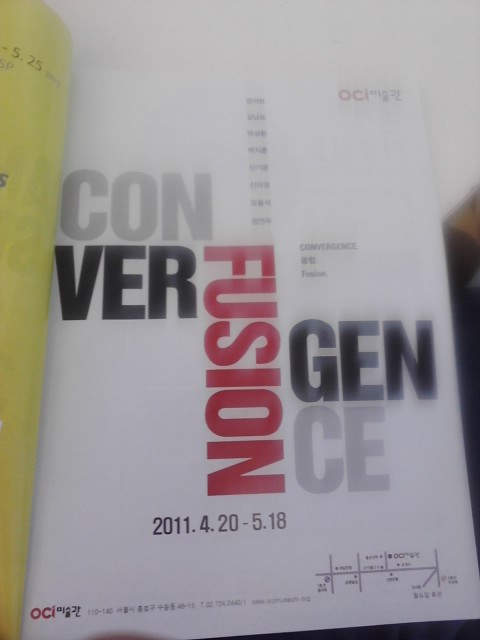
That Korean tradition of a marriage of the humanities and sciences is making a come back. When E. O. Wilson’s book “Consilience, the Unity of Knowledge” was translated into Korean a few years ago, it became a run-away best seller. The hottest word among policy makers in Seoul is “convergence” these days. Korea’s national assembly passed a law to make technology convergence a national priority in November of 2010. The mandate for Koreans is to find connections between previously unrelated fields allowing discrete technologies to spill over on to each other. Nanotechnology merges with biotechnology, IT with tourism, medical technology with social networking. A growing number of Koreans recognize the potential benefits of breaching these disciplinary walls, and linkage with the liberal arts is considered essential.
It is no surprise that Pastreich has recently embraced convergence, writing articles advocating convergence between biotechnology and construction, social networking in IT. He was appointed as a founding member of the Korea Industry Convergence Association- an unprecedented distinction for a foreigner.
Perhaps the paradox of Pastreich work in Korea is wrapped up in the complexities of Korea today: a strict Confucian society in which everything must be done by the rules, and yet at the same time one of the most innovative societies, full of first adopters. Koreans are strict about which box people should be in, but they are also quite open to combining technologies. There is certain logic about a literature professor turned philosopher of technology finding a niche for himself in the Hermit Kingdom. When Pastreich brings local artists along with him to a talk at the Electronics Telecommunications Research Institute, it strikes some as bizarre. But maybe, just maybe, he learned something about Korea from his readings of the classics.
 Korea is a word leader in plastic surgery and only increasing its lead these days. There seems to be some unusual tie between technological change and plastic surgery, as if computer animation, movies, interactive social networks and plastic surgery were part of a continuum. Maybe the interest in avatars is spilling over into the alteration of one’s physical appearance. Or perhaps the full capacity of new innovations in IT and software is being most quickly applied to plastic surgery here in Korea. I stopped by a plastic surgeon myself the other day just to learn what could be done. I know I am getting a bit over the hill and could use some sprucing up. Well the range of options was mind-blowing and the enthusiasm, expressed was quite impressive.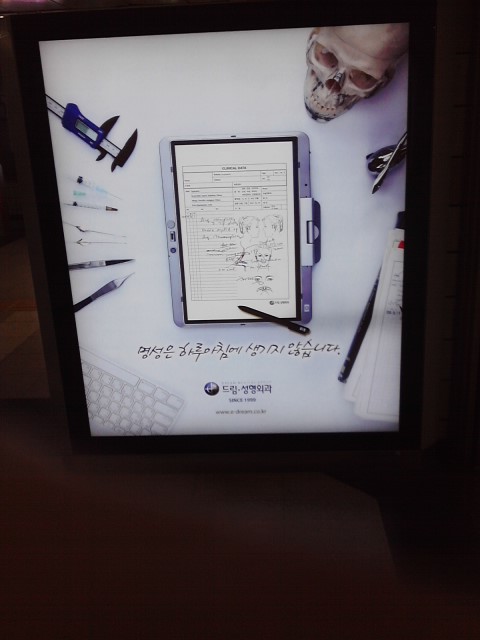
 The City of Seoul has launched several major initiatives to encourage citizens to become