Both of Emanuel’s recently published books will be used in graduate courses in the United States this semester.
His book on the reception of the Chinese vernacular in Japan, The Observable Mundane: Vernacular Chinese and the Emergence of a Literary Discourse on Popular Narrative in Edo Japan, will be assigned in the East Asian Studies graduate program at Princeton
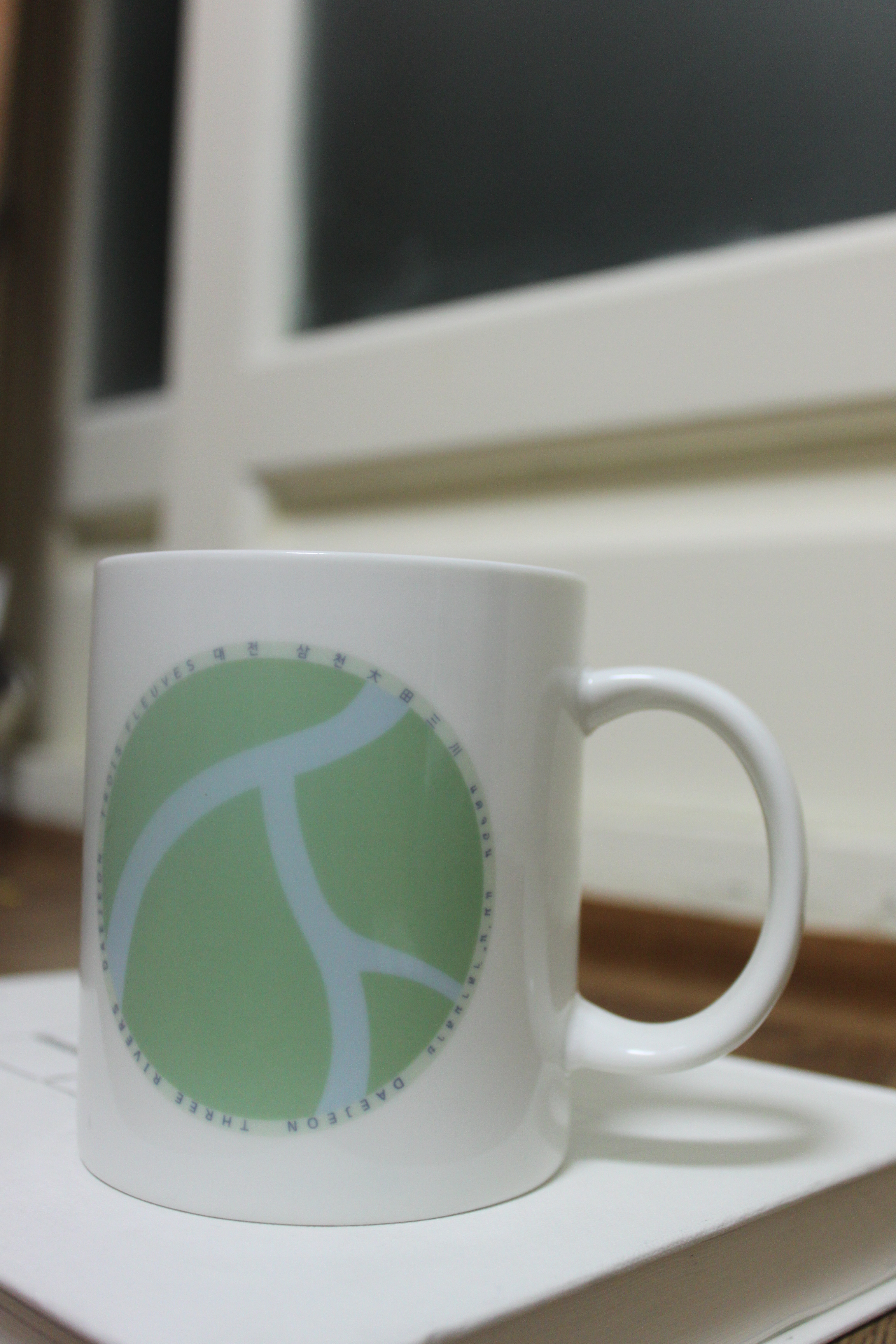
The "Daejeon: Three Rivers" Logo that Emanuel Designed for the City of Daejeon.
Much of my work on the environment in Daejeon had to do with reimagining the city as an Eco City. I felt strongly, as do many of the citizens of that wonderful city, that until an awareness of the city as an eco city set in, we cannot make much progress. That is to say that Daejeon must be completely redefined as a cultural space. Such a development can take place as an extension of its status as a science park, of course.
We put together a wide range of proposals for the city as an eco city through the Daejeon Environment Forum back in 2009. Several, including the proposal for bike paths, received considerable attention. See here for more detail.
We also learned that implementation is another matter. Until the concept of “Daejeon” shifts, the importance of a massive investment in the environment will be obscure.
I designed this logo for Daejeon about a year ago and only today did it come out on a coffee cup. The logo draws attention to the ecosystem of Daejeon. Daejeon means literally “wide field” referring to a large expanse of green level land surrounded by mountains that makes up the region.
That space is defined by three rivers: the Gapcheon, the Daejeon Cheon, and the Yudeung Cheon. In fact, until the 1980s, the term “Three Rivers” 삼천 三川 referred to a large district in Daejeon. That underlying ecological formation, the true beauty of the city, has been obscured by the modernization process. Rediscovering it is essential to Daejeon’s, and Korea’s, future.
In addition, the logo features the expression “Daejeon Three Rivers” in English, Korean, Chinese/Japanese, French and Thai as a representation of the international nature of the city today. The three rivers flowing together also defines the cultural and global role of our beloved city.
We will have a new set up mugs out soon and encourage you to order some. We hope that all the major cafes in Daejeon will use these cups in the near future so as to promote such a new vision.
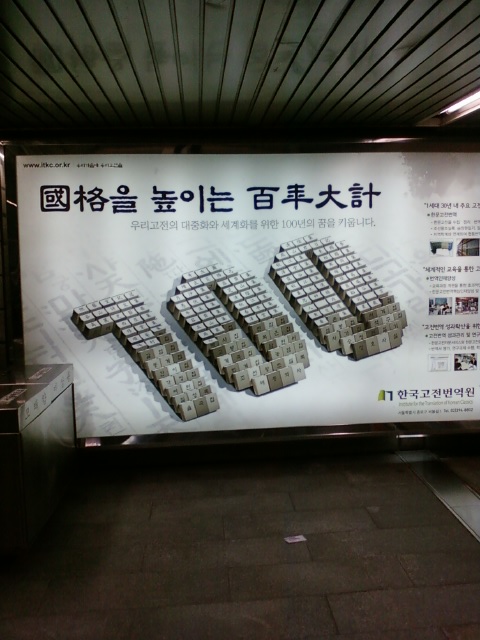
This Advertisement introduces the immense project being undertaken at present by the Institute for the Translation of the Korean Classics (한국고전번역원) to render large sections of the Korean literary and intellectual canon into contemporary Korean language. Because literary Chinese was the intellectual language of Korea until the twentieth century, there is a vast amount of the Korean tradition that is simply not accessible to contemporary readers. Few Koreans today learn classical Chinese. That discontinuity in the Korean cultural tradition is critical to understand how Korean culture is different that of France or Italy, nations in which a remarkable cultural continuity over the last thousand years remains intact. If you ask an educated Korean about the writings of a 17th century Korean philosopher, he or she would most likely stare at you blankly—with a few exceptions. But if you asked an educated Italian intellectual about a major Italian philosopher, he or she most likely has read some of the philosopher’s writings in the original.
The work of the Institute for the Translation of the Korean Classics is aimed at opening up the classical tradition to contemporary Koreans. The greater challenge will be making that tradition accessible to internationals. Although daunting, such an effort is absolutely essential if Korea is to get the recognition globally it deserves.
By the way, the situation is even more severe in Vietnam where also most of the writings until the 20th century are in literary Chinese but very little has been translated into contemporary Vietnamese.
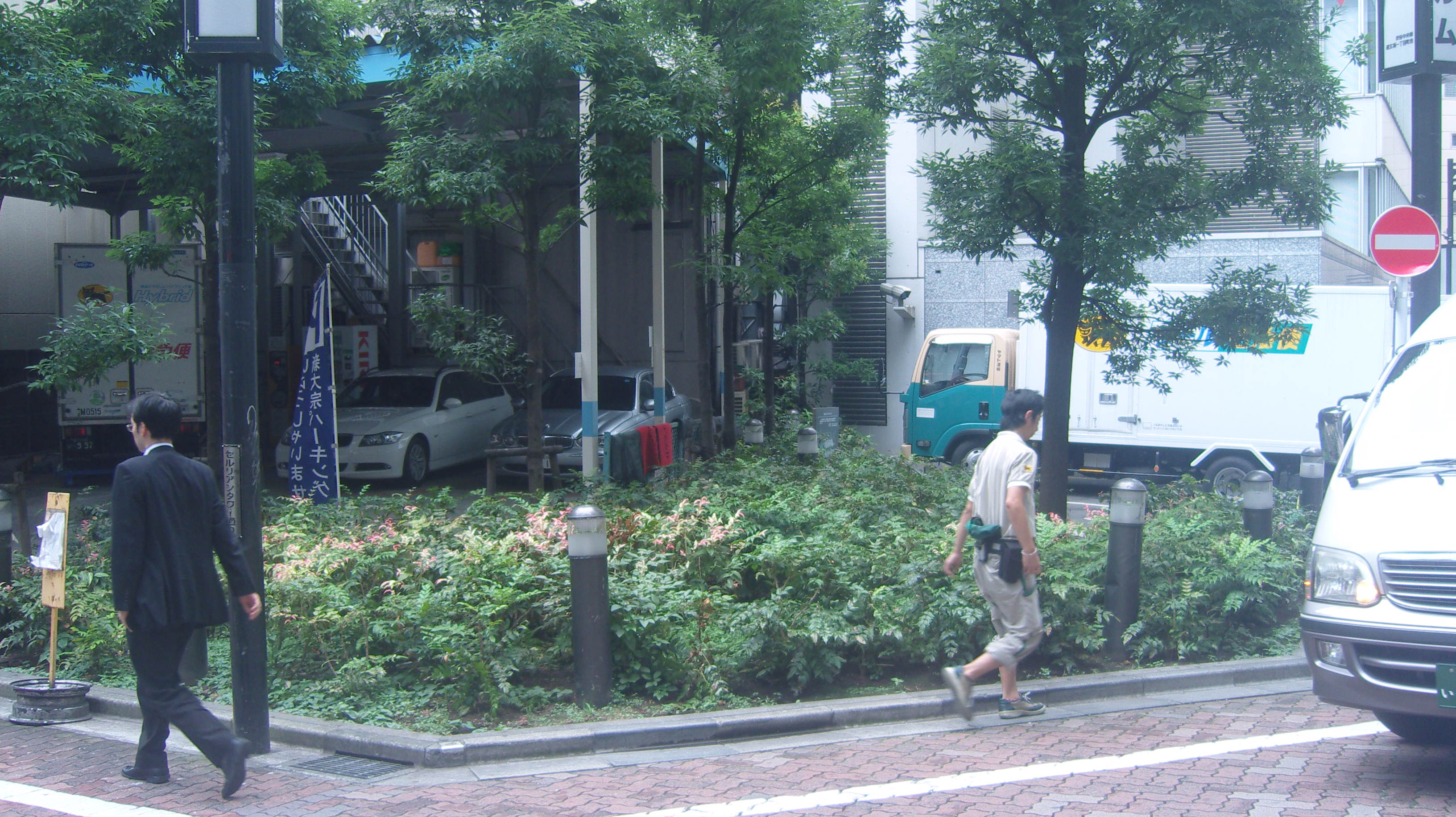
During my recent visit to Japan to attend a meeting at RIKEN and see a few friends at University of Tokyo, I was quite impressed at the innovation I saw all around me in Japan. For example, a small bit of land in downtown Tokyo was converted into a very attractive natural space with flora that truly appeared wild.
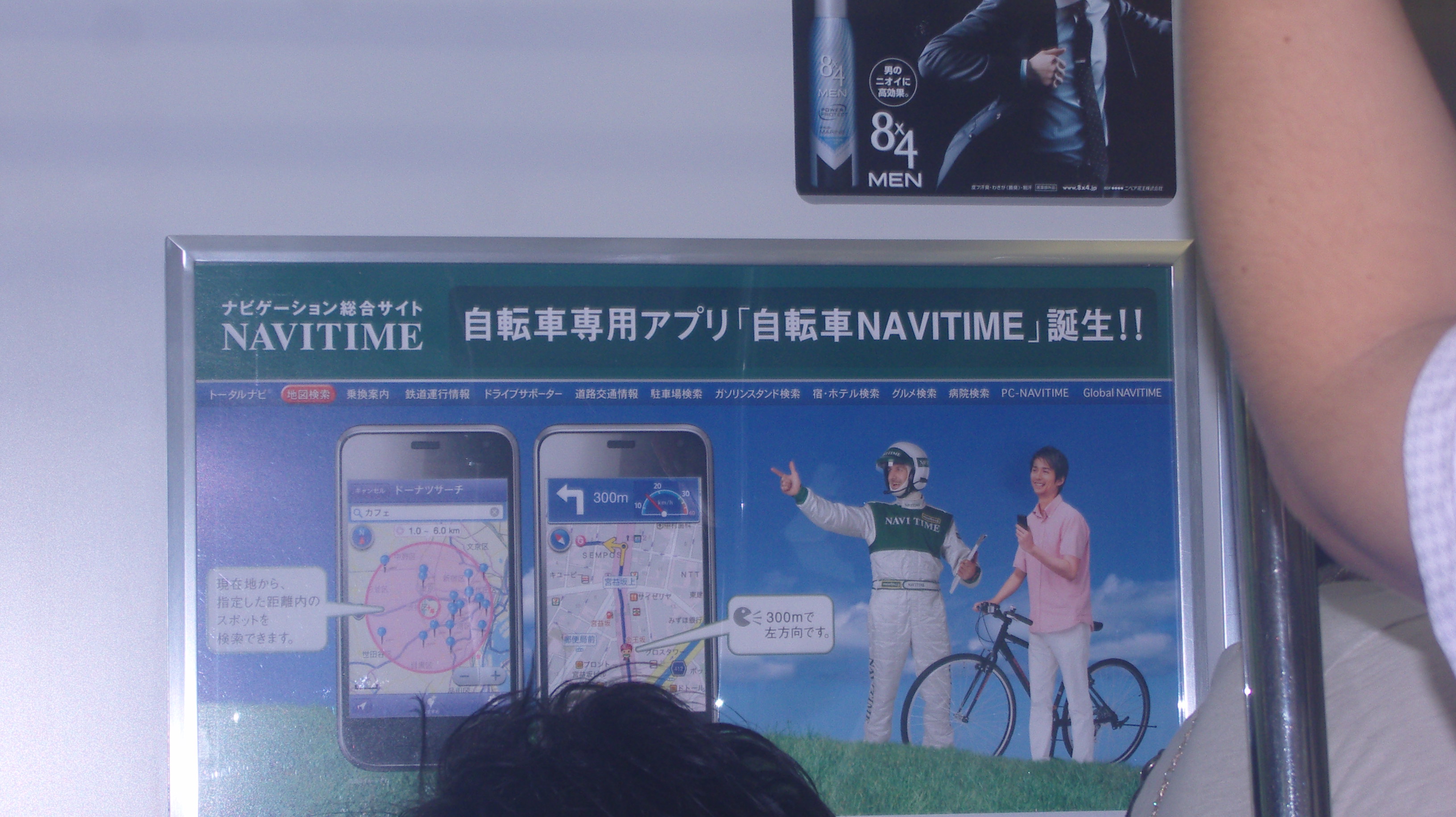
I saw an advertisement for a very innovative navigation system aimed at bicycle riders.
Dr. Isoshima at RIKEN was wearing a ventilated shirt that looked remarkably comfortable, with two small fans sewn in place.
In Wako there is an organic farm. This dispenser allows the local residents to sell their pumpkins to passersby.An empty lot in the Shibuya neighborhood of Tokyo is lovingly maintained as a natural space.A new system for navigation aimed at bicycle ridersHere is a ventilated shirt that my friend Dr. Isoshima at RIKEN was wearing the other day.
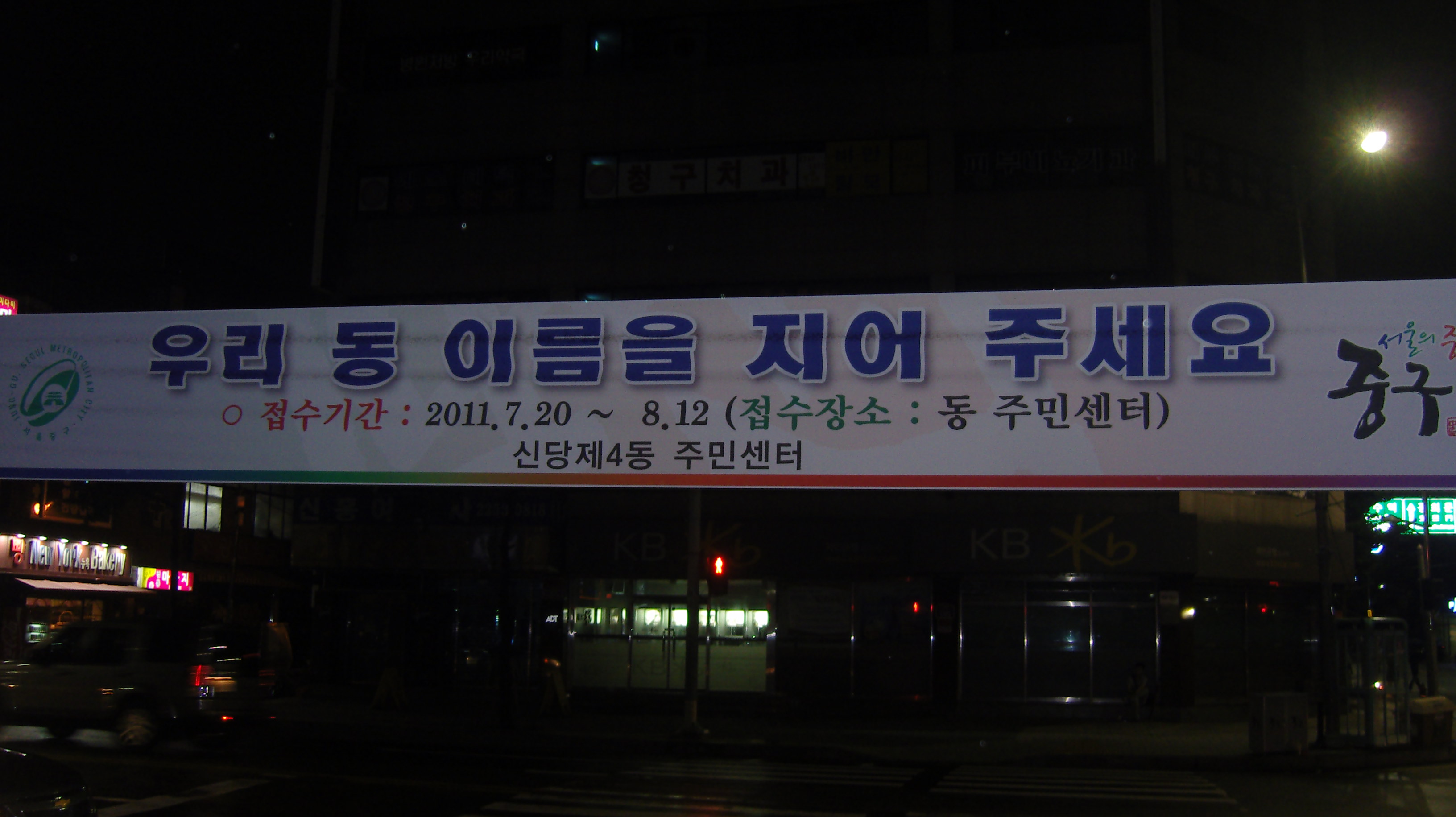
It is just an anecdote,, but it speaks volumes. Here is a call for citizens to suggest names for their neighborhood in the Jung-gu District of Seoul. I see constantly calls for contests and other opportunities for citizens to participate in the naming and the planning of the metro and the city in Seoul. How sincere all of these calls are, I cannot say, but I can say that I do not see much such calls much in the United States.
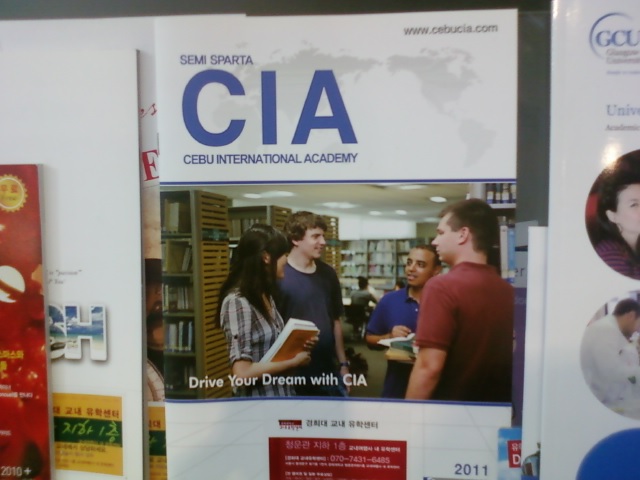
This advertisement for the Cebu International Academy is quite revealing. The term CIA is rather amusing, of course. But it also suggests something about some fundamental trends in our times. As we can see here, the term “CIA,” originally associated with the Central Intelligence Agency established by Harry Truman, has been reduced to a rather amusing phrase that can be assigned to just about anything in a rather light-hearted manner. The authority of force, and the control of information, known from a previous age has been reduced and cheapened. Of course some might say that it is a positive trend, granted the abuses associated with intelligence. But although we should be honest with ourselves about the mistakes of the past, we should also be quite wary of the degradation of terms. Once terms cease to have any real gravitas, authority can be grabbed by just about anyone.
Article on Emanuel’s Book “Life is a Matter of Direction, Not Speed: A Robinson Crusoe in Korea” from Joong Ang Daily. Interview with the author and description of the book in Korean.
Key Factors for the Future Success of Scientific Research Institutes
Friday, September 9th, 2011
Emanuel Pastreich
The future of the research institute is one of the most critical topics of our age. Across the world, research institutes are struggling to define their vision and their function in response to the rapid evolution of technology and a changing economic and demographic environment. Here are a few issues that are central to assuring that a future research institute fully realizes its potential.
1. The need for a vision of how the research institute contributes to society
In the long term, large research projects will be strong candidates for funding, and broad enthusiasm among workers, researchers and taxpayers if they feature an over-arching vision for explicit social contributions. In an age of limited budgets, the need to show social relevance will be decisive. We have many research institutes that describe their research in terms of biotechnology or nanotechnology. Such descriptions are fine from an intellectual point of view, but in the future justifications for funding must be made in terms of a direct response to serious medical, environmental, or energy challenges, locally and internationally. Creating an intellectual backdrop that highlights how the research institute is leading the way, not only in terms of new developments in medicine and biotechnology, but also in an ethical sense, will be the key to building international collaboration networks. Those networks, by extension, will determine the effectiveness of the institution.
My increased collaboration with the Graduate Institute for Peace Studies at Kyung Hee University, and my work with the Global Peace Festival Foundation in planning the November Global Peace Convention in Seoul has led me to think more deeply about the term “peace” and its significance in our age.
Two things are clear:
First, “peace” is growing in influence as a critical concept for responding to the challenges of our age and an idea with immense intellectual and emotional appeal.
Second, the concept of “peace” will require a thorough redefinition in light of significant changes in human society that have taken place and the new challenges that we face. We need to build a discourse on peace that is at least as nuanced and authoritative as that used for “security,” or for that matter that used for “economics.”