You might expect South Koreans to be glued to the TV wondering what will happen next in North Korea. But you would be pretty far off. If anything, it is the internationals who are watching carefully. When I looked at the website of KBS News this evening, North Korea was not even in the top stories listed.
“Climate Change, Social Change and the North Korean Threat”
I have yet to see an article discussing the implications of climate change for North Korea. But the topic came up in a recent Asia Institute seminar with Vince Rubino, Matthew Weigand and I. If climate change, the global financial chaos, digitalization and the disorder stemming to domestic and international conflicts sweeping the world worsen in the years to come, there may be some unexpected consequences. Not the least of which would be the strengthening of North Korean power and influence.
“Strengthening of North Korean power? Wait a minute, Emanuel, what are you talking about? I thought North Korea was on the edge of collapse.
Which will be the next Byzantium: Seoul or Singapore?
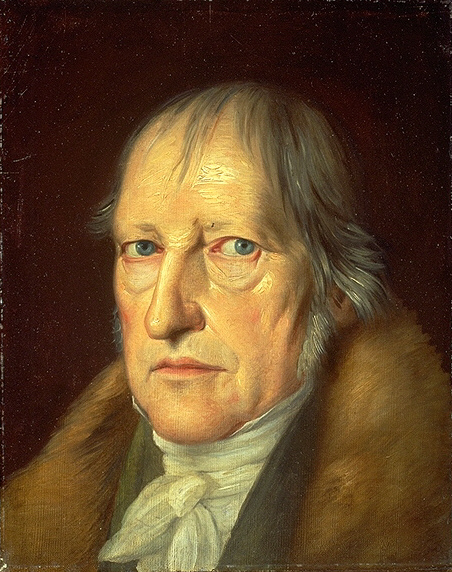
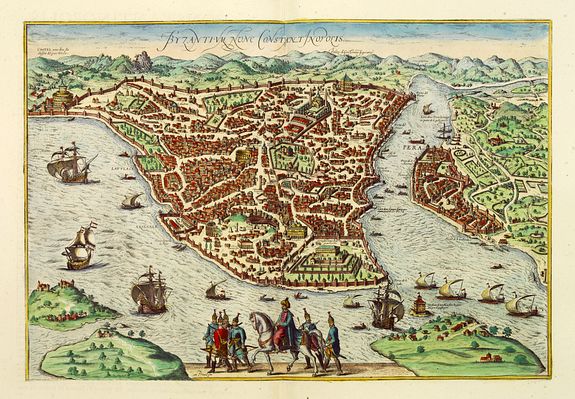

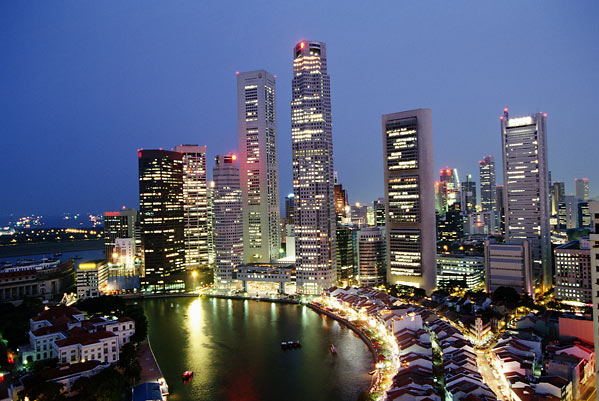
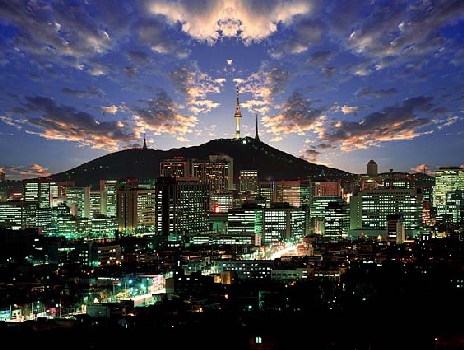
The rapid acceleration of technology today has the effect of speeding up historical processes. We see geopolitical shifts today take place at an increasingly fast pace. I can only think of Georg Wilhelm Friedrich Hegel on steroids. That is to say that historical cycles that would take centuries to unfold in a previous age are now playing out in fast forward.
Luxury Goods helps the Korean retail market
Here is a recent article form MK News indicating that the only part of the retail economy in Korea showing strong growth is the luxury goods sector. As I noted in my recent post, this trend has very disturbing implications for the Korean, and world, economy.
Vogue Archive: The Collapsing cost of information brings the past smack into the middle of the present
It is now becoming extremely cheap to input, reformat and process information. That situation makes it possible for Vogue Magazine to make accessible every single issue from its founding in 1892. That opens up to the casual viewer the whole range of Vogue’s history and allows for the appropriation and adaptation of images, words and ideas from a broad swath of history. See Vogue Archive
Broadcast about Emanuel’s Teaching on EBS (article in Korean)
A short introduction to the broadcast today:
EBS <초대석>
한국문화를 위한 미국 선비의 고언(苦言)
-25년 넘게 한중일 고전문학을 연구하고, 연암 박지원 선생의 고전소석을 영어로 번역한,
파란 눈의 동양학자 이만열 교수 (경희대 후마니타스칼리지)!
미국 출신 인문학자가 본 한국 전통문화의 저력, 그리고 현주소는?
Article featuring our Daejeon Three Rivers Mug Cup (article, Korean)
 This article in Hello DD, the primary online journal for science and technology news related to the Daedeok Research Cluster in Daejeon, features our Daejeon, Three Rivers mug cup. The article mentions my own vision that having people look at this image of Daejeon’s ecosystem while drinking coffee each morning could transform their thinking.
|
Professor Jonathan Spence (essay)
Jonathan Spence
Jonathan Spence is the towering intellectual in Chinese studies at Yale, a man who has produced generations of important scholars in Chinese history and inspired many undergraduates at Yale to study Chinese. His most important role, I believe, has been introducing Chinese culture to American intellectuals who would otherwise not take much interest. Because he writes such elegant English, and is so well versed in the Western classics, his writing makes China accessible. I took only one course with Professor Spence, his famous survey of Modern China. We established a close relationship that has lasted to this day.
Professor Kang-i Sun Chang (essay)
Professor Kang-i Sun Chang
There was one other Chinese at Yale who had immense impact on me and led me to strive for excellence in the field of Chinese, Professor Kang-i Sun Chang (孙康宜教授). An extremely enthusiastic teacher and scholar trained in Taiwan, she had an all encompassing view of the potential of Chinese literature to be meaningful to everyone. She was also the one who encouraged me to learn Japanese and to study in Japan for my graduate work. Her father had studied in Japan in a previous era and she felt that I should take an equally broad perspective. An extremely well-read scholar, who wished to talk with anyone willing to engage her in a serious conversation, Professor Zhang constantly shared with me poems and stories when we sat at the desk in her office.
Would we be better off if we were run by robots?
Of course it is a joke, or mostly a joke, perhaps.
But as we witness the complete inability of humans to regulate themselves and embrace global projects that will start to address the problems of limited natural resources, globalization and climate change, we cannot help wonder whether humans are even capable of rising to the occasion.
When Albert Einstein wrote about world federalism in the 1950s, the facts were already clear: technology has moved so far beyond human’s ability to control that we need a global approach to assuring that technology is used responsibly and global war can be avoided. And yet, although the need for “world federalism” is even greater today, and the world is increasingly integrated by trade and the global exchange of information, if anything, humans are even less capable of coming up with global solutions.