한류: 기회인가 아니면 또 다른 위기인가? 싸이에 보낸 편지 (이만열 2013년 7월)

한류: 기회인가 아니면 또 다른 위기인가?

이만열 2013년 7월24일


한국은 전 세계 곳곳에서 다양한 삶을 사는 이들에게 ‘한류’라는 이름으로 큰 문화적 충격과 전망을 제시함으로써 새로운 역할을 하는 선두적 주자로의 잠재력을 가지게 되었다. 한국 문화는 개발도상국이나 소수 민족에게서나 엿볼 수 있는 접근성의 용이뿐 아니라, 정서적인 진정성 면에서도 엄청난 힘을 가진 동시에 선진국의 면모를 가진 유일한 문화라고 간주해도 과언이 아니다. 아프리카와 미국인 사이에서 태권도, 일본 여성들에게 있어서 한국 드라마, 동남아시아에서의 K-pop 열풍은 위의 사실을 입증해 보이는 가장 쉬운 예라 볼 수 있다. 한국은 단순히 혁명이나 대립이 아닌 또 다른 현대 사회라는 문화라고 볼 수 있다.

그러나 이러한 한류의 열풍 이면에는 엄청난 위협이 도사리고 있다. 세계적인 잠재력과 그 세계의 문화를 선도하는 “한류”, 그 한류의 본원지인 “한국”, 이 모두에게 한류라는 문화가 가져다줄 위기는 아주 위협적이라 본다. 한층 더 발전된 인간의 삶과 국가적인 차원에서의 경제적 풍요로움을 가져다주는 한류는 한줄기 희망이었다. 이는 단순히 전통적 가족의 가치관에서뿐만 아니라, 사회라는 단위의 삶에서도 밀착된 관계를 보여주고 있다. 하지만 한류는 최근 2년간 급속하게 상업화되었다.

내가 싸이의 “강남스타일”이라는 뮤직비디오를 보고 위와 같이 제기되는 문제에 대해 상당히 충격을 받았다. 이 비디오를 본 다른 이들은 여성을 한 인격체가 아닌 물건으로 취급하고 성적 소비물로만 여기는 이 부분들에 대해 반론을 제시할 수도 있을 것이다. 타인이나 사회에 대한 우려는 전혀 찾아볼 수가 없다. 심지어 이를 이 시대에 도래한 심각한 문제라고 전혀 인지하지 못하는 것 같다.

후속곡으로 발표된 “젠틀맨”의 뮤직비디오와 노래는 “강남스타일”보다 더 상황이 나빠졌다. 대표적인 두 가지 이유를 들 수 있다. 첫 번째, 소비문화를 화려하게만 보이도록 더 부추기고 있기 때문이고, 다음 이유는 이 사회의 최상위 1%의 삶을 미화시키고 심지어는 찬송하고 있다는 것이다.

그래서 나는 다소 장난스럽고 웃기게 보일 수 있는 편지를 싸이에게 써 보았다. 이 편지에 답장을 받을 수 있을지는 모르겠다.
Read more

TV조선 인터뷰 2013년 7월 15일

TV조선 인터뷰  2013년 7월 15일 

누구보다 한국을 잘 알고, 한국을 사랑한 세계적인 인문학자, 경희대 이만열 페트라이쉬 교수 스튜디오에 모셨습니다. 안녕하세요.

[주요발언] 임마누엘 페스트라이쉬(이만열) / 경희대 국제대학원 교수
“한국문화, 질 높은 콘텐츠와 제국주의 전통 없어서 인기”
“한국인, 전통문화를 낮게 평가하는 경향 있어”
“전통문화가 뛰어나지만 중요성 인지는 떨어져”
“중국과 별도로 한국 고유의 주자학 전통 있어”
“한국, 선진국과 개발도상국의 사이에 위치해 창조적인 일 할 수 있어”
“한국의 현 정치권 막말 파동, 조용한 것보단 나을 것”
“한국, 이제는 세계적으로 큰 역할하고 있어”
“학생을 가르치며 한국의 미래 조망 좋다고 생각해”
“한국 학생, 다른 나라 학생에 비해 교육 수준 높아”
“남북분단 문제해결에 집착하면 오히려 답이 안 보여”

VOD 다시보기 


Professor Michael Puett of Harvard University visits Korea under auspices of the Asia Institute and Kyung Hee Cyber University

Professor Michael Puett of Harvard University visits Korea under auspices of the Asia Institute and Kyung Hee Cyber University


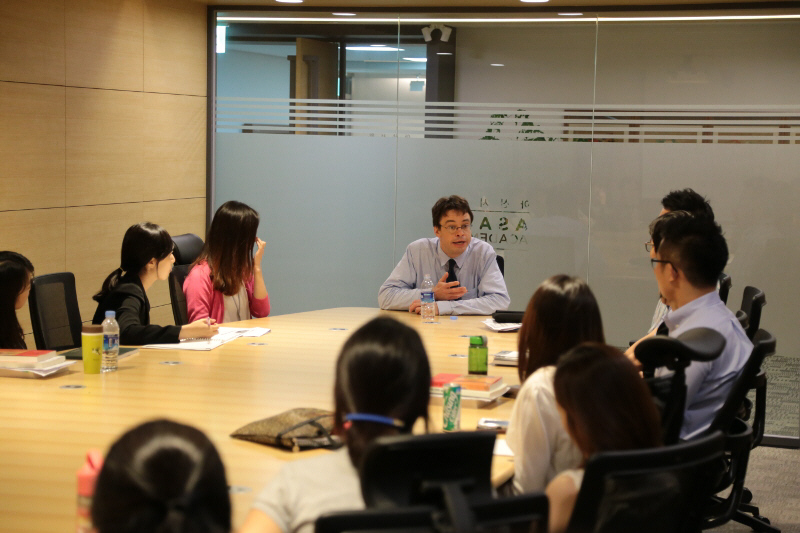
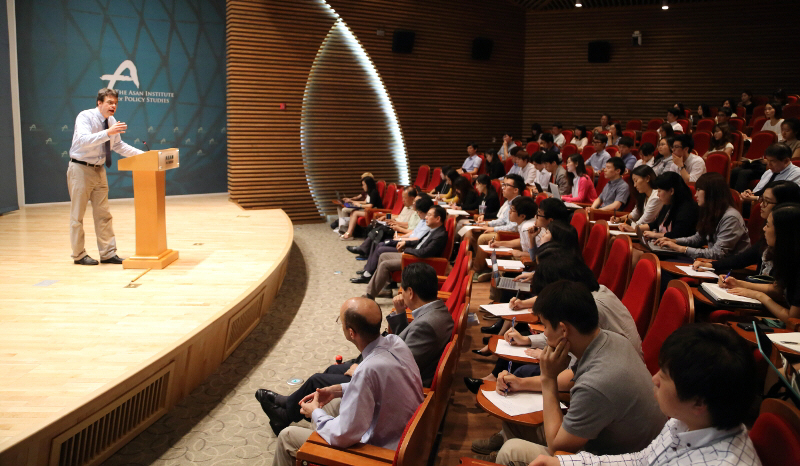
Michael Puett speaks with students about China at the Asan Institute for Policy Studies.

The Asia Institute, in cooperation with our partner Kyung Hee Cyber University, hosted Professor Michael Puett of Harvard University for a one week stay in Seoul (July 16-22, 2013).

Professor Puett is an expert widely recognized for his work on the political thought of ancient China who has begun writing widely about the potentiality for the future of China to be found in its own varied and complex cultural past.

Kyung Hee Cyber University and the Asia Institute hosted three talks with Professor Puett in which he spoke to an audience of students (middle school, high school and college—as well as some adults) about critical issues for youth. The first lecture concerned the meaning of education and study with a focus on what Harvard University education offers as a model.

The second lecture concerned the larger cultural and geopolitical significance of the rise of China for Korea and the world with an emphasis on a long-term, balanced perspective.


Earnest discussion with students.

The third lecture, which also featured Professor John Treat of Yale University and Director Emanuel Pastreich of the Asia Institute, concerned a broad consideration of strategies and approaches to study aimed at today’s youth.

Read more

“Seoul as a Mecca for the Creative Class in the 21st Century” Saturday, September 14th, 2013

The Asia Institute & 10 Magazine Book Club


Present


“A Florence for the New Renaissance: Seoul as a Mecca for the Creative Class in the 21st Century”


Date: Saturday, September 14th, 2013

Time: 2 PM to 4 PM

Admission fee: 5,000won (students enter free)

Place: Haechi Hall in Seoul Global Culture & Tourism Center
(5th Floor M Plaza in Myeong-dong) 

Read more

“Seoul as a Mecca for the Creative Class in the 21st Century” The Asia Institute Talk on September 14, 2013

“A Florence for the New Renaissance: Seoul as a Mecca for the Creative Class in the 21st Century”

The Asia Institute and the 10 Magazine Book Club invite you to a special lecture on Saturday 14th. The speakers will be Emanuel Pastreich, professor at Kyunghee University and director of the Asia Institute & Ogan Gurel, a director at the Samsung Advanced Institute of Technology and visiting professor at SKKU’s Advanced Institute for Health Sciences and Technology.

Emanuel & Ogan will give a presentation entitled “A Florence for the New Renaissance: Seoul as a Mecca for the Creative Class in the 21st Century”

“It was not that long ago that the only internationals you would find wandering around Seoul were missionaries, English teachers and GIs. But that has changed radically over the last few years, with the best and brightest of the creative class flocking to Seoul as the new-found cluster for culture, business, technology and education. What is it about Seoul that makes is a leading contender for the global city, like Florence at the dawn of the Renaissance? What are the blue oceans for internationals looking for unique opportunities? How does Seoul stack up against Singapore, Seoul, Shanghai and Hong Kong? This talk will engage an informed and motivated audience in a frank and inspiring discussion about the true potential for Seoul and what we need to do to make Seoul realize its full potential.”

The second half of the session will be a question and answer session with the audience in which we can ask both guests about their work and experiences of Korea.

Date: Saturday, September 14th.
날짜 : 09월 14일
Time: 2pm to 4pm.
시간: 오후 2시
Admission fee: 5,000won (students enter free)
Place: Haechi Hall in Seoul Global Culture & Tourism Center
(5th Floor M Plaza in Myeong-dong)

Full directions are here

link 

“북한의 숨겨진 위협” (뉴스위크) 2013년 7월 1일

뉴스위크

2013년 7월 1일

SEOUL REPORT – 북한의 숨겨진 위협

가장 시급한 문제는 핵실험도, 미사일도 아닌 토양 사막화다


EMANUEL PASTREICH


오늘날 비무장지대 저편에는 한국만이 아니라 국제사회 전반을 심각하게 위협하는 존재가 있다. 이에 대처하려면 집중적이고 강력하면서도 장기적인 전략이 필요하다. 국제사회를 하나로 규합해 그 위협이 완전히 소멸될 때까지 협력하게 만들 수 있는 전략 말이다.

여기서 말하는 위협이란 대포동 미사일이나 무수단, 노동 미사일같은 대륙간 탄도미사일이 아니다. 북한이 올해 초 국제사회 위협 용도로 실험했던 핵무기도 아니다. 물론 동북아시아의 군비경쟁은 아주 심각하다. 북한으로 인해 향후 다른 나라들까지 핵무기를 갖게 될 수도 있다. 그러나 잠재적으로 그보다 더 파괴적인 위협이 있다. 우리는 아직까지 이 위협에 대해 완전히 무방비 상태다.

그 위협은 바로 무차별적인 벌목과 토양 훼손 탓에 갈수록 넓어져가는 사막지대다. 북한인들의 무책임한 농업 관행은 아무런 식물도 자라나지 못하는 ‘죽은 땅’을 계속 늘리고 있다. 북한에서 사막화 현상은 갈수록 심해진다. 김성일 서울대 교수는 지난 20년 간 북한에서 1만㎢에 달하는 숲이 사라졌다고 추산했다. 이로 인해 땅이 복구 불가능할 정도로 손상되면 끔찍한 홍수와 가뭄이 끝없이 반복될 수밖에 없다.

북한의 사막화는 아시아의 전반적인 추세가 극단적으로 드러난 일면에 불과하다. 아시아 지역은 아프리카보다 더 빠른 속도로 사막화하고 있다. 매년 5000㎢에 달하는 땅이 사막으로 변하며, 중국과 몽골의 땅 중 1300만㎢ 이상이 이미 사막이 됐다. 만약 북한의 사막화가 중국과 합쳐진다면 그 결말은 참혹할 것이다.

사막화는 그 원인이 무엇이든 간에 생태계를 불안정하게 만들고 서식지를 줄여 생물다양성을 손상시킨다. 이런 악영향에는 국경이 없다. 한국에서도 그런 영향은 이미 시작됐다. 중국 북동부에서 형성돼 한국을 거쳐 일본까지 불어가는 황사는 생태뿐 아니라 건강에도 위협적이다. 사막화에 따라 이 문제는 갈수록 심해지는데, 북한에 퍼져 가는 사막지대는 이 재앙을 더욱 가속화할 것이다.

이 새로운 위협은 군사적인 위협과 달리 직접적이고 장기적인 개입만이 유일한 해결책이다. 우리는 북한 주민, 기구, 정부와 함께 문제 해결에 나서는 한편 빠른 시일 내에 그들에게 전문기술과 도움을 제공해야 한다. 한국은 북한의 척박한 토양을 안정화시키기에 충분한 재조림 기술을 가지고 있다. 이는 북한에 중대한 영향을 미칠 수 있다.

무엇보다도 우리는 사막화에 대처하면서 북한 땅에 사는 주민들에게 존경과 염려를 표해야 한다. 북한 정부와 그들의 잘못된 정책이 혐오스럽다고 해서 동아시아의 사막화라는 위협을 외면하면 안된다. 효과적인 정책을 통해 북한인들에게 기후변화 대응책을 가르치는 것이 급선무다.

북한인들은 중국인이나 몽골인처럼 기본적으로 사막화 문제를 다루기 위한 기술을 가지고 있지 않다. 대부분 경우에 지역 농부들은 난방을 위해, 혹은 생활비를 벌기 위해 어쩔 수 없이 나무를 자른다. 이에 대응하려면 기술과 자원 보급이 필요하겠지만 무엇보다도 중요한 것은 환경을 심각하게 파괴하는 소비문화를 바꾸는 일이다. 과도한 방목과 벌목, 토양 훼손은 북한에서 일상적으로 벌어진다. 그런 태도를 부추기는 소비문화가 바뀌지 않는 한 이 위협에서 벗어날 수 없다.

북한의 토양 손실은 B-2 폭격기나 미사일 방어체계로 막을 수 없다. 북한 주민, 기구, 정부와의 긴밀하고 장기적인 협력이 필요하다. 수수방관하고 있을 여유가 없다. 북한 정부는 외교 정책이나 국내 정책을 이유로 국제사회의 제안을 받아들이지 않기 때문이다. 그렇게 파괴된 북한의 생태계는 통일 뒤에도 오래 남아 있을 것이다.

앞으로는 유엔사막화방지협약(UNCCD)이 6자회담에서 중요한 역할을 맡아야 하고, 미 정부 관리들은 사막화의 위협을 비핵화와 같은 수준의 의제로 격상시켜야 한다. 북한에 사막이 퍼지고 있다는 사실을 기초로 북한 위협에 대한 국제사회의 대응을 완전히 다시 설정할 필요가 있다. 한반도가 통일되더라도 북한의 파괴된 환경은 한국과 아시아 지역에 수복 불가능한 손실로 남을 것이다.


link

“주자학의 再발견” (조선일보)

조선일보

2013년 7월 11일

“주자학의 再발견”


임마누엘 페스트라이쉬


대한민국 사회에는 주자학에 대한 광범위한 고정관념이 존재하고 있다. 즉 주자학은 구시대의 사유 체계로서 서양 문화와 제도 유입을 바탕으로 이룩한 현대 한국에서는 더 이상 재고할 가치가 없는 이론이라는 것이다. 더구나 지난 20세기 전반기에 겪었던 일제 강점이라는 비극적 경험 때문에 주자학을 이러한 역사적 질곡의 주요 원인으로 인식하며 더더욱 멀리 여기게 되었다. 그러다 보니 중국이나 일본의 유학자들 이상의 철학적 경지를 이루었던 퇴계 이황이나 율곡 이이와 같은 분들의 위대한 사상조차도 무지와 무관심 속에 역사 속으로 사장되어 버리는 것이 현실이다.

이런 말도 들었다. “조선의 양반들은 책을 읽는 데에만 시간을 소일했을 뿐이고 실질적으로 사회에 기여한 경우는 거의 없다. 양반들의 이러한 실수 때문에 한국은 일본에 비해 근대화에 너무 뒤처지게 되었고 서양 과학이 한참 후에 소개되었을 때에야, 즉 일본의 한국 식민 지배를 통해서나 실질적 근대국가의 성장을 시작할 수 있었다.”

비록 조선의 양반

Read more

Pursuing opportunities with North Korea

I worry about North Korea and its future. But I also have high hopes for North Korea and its potential.

It is common sense that the way to solve the North Korean crisis is for North Korea to accept the norms of the international community and become a stakeholder.

But I would like to suggest that maybe the solution to the North Korean problem could also be the opposite approach. That maybe if we change our basic assumptions about international relations and security and how we address difficulties and disagreements, a solution can be found somewhere quite unexpected.

Perhaps the solution is for us to rethink the nation state as the basic unit of international relations, or to consider the environment, and other serious non-traditional threats, as the primary security issues for our future, and to redefine the role of finance, trade, technology and consumption in our society. Maybe the solution to the North Korean problem can be found in Peter Drucker’s famous adage, “Don’t solve problemsPursue opportunities.”

We should not be obsessing about how to solve North Korea’s intractable problems. Rather we should put forth a bold and inspiring vision for what possibilities are out there in Northeast Asia and encourage everyone to reach our for something beyond him or herself. When that happens, when a new hope takes root, the walls of separation will fall down, not because we tear them down, but because they no longer serve any purpose.

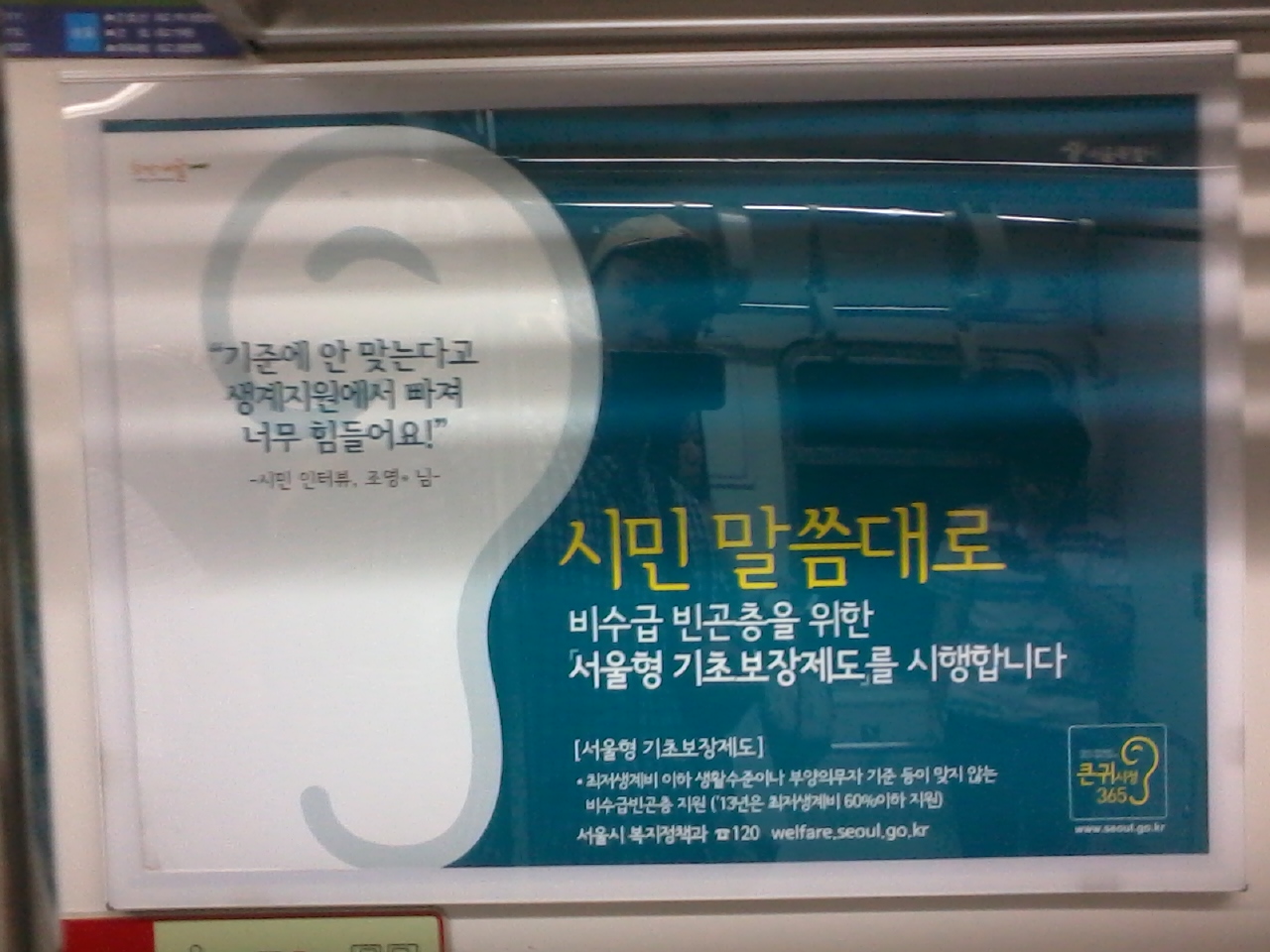
Seoul’s “The Big Ear” program to supply the basic needs for the permanently unemployed and impoverished

Sign for Seoul Metropolitan City's "The Big Ear" program in Seoul Metro.
Sign for Seoul Metropolitan City’s “The Big Ear” program in Seoul Metro.

Here is an ad for Seoul Metropolitan City’s “The Big Ear” program to help the poor in the city.  The “Big Ear” suggests a government that listens to everyone without exception.


The caption is translated below:


“I was told that I do not meet the standard and lost all economic support. It is just so hard!”(comments of citizen Cho Young-XX)

Following the words of citizens.


Seoul is carrying out a unique “Seoul Style” basic security system for all the unemployed and impoverished.

The program is known as “The Big Ear”


Korean

Synopsis of Emanuel’s Sci-Fi Thriller “Climate Change & Causality in Pyongyang”

Here is a rather humorous synopsis for a science fiction movie I would like to make. If  anyone is interested, do let me know.


“Climate Change & Causality in Pyongyang”


Synopsis


Section One

Park Sunja is a rising star in Korean society. Her father, once the prime minister, is a charismatic figure who encourages her to be the best and she has taken every opportunity. She has not only received the best education at Seoul National University and Princeton, and has the best network in Seoul, she also has a certain passion and political skill that makes her stand out even among Seoul’s best and brightest.

Maybe Sunja is different because of a childhood experience: her mother and father had a bitter split up when she was nine which left her living in relative poverty with distant in-laws. That experience taught her something about how the other half live and makes her more aware, more curious, about the rest of the world than her privileged friends.

Because Sunja spent much time abroad as a privileged child, she speaks English as well as, or better than, Korean. The dialog in the movie is split between English language scenes with international friends and Korean language scenes with Korean friends. Often Sunja seems to have trouble understanding what both the international friends and Korean friends say. That slight “lost in translation” quality is important part of the story. 

Read more