EAST ASIA YOUTH LEADERSHIP FORUM on Climate Change (The Asia Institute and Kyung Hee Cyber University)

AI logo small

&

kyung hee cyber u 

PRESENT

THE 1ST EAST ASIA YOUTH LEADERSHIP FORUM


“CREATIVE RESPONSES TO THE CHALLENGE OF CLIMATE CHANGE”


December 20th & 21th 

中文

日本語

한국어 


The next generation is facing the challenges and opportunities born of a rapidly globalizing world, climate change and the rise of the Internet. It is in this context that Kyung Hee Cyber University and The Asia Institute will host a forum exclusively for teenagers from Korea, and throughout East Asia, in which they can gather to discuss in earnest the various issues that the world faces, and while interacting with renowned experts in related fields, come up with their own proposals for a better world for themselves and future generations. This unique event can serve as a critical moment in their lives, a stepping stone as they set forth to become global leaders.


Objectives of the Forum

To give thoughtful high school students first-hand experience participating in a world-class international forum, thereby allowing them to grasp the significance of international to a degree not possible in the classroom, and have an opportunity to express their opinions on important policy issues in a serious debate.

To listen to lectures by world-renowned experts both online and offline, thereby gaining new insights into possible solutions to current global challenges; to actively participate in debates concerning the most recent developments into a broad range of fields from politics and economics to technology and culture.

To establish an international network that includes committed students from other countries and schools throughout Asia for the purpose of building a brighter future of all.
Read more

“동아시아, 무기여 잘 있거라” (중앙일보 2014년 11월 22일)

중앙일보

동아시아, 무기여 잘 있거라”

2014년 11월 22일

임마누엘 페스트라이쉬

이달 중순 중국 베이징에서 열린 아태경제협력체(APEC) 총회에서 미국과 중국은 기후변화 대응 문제에 대한 협력을 약속했다. 이는 동아시아 지역에서 긴장이 높아지고 있는 가운데 건설적인 미래상을 보인 것이고 희망도 보여준 것이다. 그러나 APEC에서의 낙관적인 연설과 선언에도 불구하고 많은 전문가는 여전히 동아시아 지역의 미래를 우려하고 있다. 한·중·일 세 나라 간에는 영토분쟁과 역사 문제, 그리고 자원 문제 등이 갈등의 근원으로 존재하고 있고 이에 따른 세력균형 문제와 군사비 지출 폭증은 심각한 양상을 보이고 있다. 동아시아 안보 모순은 누구에게도 도움이 되지 않는다는 점에서 비극적이다. 그렇지만 평화를 위한 방안이 아직 존재한다는 점에서 희망은 남아 있다.

 동아시아 평화 논의의 출발점은 이 지역 엘리트의 각성이다. 현재 동아시아 지역의 엘리트들은 전쟁의 참상을 경험하지 못했거나, 전쟁을 막아야 한다는 교육을 제대로 받지 못했다. 동아시아에서 위험하고도 불필요한 갈등이 심화되는 배경의 하나다. 오늘날 아시아는 제1차 세계대전 직전의 유럽과 유사한 행태를 보인다는 점에서 한탄할 만하다. 유럽 국가들은 제국주의 시대 모순이 극대화된 세계대전을 두 번이나 겪으면서 수천만 명의 생명이 살해당하는 장면을 목도하고, 핵전쟁이 얼마나 무서운 것인지를 인식한 뒤인 1970년대가 돼서야 전쟁 예방을 위한 협상에 나선 것이다.

 한·중·일 지식인들이 책임감을 갖고 새로운 안보 패러다임을 주장해야 하는 시기를 더 이상 미룰 순 없다. 구체적인 평화질서 구상과 군축 방안을 본격적으로 검토해야만 한다. 사실 동아시아에서 평화를 논의하기에 적당한 다자 회의체는 이미 존재하고 있다. 6자회담은 북핵 문제를 다루는 회의체지만 9·19 공동성명에서 동아시아 평화 가능성을 탐색하자는 합의를 이룬 적이 있다. 동남아국가연합(아세안) 지역 안보포럼이나 안보협력회의도 한·중·일 3국의 평화 문제를 논의할 수 있는 무대가 될 수 있다.

Read more

Lotte World Mall

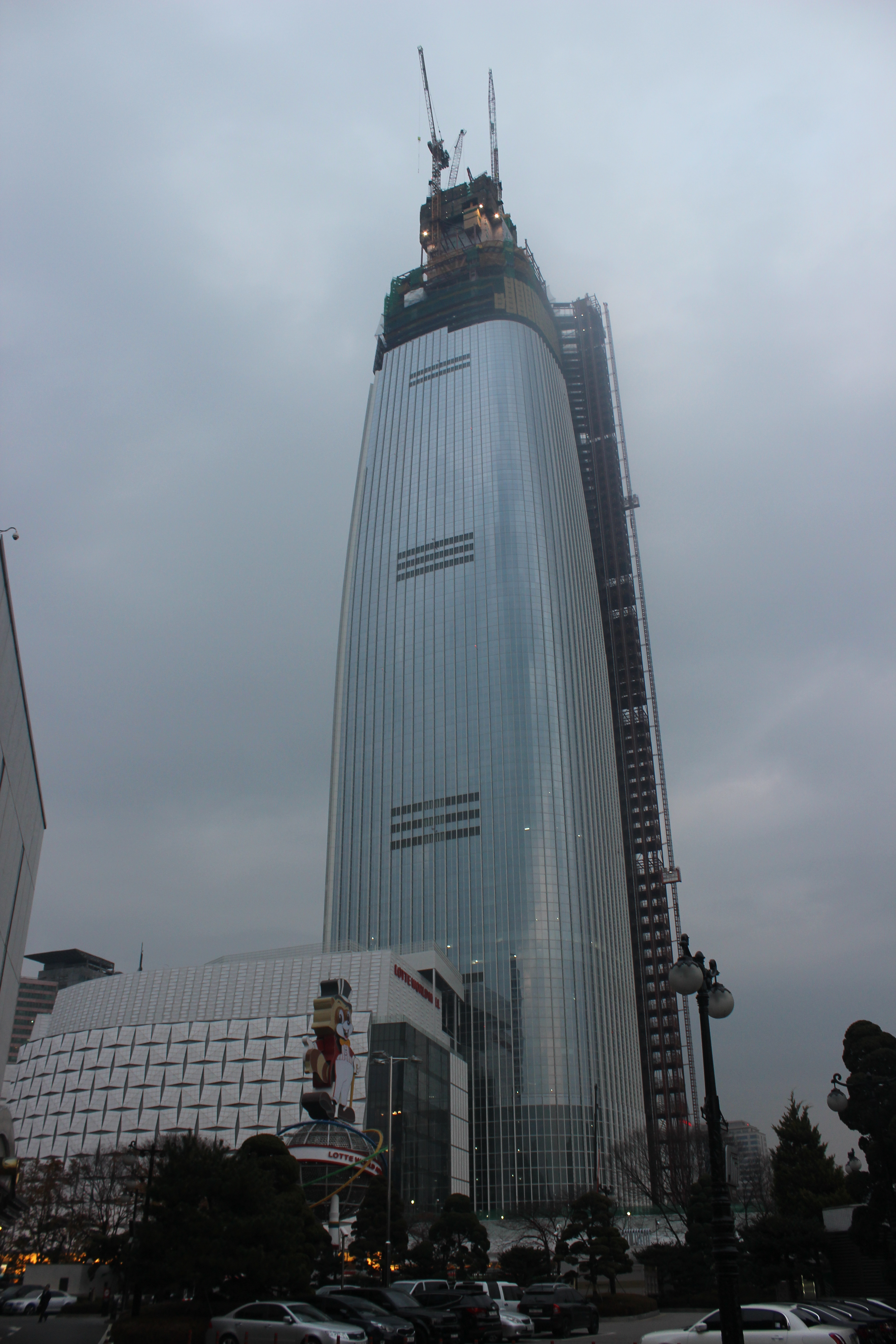
I had a chance to visit the new Lotte World Mall which recently opened after various delays related to questions concerning the safety of the building’s construction. It is a completely self-contained universe on a scale unlike anything I have seen in Seoul. adjacent  to the Lotte World amusement park, Lotte World Mall (distinct from the Lotte Department Store) has elaborate artistic displays and cultural elements that mix entertainment and shopping.


The towering Lotte World Mall is visible from just about anywhere in Gangnam.

Read more

Lecture at the Multicultural High School Dasom in Jaecheon

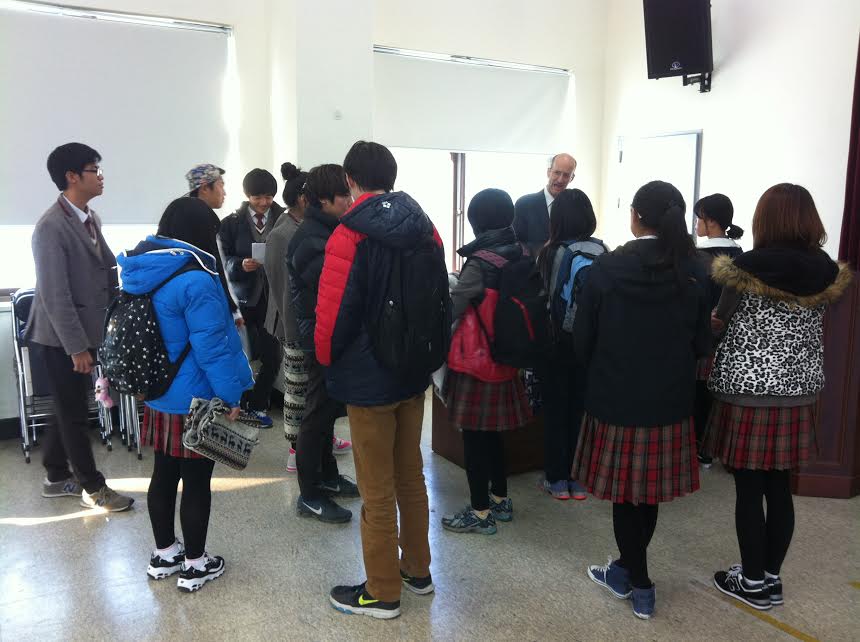
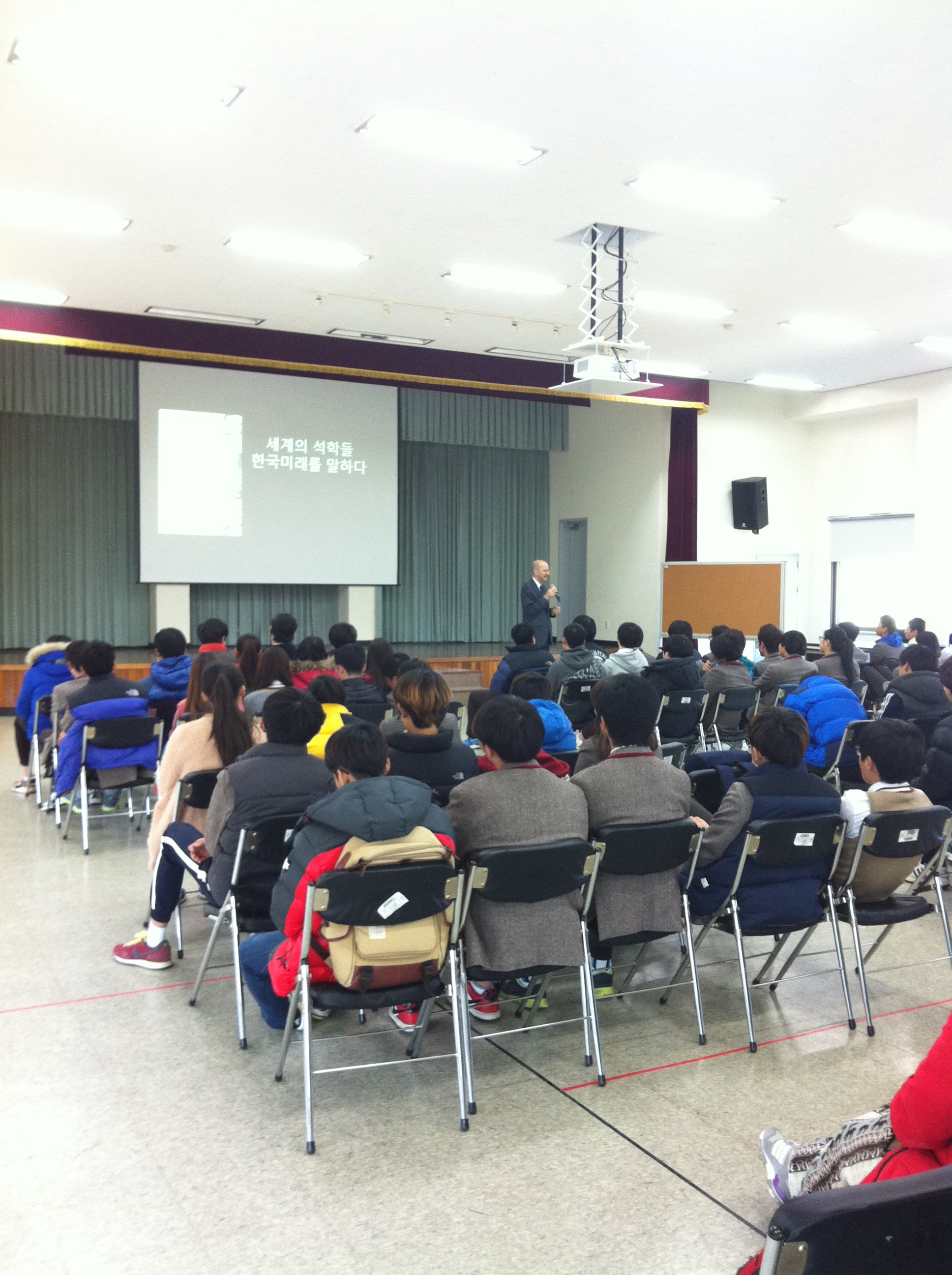
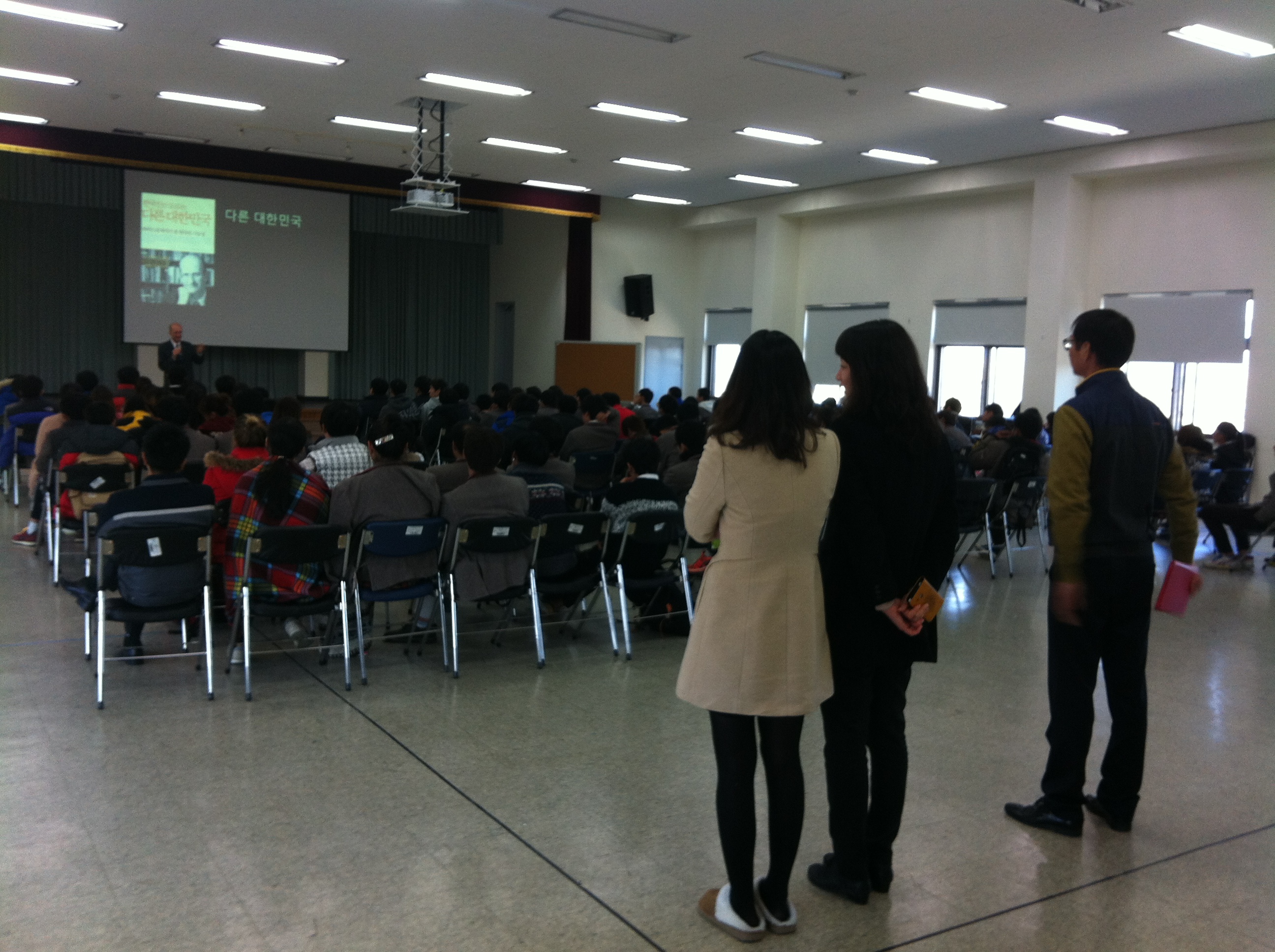
I had the honor of delivering a talk at Dasom High School in Jaecheon Korea on November 3, 2014.  The talk related myexperiences working in Korea to a group of students for whom many have a non-Korean mother and a Korean father (although Korean students and other foreign students were also included in the audience). Dasom High School was opened several years ago by the government as part of an effort to increase opportunities for multicultural students (which in Korean means those with one parent Korean and one parent non-Korean) in society.

The talk focused on Korea’s tremendous appeal and potential as a multicultural society. I wanted to suggest that those with mixed parentage may well go on to play a central role in Korean society as it evolves in the years to come.

I was deeply impressed by the sincerity of the students and their honest desire to learn and grow. I do hope many will join the Asia Institute.

Emanuel speaks to students at Dasom High School about Korea's tremendous potential as a multi-cultural society. The discussion with the students was an inspiring opporunity to discuss how those from other countries and those with mothers (or fathers) from other nations could play an increasingly important role in the nation.
Emanuel speaks to students at Dasom High School about Korea’s tremendous potential as a multi-cultural society. The discussion with the students was an inspiring opportunity to discuss how those from other countries and those with mothers (or fathers) from other nations could play an increasingly important role in the nation.


Several of the teachers at Dasom High School watching from the rear.


Emanuel most enjoyed the direct discussions with the students.

Business Korea

“Could the Past be the Focus for Korea-China Exchanges in the Future?”

November 5, 2014 


Emanuel Pastreich


As Korean and Chinese economic exchange becomes more extensive, it is essential that a broader range of cultural and educational programs for collaboration be established that assure a broad range of interaction between individuals and smaller organizations, creating a tightly-knit fabric of ties that will bind the two countries together.

Such exchanges must be carefully organized and should focus on long-term projects. Sadly, many exchanges between Korean and Chinese scholars or government officials are limited to formal meetings or dinners and carry no assurance of long-term relationship building. Actual intellectual exchange, even when there is much for both sides to learn, is often quite limited as well. Therefore, research projects and collaborative initiatives should be in 5-year or ten-year units and be designed in such a manner as to assure maximum direct collaboration (conversation, joint papers, exchanges of opinion) on common projects between Korean and Chinese students, professors and policy makers.

Moreover, the projects that Korea and China develop together must be part of a larger project aimed at creating a new civilization that will lead us in a new direction in an age of economic and environmental crises. To say that the purpose of cooperation must be relevant to the world is not to suggest that cooperation is not grounded in the cultures of the two countries. Rather, we must discover the hidden treasures in these two cultures and introduce them to the world.

Our project is to reinvent civilization itself, to bring together the strengths of the Western tradition in technology and science with the emphasis on sustainability, social harmony, and a long-term perspective that is found in the Eastern tradition.

Above all, research between Koreans and Chinese will search for aspects of the great traditions of the past that can be concretely applied in the current day.

An excellent place to start is with joint research into the topic of government programs and policies from past dynasties in China and Korea to see how they can be applied in the modern era. In light of the fact that Korea and China have produced several of the best administered and innovative systems of governance in world history, such a project for joint research and development offers tremendous opportunities.

Here are a few concrete suggestions for what might be most meaningful.

Good Governance, and Checks and Balances

The use of checks and balances within the government, the use of the examination system, and centuries of policies for managing the relationship between the central government and local government in China and Korea offer tremendous lessons for contemporary governance. Although we do not normally associate democracy with pre-modern Korea and China, a powerful argument can be made that China played an enormous role in shaping what we call democracy today, and that “democracy” is best seen as a convergence of the Greek concept of the citizen with Chinese traditions of civil service and the rule of law.

More specifically, there are numerous approaches to civil service exams, placement, and rotation from China and Korea that could be effectively employed in countries around the world, with some modification, to address contemporary problems of corruption and assure good governance. The various dynasties of Korea and China have remarkable systems for bringing family units into the governance structure, and also for assuring autonomy at the local level. An extensive comparative study of best practices for government from multiple dynasties in China and Korea could be the basis for concrete proposals for government reforms in the current age.

The examination system is particularly appealing as an effective manner of combating corruption in government. Both China and Korea offer concrete examples of how the examination system can be used to introduce a new generation of motivated and dedicated young people in government. As China looks to the future, it is clear that a reinterpretation of the Chinese past will be most effective in influencing future policy, rather than an appeal to so-called “Western” models that are culturally distant and often problematic. An objective assessment of the Korean and Chinese past may be the best approach to innovation.

Diplomacy and International Relations

The diplomatic and security architecture of East Asia seems to be limited by the precedents of Western diplomacy. Too many practitioners of international relations in Asia are quick to assume we are somehow heading back to a Cold War, simply because they do not know any other precedents. They fall back on the Six Party Talks because they do not know that there have been other approaches used in the past. But the Song Dynasty’s complex relations with other nations, or the diplomacy of Baekjae and Goguryo, and previous dynasties offer examples of stable and peaceful relations between the nations of East Asia that are different from the Cold War system and offer peaceful solutions to conflicts. The joint study of diplomatic history by Korean and Chinese scholars can produce new inspirations for how current diplomatic conflicts can be resolved. Overall, East Asia has been far more successful at maintaining peaceful relations between nations than has been the case in Europe over the last six hundred years.

There are also precedents from the status of Ryukyu Kingdom, from the Liao, and from the Northern Wei that could be put to good use as we try to imagine what creative new possible power relations can be established in the future to reduce tension and misunderstandings.

Sustainability and Agriculture

China and Korea offer tremendously valuable precedents for organic farming based on a long-term perspective of soil, water, and human populations. Both countries have a strong tradition of effectively producing food using organic farming that supported larger urban populations with no artificial fertilizers. As the world seeks a way back to stable ecosystems, there is much we can learn and apply from the practices of East Asia. Seoul, for example, was a near-perfect eco-city until the 20th century, using an absolute minimum of energy and achieving near 100 percent recycling. There are many treasures in the past of China and Korea awaiting our discovery.

Education and Research

Traditional China and Korea offer many innovative and effective approaches to education for children and adults, many of which can be used in the current age to improve our education systems. Traditional approaches to reading, to memorization, to the practice of composition, and to scholarly debate from different ages of China and Korea can inspire new educational innovations.

Moreover, traditional Confucian education made ethics central in education to a degree that has been lost in modern society. Such an awareness of the ethical implications of learning should be reintroduced into our education system.

The Seowon academy system (Shuyuan in Chinese) of Korea and China, evolving along different trajectories, offers suggestions as to how the university can be re-invented so as to make it again a center for scholarship, serious debate on issues of our age, and ethical behavior. Moreover, the individualized approach to student evaluations in traditional education was far more human than what we see now. Moreover, the life-long commitment between student and teacher makes the traditional approach to education of great value to modern students and teachers.

In a sense, we are talking about both a descriptive and a prescriptive research project for Chinese and Korean scholars, something similar to what happened in Europe in the Renaissance when the best of Rome and Greece were brought into the modern world. China and Korea are not moving back to the past, they are looking for hints of new policies, technologies, and institutions to meet the challenges of the future.

As China and Korea reach a new level of technological and institutional complexity, they are compelled to find continuity with the pre-modern tradition. This research project can provide contemporary policy makers with concrete hints for excellence in multiple fields to be found in the past.

Read more

“Beginning with a job revolution” (JoongAng Daily, November 4, 2014)

JoongAng Daily

November 4, 2014

 “Beginning with a job revolution”


Emanuel Pastreich


Forty years ago in Korea, a 22-year-old woman would, for the first time, put on makeup and try on expensive dresses as she prepared for marriage. But these days, young women spend an infinite amount of time and money dressing up for what seems like a life-altering event.

But it’s not for a wedding – in fact, many of them doubt they will ever marry and enjoy a family – rather it’s for an ineluctable rite of passage: the dreaded job interview.

That’s right. The stress and tension once associated with weddings now result from a short meeting with a complete stranger that is required for a potential job. And this ritual has only become more central in the lives of young people over the past three years as the economy grows worse. Cosmetic companies, plastic surgery clinics and clothiers make implicit reference to this rite in their advertisements. And the young and inexperienced latch on to this event as a promise of stability in an increasingly disorienting and uncertain world.

As a professor, I have watched the emergence of this cult with dismay. I see young men and women spending large amounts of money practicing for interviews, having professional photographs taken for their resumes and otherwise neglecting their classes and friends to prepare for a single moment, supposedly in which their futures will be determined by the most superficial of criteria. It seems as if the university can do nothing to help our graduates to thrive in the world other than to help them build up their experience with summer internships. A professor is not someone who can offer advice for a lifetime. Rather, we provide just a few required documents in the process.

Sadly, many students flood into graduate schools in the hope that continued studies will somehow afford them some certainty in their lives – even though graduate school cannot provide much in the way of benefits. Permanent positions for students with master’s and doctorate degrees are decreasing.

So the faculty sits by watching helplessly as our students are forced to remodel their lives to match the requirements of the dreaded interview. And yet, if we could think big for a change, if we could use our imagination, we could come up with a new approach to education and the future of our children.

Imagine if universities provided a job to students along with their diploma, rather than simply pushing them out into the cold world. Although at first glance such a proposal may seem unrealistic, if we rethink the nature of education, something similar may be possible.

The program could work something like this: Students entering university would be given a chance to create a venture company together with classmates who have similar or complementary interests in their first or second year of study. The university would help them create this company based upon their studies, their strengths and emerging business opportunities. The venture company started by the students would then permit the students, before graduation, to explore new concepts and consider new approaches to business, to manufacturing or to services.

Those interested in public service could form their own NGOs or other small organizations with their peers. Over the course of four years as an undergraduate, students would learn from their subjects, but also learn how to run the small venture company they created.

Come graduation, the students – whether in groups of three or 10 – would be launched into the world with both a diploma and a venture company to make their way and find their future. The venture company that they are a part of would be subject to strict demands from the university and from financing organizations, but those demands would be no more stressful than the demands made of graduates today, and more helpful to the students than ritual interviews.

There are two key shifts that must take place before such a plan is viable. The first is that Korea must have a policy to assess people’s careers on the basis of their skills and their experience. It is entirely logical that someone who has experience starting his or her own business should be highly evaluated for future employment regardless of the scale of the effort. We should not assume that the only road to success is through a big mainstream corporation.

The other change required is in financing itself. Many youth are deeply discouraged about their futures simply because they cannot find the means to realize their dreams. If banks were required to commit a significant part of their lending and financial assistance to people under the age of 30 (say, 30 or 40 percent), we could see a significant change in the mood among graduates. If they had an extremely good chance of receiving funding for their work and it was relatively easy to start a company for someone in his twenties, the entire nature of getting a job would change. You could essentially create your own job.

Such a move to create entrepreneurs on a massive scale among those under 30 is the best approach to revitalizing the Korean economy and bringing in new ideas and approaches on a massive scale. It is not the fault of professors that Korea is not producing the next Steve Jobs or Bill Gates in great numbers. That state is the result of the impossibility of youth realizing their ideas.

Moreover, I have heard many explanations for the factors behind the “Korean Miracle” of the 1970s and 1980s, but oddly the issue of age is rarely mentioned. When Park Chung Hee took office in 1961, he was 44; when Nam Duck-woo became finance minister in 1969, he was 45. They hired many far younger than themselves.

Shifting the entire process of developing business and financing opportunities down to those in their 20s and 30s would have a tremendous impact on Korea’s economy. It would also bring new hope to graduates, in which they could play a direct and significant role in society.

Read more

Emanuel’s talk on Korean and Chinese literature at Association for Asian Studies (Friday, March 27, 2015 @ Chicago)

Association for Asian Studies


FRIDAY, 27 MARCH 2015

10:45 AM – 12:45 PM

”Materiality and Writing: Circulation of Texts and Translingual Practices in Late Chosŏn”


Talk by Emanuel Pastreich


“Record of the Hanru Pavillion:” How an Alien Vernacular Invigorated a Korean indigenous Drama”


Organizer: | Jamie Jungmin Yoo (Chinese Academy of Social Sciences)

Read more

The Asia Institute Newsletter (March-October 2014)

AI logo small

The Asia Institute Newsletter

March-October 2014


Events


Asia Institute Seminar with John Feffer, Director of Foreign Policy in Focus (Asia Institute senior associate) and Emanuel Pastreich (Director, the Asia Institute)

“Climate change and the future of East Asia: First steps towards a new civilization”

October 30, 2014

This seminar was moderated by Jimin Kim, a high  school student from Gangnam Internatioanl School and intern at Asia Institute and Zhao Xinyue, staff member of the Asia Institute’s China program and a graduate student, was respondent. The seminar was an honest discussion of what needs to be done to respond to climate change in terms of culture and policy. The event featured an open discussion with an audience consisting of many young people.


Asia Institute seminar with Stephen Costello, Producer at Asia East Policy Roundtable

“South Korea’s Role in Northeast Asia”

23 June 2014


Stephen Costello gave a thoughtful assessment of contemporary Asian policy in Washington D.C.  and the potential for Korea to play a larger role.


The Asia Institute in Korea TAIK

27, September, 2014

Students and Researchers give short presentations on their ideas for our group.

Gabriel Pettyjohn- The Asia Institute Researcher

 “Cosmopolitan Citizenship …… And, Thinking””.


Kylie Youk – Korea International School

“The Blending Process”


Chanwoo Oh –Korea International School

“How To Breathe”

Read more

贝一明 演讲 于 复旦大学 中文系 (2014年 11月 24日)

Fudan_University


复旦大学

中文系


“中国通俗小说之影响于日朝”


贝一明 (Emanuel Pastreich)

亚洲研究所 所长(庆熙大学 国际大学院 副教授)


2014年 11月 24日(星期一)下午  3:00 至 5:00

地点: 复旦大学 光华楼 西主楼 1001 会议室


贝一明的介绍文