“The Mannerism Threat ” (Emanuel Pastreich November 23,2015)

JoongAng Daily

“The Mannerism Threat ”

Nov 23,2015


Emanuel Pastreich


I am deeply impressed with the level of the scientific research in Korea and by the quality of the products Korea produces. I have witnessed first-hand just how hard Koreans work to design and fabricate increasingly sophisticated products with global appeal.

At the same time, however, I fear that a mannerism is creeping into the thinking of Koreans when it comes to the development of new industries that will seriously undermine all of their hard work in the most profound manner.

When I use the word mannerism, I am not referring to art of the high renaissance, but rather to an obsession with the virtuoso command of style within a set genre, a tendency to value minute details over the grand vision that results in myopia and a profound cultural stasis. Specifically, mannerism refers here to an obsession with the details of a certain product and a turning away from the social and economic significance of the product itself.

The field of smartphones is typical of the new mannerism in industrial design. These days we find engineers working around the clock to add new functions to smartphones that are of minor functional significance and do not represent the development of a new field or concept. 

Read more

TAI Seminar: “Endless war, climate change and the refugee crisis”

TAI Seminar

“Endless war, climate change and the refugee crisis”

November 22, 2015


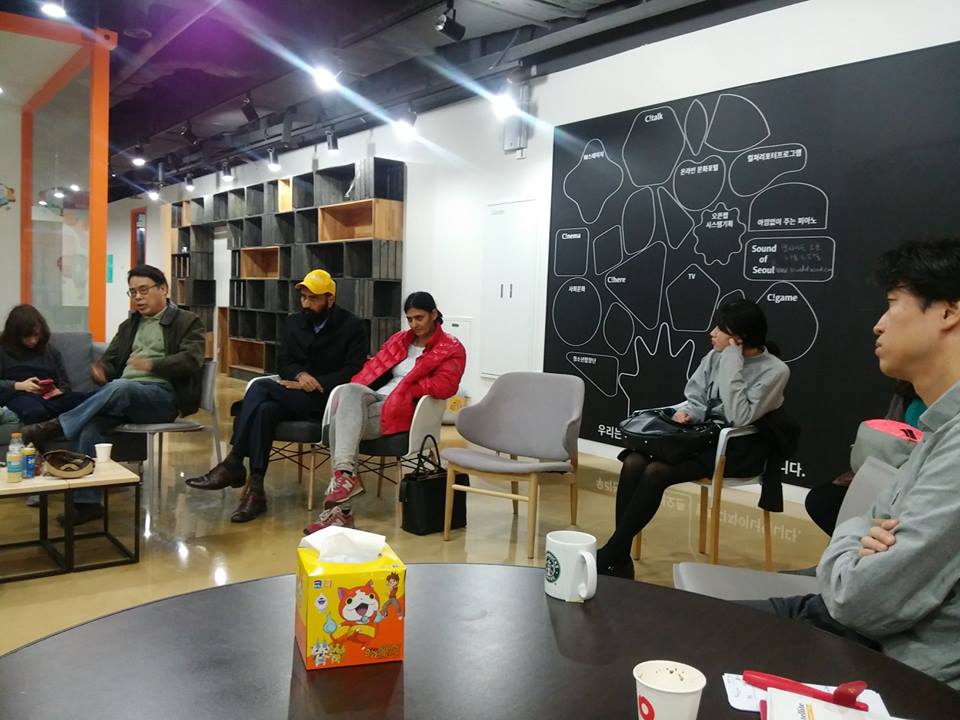
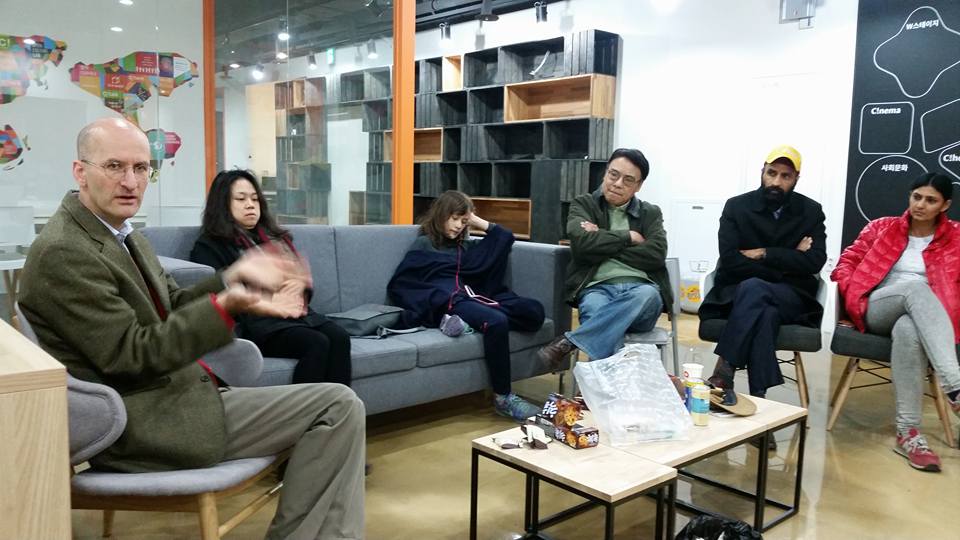
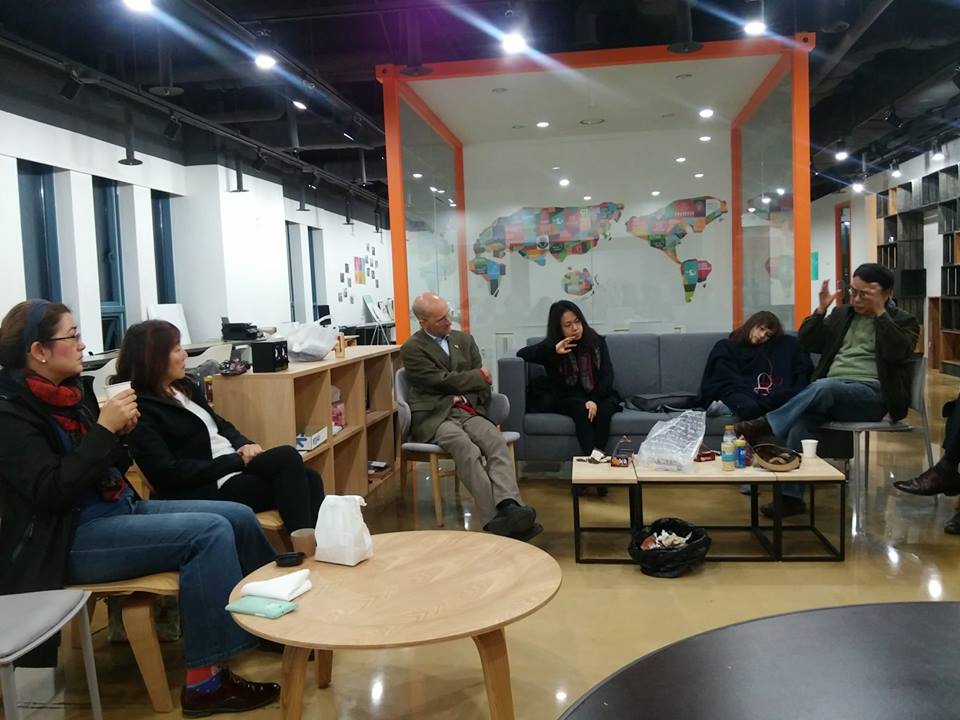
The Asia Institute held a seminar today (November 22, 2015) on the topic of “Endless war, climate change and the refugee crisis” at WCO. The seminar was attended by about fifteen people and was one of the most thoughtful discussions of contemporary issues I have attended recently. The larger implications of the massive immigration to Europe we considered in depth and the seriousness of this situation for Korea was also explored.

12239734_10153840662882932_6362814703880529585_n

Dr. Lakhvinder Singh, a long term friend of the Asia Institute spoke of just how serious the problem of refugees and the endless wars going on has become and the relative ignorance that we find in Korea of the danger of losing the current economic situation that the country enjoys. He called on Korea to move beyond its indifference and promote a culture of peace aimed at the world saying that “Korea’s time has come.” Dr. Singh proposed that we start a peace movement here, and I asked him to organize regular seminars for us.


Yoojin Jung of the Asia Institute strived to maintain objectivity, asking that we be careful in our use of terms and avoid conflating the refugee crisis with the problem of climate change without more substantial research. Professor Choi Mulim of Seoul National University spoke at length about problems with Korean detachment from international issues and spoke forcefully about the need to move forward.

12286086_777828749006614_1913585574_n12270500_777828742339948_482182157_n

Dr. Seo Sangdae spoke about the serious risks for Europe of having such large numbers of people form an entirely different culture suddenly in their midst.


We were joined also by Pang Eunmi of the Asia Institute, Leslie Song, a political strategist from the United States, Sonja Glaeser, Professor Kim Hyungrul, chairman of the Asia Institute, and about six students from Sookmyung University who have been working on the issue of refugees with Professor Kim.


A Visit to Gabriel House

A Visit to Gabriel House 

November 22, 2015

Emanuel Pastreich 

I had the chance to volunteer with my daughter Rachel today at the Gabriel House (가브리엘의집) near Namsan for about three hours. We did not know anything about Gabriel House before we arrived and simply assumed it was an orphanage (the Korean term for a foster home as many of the children in so-called “orphanages” have parents who simply cannot, or will not care for them). But Gabriel House is a Christian home dedicated to caring for children with severe mental disabilities such as autism and retardation. Some of the children were capable of speech, but no small number of them sat alone, some banging their heads against the walls.

It was hard work and a bit of a shock for my daughter who had not had such an experience previously. But it was extremely valuable and I hope to go back again soon. I know from my previous experience that if you do not go back repeatedly, you cannot make much of a difference to children in such a situation.

I volunteered with autistic children for years back in graduate school, both in the United States and in Korea, but it had been some twenty years since I had done so (although I have volunteered with foster children in Korea more recently). I realized that I have become much more stand-offish and full of myself over the years. I have not had to work with people who require real attention and who you must feed and clean and care for. So it was extremely difficult to start that work up again after that many years.

I was also profoundly aware of how alone these children are. Not only that their disabilities cut them off from the world, but that they do not have a family around them to give them attention, negative and positive, day in and day out. I found that just sitting next to the children was the best that I could do.

The first boy I worked with was extremely difficult and I eventually left him because I could not make any progress at all. But I found a few other young children with whom eye contact was possible and even occasional smiles. Perhaps I should have just stayed with the first boy, but there were some fifteen children and not that many volunteers.

I also was forced to think about just how little I understand about the world. I thought to myself first about how little these children understand about the world we live in, from climate change, to economics to geopolitics. But after contemplating this angle for a few minutes, I was led to the conclusion that in fact in the larger scale of things I am much closer to these kids than I imagine as there is so much in the universe, in my own society that I simply do not understand.

太阳能丝绸之路

我多考虑过现在中国计划的丝绸之路经济带与海上丝绸之路。 我有一个很简单的想法。

我想最重要的方面就是不要打扰大自然不要迫害生态。一路一带是代表一个新的中国。而且象征一个新的文明从中国开始。

所以我们应该多主张太阳能丝绸之路,


太阳发电给所有的市民是等于给他们希望。


“한국 산업의 매너리즘 위기” (중앙일보 2015년 11월 21일)

중앙일보

“한국 산업의 매너리즘 위기”

2015년 11월 21일


임마누엘 페스트라이쉬


한국의 과학기술 수준과 한국 제품의 질에 감탄하곤 한다. 사실 한국인들은 갈수록 정교한 제품을 디자인하고 제조함으로써 세계시장에서 큰 인기를 끌고 있다. 필자는 그 생산 과정을 직접 두 눈으로 지켜봤다.

하지만 다른 한편으론 우려도 금할 수 없다. 새로운 산업의 개척을 가로막는 뿌리 깊은 매너리즘 때문이다. 그대로 내버려뒀다간 그간 한국이 이룩한 놀라운 기술 발전을 심각하게 저해할지도 모른다.

여기서 말하는 매너리즘은 르네상스 시대의 고상한 예술 장르가 아니다. 바로 주어진 특정 장르에 매몰된 채 스타일만 바꾸려는 습성을 가리킨다. 희망찬 미래산업을 향한 원대한 비전보다는 기존 제품의 디테일한 면에 집착하는 경향 말이다. 이렇게 되면 근시안적이고 심각한 문화적 정체로 이어질지 모른다. 특정 제품의 세부적인 면에 과도하게 집착해 그 제품이 갖는 보다 큰 사회경제적 의미를 무시하면 그렇다는 얘기다.

산업디자인 분야에서 나타나는 새로운 형태의 매너리즘은 스마트폰에서 쉽게 찾을 수 있다. 요즘 한국의 수많은 엔지니어가 새로운 기능이 첨가된 스마트폰을 만들기 위해 하루 종일 연구에 매달린다. 그러나 몇 가지 사소한 기능만 첨가될 뿐 새로운 분야 개척으로 이어지진 않는다.

가령 시중에는 액정화면이 휘어지거나 사용자의 손이나 눈의 움직임에 따라 반응하는 광학센서가 부착된 스마트폰이 출시됐다. 자동차의 경우 NVS(소음, 진동, 견고성) 분석 기법을 통해 운전자의 승차감이 좋아지고, 엔진의 효율성이 높아지며, 차 섀시도 충돌 시 충격을 크게 줄여준다.

편리성 향상에 초점을 맞춘 이 모든 노력을 십분 인정한다. 그러나 이런 종류의 혁신은 휴대전화이건 자동차건 모든 제품이 영원히 생산될 것이란 전제 아래 이뤄지는 세부적 변형에 불과하다.

한때 한국에는 자동차나 휴대전화가 없었다. 그렇다면 미래 어느 시점에 한국에서 자동차나 스마트폰이 더 이상 쓰이지 않을 가능성도 부인하기 어렵다. 그뿐 아니라 기존의 스마트폰이나 자동차 기술을 이용한 전혀 다른 제품과 서비스가 생길 수도 있다. 생태학적으로나 문화적으로 보다 더 건전하고 수익성 높은 제품들 말이다.

Read more

Public events at the Paris Climate Summit prohibited

Here is today’s notice from 350.ORG which is organizing a protest on the occasion of the COP Meeting in Paris.

In a sense the content is entirely predictable. We are being led down a rabbit hole and away from addressing the most serious security threat in history. Now I think the significance of recent developments should be apparent.

Quote:


Yesterday, we got some disappointing news. Citing security concerns, the French government has prohibited many of the Paris mobilizations and events connected to the upcoming climate summit from going forward — including the massive march being planned for November 29th.

This is a heavy blow, especially for the many organizers who have been working around the clock for months to bring hundreds of thousands of people out into the streets of Paris. It’s a heavy blow, too, because it makes our job — of making sure this summit actually yields real, ambitious results — that much harder.

While activists in Paris are revising their plans, it’s up to the rest of us to kick it up a notch.

The Global Climate March — which already consists of thousands of events, small and large, all around the world — will continue. From London to Los Angeles, Quito to Quezon City, people are still taking to the streets.

Organizers in Paris are still reeling from Friday’s terrible attacks, and now they’re scrambling to figure out what they can still do to have an impact in the face of a potentially repressive security situation.

We need to speak up for activists in Paris, who are struggling to be heard. Those of us who can mobilize, must. The Paris Climate Summit is still a crucial opportunity for world governments to send a signal that the world is moving away from fossil fuels. In fact, it’s becoming increasingly clear that the world needs this sort of global cooperation urgently.

Even as climate change contributes to conflict around the world, this summit is an opportunity for us to come together and finally grapple with the scale of the problem we’re facing. Unfortunately, that’s not the sort of ambition that governments and politicians muster on their own. That’s the sort of thing only mass social movements have the power to make happen.

more


Buddhist Economics as seen by E. F. Schumacher

In preparation for my short remarks at tomorrow’s Seoul Climate-Energy Conference, I started rereading E. F. Schumacher’s classic book and stumbled on his chapter “Buddhist Economics” which builds on his ideas about a participatory economy based on his experiences learning about Buddhism while in Burma in 1955. Perhaps we can find something of the future in his words today. He speaks of a “middle way” between  “materialist heedlessness” and “traditionalist immobility.”


E. F. Schumacher

Small is Beautiful


Chapter 4: Buddhist Economics


Economists themselves, like most specialists, normally suffer from a kind of metaphysical blindness, assuming that theirs is a science of absolute and invariable truths, without any presuppositions. 

The Buddhist point of view takes the function of work to be at least threefold: to give a man a chance to utilise and develop his faculties; to enable him to overcome his ego-centredness by joining with other people in a common task; and to bring forth the goods and services needed for a becoming existence.

It is clear, therefore, that Buddhist economics must be very different from the economics of modern materialism, since the Buddhist sees the essence of civilisation not in a multiplication of wants but in the purification of human character. 

From a Buddhist point of view, this is standing the truth on its head by considering goods as more important than people and consumption as more important than creative activity.

The keynote of Buddhist economics, therefore, is simplicity and non-violence. From an economist’s point of view, the marvel of the Buddhist way of life is the utter rationality of its pattern—amazingly small means leading to extraordinarily satisfactory results.

The ownership and the consumption of goods is a means to an end, and Buddhist economics is the systematic study of how to attain given ends with the minimum means.

From the point of view of Buddhist economics, therefore, production from local resources for local needs is the most rational way of economic life, while dependence on imports from afar and the consequent need to produce for export to unknown and distant peoples is highly uneconomic and justifiable only in exceptional cases and on a small scale.

Modern economics does not distinguish between renewable and non-renewable materials, as its very method is to equalize and quantify everything by means of a money price. 

Non-renewable goods must be used only if they are indispensable, and then only with the greatest care and the most meticulous concern for conservation. To use them heedlessly or extravagantly is an act of violence, and while complete non-violence may not be attainable on this earth, there is nonetheless an ineluctable duty on man to aim at the ideal of non-violence in all he does.

As the world’s resources of non-renewable fuels—coal, oil, and natural gas—are exceedingly unevenly distributed over the globe and undoubtedly limited in quantity, it is clear that their exploitation at an ever-increasing rate is an act of violence against nature which must almost inevitably lead to violence between men.

Before they dismiss Buddhist economics as nothing better than a nostalgic dream, they might wish to consider whether the path of economic development outlined by modern economics is likely to lead them to places where they really want to be.

It is a question of finding the right path of development, the Middle Way between materialist heedlessness and traditionalist immobility, in short, of finding “Right Livelihood.”
 

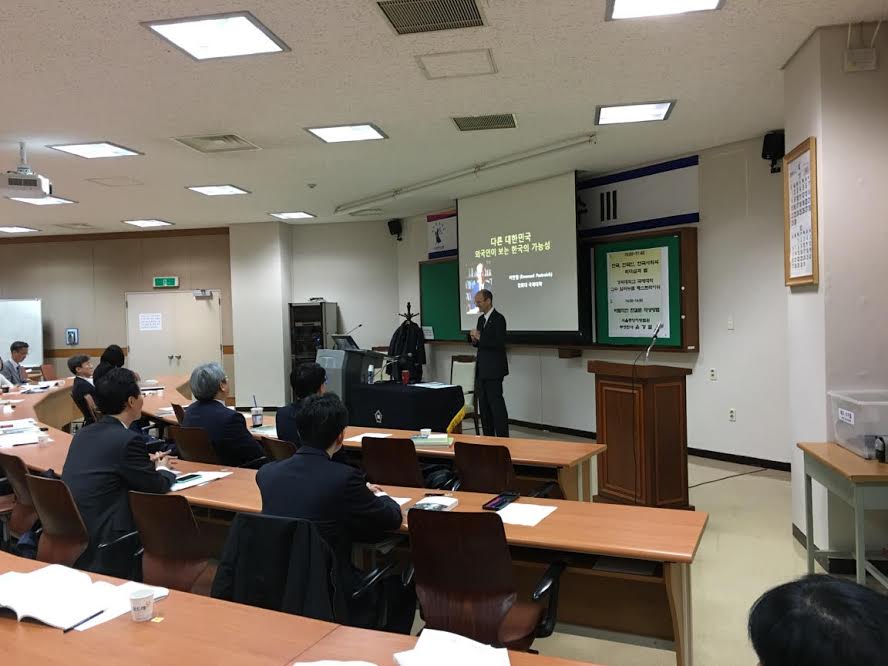
“오늘날의한국의법, 그리고미래” 사법연수원 특강


이만열 (임마누엘페스트라이쉬)

아시아인스티튜트소장

사법연수원

오늘날의한국의법, 그리고미래”

2015.11.11


58fde82e-fc75-45ff-abb1-9ee639b39fb9


전철 삼호선을 타고 멀리 북쪽으로 계속 가서 한번도 가본 적도 없는 마두역 에 내렸어요.

맑은 가을 날 아침, 지하철역에서 사법연수원으로 걸어가는 길은 즐거웠다.  한국과 세계가 머지 않아 넘어서야 하는 여러가지 도전들에 대한 나의 생각을, 판사들에게 솔직하게 이야기할 수 있는 이 귀한 기회에 나는 크게 흥분이 되어 있는 상태였다.

사실 강연에 대한 초안을 작성하기 전에는 판사들에게 강연을 한다는 사실의 중요성에 대해 깊게 생각해보지 않았었다. 그러나 강연 준비에 본격적으로 착수하면서 작년에 돌아가신 나의 이모 Jeanne Rouff에 대한 생각을 멈출 수 없었다.

Jeanne Rouff는, 우리 어머니의 언니이다. 그녀는 Luxembourg에서만 평생을 일했었다. 미국으로 유학을 떠난 후 고국으로 다시 돌아가지 않았던 우리 어머니와 달리 Jeanne은  영어에는  재능이 없었다.  Jeanne 이모는 룩셈부르크의 첫 여성 변호사이자 판사, 그리고 첫 여성 대법관이었다.

Jeanne 이모의 지적인 업무와 일에 대한 열정의 깊이는 항상 어린 나에게 가장 큰 영감의 원천이 되었다. 나는 항상 커서 그녀처럼 되고 싶었다.  언젠가 룩셈부르크의 숲속에 위치한 회색 치장벽을 가진 그녀의 집에 방문했었을 때, 검토 중에 있는 사건 파일들과 놀라운 책들이쌓여있던, 윤광이 나는 긴 나무 책상이 있는 서재를 나는 지금도 잊을 수 없다. 나도 그녀처럼 법을 해석하고 정책을 결정하는 사람이 되고 싶었다. 나는 뭔가 크고 중요한 일을 하고 싶었다.

Read more