TAI Seminar series with important intellectuals: “The past and future of Asia”

TAI The Asia Institute has been carrying out a seminar series with major thinkers on East Asia and the United States which has been published for the most part through “The Diplomat”


Please see the following links for the interviews in English


AI logo smallSeminar_series_Logo1_Color


The Diplomat

Interview: Benjamin Elman

“The ‘rise of China’ narrative can be read in different ways, and for Japan it is a challenge.”

December 10, 2015

Emanuel Pastreich


The Diplomat

Interview: Lawrence Wilkerson

A discussion of tensions in East Asia, and some possible solutions

By Emanuel Pastreich

December 03, 2015

The Diplomat

Asia Institute Interview with Alexis Dudden

Alexis Dudden on tensions in East Asia

November 27, 2015


The Diplomat

Asia Institute Interview with Joseph Nye

“The U.S. and China are deeply entangled, and that state is largely a good thing.”

The Diplomat October 30. 2015

The Diplomat

Asia Institute Interview with Richard Bush

Insights into the economies of Northeast Asia

October 22, 2015

The Diplomat

Asia Institute Interview with Francis Fukuyama

Francis Fukuyama on the rise of China, East Asia tensions, and the role of the United States

October 15, 2015

The Diplomat

Asia Institute Interview with Ezra Vogel

Ezra Vogel on managing relations in Northeast Asia

The Diplomat September 29, 2015

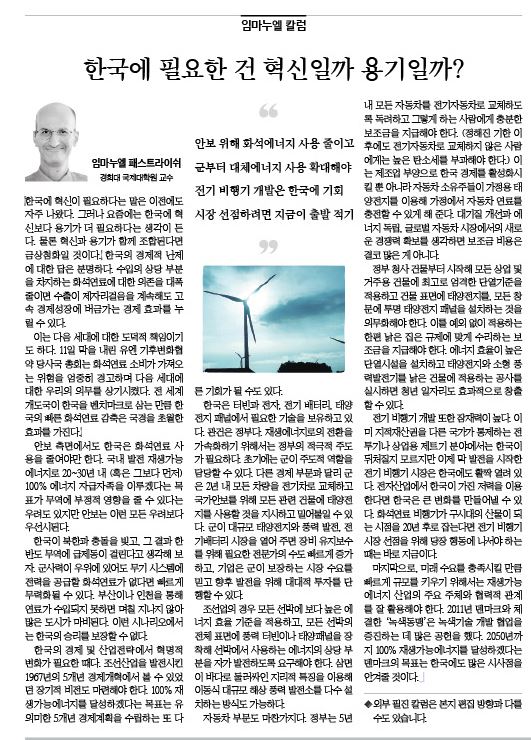
“한국에 필요한 건 혁신일까 용기 일까” (중앙일보 2015년 12월12일)

중앙일보

“한국에 필요한 건 혁신일까 용기일까?

2015년 12월 12일

임마누엘 페스트라이쉬


한국에 혁신이 필요하다는 말은 이전에도 자주 나왔다. 그러나 요즘에는 한국에 혁신보다 용기가 더 필요하다는 생각이 든다. 물론 혁신과 용기가 함께 조합된다면 금상첨화일 것이다. 한국의 경제적 난제에 대한 답은 분명하다. 수입의 상당 부분을 차지하는 화석연료에 대한 의존을 대폭 줄이면 수출이 제자리걸음을 계속해도 고속 경제성장에 버금가는 경제 효과를 누릴 수 있다.

이는 다음 세대에 대한 도덕적 책임이기도 하다. 프랑스 파리에서 열린 유엔 기후변화협약 당사국 총회는 화석연료 소비가 가져오는 위험을 엄중히 경고하며 다음 세대에 대한 우리의 의무를 상기시켰다. 전 세계 개도국이 한국을 벤치마크로 삼는 만큼 한국의 빠른 화석연료 감축은 국경을 초월한 효과를 가진다.

안보 측면에서도 한국은 화석연료 사용을 줄여야만 한다. 국내 발전 재생가능에너지로 20~30년 내 (혹은 그보다 먼저) 100% 에너지 자급자족을 이루겠다는 목표가 무역에 부정적 영향을 줄 수 있다는 우려도 있지만 안보는 이런 모든 우려보다 우선시된다.

한국이 북한과 충돌을 빚고, 그 결과 한반도 무역에 급제동이 걸린다고 생각해 보자. 군사력이 우위에 있어도 무기 시스템에 전력을 공급할 화석연료가 없다면 빠르게 무력화될 수 있다. 부산이나 인천을 통해 연료가 수입되지 못하면 며칠 지나지 않아 많은 도시가 마비된다. 이런 시나리오에서는 한국의 승리를 보장할 수 없다.

한국의 경제 및 산업 전략에서 혁명적 변화가 필요한 때다. 조선산업을 발전시킨 1967년의 5개년 경제개혁에서 볼 수 있었던 장기적 비전도 마련해야 한다. 100% 재생가능 에너지를 달성하겠다는 목표는 유의미한 5개년 경제계획을 수립하는 또 다른 기회가 될 수도 있다.

한국은 터빈과 전자, 전기 배터리, 태양전지 패널에서 필요한 기술을 보유하고 있다. 관건은 정부다. 재생에너지로의 전환을 가속화하기 위해서는 정부의 적극적 주도가 필요하다. 초기에는 군이 주도적 역할을 담당할 수 있다. 다른 경제 부문과 달리 군은 2년 내 모든 차량을 전기차로 교체하고 국가안보를 위해 모든 관련 건물에 태양전지를 사용할 것을 지시하고 밀어붙일 수 있다. 군이 대규모 태양전지와 풍력발전, 전기 배터리 시장을 열어 주면 장비 유지 보수를 위해 필요한 전문가의 수도 빠르게 증가하고, 기업은 군이 보장하는 시장 수요를 믿고 향후 발전을 위해 대대적인 투자를 단행할 수 있다.

조선업의 경우 모든 선박에 보다 높은 에너지 효율 기준을 적용하고 모든 선박의 전체 표면에 풍력 터빈이나 태양 패널을 장착해 선박에서 사용하는 에너지의 상당 부분을 자가 발전하도록 요구해야 한다. 삼면이 바다로 둘러싸인 지리적 특징을 이용해 이동식 대규모 해상 풍력발전소를 다수 설치하는 방식도 가능하다.

자동차 부문도 마찬가지다. 정부는 5년 내 모든 자동차를 전기자동차로 교체하도록 독려하고 그렇게 하는 사람에게 충분한 보조금을 지급해야 한다(정해진 기한 이후에도 전기자동차로 교체하지 않은 사람에게는 높은 탄소세를 부과해야 한다). 이는 제조업 부양으로 한국 경제를 활성화시킬 뿐 아니라 자동차 소유주들이 가정용 태양전지를 이용해 가정에서 자동차 연료를 충전할 수 있게 해 준다. 대기 질 개선과 에너지 독립, 글로벌 자동차 시장에서의 새로운 경쟁력 확보를 생각하면 보조금 비용은 결코 많은 게 아니다.

정부 청사 건물부터 시작해 모든 상업 및 거주용 건물에 최고로 엄격한 단열 기준을 적용하고 건물 표면에 태양전지를, 모든 창문에 투명 태양전지 패널을 설치하는 것을 의무화해야 한다. 이를 예외 없이 적용하는 한편 낡은 집은 규제에 맞게 수리하는 보조금을 지급해야 한다. 에너지 효율이 높은 단열시설을 설치하고 태양전지와 소형 풍력발전기를 낡은 건물에 적용하는 공사를 실시하면 청년 일자리도 효과적으로 창출할 수 있다.

전기 비행기 개발 또한 잠재력이 높다. 이미 지적재산권을 다른 국가가 통제하는 전투기나 상업용 제트기 분야에서는 한국이 뒤처질지 모르지만 이제 막 발전을 시작한 전기 비행기 시장은 한국에도 활짝 열려 있다. 전자산업에서 한국이 가진 저력을 이용한다면 한국은 큰 변화를 만들어낼 수 있다. 화석연료 비행기가 구시대의 산물이 되는 시점을 20년 후로 잡는다면 전기 비행기 시장 선점을 위해 당장 행동에 나서야 하는 때는 바로 지금이다.

마지막으로, 미래 수요를 충족시킬 만큼 빠르게 규모를 키우기 위해서는 재생가능 에너지 산업의 주요 주체와 협력적 관계를 잘 활용해야 한다. 2011년 덴마크와 체결한 ‘녹색동맹’은 녹색기술 개발 협업을 증진하는 데 많은 공헌을 했다. 2050년까지 100% 재생가능 에너지를 달성하겠다는 덴마크의 목표는 한국에도 많은 시사점을 안겨줄 것이다.


한국에 필요한 건 혁신일까 용기 일까


Interview: Benjamin Elman The Diplomat, December 10, 2015


The Diplomat

Interview: Benjamin Elman

“The ‘rise of China’ narrative can be read in different ways, and for Japan it is a challenge.”

December 10, 2015

Emanuel Pastreich


When people talk about the future of East Asia, and the potential for integration, they say,“Well, Europe has been integrated from Roman times but East Asia has no such precedent. In fact Japan has never really been part of a unified architecture in Asia.” Is there something in the way East Asia has evolved in the 2,000 years that limits future integration, or is that not an assumption we should make?

In order to understand global issues, one needs to understand the regional issues that undergird them. China, Japan, Korea, and to some degree Vietnam and other portions of South Asia have become a very viable regional group. China is increasingly influenced by the nations around it in economics and politics. To understand the region’s potential, we need to consider the historical development of the Chinese empire, the economic impact of the Tokugawa government (17th-19th centuries), and, ultimately, how Korea was a part of economic and scientific change influencing both sides.

Korea often served as a conduit for medical knowledge, for Buddhist and Confucian metaphysics, and for technological innovations. Korea has been caught in the middle historically as China continued to surpass Korea in terms of its military and economic power and influence in East Asia during the Ming and Qing dynasties. I think that when Japan’s Toyotomi Hideyoshi led invasions (1592 and 1597) of Korea that fundamentally altered the geopolitical landscape and reduced Korea’s role in the economic and political order of the region.

We tend to underestimate just how big Japan was in the global economy in the 16th and 17th centuries. The Tokugawa reunification of Japan after the battle of Sekigahara (1600) brought together a population of 25-27 million under a highly disciplined military. That meant that Japan was not just an island, but a powerful state capable not only of invading Korea and marching all the way to the Yalu River, but also capable of challenging the Ming Dynasty. Innovations in naval warfare and the decision of the Ming to throw their full weight into the campaign against Japan meant that Hideyoshi was forced to give up the campaign against the Ming, but the consequences of that campaign were that Korea was devastated and is only now starting to recover its self-confidence. The Gyeongbok Palace remained in ruins until the middle of the 19th century. Japan took advantage of Korea’s decline.

Read more

Renminbi’s new status and its implications

The Chinese renminbi has been added to the basket of global currencies making up the International Monetary Fund’s special drawing rights (SDRs).

Stratfor notes in this article that this is the first time ever that a currency of a nation not allied with the US is included. Previously only

US dollar, the British pound, the Japanese yen & the euro were in SDR.

See article below:

https://www.stratfor.com/sample/weekly/china-and-changing-global-economic-order

The significance is tremendous and I would suggest that the US has no choice at this point but to come to an understanding at a high level with China concerning economic cooperation–and cooperation on the environment, security and many other fields as well.

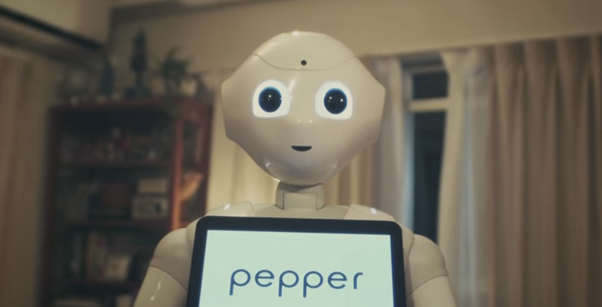
“Future Life with Pepper” @ Softbank

Japan faces an unprecedented collapse in its population and a rapidly aging society. Moreover, more and more Japanese find themselves living alone, often unmarried and without children. It is in this context that Softbank, launched a new domestic robot “Pepper” which is aimed as much as serving as a companion as it is as a tool.


maxresdefault1215-1


In the following video, Pepper is shown serving as a cheerleader of sorts for various families. Most striking is the

lonely woman in the first scene who seeks comfort and affection from Pepper.


Pepper is above all a reminder that the combination of an aging, childless society with computer technology developing at an

exponential rate will produce some rather unusual social phenomena. Above all, we are reminded that the future is not that far away at

all. Like climate change, it is already here with us right now.


Here is the video used in the ad:


“Future life with Pepper”


http://www.softbank.jp/robot/movies/20150618/

Envelope for bribes

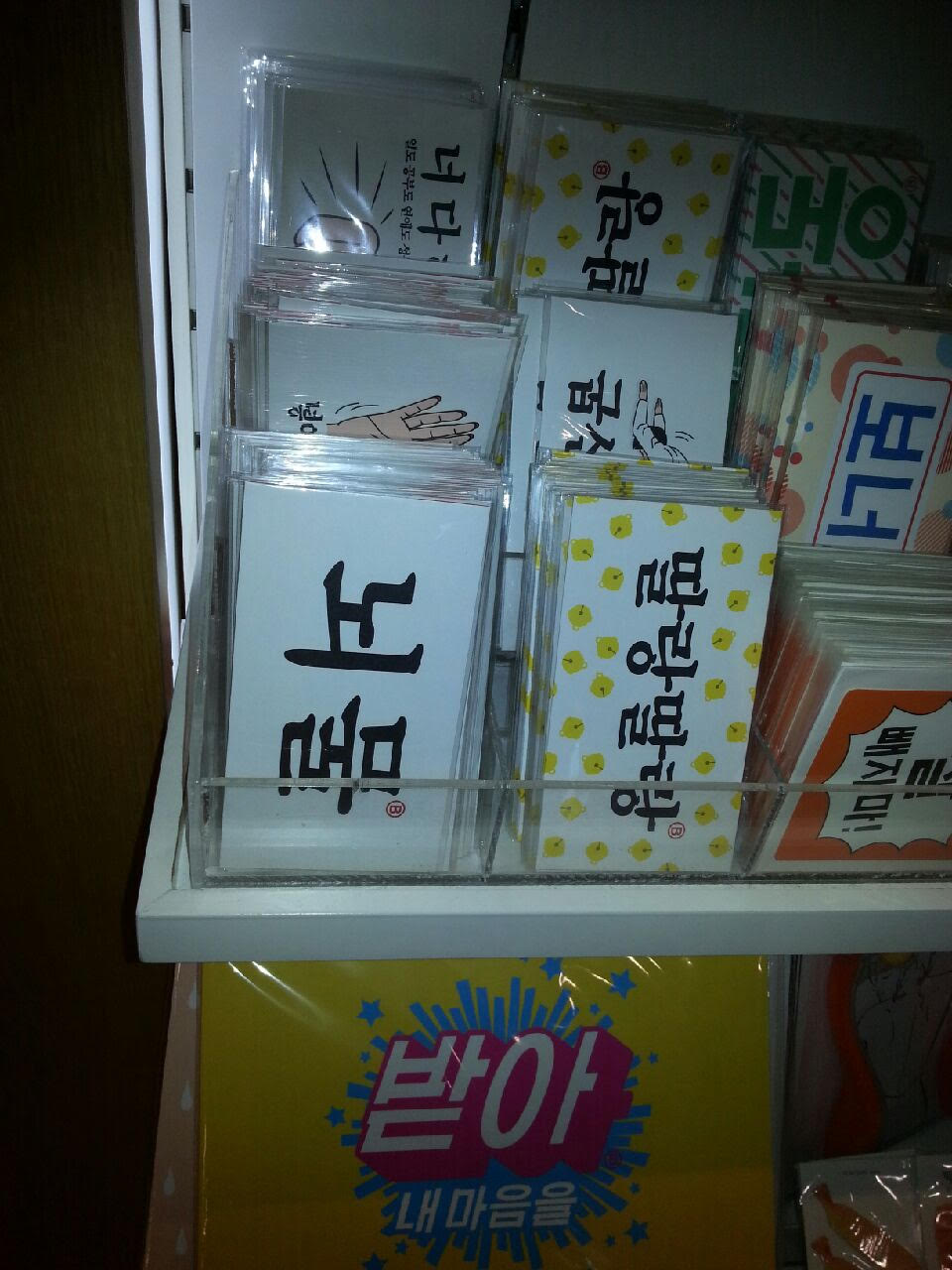
Kyobo Books in Gwanghwamun is increasingly not about books at all. The space sells everything from clothing and speakers to food and candles. But this bit of stationary caught my eye today. The envelope you might use for a end-of-the-year letter to a close associate is marked explicitly with the words “bribe!” Some distinct Korean form of humor?

unnamed (4)

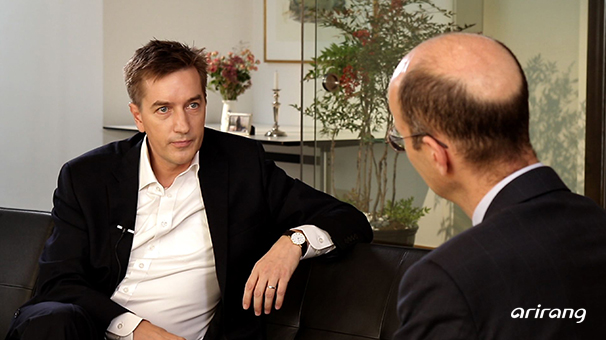
Interview with Ambassador Thomas Lehmann of Denmark @ G Lounge (Arirang TV)

G Lounge
Arirang TV

November 30, 2015
Interview with Ambassador Thomas Lehmann
Danish Embassy in Seoul

interview with thomas lehmann

Hosted by Emanuel Pastreich

Green Growth in Korea and Denmark


A wide-ranging discussion of the “Green Alliance” between Denmark and Korea and prospects for new approaches to growth post Paris 2015 COP 21.


Part 1


https://www.youtube.com/watch?v=_XzyLUucH7k


Part 2


https://www.youtube.com/watch?v=XhMqsIFrVQg


Part 3


https://www.youtube.com/watch?v=G_xsPyuN4vE