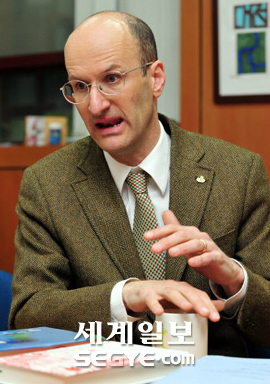
Asia Institute Seminar
“Korean Social Welfare in Comparative Perspective”
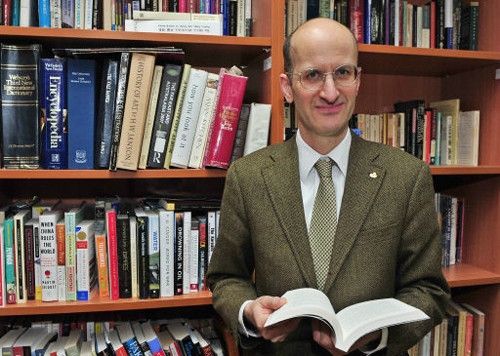
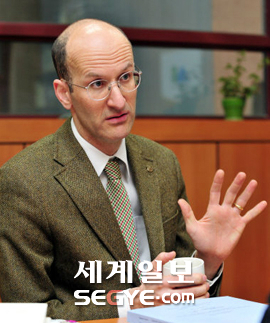
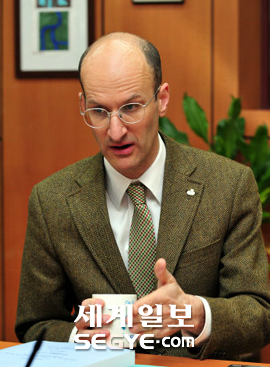
Dr. Eckhard Schroeter
Professor
Chair of Public Administration
Zeppelin Universität
August 28, 2012
Emanuel Pastreich:
Should government be entirely responsible for the social well being of the individual, should responsibility be split with employees? Should individuals be responsible for themselves? Where exactly do you see the funding coming from that will cover expenses like medical treatment? Will you just tax the people more? Will you tax corporations more? If you just tax the people more, the problem is not really solved, especially if the political system is such that such expenses are passed on to the poorer members of our society. If you tax corporations, they can just pass that cost on to people and adopt new policies to protect themselves. As long as corporations have a high level of influence, it is quite difficult to change the situation indeed. What do you think?
Eckhard Schroeter:
I strongly believe in the principle of subsidiary (belonging to the larger whole) in policy. Individuals and smaller and lower-level groups and organizations are our immediate points of reference. Above them are larger collectives and above that is the nation, or welfare state, that can step in when required. We should look at welfare policies as an essential approach to risk management in the fact of the vicissitudes of life. We are subject to multiple risks in the course of a lifetime to our health and our well being. We all are at risk. In today’s complex world, the stakes associated with those risks are so high that we need to rely on larger collectives to socialize our risk management. The approach is extremely practical and understandable to anyone.