The Environment Crisis: Don’t cut Defense Budgets!

It is one of the terrible ironies of this moment that at the same time that we are seeing reports that carbon dioxide emissions jumped 6% between 2009 and 2010 (with the United States and China leading the pack as linked economies), military budgets for traditional warfare are skyrocketing. People seemed to be still deluded into thinking we will fight the next war with missiles and aircraft. The climate war is here, but we are unprepared.

The solution is not to ask ministries of defense to cut their budgets and dedicate that money to planting trees. We all know that as good as the intention may be, such an approach will never work. The only solution is to redefine the concept of “security” and increase the amount of spending within defense ministries on environmental issues. Innovative countries like Korea are capable of making the transition. The only question is whether they can do it quickly enough.

Some individuals may disdain the idea of working closely with the military or “militarizing” the issue of the environment. I would argue that we really do not have any choice at this point.

Two essential laws of politics

I tend to be naive about politics. Or should we say I am politically naive.

Sometimes it is a studied posture of someone who actually knows how things work, but pretends not to know. Sometimes I am literally that naive and that simple when it comes to politics. And then sometimes I tend to treat the political world in terms of what I want it to be, instead of in terms of what it really is. If I could just give up the naive assumptions and play the game smartly.

Read more

What Emanuel does not like about Korea

I have received numerous criticisms of late to the effect that I am too positive about Korea. Although I think my writings do contain numerous criticisms of Korean practice, it is certainly true that I go to great lengths to keep the tone constructive and positive. That said, I have decided to give a short list of serious issues with Korea that I have.

The white or brown sauce that is squirted on food at restaurants:

So many times we find at Korean restaurants that the cooks feel that they have to squirt a white or brown sauce in lines on top at the food at the last minute to make it look better.  The sauce does not add to the flavor and I wish we could just eat the food.

Not being able to see the name of the station from my seat on the subway 

How many times on the subway have a found that the sign indicating the station at which the train is stopping at is invisible from where I am sitting? The visibility of signs is clearly far worse in Seoul Metro than in other major subway systems I have ridden.

Read more

Two Cultural Challenges for Korea: Accepting the Richness of the Joseon Dynasty and Value of the Ideographs (essay)

Two Cultural Challenges for Korea: Accepting the Richness of the Joseon Dynasty and Value of the Ideographs

Emanuel Pastreich

October 21, 2011

There are two major cultural challenges that Korea faces today as it suddenly finds itself playing an international role on a scale that no one had imagined could happen so soon. Both challenges relate to Korea’s cultural identity, and both may seem somewhat obscure to internationals unfamiliar with the specifics of Korea’s cultural experience.

The first challenge is for Koreans to recognize for themselves, and introduce with confidence to the world, the full richness of the Korean cultural tradition. So often we see international visitors being treated to second-rate gayageum performances

Read more

The Function of Literature and the Byeung-ju Lee (이병주) International Literary Festival

Emanuel was invited as a speaker at the Byeung-ju Lee International Literary Festival in Seoul on September 29, 2011. The Festival brings together important writers and literary critics to discuss contemporary literature and its significance. Emanuel was on a panel with the Chinese novelist Dong Xi (東西) and the Japanese horror writer Kishi Yusuke (貴志祐介). We also spent a day in Hadong, at the base of Jili san Mountain. Hadong was the long term resident of Lee Byung-ju, author of many novels on the social conflicts of Korea in the 20th century.  His most famous novel Jili san is the epic of a family torn apart by ideological conflicts.

Emanuel spoke about the function of literature in contemporary society, arguing that literature is the most effective means to address social issues

Read more

Essential points for Research Institutes (과학연구기관의 향후성과를 위한 핵심요인) Essay

과학연구기관의 향후성과를 위한 핵심요인

연구기관의 미래는 이시대의 가장 중요한 문제중하나이다. 전세계에 곳곳의 연구기관들은 비전을 정립하고 급속한 기술의 발전과 변화 무쌍한 경제 및 인구환경에 대응하여 제기능을 다하는데 있어어려움을 겪고있다. 미래의 연구기관이 잠재력을 무한 발휘할수 있도록 확신하기 위해 가장 중요한 몇가지 쟁점을 제시해보고자한다.

1. 연구기관의 사회적 기여에 대한 비전필요

장기적인 관점에서 대규모 연구프로젝트들은 분명한 사회적 기여에 대한 중요한 비전을 제시할수만있다면 강력한 재정지원 및 근로자, 연구원, 그리고 납세자의 폭넓은 지지의 대상이 될 것이다. 제한된 예산이라는 시대에서 사회적 관련성에 대한 제시의 필요성이 결정적인 요인이 될것이다.

Read more

A Practical Defense of the Humanities in the 21st Century

There has been a tremendous swing towards business and technology in higher education today, both in Korea and around the world. We see business schools and business majors emerging everywhere, even at institutions that seemed quite distant from business previously. Moreover, we also see that many jobs advertised take the MBA as a requirement.

That shift in education is born of a profound insecurity that many of us feel. There is a need to find employment rapidly that will pay us enough to survive in an age of such terrible and brutal competition. It seems as if it is only in business and in the apprehension of specialized skills in computer programming or nanotechnology can we hope to find security.

Read more

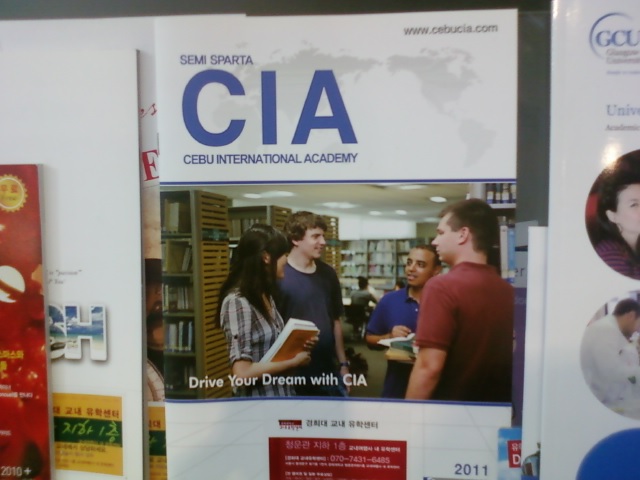
Some thoughts on the CIA

This advertisement for the Cebu International Academy is quite revealing. The term CIA is rather amusing, of course. But it also suggests something about some fundamental trends in our times. As we can see here, the term “CIA,” originally associated with the Central Intelligence Agency established by Harry Truman, has been reduced to a rather amusing phrase that can be assigned to just about anything in a rather light-hearted manner. The authority of force, and the control of information, known from a previous age has been reduced and cheapened. Of course some might say that it is a positive trend, granted the abuses associated with intelligence. But although we should be honest with ourselves about the mistakes of the past, we should also be quite wary of the degradation of terms. Once terms cease to have any real gravitas, authority can be grabbed by just about anyone.


Panel on Transportation and Resources in Mongolia at “Mongolia and Northeast Asia Peace” Conference in Ulaanbaatar

Panel on Transportation and Resources in Mongolia at “Mongolia and Northeast Asia Peace” Conference in Ulaanbaatar

Emanuel Pastreich had the opportunity to head a panel of experts for a discussion of opportunities and challenges in the energy, transportation and natural resources sectors held at the Global Peace and Leadership Conference “Mongolia and Northeast Asia Peace.”

The Global Peace and Leadership Conference “Mongolia and Northeast Asia Peace” (August 25-27, 2011) was a remarkable event bringing together wide range of individuals and groups committed to a peaceful and fair approach to social, cultural, economic and institutional integration in Northeast Asia. The choice of Ulaanbaatar, Mongolia as the site has particular significance as Mongolia is a new power in the debate on Northeast Asian integration. As an emerging economic center, with vast mineral resources and a tradition of leadership in both Central Asia and Northeast Asia, Mongolia has been visited recently by Korean President Lee Myung Bak and United States President Joseph Biden (Vice President Biden was still in town when our conference began on August 25).      

Read more