Passionate discussion of Korea-China relations at Hongling Chinese Culture Salon

Passionate discussion of Korea-China relations at Hongling Chinese Culture Salon

On September 27, 2017, the Hongling Culture Salon, a bimonthly gathering which offers an opportunity for Koreans, Chinese and other residents of Seoul to discuss current issues in Chinese language, held a special meeting on the occasion of the 25th anniversary of the normalization of normalization of diplomatic relations between the People’s Republic of China and the Republic of Korea.
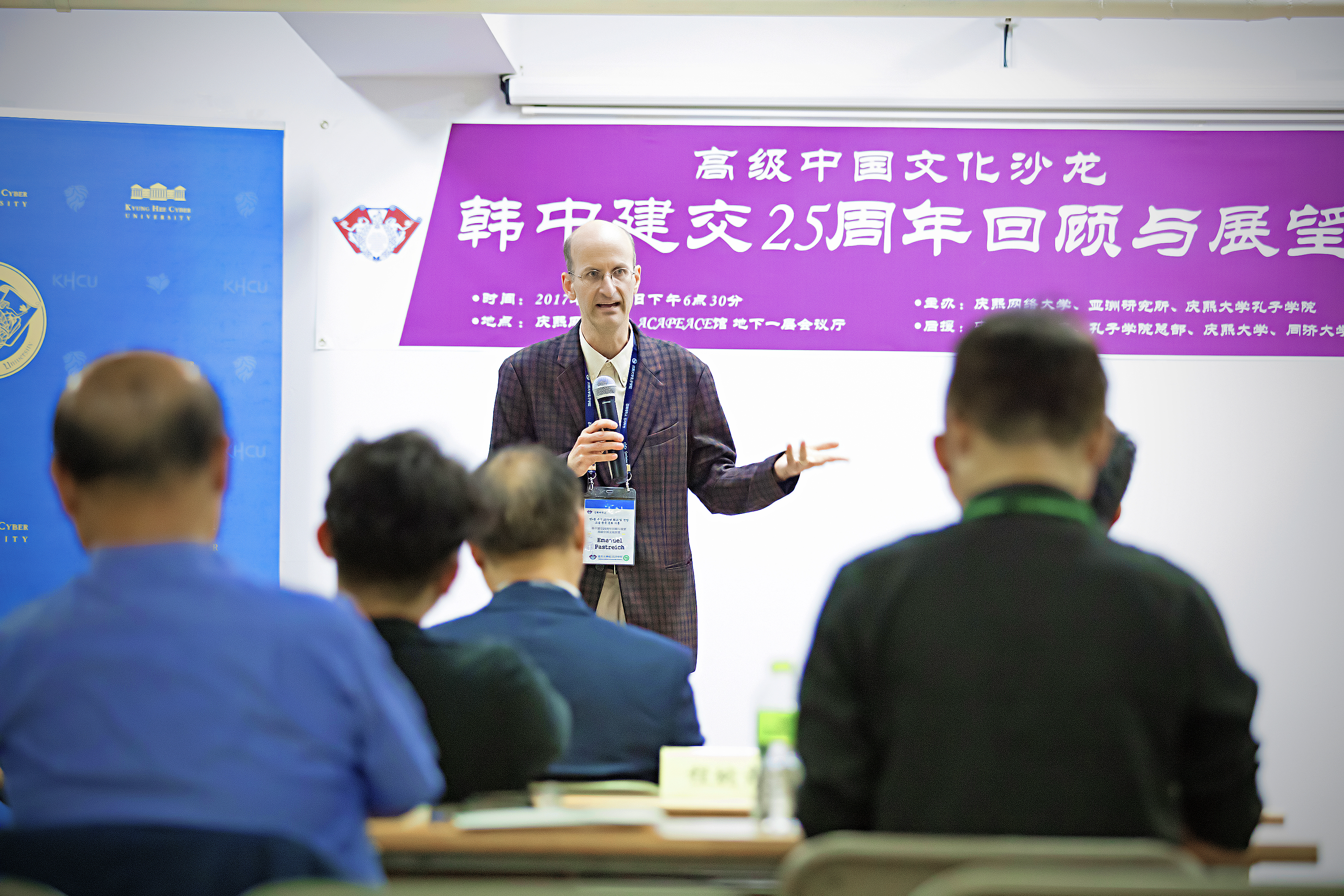
emanuel talks

The Hongling Culture Salon is organized by the Asia Institute, Kyung Hee University Cyber University and the Confucius Institute of Kyung Hee University. The seminar was our thirteenth such event.

I was tapped to lead an honest and at times, moving debate among the 50 individuals who gathered for the salon. We had much to discuss granted the aggressive approach of the Trump administration towards North Korea and China and the tragic impact of the deployment of THAAD in South Korea over the objections of the Chinese government.
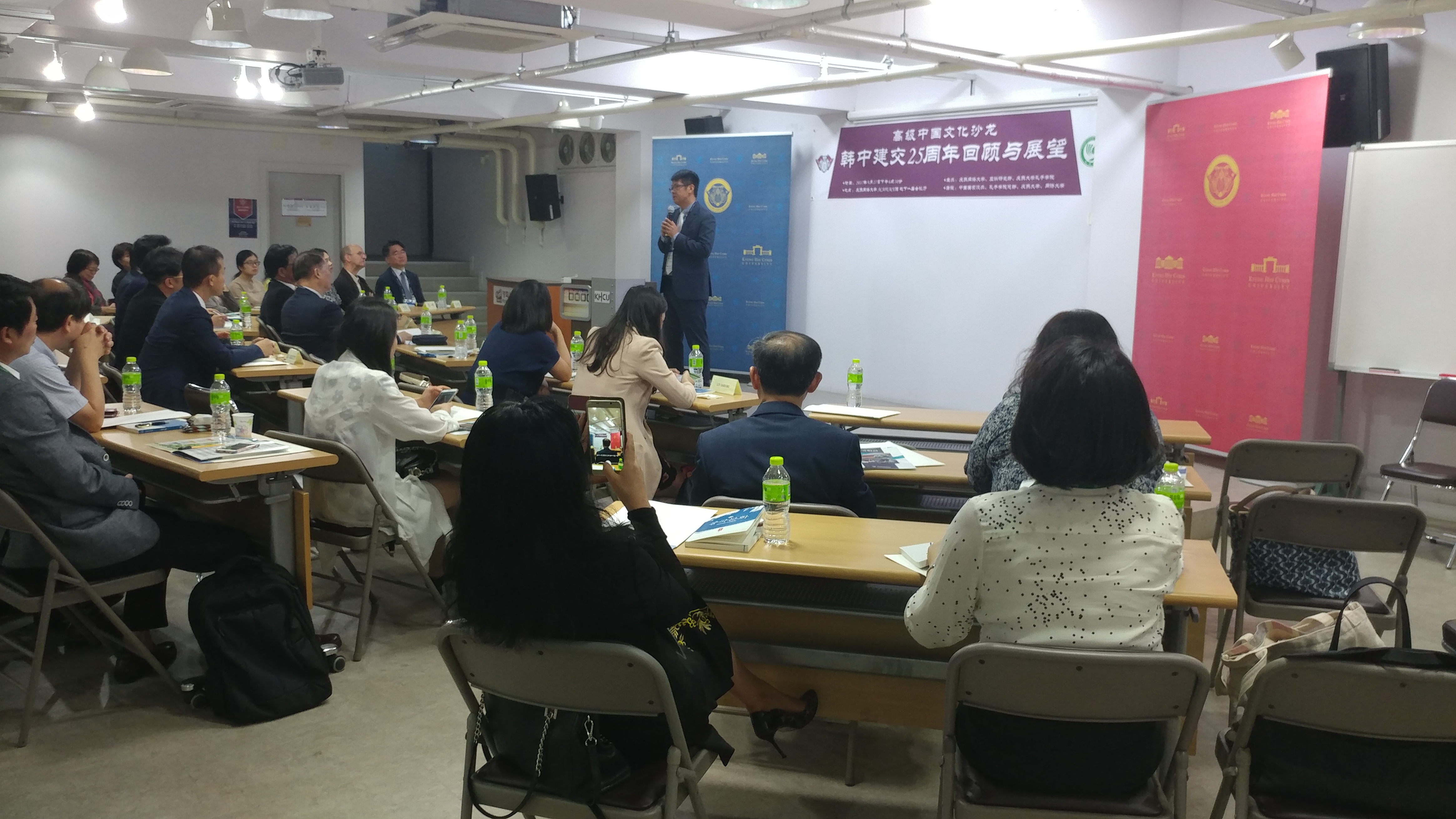
2017.09.27.홍릉문화살롱03.jpg

Many attending were Chinese who have lived in Korea for many years, or Koreans who have lived in China for many years, in most cases with husbands or wives from the other country. The speakers expressed both tremendous enthusiasm about the potential for real cooperation in just about every field, a deep sadness that political circumstances had done so much damage, and desire to explore new routes forward.

Read more

“A Republic of Korea Greater than Koreans imagined” Is it possible? October 27, 2017


seminar_series_logo1_color-e1506698367692.jpg

Asia Institute Seminar:

“A Republic of Korea Greater than Koreans imagined”

Is it possible?

Friday, October 27, 2017

7-9 PM

Discussion led by

Emanuel Pastreich

Director

The Asia Institute

Location:

KT Olleh Square Innovation/Economy/Renovation Center

(First Floor of KT Building, Gwanghwamun [next to US Embassy])

(광화문 KT 올레스퀘어  창조경제 혁신센터 회의실


The Republic of Korea is faced with overwhelming challenges from the current economic collapse, the breakdown of an equitable society under pressure from an aging population and the unequal distribution of wealth and the constant pressure of climate change.

The problems are almost overwhelming, although few want to discuss them. Yet, might there not be some opportunities beneath the surface in Korean know-how, in the Korean culture and in the remarkable vitality of Korean youth? Join us for a open discussion with Emanuel Pastreich, director of the Asia Institute and author of the recent best-selling book, “A Republic of Korea Greater than Koreans imagined.”


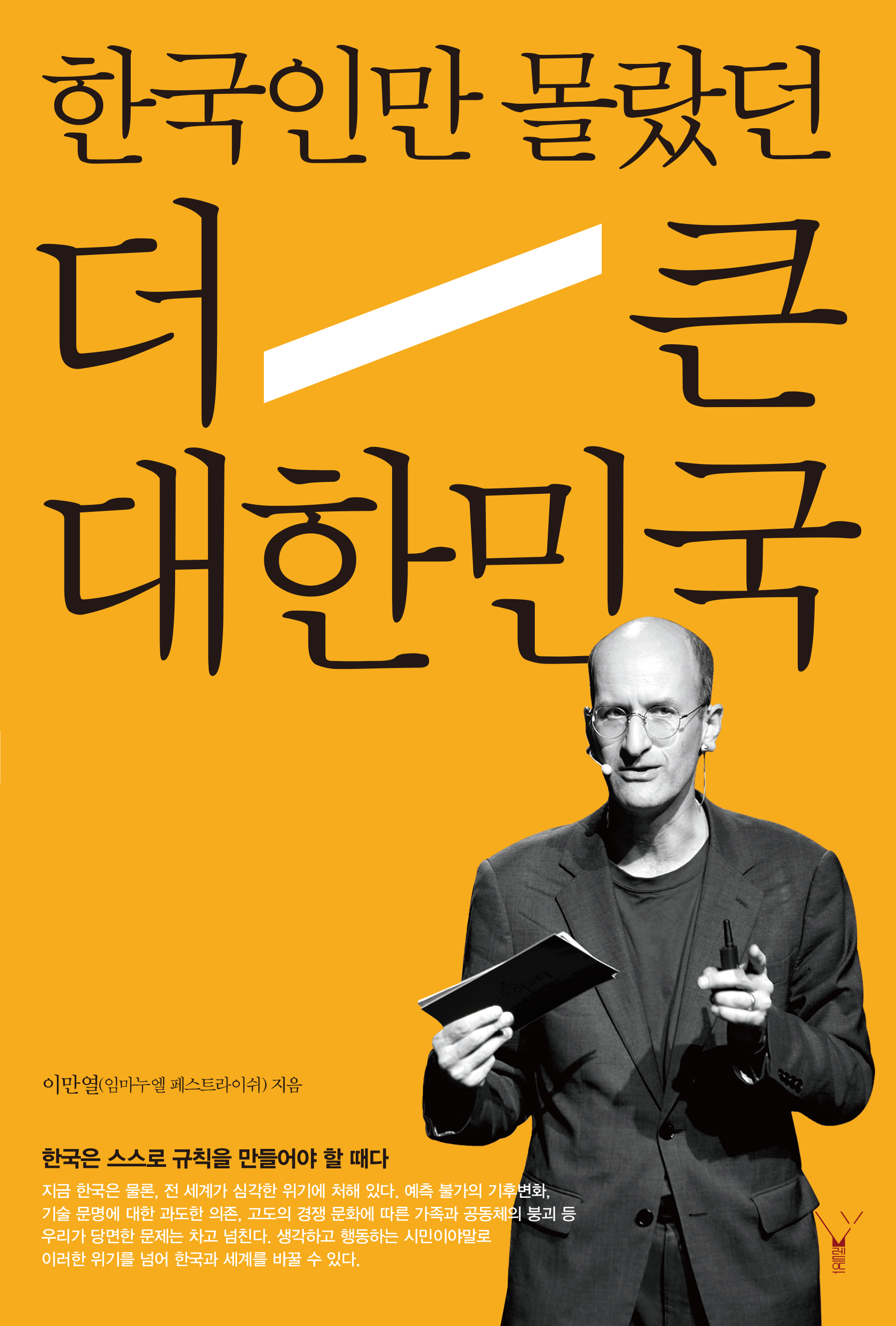
최인아책방 북콘서트 2017년 8월 17일 “한국인만 몰랐던 더 큰 대한민국”


최인아책방 북콘서트

2017년 8월 17일 (목)  오후 8시 – 10시

“한국인만 몰랐던 더 큰 대한민국”

한국인만 몰랐던 더 큰 대한민국

임마누엘 페스트라이쉬


참가비는 2만원

행사 안내

최인아책방

장소:

서울특별시 강남구 선릉로 521 4층

4 층, 521 Seolleung-ro, Gangnam-gu, Seoul

a47ecd65460522986283919eba7b4cd8_1494466159_9643

02-2088-7330


The Asia Institute “Post-peace march account” in The Korea Times

The Korea Times

“Post-peace march account”

May 21, 2017


Meenakshi Pawar


On May 15, the Asia Institute and the Korea Peace Movement ― both deeply concerned about the fast deteriorating situation on the Korean Peninsula ― brought together their first peace march in downtown Seoul. Institute members feel they must raise their voices before it is too late and our children and dear ones are vaporized in the coming nuclear fire, and inform authorities that something must be done to address the growing concerns of citizens.

A broad section of Korean society participated in the march, including academics, business people, housewives, school teachers and students. Professor Emanuel Pastreich, director of the Asia Institute, opened the event. In his speech, he emphasized that no matter how small we are today, we must take the first step in the right direction. It takes an act of bravery to resist a wrong in society. Having gone through so much pain and suffering in the past few months because of the fear of nuclear war, we can no longer sit quietly in our homes and hope for this terrifying situation to return to normal. He said if others are preparing to wage war, we must come out in the streets and start waging peace.

Read more

Asia Institute Seminar: “India’s Strategic Interests in East Asia”


Asia Institute Seminar

Saturday, June 17, 2017

5-6:30 PM


Rahul Raj

Professor

Sejong University


“India’s Strategic Interests in East Asia”


Introductory Remarks:

Emanuel Pastreich

Director

The Asia Institute


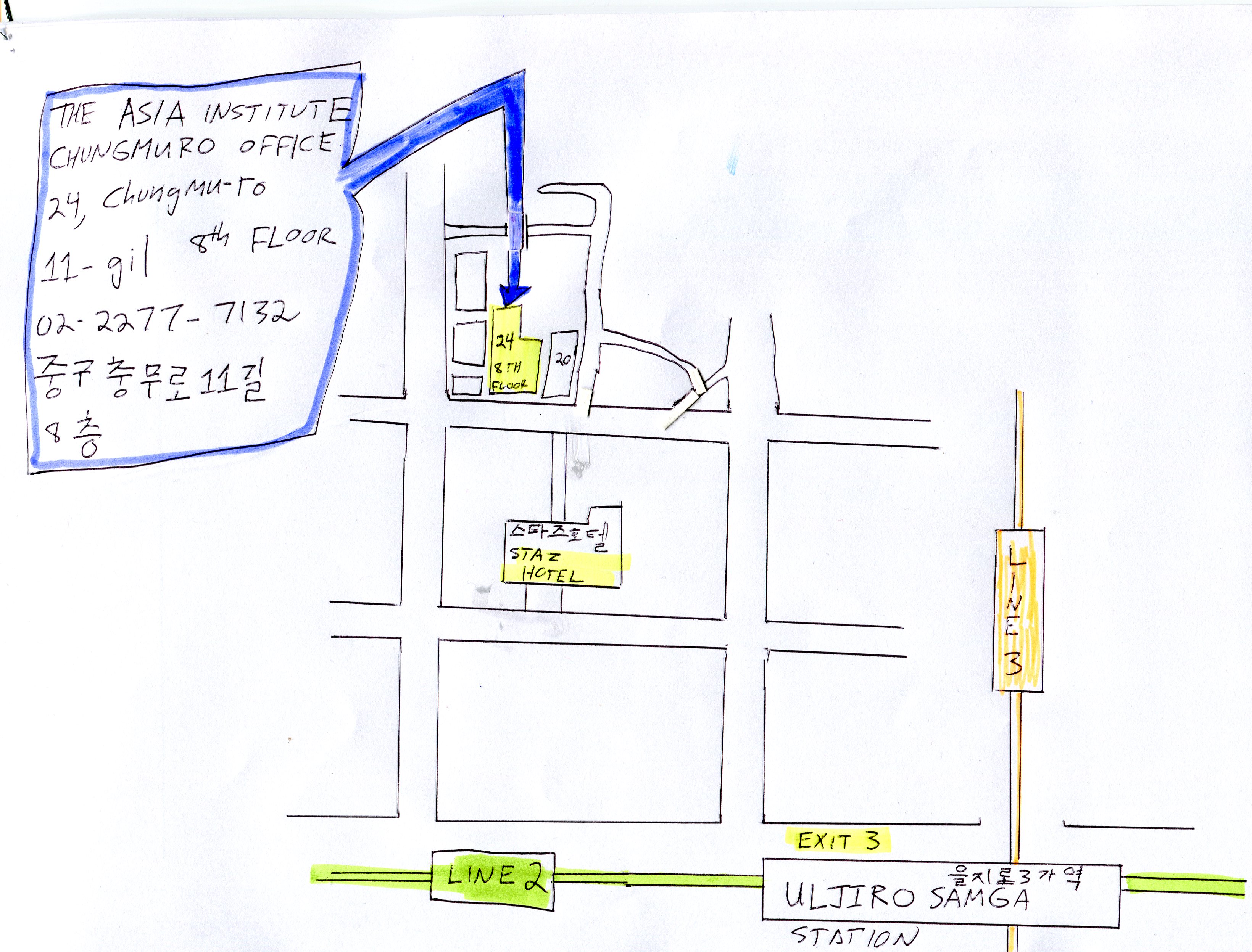
Asia Institute Chungmuro Office

8th Floor

24, Chungmuro 11-gil Jung-gu Seoul, Korea


중구충무로 11길 24번지 8층

02 2277-7132


India has taken a deeper interest in East Asia as it strives to define its new global role. This seminar will consider what India is looking for, who are the different parties competing to define India’s strategy and what are the prospects for the future.

Although India’s engagement with East Asia dates back to thousands of years, much of the developments in the realm of the business and strategic relations developed in the post-1990s to project itself as a regional power when it opened its market and launched its “Look East Policy”. Under this policy, it initiated forging several economic and commercial ties and also enhanced security partnerships with like-minded countries who are concerned with the increasing influence of China in the region. In the early years, the Look East Policy was primarily focused on the Association of Southeast Asian Nations (ASEAN). India has since expanded the geographic domain of its policy to include Korea, Japan, China, and Australia.

As the power balance is moving from the western hemisphere to Asia-pacific region wherein the rise of China and the US’s pivot to Asia define the foreign policy debate in many countries, New Delhi has also crafted its foreign policy to stay abreast. The Indian Prime Minister, Narendra Modi led government soon after its emphatic victory in 2014 re-crafted the India’s “Look East Policy” to “Act East Policy” wherein it has sought to actively engage the Asian partners both from the economic as well as security perspective. This can be gauged by the fact that Asia has become one of the most focused areas of the present government. The Modi government has forged and revitalized several strategic partnerships and also tried to put impetus in the existing partnerships with countries which had lost its sheen due to India’s own policy paralysis in the last few years. The strategic interest is not only confined to military but it also includes economic interests. India is the second biggest market with its rapidly ballooning middle class wherein most of the Asian tigers including Korea, Taiwan, Singapore, Japan, and many others have huge strategic interests in the world’s fastest growing economy.


chungmuro.jpg

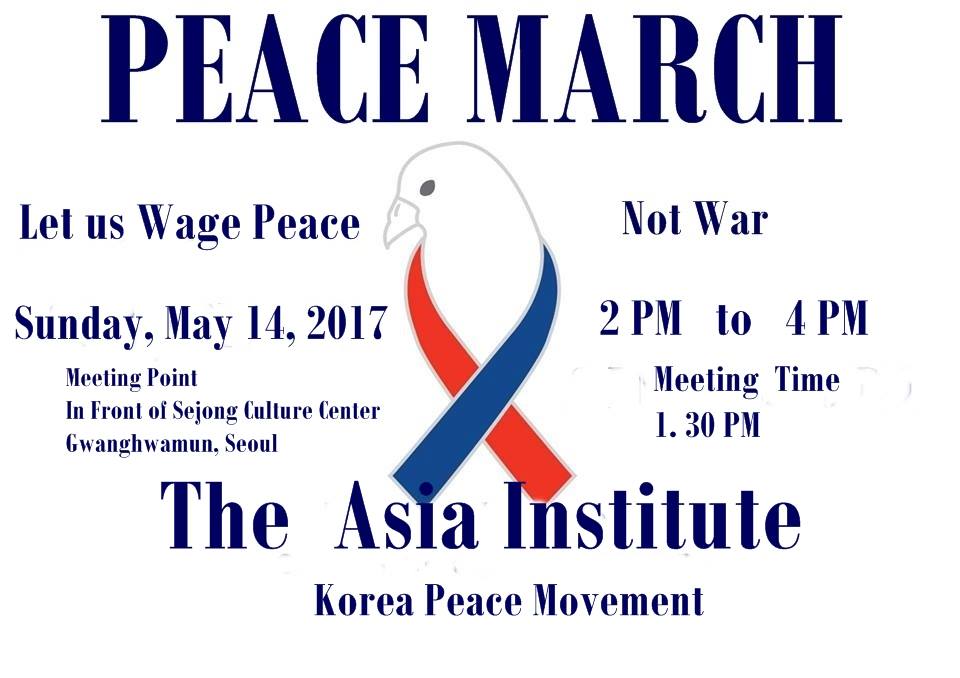
KOREA PEACE MARCH (MAY 14, 2 PM)

Sunday, May 15 2017

2 PM

March for Peace

@

Front of Sejong Culture Center

Gwanghwamun, Seoul


MAY 14 PEACE MARCH

The Korea Peace Movement and the Asia Institute are holding a March for Peace on Sunday, May 15, starting at 2 PM in front of the Sejong Culture in Gwanghwamun, Seoul.


We live in an age in which conflict and destruction has torn so many countries apart and there is a real threat of world war if we do not make an effort to promote peaceful cooperation and offer up a peaceful model for how we can combine forces to address the tremendous challenges of our age.


Please do join us for this march and show that world that it is not enough to stand by in silence, we must actively wage peace.


“The US and Korean New President” with Costello & Pastreich @ National Assembly

“The US and Korean New President”

Stephen Costello

President of ProGlobal Consulting and Host of AsiaEast


Moderated by

Emanuel Pastreich

Director of the Asia Institute

Friday, May 12

10 AM to 12 PM

National Assembly

Seminar Room 2

의원회관 제2 세미나실

(C)2008 Kyu Lee

STEPHEN COSTELLO is a policy analyst with 20 years of experience in Korea and Northeast Asia as political consultant, policy analyst, think tank program director, and tech-sector business consultant.  Mr. Costello specializes in policy and politics in Korea and Northeast Asia as well as US policy and policy-making toward the region.

pastreich and ai


Emanuel Pastreich is the director of the Asia Institute and associate professor at Kyung Hee University in Seoul.


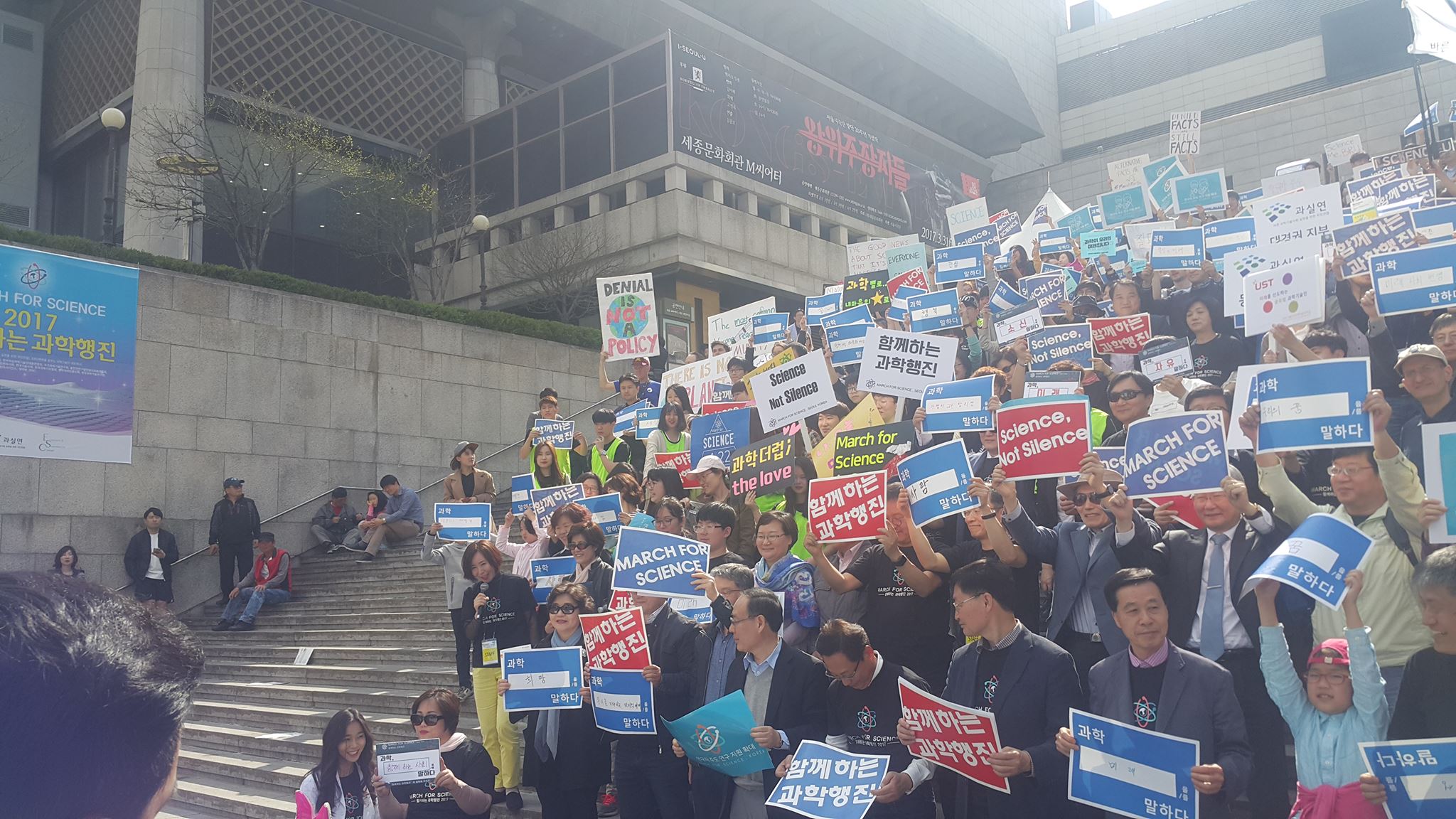
March for Science in Seoul

I was there for the entire March for Science in Seoul last Saturday and had a chance to talk to a variety of teachers and students.


18056378_411197702596528_4491919658430560948_o
You can see me on the far right


18077410_411212582595040_8943564828515987252_o
The woman pushing the woman in the wheel chair is wearing one of the Asia Institute’s “Stop Climate change” pins. 

“THE ROAD TO A SHRINKING SOCIETY” MATSUHISA HIROSHI MAY 15, 2017

ASIA INSTITUTE SEMINAR

6:00-7:30 PM


Monday, MAY 15, 2017


“THE ROAD TO A SHRINKING SOCIETY”

How to make ourselves truly renewable


WCO ANGUK

3RD FLOOR

(SEE MAP)

MATSUHISA HIROSHI

PROFESSOR  EMERITIS

KYOTO UNIVERSITY

SCHOOL OF ENGINEERING

After the meltdowns at the Fukushima nuclear power plants in 2011, Japanese public opinion has been divided into three groups: those who want to continue using it, those who want to phase it out and those who want to end its use immediately. The establishment has argued that nuclear power is required for the economy and recently the Abe Administration has pushed for restarting plants as part of his agenda for growth.

The choice is one rather of choosing the future of Japan and goes far beyond nuclear power. If we continue this rate of “growth” we will exhaust all our resources in the near future. Even 2% growth will assure us that we will use up what resources we have in fifty years, rather than one hundred.

War and catastrophe will be the consequences of the radical exhaustion of resources.

         There is much talk about a sustainable society today, but the term “sustainable” is used in a vague sense with no concrete guidelines.

Some in industry see it as meaning the sustaining of current growth into the future, the complete opposite of the environmentalists demand for limited consumption.

We must face the truth and reduce real consumption. If we reduce consumption by 1% every year, a 100 year reserve can be continued indefinitely. If we reduce more than that, we can build up a reserve. We must design a smaller society for the sake of future generations in order to avoid catastrophe.

The current economic system is based on mass production and mass consumption. As a result, our lives are flooded with industrial products to which we have become addicted. Our ever-growing society is already showing the signs of discordance as a result of this consumption illness.  A smaller society, on the other hand, supports local production and consumption, and requires less energy. We will have a more healthy society if people are not addicted to industrial products and anonymous consumption but rather nurture each other and promote a creative life.

WCO Anguk