Deb Havens & Arthur Park of Grand Rapids, Michigan call for a Korean Cultural Center

I recently received a note from two individuals in Grand Rapids, Michigan, who have engaged in an in ambitious project to build a center for Korean culture in Grand Rapids that could serve as a hub for introducing Korea to Americans. Tragically, although Americans drive Hyundais and watch Samsungs, many know more about North Korean missiles than they do about Korean history and culture. The approach put forth is very innovative and inspired. Dr.Deborah Havens, a scholar who has taken a deep interest in Korean culture since her son Haight married an Korean woman (and she was blessed with three grandchildren with Korean roots), has teamed up with the Korean-American Professor Arthur K. J. Park to launch a new initiative for education about Korea in the United States. Professor Park has already started his own effort to introduce Korea to Americans through his Morning Crane Tea and Morning Earth Korea projects (including cultural tours to Korea).
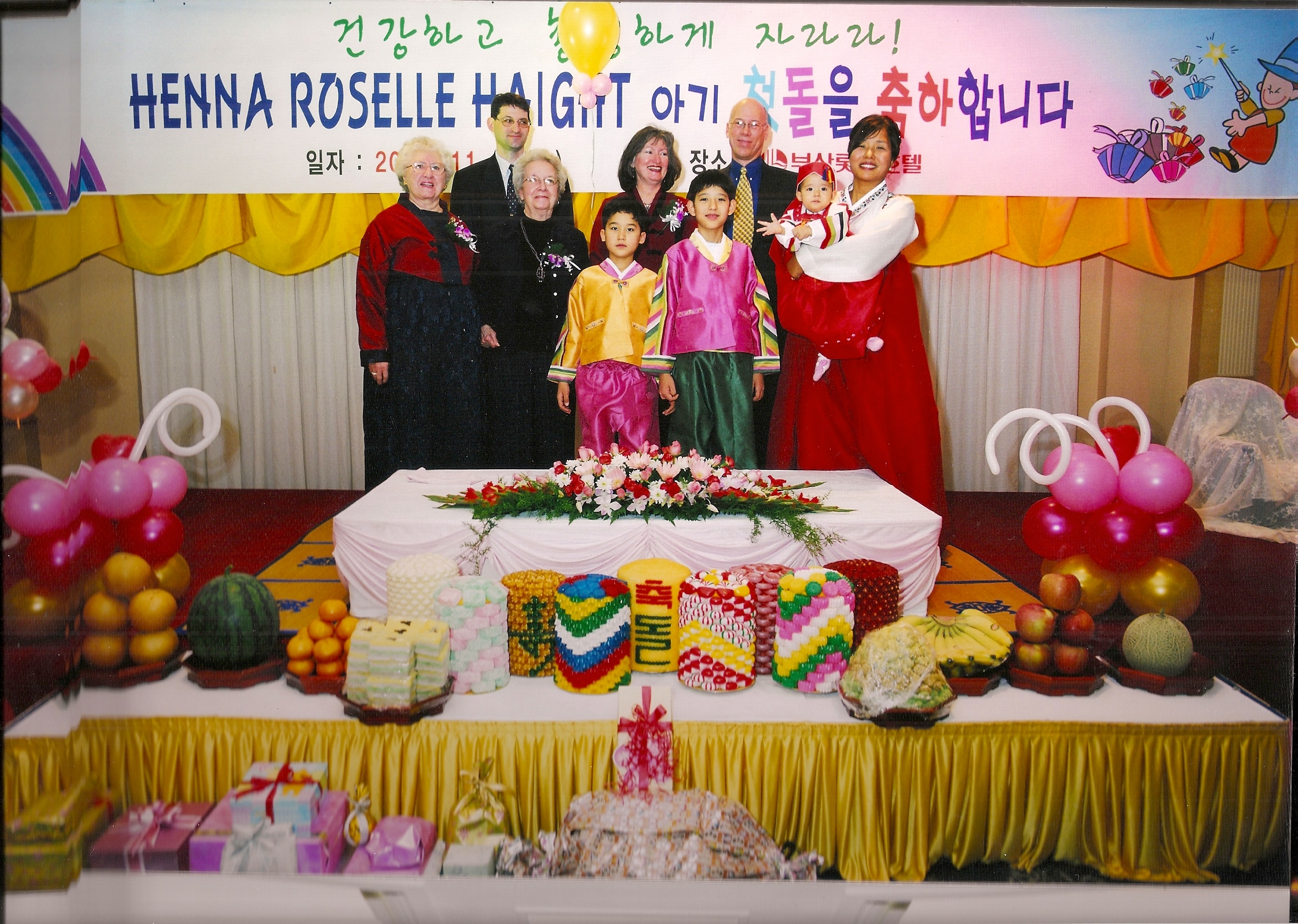
Deborah Haven’s family: Mrs. Haven’s mother is on the far left next to her mother-in-law. She is next to her husband David Charles Limbaugh who served in the Korean War. Their grandsons Brennan and Henry are in front, next to Henna and her daughter-in-law Jungson.

Read more

“외국학생의 한국어 능력 떨어지는 까닭” (서울신문)

서울신문

2012년 5월 16일

“외국학생의 한국어 능력 떨어지는 까닭”

임마누엘 페스트라이쉬 

전 세계적으로 한국어 교육 열풍이 일고 있다. 한국 대학에서 한국어로 강의하는 수업을 듣는 외국인 학생들의 수도 상당히 늘어났다. 한국인들은 한국어를 배우려는 외국인들을 낯설어하면서도 상당히 잘해 주려고 한다. 그러나 애석하게도 그러한 친절함이 도리어 부정적인 결과를 가져오기도 한다. 가장 심각한 문제는 많은 외국학생이 고급 한국어를 구사할 정도로 배우지 못하고 있으며, 복잡한 내용의 표현이나 멋들어진 에세이를 쓰지 못한다. 이는 부분적으로 한국어 교재의 부재, 혹은 한국어 교육지침이 제대로 되어 있지 않기 때문이다. 그러나 더욱 큰 문제는 한국어를 배우려는 외국인들에 대한 한국인의 선입견에 있다.

Read more

“Korean Women and the Development of Science in Korea “한국 여성과 과학기술의 발전” in Kukmin Newspaper (April 30, 2012) in Korean

This article in the Kukmin Newspaper describes many of the topics related to the status of women in science in Korea that we have touched upon in these pages previously.


국민일보

2012년 4월 30일

“한국 여성과 과학기술의 발전”

Read more

“The Seoul Nuclear Security Summit: New Thinking in Northeast Asia?” (article)

A thoughtful article by Asia Institute’s senior associate Markku Heiskanen on the recent Seoul Nuclear Security Summit with Brookings Institution’s James Goodby.

MARCH 28, 2012

“The Seoul Nuclear Security Summit: New Thinking in Northeast Asia?”

James E. Goodby, Nonresident Senior Fellow, Foreign PolicyCenter for Northeast Asian Policy Studies

Markku Heiskanen, Senior Associate and Program Director, The Asia Institute

The Nautilus Institute

The primary motive for convening the 2010 nuclear security summit was to address the unprecedented threat of nuclear materials in the hands of terrorists. This remains the main task of the summit, but two other security problems will be on the minds of participants: the Fukushima catastrophe of 2011 and the nuclear programs of North Korea and Iran. 

Read more

The concept of “Seonbi” as a universal value (Korea Economic News in Korean)

In this article I argue that the Korean concept of “seonbi” could be a global norm equal to “samurai,” “ninja” and “knight” and serve as a model for the entire world. The concept of “seonbi” an ideal for the integration of learning and action, proper behavior and moral commitment is quite appealing, but has not been seriously introduced globally.

Korea Economic News

April 21, 2012

한국경제신문

2012년4월21일

`선비`를 한국의 상징으로 키우자

Read more

“Korea’s advantages in Gaming Can Determine the Future of Surgery” (article in Korea IT Times)

KOREA IT TIMES

Korea’s advantages in Gaming Can Determine the Future of Surgery

Monday, April 16th, 2012
Emanuel Pastreich

SEOUL, KOREA —  Korea’s remarkable strengths in display technology, IT and especially gaming offers a unique opportunity to play a key role in a field not traditionally considered a Korean strength: surgery. The convergence of technologies today promises to radically transform surgery over the next ten years, providing unprecedented  opportunities for innovation, in a word, whereas surgery today resembles flying a biplane with much dependence on visual confirmation and physical strength, surgery of the future will be akin to operating a 747, employing an array of tools to visualize the invisible internal aspects of the body in 3-dimensions and to do be able to do so on a 24 hour basis before and after a surgical procedure.

Read more

Article in Korean on Korea’s democratic tradition from the Joseon Dynasty (in Korean in Kukmin Ilbo newspaper

This article argues that there is much of the democratic tradition in Korea that can be traced back far beyond the democracy movement of the 1980s, back into the Joseon period of the 17th and 18th centuries. The argument may seem somewhat obscure to some, but I would argue that if we see democracy in terms of the balance of power, Korea has a powerful and old tradition that deserves to be treated seriously, and emulated around the world. The Korean model is particularly relevant for China today.

Read more